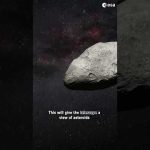
Asteroids, like stars, only come out at night. Hidden in the glare of our Sun are an unknown number of asteroids on paths we cannot track, many of which could be heading for Earth, and we just don’t know it.
Our planned NEOMIR mission will be located between Earth and the Sun and will act as an early warning system for asteroids 20 metres and larger that cannot be seen from the ground.
By making observations in the infrared part of the light spectrum, NEOMIR will detect the heat emitted by asteroids themselves, which isn’t drowned out by sunlight. This thermal emission is absorbed by Earth’s atmosphere, but from space NEOMIR will be able to see closer to the Sun than we can currently from Earth.
We are Europe’s gateway to space. Our mission is to shape the development of Europe’s space capability and ensure that investment in space continues to deliver benefits to the citizens of Europe and the world. Check out https://www.esa.int/ to get up to speed on everything space related.
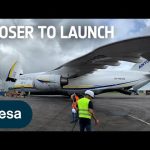
After many years of study, development, building and testing, ESA’s Jupiter Icy Moons Explorer, Juice, has finally arrived at Europe’s Spaceport in Kourou, French Guiana. At the end of 2022 the spacecraft underwent its final thermal vacuum test at an Airbus Defence and Space facility in Toulouse, as well as its final software verification tests, whereby it was controlled from the ESOC mission control centre in Darmstadt, Germany.
Soon, an Ariane 5 will lift Juice into orbit and send it on its journey to explore the largest planet in our Solar System and its three icy moons, Europa, Callisto and in particular Ganymede. By exploring and studying the Jovian system, the mission neatly fullfills its role in ESA’s Cosmic Vision programme, teaching us about our Universe and the origins of life.
Stay tuned: www.esa.int/juice
★ Subscribe: http://bit.ly/ESAsubscribe and click twice on the bell button to receive our notifications.
We are Europe’s gateway to space. Our mission is to shape the development of Europe’s space capability and ensure that investment in space continues to deliver benefits to the citizens of Europe and the world. Check out https://www.esa.int/ to get up to speed on everything space related.
The Copernicus Data Space Ecosystem offers immediate access to a wide range of open and free Earth observation data and services. Following from the success of the current Copernicus Data Hub distribution, the new service ensures continuity and extends the portfolio for data access and data processing possibilities.
The Copernicus Data Space Ecosystem represents a significant leap forward in the way users can access and work with Earth observation data. The service aims to further improve access and exploitation of the Copernicus satellites data.
We are Europe’s gateway to space. Our mission is to shape the development of Europe’s space capability and ensure that investment in space continues to deliver benefits to the citizens of Europe and the world. Check out https://www.esa.int/ to get up to speed on everything space related.
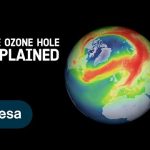
In the 1980s, scientists discovered a gaping hole in Earth’s ozone layer, caused by humanmade chemicals. But thanks to the historical Montreal Protocol, the world came together to take bold action to save our planet. Decades later, we can see the steady recovery of the ozone hole. How did we do it? And what does space have to do with it? Join us as we explore the journey of the ozone hole, from its alarming discovery to the incredible strides made to fix it, and how satellites are helping us track its recovery.
★ Subscribe: http://bit.ly/ESAsubscribe and click twice on the bell button to receive our notifications.
We are Europe’s gateway to space. Our mission is to shape the development of Europe’s space capability and ensure that investment in space continues to deliver benefits to the citizens of Europe and the world. Check out https://www.esa.int/ to get up to speed on everything space related.
What happens next for the new 2022 class of ESA astronauts? Which upcoming launch to a faraway planet and its moons is getting everyone excited? And which anniversary will we be celebrating on 12 March? Get all the answers and more in our new edition of Space Round Up, your news gateway to space.
We are Europe’s gateway to space. Our mission is to shape the development of Europe’s space capability and ensure that investment in space continues to deliver benefits to the citizens of Europe and the world. Check out https://www.esa.int/ to get up to speed on everything space related.
The Webb observations which revealed this small asteroid were not originally designed to hunt for new asteroids — in fact, they were calibration images of the main-belt asteroid (10920) 1998 BC1, which astronomers discovered in 1998, but the calibration team considered them to have failed for technical reasons due to the brightness of the target and an offset telescope pointing. Despite this, the data on asteroid 10920 were used by the team to establish and test a new technique to constrain an object’s orbit and to estimate its size. The validity of the method was demonstrated for asteroid 10920 using Webb observations combined with data from ground-based telescopes and ESA’s Gaia mission.
In the course of the analysis of Webb’s data, the team found the smaller and previously unknown interloper in the same field of view. The team’s results suggest the object measures 100–200 meters, occupies a very low-inclination orbit, and was located in the inner main-belt region at the time of the Webb observations.
We are Europe’s gateway to space. Our mission is to shape the development of Europe’s space capability and ensure that investment in space continues to deliver benefits to the citizens of Europe and the world. Check out https://www.esa.int/ to get up to speed on everything space related.
In this video, forestry expert Maurizio Santoro, senior researcher at Gamma Remote Sensing and one of the leaders of ESA projects related to the Climate Change Initiative (CCI), explains how the use of various data, whether in synergy or in comparison, can bring a great contribution/benefit to the field of mapping biomass and measuring this Essential Climate Variable.
★ Subscribe: http://bit.ly/ESAsubscribe and click twice on the bell button to receive our notifications.
We are Europe’s gateway to space. Our mission is to shape the development of Europe’s space capability and ensure that investment in space continues to deliver benefits to the citizens of Europe and the world. Check out https://www.esa.int/ to get up to speed on everything space related.
This image takes the viewer to space to finish at Webb’s view of the galaxy merger II ZW 96.
This pair of galaxies is roughly 500 million light-years from Earth and lies in the constellation Delphinus, close to the celestial equator. As well as the wild swirl of the merging galaxies, a menagerie of background galaxies are dotted throughout the image. Learn more about the object here.
Credit: ESA/Webb, NASA, CSA, L. Armus, A. Evans, SDSS, E. Slawik, N. Risinger, M. Zamani (ESA/Webb), N. Bartmann (ESA/Webb) Music: Tonelabs – The Red North
★ Subscribe: http://bit.ly/ESAsubscribe and click twice on the bell button to receive our notifications.
We are Europe’s gateway to space. Our mission is to shape the development of Europe’s space capability and ensure that investment in space continues to deliver benefits to the citizens of Europe and the world. Check out https://www.esa.int/ to get up to speed on everything space related.
Terrae Novae is not only literally about exploring new worlds, but by describing the limitless opportunities for discovery, economic growth and inspiration it also expresses our ambitions for Europe’s future innovators, scientists and explorers.
This video shows the many exploration activities ESA is conducting or has planned in our Solar System, from the International Space Station to the Moon with the European Service Module and lunar Gateway modules for Artemis, and on to Mars with the Mars Sample Return campaign.
We are Europe’s gateway to space. Our mission is to shape the development of Europe’s space capability and ensure that investment in space continues to deliver benefits to the citizens of Europe and the world. Check out https://www.esa.int/ to get up to speed on everything space related.
During a break from looking at planets around other stars, ESA’s CHaracterising ExOPlanet Satellite (Cheops) mission has observed a dwarf planet in our own Solar System and made a decisive contribution to the discovery of a dense ring of material around it.
Studying these dwarf planets is difficult because of their small sizes and extreme distances. Quaoar itself orbits the Sun at almost 44 times the Sun-Earth distance. So, occultations are particularly valuable tools. Until recently, however, it has been difficult to predict exactly when and where they will take place.
For an occultation to occur, the alignment between the occulting object (here the TNO), the star, and the observing telescope must be extremely precise. In the past, it has been almost impossible to meet the stringent accuracy requirements to be certain of seeing an event. Nevertheless, to pursue this goal the European Research Council Lucky Star project, coordinated by Bruno Sicardy, Sorbonne University & Paris Observatory – PSL (LESIA), was created to predict upcoming occultations by TNOs, and to co-ordinate the observation of these events from professional and amateur observatories around the globe.
We are Europe’s gateway to space. Our mission is to shape the development of Europe’s space capability and ensure that investment in space continues to deliver benefits to the citizens of Europe and the world. Check out https://www.esa.int/ to get up to speed on everything space related.
Türkiye and Syria are reeling from one of the worst earthquakes to strike the region in almost a century. Tens of thousands of people have been killed with many more injured in this tragedy. Turkish authorities, along with the United Nations and the International Federation Red Cross & Red Crescent Societies, activated the International Charter ‘Space and Major Disasters’. The Charter provides satellite images of the affected areas to support local teams with their rescue efforts. Philippe Bally, ESA Charter Representative, explains.
We are Europe’s gateway to space. Our mission is to shape the development of Europe’s space capability and ensure that investment in space continues to deliver benefits to the citizens of Europe and the world. Check out https://www.esa.int/ to get up to speed on everything space related.
The aurora isn’t unique to Earth. Some other worlds in our Solar System, such as Saturn and Jupiter, have magnetic fields too. Solar wind particles can collide with them just as happens with Earth! Would you like to fly to another planet and see its aurora?
📹 @EuropeanSpaceAgency
★ Subscribe: http://bit.ly/ESAsubscribe and click twice on the bell button to receive our notifications.
We are Europe’s gateway to space. Our mission is to shape the development of Europe’s space capability and ensure that investment in space continues to deliver benefits to the citizens of Europe and the world. Check out https://www.esa.int/ to get up to speed on everything space related.
A grand odyssey of exploration is about to begin. Humankind’s next bold mission to the outer Solar System, ESA’s Jupiter Icy Moons Explorer, Juice, is poised to explore giant planet Jupiter and its largest moons. These intriguing worlds have piqued our curiosity ever since Galileo first raised his telescope to the planet and discovered its four largest moons: Io, Europa, Ganymede and Callisto, three of which are thought to harbour underground oceans.
Early space probes visiting the Jovian system have raised more questions than answers. But thanks to Juice, many of those answers are now within reach. ESA is launching the spacecraft in April 2023 on an eight-year journey to the distant planet.
To uncover the hidden secrets of these mysterious worlds, Juice is equipped with the most powerful science instruments ever sent to the outer Solar System. The spacecraft will face many dangers along the way: radiation, extreme temperatures, and the vast gravitational pull of Jupiter, all while operating hundreds of millions of kilometres from Earth. But in the safe hands of ESA’s operators to guide it safely through these challenges, the dangers will be worth it for the science that Juice is destined to uncover.
The countdown to this new era of Jupiter system exploration has begun. Stay tuned: www.esa.int/juice
Credit: Produced by ESA/ATG medialab
★ Subscribe: http://bit.ly/ESAsubscribe and click twice on the bell button to receive our notifications.
We are Europe’s gateway to space. Our mission is to shape the development of Europe’s space capability and ensure that investment in space continues to deliver benefits to the citizens of Europe and the world. Check out https://www.esa.int/ to get up to speed on everything space related.
Gravity is the force that keeps us on our planet by drawing us so powerfully towards its centre. It has much the same effect on everything else floating in the cosmos, as long as it is big enough. All objects in the Universe are subject to their own force of gravity. It is one of the fundamental forces of our Universe.
As gravity pulls matter towards other matter, a sphere forms. Why? Only a sphere allows every point on its surface to have the same distance from the centre, so that no part of the object can further ‘fall’ toward its centre.
Smaller objects in space are spared from the overwhelming power of gravity, which is why we see asteroids that look like pieces of rubble. Why do these bodies have the shape that they have? Their shape arises from a simple electrostatic force.
📹 @EuropeanSpaceAgency
★ Subscribe: http://bit.ly/ESAsubscribe and click twice on the bell button to receive our notifications.
We are Europe’s gateway to space. Our mission is to shape the development of Europe’s space capability and ensure that investment in space continues to deliver benefits to the citizens of Europe and the world. Check out https://www.esa.int/ to get up to speed on everything space related.
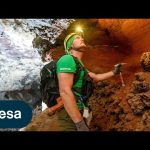
Astronauts with their sights on the Moon receive world-class geology training during the fifth edition of ESA’s Pangaea campaign.
ESA astronaut Alexander Gerst and NASA’s Stephanie Wilson joined the course to learn how to read a landscape, collect scientifically relevant rocks and effectively communicate their geological observations. From choosing landing sites for a future Artemis mission, to designing science operations for a moonwalk, the course challenges space explorers to become field scientists.
The astronauts gather a wealth of geological knowledge and learn how to be the eyes and ears of scientists on the ground through a balanced mix of theory and field trips across Europe. A crew of leading European planetary scientists and engineers make sure the trainees work in tandem using the best geology observation techniques.
The course began in September 2022 in the Italian Dolomites with lessons on martian geology and asteroids at the Bletterbach canyon.
During the second leg of the training, Alexander and Stephanie followed the footsteps of Apollo astronauts to study the Ries crater in Germany, one of the best-preserved impact craters on Earth, where American crews trained before their flight to the Moon.
The astronauts travelled to the Spanish Canary Island of Lanzarote for an intense week of training in November 2022, where they learned about the geological interactions between volcanic activity and water – two key factors in the search for life.
Follow the latest news about Pangaea training on Twitter, read all about it on the blog and watch their steps with our Flickr gallery.
We are Europe’s gateway to space. Our mission is to shape the development of Europe’s space capability and ensure that investment in space continues to deliver benefits to the citizens of Europe and the world. Check out https://www.esa.int/ to get up to speed on everything space related.
The “lunar hay fever”, as @NASA astronaut Harrison Schmitt described it during the Apollo 17 mission created symptoms in all 12 people who have stepped on the Moon. From sneezing to nasal congestion, in some cases it took days for the reactions to fade. Inside the spacecraft, the dust smelt like burnt gunpowder.
The Moon missions left an unanswered question of lunar exploration – one that could affect humanity’s next steps in the Solar System: can lunar dust jeopardise human health?
★ Subscribe: http://bit.ly/ESAsubscribe and click twice on the bell button to receive our notifications.
We are Europe’s gateway to space. Our mission is to shape the development of Europe’s space capability and ensure that investment in space continues to deliver benefits to the citizens of Europe and the world. Check out https://www.esa.int/ to get up to speed on everything space related.
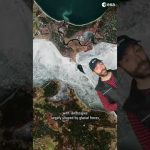
Mecklenburg–West Pomerania is one of Germany’s least populated states. Nearly two-thirds is covered by farmland with the main crops being rye, wheat, barley and hay. The green areas present in this image are most likely winter wheat and winter rapeseed. The region’s pastures typically support sheep, horses and cattle.
On the state’s coastline on the Baltic Sea lie many holiday resorts, unspoilt nature and the islands of Rügen and Usedom, as well as many others.
We are Europe’s gateway to space. Our mission is to shape the development of Europe’s space capability and ensure that investment in space continues to deliver benefits to the citizens of Europe and the world. Check out https://www.esa.int/ to get up to speed on everything space related.
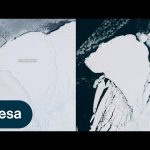
An iceberg around the size of Greater London broke off Antarctica’s Brunt Ice Shelf due to a natural process called ‘calving’. The iceberg, measuring 1550 sq km, detached from the 150 m-thick ice shelf a decade after scientists first spotted massive cracks in the shelf.
We are Europe’s gateway to space. Our mission is to shape the development of Europe’s space capability and ensure that investment in space continues to deliver benefits to the citizens of Europe and the world. Check out https://www.esa.int/ to get up to speed on everything space related.
We are Europe’s gateway to space. Our mission is to shape the development of Europe’s space capability and ensure that investment in space continues to deliver benefits to the citizens of Europe and the world. Check out https://www.esa.int/ to get up to speed on everything space related.
Did you know that ESA is researching human hibernation for long distance spaceflight to Mars or beyond?
Hibernating astronauts could be the best way to save mission costs, reduce the size of spacecraft by a third and keep crew healthy on their way to Mars. An ESA-led investigation suggests that human hibernation goes beyond the realm of science-fiction and may become a game-changing technique for space travel.
When packing for a return flight to the Red Planet, space engineers account for around two years’ worth of food and water for the crew.
Torpor during hibernation is an induced state that reduces the metabolic rate of an organism. This ‘suspended animation’ is a common mechanism in animals who wish to preserve energy. Reducing the metabolic rate of a crew en route to Mars down to 25% of the normal state would dramatically cut down the amount of supplies and habitat size, making long-duration exploration more feasible.
Mimicking therapeutic torpor, the idea of putting human into a state of hibernation, has been around in hospitals since the 1980s – doctors can induce hypothermia to reduce metabolism during long and complex surgeries. However, it is not an active reduction of energy and misses most of the advantages of torpor. Studies on hibernation to visit other planets could offer new potential applications for patient care on Earth.
Animals hibernate to survive periods of cold and food or water scarcity, reducing their heart rate, breathing and other vital functions to a fraction of their normal life, while body temperature lowers close to ambient temperature. Tardigrades, frogs and reptiles are very good at it. Lower testosterone levels seem to aid long hibernation in mammals, estrogens in humans strongly regulate energy metabolism.
With the crew at rest for long periods, artificial intelligence will come into play during anomalies and emergencies.
The possibilities of hibernation for medical use is of particular interest to the European research community and could transform how we approach many severe illnesses.
Inducing torpor is already used in some medical environments such as surgical theathers to replace anesthesia in those patients allergic to anesthetic drugs.
The step to space research is closer than you might think. Get involved with spaceflight research via https://www.esa.int/spaceflightAO. Find out about our commercial partnerships and opportunities in human and robotic exploration via https://www.esa.int/explorationpartners to run your research in microgravity as well.
★ Subscribe: http://bit.ly/ESAsubscribe and click twice on the bell button to receive our notifications.
We are Europe’s gateway to space. Our mission is to shape the development of Europe’s space capability and ensure that investment in space continues to deliver benefits to the citizens of Europe and the world. Check out https://www.esa.int/ to get up to speed on everything space related.
Researchers have found evidence for the existence of a new type of planet they have called a “water world,” where water makes up a large fraction of the entire planet. These worlds, discovered in a planetary system 218 light-years away, are unlike any planets in our Solar System.
📹 @europeanspaceagency 🖥️ @nasa , ESA, L. Hustak
★ Subscribe: http://bit.ly/ESAsubscribe and click twice on the bell button to receive our notifications.
We are Europe’s gateway to space. Our mission is to shape the development of Europe’s space capability and ensure that investment in space continues to deliver benefits to the citizens of Europe and the world. Check out https://www.esa.int/ to get up to speed on everything space related.
We are Europe’s gateway to space. Our mission is to shape the development of Europe’s space capability and ensure that investment in space continues to deliver benefits to the citizens of Europe and the world. Check out https://www.esa.int/ to get up to speed on everything space related.
These are termed “tidal disruption events.” But the wording belies the complex, raw violence of a black hole encounter. There is a balance between the black hole’s gravity pulling in star stuff, and radiation blowing material out. In other words, black holes are messy eaters. Astronomers are using Hubble to find out the details of what happens when a wayward star plunges into the gravitational abyss.
We are Europe’s gateway to space. Our mission is to shape the development of Europe’s space capability and ensure that investment in space continues to deliver benefits to the citizens of Europe and the world. Check out https://www.esa.int/ to get up to speed on everything space related.
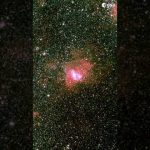
This video takes the viewer on a journey to NGC 346, one of the most dynamic star-forming regions in nearby galaxies, as seen by the NASA/ESA/CSA James Webb Space Telescope.
NCG 346 is located in the Small Magellanic Cloud (SMC), a dwarf galaxy close to our Milky Way.
Credit: ESA/Webb, NASA, CSA, ESO, ESA/Hubble, Digitized Sky Survey 2, A. Nota, N. Bartmann, M. Zamani Music: Music for the Zoom: Tonelabs – The Red North
★ Subscribe: http://bit.ly/ESAsubscribe and click twice on the bell button to receive our notifications.
We are Europe’s gateway to space. Our mission is to shape the development of Europe’s space capability and ensure that investment in space continues to deliver benefits to the citizens of Europe and the world. Check out https://www.esa.int/ to get up to speed on everything space related.
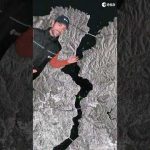
Separating the Black Sea and the Sea of Marmara, the Bosphorus strait is one of the busiest maritime passages in the world, with around 48 000 ships passing through every year. Daily traffic includes international commercial shipping vessels and oil tankers, as well as local fishing and ferries.
The two identical Copernicus Sentinel-1 satellites carry radar instruments, which can see through clouds and rain, and in the dark, to image Earth’s surface below. The multi-temporal remote sensing technique combines two or more radar images over the same area to detect changes occurring between acquisitions.
We are Europe’s gateway to space. Our mission is to shape the development of Europe’s space capability and ensure that investment in space continues to deliver benefits to the citizens of Europe and the world. Check out https://www.esa.int/ to get up to speed on everything space related.
Researchers have confirmed the presence of an exoplanet, a planet that orbits another star, using James Webb Space Telescope for the first time. Formally classified as LHS 475 b, the planet is almost exactly the same size as our own, clocking in at 99% of Earth’s diameter.
Among all operating telescopes, only Webb is capable of characterising the atmospheres of Earth-sized exoplanets. The team attempted to assess what is in the planet’s atmosphere by analysing its transmission spectrum. Although the data show that this is an Earth-sized terrestrial planet, they do not yet know if it has an atmosphere.
Webb also revealed that the planet is a few hundred degrees warmer than Earth, so if clouds are detected it may lead the researchers to conclude that the planet is more like Venus, which has a carbon dioxide atmosphere and is perpetually shrouded in thick cloud.
📹 @EuropeanSpaceAgency 🖥️ @NASA , ESA, @canadianspaceagency , L. Hustak
★ Subscribe: http://bit.ly/ESAsubscribe and click twice on the bell button to receive our notifications.
We are Europe’s gateway to space. Our mission is to shape the development of Europe’s space capability and ensure that investment in space continues to deliver benefits to the citizens of Europe and the world. Check out https://www.esa.int/ to get up to speed on everything space related.
At the start of 2023 the European Space Agency ESA is happily looking forward to another year filled with a host of thrilling new missions, cutting edge science and the continued effort to guarantee independent access to space for Europe. We will see the first images of the first Meteosat Third Generation satellite, the launch of the Jupiter Icy Moons Explorer, and of Euclid and another Sentinel-1 satellite launch. It will also be the year of Ariane 6 which will make its inaugural flight and the first Dane in space, Andreas Mogensen will return to the ISS as the new astronaut-candidates commence their training. Near the end of the year the second Space Summit will further cement ESA’s ambitions for Space in Europe.
★ Subscribe: http://bit.ly/ESAsubscribe and click twice on the bell button to receive our notifications.
We are Europe’s gateway to space. Our mission is to shape the development of Europe’s space capability and ensure that investment in space continues to deliver benefits to the citizens of Europe and the world. Check out https://www.esa.int/ to get up to speed on everything space related.
Just think about the amount of food and water that a crew of astronauts would need to go all the way to Mars, as well as all the mental, physiological, and, most importantly, radiation risk challenges. How about we avoid all of those issues by putting the astronauts to sleep?
The main problem is that humans don’t hibernate. Astronauts would have to take a drug to induce hibernation and enter sleeping pods, quiet environments with low lights, high humidity, kept at temperatures below 10°C.
Hibernation not only promises to benefit astronauts in space, but it may also offer new potential applications for patient care on Earth.
★ Subscribe: http://bit.ly/ESAsubscribe and click twice on the bell button to receive our notifications.
We are Europe’s gateway to space. Our mission is to shape the development of Europe’s space capability and ensure that investment in space continues to deliver benefits to the citizens of Europe and the world. Check out https://www.esa.int/ to get up to speed on everything space related.
Nicaragua is the largest republic in Central America and is often referred to as ‘the country of lakes and volcanoes’ because of its many lakes, lagoons and a string of some 40 volcanoes stretching northwest to southeast along the Pacific coast.
We are Europe’s gateway to space. Our mission is to shape the development of Europe’s space capability and ensure that investment in space continues to deliver benefits to the citizens of Europe and the world. Check out https://www.esa.int/ to get up to speed on everything space related.
Two of the most distant galaxies seen to date have been captured by Webb in the outer regions of the giant galaxy cluster Abell 2744. The galaxies are not inside the cluster, but many billions of light-years behind it.
One of the galaxies existed only 450 million years after the Big Bang while the other one existed 350 million years after the Big Bang.
Both galaxies are seen really close in time to the Big Bang which occurred 13.8 billion years ago.
We are Europe’s gateway to space. Our mission is to shape the development of Europe’s space capability and ensure that investment in space continues to deliver benefits to the citizens of Europe and the world. Check out https://www.esa.int/ to get up to speed on everything space related.
Recently, Andreas Mogensen, now getting ready for his ‘Huginn’ mission to the ISS in 2023, stopped by ESA’s ESOC mission control centre in Darmstadt, Germany, to meet with some of the experts who keep our satellites flying.
Andreas usually works at NASA’s Johnson Space Center in Houston as an ISS ‘capcom’, and we don’t often see him in Europe. A few months back, while returning to Germany for some training at ESA’s Astronaut Centre in Cologne, we seized the opportunity to ask him if he’d like to stop over in Darmstadt for a look behind the scenes at mission control, and he immediately answered, ‘yes’!
Andreas’ studied aeronautical engineering with a focus on ‘guidance, navigation and control of spacecraft’ and we thought he’d be delighted to meet with the teams at mission control doing precisely that sort of work for our robotic missions.
We figured he’d also enjoy meeting colleagues from our Space Safety programme, especially the ones working on space debris and space weather, as these are crucial areas that influence the daily life of astronauts on the ISS.
Andreas met with Bruno Sousa and Julia Schwartz, who help keep Solar Orbiter healthy and on track on its mission to gather the closest-ever images of the Sun, observe the solar wind and our Star’s polar regions, helping unravel the mysteries of the solar cycle.
He also met with Stijn Lemmens, one of the analysts keeping tabs on the space debris situation in orbit, and Melanie Heil, a scientist helping ESA understand how space weather and our active Sun can affect missions in orbit and crucial infrastructure – like power grids – on ground.
We hope you enjoy this lively and informative day at mission control as much as Andreas and the teams at ESOC did!
★ Subscribe: http://bit.ly/ESAsubscribe and click twice on the bell button to receive our notifications.
We are Europe’s gateway to space. Our mission is to shape the development of Europe’s space capability and ensure that investment in space continues to deliver benefits to the citizens of Europe and the world. Check out https://www.esa.int/ to get up to speed on everything space related.
With this Timelapse captured from the ISS by our astronaut Samantha Cristoforetti, the entire ESA family wants to wish you a peaceful, safe and exciting year 2023!
May the new year be full of grand adventures and opportunities!
We’ll keep bringing the wonders of the universe and Earth to the palm of your hands 😉
📹 @EuropeanSpaceAgency / @NASA – S. Cristoforetti
★ Subscribe: http://bit.ly/ESAsubscribe and click twice on the bell button to receive our notifications.
We are Europe’s gateway to space. Our mission is to shape the development of Europe’s space capability and ensure that investment in space continues to deliver benefits to the citizens of Europe and the world. Check out https://www.esa.int/ to get up to speed on everything space related.
It’s New Year’s Eve day and our Earth from Space hosts, Chiara and Jorge, share some traditions of their home countries.
In Italy, people eat lentils on the last dinner of the year to bring good fortune and in Spain people eat one grape with each chime of the clock at midnight making a wish.
We are Europe’s gateway to space. Our mission is to shape the development of Europe’s space capability and ensure that investment in space continues to deliver benefits to the citizens of Europe and the world. Check out https://www.esa.int/ to get up to speed on everything space related.
2022 was a year of many ‘firsts’ for space in Europe, seeing the first European female International Space Station commander, the launch of the first Vega-C rocket, the launch of the first Artemis mission working to bring humans back to the Moon, and first images from the James Webb Space Telescope among many other success stories and lessons learned.
★ Subscribe: http://bit.ly/ESAsubscribe and click twice on the bell button to receive our notifications.
We are Europe’s gateway to space. Our mission is to shape the development of Europe’s space capability and ensure that investment in space continues to deliver benefits to the citizens of Europe and the world. Check out https://www.esa.int/ to get up to speed on everything space related.
Three different moments in a far-off supernova explosion were captured in a single snapshot by the NASA/ESA Hubble Space Telescope. The progenitor star exploded more than 11 billion years ago, when the Universe was less than a fifth of its current age of 13.8 billion years.
📹 @EuropeanSpaceAgency
📸 @NASA, ESA, STScI, Wenlei Chen (UMN), Patrick Kelly (UMN), Hubble Frontier Fields
★ Subscribe: http://bit.ly/ESAsubscribe and click twice on the bell button to receive our notifications.
We are Europe’s gateway to space. Our mission is to shape the development of Europe’s space capability and ensure that investment in space continues to deliver benefits to the citizens of Europe and the world. Check out https://www.esa.int/ to get up to speed on everything space related.
As Mars orbits around our Sun, time on the Red Planet is measured in years. However, there are some significant differences between a year on Mars and a year on Earth. Let’s look at some similarities and differences between a year on the two planets.
We are Europe’s gateway to space. Our mission is to shape the development of Europe’s space capability and ensure that investment in space continues to deliver benefits to the citizens of Europe and the world. Check out https://www.esa.int/ to get up to speed on everything space related.
The hopes of a new generation of astronomers were riding in the nosecone of the ESA-provided Ariane 5 rocket that had just disappeared into the clouds above Europe’s Spaceport in Kourou, French Guiana.
One year after this historic launch, Webb has already delivered groundbreaking data and breathtaking images. Here are the top 5 images for our Instagram community.
We are Europe’s gateway to space. Our mission is to shape the development of Europe’s space capability and ensure that investment in space continues to deliver benefits to the citizens of Europe and the world. Check out https://www.esa.int/ to get up to speed on everything space related.
In Rovaniemi, the Arctic Circle runs through Santa Claus Village, located eight kilometres north of the city centre. The Arctic Circle marks the southernmost latitude where the sun can stay continuously below or above the horizon for 24 hours – these phenomena are known as the Midnight Sun in the summer and the Polar Night in the winter.
We are Europe’s gateway to space. Our mission is to shape the development of Europe’s space capability and ensure that investment in space continues to deliver benefits to the citizens of Europe and the world. Check out https://www.esa.int/ to get up to speed on everything space related.
While Webb and other space telescopes, including the NASA/ESA Hubble Space Telescope, have previously revealed isolated ingredients of this heated planet’s atmosphere, the new readings provide a full menu of atoms, molecules, and even signs of active chemistry and clouds. The latest data also give a hint of how these clouds might look up close: broken up rather than as a single, uniform blanket over the planet.
📹 @EuropeanSpaceAgency
📸 @NASA, ESA, @canadianspaceagency , J. Olmsted (STS)
★ Subscribe: http://bit.ly/ESAsubscribe and click twice on the bell button to receive our notifications.
We are Europe’s gateway to space. Our mission is to shape the development of Europe’s space capability and ensure that investment in space continues to deliver benefits to the citizens of Europe and the world. Check out https://www.esa.int/ to get up to speed on everything space related.
Our alien friend Paxi went to visit ESA astronaut Thomas Pesquet on board the International Space Station during his Alpha mission. Thomas explains the difference between natural satellites – moons orbiting planets – and artificial satellites – human-made machines orbiting a space object.
We are Europe’s gateway to space. Our mission is to shape the development of Europe’s space capability and ensure that investment in space continues to deliver benefits to the citizens of Europe and the world. Check out https://www.esa.int/ to get up to speed on everything space related.