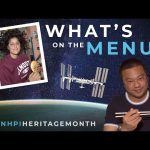
In honor of Asian American and Native Hawaiian Pacific Islander Heritage Month, learn about the intersection of food and culture in space from NASA astronaut Sunita “Suni” Williams, whose father immigrated to the U.S. from India, and International Space Station (ISS) food scientist/system manager Xulei Wu, a first-generation Asian American born in China.
Hear their stories about cultural representation in space, the importance of food in Indian and Chinese cultures, and the inclusive standard menu aboard the ISS. What’s one dish you would like to see aboard? Drop your suggestion in the comments below!
Producer/Editor: Lacey Young Art Director: Mark Hailey Music: Universal Production Music
Watch NASA’s SpaceX Crew-4 astronauts arrive at the International Space Station aboard their Dragon spacecraft Freedom. Docking is scheduled for approximately 7:40 p.m. EDT (23:40 UTC).
Once aboard the orbiting laboratory, astronauts Bob Hines, Jessica Watkins, and Kjell Lindgren of NASA, alongside Samantha Cristoforetti of ESA (European Space Agency), will spend nearly six months conducting new scientific research in areas such as materials science, health technologies, and plant science to prepare for human exploration beyond low-Earth orbit and to benefit life on Earth.
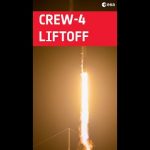
Crew-4 lifted off on April 27 at 3:52 a.m. ET (7:52 UTC) from NASA’s Kennedy Space Center aboard a SpaceX Falcon 9 rocket.
Crew Dragon Freedom is launched to the International Space Station, carrying ESA astronaut Samantha Cristoforetti and @NASA astronauts Kjell Lindgren, Robert “Bob” Hines and Jessica Watkins.
Collectively known as Crew-4, the four astronauts were launched from @NASA’s Kennedy Space Center in Florida, USA.
Samantha is the third ESA astronaut to travel to the orbital outpost in a @SpaceX Crew Dragon. During the journey she and Jessica will serve as Mission Specialists. Kjell is Crew-4 Commander and Bob is Crew-4 Pilot.
Upon arrival, Crew-4 will be greeted by the Space Station’s current crew – including ESA astronaut Matthias Maurer. Samantha and Matthias will enjoy a brief handover in orbit before he returns to Earth with Crew-3.
Samantha first flew to space in 2014 for her @AsiTV-sponsored mission Futura. Her ESA space mission, known as Minerva, will officially begin once she reaches the Station.
Throughout her mission, Samantha will hold the role of US Orbital Segment (USOS) lead, taking responsibility for all operations within the US, European, Japanese and Canadian modules and components of the Space Station. She will support around 35 European and many more international experiments in orbit.
We are Europe’s gateway to space. Our mission is to shape the development of Europe’s space capability and ensure that investment in space continues to deliver benefits to the citizens of Europe and the world. Check out https://www.esa.int/ to get up to speed on everything space related.
NASA’s SpaceX Crew-4 astronauts prepare for launch, an update on our Artemis I mega Moon rocket and spacecraft, and celebrating our home planet for #EarthDay – just a few of the stories to tell you about This Week at NASA!
🎨 Skip the waitlist and invest in blue-chip art for the very first time by signing up for Masterworks: https://masterworks.art/historymarche Purchase shares in great masterpieces from artists like Pablo Picasso, Banksy, Andy Warhol, and more.
🚩 The four-year long Civil War in the United States was America’s bloodiest and most divisive conflict, pitting the Union Army against the Confederate States of America. But how did the Union manage to create and execute a military strategy that played into its strengths and Confederate weaknesses, to achieve final victory?
NASA associate administrators participate in a panel on the collaboration of the Artemis Program and the aerospace industry in building the space economy at the 37th Annual Space Symposium in Colorado Springs, Colorado.
Speakers include: – Dr. Thomas Zurbuchen, Associate Administrator for NASA’s Science Mission Directorate – Jim Free, Associate Administrator for NASA’s Exploration Systems Development Mission Directorate – Jim Reuter, Associate Administrator for NASA’s Space Technology Mission Directorate – Ken Bowersox, Deputy Associate Administrator for NASA’s Space Operations Mission Directorate
The panel is moderated by Northrop Grumman/Space Foundation’s Lauren Smith.
What the President’s budget means for NASA, a record-setting astronaut returns safely to Earth, and the next Commercial Crew mission to the space station … a few of the stories to tell you about – This Week at NASA!
Producer: Andre Valentine Editor: Sonnet Apple Music: Universal Production Music
0:00 Introduction 0:14 The President’s Budget and the State of NASA 1:21 Record-Setting U.S. Astronaut Returns to Earth 1:47 NASA Previews SpaceX Crew-4 Mission 2:16 Final Test Ahead of Artemis I Moon Mission 2:43 Hubble Spots Farthest Star Ever Seen
🎨 Skip the waitlist and invest in blue-chip art for the very first time by signing up for Masterworks: https://masterworks.art/historymarche Purchase shares in great masterpieces from artists like Pablo Picasso, Banksy, Andy Warhol, and more.
🚩 On a late November morning in the year 1095, the rousing sermon of Pope Urban II reverberated across Europe. Thousands of knights and ordinary people took the cross and marched East. Over the next two hundred years the Christian armies attempted to recover Palestine from Islamic rule. But conquering these lands was easier than keeping them. What were the strategic methods employed by the Crusader states to keep hold of the Holy Land?
The Smithsonian’s National Air and Space Museum held its Michael Collins Trophy award ceremony March 24 at the museum’s Steven F. Udvar-hazy Center in Chantilly, VA. The 2022 recipients were Wally Funk for Lifetime Achievement and the Mars Ingenuity Helicopter Team for Current Achievement.
Ingenuity rode to the surface of Mars attached to the belly of the Perseverance rover on Feb 18, 2021. And several weeks later, on April 19, the rotorcraft achieved the very first powered, controlled flight on another planet.
While Ingenuity arrived on Mars as a technology demonstration, NASA has extended flight operations through September. The historic rotorcraft has successfully completed 23 flights and counting and will continue supporting the Perseverance rover’s upcoming science campaign exploring the ancient river delta of Jezero Crater. Along the way, it will continue pushing its own capabilities to help inform the design of future Mars aerial vehicles.
Lifetime Achievement recipient, Wally Funk and 12 other women pilots underwent spaceflight training in the ’60s as part of an unofficial program – even outperforming the men – but were denied the chance to fly.
Wally never abandoned her dream of going to space and at 82-years-old that dream came true when she launched aboard the FIRST crewed suborbital mission of Blue Origin’s New Shepard capsule.
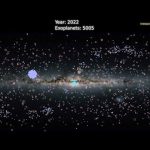
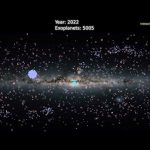
On March 21, 2022, the number of known exoplanets passed 5,000 according to the NASA Exoplanet Archive. This 360-degree animation and sonification tracks humanity’s discovery of the planets beyond our solar system over time. Turning NASA data into sounds allows users to hear the pace of discovery with additional information conveyed by the notes themselves.
As each exoplanet is discovered, a circle appears at its position in the sky. The size of the circle indicates the relative size of the planet’s orbit and the color indicates which planet detection method was used to discover it. The music is created by playing a note for each newly discovered world. The pitch of the note indicates the relative orbital period of the planet. Planets that take a longer time to orbit their stars are heard as lower notes, while planets that orbit more quickly are heard as higher notes.
Please note: Not all browsers support viewing 360 videos. YouTube supports their playback on computers using Chrome, Firefox, MS Edge, and Opera browsers. For the best experience on a mobile device, play this video in the YouTube app.
Credit: NASA/JPL-Caltech/M. Russo, A. Santaguida (SYSTEM Sounds)
On March 21, 2022, the number of known exoplanets passed 5,000 according to the NASA Exoplanet Archive. This animation and sonification tracks humanity’s discovery of the planets beyond our solar system over time. Turning NASA data into sounds allows users to hear the pace of discovery, with additional information conveyed by the notes themselves.
As each exoplanet is discovered, a circle appears at its position in the sky. The size of the circle indicates the relative size of the planet’s orbit and the color indicates which planet detection method was used to discover it. The music is created by playing a note for each newly discovered world. The pitch of the note indicates the relative orbital period of the planet. Planets that take a longer time to orbit their stars are heard as lower notes, while planets that orbit more quickly are heard as higher notes.
Credit: NASA/JPL-Caltech/M. Russo, A. Santaguida (SYSTEM Sounds)
🚩 Heraclius’ campaigns are an example of an indirect approach to war strategy. And although his gains would be swiftly lost in the wake of the Muslim Conquest, the method by which they were achieved would remain a point of pride in Byzantine military history.
📜 Sources: Howard-Johnston J. The Last Great War of Antiquity. Oxford University Press 2021. Kaegi W. Heraclius Emperor of Byzantium. Cambridge University Press 2003. Daryaee T. Sasanian Persia. IB Tauris 2009. Kaegi W. Byzantine Military Unrest 471-843. Adolf M Hakkert 1981. Kardaras G. Byzantium and the Avars, 6th-9th Century AD. Brill 2019. Luttwak E. The Grand Strategy of the Byzantine Empire. Belknap Press of Harvard University Press 2009. Pohl W. The Avars. Cornell University Press 2018. Pourshariati P. Decline and Fall of the Sasanian Empire. IB Tauris 2008. Reinink G, Stolte B (eds.). The Reign of Heraclius (610-641). Peeters 2002. Maksymiuk K. Geography of Roman-Iranian Wars. Uniwersytet Przyrodniczo-Humanistyczny w Siedlcach, Siedlce 2015. Greatrex G, Lieu S. The Roman Eastern Frontier and the Persian Wars: Part II AD 363-630. Routledge 2002.
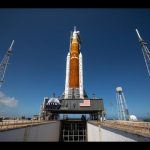
Preparing the space station for solar array upgrades, rolling out the spacecraft for our Artemis I mission, and the Webb Space Telescope team reaches another milestone … a few of the stories to tell you about – This Week at NASA!
Producer: Andre Valentine Editor: Lacey Young Music: Universal Production Music
🚩 Go to: https://curiositystream.thld.co/historymarche_0322 and use the code HISTORYMARCHE to save 25% discount off today, that’s only $14.99 a year. Thanks to Curiosity Stream for sponsoring today’s video. 👇 Push down for more cool stuff 👇
🚩 Ever since it happened people have been debating what took place at Canossa. Some have called it a brilliant masterstroke by Emperor Henry IV, while others have termed it his humiliation. The events leading up to January 28, 1077 are considered one of the most dramatic moments of the Middle Ages, and perhaps the most murky when it comes to understanding what really took place at this Italian castle.
🚩 This video was produced in collaboration with Medievalists.net, the best place to learn about the Middle Ages for FREE. Enjoy expertly written news, articles and videos – Medievalist.net is where the Middle Ages begin! https://www.medievalists.net/
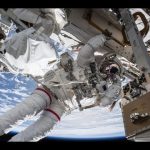
NASA astronauts Kayla Barron and Raja Chari conduct a spacewalk at the International Space Station (ISS) to assemble and install brackets and struts kits for upcoming solar array upgrades. The new ISS Roll-Out Solar Arrays, or iROSAs, will increase the space station’s total available power. So far, two of six iROSAs have been deployed on the station with four additional arrays to be delivered.
Barron will serve as extravehicular crewmember 1 (EV 1) and will wear a suit with red stripes. Chari will serve as extravehicular crewmember 2 (EV 2) and will wear a suit with no stripes. The spacewalk will be the second of Barron’s career and the first for Chari.
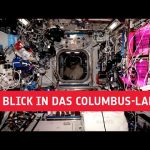
Join ESA astronaut Matthias Maurer on a tour of Columbus, Europe’s science laboratory on the International Space Station.
Cosmic Kiss is Matthias’s first mission to the Space Station and the Columbus module is one of his main workplaces. It is also where he sleeps in his crew quarters known as CASA.
Columbus is Europe’s largest contribution to the orbital outpost and the first European laboratory for permanent, multidisciplinary research in space. It houses 16 standardised payload cabinets, known as racks, which host laboratory equipment and technical systems. This allows the facility to support research across a wide range of different scientific disciplines.
Work focuses on materials science, fluid physics, chemistry, remote sensing, biology, biotechnology, medicine and human physiology, as well as technology demonstrations to aid innovation on Earth. Once installed by an astronaut, many of the experiments that happen in Columbus can be remotely controlled and monitored by User Support Operations Centres on the ground.
Matthias will live and work in orbit for approximately six months for his Cosmic Kiss mission. During this time, he will conduct and support more than 35 European and numerous other international experiments in microgravity.
We are Europe’s gateway to space. Our mission is to shape the development of Europe’s space capability and ensure that investment in space continues to deliver benefits to the citizens of Europe and the world. Check out https://www.esa.int/ to get up to speed on everything space related.
Are you curious to know how a telescope works? Join ESA astronomer Giovanna Giardino as she gives an insight into the inner workings of the world’s largest telescope in space, the extraordinary James Webb Space Telescope.
We are Europe’s gateway to space. Our mission is to shape the development of Europe’s space capability and ensure that investment in space continues to deliver benefits to the citizens of Europe and the world. Check out https://www.esa.int/ to get up to speed on everything space related.
The next commercial cargo mission to the space station, celebrating the first year of Perseverance on Mars, and the first science images from a recently launched mission … a few of the stories to tell you about – This Week at NASA!
Producer: Andre Valentine Editor: Sonnet Apple Music: Universal Production Music
0:00 Introduction
0:15 The Next Commercial Cargo Mission to the Space Station 0:44 Russian Spacecraft Delivers Cargo to Space Station 1:12 Perseverance Marks One Year on Mars 1:55 IXPE Sends First Science Image 2:33 New Sea Level Rise Projections for U.S. Communities
How did the universe go from a dark and cold place after the Big Bang, to the mesmerizing cosmos we see today? In this episode of Meet the Experts, ESA research fellow Rachana Bhatawdekar takes us on a tour of the early universe, to discover how the very first stars and galaxies were born after the Big Bang.
We are Europe’s gateway to space. Our mission is to shape the development of Europe’s space capability and ensure that investment in space continues to deliver benefits to the citizens of Europe and the world. Check out https://www.esa.int/ to get up to speed on everything space related.
Fine-tuning the James Webb Space Telescope, a different view of Venus, and the science on an upcoming space station resupply mission … a few of the stories to tell you about – This Week at NASA!
Producer: Andre Valentine Editor: Sonnet Apple Music: Universal Production Music
0:00 Introduction 0:13 Aligning the James Webb Space Telescope 1:02 Parker Solar Probe’s First Visible Light Images of Venus’ Surface 1:34 Upcoming Commercial Resupply Mission to the Space Station 2:13 Airborne Science Mission Studying Snowstorms 2:45 RS-25 Engine Test Series Continues
🚩 Install Friends & Dragons for free 🐲 iOS/Android: https://fndga.me/3sdwp9g and get a special bonus pack 🏵 👇 Push down for more cool stuff 👇
🚩 This video was produced in collaboration with Bulgarian Empire Mapping, check out their channel and give them the credit that they deserve! https://www.youtube.com/channel/UCD-0LPbxri4fSvd0UoisIfg – Big shout to BEM for collaborating with us on this video!
Embark on a mission with ESA astronomers Mark McCaughrean and Giovanna Giardino to learn more about the James Webb Space Telescope and the early Universe. This programme is suitable for primary and secondary students. Join the quest!
We are Europe’s gateway to space. Our mission is to shape the development of Europe’s space capability and ensure that investment in space continues to deliver benefits to the citizens of Europe and the world. Check out https://www.esa.int/ to get up to speed on everything space related.
The Webb Space Telescope reaches its new home, remembering our fallen heroes, and testing a VIPER in the sand … a few of the stories to tell you about – This Week at NASA!
🚩 Thanks to Curiosity Stream for sponsoring today’s video. Go to https://curiositystream.thld.co/historymarche_0122 and use code HISTORYMARCHE to save 25% off today, that’s only $14.99 a year. 👇 Push down for more cool stuff 👇
🚩 After Rome’s destruction of Carthage in 146 BC, the Carthaginian libraries were given to the kings of Numidia, but Mago’s work was considered too important to lose. It was brought to Rome and Decimus Junius Silanus was commissioned by the Roman Senate to translate it into Latin – but the Punic and Latin versions of the texts were eventually lost. However, it was Cassius Dionysius of Utica, an ancient North African writer on botany and medicinal substances, who became best known for his Greek translation of the great 28-volume treatise on agriculture, written by the Carthaginian Mago…
🚩 Offset your carbon footprint on Wren: https://www.wren.co/start/historymarche The first 100 people who sign up will have 10 extra trees planted in their name! 👇 Push down for more cool stuff 👇
Kremydi S., 2015. «Coinage and Finance» in Fox R.L., (ed.), Brill’s Companion to Ancient Macedon: Studies in the Archaeology and History of Macedon, 650 BC – 300 AD, Brill,Leiden – Boston, 159-178.
Mackay C.S., 2013. Ancient Rome. Political and Military History. Papadimas Publications,Athens.
Millett P., 2010. «The Political Economy of Macedonia» in Worthington, I., Roisman, J.,(eds.) 2010. A Companion to Ancient Macedonia. Wiley – Blackwell, John Wiley &Sons Ltd, London, 472-504.
Milns R.D., 1999. «The Eects of Alexander’s Campaigns on Food Prices», Ancient Mace-donia VI, Institute for Balkan Studies, Thessaloniki, 763-769.
Petropoulou A., 2010. «From Alexander to the Roman period» in Hellenic History. Νο.3,Collection from the newspaper ‘’I Kathimerini”, Athens, 7-75.
Price M.J., 1989. The coinage in the name of Alexander the Great and Philip Arrhidaeus. London.
RegerG., 2003. «TheEconomy», inErskineA., (ed.), A Companion to the Hellenistic World. Wiley – Blackwell, Oxford, 331-353.
Shipley G., 2000. The Greek World after Alexander 323-30 BC, London.
Touratsoglou I., 2010. Contribution to the economic history of the ancient Macedonian king-dom (6th-3rd c. B.C.), Athens
Walbank F.W., 1984. «Macedonia and the Greek Leagues» in Walbank F.W., Astin A.E.,Frederiksen M.W., Ogilvie R.M., (eds.), The Cambridge Ancient History. vl 7, pt 1. The Hellenistic World2, Cambridge University Press, 446-473.
Xydopoulos I., 2006. Social and Political Interactions between Macedonians and other Greeks. Society for Macedonian Studies, Thessaloniki.
Xydopoulos I., 2012. «Macedonia in the Hellenistic period», in Drougou S., Touratsoglou I.,(eds.), Topics on Hellenistic pottery in ancient Macedonia. Athens, 22-35
Plutarch 7. Lives VII. Demosthenes and Cicero. Alexander and Caesar
🚩 Install Raid for Free ✅ IOS/ANDROID/PC: https://pl.go-ga.me/8ka966fk and get a special starter pack 💥 Available only for the next 30 days 👇 Push down for more cool stuff 👇
🚩 This video was produced in collaboration with Medievalists.net, the best place to learn about the Middle Ages for FREE. Enjoy expertly written news, articles and videos – Medievalist.net is where the Middle Ages begin! https://www.medievalists.net/
Why can you see the Moon during the day? Easy, because it’s there! It may seem odd to look up at the daytime sky and see the Moon but it’s perfectly natural. Planetary geologist Sarah Noble breaks it down so you know when to look up. Follow more Moon science: http://www.nasa.gov/moon
Producers: Jessica Wilde & Scott Bednar Editor: Seth Robinson
By studying X-rays in deep space, we can learn about some of the most violent and extreme objects in the universe, such as black holes and the remains of stars that have exploded. NASA’s Imaging X-Ray Polarimetry Explorer, IXPE, will study these phenomena in a new way. Learn more in this episode of #EZScience, starring NASA associate administrator for science Dr. Thomas Zurbuchen and Smithsonian Under Secretary for Science and Research Dr. Ellen Stofan.
IXPE is set to launch Dec. 9 at 1:00 a.m. EST (06:00 UTC) from NASA’s Kennedy Space Center. Watch the live broadcast: https://youtu.be/JGij0x0PA_Q
The world’s next generation cosmic observatory, the James Webb Space Telescope, is due for launch on an Ariane 5 from Europe’s Spaceport in French Guiana in late December.
Developed and constructed over more than 30 years, Webb is a remarkable feat of engineering and technology – with the largest astronomical mirror ever flown in space, sophisticated new scientific instruments, and a sunshield the size of a tennis court.
Webb is an international partnership between @NASA, ESA and the @Canadian Space Agency and will reveal the Universe in a whole new light. Optimised for infrared wavelengths, its detectors will be able to look back to shortly after the very dawn of time, revealing the formation of the first galaxies, as well as study stars and planets in our own Milky Way.
We are Europe’s gateway to space. Our mission is to shape the development of Europe’s space capability and ensure that investment in space continues to deliver benefits to the citizens of Europe and the world. Check out https://www.esa.int/ to get up to speed on everything space related.
Weather permitting, NASA TV will air a view of the Dec. 4, 2021, total solar eclipse from Union Glacier, Antarctica. The stream will start at 1:30 a.m. EST (06:30 UTC) and end at 3:37 a.m. EST (08:47 UTC). Totality begins at 2:44 a.m. EST (07:44 UTC).
This stream is provided courtesy of Theo Boris and Christian Lockwood of the JM Pasachoff Antarctic Expedition.
🚩 Install Raid for Free ✅ IOS/ANDROID/PC: https://clcr.me/Nov_HistoryMarche and get a special starter pack 💥 Available only for the next 30 days 👇 Push down for more cool stuff 👇
🚩 This video was produced in collaboration with my friend Hoc Est Bellum https://www.youtube.com/channel/UCl5m12RUvypT4e7w-mWrzsA I’m very happy to be working together on a new series with Hoc Est Bellum! Check out his channel and give him the credit that he deserves.
The launch of our first planetary defense test mission, a new docking module for the space station, and shielding the Orion spacecraft from the heat … a few of the stories to tell you about – This Week at NASA!
Asteroids, comets, and meteors: what’s the difference? These space rocks each have their own unique attributes. But differences aside, these fascinating objects are all worthy of study. Just ask @NASA Jet Propulsion Laboratory scientist Ryan Park and he’ll agree.
Meet Hera, our very own asteroid detective. Together with two CubeSats – Milani the rock decoder and Juventas the radar visionary – Hera is off on an adventure to explore Didymos, a double asteroid system that is typical of the thousands that pose an impact risk to planet Earth.
Suitable for kids and adults alike, this episode tells the story of the discovery of asteroids, in ‘The Curious Case of the Missing Planet’. Astronomers in the 18th century were sure there was a planet in the wide gap between Mars and Jupiter – and even formed a group called the Celestial Police to find it. But eventually it became clear there was no single world out there, just lots and lots of little ones. Fast forward to today and more than a million asteroids have been discovered, and Hera will perform close-up detection on two of them.
We are Europe’s gateway to space. Our mission is to shape the development of Europe’s space capability and ensure that investment in space continues to deliver benefits to the citizens of Europe and the world. Check out https://www.esa.int/ to get up to speed on everything space related.
The space station crew is safe following a debris event, our recently returned Crew-2 astronauts discuss their mission, and what our Crew-1 astronauts did in Washington … a few of the stories to tell you about – This Week at NASA!
🚩 The divergent evolution of the Norse world from the 11th century onwards was, above all, influenced by each country’s geopolitical limitations. This explains the different stages of military Europeanisation that each region attained up to the late twelfth century. Changes in warfare, initially obtained through imitation, slowly started to show growing regional differences from around 1200 AD onwards, a phenomenon mainly fuelled by the disparate conquest interests of the Scandinavian kingdoms.
The Vice President checks out new Earth Science work, two decades and counting of continuous human presence in space, and 29 days on the edge for the Webb Space Telescope team … a few of the stories to tell you about – This Week at NASA!
When was the last time an asteroid hit Earth? Small asteroids and other tiny particles bombard our planet daily, but almost all of them burn up safely in the atmosphere. Bigger impacts are extremely rare, but scientists like Marina Brozovic are keeping their eyes on the sky.
Satellites play a vital role in monitoring the rapid changes taking place in the Arctic. Tracking ice lost from the world’s glaciers, ice sheets and frozen land shows that Earth is losing ice at an accelerating rate. Currently more than a trillion tonnes of ice is lost each year. The sooner Earth’s temperature is stabilised, the more manageable the impacts of ice loss will be.
Credit: ESA/Planetary Visions
★ Subscribe: http://bit.ly/ESAsubscribe and click twice on the bell button to receive our notifications.
We are Europe’s gateway to space. Our mission is to shape the development of Europe’s space capability and ensure that investment in space continues to deliver benefits to the citizens of Europe and the world. Check out https://www.esa.int/ to get up to speed on everything space related.