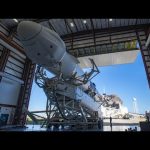
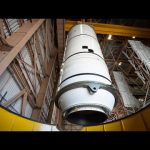
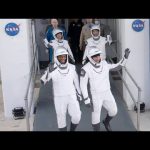
The release of NASA’s budget request, a new set of Earth-focused missions, and new research findings about Jupiter’s moon Europa … a few of the stories to tell you about – This Week at NASA!
We are Europe’s gateway to space. Our mission is to shape the development of Europe’s space capability and ensure that investment in space continues to deliver benefits to the citizens of Europe and the world. Check out https://www.esa.int/ to get up to speed on everything space related.
NASA spacecraft deliver stunning visual imagery of the cosmos, but we can also experience that data by turning it into sound. Kim Arcand at the Chandra X-Ray Observatory has helped develop many different sonifications including from galaxies, black holes, nebulae and more. Kim chats with NASA’s Chief Scientist Jim Green about her process of choosing instruments to represent different kinds of light, and plays a few examples of these cosmic sounds. Kim developed these sonifications in collaboration with astrophysicist Matt Russo and musician Andrew Santaguida, both of the SYSTEM Sound project. Check out the full series of sonifications at chandra.si.edu/sound and listen to the rest of this Gravity Assist podcast episode at nasa.gov/gravityassist.
We are Europe’s gateway to space. Our mission is to shape the development of Europe’s space capability and ensure that investment in space continues to deliver benefits to the citizens of Europe and the world. Check out https://www.esa.int/ to get up to speed on everything space related.
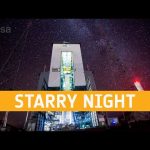
This timelapse was filmed under the stars on the Ariane 6 launch base at Europe’s Spaceport in French Guiana.
Preparations are under way for the arrival of Ariane 6, Europe’s next-generation launch vehicle. Imagine yourself stepping out of the launcher assembly building or standing on the launch pad in front of the 90-metre high mobile gantry, to look at the stars.
Ariane 6, developed by ESA, has two versions depending on the required performance. This rocket will be capable of a wide range of missions to guarantee independent access to space for Europe and continue four decades of the Ariane adventure.
Credits: ESA – @CNES – @arianespace
★ Subscribe: http://bit.ly/ESAsubscribe and click twice on the bell button to receive our notifications.
We are Europe’s gateway to space. Our mission is to shape the development of Europe’s space capability and ensure that investment in space continues to deliver benefits to the citizens of Europe and the world. Check out https://www.esa.int/ to get up to speed on everything space related.
A record-breaking spaceflight for the Crew-1 mission, swearing-in NASA’s new administrator, and the anniversary of the first American in space … a few of the stories to tell you about – This Week at NASA!
Confirming the nomination of NASA’s next administrator, an update on a commercial crew mission, and remembering a spaceflight pioneer … a few of the stories to tell you about – This Week at NASA!
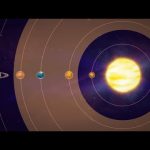
There’s a helpful concept we use to help understand what distance from a given star you might expect to find planets with liquid water on their surface – liquid water being essential for life as we know it. It’s called the habitable zone. Every star has a habitable zone, but where that zone lies is different for stars of different sizes and brightness.
The next commercial crew mission to the space station, a historic milestone on Mars, and a hearing to confirm NASA’s next administrator … a few of the stories to tell you about – This Week at NASA!
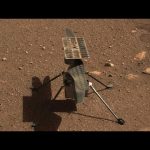
Up, up, and away! The Ingenuity #MarsHelicopter is set to make history. It will make the first attempt at powered flight on another planet on Monday, April 19. Don’t miss your chance to watch live with helicopter team in mission control beginning at 6:15 a.m. EDT (10:15 a.m. UTC) as they receive the data and find out if they were successful.
We’re doing science at 17,500 miles per hour! The International Space Station is a state-of-the-art microgravity laboratory that is unlocking discoveries not possible on Earth, and helping us push farther into deep space. We’re testing technologies that are critical to our return to the Moon and great leap to Mars. Station research has contributed to medical and social benefits on our home planet, allowing us to find new ways to combat disease back on Earth, and develop technologies to deliver clean water to remote communities in need. We’re inspiring future generations, from a platform that is one of the largest international collaborations of our time.
The President’s funding request for NASA, preparing for first flight on another world, and a new crew heads to the space station … a few of the stories to tell you about – This Week at NASA!
NASA trailblazer and “Hidden Figure”, Mary W. Jackson was born April 9, 1921 in Hampton, VA. Despite segregation and difficult odds, she became the first black female engineer at NASA.
Jackson began her career with the agency in the segregated West Area Computing Unit of NASA’s Langley Research Center in Hampton, Virginia. The mathematician and aerospace engineer went on to lead programs influencing the hiring and promotion of women in NASA’s science, technology, engineering, and mathematics careers. In 2019, she was posthumously awarded the Congressional Gold Medal.
Firing up the rocket for the Artemis Moon missions, a nomination for NASA’s next administrator, and making room for the space station’s next crew … a few of the stories to tell you about – This Week at NASA!
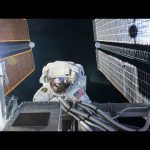
Slip into the weekend while cheering on two astronauts working in the vacuum of space! At 7 a.m. EST on Friday, Mar. 5, Kate Rubins of NASA and Soichi Noguchi of JAXA (Japan Aerospace Exploration Agency) will exit the International Space Station to vent ammonia from the Early Ammonia System and complete several other tasks outside the orbital lab.
Once their spacesuits are switched to battery power, the spacewalk is scheduled to last approximately six-and-a-half hours.
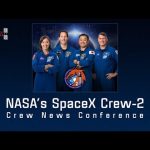
Watch a live Q&A with the next four astronauts launching to the International Space Station aboard the SpaceX Crew Dragon! NASA astronauts Shane Kimbrough and Megan McArthur will serve as spacecraft commander and pilot, respectively, for the mission. JAXA (Japan Aerospace Exploration Agency) astronaut Akihiko Hoshide and ESA (European Space Agency) astronaut Thomas Pesquet will serve as mission specialists.
NASA’s SpaceX Crew-2 mission is currently set for liftoff no earlier than April 20, atop a Falcon 9 rocket from Launch Complex 39A at our Kennedy Space Center in Florida. This will be Kimbrough’s third trip to space, McArthur’s second, Pesquet’s second, and the third spaceflight for Hoshide.
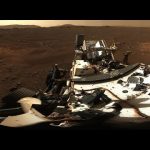
Take a guided tour around the first high-definition 360-degree view of Jezero Crater provided by NASA’s Perseverance Mars Rover. Mission experts will walk us through the new Martian terrain, explain why it’s got scientists excited, and answer your questions. The image shows the crater rim and cliff face of the ancient river delta in the distance. The camera system can reveal details as small as 3 to 5 millimeters across near the rover and 2 to 3 meters across in the distant slopes along the horizon.
Speakers: • Jim Bell — Mastcam-Z principal investigator, Arizona State University • Elsa Jensen — Mastcam-Z uplink lead, Malin Space Science Systems • Kjartan Kinch — Mastcam-Z calibration target lead, Niels Bohr Institute of The University Of Copenhagen #CountdownToMars
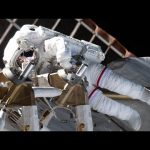
Early riser? Watch two humans work in the vacuum of space on Sunday, Feb. 28! NASA astronauts Kate Rubins and Victor Glover will exit the orbital lab’s Quest airlock at about 6 a.m. EST to begin assembling and installing modification kits required for upcoming solar array upgrades.
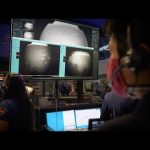
Now that our Perseverance Mars Rover successfully landed on the Red Planet after a nearly seven-month journey, mission experts will talk about the robotic scientist’s touchdown in the most challenging terrain on Mars ever targeted.
Perseverance, which launched July 30, 2020, will search for signs of ancient microbial life, collect carefully selected rock and regolith (broken rock and dust) samples for future return to Earth, characterize Mars’ geology and climate, and pave the way for human exploration beyond the Moon.
Tune in to watch a live broadcast from the Von Karman Auditorium at NASA’s Jet Propulsion Laboratory.
Install Raid for Free ✅ IOS/ANDROID/PC: https://clcr.me/Feb_HistoryMarche and get a special starter pack 💥 Available only for the next 30 days 👇 Push down for more cool stuff 👇
This video is dedicated to my patrons who chose the topic for this video. As a way to thank you, I devoted more time than I normally do to researching and writing the narrative that totals at around 50-55 minutes in duration. Thank you for supporting my work!
We continue where we left off in Part 1 (https://youtu.be/f6H9APJixoo). In early 451 AD Attila invades the Western Roman Empire with the intent of taking over Gaul…
Spanning missions from Apollo to Artemis, “The Power of African American Leadership in NASA” will look at how African Americans in leadership roles have influenced change and helped drive mission success through lessons learned and discussions shared by current and past NASA leaders. The panel discussion, moderated by NASA associate administrator for Small Business Programs Glenn Delgado, will feature:
• Brenda Manuel, retired NASA associate administrator for Diversity and Equal Opportunity • Clayton Turner, director, NASA’s Langley Research Center • Hildreth (Hal) Walker Jr., NASA “Hidden Figure,” who led the manufacturing, testing, and operation of the KORAD K-1500 ruby laser system for the lunar laser ranging experiment as part of the Apollo 11 Moon landing • Dr. Woodrow Whitlow, retired NASA associate administrator for Mission Support • Vanessa Wyche, deputy center director, NASA’s Johnson Space Center
From the @Airbus integration halls in Bremen, Germany, this replay of a live event shows a sneak peek of the two European Service Modules that will power astronauts to the Moon and back as part of @NASA’s Orion spacecraft.
Orion is NASA’s next exploration spacecraft to send astronauts farther into space than ever before, beyond the Moon to asteroids and even Mars.
ESA has contracted and is overseeing the development of the European Service Module, the part of the Orion spacecraft that provides air, electricity and propulsion. Much like a train engine pulls passenger carriages and supplies power, the European Service Module will power the Orion crew module to its destination and back to Earth.
The programme includes Andreas Hammer, Head of @Airbus Defence and Space Exploration showing the European Service Modules in production, ESA Director General Jan Wörner announcing future developments, a statement by ESA’s head of European Service Module programme Philippe Deloo, a statement by Airbus head of European Service Module programme Didier Radola, a Moon missions overview with ESA astronaut Alexander Gerst and ESA’s head of Space Transportation Nico Dettmann on how ESA is building Orion with industry.
★ Subscribe: http://bit.ly/ESAsubscribe and click twice on the bell button to receive our notifications.
We are Europe’s gateway to space. Our mission is to shape the development of Europe’s space capability and ensure that investment in space continues to deliver benefits to the citizens of Europe and the world. Check out https://www.esa.int/ to get up to speed on everything space related.
🎄❄️ Watch thousands of high quality documentaries on CuriosityStream: https://curiositystream.thld.co/historymarchejan2021 and use the code: HISTORYMARCHE when you sign up to get 30 days of FREE unlimited access. 👇 Push down for more cool stuff 👇
This video is dedicated to my patrons who chose the topic for this video. As a way to thank you, I devoted more time than I normally do to researching and writing the narrative that totals at around 50-55 minutes in duration. Thank you for supporting my work!
The Battle of Catalaunian Fields was one of most enthralling military engagements in history. Doing research on this topic was amazingly fun. I highly recommend you check out the sources I used for this video, and give them the credit that they deserve. It’s thanks to them that we get to learn about these battles in such amazing detail.
The first space station spacewalk of the new year, a new date for a commercial crew test flight, and our next landing on Mars is fast approaching … a few of the stories to tell you about – This Week at NASA!
An update on the recent Green Run hot fire test, preflight preparations continue with the Orion spacecraft, and a new view of small solar structures … a few of the stories to tell you about – This Week at NASA!
The annual assessment of global temperatures, a first-of-its-kind undocking from the space station, and a look at what goes into the Green Run hot fire test … a few of the stories to tell you about – This Week at NASA!
❄️ Brave the freezing darkness of Conqueror’s Blade Season VI with a FREE 7-day Premium Account! https://patron.me/Marche-CBVI ❄️
👇 Push down for more cool stuff 👇
Ever wonder what it’s like to see our planet from space? NASA’s astronauts will take you on a journey to the International Space Station, exploring the life-changing experience of an orbital perspective. View Earth as you’ve never seen it before: through the eyes of an astronaut.
Sending the first Artemis mission to the Moon in preparation for human missions, landing a new rover on Mars, and launching the James Webb Space Telescope into space, expanding our ability to see deep into the universe, are just a few of the things NASA has planned for 2021.
To learn more about the missions mentioned in this video, take a deep dive into these links:
The International Space Station is one of the most ambitious international collaborations ever attempted, and is a convergence of science, technology and human innovation that provides humanity a one-of-a-kind proving ground for Artemis as we go forward to the Moon and on to Mars. International collaboration in space exploration serves as an unparalleled and inspiring example of what humanity can do when it comes together to achieve a common goal for the common good. NASA’s partnerships with the Canadian Space Agency, European Space Agency, Japan Aerospace Exploration Agency, and Roscosmos aboard the space station have led to an unprecedented continuous human presence in space for nearly 20 years.
In recognition of the 20th anniversary of continuous human presence aboard the International Space Station, listen as Space Foundation Board Member Jeanne Meserve sits down the International Space Station partner leaders as they discuss what it has taken to keep this global partnership successful. Joining the conversation is the International Space Station Partner Leadership consisting of Joel Montalbano of the National Aeronautics and Space Administration, Sergei Krikalev of Roscosmos, Luc Dubé of the Canadian Space Agency, Frank De Winne of the European Space Agency, and Junichi Sakai of the Japanese Aerospace Exploration Agency.
The Vice President introduces the Artemis team of astronauts, progress on hardware for upcoming Artemis missions, and the science priorities for our next human mission on the Moon … a few of the stories to tell you about – This Week at NASA!
What progress have we made on returning to the Moon to build a sustainable human presence there? Tune in starting at 12:30pm ET, Wed., Dec. 9 for the eighth meeting of the National Space Council, including a news update from Vice President Pence and NASA Administrator Jim Bridenstine on our Artemis program to send the first woman and next man to the Moon by 2024. The National Space Council advises the president on America’s space policy and strategy and reviews the nation’s long-range goals for space activities.
At NASA, we have always answered the innate call to explore and our achievements have changed the course of history. Now, we’re returning to the Moon under the Artemis program to learn to live and work on another world for the benefit of humanity.
NASA has selected an initial team of astronauts – the Artemis Team – to help pave the way for our next human missions on and around the Moon. The Artemis program includes sending the first woman and next man to walk on the lunar surface. Let’s meet the team!
Critical cargo on the next space station resupply mission, NASA is at a virtual Earth and space science meeting, and a key piece of hardware installed on the Orion spacecraft … a few of the stories to tell you about – This Week at NASA!
Few conflicts have rivaled the scale and destruction of the Punic wars fought between Rome and Carthage. In this first episode I set the stage for a conflict that will reshape history!
Sources:
“The Fall of Carthage” by Adrian Goldsworthy
“In the Name of Rome” by Adrian Goldsworthy
“The Rise of Rome” by Anthony Everitt
The gameplay comes from Total War: Rome 2
“Please note this is an unofficial video and is not endorsed by SEGA or the Creative Assembly in any way. For more information on Total War, please visit www.totalwar.com.”
Making ready for the first Artemis mission around the Moon and back, the space station is getting a new doorway to space, and how to know when and where you can look up to spot the station … a few of the stories to tell you about – This Week at NASA!
The journey of Resilience to the space station, the next ocean-observing satellite, and an update on a critical rocket test series for our Artemis missions … a few of the stories to tell you about – This Week at NASA!
Download link: images-assets.nasa.gov/video/The Journey of Resilience to The Space Station on This Week @NASA – November 21 2020/The Journey of Resilience to The Space Station on This Week @NASA – November 21 2020~orig.mp4
Producer: Andre Valentine
Editor: Sonnet Apple
Music: Universal Production Music
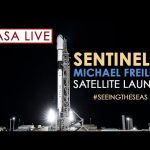
We’re sending the Sentinel-6 Michael Freilich satellite to space to collect the most accurate data yet on global sea level and how our oceans are rising in response to climate change. This #SeeingTheSeas mission, a historic U.S.-European partnership, will launch from Vandenberg Air Force Base in California aboard a SpaceX Falcon 9 rocket at 12:17 p.m. EST (9:17 a.m. PST, 5:17 p.m. UTC).
The satellite, and its twin Sentinel-6B, is jointly developed by ESA (European Space Agency), the European Organisation for the Exploitation of Meteorological Satellites (EUMETSAT), NASA, and the National Oceanic and Atmospheric Administration (NOAA), with funding support from the European Commission and support from France’s National Centre for Space Studies (CNES). Sentinel-6 Michael Freilich is named in honor of the former director of NASA’s Earth Science Division, who was instrumental in advancing space-based ocean measurements.