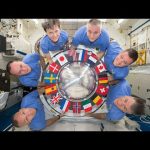
How do we know the Earth isn’t flat? For thousands of years people have known the Earth is round. Ancient civilizations used the stars and shadows to figure it out. Mariners confirmed it by sailing around the globe. And when the space age began, we saw it with our own eyes — the Earth is round!
A NASA scientist explains how we’ve known for centuries that our planet is a sphere.
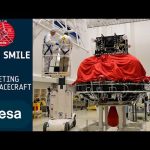
Smile is a brand-new space mission currently in the making. It will study space weather and the interaction between the solar wind and Earth’s magnetic environment.
At the European Space Agency’s technical heart in the Netherlands, engineers have spent the last five months unboxing and testing different elements of the spacecraft, and joining the two main parts together. Due to launch by the end of 2025, Smile is now well on its way to being ready for space.
This video provides a glimpse into what we’ve been up to recently. It is the second episode in a series of short videos, and includes interviews with Adriana González Castro (ESA Smile Project Controller), Walfried Raab (ESA Smile Lead Payload Engineer), Sylvain Vey (ESA Smile Instrument and Operations Interface Engineer), Li Jing (CAS Smile Project Manager), Benjamin Vanoutryve (Smile AIT/AIV and Launcher Interface Principal Engineer), and José Ignacio Maestra Onteniente (Airbus Smile AIT Manager).
Credit: ESA/Lightcurve Films
Acknowledgment: Direction, main camera, sound, editing, post-production by Lightcurve Films. Original music by William Zeitler. Drone footage is by The Postboat Dronedepartment.
★ Subscribe: http://bit.ly/ESAsubscribe and click twice on the bell button to receive our notifications.
We are Europe’s gateway to space. Our mission is to shape the development of Europe’s space capability and ensure that investment in space continues to deliver benefits to the citizens of Europe and the world. Check out https://www.esa.int/ to get up to speed on everything space related.
Steve Spangler is a bestselling author, STEM educator and Emmy award-winning television personality with more than 2,100 television appearances to his credit. Steve appeared as a regular guest on the Ellen DeGeneres Show from 2007-2022 (27 appearances).
Watch Intuitive Machines’ Nova-C Moon lander and NASA’s Lunar Trailblazer lift off on a SpaceX Falcon 9 rocket from NASA’s Kennedy Space Center in Florida. IM-2 is scheduled to launch at 7:16 p.m. EST (0016 UTC Feb. 27).
The lander, named Athena, will carry NASA science and technology to the Moon’s surface. Athena will orbit the Moon for approximately three days before landing at Mons Mouton, a lunar plateau near the Moon’s South Pole.
The NASA tech aboard the lander will demonstrate resource utilization on the Moon by measuring the possible presence of volatiles or gases from lunar soil and give future spacecraft a permanent reference point on the lunar surface.
Launching as a rideshare with the IM-2 delivery, NASA’s Lunar Trailblazer spacecraft also will begin its journey to lunar orbit, where it will map the distribution of the different forms of water on the Moon.
This is Intuitive Machines’ second launch to the Moon as part of NASA’s Commercial Lunar Payload Services (CLPS) initiative. To learn more about CLPS, visit https://go.nasa.gov/3RFR0A5.
Steve Spangler is a bestselling author, STEM educator and Emmy award-winning television personality with more than 2,100 television appearances to his credit. Steve appeared as a regular guest on the Ellen DeGeneres Show from 2007-2022 (27 appearances).
NASA’s SPHEREx and PUNCH missions are set to launch together, with one mission aiming to answer big-picture questions about our universe and the other seeking a better understanding of our Sun.
SPHEREx (Spectro-Photometer for the History of the Universe, Epoch of Reionization and Ices Explorer) is an infrared space telescope designed to map the entire sky like none before it. SPHEREx will study the origins of the universe, galaxies, and the ingredients for life in our galaxy.
PUNCH (Polarimeter to Unify the Corona and Heliosphere) is a constellation of four small satellites dedicated to studying the Sun’s outer atmosphere, the solar corona, and how it extends into space to form the solar wind. Understanding these processes is critical to predicting space weather and its impact on Earth’s magnetic field.
Together, SPHEREx and PUNCH demonstrate NASA’s commitment to uncovering the fundamental forces that shape our universe and our own star.
Steve Spangler is a bestselling author, STEM educator and Emmy award-winning television personality with more than 2,100 television appearances to his credit. Steve appeared as a regular guest on the Ellen DeGeneres Show from 2007-2022 (27 appearances).
Listen to the ESA/JAXA BepiColombo spacecraft as it flew past Mercury on 8 January 2025. This sixth and final flyby used the little planet’s gravity to steer the spacecraft on course for entering orbit around Mercury in 2026.
What you can hear in the sonification soundtrack of this video are real spacecraft vibrations measured by the Italian Spring Accelerometer (ISA) instrument. The accelerometer data have been shifted in frequency to make them audible to human ears – one hour of measurements have been sped up to one minute of sound.
BepiColombo is always shaking ever so slightly: fuel is slightly sloshing, the solar panels are vibrating at their natural frequency, heat pipes are pushing vapour through small tubes, and so forth. This creates the eerie underlying hum throughout the video.
But as BepiColombo gets closer to Mercury, ISA detects other forces acting on the spacecraft. Most scientifically interesting are the audible shocks that sound like short, soft bongs. These are caused by the spacecraft responding to entering and exiting Mercury’s shadow, where the Sun’s intense radiation is suddenly blocked. One of ISA’s scientific goals is to monitor the changes in the ‘solar radiation pressure’ – a force caused by sunlight striking BepiColombo as it orbits the Sun and, eventually, Mercury.
The loudest noises – an ominous ‘rumbling’ – are caused by the spacecraft’s large solar panels rotating. The first rotation occurs in shadow at 00:17 in the video, while the second adjustment at 00:51 was also captured by one of the spacecraft’s monitoring cameras.
Faint sounds like wind being picked up in a phone call, which grow more audible around 30 seconds into the video, are caused by Mercury’s gravitational field pulling the nearest and furthest parts of the spacecraft by different amounts. As the planet’s gravity stretches the spacecraft ever so slightly, the spacecraft responds structurally. At the same time, the onboard reaction wheels change their speed to maintain the spacecraft’s orientation, which you can hear as a frequency shift in the background.
This is the last time that many of these effects can be measured with BepiColombo’s largest solar panels, which make the spacecraft more susceptible to vibrations. The spacecraft module carrying these panels will not enter orbit around Mercury with the mission’s two orbiter spacecraft.
The video shows an accurate simulation of the spacecraft and its route past Mercury during the flyby, made with the SPICE-enhanced Cosmographia spacecraft visualisation tool. The inset that appears 38 seconds into the video shows real photographs taken by one of BepiColombo’s monitoring cameras.
We are Europe’s gateway to space. Our mission is to shape the development of Europe’s space capability and ensure that investment in space continues to deliver benefits to the citizens of Europe and the world. Check out https://www.esa.int/ to get up to speed on everything space related.
Steve Spangler is a bestselling author, STEM educator and Emmy award-winning television personality with more than 2,100 television appearances to his credit. Steve appeared as a regular guest on the Ellen DeGeneres Show from 2007-2022 (27 appearances).
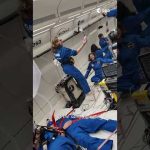
We know how microgravity impacts the brain thanks to astronauts on the ISS, but what about life on the Moon or Mars? Future explorers will also face hypoxia—low oxygen levels—which could affect their brain function and decision-making.
A team of students is tackling this challenge by conducting zero-gravity flight experiments to study how the brain responds to both microgravity and hypoxia. Their research could help improve astronaut safety for future lunar and Martian missions, ensuring they can explore safely beyond their spacecraft.
Could this be a key step in preparing humans for deep space exploration? Let us know your thoughts in the comments!
📹 ESA – European Space Agency 📸 ESA – European Space Agency
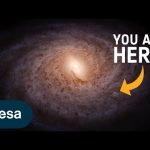
This is a new artist’s animation of our galaxy, the Milky Way, based on data from ESA’s Gaia space telescope.
Gaia has changed our impression of the Milky Way. Even seemingly simple ideas about the nature of our galaxy’s central bar and the spiral arms have been overturned. Gaia has shown us that it has more than two spiral arms and that they are less prominent than we previously thought. In addition, Gaia has shown that its central bar is more inclined with respect to the Sun. No spacecraft can travel beyond our galaxy, so we can’t take a selfie, but Gaia is giving us the best insight yet of what our home galaxy looks like. Once all of Gaia’s observations collected over the past decade are made available in two upcoming data releases, we can expect an even sharper view of the Milky Way.
We are Europe’s gateway to space. Our mission is to shape the development of Europe’s space capability and ensure that investment in space continues to deliver benefits to the citizens of Europe and the world. Check out https://www.esa.int/ to get up to speed on everything space related.
Teachers from all over the world gather to attend Science in the Rockies, a three day hands-on science workshop. Not only do they learn new cool science experiments to take back to their classrooms, but they have an experience they will never forget. Sharing ideas and concepts and building relationships with teachers from around the globe.
Steve Spangler is a bestselling author, STEM educator and Emmy award-winning television personality with more than 2,100 television appearances to his credit. Steve appeared as a regular guest on the Ellen DeGeneres Show from 2007-2022. Learn more about Steve at https://stevespangler.com/about-steve-spangler/
Did you know the Large Magellanic Cloud, one of our galaxy’s closest neighbors, survived a dramatic collision with the Milky Way’s gaseous halo? Despite losing most of its gas, the Large Magellanic Cloud is still forming new stars—a testament to its resilience! Thanks to Hubble Space Telescope, astronomers measured the Large Magellanic Cloud’s halo for the first time, revealing incredible insights about galaxy interactions.
📹 ESA – European Space Agency 📸 NASA, ESA, R. Crawford
Preparing to orbit and do science on the Moon, investigating how solar wind interacts with Mars, and demonstrating quiet supersonic flight are just a FEW of the milestones we have planned for 2025.
To learn more about the NASA missions mentioned in this highlight video, take a deep dive into these links:
🚩 If you like what you see, consider supporting my work on Patreon and you get ad-free early access to my videos for as little as $1 https://www.patreon.com/historymarche — You can also show your support by subscribing to the channel and liking the video. Thank you for watching.
📢 Narrated by David McCallion
🎼 Music: EpidemicSound Filmstro Storyblocks
Credits: Shield and Coat of Arms of the Holy Roman Emperor (c.1300-c.1400) – Heralder & Tom Lemmens (2013) https://en.m.wikipedia.org/wiki/File:Shield_and_Coat_of_Arms_of_the_Holy_Roman_Emperor_(c.1300-c.1400).svg
📚 Sources and citations: Battle on the Marchfeld – RNDr. et PhDr. Aleš Nováček, Ph.D. https://www.bellum.cz/en/battle-on-the-marchfeld.html Pavlac, Brian A. (2001). “Battle of Marchfeld (August 26, 1276)”. In Jeep, John M. (ed.). Routledge Revivals: Medieval Germany: An Encyclopedia. Routledge. Clauss, M. (2010). Rogers, Clifford J. (ed.). The Oxford Encyclopedia of Medieval Warfare and Military Technology: Volume I. Oxford: Oxford University Press. Oto Luthar – The Land Between: A History of Slovenia (2008) Wilson, Peter H. – Heart of Europe: A History of the Holy Roman Empire (2016) Karl-Friedrich Krieger: Rudolf of Habsburg. Darmstadt (2003)
Steve Spangler is a bestselling author, STEM educator and Emmy award-winning television personality with more than 2,100 television appearances to his credit. Steve appeared as a regular guest on the Ellen DeGeneres Show from 2007-2022. Learn more about Steve at https://stevespangler.com/about-steve-spangler/
In 2024, ESA continued to drive Europe’s innovation and excellence in space, equipping the continent with advanced tools and knowledge to address global and local challenges. The year saw pioneering missions, cutting-edge satellites and the pivotal restoration of Europe’s independent access to space.
The first Ariane 6 launch was perhaps ‘the’ highlight of the year but it was only one of many achievements. We saw the last Vega launch and then the return to flight of Vega-C, the more powerful, upgraded version carrying Sentinel-1C.
Far away in our Solar System, the ESA/JAXA BepiColombo spacecraft performed two Mercury flybys in 2024, needed so that it can enter orbit around Mercury in 2026. Juice also performed a crucial gravity assist, this time becoming the first spacecraft to conduct a Moon-Earth double flyby on its way to Jupiter.
Twenty years after ESA’s Rosetta was launched and 10 years since its historic arrival at the comet 67P/Churyumov-Gerasimenko, we launched another spacecraft to a small body, the Hera planetary defence mission to investigate asteroid Dimorphos.
2024 was an important year for Europe’s Galileo constellation which continued to expand with the launch of four new satellites and an updated Galileo ground system. The year also saw the launch of ESA’s Proba-3 mission: two precision formation-flying satellites forming a solar coronagraph to study the Sun’s faint corona.
In human spaceflight, Europe continues to contribute to science from the ISS as Andreas Mogensen’s Huginn mission continued into 2024. Andreas even met up in space with ESA project astronaut Marcus Wandt who was launched on his Muninn mission, making it the first time two Scandinavians were in space together.
Meanwhile the latest class of ESA astronauts completed basic training and graduated in April. Two of them, Sophie and Raphaël, were then assigned to long-duration missions to the ISS in 2026.
We made crucial steps for Europe in gaining access to the Moon: the inauguration of our LUNA facility with DLR, and the delivery of a third European Service Module for NASA’s Orion spacecraft as part of the Artemis programme.
Europe is also contributing to the international Lunar Gateway and developing and ESA lunar lander called Argonaut. These landers will rely on ESA Moonlight, the programme to establish Europe’s first dedicated satellite constellation for lunar communication and navigation.
As 2024 draws to a close, ESA’s achievements this year have reinforced Europe’s role in space. ESA’s journey continues to explore new frontiers, shaping the space landscape for generations to come.
Credits: ESA – European Space Agency
★ Subscribe: http://bit.ly/ESAsubscribe and click twice on the bell button to receive our notifications.
We are Europe’s gateway to space. Our mission is to shape the development of Europe’s space capability and ensure that investment in space continues to deliver benefits to the citizens of Europe and the world. Check out https://www.esa.int/ to get up to speed on everything space related.
Steve Spangler shows experiments you can do at home that prove the power of air pressure. This time, he gets an egg into, and out of a bottle with… fire?
Steve Spangler is a bestselling author, STEM educator and Emmy award-winning television personality with more than 2,100 television appearances to his credit. Steve appeared as a regular guest on the Ellen DeGeneres Show from 2007-2022. Learn more about Steve at https://stevespangler.com/about-steve-spangler/
Steve Spangler is a bestselling author, STEM educator and Emmy award-winning television personality with more than 2,100 television appearances to his credit. Steve appeared as a regular guest on the Ellen DeGeneres Show from 2007-2022. Learn more about Steve at https://stevespangler.com/about-steve-spangler/
Steve Spangler is a bestselling author, STEM educator and Emmy award-winning television personality with more than 2,100 television appearances to his credit. Steve appeared as a regular guest on the Ellen DeGeneres Show from 2007-2022. Learn more about Steve at https://stevespangler.com/about-steve-spangler/
This video takes the viewer on a journey that zooms through space to reveal the Tarantula Nebula.
Thousands of never-before-seen young stars are spotted in the stellar nursery called 30 Doradus, captured by the NASA/ESA/CSA James Webb Space Telescope. It is nicknamed the Tarantula Nebula for the appearance of its dusty filaments in previous telescope images, the nebula has long been a favourite for astronomers studying star formation. In addition to young stars, Webb reveals distant background galaxies, as well as the detailed structure and composition of the nebula’s gas and dust.
Credit: NASA, ESA, CSA, STScI, ESO, E. Slawik, N. Risinger, D. De Martin, D. Lennon, E. Sabbi, N. Bartmann, M. Zamani Music: tonelabs – Happy Hubble
Smile is the Solar wind Magnetosphere Ionosphere Link Explorer, a brand-new space mission currently in the making. It will study space weather and the interaction between the solar wind and Earth’s environment.
Unique about Smile is that it will take the first X-ray images and videos of the solar wind slamming into Earth’s protective magnetic bubble, and its complementary ultraviolet images will provide the longest-ever continuous look at the northern lights.
In this first of several short videos, David Agnolon (Smile Project Manager) and Philippe Escoubet (Smile Project Scientist) talk about the why and the how of Smile. You’ll see scenes of the building and testing of the spacecraft’s payload module by Airbus in Madrid, including the installation of one of the European instruments, the Soft X-ray Imager from the University of Leicester.
Smile is a 50–50 collaboration between the European Space Agency (ESA) and the Chinese Academy of Sciences (CAS). ESA provides the payload module of the spacecraft, which carries three of the four science instruments, and the Vega-C rocket which will launch Smile to space. CAS provides the platform module hosting the fourth science instrument, as well as the service and propulsion modules.
Credit: ESA/Lightcurve Films
Acknowledgements: Direction, main camera, sound, editing, post-production by Lightcurve Films. Original music by William Zeitler. Artwork shown in the video is by Eryka Isaak and CAS.
★ Subscribe: http://bit.ly/ESAsubscribe and click twice on the bell button to receive our notifications.
We are Europe’s gateway to space. Our mission is to shape the development of Europe’s space capability and ensure that investment in space continues to deliver benefits to the citizens of Europe and the world. Check out https://www.esa.int/ to get up to speed on everything space related.
Steve Spangler is a bestselling author, STEM educator and Emmy award-winning television personality with more than 2,100 television appearances to his credit. Steve appeared as a regular guest on the Ellen DeGeneres Show from 2007-2022. Learn more about Steve at https://stevespangler.com/about-steve-spangler/
Aurelia works on VR experiences that recreate locations in space.
Sometimes, her work takes her beyond the office. Recently, Aurelia attended Gamescom , the world’s biggest video game event, where her team showcased MUSE, a VR project she helped design!
Discover the first page of ESA Euclid’s great cosmic atlas and marvel at millions of stars and galaxies captured in pristine detail, in a huge 208-gigapixel mosaic. The mosaic covers an area of the Southern Sky more than 500 times the area of the full Moon as seen from Earth.
This video takes you through a rare sky dive. Starting from a vast cosmic panorama bedazzled by some 14 million galaxies, a series of ever-deeper zooms brings you to a crisp view of a swirling spiral galaxy, in a final image enlarged 600 times compared to the full mosaic.
Although the scenes are enticing, they are not taken for their beauty, but to help us advance our understanding of the cosmos. Many of the 14 million galaxies in the initial vista will be used to study the hidden influence of dark matter and dark energy on the Universe.
Unveiled as a teaser of the wide survey, the mosaic accounts for 1% of the area that Euclid will cover over six years, and was obtained by combining 260 observations collected in just two weeks.
This first chunk of Euclid’s survey was revealed on 15 October 2024 at the International Astronautical Congress in Milan, Italy, by ESA’s Director General Josef Aschbacher and Director of Science Carole Mundell.
————————————————— Copyright: ESA/Euclid/Euclid Consortium/NASA, CEA Paris-Saclay, image processing by J.-C. Cuillandre, E. Bertin, G. Anselmi; ESA/Gaia/DPAC; ESA/Planck Collaboration —————————————————
★ Subscribe: http://bit.ly/ESAsubscribe and click twice on the bell button to receive our notifications.
We are Europe’s gateway to space. Our mission is to shape the development of Europe’s space capability and ensure that investment in space continues to deliver benefits to the citizens of Europe and the world. Check out https://www.esa.int/ to get up to speed on everything space related.
“New things are possible—more things are possible—because we are going together. And we’re going together, as nations, now more than ever before.”
NASA Administrator Bill Nelson speaks to the power, the promise, and the potential of NASA’s international partnerships, and how those partnerships help humanity reach new possibilities.
Credit: NASA Producer: Shane Apple Music: Universal Production Music
Steve Spangler is a bestselling author, STEM educator and Emmy award-winning television personality with more than 2,100 television appearances to his credit. Steve appeared as a regular guest on the Ellen DeGeneres Show from 2007-2022. Learn more about Steve at https://stevespangler.com/about-steve-spangler/
This tiny satellite will study the surface of the asteroid Dimorphos up close, helping us learn more about asteroid deflection and space safety. With groundbreaking sensors and instruments, Milani is ready to explore this binary asteroid system alongside Hera and Juventas
Stay tuned for more on Hera’s thrilling mission!
📹 ESA – European Space Agency 📸 ESA/Science Office
Steve Spangler is a bestselling author, STEM educator and Emmy award-winning television personality with more than 2,100 television appearances to his credit. Steve appeared as a regular guest on the Ellen DeGeneres Show from 2007-2022. Learn more about Steve at https://stevespangler.com/about-steve-spangler/
Our Hera spacecraft will soon start its journey to the distant asteroid moon Dimorphos orbiting around its parent body Didymos.
One of the first features Hera will look for is the crater left on Dimorphos by its predecessor mission DART, which impacted the asteroid to deflect its orbit.
Yet, more recent impact simulations suggest no crater will be found. The DART impact is likely to have remodelled the entire body instead – a significant finding for both asteroid science and planetary defence.
In this last episode of the Young Professional Satellite docu series, we follow the team’s last steps to make their dream come true: sending their satellite to space.
After securing the crucial final assembly and battery connection, we take you inside the thermal vacuum tests (TVAC) to see how YPSat is tested under the extreme temperatures of space; through vibration tests to ensure its structural integrity during launch; and electromagnetic compatibility (EMC) tests to prevent interference with the launcher’s systems.
As we approach the European Space Agency’s traditional Flight Acceptance Review, the satellite is officially certified for flight. With the integration complete and final battery charge applied, control is handed over to the rocket. The only task left for the teams on the ground is to analyse one last time the rocket’s trajectory and await the critical first signal.
As tension builds up on launch day, watch as the team retrieves YPSat’s data and decodes breathtaking images and videos from its mission.
—————————————————
Credits: Directed and produced by Chilled Winston: https://chilledwinston.com/ and Emma de Cocker Powered by ESA – European Space Agency Soundtracks from Epidemic Sound
—————————————————
Chapters: 00:00 – Introduction 01:30 – Final Assembly 02:49 – The Test Campaign 06:42 – Final Launch Preparations 10:01 – Ariane 6 Launch 11:38 – Gathering & Decoding the Footage 15:15 – Unveiling the Footage 17:08 – Watch at the End
★ Subscribe: http://bit.ly/ESAsubscribe and click twice on the bell button to receive our notifications.
We are Europe’s gateway to space. Our mission is to shape the development of Europe’s space capability and ensure that investment in space continues to deliver benefits to the citizens of Europe and the world. Check out https://www.esa.int/ to get up to speed on everything space related.
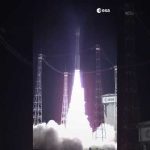
The third Copernicus Sentinel-2 satellite, Sentinel-2C, has launched aboard the last Vega rocket, flight VV24, from Europe’s Spaceport in French Guiana. The rocket lifted off on 5 September at 03:50 CEST (4 September 22:50 local time).
Sentinel-2C was the last liftoff for the Vega rocket – after 12 years of service this was the final flight, the original Vega is being retired to make way for an upgraded Vega-C.
🎥 ESA – European Space Agency Credits: ESA/CNES/Arianespace
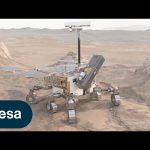
Watch the second episode of the ExoMars Rosalind Franklin rover mission – Europe’s ambitious exploration journey to search for past and present signs of life on Mars.
This episode starts with Rosalind searching for traces of life below the martian surface using a ground penetrating radar and a set of cameras.
The rover will dig, collect, and investigate the chemical composition of material collected by a drill. Rosalind Franklin will be the first rover to reach a depth of up to two metres deep below the surface, acquiring samples that have been protected from surface radiation and extreme temperatures.
Rosalind Franklin uses the WISDOM radar to help scientists on Earth decide where to drill. Besides identifying the most promising targets for sampling, WISDOM will help the rover avoid potential hazards, such as the presence of buried rocks that could damage the drill. The scientific eyes of the rover are set on the Panoramic Camera suite known as PanCam. The Close-UP Imager (CLUPI) sits on the side of the drill box, a camera designed to acquire high-resolution, colour, close-up images of outcrops, rocks and soils. PanCam and CLUPI will help scientists find the most promising spots to drill. These instruments can also investigate very fine outcrop details and image drill samples before they are sent into the rover’s laboratory. After the rover retracts its drill, the sample is in a special chamber at the tip. Under the reduced martian gravity (38% of Earth’s), the material drops onto a special “hand” that the rover can extend to the front to collect drill samples. The mission will serve to demonstrate key technologies that Europe needs to master for future planetary exploration missions.
The ExoMars rover series show the rover and martian landscapes as true to reality as possible for a simulation.
Check ESA’s ExoMars website and our frequently asked questions for the latest updates.
Credits: ESA – European Space Production: Mlabspace for ESA 3D animation: ESA/Mlabspace Video footage: ESA/NASA, Shutterstock Music composed by Valentin Joudrier
★ Subscribe: http://bit.ly/ESAsubscribe and click twice on the bell button to receive our notifications.
We are Europe’s gateway to space. Our mission is to shape the development of Europe’s space capability and ensure that investment in space continues to deliver benefits to the citizens of Europe and the world. Check out https://www.esa.int/ to get up to speed on everything space related.
Steve Spangler is a bestselling author, STEM educator and Emmy award-winning television personality with more than 2,100 television appearances to his credit. Steve appeared as a regular guest on the Ellen DeGeneres Show from 2007-2022. Learn more about Steve at https://stevespangler.com/about-steve-spangler/
Today, Salsa, the first of four satellites that make up our Cluster mission, will reenter Earth’s atmosphere over the South Pacific Ocean Uninhabited Area.
This marks the end of the historic mission, over 24 years after it was sent into space to measure Earth’s magnetic environment. Though the remaining three satellites will also stop making scientific observations, discoveries using existing mission data are expected for years to come.
This ‘targeted reentry’ is the first of its kind. ESA’s efforts to ensure a clean end to the Cluster mission go beyond international standards, making the agency a world-leader in sustainable space exploration.
The Copernicus Sentinel-2C satellite lifted off on 5 September at 03:50 CEST (4 September 22:50 local time) aboard the last Vega rocket, flight VV24, from Europe’s Spaceport in French Guiana.
Sentinel-2C will continue the legacy of delivering high-resolution data that are essential to Copernicus – the Earth observation component of the EU Space Programme. Developed, built and operated by ESA, the Copernicus Sentinel-2 mission provides high-resolution optical imagery for a wide range of applications including land, water and atmospheric monitoring.
Sentinel-2C was the last liftoff for the Vega rocket – after 12 years of service this was the final flight, the original Vega is being retired to make way for an upgraded Vega-C.
Credits: ESA/CNES/Arianespace
Chapters: 00:00 Waiting for liftoff 01:10 Liftoff 04:25 Second stage separation 06:18 Sentinel-2C separation 06:46 Acquisition of signal 07:23 Statements
★ Subscribe: http://bit.ly/ESAsubscribe and click twice on the bell button to receive our notifications.
We are Europe’s gateway to space. Our mission is to shape the development of Europe’s space capability and ensure that investment in space continues to deliver benefits to the citizens of Europe and the world. Check out https://www.esa.int/ to get up to speed on everything space related.
Steve Spangler is a bestselling author, STEM educator and Emmy award-winning television personality with more than 2,100 television appearances to his credit. Steve appeared as a regular guest on the Ellen DeGeneres Show from 2007-2022. Learn more about Steve at https://stevespangler.com/about-steve-spangler/