Tag: This Week at NASA

  • October Spacewalks Aboard the Space Station on This Week @NASA – October 13, 2017

    October Spacewalks Aboard the Space Station on This Week @NASA – October 13, 2017

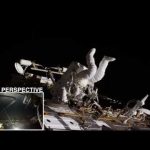
    The Oct. 10th spacewalk outside the International Space Station was the second in less than a week by NASA’s Randy Bresnik and Mark Vande Hei – and one of three U.S. spacewalks planned for October. The astronauts lubricated the new latching end effector they installed on the Canadarm2 robotic arm on Oct. 5. They also replaced a faulty camera system and completed several other tasks. Joe Acaba will join Bresnik for the next spacewalk – currently scheduled for Oct. 20. Also, California Wildfires Seen from Space, NASA Pinpoints Cause of Earth’s Record CO2 Levels, Send Your Name to Mars, Celebrating the First Piloted Supersonic Flight, and Potential Asteroid Warning Network Tested!

    This video is available for download from NASA’s Image and Video Library: https://images.nasa.gov/#/details-NHQ_2017_1013_October%20Spacewalks%20Aboard%20the%20Space%20Station%20on%20This%20Week%20@NASA%20%E2%80%93%20October%2013,%202017.html
  • National Space Council Meets on This Week @NASA – October 6, 2017

    National Space Council Meets on This Week @NASA – October 6, 2017

    Vice President Mike Pence called for renewed U.S. leadership in space during the first meeting of the National Space Council – outlining exploration goals that include returning American astronauts to the Moon, to build the foundation needed to send Americans to Mars and beyond. The October 5 council meeting, held at the Smithsonian National Air and Space Museum’s Steven F. Udvar-Hazy Center, outside Washington, brought together representatives from all aspects and sectors of the national space enterprise, for the first time in a quarter century – including NASA’s Acting Administrator, Robert Lightfoot. Also, U.S. Spacewalk aboard the Space Station, Eugene Parker Views Solar Probe Spacecraft, Scientists Find Giant Black Hole Pairs, and Parachute Test Platform Launched!

    This video is available for download from NASA’s Image and Video Library: https://images.nasa.gov/#/details-NHQ_2017_1006_National%20Space%20Council%20Meets%20on%20This%20Week%20@NASA%20%E2%80%93%20October%206,%202017.html

  • Vice President Visits Marshall Space Flight Center on This Week @NASA – September 29, 2017

    Vice President Visits Marshall Space Flight Center on This Week @NASA – September 29, 2017

    Vice President Mike Pence visited our Marshall Space Flight Center on Sept. 25 to thank employees working on NASA’s human spaceflight programs. He also spoke to the three NASA astronauts currently serving onboard the International Space Station. During a tour, the Vice President also saw progress being made on our Space Launch System rocket, that will send astronauts in our Orion spacecraft on missions around the Moon and ultimately to Mars. Also, NASA Data and Tech Aid in Disaster Relief, Congressional Hearing on August 21 Solar Eclipse, OSIRIS-REx Views Earth During Flyby, and “Bladed Terrain” on Pluto Made of Frozen Methane!

    This video is available for download from NASA’s Image and Video Library: https://images.nasa.gov/#/details-NHQ_2017_0929_Vice%20President%20Visits%20Marshall%20Space%20Flight%20Center%20on%20This%20Week%20@NASA%20%E2%80%93%20September%2029,%202017.html

  • Tracking Hurricane Maria from Space on This Week @NASA – September 22, 2017

    Tracking Hurricane Maria from Space on This Week @NASA – September 22, 2017

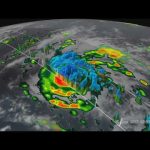
    Satellite data continues to enable weather forecasters to look inside and outside of powerful hurricanes. Imagery from NOAA’s GOES East satellite, captured Sept. 17 to Sept. 20, shows Hurricane Jose along the U.S. east coast, and Hurricane Maria, as it moved through the Leeward Islands, strengthening to a Category 5 hurricane, and making landfall in Puerto Rico. Meanwhile, The Global Precipitation Measurement (GPM) satellite found rain falling inside Maria at a rate of over 6.44 inches per hour in powerful storms that reached above 9.7 miles high. Also, SpaceX Dragon Returns with Science, Katherine Johnson Research Facility Opened, Earth’s Gravity Assist to OSIRIS-REx, Hubble Spots Asteroids Orbiting Each Other, and Engineering the Future!

    This video is available for download from NASA’s Image and Video Library: https://images.nasa.gov/#/details-NHQ_2017_0922_This%20Week%20@NASA.html

  • Farewell to Cassini on This Week @NASA – September 15, 2017

    Farewell to Cassini on This Week @NASA – September 15, 2017

    On Sept. 15, our Cassini spacecraft concluded its remarkable mission with a plunge into Saturn’s atmosphere. This was the last of 22 close orbits Cassini made between Saturn and its rings as part of the mission’s Grand Finale. No other spacecraft has ever explored this unique region. Although the spacecraft may be gone after the finale, the enormous amount of data collected about Saturn, its magnetosphere, rings and moons during this last dive is expected to yield new discoveries for decades. Also, Recovering from Irma, New Crew Launches to the Space Station, Successful Orion Chute Test and Shane Kimbrough in Washington!

    This video is available for download from NASA’s Image and Video Library: https://images.nasa.gov/#/details-NHQ_2017_0915_Farewell%20to%20Cassini%20on%20This%20Week%20@NASA%20%E2%80%93%20September%2015,%202017.html

  • Catastrophic Storm Seen from Space on This Week @NASA – September 1, 2017

    Catastrophic Storm Seen from Space on This Week @NASA – September 1, 2017

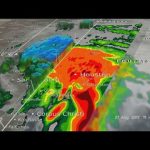
    We worked with our partner agencies to use space-based assets to capture imagery of Hurricane Harvey that impacted the Texas-Louisiana Gulf Coast region. Imagery captured from the vantage point of space, provides data that weather forecasters, emergency responders and other officials can use to better inform the public. Views from the International Space Station, and NOAA’s GOES East satellite showed the massive size and movement of the storm. While our Global Precipitation Measurement (GPM) Mission analyzed the storm’s record-breaking rainfall – which led to catastrophic flooding in Texas and Louisiana. Due to the storm, our Johnson Space Center in Houston is closed through Labor Day, while the region recovers, but Mission Control remains operational in support of the crew aboard the International Space Station. Also, Final RS-25 Engine Test of the Summer, Key SLS Rocket Hardware Finished, and Researching Quiet Supersonic Flight!

    This video is available for download from NASA’s Image and Video Library: https://images.nasa.gov/#/details-NHQ_2017_0901_Catastrophic%20Storm%20Seen%20from%20Space%20on%20This%20Week%20@NASA%20%E2%80%93%20September%201,%202017.html

  • Eclipse Across America on This Week @NASA – August 25, 2017

    Eclipse Across America on This Week @NASA – August 25, 2017

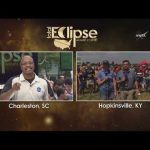
    The Aug. 21 eclipse across America generated interest and excitement far and wide. Our coverage of the historic eclipse – the first coast-to-coast total solar eclipse for the U.S. in 99 years – was widespread … Anchored from the College of Charleston, in South Carolina – we showed you views of the eclipse that only NASA could. Views from space, from Earth’s atmosphere and from the ground – with expert observation and analysis provided from many of the 14 states around the country, situated along the path of totality. That’s where thousands of people flocked – for the ultimate eclipse experience – total darkness in the middle of the day!

    This video is available for download from NASA’s Image and Video Library: https://images.nasa.gov/#/details-NHQ_2017_0825_Eclipse%20Across%20America%20on%20This%20Week%20@NASA%20%E2%80%93%20August%2025,%202017.html

  • New Crew Launches to the Space Station on This Week @NASA – July 28, 2017

    New Crew Launches to the Space Station on This Week @NASA – July 28, 2017

    Acting Administrator Robert Lightfoot was in Kazakhstan on July 28 to observe the launch to the International Space Station of our astronaut Randy Bresnik with his crewmates – Sergey Ryazanskiy of Roscosmos, and Paolo Nespoli of the European Space Agency. The trio is scheduled to spend more than four months on the station working on hundreds of science and technology experiments. Also, New 4K Footage of Spacewalk, NASA Technologies Showcased at AirVenture Event, Preparing to Chase the Total Solar Eclipse from the Sky, and Another Successful RS-25 Engine Test!

  • Vice President Pence Visits Kennedy on This Week @NASA – July 7, 2017

    Vice President Pence Visits Kennedy on This Week @NASA – July 7, 2017

    Vice President Mike Pence spoke to employees on July 6 at our Kennedy Space Center in Florida, highlighting the public/private partnerships transforming the center into a multi-user spaceport, and changing the way we do business in low-Earth orbit. Acting Administrator Robert Lightfoot and Kennedy Director Bob Cabana accompanied the Vice President on tours of several facilities currently being leased by private space companies. The tour showcased hardware, systems and infrastructure, that will soon facilitate U.S. based astronaut launches and eventual missions to deep space. Also, SpaceX Dragon Released from Space Station, Happy July 4th from Space, and 3D-Printed Habitat Challenge!

  • President Trump Reestablishes the National Space Council on This Week @NASA – June 30, 2017

    President Trump Reestablishes the National Space Council on This Week @NASA – June 30, 2017

    President Donald Trump signed an Executive Order on June 30 to reestablish the National Space Council. To mark International Asteroid Day on June 30, we aired a special television program with information about the work our Planetary Defense Coordination Office and other NASA-funded programs do to find, track and characterize Near Earth Objects. These are asteroids and comets in the vicinity of Earth’s orbit that could pose an impact threat to our planet. The Planetary Defense Coordination Office also issues alerts and helps coordinate any U.S. government response to an impact threat. The broadcast was part of a 24-hour Asteroid Day program from Broadcasting Center Europe. Also, NASA Testifies at Congressional Hearings, and Colorful Clouds in Space!

  • What’s Happened So Far – Mid Year @NASA – June 16, 2017

    What’s Happened So Far – Mid Year @NASA – June 16, 2017

    2017 is shaping up to be another year of unprecedented exploration, amazing discoveries, technological advances and progress in development of future missions – and we’re just six months into the year. Here are some of our top stories of 2017, so far – Mid-Year at NASA!

  • Milestone Spacewalk on the Space Station on This Week @NASA – May 12, 2017

    Milestone Spacewalk on the Space Station on This Week @NASA – May 12, 2017

    On May 12, Peggy Whitson and Jack Fischer conducted a spacewalk outside the International Space Station. This was the 200th spacewalk in support of station assembly and maintenance. Prior to the outing, during their pre-breathe activities in the airlock, the spacewalkers had to share Whitson’s service and cooling umbilical (SCU), due to an issue with the SCU connected to Fischer’s suit. That device provides electricity, cooling and communications during the pre-breathe phase of a spacewalk. Despite a late start, the pair completed the primary task of replacing an avionics box that supplies electricity and data connections to the science experiments on the orbital laboratory. It was Whitson’s ninth spacewalk and the first for Fischer. Also, Exploration Mission-1 Announcement, Future Space Station Crew Previews Mission, Humans to Mars Summit 2017, James Webb Space Telescope at JSC, and Martian New Year in Mars, PA!

  • Webb Telescope Passes Important Optical Test on This Week @NASA – May 5, 2017

    Webb Telescope Passes Important Optical Test on This Week @NASA – May 5, 2017

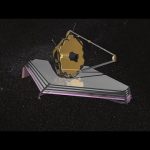
    NASA’s James Webb Space Telescope (JWST) has successfully passed the center of curvature test at Goddard Space Flight Center, in Greenbelt, Md. This important optical measurement of Webb’s fully assembled primary mirror was the final test held at Goddard before the telescope is shipped off for end-to-end cryogenic testing at Johnson Space Center in Houston. When that’s complete, the world’s most advanced observatory goes to Northrop Grumman Aerospace Systems in Redondo Beach, California, for final assembly and testing. Webb is targeted for launch in 2018 on a mission to help unravel some of the greatest mysteries of the universe. Also, Cassini Update, NASA Visits Midwest Company Helping Build Orion, Orion’s Launch Abort System Motor Tested, Wind Tunnel Tests Continue with SLS, and Community College Aerospace Scholars!

  • Oceans Beyond Earth on This Week @NASA – April 14, 2017

    Oceans Beyond Earth on This Week @NASA – April 14, 2017

    Two long-running NASA missions are providing new details about ocean bearing moons of Jupiter and Saturn – further heightening scientific interest in these and other “ocean worlds” in our solar system and beyond. The details – discussed during an April 13 NASA science briefing – include the announcement by the Cassini mission that a key ingredient for life has been found in the ocean on Saturn’s moon Enceladus. Meanwhile, researchers using the Hubble Space Telescope observed a probable plume erupting from the surface of Jupiter’s moon Europa, at the same location where Hubble saw evidence of a plume in 2014. Researchers say this could be circumstantial evidence of water erupting from the moon’s interior. Hubble’s monitoring of plume activity on Europa and Cassini’s long-term investigation of Enceladus are laying the groundwork for NASA’s Europa Clipper mission, which is being planned for launch in the 2020s. Also, Expedition 50 Returns Home Safely, Next Space Station Crew at Launch Site, Student Launch Event, Groundbreaking for New Lab, and Yuri’s Night, First Space Shuttle Mission Celebrated!

  • NASA Cassini Mission Prepares for “Grand Finale” on This Week @NASA – April 7, 2017

    NASA Cassini Mission Prepares for “Grand Finale” on This Week @NASA – April 7, 2017

    NASA held a news conference April 4 at the Jet Propulsion Laboratory, with participation from NASA headquarters, to preview the final phase of the Cassini spacecraft’s mission to Saturn. On April 26, Cassini will begin its “Grand Finale” – a series of deep dives between the planet and its rings. No other mission has ever explored this unique region that is so close to the planet. Cassini will make 22 orbits that swoop between the rings and the planet before ending its 20-year mission on Sept. 15, with a final plunge into Saturn. The mission team hopes to gain powerful insights into the planet’s internal structure and the origins of the rings, obtain the first-ever sampling of Saturn’s atmosphere and particles coming from the main rings, and capture the closest-ever views of Saturn’s clouds and inner rings. Also, Next Space Station Crew Travels to Launch Site, New Target Launch Date for Orbital ATK Mission to ISS, Lightfoot Visits Industry Partners, Human Exploration Rover Challenge, and John Glenn Interred at Arlington National Cemetery.

  • Orion Spacecraft Parachute Test on This Week @NASA – March 10, 2017

    Orion Spacecraft Parachute Test on This Week @NASA – March 10, 2017

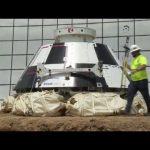
    NASA conducted the latest successful test of the Orion spacecraft’s parachute system on March 8 in the skies above the U.S. Army’s Yuma Proving Ground in Arizona. The test was designed to evaluate the parachutes’ performance in an emergency abort situation that would require Orion to be jettisoned from the agency’s Space Launch System rocket during a launch. Even at this relatively low altitude, the parachutes are designed to fully deploy and safely return Orion and its crew to Earth. Also, Shin Honored by Aviation Week, Space Station Resupply Mission Targeted for March 19, Small Business Innovation Proposals Selected, Deep Space Atomic Clock, Modern Figures Virtual Tour, and NASA Aero “Night of Flight”!

  • Michoud Recovering From Tornado on This Week @NASA – February 10, 2017

    Michoud Recovering From Tornado on This Week @NASA – February 10, 2017

    Recovery efforts are underway at NASA’s Michoud Assembly Facility in New Orleans, which was hit by a tornado Feb. 7. In accounting for all 3,500 employees at the facility, officials reported five suffered minor injuries. Buildings, structures and parked cars sustained damage, but there was no reported damage to hardware for NASA’s Space Launch System (SLS) rocket, Orion spacecraft, or the barge Pegasus docked at Michoud. NASA will release updates on the facility’s status as they become available. Also, SpaceX Launch Targeted for Mid-February, SLS Booster Hardware Arrives at KSC, and NASA Aerospace Days!

  • Expedition 50/51 Launches to Space Station on This Week @NASA – November 18, 2016

    Expedition 50/51 Launches to Space Station on This Week @NASA – November 18, 2016

    The Expedition 50/51 crew, including NASA astronaut Peggy Whitson, launched aboard a Soyuz spacecraft from the Baikonur Cosmodrome in Kazakhstan Nov. 17 eastern time, to begin a two-day flight to the International Space Station. Whitson, Oleg Novitskiy of the Russian space agency Roscosmos and Thomas Pesquet of ESA (European Space Agency) are scheduled to join Expedition 50 commander Shane Kimbrough of NASA and Roscosmos cosmonauts Sergey Ryzhikov and Andrey Borisenko, who all have been aboard the orbiting laboratory since October. Whitson will assume command of the station in February – making her the first woman to command the space station twice. Whitson and her Expedition 50 crewmates are scheduled to return to Earth next spring. Also, Supermoon Shines Bright, Newman Participates in Operation IceBridge, and Advanced Weather Satellite Mission Previewed!

  • Humanity’s Eye into the Universe on This Week @NASA – November 4, 2016

    Humanity’s Eye into the Universe on This Week @NASA – November 4, 2016

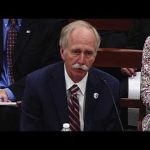
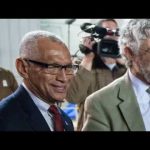
    During a Nov. 2 media event at NASA’s Goddard Space Flight Center, Administrator Charlie Bolden was joined by Goddard Center Director Chris Scolese and Senior Project Scientist, Dr. John Mather for an update on the James Webb Space Telescope, including a rare glimpse at the telescope’s primary mirror. Engineers and technicians recently completed a “Center of Curvature” test on the mirror, which measures the shape of the mirror. This is the first important optical measurement before the mirror goes into the testing chambers. Meanwhile, the telescope’s sunshield layers also have been finished. This will protect Webb’s sensitive instruments from the sun when the telescope is in space. The Webb Telescope, which is targeted for launch in 2018, will study every phase in the history of our universe, including the cosmos’ first luminous glows, the formation of planetary systems capable of supporting life, and the evolution of our own solar system. Also, Expedition 49 Returns Safely from the International Space Station, Next Space Station Crew Travels to Launch Site, Agency Innovation Mission Day, SDO Captures Lunar Transit, and World Altitude Record for MMS!

  • Making Human Settlement of Space a Reality on This Week @NASA – October 14, 2016

    Making Human Settlement of Space a Reality on This Week @NASA – October 14, 2016

    An Oct. 11 opinion article written by President Barack Obama and published by CNN, outlined a vision for the future of space exploration. In it, the president echoed the words in his 2015 State of the Union address about the importance of sending humans on a roundtrip mission to Mars by the 2030s, and developing technology to help us stay on the Red Planet for an extended time. That same day in a blog post, NASA Administrator Charlie Bolden and John Holdren, assistant to the President for Science and Technology, discussed two NASA initiatives that build on the president’s vision and use public-private partnerships to enable humans to live and work in space in a sustainable way. The first was the selection of six companies to develop habitation systems as part of the agency’s Next Space Technologies for Exploration Partnerships or “NextSTEP” program, designed to lay the groundwork for deep space missions. And this fall as part of the second initiative, NASA will start the process of providing companies with a potential opportunity to add their own modules and other capabilities to the International Space Station. The move is in-line with NASA’s plan to support and foster the growing community of scientists and entrepreneurs conducting research and growing businesses in space. Also, White House Frontiers Conference, Kennedy Reopens After Hurricane Matthew, Orion Service Module Vibration Tests, SLS Liquid Hydrogen Fuel Tank Completed, and Aviation Safety Reporting System Turns 40!

  • Asteroid Sample Return Mission Launches on This Week @NASA – September 9, 2016

    Asteroid Sample Return Mission Launches on This Week @NASA – September 9, 2016

    On Sept. 8, NASA launched the Origins, Spectral Interpretation, Resource Identification, Security – Regolith Explorer, or OSIRIS-REx mission from Cape Canaveral Air Force Station in Florida. OSIRIS-REx, the first U.S. mission to sample an asteroid, is scheduled to arrive at near-Earth asteroid Bennu in 2018. Mission plans call for the spacecraft to survey the asteroid, retrieve a small sample from its surface, and return the sample to Earth for study in 2023. Analysis of that sample is expected to reveal clues about the history of Bennu over the past 4.5 billion years, as well as clues about the evolution of our solar system. Also, Williams’ Record-Breaking Spaceflight Concludes, Next ISS Crew Prepares for Launch, Sample Return Robot Challenge, NASA X-Plane Gets its Wing, and Convergent Aeronautics Solutions Showcase!

  • Dragon Cargo Spacecraft Departs the ISS on This Week @NASA – August 26, 2016

    Dragon Cargo Spacecraft Departs the ISS on This Week @NASA – August 26, 2016

    The SpaceX Dragon cargo spacecraft left the International Space Station on August 26. The Dragon departed the station five weeks after delivering almost 5,000 pounds of supplies, experiments and equipment to the orbital complex – including an international docking adapter for use by future American commercial crew spacecraft transporting astronauts to the station. The station’s Canadarm2 robotic arm was used to grapple the Dragon, move it away from the ISS, and release it for its return trip to Earth. The capsule is returning with about 3,000 pounds of cargo and experiments for researchers and investigators. Also, New U.S. Endurance Record in Space, Next U.S. Spacewalk Previewed, Boeing CST-100 Starliner Land Drop Test, SLS Liquid Hydrogen Test Tank Moved, and Celebrating National Parks, from Space!

  • Extreme Underwater Mission on This Week @NASA – July 29, 2016

    Extreme Underwater Mission on This Week @NASA – July 29, 2016

    The 21st NASA Extreme Environment Mission Operations got underway July 21 in the Florida Keys. NASA astronauts Reid Wiseman and Megan McArthur are part of the international crew of NEEMO-21 aquanauts performing research during the 16-day mission, which takes place about 60 feet below the surface of the Atlantic Ocean, in the Aquarius habitat – the world’s only undersea science station. Simulated spacewalks are designed to evaluate tools and mission operation techniques that could be used on future space missions. NEEMO-21’s objectives include testing a mini DNA sequencer similar to the one NASA astronaut Kate Rubins also will test aboard the International Space Station, and a telemedicine device that will be used for future space applications. The mission also will simulate communications delays like those that would be encountered on a mission to Mars. Also, Space Launch System Work Platforms, All-Electric X-Plane Arrives, Asteroid Mission Technology, and NASA @Comic-Con International.

  • NASA astronomical findings highlighted on This Week @NASA – January 8, 2016

    NASA astronomical findings highlighted on This Week @NASA – January 8, 2016

    New NASA astrophysics findings were highlighted at the 227th American Astronomical Society meeting, Jan. 4-8 in Kissimmee, Florida. The findings, which ranged from runaway stars to a burping galaxy, were made with the help of several NASA observation instruments, including the Spitzer Space Telescope, the Wide-field Infrared Survey Explorer, the Chandra X-ray Observatory, the Nuclear Spectroscopic Telescope Array and others. Also, Next space station crew preparing for mission, Economical new era of aviation, A new level of coral reef studies and more!

  • Advancing the Journey to Mars on This Week @NASA – October 30, 2015

    Advancing the Journey to Mars on This Week @NASA – October 30, 2015

    During an Oct. 28 keynote speech at the Center for American Progress, in Washington, NASA Administrator Charlie Bolden spoke about the advancement made on the journey to Mars and what lies ahead for future administrations and policy makers. NASA’s recently released report “Journey to Mars: Pioneering Next Steps in Space Exploration,” outlines its plan to reach Mars in phases – with technology demonstrations and research aboard the International Space Station, followed by hardware and procedure development in the proving ground around the moon, before sending humans to the Red Planet. Also, Space station spacewalk, Another record in space for Kelly, Mars Landing Sites/ Exploration Zones Workshop, Cassini’s “deep dive” flyby and more!

  • Water Flowing on Mars Today on This Week @NASA – October 2, 2015

    Water Flowing on Mars Today on This Week @NASA – October 2, 2015

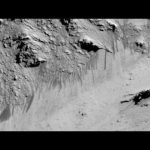
    A major scientific discovery was announced by NASA at a Sept. 28 news conference. From its vantage point high above the Martian surface, NASA’s Mars Reconnaissance Orbiter (MRO) spacecraft has found the strongest evidence yet, that under certain circumstances, liquid water has been found on Mars. Researchers say an imaging spectrometer on MRO detected signatures of hydrated minerals on slopes where downhill streaks, known as Recurring Slope Lineae (RSL) are seen. In the past, RSL flows have been described as possibly related to liquid water. But the new findings of hydrated minerals is key evidence. Hydrated salts can lower the freezing point of liquid brine – and produce liquid water. Also, Life beyond Earth in the next decade?, “The Martian” screening event, Cargo ship departs space station, New cargo ship delivers to space station, Rare double celestial treat and Espacio a Tierra!