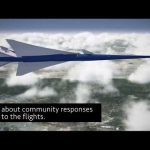
Building the future of quiet supersonic flight, science and supplies delivered to the space station, and uncovering the farthest star ever seen – a few of the stories to tell you about, This Week at NASA!
This video is available for download from NASA’s Image and Video Library: https://images.nasa.gov/details-Lowering%20the%20Boom%20of%20Supersonic%20Flight%20on%20This%20Week%20@NASA%20%E2%80%93%20April%206,%202018.html
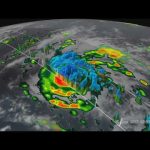
Satellite data continues to enable weather forecasters to look inside and outside of powerful hurricanes. Imagery from NOAA’s GOES East satellite, captured Sept. 17 to Sept. 20, shows Hurricane Jose along the U.S. east coast, and Hurricane Maria, as it moved through the Leeward Islands, strengthening to a Category 5 hurricane, and making landfall in Puerto Rico. Meanwhile, The Global Precipitation Measurement (GPM) satellite found rain falling inside Maria at a rate of over 6.44 inches per hour in powerful storms that reached above 9.7 miles high. Also, SpaceX Dragon Returns with Science, Katherine Johnson Research Facility Opened, Earth’s Gravity Assist to OSIRIS-REx, Hubble Spots Asteroids Orbiting Each Other, and Engineering the Future!
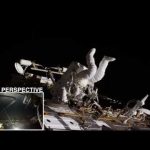
Acting Administrator Robert Lightfoot was in Kazakhstan on July 28 to observe the launch to the International Space Station of our astronaut Randy Bresnik with his crewmates – Sergey Ryazanskiy of Roscosmos, and Paolo Nespoli of the European Space Agency. The trio is scheduled to spend more than four months on the station working on hundreds of science and technology experiments. Also, New 4K Footage of Spacewalk, NASA Technologies Showcased at AirVenture Event, Preparing to Chase the Total Solar Eclipse from the Sky, and Another Successful RS-25 Engine Test!
2017 is shaping up to be another year of unprecedented exploration, amazing discoveries, technological advances and progress in development of future missions – and we’re just six months into the year. Here are some of our top stories of 2017, so far – Mid-Year at NASA!
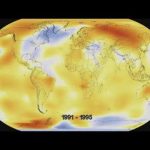
NASA and the National Oceanic and Atmospheric Administration (NOAA) announced on Jan. 18, that global surface temperatures in 2016 were the warmest since modern record keeping began in 1880. The finding was based on results of independent analyses by both agencies. According to analysis by scientists at NASA’s Goddard Institute for Space Studies (GISS) in New York, 2016 is the third year in a row to set a new record for global average surface temperatures, further demonstrating a long-term warming trend. Also, Cygnus Cargo Module Arrives at KSC, Up in 30 Seconds, and Remembering Gene Cernan.
On June 28, the booster for NASA’s Space Launch System (SLS) rocket was fired up for a major two-minute full-duration qualification ground test at Orbital ATK Propulsion Systems’ test facilities in Promontory, Utah. Engineers will evaluate test data on the motor’s performance using cold propellant, the steering operation of its redesigned nozzle, and other operational data to help qualify the booster for flight. This is the last time the booster will be fired in a test environment before it’s used for the first uncrewed test flight of SLS with NASA’s Orion spacecraft, known as Exploration Mission-1, in late 2018. Also, SLS Test Hardware Arrives at Marshall, Juno Arrives at Jupiter July 4th, Test Lab Launched to Streamline Air Travel, Russian Docking System Tested on ISS, and NASA 2016 Agency Honor Award Distinguished Honorees.
The successful first flight test of NASA’s Orion spacecraft on Dec. 5 not only was a historic moment for the agency – but also was a critical step on NASA’s Journey to Mars. Orion rode to space from Cape Canaveral Air Force Station on a Delta IV heavy rocket with no crew, but loaded with about 1,200 sensors. The flight test basically was a compilation of the riskiest events that will happen when astronauts fly on Orion on deep space missions. Also, Journey to Mars briefing, 1st SLS flight barrel and Commercial crew milestone.
Several Mars-based NASA spacecraft had prime viewing positions for comet Siding Spring’s October 19 close flyby of the Red Planet. Early images included a composite photo from NASA’s Hubble Space Telescope that combined shots of Mars, the comet, and a star background to illustrate Siding Spring’s distance from Mars at closest approach. Also, images from the Mars Reconnaissance Orbiter’s HiRISE camera, which represent the highest-resolution views ever acquired of a comet that came from the Oort Cloud, at the outer fringe of the solar system. The comet flyby – only about 87,000 miles from Mars – was much closer than any other known comet flyby of a planet. Also, Partial solar eclipse, Space station spacewalk, Preparing to release Dragon, Cygnus launch update, Welding begins on SLS, Astronaut class visits Glenn and more!
During an October 15 spacewalk outside the International Space Station – the second U.S. spacewalk in as many weeks – Expedition 41 Flight Engineers Reid Wiseman and Barry Wilmore of NASA, replaced a failed voltage regulation device to restore the station’s electrical power output to full capacity. The pair also relocated camera and TV equipment as part of a major reconfiguration to accommodate new docking adapters for use by U.S. commercial crew spacecraft in the next few years. Also, MAVEN’s “First Light”, Hubble finds extremely distant galaxy, Possible bonus destination for New Horizons, New information about volcanic activity on our moon and more!
SpaceX-3 launches to the International Space Station, Kepler finds a Earth-sized planet and LADEE ends its mission on the lunar surface. These stories and more on this week’s, This Week @NASA