Steve Spangler is a bestselling author, STEM educator and Emmy award-winning television personality with more than 2,100 television appearances to his credit. Steve appeared as a regular guest on the Ellen DeGeneres Show from 2007-2022 (27 appearances).
Steve Spangler is a bestselling author, STEM educator and Emmy award-winning television personality with more than 2,100 television appearances to his credit. Steve appeared as a regular guest on the Ellen DeGeneres Show from 2007-2022 (27 appearances).
Will the Sun ever burn out? Not quite, but it will change dramatically. Like all stars, it’s going through a life cycle powered by nuclear fusion. Right now, it’s halfway through its 10-billion-year lifetime.
Eventually, the Sun will expand into a red giant, engulfing the inner planets, then collapse into a white dwarf — a small, hot, dim remnant of its former self.
A NASA scientist explains what’s ahead for our star.
Steve Spangler is a bestselling author, STEM educator and Emmy award-winning television personality with more than 2,100 television appearances to his credit. Steve appeared as a regular guest on the Ellen DeGeneres Show from 2007-2022 (27 appearances).
Steve Spangler is a bestselling author, STEM educator and Emmy award-winning television personality with more than 2,100 television appearances to his credit. Steve appeared as a regular guest on the Ellen DeGeneres Show from 2007-2022. Learn more about Steve at https://stevespangler.com/about-steve-spangler/
Steve Spangler is a bestselling author, STEM educator and Emmy award-winning television personality with more than 2,100 television appearances to his credit. Steve appeared as a regular guest on the Ellen DeGeneres Show from 2007-2022. Learn more about Steve at https://stevespangler.com/about-steve-spangler/
🚩 If you like what you see, consider supporting my work on Patreon and you get ad-free early access to my videos for as little as $1 https://www.patreon.com/historymarche — You can also show your support by subscribing to the channel and liking the video. Thank you for watching.
🚩 In Britain, at the northernmost edge of the empire, Rome’s strategy for command and control failed horribly. For the first time in memory, the Roman army is in retreat and the power of Rome is questioned. The Iceni army led by Boudica has cornered the outnumbered Romans at Mancetter. The Roman general Gaius Suetonius Paulinus steels his men for the battle ahead: “Ignore the racket made by these savages. There are more women than men in their ranks. We have beaten them before and when they see our weapons and feel our spirit, they will crack. Stick together. Throw the javelins, then push forward! Knock them down with your shields and finish them off with your swords. Forget about plunder. Just win and you will have everything!”
📢 Narrated by David McCallion
🎼 Music: Epidemic Sound Filmstro
📚 Sources: Boudicca’s Rebellion AD 60–61: The Britons rise up against Rome (2011), Nic Fields, Osprey Publishing Ltd. ISBN: 978 1 849083133. The Annuls of Imperial Rome (2009), Tacitus, Translated by Alfred John Church and William Jackson Brodribb, Digireads.com Publishing. ISBN: 1-4209-2668-3. Boudica & Britain https://www.pbs.org/empires/romans/empire/boudica.html
Twenty years ago, astronomers discovered Apophis, an asteroid once feared to collide with Earth in 2029. Thanks to incredible advancements in science, the threat is now ruled out.
However, Apophis will still pass closer than some satellites currently orbiting Earth and will be visible with the naked eye.
This rare event is a great opportunity to study Apophis up close and prepare for future asteroid encounters.
Steve Spangler is a bestselling author, STEM educator and Emmy award-winning television personality with more than 2,100 television appearances to his credit. Steve appeared as a regular guest on the Ellen DeGeneres Show from 2007-2022. Learn more about Steve at https://stevespangler.com/about-steve-spangler/
According to the Food and Agriculture Organization (FAO), global agricultural production will need to increase by 60% by 2050 to meet the food demands of the growing global population.
A new satellite called Copernicus Hyperspectral Imaging Mission for the Environment, or CHIME, is being developed to support EU policies on the management of natural resources – ultimately helping to address the global issue of food security.
CHIME will carry a unique visible to shortwave infrared spectrometer to provide routine hyperspectral observations to support new and enhanced services for sustainable agricultural and biodiversity management, as well as soil property characterisation.
CHIME is one of six Copernicus Sentinel Expansion missions that ESA is developing on behalf of the EU. The missions will expand the current capabilities of the Copernicus Space Component – the world’s biggest supplier of Earth observation data.
This video features interviews with Marco Celesti, CHIME Mission Scientist and Jens Nieke, CHIME Project Manager.
Credits: ESA – European Space Agency
★ Subscribe: http://bit.ly/ESAsubscribe and click twice on the bell button to receive our notifications.
We are Europe’s gateway to space. Our mission is to shape the development of Europe’s space capability and ensure that investment in space continues to deliver benefits to the citizens of Europe and the world. Check out https://www.esa.int/ to get up to speed on everything space related.
In the vast expanse of space, astronauts face a unique challenge – the need to share spacesuits during prolonged spacewalks. These suits, including their inner linings that come into direct contact with the astronauts’ skin, tend to accumulate bodily fluids over time. Drawing a rather relatable analogy, it’s akin to sharing underwear in space!
However, the practicality of washing these spacesuit interiors on lunar surfaces or beyond presents a significant hurdle. To counter this, a dedicated group of researchers is delving into innovative strategies to curb the growth of potentially harmful microbes within the inner layers of these suits.
Here’s where the solution gets intriguing: the world of microbiology offers a fascinating approach. Certain types of microbes possess ‘secondary metabolites’ that allow them to combat other microbes. These compounds are not only diverse in colour but also possess antibiotic properties. The ingenious idea involves integrating these microbial warriors into the very fabric of the spacesuit’s inner layer.
This pioneering research isn’t confined solely to the realm of spacesuits; its implications extend far beyond. The outcomes hold the potential to revolutionise the field of antimicrobial treatments and smart textile technologies right here on Earth. As we gear up for lunar expeditions and beyond, these microbial-fighting fabrics could play a pivotal role in ensuring astronauts’ health and well-being while opening new frontiers of innovation back home.
ESA’s Euclid mission will create a 3D-map of the Universe that scientists will use to measure the properties of dark energy and dark matter and uncover the nature of these mysterious components. The map will contain a vast amount of data, it will cover more than a third of the sky and its third dimension will represent time spanning 10 billion years of cosmic history.
But dealing with the huge and detailed set of novel data that Euclid observations will produce is not an easy task. To prepare for this, scientists in the Euclid Consortium have developed one of the most accurate and comprehensive computer simulations of the large-scale structure of the Universe ever produced. They named this the Euclid Flagship simulation.
Running on large banks of advanced processors, computer simulations provide a unique laboratory to model the formation and evolution of large-scale structures in the Universe, such as galaxies, galaxy clusters, and the filamentary cosmic web they form. These state-of-the-art computational techniques allow astrophysicists to trace the motion and behavior of an extremely large number of dark-matter particles over cosmological volumes under the influence of their own gravitational pull. They replicate how and where galaxies form and grow, and are used to predict their distribution across the celestial sphere.
Explore the Euclid Flagship simulation in this video and get a sneak preview of the structure of the dark Universe, as we currently model it. New insights will be brought to you by the Euclid mission in the coming years.
Credits: ESA/Euclid Consortium/Cacao Cinema The authors kindly acknowledge the use of the Splotch package: http://www.mpa-garching.mpg.de/~kdolag/Splotch
★ Subscribe: http://bit.ly/ESAsubscribe and click twice on the bell button to receive our notifications.
We are Europe’s gateway to space. Our mission is to shape the development of Europe’s space capability and ensure that investment in space continues to deliver benefits to the citizens of Europe and the world. Check out https://www.esa.int/ to get up to speed on everything space related.
We know the Moon contains water, but, could future astronauts access and make use of it? That’s the goal. At NASA, we’re actively trying to answer that question. Once it lands at the lunar south pole, our PRIME-1 — Polar Resources Ice Mining Experiment-1 – will robotically sample and analyze ice from beneath the lunar surface, contributing to our search for water on the Moon: https://go.nasa.gov/2QygCmF
Meet the four astronauts who will take a trip around the Moon aboard the Orion spacecraft on their approximately 10-day Artemis II mission, the first crewed flight test and a critical step toward establishing a long-term human presence on the Moon.
NASA and CSA (Canadian Space Agency) will reveal the three NASA astronauts and one CSA astronaut during an event at 11 a.m. EDT (10 a.m. CDT) on Monday, April 3, from NASA Johnson Space Center’s Ellington Field in Houston.
NASA’s Double Asteroid Redirection Test, also known as DART, is humanity’s first attempt to change the motion of a non-hazardous asteroid in space by intentionally crashing a spacecraft into it. After impact, ground-based observatories across the globe will turn their eyes to the skies to determine if this planetary defense test was successful. In this video, NASA visits Lowell Observatory to learn more about how astronomers have been tracking this double asteroid over the course of many years, and how they will document the orbital change post-impact.
DART is a spacecraft designed to impact an asteroid as a test of technology. DART’s target asteroid is NOT a threat to Earth. This asteroid system is a perfect testing ground to see if intentionally crashing a spacecraft into an asteroid is an effective way to change its course, should a hazardous asteroid be discovered in the future.
Will an asteroid ever hit Earth? There are no known impact threats, but tiny meteors burn up in Earth’s atmosphere all the time! NASA asteroid expert Dr. Kelly Fast tells us more. Learn more about NASA’s planetary defense efforts: nasa.gov/planetarydefense
How will we uncover the history of the Moon? What tools and instruments will help us dig deeper? The latest episode of #AskNASA will answer these questions and more.
NASA’s Chief Exploration Scientist Jacob Bleacher demonstrates exactly how craters help us understand the history of Moon rocks and the Moon’s surface.
As part of the Artemis program, Jacob highlights the import role astronauts play in finding and analyzing samples. Jacob also explains how field work on Earth support both science and human exploration.
Comment with your #AskNASA question and subscribe to learn more from our experts!
When NASA’s InSight descends to the Red Planet on Nov. 26, 2018, it’s guaranteed to be a white-knuckle event. Rob Manning, chief engineer at NASA’s Jet Propulsion Laboratory, explains the critical steps that must happen in perfect sequence to get the robotic lander safely to the surface.
Produced in association with Arm, this short and thoughtful film looks at the role robots powered by Artificial Intelligence (AI) may be set to play in our lives: from becoming our friends and keeping us company; to helping children with autism communicate; or assisting a rapidly ageing population. Jem Davies, Fellow and General Manager for Machine Learning at Arm, joins other experts from industry and academia to offer their perspective on the future possibilities for companion robots and AI.
Written and directed by: Colin Ramsay and James Uren
Producer: Colin Ramsay
Executive Producer: Beth Singler
A Little Dragon Films production
Co-funded by the Faraday Institute for Science and Religion
Designer babies, the end of diseases, genetically modified humans that never age. Outrageous things that used to be science fiction are suddenly becoming reality. The only thing we know for sure is that things will change irreversibly.
Thanks to Volker Henn, James Gurney and (prefers anonymity) for help with this video!
THANKS A LOT TO OUR LOVELY PATRONS FOR SUPPORTING US:
Jeffrey Schneider, Konstantin Kaganovich, Tom Leiser, Archie Castillo, Russell Eishard, Ben Kershaw, Marius Stollen, Henry Bowman, Ben Johns, Bogdan Radu, Sam Toland, Pierre Thalamy, Christopher Morgan, Rocks Arent People, Ross Devereux, Pascal Michaud, Derek DuBreuil, Sofia Quintero, Robert Swiniarski, Merkt Kızılırmak, Michelle Rowley, Andy Dong, Saphir Patel, Harris Rotto, Thomas Huzij, Ryan James Burke, NTRX, Chaz Lewis, Amir Resali, The War on Stupid, John Pestana, Lucien Delbert, iaDRM, Jacob Edwards, Lauritz Klaus, Jason Hunt, Marcus : ), Taylor Lau, Rhett H Eisenberg, Mr.Z, Jeremy Dumet, Fatman13, Kasturi Raghavan, Kousora, Rich Sekmistrz, Mozart Peter, Gaby Germanos, Andreas Hertle, Alena Vlachova, Zdravko Šašek
SOURCES AND FURTHER READING:
The best book we read about the topic: GMO Sapiens
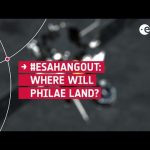
Join us to talk about the possible landing sites on comet 67P/Churyumov-Gerasimenko for Rosetta’s lander Philae.
The Hangout will also include a live draw for participants who took part in our ‘Rosetta, are we there yet?’ photo contest – watch to see if you win ESA swag!
Our hosts will be joined by:
Fred Jansen – Rosetta Mission Manager and/or Matt Taylor – Rosetta Project Scientist [TBC]
Andrea Accomazzo – Rosetta Flight Director
Barbara Cozzoni and/or Valentina Samodelov – Philae Operations Engineer, +DLR, German Aerospace Center [TBC]
Send us your questions before or during the hangout by posting a comment on this event – or on Twitter using #AskRosetta
Economist Andrew McAfee suggests that, yes, probably, droids will take our jobs — or at least the kinds of jobs we know now. In this far-seeing talk, he thinks through what future jobs might look like, and how to educate coming generations to hold them.
TEDTalks is a daily video podcast of the best talks and performances from the TED Conference, where the world’s leading thinkers and doers give the talk of their lives in 18 minutes (or less). Look for talks on Technology, Entertainment and Design — plus science, business, global issues, the arts and much more.
Find closed captions and translated subtitles in many languages at http://www.ted.com/translate