Cristian Presura la Jurnalul de stiinte
https://www.digi24.ro/stiri/sci-tech/de-ce-rugineste-fierul-1071108?fbclid=IwAR3aGt7BWdB2yd7GogRtU0SCSc2I7wUtRFv4HpFfJyQV_TQPYLFrMzeLLO0
Author: kidibot
-
De ce ruginește fierul
-

Remembering our Fallen Heroes on This Week @NASA – February 8, 2019
Remembering our fallen heroes, a milestone for our InSight lander on Mars, and, data released on our global temperature … a few of the stories to tell you about – This Week at NASA!
This video is available for download from NASA’s Image and Video Library: https://images.nasa.gov/details-NHQ_2019_0208_Remembering%20our%20Fallen%20Heroes%20on%20This%20Week%20@NASA%20%E2%80%93%20February%208,%202019.html
-
Growing blood vessels. We research. You benefit.
By cultivating human endothelial cells in space, researchers are gaining knowledge about the way our blood vessels function. This could help prevent and treat diseases such as atherosclerosis, hypertension, diabetes and thrombosis here on Earth, while keeping astronauts healthy in space.
In this video, biochemist and molecular biologist Dr Markus Wehland discusses the Spheroids experiment, which ran on the International Space Station during ESA astronaut Tim Peake’s Principia mission in 2016.
Cells cultivated in microgravity during this experiment assembled into globular and tubular structures. These structures were similar to the inner lining of blood vessels inside our bodies, but had never been achieved before by scientists cultivating cells on Earth.
Knowledge about cell growth and structure gained through this study could aid the development of tissue engineering techniques to replace damaged blood vessels in patients. It could also improve the efficiency and safety of drugs that help regulate vessel development.
It is good news for those affected by cardiovascular disease and a great example of the way in which research in microgravity is enhancing life on Earth.
The step to space research is closer than you might think. Get involved with spaceflight research via www.esa.int/spaceflightAO. Find out about our commercial partnerships and opportunities in human and robotic exploration via www.esa.int/explorationpartners to run your research in microgravity as well.
★ Subscribe: http://bit.ly/ESAsubscribe and click twice on the bell button to receive our notifications.
Check out our full video catalog: http://bit.ly/SpaceInVideos
Follow ESA on Twitter: http://bit.ly/ESAonTwitter
On Facebook: http://bit.ly/ESAonFacebook
On Instagram: http://bit.ly/ESAonInstagram
On Flickr: http://bit.ly/ESAonFlickrESA is Europe’s gateway to space. Our mission is to shape the development of Europe’s space capability and ensure that investment in space continues to deliver benefits to the citizens of Europe and the world. Check out http://www.esa.int/ESA to get up to speed on everything space related.
Copyright information about our videos is available here: http://www.esa.int/spaceinvideos/Terms_and_Conditions
#ESA
#Exploration
#Health -

Earth from space: Northeast Kenya
The Copernicus Sentinel-2A satellite takes us over part of northeast Kenya – an area east of the East African Rift in this week’s edition of the Earth from Space programme.
Download the image: http://www.esa.int/spaceinimages/Images/2019/02/Northeast_Kenya
★ Subscribe: http://bit.ly/ESAsubscribe and click twice on the bell button to receive our notifications.
Check out our full video catalog: http://bit.ly/SpaceInVideos
Follow ESA on Twitter: http://bit.ly/ESAonTwitter
On Facebook: http://bit.ly/ESAonFacebook
On Instagram: http://bit.ly/ESAonInstagram
On Flickr: http://bit.ly/ESAonFlickrESA is Europe’s gateway to space. Our mission is to shape the development of Europe’s space capability and ensure that investment in space continues to deliver benefits to the citizens of Europe and the world. Check out http://www.esa.int/ESA to get up to speed on everything space related.
Copyright information about our videos is available here: http://www.esa.int/spaceinvideos/Terms_and_Conditions
#NortheastKenya
#EarthFromSpace
#EarthObservation -

⚡️ Science Max – LIGHTNING – Home Experiments ⚡️
🚀NEW VIDEOS EVERY THURSDAY! 🚀
Have you ever done a science experiment and wondered “What would this be like if it were HUGE?” Welcome to Science Max, the exciting new series that turbocharges all the science experiments you’ve done at home.
-
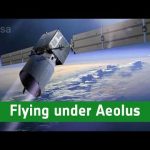
Flying under Aeolus
Following the launch of Aeolus on 22 August 2018, scientists have been busy fine-tuning and calibrating this latest Earth Explorer satellite. Aeolus carries a revolutionary instrument, which comprises a powerful laser, a large telescope and a very sensitive receiver. It works by emitting short, powerful pulses – 50 pulses per second – of ultraviolet light from a laser down into the atmosphere. The instrument then measures the backscattered signals from air molecules, dust particles and water droplets to provide vertical profiles that show the speed of the world’s winds in the lowermost 30 km of the atmosphere. These measurements are needed to improve weather forecasts. As part of the working being done to calibrate this novel mission, scientists have been taking similar measurements from an aircraft carrying an airborne version of Aeolus’ instrument. The pilot flies the plane under the satellite as it orbits above so that measurements of wind can be compared.
Learn more about Aeolus: http://bit.ly/AeolusESA
★ Subscribe: http://bit.ly/ESAsubscribe and click twice on the bell button to receive our notifications.
Check out our full video catalog: http://bit.ly/SpaceInVideos
Follow ESA on Twitter: http://bit.ly/ESAonTwitter
On Facebook: http://bit.ly/ESAonFacebook
On Instagram: http://bit.ly/ESAonInstagram
On Flickr: http://bit.ly/ESAonFlickrESA is Europe’s gateway to space. Our mission is to shape the development of Europe’s space capability and ensure that investment in space continues to deliver benefits to the citizens of Europe and the world. Check out http://www.esa.int/ESA to get up to speed on everything space related.
Copyright information about our videos is available here: http://www.esa.int/spaceinvideos/Terms_and_Conditions
#Aeolus
#Satellite
#EarthObservation -
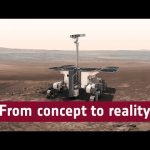
ExoMars Rover: from concept to reality
The second part of the ExoMars programme is ongoing.
In Stevenage, UK, a rover is being built that will carry a drill and a suite of instruments dedicated to exobiology and geochemistry research. It will be the first mission to combine the capability to move across the surface and to study Mars at depth.
The primary goal of the ExoMars programme is to address the question of whether life has ever existed on the red planet.
The first part of the programme was launched in March 2016 with the Trace Gas Orbiter. The second part is planned for launch in 2020 and comprises the rover and surface science platform
ExoMars is a joint endeavour between ESA and the Russian space agency, Roscosmos.
★ Subscribe: http://bit.ly/ESAsubscribe and click twice on the bell button to receive our notifications.
Check out our full video catalog: http://bit.ly/SpaceInVideos
Follow ESA on Twitter: http://bit.ly/ESAonTwitter
On Facebook: http://bit.ly/ESAonFacebook
On Instagram: http://bit.ly/ESAonInstagram
On Flickr: http://bit.ly/ESAonFlickrESA is Europe’s gateway to space. Our mission is to shape the development of Europe’s space capability and ensure that investment in space continues to deliver benefits to the citizens of Europe and the world. Check out http://www.esa.int/ESA to get up to speed on everything space related.
Copyright information about our videos is available here: http://www.esa.int/spaceinvideos/Terms_and_Conditions
#ExoMars
#Mars
#PlanetaryScience -
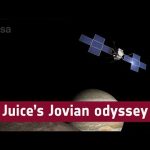
Juice’s Jovian odyssey
Juice, ESA’s Jupiter Icy Moons Explorer, is set to embark on a seven-year cruise to Jupiter starting May 2022. The mission will investigate the emergence of habitable worlds around gas giants and the Jupiter system as an archetype for the numerous giant planets now known to orbit other stars.
This animation depicts the journey to Jupiter and the highlights from its foreseen tour of the giant planet and its large ocean-bearing moons.
An Ariane 5 will lift Juice into space from Europe’s Spaceport in Kourou. A series of gravity-assist flybys at Earth (3), Venus (1) and Mars (1) will set the spacecraft on course for its October 2029 rendezvous in the Jovian system.
It is expected that a number of instruments will be activated during the gravity assists (indicated by the different coloured beams scanning across the planets) and measurements will be taken for calibration and to check the health of the instruments. The visualisations of the Earth flybys show the closest approaches over the planet according to current planning – over the South Pacific Ocean, Argentina and Peru, respectively. Throughout the animation, the instrument beam colours correspond to example observations by JANUS (green), MAJIS (red), UVS (purple), Gala (Blue) and RIME (grey), which are cameras, spectrometers, laser altimeter and radar.
During the Venus flyby, limited observations can be made because the spacecraft will be oriented to protect it from the heat of the Sun experienced in the inner Solar System. The Mars flyby will see Juice fly over the planet’s south pole to make scientific observations.
Juice will start its science mission about six months prior to arriving in orbit around the gas giant, making observations as it approaches its destination. Once in the Jovian system, a gravity-assist flyby of Jupiter’s largest moon Ganymede – the largest moon in the Solar System – helps Juice enter orbit around the gas giant 7.5 hours later.
While in Jupiter orbit, the spacecraft will study the Jovian system as an archetype for gas giants, making observations of its atmosphere, the magnetosphere, its rings and satellites.
During the tour, Juice will make two flybys of Europa, which has strong evidence for an ocean of liquid water under its icy shell. Juice will look at the moon’s active zones, its surface composition and geology, search for pockets of liquid water under the surface and study the plasma environment around Europa.
A sequence of Callisto flybys will not only be used to study this ancient, cratered world that may too harbor a subsurface ocean, but it will change the angle of Juice’s orbit with respect to Jupiter’s equator, making it possible to investigate the polar regions and environment at higher latitudes.
During the tour there will also be unique periods to observe events such as moon transits. The example in this animation shows Europa and Io passing in front of Jupiter on 27 January 2032. This type of event is rare, with less than 10 expected to occur during Juice’s tour of the Jovian system.
A sequence of Ganymede and Callisto flybys will adjust the orbit of Juice to enable it to enter orbit around Ganymede, marking it the first spacecraft to orbit another planet’s moon (aside from our own). The elliptical orbit will be followed by a 5000 km altitude cicular orbit, and later a 500 km circular orbit.
Ganymede is unique in the Solar System in that it is the only moon to have a magnetosphere. Juice will investigate this phenomenon and the moon’s internal magnetic field, and the interaction of its plasma environment with that of Jupiter. Juice will also study the moon’s atmosphere, surface, subsurface, interior and its internal ocean, investigating the moon as a planetary object and possible habitat.
Over time the 500 km orbit will naturally decay – eventually there will not be enough propellant to maintain it – and it will make a grazing impact on the surface. The animation concludes with an example of what the approach to impact could look like.
★ Subscribe: http://bit.ly/ESAsubscribe and click twice on the bell button to receive our notifications.
Check out our full video catalog: http://bit.ly/SpaceInVideos
Follow ESA on Twitter: http://bit.ly/ESAonTwitter
On Facebook: http://bit.ly/ESAonFacebook
On Instagram: http://bit.ly/ESAonInstagram
On Flickr: http://bit.ly/ESAonFlickrESA is Europe’s gateway to space. Our mission is to shape the development of Europe’s space capability and ensure that investment in space continues to deliver benefits to the citizens of Europe and the world. Check out http://www.esa.int/ESA to get up to speed on everything space related.
Copyright information about our videos is available here: http://www.esa.int/spaceinvideos/Terms_and_Conditions
#JUICE
#Jupiter
#SolarSystem -
Paxi – Veden kiertokulku
Lähde Paxin mukaan vierailulle Maa-planeetalle opiskelemaan veden kiertokulkua.
Tässä 6–12-vuotiaille tarkoitetussa videossa Paxi selittää, miten veden kiertokulku toimii.
★ Subscribe: http://bit.ly/ESAsubscribe and click twice on the bell button to receive our notifications.
Check out our full video catalog: http://bit.ly/SpaceInVideos
Follow ESA on Twitter: http://bit.ly/ESAonTwitter
On Facebook: http://bit.ly/ESAonFacebook
On Instagram: http://bit.ly/ESAonInstagram
On Flickr: http://bit.ly/ESAonFlickrESA is Europe’s gateway to space. Our mission is to shape the development of Europe’s space capability and ensure that investment in space continues to deliver benefits to the citizens of Europe and the world. Check out http://www.esa.int/ESA to get up to speed on everything space related.
Copyright information about our videos is available here: http://www.esa.int/spaceinvideos/Terms_and_Conditions
-
Paxi – Vattnets kretslopp
Följ med Paxi när han besöker planeten Jorden och lär dig om vattnets kretslopp.
I den här filmen, som är ämnad för barn i åldern 6 till 12 år, förklarar Paxi hur vattnets kretslopp fungerar.
★ Subscribe: http://bit.ly/ESAsubscribe and click twice on the bell button to receive our notifications.
Check out our full video catalog: http://bit.ly/SpaceInVideos
Follow ESA on Twitter: http://bit.ly/ESAonTwitter
On Facebook: http://bit.ly/ESAonFacebook
On Instagram: http://bit.ly/ESAonInstagram
On Flickr: http://bit.ly/ESAonFlickrESA is Europe’s gateway to space. Our mission is to shape the development of Europe’s space capability and ensure that investment in space continues to deliver benefits to the citizens of Europe and the world. Check out http://www.esa.int/ESA to get up to speed on everything space related.
Copyright information about our videos is available here: http://www.esa.int/spaceinvideos/Terms_and_Conditions
-
Paxi – Vannsyklusen
Följ med Paxi när han besöker planeten Jorden och lär dig om vattnets kretslopp.
I den här filmen, som är ämnad för barn i åldern 6 till 12 år, förklarar Paxi hur vattnets kretslopp fungerar.
★ Subscribe: http://bit.ly/ESAsubscribe and click twice on the bell button to receive our notifications.
Check out our full video catalog: http://bit.ly/SpaceInVideos
Follow ESA on Twitter: http://bit.ly/ESAonTwitter
On Facebook: http://bit.ly/ESAonFacebook
On Instagram: http://bit.ly/ESAonInstagram
On Flickr: http://bit.ly/ESAonFlickrESA is Europe’s gateway to space. Our mission is to shape the development of Europe’s space capability and ensure that investment in space continues to deliver benefits to the citizens of Europe and the world. Check out http://www.esa.int/ESA to get up to speed on everything space related.
Copyright information about our videos is available here: http://www.esa.int/spaceinvideos/Terms_and_Conditions
-
Science at ESA
Science is the underpinning theme of ESA, driving the spiral of inspiration, innovation, information exchange and interaction with our stakeholders. In this video, Günther Hasinger, ESA Director of Science, reflects on the growth of ESA’s space science programme over the past decades, as well as on its current and future challenges. He also highlights the importance of long-term strategic planning and international cooperation in these endeavours, and finally looks back at some recent successes of ESA’s space science missions.
Learn more about ESA’s space science missions: http://www.esa.int/science
Science is everywhere at ESA. As well as exploring the Universe and answering the big questions about our place in space we develop the satellites, rockets and technologies to get there. Science also helps us to care for our home planet. All this week we’re highlighting different aspects of science at ESA. Join the conversation with #ScienceAtESA.
Credits: ESA/NASA/JPL/University of Arizona (Huygens landing); ESA/Rosetta/Philae/ROLIS/DLR, Stefano Mottola (Philae landing); ESA/Planck Collaboration (cosmic microwave background); ESA/Gaia/DPAC (Milky Way); MPG/ESO (Eagle Nebula, visible); ESA/Herschel/PACS/SPIRE/Hill, Motte, HOBYS Key Programme Consortium (Eagle Nebula, far-infrared); ESA/XMM-Newton/EPIC/XMM-Newton-SOC/Boulanger (Eagle Nebula, X-rays); NASA, ESA/Hubble and the Hubble Heritage Team (Pillars of Creation); ESO (Pillars of Creation, ground-based view); Koppelman, Villalobos & Helmi, Kapteyn Astronomical Institute, University of Groningen (Milky Way simulation); ESA/XMM-Newton/F. Nicastro et al./R. Cen (warm-hot intergalactic medium); ESA/DLR/FU Berlin, CC BY-SA 3.0 IGO (Mars surface); ESA/NASA/JPL/ASI/Univ. Rome (Mars, liquid water under south pole); NASA/JPL-Caltech (Mars view); ESO, M. Kornmesser, L. Calcada (`Oumuamua animation)
★ Subscribe: http://bit.ly/ESAsubscribe and click twice on the bell button to receive our notifications.
Check out our full video catalog: http://bit.ly/SpaceInVideos
Follow ESA on Twitter: http://bit.ly/ESAonTwitter
On Facebook: http://bit.ly/ESAonFacebook
On Instagram: http://bit.ly/ESAonInstagram
On Flickr: http://bit.ly/ESAonFlickrESA is Europe’s gateway to space. Our mission is to shape the development of Europe’s space capability and ensure that investment in space continues to deliver benefits to the citizens of Europe and the world. Check out http://www.esa.int/ESA to get up to speed on everything space related.
Copyright information about our videos is available here: http://www.esa.int/spaceinvideos/Terms_and_Conditions
#ESA
#ScienceAtESA
#SpaceScience -
Mapping the future of our forests with Microsoft AI
Microsoft’s AI for Good initiative empowers people around the world working to solve humanitarian issues and create a more sustainable and accessible world. Learn how SilviaTerra is empowering conservationists, government organizations and land owners to inventory forests for ecological social and economic health using AI.
Subscribe to Microsoft on YouTube here: https://aka.ms/SubscribeToYouTube
Follow us on social:
LinkedIn: https://www.linkedin.com/company/microsoft/
Twitter: https://twitter.com/Microsoft
Facebook: https://www.facebook.com/Microsoft/
Instagram: https://www.instagram.com/microsoft/For more about Microsoft, our technology, and our mission, visit https://aka.ms/microsoftstories
-

Kaslan Corporation Special Announcement
Please take a moment to watch this announcement from Kaslan Corp. Founder and CEO, Henry Kaslan regarding the upcoming global reveal of a revolutionary new family product that will change the landscape of artificial intelligence forever. Visit KaslanCorp.com for more information.
-
NASA at the Big Game
No matter what team you’re rooting for, our technology is helping you play the game. Our discoveries off the planet have developed all sorts of equipment on the field — from shock-absorbent foam in helmets to retractable stadium roofs. 🏈 Go NASA!
Learn more about NASA technologies found in your everyday life at: https://homeandcity.nasa.gov/
-

Getting Back to Business on This Week @NASA – February 1, 2019
Getting back to the business of NASA, an update on our Commercial Crew Program, and, our mission to the Sun is in full swing … a few of the stories to tell you about – This Week at NASA!
This video is available for download from NASA’s Image and Video Library: https://images.nasa.gov/details-NHQ_2019_0201_Getting%20Back%20to%20Business%20on%20This%20Week%20@NASA%20%E2%80%93%20February%201,%202019.html
-

🔬 Science Max – EARTHQUAKES – Home Experiments 🌎
🚀NEW VIDEOS EVERY THURSDAY! 🚀
Have you ever done a science experiment and wondered “What would this be like if it were HUGE?” Welcome to Science Max, the exciting new series that turbocharges all the science experiments you’ve done at home.
-
Dandora for AI4KIDS, for Upskilling Village Kids in Artificial Intelligence
#AI4KIDS #Youcode #SKILLINDIA
Women Entrepreneur Suriya Prabha
(https://www.linkedin.com/in/suriya-prabha-k-798663170/)
Building a Startup Youcode that prepare our Kids for Artificial Intelligence FutureStartup Youcode Intelligence Solutions Artificial Intelligence for Kids (#AI4KIDS) campaign in India with Dandora
India has a serious Skill Problem, which is more prevalent in Small towns and Villages. GOI is doing a lot through SKILL INDIA, but Govt alone cant fix, there needs radical new ideas from Startup community, So the Startup YouCode Intelligence solutions
What is the Startup Youcode Intelligence solutions Unique Approach?
AI4KIDS campaign to Reach out to the Unreached Village Kids and have a Awareness campaign on AI. Build Kids consumable AI content, which are fun, interactive, easy to understand and Learn through Google AIY Kit, Amazon AWS DeepLens and Microsoft Vision AI developer KitWhy Indian Village Kids has to be Empowered on AI?
Since the students of today will need to work in a future where AI is the reality, it’s important to expose village and small town students ( Major chunk of Indian students Population) to use the AI based technology very early on and make them understand and Learnhttps://www.linkedin.com/company/14452246/admin/
https://twitter.com/TeamYouCode
https://www.facebook.com/TeamYouCode/
https://www.youtube.com/channel/UCcgZTCCQcLNegkjaoh_UASA
https://www.instagram.com/youcode_in/ -

Vector Robot – What is Artificial Intelligence (AI for Kids)
Basic Introduction to robots video for kids. Learn With Lily! Subscribe, comment and like!
Today we learn about artificial intelligence and robots for kids.
Robots and AI
– What does artificial mean?
– What is intelligence?
– What is artificial intelligence?
– What is A.I.?
– Review of the Vector Home Robot by Ankieducational videos for preschoolers. educational videos for toddlers
#baby #children #babies #toddlers #preschool #babyvideos #kids #teach #learn #boostIQ -

Aibo SONY robot dog favorite pet for children and adults with artificial intelligence
Sony’s puppy-sized robot dog aibo, equipped with cameras, artificial intelligence and internet capability, can now remotely check up on family members, children or even pets, the Japanese electronics giant says.
-

ESA’s detection expertise
What’s the difference between spotting asteroids in space, and debris objects in Earth orbit? At first, both look like tiny dots streaming across the sky, against a backdrop of twinkling stars. As part of its Space Safety & Security activities, ESA brings together experts in asteroid and debris detection, asking what these two vital fields have in common, and how they can protect us from hazards in space.
★ Subscribe: http://bit.ly/ESAsubscribe and click twice on the bell button to receive our notifications.
Check out our full video catalog: http://bit.ly/SpaceInVideos
Follow ESA on Twitter: http://bit.ly/ESAonTwitter
On Facebook: http://bit.ly/ESAonFacebook
On Instagram: http://bit.ly/ESAonInstagram
On Flickr: http://bit.ly/ESAonFlickrESA is Europe’s gateway to space. Our mission is to shape the development of Europe’s space capability and ensure that investment in space continues to deliver benefits to the citizens of Europe and the world. Check out http://www.esa.int/ESA to get up to speed on everything space related.
Copyright information about our videos is available here: http://www.esa.int/spaceinvideos/Terms_and_Conditions
-
Lunar Exploration – ESA’s missions
50 years after the first human landed on the Moon, what is next? The exploration of our Moon is a global endeavour with Europeans and commercial actors playing a large role. The European Space Agency has developed an exploration programme based on four main missions.
Luna Resurs is a partnership with the Russian agency Roscosmos that will carry European technology to land precisely and safely on the Moon (PILOT) and to extract and analyse samples of the lunar terrain (PROSPECT).
Orion and the European Service Module will return humans to the Moon and take advantage of the new technology for human space transportation. Orion, the NASA spacecraft, will bring humans farther than they have never been before. ESA is providing the service modules that will provide propulsion, life support, power, air and water, and control the temperature in the crew module.
ISRU aims to extract and process resources on the Moon into useful products and services: “In-situ resource utilisation”. A mission to explore lunar resources could be a reality from 2025. The goal is to produce drinkable water or breathable oxygen on the Moon.
The Heracles mission could take of in 2028 to allow us to gain knowledge on human-robotic interaction while landing a spacecraft on the Moon, collecting samples with a rover operated from the lunar Gateway and send samples back to Earth.
Visit our #LunarExploration interactive site to explore more: http://lunarexploration.esa.int
★ Subscribe: http://bit.ly/ESAsubscribe
Check out our full video catalog: http://bit.ly/SpaceInVideos
Follow ESA on Twitter: http://bit.ly/ESAonTwitter
On Facebook: http://bit.ly/ESAonFacebook
On Instagram: http://bit.ly/ESAonInstagram
On Flickr: http://bit.ly/ESAonFlickrESA is Europe’s gateway to space. Our mission is to shape the development of Europe’s space capability and ensure that investment in space continues to deliver benefits to the citizens of Europe and the world. Check out http://www.esa.int/ESA to get up to speed on everything space related.
Copyright information about our videos is available here: http://www.esa.int/spaceinvideos/Terms_and_Conditions
-
What is the origin of the Moon?
The Moon has been circling the Earth for over four billion years, but where did it come from?
In this video, Ralf Jaumann, planetary geologist at the German Aerospace Centre, DLR, discusses the four theories that could explain the origin of the Earth-Moon system.
There are four theories about the origin of the Earth-Moon system.
The first is that Earth captured a celestial body in its orbit. Another possibility is that a rapidly rotating Earth could have thrown material out to form the Moon around it. A third theory is that Earth and the Moon formed at the same time out of the same material. Today, most scientists believe the Moon is ‘Earth’s child’ – a large body collided with Earth, destroying our planet’s mantle and sending material into orbit from which the Moon formed. This ‘big splash’ theory would explain why the Moon’s rocks are similar to those on Earth.
Find out more about the why and how of lunar exploration on ESA’s interactive guide of the Moon: https://lunarexploration.esa.int/#/intro
★ Subscribe: http://bit.ly/ESAsubscribe and click twice on the bell button to receive our notifications.
Check out our full video catalog: http://bit.ly/SpaceInVideos
Follow ESA on Twitter: http://bit.ly/ESAonTwitter
On Facebook: http://bit.ly/ESAonFacebook
On Instagram: http://bit.ly/ESAonInstagram
On Flickr: http://bit.ly/ESAonFlickrESA is Europe’s gateway to space. Our mission is to shape the development of Europe’s space capability and ensure that investment in space continues to deliver benefits to the citizens of Europe and the world. Check out http://www.esa.int/ESA to get up to speed on everything space related.
Copyright information about our videos is available here: http://www.esa.int/spaceinvideos/Terms_and_Conditions
-
Anti-Gravity Cone?! – EXPLAINED!
Using a record player, four treadmills, and a beach ball, this video explains how a ball can defy gravity.
SUBSCRIBE: https://www.youtube.com/WhatThePhysics?sub_confirmation=1
See a new experiment (previous video) that, for the first time ever, shows how a ball can roll uphill:https://bit.ly/2TY1FX9
** PRODUCTION CREDITS
————————————————————Host, Producer: Greg Kestin
Filming: Daniel Thomson, Greg Kestin, Lauren Liebhaber, Yasmeen Ketcherside, Kelsey Tsipis, Tim Treuer
Research, Writing: Greg Kestin, Samia Bouzid
Editing, Animating: Greg Kestin
Editorial Input: Julia Cort, Ari Daniel
Media: Shutterstock
Special thanks to Entire NOVA team
From the producers of PBS NOVA
© WGBH Educational Foundation
Funding provided by FQXi
Music provided by APM -
ESA Director General’s press breakfast
The ESA Director General’s annual new year press breakfast held at ESA’s headquarters in Paris, France, on 16 January 2019. Jan Wörner talked about the achievements of 2018 and the highlights for 2019, with a particular focus on Space19+, the ministerial conference to be held in Seville, Spain, in November 2019. The event was concluded with an interactive question-and-answer session with Director General and ESA’s Programme Directors.
★ Subscribe: http://bit.ly/ESAsubscribe and click twice on the bell button to receive our notifications.
Check out our full video catalog: http://bit.ly/SpaceInVideos
Follow ESA on Twitter: http://bit.ly/ESAonTwitter
On Facebook: http://bit.ly/ESAonFacebook
On Instagram: http://bit.ly/ESAonInstagram
On Flickr: http://bit.ly/ESAonFlickrESA is Europe’s gateway to space. Our mission is to shape the development of Europe’s space capability and ensure that investment in space continues to deliver benefits to the citizens of Europe and the world. Check out http://www.esa.int/ESA to get up to speed on everything space related.
Copyright information about our videos is available here: http://www.esa.int/spaceinvideos/Terms_and_Conditions
-

Earth from space: Gangotri Glacier
In the 300th edition of the #EarthfromSpace programme, Copernicus Sentinel-2 takes us over Gangotri, one of the largest glaciers in the Himalayas.
Download the image: http://www.esa.int/spaceinimages/Images/2019/01/Gangotri_India
★ Subscribe: http://bit.ly/ESAsubscribe and click twice on the bell button to receive our notifications.
Check out our full video catalog: http://bit.ly/SpaceInVideos
Follow ESA on Twitter: http://bit.ly/ESAonTwitter
On Facebook: http://bit.ly/ESAonFacebook
On Instagram: http://bit.ly/ESAonInstagram
On Flickr: http://bit.ly/ESAonFlickrESA is Europe’s gateway to space. Our mission is to shape the development of Europe’s space capability and ensure that investment in space continues to deliver benefits to the citizens of Europe and the world. Check out http://www.esa.int/ESA to get up to speed on everything space related.
Copyright information about our videos is available here: http://www.esa.int/spaceinvideos/Terms_and_Conditions
-

What is Space19+?
ESA Web TV talks with ESA’s Director General Jan Wörner about the plans for ‘Space19+’, ESA’s next Ministerial Council, and its benefits for citizens.
Ministers from ESA’s Member States will come together in Seville, Spain, 27-28 November 2019, to secure financing for ESA’s activities in the coming years.
In this interview the Director General discusses the Space19+ proposal including his plans for space programmes to be carried out by the Agency beyond 2019, covering all aspects of space activities: science and exploration, applications, access to space, operations, research and development. The Space19+ plan also puts ESA in a world-leading position in the emerging field of space safety and security.
★ Subscribe: http://bit.ly/ESAsubscribe and click twice on the bell button to receive our notifications.
Check out our full video catalog: http://bit.ly/SpaceInVideos
Follow ESA on Twitter: http://bit.ly/ESAonTwitter
On Facebook: http://bit.ly/ESAonFacebook
On Instagram: http://bit.ly/ESAonInstagram
On Flickr: http://bit.ly/ESAonFlickrESA is Europe’s gateway to space. Our mission is to shape the development of Europe’s space capability and ensure that investment in space continues to deliver benefits to the citizens of Europe and the world. Check out http://www.esa.int/ESA to get up to speed on everything space related.
Copyright information about our videos is available here: http://www.esa.int/spaceinvideos/Terms_and_Conditions
-
A taste of astronomy at ESA
To explore some of the biggest questions in astronomy, ESA operates a fleet of space science missions that are exploring our Solar System and observing the Universe across the electromagnetic spectrum.
In this video, Günther Hasinger, ESA Director of Science, reflects on current challenges in space science, from planets and life to the fundamental workings of the Universe. Then, María Santos-Lleo, XMM-Newton Science Operations Manager, explains how ESA’s flagship X-ray observatory collects data from some of the most energetic sources in the cosmos. Finally, Bruno Merin, Head of the ESAC Science Data Centre, shows how data from ESA’s space science missions are stored and made available to the worldwide community.
Learn more about ESA’s space science missions: http://www.esa.int/science
Explore the Universe with ESASky, an online application that allows users to visualise the sky as observed by ESA’s astronomy missions: http://bit.ly/ESASky
★ Subscribe: http://bit.ly/ESAsubscribe and click twice on the bell button to receive our notifications.
Check out our full video catalog: http://bit.ly/SpaceInVideos
Follow ESA on Twitter: http://bit.ly/ESAonTwitter
On Facebook: http://bit.ly/ESAonFacebook
On Instagram: http://bit.ly/ESAonInstagram
On Flickr: http://bit.ly/ESAonFlickrESA is Europe’s gateway to space. Our mission is to shape the development of Europe’s space capability and ensure that investment in space continues to deliver benefits to the citizens of Europe and the world. Check out http://www.esa.int/ESA to get up to speed on everything space related.
Copyright information about our videos is available here: http://www.esa.int/spaceinvideos/Terms_and_Conditions
-
Fifteen years imaging the Red Planet
On 25 December 2003, ESA’s Mars Express entered orbit around the Red Planet. The spacecraft began returning the first images from orbit using its High Resolution Stereo Camera just a couple of weeks later, and over the course of its fifteen year history has captured thousands of images covering the globe.
This video compilation highlights some of the stunning scenes revealed by this long-lived mission. From breathtaking horizon-to-horizon views to the close-up details of ice- and dune-filled craters, and from the polar ice caps and water-carved valleys to ancient volcanoes and plunging canyons, Mars Express has traced billions of years of geological history and evolution.
For regular news and image releases from Mars Express see http://www.esa.int/Our_Activities/Space_Science/Mars_Express
★ Subscribe: http://bit.ly/ESAsubscribe and click twice on the bell button to receive our notifications.
Check out our full video catalog: http://bit.ly/SpaceInVideos
Follow ESA on Twitter: http://bit.ly/ESAonTwitter
On Facebook: http://bit.ly/ESAonFacebook
On Instagram: http://bit.ly/ESAonInstagram
On Flickr: http://bit.ly/ESAonFlickrESA is Europe’s gateway to space. Our mission is to shape the development of Europe’s space capability and ensure that investment in space continues to deliver benefits to the citizens of Europe and the world. Check out http://www.esa.int/ESA to get up to speed on everything space related.
Copyright information about our videos is available here: http://www.esa.int/spaceinvideos/Terms_and_Conditions
-
2019 preview
ESA is looking forward to another interesting year in 2019.
ESA astronaut Luca Parmitano will return to the International Space Station, in Science Cheops will look at exoplanets, while the EDRS-C satellite will start the era of super-fast data relay on orbit.
In Kourou preparation will go full speed for Vega-C, a more powerful version of ESA’s light weight launcher, also paving the way for future Ariane 6.
And in November in Spain at ‘Space 19+’, the Council at Ministerial level, ESA will propose to its Member States a bold vision for a strong Europe in space.
★ Subscribe: http://bit.ly/ESAsubscribe and click twice on the bell button to receive our notifications.
Check out our full video catalog: http://bit.ly/SpaceInVideos
Follow ESA on Twitter: http://bit.ly/ESAonTwitter
On Facebook: http://bit.ly/ESAonFacebook
On Instagram: http://bit.ly/ESAonInstagram
On Flickr: http://bit.ly/ESAonFlickrESA is Europe’s gateway to space. Our mission is to shape the development of Europe’s space capability and ensure that investment in space continues to deliver benefits to the citizens of Europe and the world. Check out http://www.esa.int/ESA to get up to speed on everything space related.
Copyright information about our videos is available here: http://www.esa.int/spaceinvideos/Terms_and_Conditions
-

Denmark Using Artificial Intelligence To Make Welfare More Efficient
Business Insider reports Artificial intelligence and machine learning may promise vast social benefits in governance, however, without regulation, they could damage democracy. Algorithms are especially useful in welfare states, where benefits can be delivered more efficiently. For example, Denmark is beginning to use algorithms to make its welfare state more efficient, but it does not seem to fully understand the dangerous potential. The municipality of Gladsaxe in Copenhagen has quietly been experimenting with a system that would use algorithms to identify children at risk of abuse. But that same technology will inevitably take a toll on privacy, family life, and free speech, and can weaken public accountability on the government
https://www.businessinsider.com/denmark-is-using-algorithms-to-dole-out-welfare-benefits-2018-12
http://www.wochit.comThis video was produced by YT Wochit Vote It using http://wochit.com
-
BepiColombo: preparations & launch (timelapse)
This year saw ESA’s science exploration mission BepiColombo begin its seven year cruise to the innermost planet of our Solar System: Mercury. This timelapse recalls some of the preparations that went into readying the mission at Europe’s Spaceport in Kourou, French Guiana.
The mission, a joint endeavour between ESA and JAXA, comprises three spacecraft modules: ESA’s Mercury Planetary Orbiter and JAXA’s Mercury Magnetospheric Orbiter that will study all aspects of Mercury from their complementary orbits around the planet, and ESA’s Mercury Transfer Module that will bring them to the planet using a combination of solar electric propulsion and nine planetary flybys.
The video includes testing of the individual spacecraft units, stacking of the three modules and a protective sunshield into their launch configuration, integration of the spacecraft inside the launcher fairing, roll out to the launch pad, and finally launch itself. The mission lifted off at 01:45:28 GMT on 20 October 2018.
★ Subscribe: http://bit.ly/ESAsubscribe and click twice on the bell to receive our notifications.
Check out our full video catalog: http://bit.ly/SpaceInVideos
Follow ESA on Twitter: http://bit.ly/ESAonTwitter
On Facebook: http://bit.ly/ESAonFacebook
On Instagram: http://bit.ly/ESAonInstagram
On Flickr: http://bit.ly/ESAonFlickrESA is Europe’s gateway to space. Our mission is to shape the development of Europe’s space capability and ensure that investment in space continues to deliver benefits to the citizens of Europe and the world. Check out http://www.esa.int/ESA to get up to speed on everything space related.
Copyright information about our videos is available here: http://www.esa.int/spaceinvideos/Terms_and_Conditions
-

Season’s Greetings from NASA 2018
On December 24, 1968, Apollo 8 arrived at the Moon and began orbital insertion. The Apollo spacecraft flew most of the way to the Moon sideways,pointed toward celestial “north” for guidance purposes.
NASA astronauts Frank Borman, James Lovell, William Anders became the first humans to travel beyond low Earth orbit and orbit another celestial body.
They were also the first humans to see the far side of the Moon, and Earth as a whole planet, taking the famous Earthrise photo.
On this 50th anniversary of the historic flight of Apollo 8, NASA wishes Season’s Greetings to everyone on the good Earth.
https://www.nasa.gov/mission_pages/apollo/missions/apollo8.html
This video is available for download from NASA’s Image and Video Library: https://images.nasa.gov/details-NHQ_2018_1221_Season%E2%80%99s%20%20Greetings%20from%20NASA%202018.html
-
ESA highlights 2018
ESA can look back at a fulfilling year. It has been a year marked by new Earth Observation missions to analyse and protect our planet, in particular the completion of the first wave of Copernicus Sentinel satellites and the launch of Aeolus. Galileo also reached an important milestone – there are now 26 satellites in orbit. Other achievements include the October launch of BepiColombo, the ESA-JAXA mission to study Mercury, and the almost continuous presence of ESA astronauts on the International Space Station.
What was your favourite moment? Tell us in the comment section.
★ Subscribe: http://bit.ly/ESAsubscribe and click twice on the bell button to receive our notifications.
Check out our full video catalog: http://bit.ly/SpaceInVideos
Follow ESA on Twitter: http://bit.ly/ESAonTwitter
On Facebook: http://bit.ly/ESAonFacebook
On Instagram: http://bit.ly/ESAonInstagram
On Flickr: http://bit.ly/ESAonFlickrESA is Europe’s gateway to space. Our mission is to shape the development of Europe’s space capability and ensure that investment in space continues to deliver benefits to the citizens of Europe and the world. Check out http://www.esa.int/ESA to get up to speed on everything space related.
Copyright information about our videos is available here: http://www.esa.int/spaceinvideos/Terms_and_Conditions
-

Apollo 8: Around The Moon and Back
50 years ago, three NASA astronauts embarked on a journey that would take them “Round the moon and back”. The Apollo 8 mission proved the performance of the command and service module. This historic mission launched on December 21, 1968 to demonstrate a lunar trajectory and was the first crewed launch of the Saturn V rocket. On Christmas Eve, Frank Borman, Jim Lovell, and Bill Anders were the first humans to orbit the Moon and the first to see an Earthrise above its surface.
This video is available for download from NASA’s Image and Video Library: https://images.nasa.gov/details-NHQ_2018_1221_Apollo%208%20-%20Around%20The%20Moon%20and%20Back.html
-
Living in space
Over the last two decades, space agencies have created more comfortable conditions on the International Space Station, but we need to explore the concept of ‘living in space’ much further if humans are to ever live and work on another world, such as the Moon or Mars.
ESA’s Discovery and Preparation Programme works to prepare ESA for the future of space exploration. As part of this programme, ESA has worked with academic and industrial partners on a huge number of studies that lay the groundwork for living in space.
The technology that exists today could easily take us to the Moon and beyond, but it is studies like those carried out under the Discovery and Preparation Programme that will make a trip resourceful, sustainable and productive.
★ Subscribe: http://bit.ly/ESAsubscribe and click twice on the bell button to receive our notifications.
Check out our full video catalog: http://bit.ly/SpaceInVideos
Follow ESA on Twitter: http://bit.ly/ESAonTwitter
On Facebook: http://bit.ly/ESAonFacebook
On Instagram: http://bit.ly/ESAonInstagram
On Flickr: http://bit.ly/ESAonFlickrESA is Europe’s gateway to space. Our mission is to shape the development of Europe’s space capability and ensure that investment in space continues to deliver benefits to the citizens of Europe and the world. Check out http://www.esa.int/ESA to get up to speed on everything space related.
Copyright information about our videos is available here: http://www.esa.int/spaceinvideos/Terms_and_Conditions
-

Erstes Interview mit Alexander Gerst nach der Rückkehr zur Erde
(Watch this interview in English: https://youtu.be/oXeetYA2ods)
Nur wenige Stunden nach dem ESA-Astronaut Alexander Gerst von seiner Horizons-Mission auf der Internationalen Raumstation ISS zurückgekehrt ist, gibt er ein kurzes Interview in der Forschungseinrichtung :envihab auf dem Campus des Deutschen Zentrums für Luft- und Raumfahrt in Köln.
Alexander Gerst kehrte am 20. Dezember 2018 zusammen mit den Besatzungsmitgliedern Serena Auñón- Chancellor und Sergei Prokopyev in der Sojus MS-09 auf die Erde zurück – demselben Raumschiff, dass sie am 6. Juni 2018 zur Station brachte.
Die Landung des Trios in der kasachischen Steppe markierte nach über sechs Monaten im Weltraum den erfolgreichen Abschluss der so genannten ISS Expedition 56/57. In dieser Zeit führte Alexander Gerst über 60 europäische Experimente durch, wurde der zweite europäische Kommandant der Internationalen Raumstation, nahm sechs Raumtransporter in Empfang, installierte die erste kommerzielle Forschungsanlage im Columbus-Labor der ESA, sendete eine wichtige Botschaft zum Klimawandel für Delegierte der COP24-Klimakonferenz, machte Echtzeitaufnahmen von einem Sojus-Startabbruch und vieles mehr.
Horizons war Alexander Gersts zweite Mission auf der Internationalen Raumstation – die erste im Jahr 2014 trug den Namen Blue Dot. Er hat nun 363 volle, allerdings nicht aufeinanderfolgende Tage im Weltraum verbracht (an seinem 364. Tag kehrte er nach Hause zurück).
In Köln angekommen, wird Alexander Gerst eine Vielzahl an Bord der ISS durchgeführter wissenschaftlich-technischer Experimente auf der Erde mit dem Ziel der vergleichenden Betrachtung und Bewertung der Daten wiederholen. Hinzu kommen medizinische Untersuchungen sowie viel Sport und körperliches Training zum Zwecke der Regenerierung und Rehabilitation.★ Subscribe: http://bit.ly/ESAsubscribe and click twice on the bell button to receive our notifications.
Check out our full video catalog: http://bit.ly/SpaceInVideos
Follow ESA on Twitter: http://bit.ly/ESAonTwitter
On Facebook: http://bit.ly/ESAonFacebook
On Instagram: http://bit.ly/ESAonInstagram
On Flickr: http://bit.ly/ESAonFlickrESA is Europe’s gateway to space. Our mission is to shape the development of Europe’s space capability and ensure that investment in space continues to deliver benefits to the citizens of Europe and the world. Check out http://www.esa.int/ESA to get up to speed on everything space related.
Copyright information about our videos is available here: http://www.esa.int/spaceinvideos/Terms_and_Conditions
-

First interview with Alexander Gerst back on Earth
(A German version of this interview is available here: https://youtu.be/Rhv-6TXTSX4)
Just hours after returning from his Horizons mission on the International Space Station, ESA astronaut Alexander Gerst gives a short interview at the German Aerospace Centre’s ‘:envihab’ facility in Cologne, Germany.
Alexander returned to Earth alongside crew mates Serena Auñón-Chancellor and Sergei Prokopyev on 20 December 2018 in the same Soyuz MS-09 spacecraft that flew them to the Station on 6 June 2018.
The trio’s landing in the Kazakh steppe marked the successful conclusion of over six months in space during which Alexander conducted over 60 European experiments, became the second ever European commander of the International Space Station, welcomed six resupply vehicles, installed the first commercial facility for research in the Columbus laboratory, delivered an important message on climate change for leaders at the COP24 climate change conference, captured real-time footage of a Soyuz launch abort and much, much more.
#Horizons was Alexander’s second mission to the International Space Station – the first was Blue Dot in 2014.
Now back in Cologne, Alexander will take his time to readapt to Earth’s gravity supported by ESA’s team of space medicine experts. He will also continue to provide ground-based data for researchers to support experiments performed in space.
Follow Alexander on social media via http://bit.ly/AlexanderGerstESA and on http://bit.ly/HorizonsBlogESA
★ Subscribe: http://bit.ly/ESAsubscribe and click twice on the bell button to receive our notifications.
Check out our full video catalog: http://bit.ly/SpaceInVideos
Follow ESA on Twitter: http://bit.ly/ESAonTwitter
On Facebook: http://bit.ly/ESAonFacebook
On Instagram: http://bit.ly/ESAonInstagram
On Flickr: http://bit.ly/ESAonFlickrESA is Europe’s gateway to space. Our mission is to shape the development of Europe’s space capability and ensure that investment in space continues to deliver benefits to the citizens of Europe and the world. Check out http://www.esa.int/ESA to get up to speed on everything space related.
Copyright information about our videos is available here: http://www.esa.int/spaceinvideos/Terms_and_Conditions
-

NASA Explorers: Final Approach
In the pre-dawn hours of a late October day, a satellite and an airplane joined forces over the frigid Weddell Sea, taking simultaneous measurements of drifting sea ice. It was the culmination of more than a decade of planning, designing and building the best way to measure Earth’s changing ice.
#NASAExplorers are constantly pushing the limit to learn more about our world and those far beyond. Join in as they celebrate a milestone in the quest to better understand the planet we call home.