Στη Βρετανία επιστήμονες και μηχανικοί εργάζονται για την αποστολή ExoMars, την κοινή Ευρωπαϊκή και ρωσική προσπάθεια που θα ταξιδέψει στον κόκκινο πλανήτη, ψάχνοντας για ζωή.
Ο Μπρούνο, είναι το ρόβερ που θα πάει στον Άρη. Είναι ένα όχημα με έξι ρόδες που μπορεί να αναπτύξει ταχύτητα δύο εκατοστών το δευτερόλεπτο και μπορεί να κινηθεί ημιαυτόνομα στην επιφάνεια του πλανήτη. Τις δοκιμές κάνουν οι μηχανικοί της Airbus, που είναι υπεύθυνοι για την κατασκευή του πρώτου οχήματος που θα ψάξει για ζωή στον κόκκινο πλανήτη.
ESA is Europe’s gateway to space. Our mission is to shape the development of Europe’s space capability and ensure that investment in space continues to deliver benefits to the citizens of Europe and the world. Check out http://www.esa.int/ESA to get up to speed on everything space related.
À procura de vida em Marte, a Agência Espacial Europeia (ESA, na sigla em inglês) e a congénere russa Roscosmos estão a ultimar a próxima missão ExoMars, a qual vai integrar também tecnologia de origem portuguesa. A Euronews deslocou-se a Stevenage, a norte de Londres, no Reino Unido, onde a Airbus está a desenvolver um novo veículo com o objetivo específico de procurar sinais de vida no planeta vermelho, o “vizinho” mais próximo da Terra no Sistema Solar.
ESA is Europe’s gateway to space. Our mission is to shape the development of Europe’s space capability and ensure that investment in space continues to deliver benefits to the citizens of Europe and the world. Check out http://www.esa.int/ESA to get up to speed on everything space related.
You have to start somewhere when looking for life away from Earth. Many #NASAExplorers look for places with water ice, including distant moons like Enceladus and Europa. This week, we’re traveling away from our home planet to investigate ice in the solar system.
Timelapse of the Russian Progress MS-10 cargo spacecraft launched on 16 November 2018 at 18:14 GMT from Baikonur cosmodrome, Kazakhstan, taken by ESA astronaut Alexander Gerst from the International Space Station.
The spacecraft was launched atop a Soyuz rocket with 2564 kg of cargo and supplies. Flying at 28 800 km/h, 400 km high, the International Space Station requires regular supplies from Earth such as this Progress launch. Spacecraft are launched after the Space Station flies overhead so they catch up with the orbital outpost to dock, in this case two days later on 18 November 2018.
The images were taken from the European-built Cupola module with a camera set to take pictures at regular intervals. The pictures are then played quickly after each other at 8 to 16 times normal speed. The video shows around 15 minutes of the launch at normal speed.
The Progress spacecraft delivered food, fuel and supplies, including about 750 kg of propellant, 75 kg of oxygen and air and 440 l of water.
Some notable moments in this video are:
00:07 Soyuz-FG rocket booster separation.
00:19 Core stage separation.
00:34:05 Core stage starts burning in the atmosphere as it returns to Earth after having spent all its fuel.
00:34:19 Progress spacecraft separates from rocket and enters orbit to catch up with the International Space Station.
ESA is Europe’s gateway to space. Our mission is to shape the development of Europe’s space capability and ensure that investment in space continues to deliver benefits to the citizens of Europe and the world. Check out http://www.esa.int/ESA to get up to speed on everything space related.
Guido van Rossum is the creator of Python, one of the most popular and impactful programming languages in the world. This conversation is part of the Artificial Intelligence podcast and the MIT course 6.S099: Artificial General Intelligence. The conversation and lectures are free and open to everyone. Audio podcast version is available on https://lexfridman.com/ai/
Europe’s Vega launch vehicle operating from Europe’s Spaceport in Kourou, French Guiana, has a flawless record.
Vega serves a wide range of missions and payload configurations, responding to different market opportunities. It is the ideal launcher for most scientific and Earth observation missions, benchmarked to loft 1500 kg into a 700 km-altitude circular orbit at 90° inclination.
Based on this success a more powerful #Vega, Vega-C, now in development is set to launch in mid-2019 offering greater performance at no additional cost.
Vega-C shares technology with Europe’s other new launcher Ariane 6. The P120C solid fuel motor will be used as the first stage for Vega-C and two or four will be used as strap-on boosters for Ariane 6.
ESA is Europe’s gateway to space. Our mission is to shape the development of Europe’s space capability and ensure that investment in space continues to deliver benefits to the citizens of Europe and the world. Check out http://www.esa.int/ESA to get up to speed on everything space related.
On Monday, Nov. 26, 2018, our InSight spacecraft is set to land on Mars: https://go.nasa.gov/2Qcl8lq. This new documentary from NASA Launch Services follows InSight’s road to launch earlier this year & May 5, 2018 liftoff from Vandenberg Air Force Base, California.
Since the very first module Zarya launched from Baikonur Cosmodrome on 20 November 1998, the International Space Station has delivered a whole new perspective on this planet we call home. Join us as we celebrate 20 years of international collaboration and research for the benefit of Earth with ESA astronaut Alexander Gerst’s longest timelapse yet.
In just under 15 minutes, this clip takes you from Tunisia across Beijing and through Australia in two trips around the world. You can follow the Station’s location using the map at the top right-hand-side of the screen alongside annotations on the photos themselves.
This timelapse comprises approximately 21 375 images of Earth all captured by Alexander from the International Space Station and shown 12.5 times faster than actual speed.
Music is Orbital Horizons, an original composition by Los Angeles-based musician Matt Piper.
Participate in further Space Station celebrations via social media using hashtag #SpaceStation20th.
ESA is Europe’s gateway to space. Our mission is to shape the development of Europe’s space capability and ensure that investment in space continues to deliver benefits to the citizens of Europe and the world. Check out http://www.esa.int/ESA to get up to speed on everything space related.
Data from space are informing those fighting the California wildfires, a U.S. commercial resupply mission launches to the space station, and showcasing the powerhouse for our Orion spacecraft … a few of the stories to tell you about – This Week at NASA!
This video is available for download from NASA’s Image and Video Library: https://images.nasa.gov/details-NHQ_2018_1117_Assisting%20Those%20Fighting%20the%20California%20Wildfires%20on%20This%20Week%20@NASA%20%E2%80%93%20November%2017,%202018.html
We’ve taken giant leaps and left our mark in the heavens. Now we’re building the next chapter, returning to the Moon to stay, and preparing to go beyond. We are NASA – and after 60 years, we’re just getting started. Special thanks to Mike Rowe for the voiceover work.
#NASAExplorers study Earth’s glaciers and ice sheets more than almost any other part of the cryosphere. As they melt and change, glaciers and ice sheets dramatically affect sea level rise and the climate system as a whole, creating an urgency to understand and forecast their behavior.
During ESA’s ɸ-week on 12–16 November in Italy, Patrick Helber from the German Research Center for Artificial Intelligence explains how artificial intelligence is being trained with Earth observation data and images such as that from the Copernicus Sentinel-2 mission so features can be detected automatically. This can then be used to classify land cover types automatically, for example.
ESA is Europe’s gateway to space. Our mission is to shape the development of Europe’s space capability and ensure that investment in space continues to deliver benefits to the citizens of Europe and the world. Check out http://www.esa.int/ESA to get up to speed on everything space related.
The NASA Administrator sends the agency’s workforce a message to observe Veterans Day 2018.
This video is available for download from NASA’s Image and Video Library: https://images.nasa.gov/details-NASA%20Administrator%20Jim%20Bridenstine%20Veterans%20Day%20Message.html
To know the evolution of sea ice and how we observe it from space is to know Dr. Claire Parkinson. Meet the scientist who continues to have a profound effect on the study of climate change through her work monitoring the health of global sea ice.
Orion is NASA’s spacecraft for carrying astronauts on exploration missions to the Moon and beyond. When Orion returns to Earth from space, it will be slowed by parachutes before splashdown. Here, NASA’s recovery team and the U.S. Navy practice recovering a test Orion capsule from the ocean waters. Bonus: stunning views of the sunset in the Pacific off the coast of California!
This footage was captured on Nov. 1, 2018, during Underway Recovery Test-7 (URT-7) — one in a series of tests that NASA’s Exploration Ground Systems Recovery Team and the U.S. Navy are conducting: https://go.nasa.gov/2Ph6Mnr. These tests verify and validate procedures and hardware that will be used to recover the Orion spacecraft after it splashes down in the Pacific Ocean following deep space exploration missions.
Space weather describes the changing environment throughout the Solar System, driven by the energetic and unpredictable nature of our Sun. Solar wind, solar flares and Coronal Mass Ejections can result in geomagetic storms on Earth, potentially damaging satellites in space and the technologies that rely on them, as well as infrastructure on the ground.
ESA’s future Lagrange mission will keep constant watch on the Sun. The satellite, located at the fifth Lagrange point, will send early warning of potentially harmful solar activity before it affects satellites in orbit or power grids on the ground, giving operators the time to act to protect vital infrastructure.
ESA is now working with European industry to assess options for the spacecraft and its mission, with initial proposals expected early in 2020.
Our star dominates the environment within our Solar System. Unpredictable and temperamental, the Sun has made life on the inner-most planets impossible, due to the intense radiation and colossal amounts of energetic material it blasts in every direction, creating the ever-changing conditions in space known as ‘space weather’.
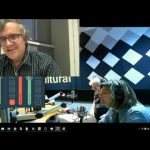
Are Cosmosul mai mult de trei dimensiuni spatiale? Afla, urmarind inregistrarea emisiunii Stiinta in Cuvinte Potrivite, cu Corina Negrea si Dan Manolache, din 11 octombrie. Am discutat despre detectia cu unde gravitationale a fuziunii dintre doua stele neutronice, ce ar scoate la iveala dimensiuni aditionale ale spatiului.
A new record for our mission to the Sun, the end of an era for a prolific planet hunter, and our next mission to Mars is closing in on its destination … a few of the stories to tell you about – This Week at NASA!
This video is available for download from NASA’s Image and Video Library: https://images.nasa.gov/details-NHQ_2018_1102_The%20Closest%20Spacecraft%20to%20the%20Sun%20on%20This%20Week%20@NASA%20%E2%80%93%20November%202,%202018.html
Science gets scaled up with the first 8K ultra high definition (UHD) video from the International Space Station. Get closer to the in-space experience and see how the international partnership-powered human spaceflight is improving lives on Earth, while enabling humanity to explore the universe. More: https://go.nasa.gov/2zgPY5o Special thanks to the European Space Agency, the ISS National Lab, and astronauts Alexander Gerst, Serena Auñón-Chancellor, Ricky Arnold and Drew Feustel.
Featured investigations and facilities:
0:01, 2:36 BEST seeks to advance use of sequencing DNA and RNA in space. https://go.nasa.gov/2tNntKu
0:13 The Minus Eighty-Degree Laboratory Freezer for ISS (MELFI) is a cold storage unit that maintains experiment samples at ultra-cold temperatures throughout a mission. https://go.nasa.gov/2RkJAl5
0:21 The Advanced Plant Habitat (APH), a recent addition to the space station, is the largest growth chamber aboard the orbiting laboratory. https://go.nasa.gov/2JCi8vV
0:33 Canadarm2 is part of Canada’s contribution to the space station. This 17-metre-long robotic arm was extensively involved in the assembly of the orbiting laboratory. https://go.nasa.gov/2ReaU42
0:41 Crew Earth Observations record how the planet is changing over time, from human-caused changes like urban growth and reservoir construction, to natural dynamic events such as hurricanes, floods and volcanic eruptions. https://go.nasa.gov/2KLFAaq
0:49 The Light Microscopy Module (LMM) is a modified commercial, highly flexible, state-of-the-art light imaging microscope facility that provides researchers with powerful diagnostic hardware and software onboard the space station. https://go.nasa.gov/2RfdYwS
0:53 ACE-T-2 looks at the assembly of complex structures from micron-scale colloidal particles interacting via tunable attractive interactions. https://go.nasa.gov/2Re2ppS
0:57 Plant Habitat-1 comprehensively compares differences in genetics, metabolism, photosynthesis, and gravity sensing between plants grown in space and on Earth. https://go.nasa.gov/2MdDBfc
1:05 The Cupola provides an observation and work area for the International Space Station crew that gives visibility to support the control of the station’s robotic arms, and a beautiful view of the Earth, celestial objects and visiting vehicles. https://go.nasa.gov/2CRsxCT
1:14 Atomization observes the disintegration processes of low-speed water jets under various conditions to improve spray combustion processes inside rocket and jet engines. https://go.nasa.gov/2RkKrlN
1:30 BCAT-CS focuses on the study of forces between particles that cluster together by studying sediments of quartz and clay particles. https://go.nasa.gov/2p6WBSV
1:38 Functional Immune analyzes blood and saliva samples to determine the changes taking place in crew members’ immune systems during flight. https://go.nasa.gov/2RfUMz1
2:03 Life Support Rack (LSR) is a technology demonstrator for closed loop air revitalization. https://go.nasa.gov/2Rdfi3C
2:15 The Japanese Experiment Module Airlock is used to deliver science experiments to external platforms, and prepare small satellites for deployment from station. https://go.nasa.gov/2RdcBik
2:23 SPHERES Tether Slosh combines fluid dynamics equipment with robotic capabilities aboard the space station to investigate automated strategies for steering passive cargo that contain fluids. https://go.nasa.gov/2RfQPdQ
ESA is Europe’s gateway to space. Our mission is to shape the development of Europe’s space capability and ensure that investment in space continues to deliver benefits to the citizens of Europe and the world. Check out http://www.esa.int/ESA to get up to speed on everything space related.
The mission has ended for NASA’s Dawn spacecraft, but the science lives on. Dawn was an intrepid explorer of the asteroid belt and the first mission to orbit two worlds beyond Earth: https://go.nasa.gov/2zl1Y5T. For more info on the mission, visit https://dawn.jpl.nasa.gov
ESA’s Test Centre based in Noordwijk, the Netherlands, simulates every aspect of space for satellite testing – including recreating the equivalent vibration of a rocket launch. This is ESA’s most powerful shaker: the Hydra hydraulic shaker, able to generate vibration equivalent to a 7.5 Richter scale earthquake.
ESA is Europe’s gateway to space. Our mission is to shape the development of Europe’s space capability and ensure that investment in space continues to deliver benefits to the citizens of Europe and the world. Check out http://www.esa.int/ESA to get up to speed on everything space related.
Snow is one part of the cryosphere that many of us have actually encountered, but it also plays a crucial role in regulating Earth’s climate. Through decades of remote sensing, NASA has kept a close eye on the ebb and flow of snow cover. #NASAExplorers also venture into the field at the far reaches of Earth to study snow, a critical resource for the millions of people who rely on it for drinking water.
After 9 years in space collecting data that revealed our night sky to be filled with trillions of hidden planets, NASA is ending the Kepler space telescope’s science operations. Kepler discovered over 2,600 planets, some of which could be promising places for life. https://go.nasa.gov/2P2umV1
You have heard of astronaut ice-cream? Well, these trick-or-treaters are loaded up with “NASA candy.” Watch as these kids marvel at the special Halloween treats in store for them. Also, as the kids will be doing, check out NASA’s InSight landing on Mars on November 26, 2018, at www.nasa.gov/insight.
Sir Michael Atiyah este matematicianul englez (89 de ani) care anunța recent că a rezolvat celebra ipoteză Riemann (premiu 1 milion $). După ce și-a prezentat calculele, matematicienii au căzut de acord: calculele lui nu sunt o demonstrație, deci premiul rămâne în picioare.
Acum, Sir Michael Atiyah “lovește” din nou, de data aceasta in fizică. Într-un alt articol (https://goo.gl/oQyubJ), el susține că a găsit un principiu prin care se pot deduce constantele “fundamentale” din fizica, și exemplifică cu calculul constantei de structura fina (~1/137). (…) . Dar chiar o fi corect?
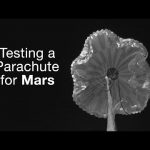
Watch as NASA tests a new parachute for landing the Mars 2020 rover on the Red Planet. On Sept. 7, NASA’s ASPIRE project broke a record when its rocket-launched parachute deployed in 4-10ths of a second—the fastest inflation of this size chute in history: https://go.nasa.gov/2Ro4eAL
A week full of Moon to Mars and more for administrator Bridenstine, seeking ideas for future cargo deliveries to our Gateway, and an oddity of an iceberg … a few of the stories to tell you about – This Week at NASA!
This video is available for download from NASA’s Image and Video Library: https://images.nasa.gov/details-NHQ_2018_1026_Talking%20Moon%20to%20Mars%20and%20more%20on%20This%20Week%20@NASA%20%E2%80%93%20October%2026,%202018.html
NASA Explorers is a new digital series that takes you inside the space agency and follows the pioneers, risk-takers and experts at the front line of exploration. Season 1, “Cryosphere,” joins NASA scientists on their journey to the frozen ends of the Earth as they study our rapidly changing world from satellites, planes and boots on the ground. The Cryosphere is a place we all depend on, but many of us will never go to. As temperatures rise, the frozen regions of Earth are changing rapidly. NASA scientists are locked in a race against time to understand our shifting climate and how it affects life on Earth.
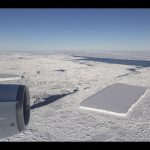
Can you spot the sharp-angled, rectangular iceberg? This footage (partially sped up) is from an Oct. 16, 2018 flight over the northern Antarctic Peninsula by our Operation IceBridge DC-8 aircraft. Mission Scientist John Sonntag provides commentary. More: https://go.nasa.gov/2JdEy71
Operation IceBridge is NASA’s longest-running aerial survey of polar ice. During the survey, designed to assess changes in the ice height of several glaciers draining into the Larsen A, B and C embayments, IceBridge senior support scientist Jeremy Harbeck saw a very sharp-angled, tabular iceberg floating among sea ice just off of the Larsen C ice shelf. A photo of the iceberg (seen at right) was widely shared after it was posted on social media.
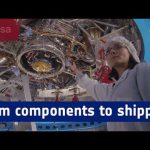
A look at the elements that make up the European service module that will provide power, water, air and electricity to NASA’s Orion Moon module.
Made in Europe the service module is integrated in Bremen, Germany, from where it will be shipped to NASA’s Kennedy Space Center in the USA for testing and getting ready for launch.
Inside the Service Module, large tanks hold fuel as well consumables for the astronauts: oxygen, nitrogen and water.
Radiators and heat exchangers keep the astronauts and equipment at a comfortable temperature, while the module’s structure is the backbone of the entire vehicle, like a car chassis.
The European Service Module is built by main contractor Airbus, with many companies all over Europe supplying components.
Orion will eventually fly beyond the Moon with astronauts, the first time a spacecraft will support humans with European hardware will also be the farthest humans ever travel from Earth. The first mission – without astronauts – is getting ready for launch in 2019.
ESA is Europe’s gateway to space. Our mission is to shape the development of Europe’s space capability and ensure that investment in space continues to deliver benefits to the citizens of Europe and the world.
The European Space Agency demonstrates its commitment to the United Nations Sustainable Development Goals through the activities promoted by its ten directorates. Satellite data and space applications, as well as space technologies, play a major role in addressing issues ranging from health care and education through to climate change and human migration. ESA’s multifaceted technical expertise can provide policy makers, aid organisations and private companies with the necessary tools to support economic growth, social development and environmental protection.
It’s not rockets and satellites that make NASA soar. It’s people. NASA Explorers is a new digital series that takes you inside the space agency and follows the pioneers, risk-takers and experts at the frontline of exploration. Season 1, “Cryosphere,” joins NASA scientists on their journey to the frozen ends of the Earth as they study our rapidly changing world from satellites, planes and boots on the ground.
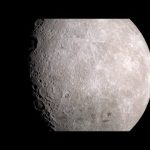
This visualization uses a digital 3D model of the Moon built from global elevation maps and image mosaics by NASA’s Lunar Reconnaissance Orbiter mission. It was created to accompany a performance of Claude Debussy’s Clair de Lune by the National Symphony Orchestra Pops, led by conductor Emil de Cou, at the Kennedy Center for the Performing Arts in Washington, DC, on June 1 and 2, 2018, as part of a celebration of NASA’s 60th anniversary.
Clair de Lune (moonlight in French) was published in 1905, as the third of four movements in the composer’s Suite Bergamasque, and unlike the other parts of this work, Clair is quiet, contemplative, and slightly melancholy, evoking the feeling of a solitary walk through a moonlit garden.
The visuals were composed like a nature documentary, with clean cuts and a mostly stationary virtual camera. The viewer follows the Sun throughout a lunar day, seeing sunrises and then sunsets over prominent features on the Moon. The sprawling ray system surrounding Copernicus crater, for example, is revealed beneath receding shadows at sunrise and later slips back into darkness as night encroaches.
This video is public domain and along with other supporting visualizations can be downloaded from the Scientific Visualization Studio at: http://svs.gsfc.nasa.gov/4655
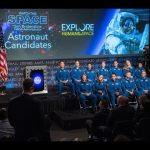
NASA’s newest class of astronaut trainees joined agency Administrator Jim Bridenstine Sept. 27 at NASA headquarters, to talk about their experiences in the training program, hopes for future missions, and more, in a live episode of “Watch This Space”.
Astronaut candidates Zena Cardman, Jasmin Moghbeli, Jonny Kim, Frank Rubio, Matthew Dominick, Warren Hoburg, Kayla Barron, Bob Hines, Raja Chari, Loral O’ Hara and Jessica Watkins were joined by Canadian Space Agency astronaut candidates Joshua Kutryk and Jenni Sidey-Gibbons. The first U.S. astronauts, the “Original Seven,” were selected in 1959. Since then, NASA has selected 21 more groups of astronauts. This latest class, announced on June 7, 2017, includes a physician, biologist, geologist, military pilots and engineers.
Once their training is complete, they may be assigned to any of a variety of missions, including: performing research on the International Space Station, launching from American soil on spacecraft built by U.S. commercial companies, and departing for deep space missions on NASA’s new Orion spacecraft and Space Launch System rocket.
This video is available for download from NASA’s Image and Video Library:https://images.nasa.gov/details-NASA%20Administrator%20Talks%20Training,%20Future%20Missions%20with%20Newest%20Astronaut%20Class.html
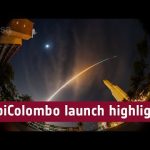
Highlights from the days up to and including the exciting launch of the ESA-JAXA BepiColombo mission to Mercury.
BepiColombo launched at 01:45 GMT from Europe’s Spaceport in Kourou, French Guiana. It will make a seven year cruise to Mercury, flying by Earth once, Venus twice and Mercury six times before entering orbit.
It is the first European mission to Mercury, the smallest and least explored planet in the inner Solar System, and the first to send two spacecraft to make complementary measurements of the planet and its dynamic environment at the same time. The mission comprises two science orbiters: ESA’s Mercury Planetary Orbiter (MPO) and JAXA’s Mercury Magnetospheric Orbiter (MMO). The ESA-built Mercury Transfer Module (MTM) will carry the orbiters to Mercury using a combination of solar electric propulsion and gravity assist flybys.
ESA is Europe’s gateway to space. Our mission is to shape the development of Europe’s space capability and ensure that investment in space continues to deliver benefits to the citizens of Europe and the world. Check out http://www.esa.int/ESA to get up to speed on everything space related.
Our administrator chats with astronaut Nick Hague, OSIRIS-REx “brakes” for a certain asteroid, and what landing site is right for our next mission to Mars? A few of the stories to tell you about – This Week at NASA!
This video is available for download from NASA’s Image and Video Library: https://images.nasa.gov/details-NHQ_2018_1019_Administrator%20Bridenstine%20chats%20with%20astronaut%20Nick%20Hague%20on%20This%20Week%20@NASA%20%E2%80%93%20October%2019,%202018.html
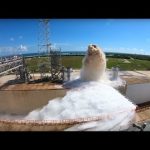
This system is used to reduce extreme heat and energy generated by a rocket launch.🚀 On Oct. 15, 2018, the Ignition Overpressure Protection and Sound Suppression water deluge system at Kennedy Space Center’s Launch Pad 39B was tested, sending water about 100 feet in the air. The test is part of preparation for launching our Space Launch System rocket on Exploration Mission-1 and subsequent missions.
Modifications were made to the pad after a previous wet flow test, increasing the performance of the system. During launch, this water deluge system will release approximately 450,000 gallons of water across the mobile launcher and Flame Deflector.