NASA planetary defender Dr. Kelly Fast has a hard and fast rule: “Find asteroids before they find us.” Working in NASA’s Planetary Defense Coordination Office, Kelly is helping send the #DARTMission to test “nudging” an asteroid in space. DART, short for Double Asteroid Redirection Test, is a planetary defense-driven test of technologies for preventing an impact of Earth by a hazardous near-Earth object. DART will be the first demonstration of the kinetic impactor technique to change the motion of an asteroid in space. NOTE: the target asteroid is currently not a threat to Earth.
🚩 Thanks to Curiosity Stream for sponsoring today’s video. Go to https://curiositystream.thld.co/historymarche_1021b and use code HISTORYMARCHE to save 25% off today, that’s only $14.99 a year. 👇 Push down for more cool stuff 👇
The Crew-3 astronauts arrive at the launch site, a critical milestone for our water-hunting lunar robot, and a deeper, more full view down into Jupiter’s atmosphere … a few of the stories to tell you about – This Week at NASA!
Producer/Writer: Andre Valentine Editor: Shane Apple Music: Universal Production Music
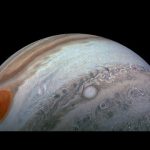
The science team for our Juno spacecraft at Jupiter will reveal new findings that provide the first 3D look at how the planet’s roiling atmosphere operates underneath the top layers of clouds, and how these revelations offer insight into the atmospheres of giant planets elsewhere in the universe.
The event will take place at NASA’s Jet Propulsion Laboratory in Southern California, which manages the Juno mission.
Briefing participants include:
– Lucas Paganini, Juno program scientist, NASA Headquarters, Washington – Scott Bolton, Juno principal investigator, Southwest Research Institute, San Antonio – Marzia Parisi, Juno scientist, JPL – Keren Duer, Juno scientist, Weizmann Institute of Science, Rehovot, Israel – Leigh Fletcher, Juno participating scientist, University of Leicester, England – Alessandro Mura, Juno co-investigator, Institute for Space Astrophysics and Planetology, Rome
For more about the Juno mission, visit nasa.gov/juno and missionjuno.swri.edu
Credit: NASA/JPL-Caltech/SWRI Video thumbnail JunoCam image processing by David Marriott
Pune o intrebare mai jos si castiga o carte! Diseara la 21:00, pe canalul www.youtube.com/presura1 vorbim despre creier, neurostiinte, emotii cu Andrei C. Miu, intr-o serie noua, moderata impreuna cu Ada Roseti. Pune ACUM o intrebare despre neurostiinte la comentariul pozei si poti castiga o carte de stiinta de la Humanitas! La unele dintre intrebari vom raspunde diseara, iar cea mai interesanta intrebare va primi premiul cel mare. Premiul il anuntam la inceputul intalnirii.
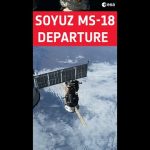
Timelapse video made during ESA astronaut Thomas Pesquet’s second mission to the International Space Station, “Alpha”. On 17 October 2021 at 01:14 GMT the Soyuz MS-18 undocked from the Space Station to return to Earth, inside were @Roscosmos Media cosmonaut Oleg Novitskiy (who had spent 191 days in space) and actress Yulia Peresild and Russian producer-director Klim Shipenko (who both spent 11 days in space). The trio landed on Earth just over three hours later. The camera for this timelapse was setup to take pictures at intervals of two a second, and the pictures are then edited into this video that plays at 25 pictures a second. The video is around 12 times faster than real speed.
Thomas shared this video on social media with the caption:
“Soyuz MS-18 departing two weekends ago already. Oleg left with Yulia and Klim and I see pictures of them back looking happy and healthy back on Earth. they were only in space for a few days though, a business trip, more than an expedition, for us and Oleg it will be a bit different: the physical and social readapting to Earth will require some work. This is a timelapse so it moves 12 times faster than in reality. I wasn’t the only one to film in the Cupola, and where the image shakes a bit is when one of my crewmates bumped the tripod! ”
Over 200 experiments are planned during Thomas’ time in space, with 40 European ones and 12 new experiments led by the French space agency @CNES.
We are Europe’s gateway to space. Our mission is to shape the development of Europe’s space capability and ensure that investment in space continues to deliver benefits to the citizens of Europe and the world. Check out https://www.esa.int/ to get up to speed on everything space related.
Odată cu dezvoltarea științelor și creșterea cunoașterii despre natura umană și lumea din jurul nostru, multe alegeri care în trecut nu au părut să aibă încărcătură morală s-au dovedit a fi alegeri morale. De exemplu, s-a considerat că este indiferent din punct de vedere moral cum își cresc părinții copiii (sau, cel puțin, că este o chestiune privată, care nu privește pe nimeni din afara familiei), sau dacă consumăm produse de origine animală (și cum au fost obținute acestea), sau dacă alegem sa călătorim cu mașina sau cu autobuzul. Astăzi, aceste teme sunt printre cele mai arzătoare din punct de vedere moral.
Ar trebui ca vaccinarea să fie obligatorie? Sunt statele îndreptățite să restricționeze după bunul plac imigrația cetățenilor străini (inclusiv a refugiaților)? Ar trebui ca platformele online să cenzureze anumite forme de discurs al utilizatorilor lor? Avem o obligație morală să votăm, și dacă da, care sunt constrângerile care ar trebui să ne ghideze votul? Sunt acceptabile orice fel de tranzacții atât timp cât toți cei implicați sunt de acord cu ele? Care ar trebui să fie rolul religiei în dezbaterile publice ale unei societăți democrate? De ce sunt importante relațiile de familie? În paginile volumului veți găsi analize ale acestor întrebări (și altora asemenea) folosind instrumentele și metodele eticii aplicate.
Toate aceste întrebări au în comun faptul că se referă la alegeri morale, alegeri despre cum ar trebui procedat din punct de vedere moral, sau ale căror implicații sunt relevante din punct de vedere moral. Această emisiune va fi, în același timp, și o dezbatere în jurul cărții „Alegeri morale. Teme actuale de etică aplicată”, pe care cei doi invitați, alături de Daniela Cutaș, au publicat-o recent la editura Polirom. ________________________________________ Invitați: ADRIAN MIROIU este profesor de științe politice la Școala Națională de Studii Politice și Administrative din București. A publicat lucrări de filosofia limbajului și a științelor sociale, de teorie politică și de analiză a politicilor publice. Fuga de competiție (2016), Lumea lui Anaxagora (2017) și Între logică și etică (2020) sunt trei dintre cărțile sale mai noi.
ALEXANDRU VOLACU este conferențiar în cadrul Facultății de Administrație și Afaceri a Universității din București, cadru didactic asociat al SNSPA și director al Bucharest Center for Political Theory. Principalele sale interese de cercetare sunt reprezentate de etica votului, teorii ale dreptății și teorii ale democrației. A publicat articole în jurnale internaționale precum Political Studies, Political Research Quarterly, Journal of Applied Philosophy, Philosophical Studies, Ethical Perspectives, Contemporary Political Theory și altele. Cea mai recentă carte a sa este Avem datoria de a vota? (Iași: Institutul European, 2019).
How did the Perseverance Mars rover pick its exact landing spot? Believe it or not, the rover made the decision on precisely where to land just moments before it touched down. How?! Thanks to the work of engineers like Swati Mohan and a new technology called Terrain Relative Navigation, Perseverance landed in the most challenging landscape ever attempted on Mars: https://go.nasa.gov/3yutGdH
Producers: Scott Bednar & Jessica Wilde Editor: Thomas Shortridge
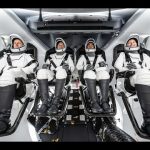
NASA’s SpaceX Crew-3 mission is set to lift off on Wednesday, Nov. 3 at 1:10 a.m. EDT (0510 UTC) from Kennedy Space Center in Florida. Astronauts Kayla Barron, Raja Chari, and Thomas Marshburn of NASA will fly to the International Space Station alongside astronaut Matthias Maurer of the European Space Agency. Once there, the crew of four will spend about six months conducting science experiments and performing maintenance upgrades aboard the orbiting laboratory. For Barron, Chari, and Maurer, this will be their first spaceflight, and the third for Marshburn.
The Crew Dragon ‘Endurance’ spacecraft will dock to the space station on Wednesday, Nov. 3 at 11:00 p.m. EDT (0300 UTC Thursday). Watch continuous coverage of their entire ride, on NASA TV: https://youtu.be/21X5lGlDOfg
Europe’s own satellite navigation system, Galileo, has become the world’s most precise, delivering metre-level accuracy, available anywhere on Earth. It is also saving lives, relaying distress calls for search and rescue. Today there are 26 Galileo satellites in orbit 23 222 km over our heads; the first of them were launched on 21 October 2011, with nine more launches in the following years. The satellites in space are supported by a globe-spanning ground segment. The system as a whole is set to grow, with the first of 12 ‘Batch 3’ about to join the current satellites in orbit and new ‘Galileo Second Generation’ satellites in development.
Galileo has been financed by the EU and developed by ESA, with services delivered by EUSPA.
★ Subscribe: http://bit.ly/ESAsubscribe and click twice on the bell button to receive our notifications.
We are Europe’s gateway to space. Our mission is to shape the development of Europe’s space capability and ensure that investment in space continues to deliver benefits to the citizens of Europe and the world. Check out https://www.esa.int/ to get up to speed on everything space related.
NASA’s #DARTmission will purposely crash a spacecraft into an asteroid to change its orbital period. But in order to hit the mark, this test mission needs to locate its target first. That’s why Johns Hopkins APL engineer Michelle Chen helped develop new autonomous navigation techniques that will ensure a bullseye. Follow DART: www.nasa.gov/DART
The DART mission is a test of a technique that could be used to mitigate the threat of an asteroid on a collision course with Earth should one be discovered in the future. DART’s target is not a threat to Earth. While no known asteroid larger than 140 meters in size has a significant chance to hit Earth for the next 100 years, only about 40 percent of those asteroids have been found as of October 2021.
NASA is crashing a spacecraft into an asteroid… on purpose! Our #DARTmission is a first-of-its-kind #PlanetaryDefense test to change the motion of an asteroid in space so that we could use this technique if an asteroid were ever discovered to be a threat to Earth. Follow DART: www.nasa.gov/DART
The DART mission is a test of a technique that could be used to mitigate the threat of an asteroid on a collision course with Earth should one be discovered in the future. DART’s target is not a threat to Earth. While no known asteroid larger than 140 meters in size has a significant chance to hit Earth for the next 100 years, only about 40 percent of those asteroids have been found as of October 2021.
Producer/Editor: Jessica Wilde Producer: Scott Bednar Videographers: James Lucas and Seth Robinson
NASA’s #DARTmission is crashing a spacecraft into an asteroid to try to change its motion in space. But how will we know if this test worked? That’s where Johns Hopkins APL scientist Andy Rivkin comes in. He’ll be studying the precise change in the asteroid’s motion right here from Earth. In fact, Andy loves DART so much, he even wrote a song about it. Follow DART: www.nasa.gov/DART
The DART mission is a test of a technique that could be used to mitigate the threat of an asteroid on a collision course with Earth should one be discovered in the future. DART’s target is not a threat to Earth. While no known asteroid larger than 140 meters in size has a significant chance to hit Earth for the next 100 years, only about 40 percent of those asteroids have been found as of October 2021.
ESA astronaut Thomas Pesquet takes you on a brief tour of the International Space Station like no other. Filmed with a 360 camera, he floats from Node-3 to Europe’s Columbus laboratory. Immerse yourself in this brief but unique fly through humankind’s orbital outpost.
We are Europe’s gateway to space. Our mission is to shape the development of Europe’s space capability and ensure that investment in space continues to deliver benefits to the citizens of Europe and the world. Check out https://www.esa.int/ to get up to speed on everything space related.
The Orion spacecraft for Artemis I is on the move, critical hardware for Artemis II is delivered, and a new telescope to study our Milky Way … a few of the stories to tell you about – This Week at NASA!
Producer/Writer: Andre Valentine Editor: Shane Apple Music: Universal Production Music
Time lapse of the stacking of the Orion spacecraft on top of the fully assembled Space Launch System (SLS) rocket at NASA’s Kennedy Space Center in Florida, on 21 October 2021, in preparation for the uncrewed Artemis I launch.
For Artemis I, the European Service Module will take the spacecraft more than 64 000 km beyond the Moon in a test flight to demonstrate its capabilities.
The European Service Module is ESA’s contribution to NASA’s Orion spacecraft that will send astronauts to the Moon and beyond. It provides electricity, water, oxygen and nitrogen as well as keeping the spacecraft at the right temperature and on course.
We are Europe’s gateway to space. Our mission is to shape the development of Europe’s space capability and ensure that investment in space continues to deliver benefits to the citizens of Europe and the world. Check out https://www.esa.int/ to get up to speed on everything space related.
We are Europe’s gateway to space. Our mission is to shape the development of Europe’s space capability and ensure that investment in space continues to deliver benefits to the citizens of Europe and the world. Check out https://www.esa.int/ to get up to speed on everything space related.
NASA is partnering with industry for revolutionary NEW spacesuits for exploration like we’ve never seen before.
These personalized spaceships will be more high-tech and modern, provide a better fit for a larger range of sizes, adapt to a more diverse group of astronauts and have better protection from the harsh environment of space. With enhanced mobility, our astronauts will be more nimble than ever before.
New spacesuits will be used at the International Space Station, during Artemis lunar surface missions, atGateway orbiting the Moon, and will prepare us for humanity’s next giant leap – sending astronauts to Mars.
Video Producer: Sonnet Apple Music: “The First Heist”/Universal Production Music
Invitată: Ramona Ilea În urmă cu două mii de ani, Seneca ne-a oferit o imagine a filosofiei ca sursă de îndrumare practică. Potrivit lui, filosofia ar putea fi un instrument pentru abordarea celor mai mari probleme ale umanității: sărăcia, boala și moartea. Dar filosofia nu este văzută astfel foarte des. Dimpotrivă, există o concepție comună că filosofia este interesantă și profundă, dar că nu are impact în lumea reală. În noua noastră emisiune, profesoara de filosofie Ramona Ilea va explora această relație dintre filosofie și activism. Ea va argumenta că filosofia este compatibilă cu activismul și poate contribui la dezbateri publice și ameliorarea unor probleme sociale. Pe baza cursurilor predate și cercetărilor efectuate in ultimii 15 ani, Ramona Ilea va explica felul în care filosofii pot sa încurajeze tinerii sa fie angajați în societate mai riguros si reflexiv, grație unui activism influențat de gândirea filosofică. _____________________ Prof. dr. Ramona Ilea a făcut facultatea la University of Toronto și doctoratul la University of Minnesota. Este profesoară de filosofie și directoare de departament la Pacific University Oregon. A publicat numeroase articole și doua cărți, Experiential Learning in Philosophy (cu Julinna Oxley) și Consequentialism and Environmental Ethics (cu Avram Hiller și Leonard Kahn), și a creat site-ul https://www.engagedphilosophy.com/. A făcut peste 80 de prezentări profesionale, dintre care mai mult de 20 de prezentări despre implicarea civică.
There are no known threats to Earth, but NASA asteroid expert Dr. Kelly Fast says it’s important to find the asteroids before they find us. That’s why NASA’s Planetary Defense Coordination Office keeps its eyes on the skies.
This November, we’re launching the Double Asteroid Redirection Test, or DART. The test mission will attempt to change the course of an asteroid that is currently no threat to our planet. Get more info at nasa.gov/PlanetaryDefense.
Producer: Scott Bednar Producer/Editor: Jessica Wilde
ESA’s Ariane 6 will offer more performance and flexibility than its predecessor Ariane 5 and will be available in two versions, with either two or four boosters.
This new rocket will launch from Europe’s Spaceport in French Guiana and its home, the recently inaugurated launch complex, is a marvel of engineering. Take a tour with Tony Dos Santos, ESA’s Technical Manager there.
The main elements of the Ariane 6 launch complex include the mobile gantry, launch pad and launch vehicle assembly building.
See tests being carried out to qualify vital systems involved in a launch campaign and hear how they work. This includes raising a mockup Ariane 6 core stage vertical in the 90 m-high mobile gantry. Watch the deluge system gush water to absorb the roar of launch and capture the moment the fluidic systems detach from the rocket as it lifts off.
The Ariane 6 programme is funded and developed by ESA. These tests by @CNESand @ArianeGroup teams were jointly performed under the responsibility of ESA.
Ariane 6 opens new opportunities and guarantees continued access to space for ESA Member States.
★ Subscribe: http://bit.ly/ESAsubscribe and click twice on the bell button to receive our notifications.
We are Europe’s gateway to space. Our mission is to shape the development of Europe’s space capability and ensure that investment in space continues to deliver benefits to the citizens of Europe and the world. Check out https://www.esa.int/ to get up to speed on everything space related.
Invitat: Alexandru Babeş Alexandru Babeş este profesor de neuroştiinţe şi fiziologie la Facultatea de Biologie a Universităţii din Bucureşti. Laboratorul pe care îl conduce se ocupă de studiul sistemului nervos periferic, al neuronilor senzitivi cu ajutorul cărora simţim durerea şi temperatura ambientală. A publicat peste treizeci de articole ştiinţifice în reviste internaţionale cu referenţi. Este coautor al unor studii apărute în Nature, Nature Medicine, Nature Communications, Journal of Neuroscience, Pain şi Journal of Physiology. Începând din 1995 a beneficiat de numeroase stagii de cercetare în Germania, Franţa, Marea Britanie şi Spania. A fost bursier al fundaţiei germane Alexander von Humboldt şi a primit din partea acesteia premiul pentru cercetare „Friedrich Wilhelm Bessel“ în 2019. În 2018 i s‑a acordat premiul „Nicolae Simionescu“ al Academiei Române. A fost preşedinte al Consiliului Naţional al Cercetării Ştiinţifice în perioada 2011–2012, iar din 2020 ocupă din nou această funcție. Cartea se poate cumpara de aici: https://www.libhumanitas.ro/povestea-creierului-in-cautarea-celui-mai-complicat-obiect-din-univers-alexandru-babes-humanitas-2021.html
🚩 The first 1,000 people to use this link will get a 1 month free trial of Skillshare: https://skl.sh/historymarche02211 👇 Push down for more cool stuff 👇
These are exciting days at Europe’s Spaceport in French Guiana and throughout several sites in ESA Member States as the development of Ariane 6 enters its final phase. Ariane 6 parts are being shipped from Europe for combined tests on the new Ariane 6 launch base. These tests rehearse all activities and systems involving the rocket and launch base on an Ariane 6 launch campaign. On the final test, the Ariane 6 core stage will perform a static hot firing while standing on its recently inaugurated launch pad. It will be from this new launch base that ESA’s Ariane 6 rocket will soon be launched for the first time.
Meanwhile in Europe, Ariane 6’s upper stage will experience the conditions of space at a new test bench at @DLR in Lampoldshausen. After this, all is ready for the much anticipated first flight of ESA’s new heavy-lift rocket from Europe’s Spaceport.
★ Subscribe: http://bit.ly/ESAsubscribe and click twice on the bell button to receive our notifications.
We are Europe’s gateway to space. Our mission is to shape the development of Europe’s space capability and ensure that investment in space continues to deliver benefits to the citizens of Europe and the world. Check out https://www.esa.int/ to get up to speed on everything space related.
On Sat., Oct. 16 at 7:30 p.m. EDT (23:30 UTC), join lunar enthusiasts around the world for International #ObserveTheMoon Night, an annual celebration of Earth’s neighbor in space! Our live hosts will guide you on a scientific and cultural expedition to the Moon. Enjoy a close-up view of the lunar surface, watch flyovers of lunar features, and learn about our VIPER mission to search for water ice on the Moon’s South Pole, and our plans to send humans there with the Artemis program. More: https://moon.nasa.gov/observe
The first mission to the Trojan asteroids, a prelaunch milestone for our Artemis I mission, and highlighting a few of our NASA centers … a few of the stories to tell you about – This Week at NASA!
Set a reminder: Our Lucy mission is scheduled to launch on Sat., Oct. 16 at 5:34 a.m. EDT (9:34 UTC) to ancient asteroids called Trojans.
The Trojan asteroids are rocky worlds as old as our solar system, and they share an orbit with Jupiter around the Sun. They’re thought to be remnants of the primordial material that formed the outer planets. On Oct. 16, NASA’s Lucy mission is scheduled to launch from Cape Canaveral, Florida, to explore these small worlds for the first time. Lucy was named after the fossilized human ancestor (called “Lucy” by her discoverers) whose skeleton expanded our understanding of human evolution. The Lucy Mission hopes to expand our understanding of solar system evolution by visiting these 4.5-billion-year-old planetary “fossils.”
Maine dupa 12:15 sonda Lucy pleaca pentru 12 ani sa studieze asteroizii troieni, iar eu si Claudiu Tănăselia (parsec.ro) retransmitem lansarea LIVE (link in primul comentariu).
Asteorizii astia sunt speciali, orbiteaza in jurul Soarelui pe aceeasi orbita ca a lui Jupiter si sinctron cu el, la 60 de grade inapoi si 60 de grade inainte. Intr-un fel, duc trena miresei 🙂 Cu zeci de kilometri diametru, abia ii vedem azi in telescoape.
In 2025, cand ajunge la ei, Lucy ii va vedea de aproape, cu o camera superperfomanta si cu un spectrometru in infrarosu Nu va fi usor, pentru ca sonda va avea o viteza de aproape zece kilometri pe secunda atunci cand trece pe langa asteorizi, asa ca trebuie sa fie foarte pregatita la fotografiat! (in cei 12 ani, doar 24 de ore in total sunt cele in care se fotografiaza si masoara eficient asteroizii).
Mai intai Lucy viziteaza asteorizii din fata lui Jupiter, apoi se intoarce spre Pamant, face un “fly by” si se duce la asteroizii din spatele lui Jupiter. Unii, ca Eurybates, sunt gri si bogati in carbon, altii, ca Orus, sunt rosii si bogati in materiale organice. Si da, numele sondei e dat dupa scheletul lui Lucy, o femela care a trait cu 3 milioane de ani in urma.
Despre toate acestea, si altele, maine in direct pe www.youtube.com/presura si aici pe Facebook! Va asteptam!
ESA astronaut Thomas Pesquet and @JAXA | 宇宙航空研究開発機構 astronaut Akihiko Hoshide performed a spacewalk on 12 September 2021 to prepare for the installation of a new solar array on the International Space Station.
The new solar arrays, called IROSA or ISS Roll-Out Solar Array, are being gradually installed over the existing arrays to boost the International Space Station’s power system.
Thomas and @NASA astronaut Shane Kimbrough prepared and installed two IROSA solar panels across three spacewalk in June. The arrays were taken from their storage area outside the Space Station and passed from spacewalker to spacewalker to the worksite. There the rolled arrays were secured, unfolded, connected and then unfurled.
Aki and Thomas prepared the P4 truss for its IROSA installation. This is the same area as where Thomas and Shane installed two IROSA’s but closer to the main body of the Space Station, in an area called the 4A channel. Only one new solar array will be installed here, on a later spacewalk. While the extravehicular activity or EVA was already the fourth spacewalk during Thomas’ Alpha mission, it was his first with Aki and the first time a spacewalking pair did not feature a US or Russian astronaut.
Aki and Thomas made good time preparing the 4A channel for the next IROSA and were able to complete a second task to replace a floating potential measurement unit that was faulty. This unit measures the difference between the Space Station’s conductive structures and the atmospheric plasma.
Thomas and Aki completed their spacewalk in six hours and 54 minutes, which hands Thomas the ESA record for longest time spent spacewalking.
Thomas posted this video on his social media channels with the caption: “Hanging out with my buddy Aki on last week’s spacewalk. The music and timelapse makes it look comical, but as you can see tools and equipment have a life of their own and never stop floating away. Keeping track and even just staying in position in front of the worksite is a constant fight! We got the support bracket done and the truss is ready for the new roll-out solar arrays. We are passing on the baton to the next crew, the arrays need to be launched still and they will be installed next year.”
Over 200 experiments are planned during Thomas’ time in space, with 40 European ones and 12 new experiments led by the French space agency @CNES.
We are Europe’s gateway to space. Our mission is to shape the development of Europe’s space capability and ensure that investment in space continues to deliver benefits to the citizens of Europe and the world. Check out https://www.esa.int/ to get up to speed on everything space related.
Going where no spacecraft has gone before, NASA’s Lucy mission will embark on a 12-year journey to Jupiter’s Trojan asteroids. As time capsules to the early solar system, these ancient remnants could give scientists vital clues about how the planets formed 4.5 billion years ago. Join mission experts on Friday, October 15 at 3:30 p.m. EDT as they take you behind-the-scenes at NASA’s Kennedy Space Center ahead of the Lucy spacecraft launch on Saturday. Submit questions using #askNASA to have them answered live during the show.
Meet the experts: Dr. Carly Howett is the Assistant Director of the Department of Space Studies at the Southwest Research Institute. Her favorite part about her job is getting to explore the universe. Before working on the Lucy mission, Carly was on NASA’s New Horizons team when it flew past Pluto. When Carly isn’t working, she enjoys spending time with her husband, two young kids and participating in triathlons.
Wil Santiago is the Deep Space Exploration Engineer at Lockheed Martin Space. His favorite part of the job is working with a team that helps design, develop and fly robotic missions that allow humanity to explore our solar system and beyond and continue pushing the boundaries of what’s possible. Outside of work, Wil enjoys exploring the outdoors and traveling.
We are Europe’s gateway to space. Our mission is to shape the development of Europe’s space capability and ensure that investment in space continues to deliver benefits to the citizens of Europe and the world. Check out https://www.esa.int/ to get up to speed on everything space related.
Did Mars ever look like Earth? We think it did! Ancient Mars may have been wetter and warmer — similar to our home planet. So what happened? Scientists like Dr. Becky McCauley Rench are trying to find out. Keep up with our Martian exploration efforts: www.nasa.gov/Mars
The James Webb Space Telescope, a once in a generation space mission, arrived safely at Pariacabo harbour in French Guiana on 12 October 2021, ahead of its launch on an Ariane 5 rocket from Europe’s Spaceport.
Webb was packed in a 30 m long container with additional equipment. It arrived from California on board the MN Colibri which sailed the Panama Canal to French Guiana on a 16-day voyage. The shallow Kourou river was specially dredged to ensure a clear passage and the vessel followed high tide to safely reach port.
The MN Colibri, like its sister vessel the MN Toucan, were built to ship Ariane 5 rocket parts from Europe to French Guiana. They were specifically designed to carry a complete set of Ariane 5 parts across the Atlantic, while having a low enough draft to enable them to follow a route along the shallow Kourou river to the Pariacabo harbour.
Webb will be the largest, most powerful telescope ever launched into space. As part of an international collaboration agreement, ESA is providing the telescope’s launch service using the Ariane 5 launch vehicle. Working with partners, ESA was responsible for the development and qualification of Ariane 5 adaptations for the Webb mission and for the procurement of the launch service by @arianespace.
Webb is an international partnership between @NASA, ESA and the @Canadian Space Agency.
We are Europe’s gateway to space. Our mission is to shape the development of Europe’s space capability and ensure that investment in space continues to deliver benefits to the citizens of Europe and the world. Check out https://www.esa.int/ to get up to speed on everything space related.
Invitat: Vlad Niculescu-Dincă Securitatea e un concept important, fie că vorbim despre securitatea fizică a fiecăruia dintre noi, despre securitatea națională sau despre securitatea și pacea internațională. Pe de altă parte securitatea e un concept contestat. Ce înseamnă Securitate pentru unii poate fi interpretat ca amenințare de către alții, poate marginaliza sau exclude, poate justifica suspendarea unor libertăți, sau poate înlesni alocări de fonduri către mai multă supraveghere. În același timp, viitorul securității este deseori legat de investiții în tehnologie. Fie că vorbim despre aplicarea tehnologiilor de recunoaștere facială și de predicție a criminalității în practicile de poliție, de rolul inteligenței artificiale în operațiuni militare, sau de securitatea cibernetică a infrastructurilor critice. A înțelege securitatea de mâine devine strâns legat de o adecvată înțelegere a rolui tehnologiei în securitate. Și dacă ne dăm seama de implicațiile pentru libertate, viață privată și alte valori, am beneficia de pe urma cercetărilor care au ca subiect relația tehnologiei cu securitatea, fie că vorbim despre Studii de Securitate, Relații Internaționale, Filozofia Tehnologiei sau Studii de Supraveghere. O abordare interdisciplinară a subiectului ne pune într-o poziție mai bună să anticipăm și până la urmă, să ne construim mai conștient securitatea de mâine. _______________________________ Dr. Vlad Niculescu-Dincă predă și cercetează în Haga la Institutul pentru Securitate și Afaceri Globale din cadrul Universității Leiden, Olanda. Și-a susținut doctoratul în 2016 la Universitatea din Maastricht cu o teză despre filosofia supravegherii mediate tehnologic. În 2017 a primit premiul Early Career Award din partea Societății pentru Filosofie și Tehnologie (Society for Philosophy and Technology) pentru o lucrare derivată din această cercetare. Are o diplomă de master din partea Universității Twente din Olanda în filosofia științei, tehnologiei și societății, a absolvit un program al Universității Tehnice din Eindhoven (PDEng), precum și Facultatea de Automatică și Calculatoare din București.
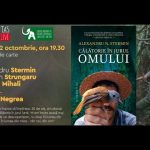
Alexandru Stermin, biolog și explorator, ne conduce într-o experiența de descoperire de sine prin mijlocirea a trei spații care reprezintă pentru el trei extreme – jungla amazoniană, Los Angeles și Beijing -, în volumul recent publicat în colecția Știință a Editurii Humanitas, „Călătorie în jurul omului”.
La o discuția despre acest volum participă Alexandru Stermin, Carmen Strungaru, etolog, și Ciprian Mihali, profesor de filosofie contemporană la Universitatea Babes-Bolyai. Moderator: Corina Negrea, realizator de emisiuni de știință la Radio România Cultural.
„Biologul Alexandru Stermin călătorește în jurul lumii. Ceea ce începe ca un periplu în lumea biologiei, a neuroștiințelor și a psihologiei se transformă într-o incursiune în lumea ideilor și concepțiilor despre univers. Ca într-o călătorie pe suprafața unei hipersfere care se închide, Alexandru Stermin părăsește zona unde cultura noastră pune omul în centru, ca să regăsească în îndepărtări, paradoxal, același om cu întrebările lui cele mai adânci. Cartea este un excelent jurnal de călătorie care combină biologia, neuroștiințele și cultura filozofică, chestionând propriile noastre concepte și credințe despre ceea ce suntem și care este locul nostru în natură.“ — CRISTIAN PRESURĂ, fizician, autorul bestsellerului Fizica povestită
„Dacă n-aș fi fost Cătălin Gruia, mi-ar fi plăcut să fiu Alexandru Stermin. O să înțelegeți de ce spun acest lucru dacă veți citi paginile dintre aceste coperte. Vă recomand cu căldură să o faceți – nu veți descoperi doar o carte, ci vă veți descoperi, veți afla mai multe despre cine suntem, de unde venim și încotro ne îndreptăm.“ — CĂTĂLIN GRUIA, redactor-șef National Geographic
„Cu câteva zile înainte să împlinesc 30 de ani, am plecat singur într-o călătorie în jurul lumii. Primele nopți le-am dormit în jungla amazoniană, apoi zile întregi am umblat în alte două jungle – jungle urbane, pe cât de depărtate, pe atât de diferite –, Los Angeles și Beijing. M-am întors acasă mai viu, însuflețit de ce descoperisem, nu doar în lumea din jurul meu, ci și în lumea din mine – din noi, din om. 30 de ani a marcat pentru mine începutul marilor descoperiri geografice – explorând lumea am descoperit geografia ființei mele, cu continentele ei, de la cele mai luxuriante, cum sunt imaginația și iubirea, la cele mai întunecate și reci, cum este moartea. Despre fascinația acestei lumi vă povestesc aici.“ — ALEXANDRU N. STERMIN
Computing power doubles every two years, an observation known as Moore’s Law. Prof Maarten Steinbuch, a high-tech systems scientist, entrepreneur and communicator, from Eindhoven University of Technology, discussed how this exponential rate of change enables accelerating developments in sensor technology, AI computing and automotive machines, to make products in modern factories that will soon be smart and self-learning. Cars will become like an iPad on wheels. The questions are, when will they be better than humans? Will humans still be necessary? And what does the future of schools and universities look like?
★ Subscribe: http://bit.ly/ESAsubscribe and click twice on the bell button to receive our notifications.
We are Europe’s gateway to space. Our mission is to shape the development of Europe’s space capability and ensure that investment in space continues to deliver benefits to the citizens of Europe and the world. Check out https://www.esa.int/ to get up to speed on everything space related.
ESA astronaut Thomas Pesquet is on his second mission to the International Space Station called Alpha. In this video Thomas talks about his crew preference food that arrived on SpaceX CRS-22 supply spacecraft, the video was recorded on 19 June 2021 in the Zvezda module of the Space Station.
Astronauts’ full space menu comprise of a range of food designed to meet nutritional and operational requirements on board. Because of the two hours of exercise they perform every day on the Station and a full schedule of science and operations, astronauts are expected to consume approximately 3000 calories per day in space. For ESA astronauts such as Thomas, two thirds of this calorie intake come from the basic food supply that is preselected and prepacked by @NASA for the entire space mission.
The final third of their calories comes from ‘crew choice meals’ – food that the astronauts choose for themselves, either from the US menu or a range of European, Russian and Japanese options.
Before any mission to the Space Station, the astronauts participate in several space food tasting sessions to help determine what dishes will be included in the basic food supply. During a training course they test a range of different food and drink items and rate each of them in a questionnaire. This information is then provided to NASA’s food lab which determines the final food package.
Over 200 experiments are planned during Thomas’ time in space, with 40 European ones and 12 new experiments led by the French space agency @CNES.
We are Europe’s gateway to space. Our mission is to shape the development of Europe’s space capability and ensure that investment in space continues to deliver benefits to the citizens of Europe and the world. Check out https://www.esa.int/ to get up to speed on everything space related.














![Space food | Mission Alpha [in French with English subtitles]](https://video.kidibot.ro/wp-content/uploads/2021/10/11052-space-food-mission-alpha-in-french-with-english-subtitles-150x150.jpg)