A Commercial Resupply Mission to the Space Station, honoring a spaceflight icon, and an out of this world experience, right here on Earth … a few of the stories to tell you about – This Week at NASA!
A sonification of data recorded by the Italian Spring Accelerometer (ISA) aboard the BepiColombo Mercury Planetary Orbiter spacecraft during the flyby of Venus on 10 August 2021. The accelerometer data was converted to frequency to be made audible to the human ear. The resulting sound is rich with interesting effects due to the planet’s gravity acting on the spacecraft structure, the response of the spacecraft to the rapid temperature changes, and the change in reaction wheel velocity as they work hard to compensate for these effects.
The audio has been matched to the timing that the images seen in this movie were captured, in the moments after closest approach.
We are Europe’s gateway to space. Our mission is to shape the development of Europe’s space capability and ensure that investment in space continues to deliver benefits to the citizens of Europe and the world. Check out https://www.esa.int/ to get up to speed on everything space related.
A stunning sequence of 89 images taken by the monitoring cameras on board the European-Japanese BepiColombo mission to Mercury, as the spacecraft made a close approach of Venus on 10 August 2021.
The sequence includes images from all three Monitoring Cameras (MCAM) onboard the Mercury Transfer Module, which provides black-and-white snapshots in 1024 x 1024 pixel resolution. It is not possible to image with the high-resolution camera suite during the cruise phase. The images have been lightly processed to enhance contrast and use the full dynamic range. A small amount of optical vignetting is seen in the corners of some of the images.
The first image is from MCAM 1, and was taken at 13:41:02 UTC, prior to close approach. As such, the spacecraft was still on the nightside of the planet, but the dayside can just be seen creeping into view. Part of the spacecraft’s solar array can also be seen.
The second image was taken by MCAM 2 at 13:51:56 UTC, two seconds after closest approach. With the Venus surface just 552 km away, the planet fills the entire field of view. The camera is not able to image detail of the planet’s atmosphere. The image also captures the Mercury Planetary Orbiter’s medium gain antenna and magnetometer boom.
The rest of the sequence is from MCAM 3, while the spacecraft was pointed at Venus, and then as it slews away and gradually recedes from view, covering the time period 13:53:56 UTC on 10 August until 12:21:26 UTC on 11 August. The high gain antenna of the Mercury Planetary Orbiter is also seen changing orientation as it points towards Earth.
The music accompanying the compilation was composed especially for the occasion, by @Anna Phoebe.
The images were captured during the second of two Venus flybys, and the third of nine flybys overall. The flybys are gravity assist manoeuvres needed to help steer the spacecraft on course for Mercury. During its seven-year cruise to the smallest and innermost planet of the Solar System, BepiColombo makes one flyby at Earth, two at Venus and six at Mercury in order to approach the orbit around Mercury. Its first Mercury flyby will take place 1-2 October 2021 from a distance of just 200 km.
BepiColombo, which comprises ESA’s Mercury Planetary Orbiter and the Mercury Magnetospheric Orbiter of @JAXA | 宇宙航空研究開発機構, is scheduled to reach its target orbit around the smallest and innermost planet of the Solar System in 2025. The spacecraft will separate and enter into their respective orbits before starting their science mission in early 2026 .
Credit: ESA/BepiColombo/MTM, CC BY-SA 3.0 IGO
Music composed by Anna Phoebe, with additional soundscapes by Mark McCaughrean
★ Subscribe: http://bit.ly/ESAsubscribe and click twice on the bell button to receive our notifications.
We are Europe’s gateway to space. Our mission is to shape the development of Europe’s space capability and ensure that investment in space continues to deliver benefits to the citizens of Europe and the world. Check out https://www.esa.int/ to get up to speed on everything space related.
Join us on Tues., Aug. 10 at 5:30 p.m. EDT (21:30 UTC) for live coverage of the launch of Northrop Grumman’s Antares rocket and Cygnus cargo spacecraft. Liftoff from our Wallops Flight Facility in Virginia is scheduled at 6:01 p.m. EDT (22:01 UTC). This Cygnus is named the SS Ellison Onizuka, in honor of the first Asian American astronaut.
What’s on board the spacecraft? Over 8,200 pounds (3,720 kg) of research, technology demonstrations, and crew supplies for the astronauts living and working on the station. Experiments heading to space will demonstrate 3D printing with dust, use engineered tissue to study muscle loss, analyze growth of slime mold, and more:https://youtu.be/R-jc-dTdK5g
The International Space Station Expedition 65 crew recorded themselves on a day off after a long week of work having some weightless fun. From Earth orbit, 400 km above our planet, the crew present the very first Space Olympics.
ESA astronaut Thomas Pesquet shared this video on social media with the caption: “The first ever Space @Olympics! A Saturday afternoon on the International Space Station. Four disciplines. Rules that evolved as we played 😄. Seven athletes. Four nations. Two teams. Crew cohesion and morale boosted like never before. The first Space Olympics saw Team Crew Dragon and Team Soyuz compete in lack-of-floor-routine, no-handball, synchronised space swimming and weightless sharpshooting.”
Over 200 experiments are planned during Thomas’ time in space, with 40 European ones and 12 new experiments led by the French space agency @CNES. Throughout Mission Alpha Thomas is highlighting the parallels between being an astronaut and an athlete: both need to perform at key moments, and train hard to be at their best. Thomas has often said that sport taught him the values of team spirit and respecting team mates, and no astronaut is an island – if one profession is an example of teamwork it is being an astronaut. It takes a team to ensure they are at their best.
We are Europe’s gateway to space. Our mission is to shape the development of Europe’s space capability and ensure that investment in space continues to deliver benefits to the citizens of Europe and the world. Check out https://www.esa.int/ to get up to speed on everything space related.
To celebrate the Summer Games in Tokyo, astronauts and cosmonauts held the very first-ever space games aboard the International Space Station. Team Soyuz took on Team Dragon in a friendly competition of synchronized floating, no-hand ball, and more!
The station’s Expedition 65 crew split up into teams based on which spacecraft they took to the orbiting laboratory. NASA astronaut Mark Vande Hei and cosmonauts Oleg Novitskiy and Pyotr Dubrov of the Russian space agency Roscosmos were on Team Soyuz. NASA astronauts Shane Kimbrough and Megan McArthur, JAXA (Japan Aerospace Exploration Agency) astronaut Akihiko Hoshide, and ESA (European Space Agency) astronaut Thomas Pesquet were on Team Dragon for the SpaceX Crew Dragon spacecraft. Both spacecraft arrived in April to deliver the seven-member crew for a six-month science mission in microgravity.
Involving the U.S., Russia, Canada, Japan, and the participating countries of ESA, people have been living and working aboard the International Space Station for more than 20 years in one of the most ambitious international collaborations ever attempted. People from 19 countries have visited the unique microgravity laboratory, which has hosted more than 3,000 research investigations from scientists, researchers, and students from more than 108 countries and areas.
The engine for our Artemis Moon rocket is all fired up, final launch preparations for an historic mission, and how you can hear back billions of years into the past … a few of the stories to tell you about – This Week at NASA!
The Pirs docking compartment (also called DC-1) left the International Space Station together with the Progress MS-16 cargo spacecraft after 20 years of service and burned up safely in the atmosphere above the Pacific Ocean on 26 July 2021. Its departure made room for the Nauka science module.
European Space Agency astronaut, Thomas Pesquet, filmed this video and shared on social media with the caption: “Here’s a timelapse of DC1’s re-entry last week, together with its tow truck, Progress 77P, seen from above. Atmospheric re-entry without a heat shield results in a nice fireball (you clearly see smaller pieces of melting metal floating away and adding to the fireworks). This timelapse is sped up, we could observe the fireball for around six minutes. Next time you see a shooting star, it might be our ISS trash getting burnt up… Not sure it will be granted in that case, but you never know, I’d still advise to go ahead and make a wish.”
We are Europe’s gateway to space. Our mission is to shape the development of Europe’s space capability and ensure that investment in space continues to deliver benefits to the citizens of Europe and the world. Check out https://www.esa.int/ to get up to speed on everything space related.
European Space Agency astronaut Thomas Pesquet shared this video on social media with the caption:
“100 days in space for #MissionAlpha. It feels like a long time ago, but we also installed new toilets shortly after arriving. I was looking at the procedures on the tablet velcroed to my thigh, and yes, this filter looked so much like a banjo, I had to. The same video specialist at ESA who edits the timelapse videos (and much, much more!), Melanie Cowan, spotted this clip from the Space Station onboard camera views, added some music and the result is… perfectly embarrassing! . True story: I actually helped Mark on this day. A little. Maybe. No one knows.”
Over 200 experiments are planned during Thomas’ time in space, with 40 European ones and 12 new experiments led by the French space agency @CNES.
We are Europe’s gateway to space. Our mission is to shape the development of Europe’s space capability and ensure that investment in space continues to deliver benefits to the citizens of Europe and the world. Check out https://www.esa.int/ to get up to speed on everything space related.
🚩 I’m very pleased to have worked with Dr. Byron Waldron on this series. His research and incredible insight into the Crisis of the Third Century made this video possible. The Crisis of the Third Century was one of the darkest periods in Roman history. By 270 AD the empire had practically disintegrated, but emperor Aurelian managed to string an unprecedented series of military victories to restore the Roman Empire.
ESA’s Jupiter Icy moons Explorer, Juice, has successfully completed rigorous thermal tests simulating the extreme coldness of space and the warmth of the Sun at ESA’s test centre ESTEC, in The Netherlands.
The spacecraft underwent a month of round-the-clock testing and monitoring in the Large Space Simulator, which recreates the vacuum of space and is able to simulate both hot and cold space environments. The spacecraft was subjected to temperatures ranging from 250 degrees to minus 180 degrees Celsius, showing that it can survive its journey in space.
Juice will launch in 2022 to our Solar System’s largest planet. It will spend over four years studying Jupiter’s atmosphere, magnetosphere and its icy moons Europa, Callisto and Ganymede, investigating whether the moons’ subsurface oceans are habitable for life.
We are Europe’s gateway to space. Our mission is to shape the development of Europe’s space capability and ensure that investment in space continues to deliver benefits to the citizens of Europe and the world. Check out https://www.esa.int/ to get up to speed on everything space related.
The next commercial crew test flight to the space station, a new space station module, and another astronomical discovery by Hubble … a few of the stories to tell you about – This Week at NASA!
Producer Credit: Andre Valentine Editor: Sonnet Apple Music: Universal Production Music/”Another Way of Winning”
Contents:
0:00 Introduction 0:13 Next Commercial Crew Mission to Space Station 0:43 Arrival of New Space Station Module 1:25 First Evidence of Water Vapor at Jupiter’s Moon Ganymede 1:52 Tropical Rainforest Vulnerability Index 2:22 NASA Announces Winners of Future of Flight Challenge 2:58 50th Anniversary of Apollo 15
The Copernicus Sentinel-2 takes us over Malé, the capital and most populous city in the Republic of Maldives, in this edition of the Earth from Space programme.
We are Europe’s gateway to space. Our mission is to shape the development of Europe’s space capability and ensure that investment in space continues to deliver benefits to the citizens of Europe and the world. Check out https://www.esa.int/ to get up to speed on everything space related.
Have you ever wondered what it would be like to work at NASA? Across the country, NASA interns from high school to graduate students are using their creativity and innovation to work on real NASA missions. Join us on Thursday, July 29th at 3:00 p.m. ET for National Intern Day, where you will hear from our very own interns on how you can join the NASA family. Send in your questions using #askNASA.
Elio Morillo is the host for this episode and a Mars 2020 Test and Operations Engineer at NASA’s Jet Propulsion Laboratory. Elio started his NASA journey as an intern working on the System Testbed for Mars 2020. After he completed his master degree, he accepted a full time position. He says his favorite part about working for NASA is being able to showcase the amazing work his team is doing on Mars and inspiring future generations to pursue a career in STEM. In his spare time, he mentors students and participates in STEM outreach programs. He also loves exploring the culinary scene in Los Angeles, Latin dancing, surfing, and hiking!
Annalise Giuliani is a NASA Internship Program Coordinator at Johnson Space Center. Annalise began her NASA journey as an intern in 2016. Shortly after graduating from college, she packed her bags and moved to California where she worked as the Multimedia Coordinator at Armstrong Flight Research Center. Several short years later, she moved to Houston, Texas to work as an Internship Coordinator at Johnson Space Center. She says her favorite part about working at NASA is working alongside individuals who come from such diverse backgrounds and professions. In her spare time she enjoys traveling, photography, and spending time with her friends, family, and her yellow lab, Gracie!
Albert Kodua is a NASA Student Airborne Research Program Intern at Armstrong Flight Research Center studying California wildfires using NASA satellite imagery. Albert’s favorite part about interning at NASA is the sense of community. He says it’s really nice to have a built-in network of people who want him to succeed and grow. Albert is currently going into his senior year as a Materials Science and Engineering major at Virginia Tech and is the Launch and Early Operations sub-team lead of one of Virginia Tech’s premier rocketry design teams, the Orbital Launch Vehicle Team.
Maria Pena is a remote summer intern at Armstrong Flight Research Center. There, she is working on developing object detection for autonomous Unmanned Aircraft Systems obstacle avoidance. Her favorite part about being an intern are the various NASA intern events. In her spare time, she likes to take portraits and nature photographs. One piece of advice she’d like to share for anyone wanting to become an intern is to always try. Never limit yourself, and push past your comfort zone.
Launching Soon: Starliner will launch on NASA’s Boeing Orbital Flight Test-2 mission headed for the International Space Station. The uncrewed mission will test end-to-end capabilities of the Starliner spacecraft and Atlas V rocket from launch to docking to a return to Earth in the desert of the western United States.
This is the second uncrewed flight test of the company’s CST-100 Starliner spacecraft for NASA’s Commercial Crew Program.
Producer/Editor: Lacey Young Music: Universal Production Music
🗡️ Behold a new golden age in Conqueror’s Blade. Play Season VIII: Dynasty today and enjoy a FREE 7 day premium account! https://bit.ly/3xZJyEH Sponsored by MY.GAMES 👇 Push down for more cool stuff 👇
🚩The battle of Badr has been described as one of the most important battles in Islamic history. And for good reason. Its outcome transformed the Muslims from a marginal religious movement to political contenders on the western coast of Arabia.
Our first wheels on the Moon. On the Apollo 15 mission, the Lunar Roving Vehicle allowed the astronauts to cover a much greater distance on the Moon than the previous three flights had accomplished. This year marks the 50th anniversary of the Apollo 15 mission. On July 26, 1971, David R. Scott (Commander), James B. Irwin (Lunar Module Pilot) and Alfred M. Worden (Command Module Pilot) launched from Kennedy Space Center’s Launch Complex 39A.
Apollo 15 set several new records for crewed spaceflight: heaviest payload in a lunar orbit of approximately 107,000 pounds, maximum radial distance traveled on the lunar surface away from the spacecraft of about 17.5 miles, most lunar surface moonwalks (three) and longest total of duration for lunar surface moonwalk (18 hours, 37 minutes), longest time in lunar orbit (about 145 hours), longest crewed lunar mission (295 hours), longest Apollo mission, the first satellite placed in lunar orbit by a crewed spacecraft, and first deep space and operational spacewalk.
The Paris Agreement adopted a target for global warming not to exceed 1.5°C. This sets a limit on the additional carbon we can add to the atmosphere – the carbon budget. Only 18% of the carbon budget is now left. That is about 10 years at current emission rates.
Each country reports its annual greenhouse gas emissions to the United Nations. Scientists then set these emissions against estimates of the carbon absorbed by Earth’s natural carbon sinks. This is known as the bottom-up approach to calculating the carbon budget.
Another way to track carbon sources and sinks is to measure the amounts of greenhouse gases in the atmosphere from space – the top-down approach. As well as tracking atmospheric carbon, ESA’s Climate Change Initiative is using satellite observations to track other carbon stocks on land and sea.
How we use the land accounts for about a quarter of our greenhouse gas emissions. Forests are the largest store of carbon on the land. Fire acts as a conduit for carbon to pass from the land to the atmosphere. And phytoplankton in the ocean is an important carbon sink.
ESA’s RECCAP-2 project is using this information to reconcile the differences between the bottom-up and top-down approaches. Observations are combined with atmospheric and biophysical computer models to deduce carbon fluxes at the surface. This will improve the precision of each greenhouse gas budget and help separate natural fluxes from agricultural and fossil fuel emissions. This work will help us gauge whether we can stay within the 1.5°C carbon budget, or if more warming is in store.
Credits: ESA/Planetary Visions
★ Subscribe: http://bit.ly/ESAsubscribe and click twice on the bell button to receive our notifications.
We are Europe’s gateway to space. Our mission is to shape the development of Europe’s space capability and ensure that investment in space continues to deliver benefits to the citizens of Europe and the world. Check out https://www.esa.int/ to get up to speed on everything space related.
Relocating a commercial spacecraft at the space station, while another one gets ready to launch to the station, and Perseverance prepares for a mission milestone on Mars … a few of the stories to tell you about – This Week at NASA!
We are Europe’s gateway to space. Our mission is to shape the development of Europe’s space capability and ensure that investment in space continues to deliver benefits to the citizens of Europe and the world. Check out https://www.esa.int/ to get up to speed on everything space related.
Ten years ago, the last shuttle mission (STS-135) dropped out of the predawn darkness and landed at Kennedy’s Shuttle Landing Facility Runway 15 for the final time.
Over the course of the more than eight days, Commander Chris Ferguson, Pilot Doug Hurley, and Mission Specialists Sandy Magnus and Rex Walheim had spent much of their time delivering a stockpile of supplies and parts to the space station.
The end of their mission aboard Atlantis may have been the end of the shuttle era, but it was the beginning a new stage of exploration.
0:00 – Intro 0:24 Preparing to launch 2:48 Launch delay 3:34 Launch 4:01 Arrive at the International Space Station 5:51 Returning Home 7:04 Landing 8:51 New Beginnings
NASA’s SpaceX Crew-2 astronauts on the International Space Station will board Crew Dragon Endeavour on Wednesday, July 21, to relocate the spacecraft to another docking port. The maneuver will free up up a “parking space” for the uncrewed Boeing Starliner spacecraft, currently targeted to launch on its second Orbital Flight Test on July 30.
Starliner’s arrival on July 31 will mark the first time two different U.S. commercial spacecraft built for crew will be docked to our orbiting laboratory at the same time.
Live NASA TV coverage of Crew Dragon relocation begins at 6:30 a.m. EDT (10:30 UTC), with undocking at 6:45 a.m. (10:45 UTC) and redocking at 7:32 a.m. (11:32 UTC).
NASA honors the 100th anniversary of the birth of space pioneer John Glenn. Glenn was one of NASA’s original seven Mercury astronauts, served four terms as a U.S. senator from Ohio, and flew on the space shuttle Discovery at the age of 77.
His flight on Friendship 7 on Feb. 20, 1962, showed the world that America was a serious contender in the space race with the Soviet Union. It also made Glenn an instant hero as the first American to orbit Earth.
After retiring from NASA in 1965, Glenn took an active part in Ohio politics and environmental protection efforts. He won his Senate seat in 1974, carrying all 88 counties of Ohio. He was re-elected in 1980 with the largest margin in Ohio history.
Ohio returned him to the Senate for a third term in 1986, again with a substantial majority. In 1992 he was elected again, becoming the first popularly elected senator from his state to win four consecutive terms.
In 1998, Glenn flew on the STS-95 Discovery shuttle flight, a 9-day mission during which the crew supported a variety of research payloads including deployment of the Spartan solar-observing spacecraft, the Hubble Space Telescope Orbital Systems Test Platform, and Glenn’s investigations on space flight and the aging process.
ESA’s first Earth observation mission dedicated to understanding our planet, the European Remote Sensing satellite (ERS-1), was launched into orbit on 17 July 1991. At the time, it was the most sophisticated Earth observation spacecraft developed and launched by Europe.
Thirty years ago, as the team went through the launch and early-orbit phase, the first synthetic aperture radar images were awaited in Kiruna and Fucino. Featuring video footage taken in 1991, the team involved tells the story of the anxious moments and important breakthroughs they made as the first images arrived. Get an insider view into the problem-solving moments from inside one of ESA’s processing rooms.
We are Europe’s gateway to space. Our mission is to shape the development of Europe’s space capability and ensure that investment in space continues to deliver benefits to the citizens of Europe and the world. Check out https://www.esa.int/ to get up to speed on everything space related.
Installing a critical system for our Orion spacecraft, the latest engine test for our Artemis Moon missions, and working to give spacecraft propulsion a boost … a few of the stories to tell you about – This Week at NASA!
NASA Administrator Bill Nelson joined author Jeff Shesol for a discussion on the life of the late U.S. senator and former astronaut John Glenn during a virtual panel that aired on NASA Television’s Public Channel and the agency’s website. Glenn Center Director Dr. Marla Pérez-Davis and acting Chief Historian Dr. Brian Odom gave opening remarks at the event.
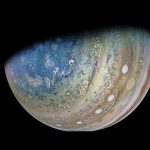
On June 7, 2021, NASA’s Juno spacecraft flew closer to Jupiter’s ice-encrusted moon Ganymede than any spacecraft in more than two decades. Less than a day later, Juno made its 34th flyby of Jupiter. This animation provides a “starship captain” point of view of each flyby. For both worlds, JunoCam images were orthographically projected onto a digital sphere and used to create the flyby animation. Synthetic frames were added to provide views of approach and departure for both Ganymede and Jupiter.
Soon Eutelsat Quantum will be launched into a geostationary orbit on board an Ariane 5 from Kourou. This advanced telecommunications satellite is revolutionary as it offers its users the ability to reconfigure the satellite while in orbit. This offers a previously unknown degree of flexibility during its 15-year lifetime. It allows for satellites of this type to be mass-produced, making them extremely interesting for commercial parties and industry. The satellite was developed as an ESA partnership project with operator @Eutelsat SA and prime contractor @Airbus working together with ESA to share the risk of developing this innovative piece of technology.
We are Europe’s gateway to space. Our mission is to shape the development of Europe’s space capability and ensure that investment in space continues to deliver benefits to the citizens of Europe and the world. Check out https://www.esa.int/ to get up to speed on everything space related.
Timelapse video made during ESA astronaut Thomas Pesquet’s second mission to the International Space Station, “Alpha”.
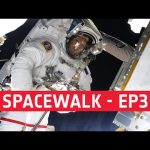
ESA astronaut Thomas Pesquet and @NASA astronaut Shane Kimbrough performed three spacewalks in the span of 10 days to install two new solar arrays that will generate more electricity on the International Space Station.
The third and final spacewalk for the duo happened on June 25 to finish installing the second pair of new solar arrays. This spacewalk proceeded without problems, and the two new solar arrays are already working and supplying power to the Space Station.
The design of the new solar arrays will be used to power the lunar Gateway that will be built in an orbit around the Moon – the next outpost in space for the agencies that run the International Space Station.
Thomas has now spent exactly 33 hours on spacewalks, all with Shane over the course of two spaceflights.
Thomas posted this video on his social media channels with the caption: “Aki took another great timelapse of our last spacewalk to install the new solar panels… for now. Four more are set to be installed, but they are not on the Station yet. This timelapse is great because it shows how small we are compared to the huge layout of the Space Station (it is about the same size as a football field – both types: American football or actually-using-your-feet-football fields). Note how the solar arrays we are working on don’t move, this is because they were turned off and not following the Sun so were not generating power. As an extra precaution we didn’t connect the power cables until darkness!”
Over 200 experiments are planned during Thomas’ time in space, with 40 European ones and 12 new experiments led by the French space agency @CnesFrance.
We are Europe’s gateway to space. Our mission is to shape the development of Europe’s space capability and ensure that investment in space continues to deliver benefits to the citizens of Europe and the world. Check out https://www.esa.int/ to get up to speed on everything space related.
A commercial cargo spacecraft leaves the space station, watching an Atlantic storm from space, and the Artemis I rocket moves closer to launch … a few of the stories to tell you about – This Week at NASA!
We are Europe’s gateway to space. Our mission is to shape the development of Europe’s space capability and ensure that investment in space continues to deliver benefits to the citizens of Europe and the world. Check out https://www.esa.int/ to get up to speed on everything space related.
Ten years ago, Atlantis rose from the launch pad on a plume of fire and parted the high clouds on its way to the International Space Station and to its place in history. The 11:29 a.m. EDT liftoff on July 8, 2011, marked the last time a space shuttle would climb from Kennedy’s seaside launch complex to soar toward the heavens.
The crew of four veteran astronauts aboard Atlantis — Commander Chris Ferguson, Pilot Doug Hurley, and Mission Specialists Sandy Magnus and Rex Walheim — set off on the STS-135 mission to deliver a stockpile of supplies and parts to the space station.
The ESA Jupiter Icy Moons Explorer (Juice) team has been working very hard to prepare the spacecraft for the first test in the one-year long environmental test campaign. This is the so-called Thermal Balance Thermal Vacuum (TBTV) test.
Juice is in the Large Space Simulator (LSS), a unique facility in Europe (run by the European Test Center, at ESA/ESTEC in the Netherlands) that can simulate the vacuum and cold and hot temperature conditions in space, and also the Sun itself!
The TBTV started on 17 June with the closure of the LSS and the “pumping-down”, meaning the removal of air within the chamber to a pressure level of 10nbar (1/100 000 000th of the outside air pressure). This is the closest Juice will come to space conditions while on Earth. It will undergo 24/7 testing, ending on 16 July 2021.
In this episode this process is followed and several team members comment on the different moments.
Produced for ESA by Lightcurve Films. GoPro footage by ESA. Original music by William Zeitler.
★ Subscribe: http://bit.ly/ESAsubscribe and click twice on the bell button to receive our notifications.
We are Europe’s gateway to space. Our mission is to shape the development of Europe’s space capability and ensure that investment in space continues to deliver benefits to the citizens of Europe and the world. Check out https://www.esa.int/ to get up to speed on everything space related.
De la ora 21:00, Claudiu ne va povesti si ne va arata imagini de la despre ultima misiune Virgin Orbit (care a lansat recent o rachetă de pe un avion), despre cursa dintre Branson și Bezos, limita spațiului, povestim despre New Shepard si apoi despre lansarea cu echipaj spre stația spațială chineză și planurile lor, eventual proiectul comun cu Rusia pentru explorarea Lunii. Povestim si despre ultima lansare SpaceX, care a dus pe orbită un dispozitiv parțial proiectat și realizat în România. Si. daca avem timp, poate atingem și subiectul Hubble
The European Robotic Arm (ERA) will be launched to the International Space Station together with the Russian Multipurpose Laboratory Module, called ‘Nauka’. ERA is the first robot able to ‘walk’ around the Russian segment of the Space Station. It has the ability to anchor itself to the Station and move back and forward by itself, hand-over-hand between fixed base-points. This 11-metre intelligent space robot will serve as main manipulator on the Russian part of the Space Station, assisting the astronauts during spacewalks. The robot arm can help install, deploy and replace elements in outer space ERA is 100% made-in-Europe. A consortium of European companies led by Airbus Defence and Space Netherlands designed and assembled it for ESA. The robotic arm is largely funded by the Dutch government.
We are Europe’s gateway to space. Our mission is to shape the development of Europe’s space capability and ensure that investment in space continues to deliver benefits to the citizens of Europe and the world. Check out https://www.esa.int/ to get up to speed on everything space related.
A U.S. commercial spacecraft departs the space station, more supplies and hardware are delivered to the station, and a moniker for the Artemis I mission’s “Moonikin” … a few of the stories to tell you about – This Week at NASA!