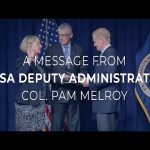
NASA’s new deputy administrator Col. Pam Melroy shares her vision for NASA’s future.
One of only two women to command a space shuttle, Melroy logged more than 38 days in space. She served as pilot on two flights, STS-92 in 2000 and STS-112 in 2002, and was the mission commander on STS-120 in 2007. All three of her missions were assembly missions to build the International Space Station.
After graduating from United States Air Force Test Pilot School, Melroy logged more than 6,000 flight hours in more than 50 different aircraft. She is a veteran of Operation Desert Shield/Desert Storm and Operation Just Cause, with more than 200 combat and combat support hours.
After serving more than two decades in the Air Force and as a NASA astronaut, Melroy took on a number of leadership roles, including at Lockheed Martin, the Federal Aviation Administration, the Defense Advanced Research Projects Agency, Nova Systems Pty, Australia, and as an advisor to the Australian Space Agency. She also served as an independent consultant and a member of the National Space Council’s Users Advisory Group.
Producer/Editor: Lacey Young Music: Universal Production Music
În această ultimă ediție înainte de vacanța de vară, am invitat alături de noi câteva dintre personalitățile care ne-au însoțit de-a lungul anului în dialogurile noastre despre idei și ideologii. Filosofi, biologi, politologi, istorici, arhitecți, din țară și din Diaspora, femei și bărbați, ne-au încântat în fiecare joi cu prezentările lor, ne-au condus în universurile multiple ale cunoașterii omenești, ale istoriei lumii și acțiunii politice, ale științei, politicii, filosofiei sau arhitecturii.
Joi, 1 iulie 2021, vor fi cu noi Mihaela Czobor-Lupp, Augustin Ioan, Ruxandra Ivan, Mihai Maci, Mihaela Miroiu, Silviu Rogobete, Alexandru Stermin și Marius Turda, într-o discuție destinsă despre ce a fost Dicționarul de idei și ideologii și mai ales despre ce poate să fie el începând cu luna septembrie, într-o versiune îmbunătățită și cât mai adaptată la setea de cunoaștere a publicului românesc.
Noi, realizatorii acestei emisiuni, am fost convinși de la început și până la sfârșit că numai o bună și răbdătoare informare asupra mersului lumii noastre ne poate feri de manipulări, dezinformări sau radicalizări. Animați noi înșine de pasiunea pentru dialogul interdisciplinar, am fost onorați să putem avea alături de noi, în fiecare joi vreme de 32 de săptămâni, minți strălucite, cercetători consacrați, pedagogi desăvârșiți, care ne-au dovedit că România dispune de un potențial teoretic și științific care merită valorificat, promovat și afirmat ca una dintre valorile cele mai de preț ale acestei țări.
Dorim, împreună cu invitații noștri, să dovedim că se poate și că nu există altă bucurie mai mare decât aceea a descoperirii neîncetate a lumii.
Emisiune realizată de Ciprian Mihali și Cristian Presură
„Dicționarul de idei și ideologii” este o serie de dialoguri despre marile teme ale gândirii sociale, politice și culturale care au construit lumea în care trăim. Sunt invitați în aceste dialoguri personalități din România și din afara țării, cercetători români consacrați în domeniul lor, care expun unui public generalist modul în care au luat naștere cele mai importante sisteme de idei ale lumii moderne, cum s-au transformat ele in ideologii și cum au evoluat de-a lungul timpului până azi. Emisiunile vorbesc deopotrivă despre istoria conceptelor, despre Scopul realizatorilor acestei emisiuni este triplu: să ofere o cunoaștere de calitate, bine structurată, argumentată și comunicată, bazată pe referințe; să adune laolaltă și să prezinte publicului vorbitor de limbă română membri de excepție ai comunității academice și științifice din România și din diaspora; să propună un model de dialog public, bazat pe schimbul argumentat de idei și pe respectul tuturor participanților la acest dialog.
At NASA, every day is asteroid day. From the many missions journeying to asteroids in our solar system – some even returning samples to Earth – to the efforts to find, track and monitor near-Earth objects and protect our planet from potential impact hazards, NASA and its partners are always looking to the skies. Join us on International Asteroid Day, Wednesday, June 30 at 1:00 p.m. ET to hear from experts and ask them your questions about all things asteroids. Send in questions using #askNASA.
Meet the experts:
Dr. Dani DellaGiustina is a Research Scientist at the University of Arizona and the acting Deputy Principal Investigator for the OSIRIS-REx mission. Dani has been studying our solar system and asteroids for quite some time. She says she loves seeing images and data that’s coming off spacecraft for the first time because chances are – you might be the first human who has ever seen a rock or feature on a planetary surface. She says it feels like you are on the edge of human knowledge. In her spare time, Dani enjoys being outside and hanging out with her dogs.
Dr. Terik Daly is a Senior Scientist at Johns Hopkins University Applied Physics Laboratory. As a planetary scientist, Terik investigates how the solar system formed and changes through time. He loves working in teams to solve problems that are too big for any one person to solve, which is why he finds his work in planetary defense interesting. Terik has three young kids and enjoys cooking, yoga and biking.
NASA’s Psyche team will measure the asteroid’s magnetic field using a magnetometer. This instrument is composed of two identical high-sensitivity magnetic field sensors located at the middle and outer end of a 6-foot (2-meter) boom on the spacecraft. The magnetometer team is based at the Massachusetts Institute of Technology and Technical University of Denmark.
The Psyche mission is led by Principal Investigator Lindy Elkins-Tanton of Arizona State University. NASA’s Jet Propulsion Laboratory is responsible for the mission’s overall management, system engineering, integration and test, and mission operations. Maxar Technologies is providing a high-power solar electric propulsion spacecraft chassis.
Staying safe and healthy moves us forward – for your family and the NASA family.
We prioritize the safety of our employees and our communities. All employees are strongly encouraged to monitor vaccine availability in their local communities while the agency updates its capabilities to support vaccine distribution and works with states to get vaccine for our mission-critical workforce.
Timelapse video made during ESA astronaut Thomas Pesquet’s second mission to the International Space Station, “Alpha”.
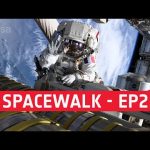
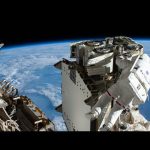
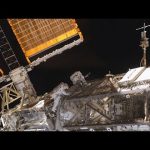
On Sunday 20 June 2021 Thomas and @NASA astronaut Shane Kimbrough were helped into their spacesuits again for their fourth spacewalk together. This time it was to complete installation of the first new solar array and get ahead on the second.
During this spacewalk the duo unfolded the solar arrays that are rolled into tubes for transport, aligned them, connected data cables and secured them to the mounting bracket. Connecting the power lines must be done during the orbital night-time as a precaution to avoid any chance of electric shock.
As Thomas and Shane waited for the night to arrive, Shane’s helmet lights and camera partially detached from his helmet but Thomas used some wire to successfully reattach them as a temporary fix.
From there the spacewalk went smoothly. Shane and Thomas connected the new solar array, watched it unfurl and prepared for the installation of the second new solar array. The second spacewalk lasted 6 hours and 28 minutes, with the duo arriving back at the airlock at 20:10 CEST (19:10 BST).
This video shows scenes from this spacewalk. The images for this timelapse were taken by @JAXA | 宇宙航空研究開発機構 astronaut and Space Station commander Aki Hoshide.
Thomas posted this video on his social media with the caption: “We have to do EVAs, but someone has to keep running the Space Station while we are preparing, spacewalking, reconfiguring, preparing again… Aki has been rock solid taking care of the spaceship pretty much by himself, performing all the maintenance and the science experiments, AND ON TOP OF THAT he found the time to take timelapses of our little walks outside. The man is a machine!”
Over 200 experiments are planned during Thomas’ time in space, with 40 European ones and 12 new experiments led by the French space agency @CNES.
We are Europe’s gateway to space. Our mission is to shape the development of Europe’s space capability and ensure that investment in space continues to deliver benefits to the citizens of Europe and the world. Check out https://www.esa.int/ to get up to speed on everything space related.
Spacewalking astronauts work outside the space station, NASA’s new deputy administrator is sworn-in, and putting another piece of our Artemis I Moon rocket in place … a few of the stories to tell you about – This Week at NASA!
The Copernicus Sentinel-1 takes us over Lake Mar Chiquita – an endorheic salt lake in the northeast province of Córdoba, Argentina, in this edition of the Earth from Space programme.
We are Europe’s gateway to space. Our mission is to shape the development of Europe’s space capability and ensure that investment in space continues to deliver benefits to the citizens of Europe and the world. Check out https://www.esa.int/ to get up to speed on everything space related.
Prin anii șaptezeci, Sartre spunea, în aplauzele intelectualilor radicali, că stânga și dreapta sunt „două cutii goale“. Un sfert de veac mai târziu, l-a contrazis Norberto Bobbio: „copacul ideologiilor e mereu verde“, a afirmat italianul. Căderea regimurilor comuniste a animat dezbaterea de idei politice și a reconfigurat identitățile de stânga și de dreapta atât în țările care redescopereau democrația, cât și în cele occidentale. România e doar un caz între multe altele. Spectrul politic de la noi a fost configurat pornind de la opoziția dintre neocomuniști și anticomuniști pentru ca, într-un al doilea moment, stânga și dreapta să-ți capete energiile de la familiile europene de partide.
Educat în România și în Franța, predă științele politice la Universitatea din București începând din 1992. Decan al facultății sale între 2004 și 2010, ca și din 2019 încoace. Consilier – câte doi ani – al președinților E. Constantinescu și T. Băsescu, secretar de stat la externe – tot pentru doi ani, deputat european – vreme de două mandate, Cristian Preda a scris despre liberalism, sisteme electorale și istoria politică românească.
Emisiune realizată de Ciprian Mihali și Cristian Presură
„Dicționarul de idei și ideologii” este o serie de dialoguri despre marile teme ale gândirii sociale, politice și culturale care au construit lumea în care trăim. Sunt invitați în aceste dialoguri personalități din România și din afara țării, cercetători români consacrați în domeniul lor, care expun unui public generalist modul în care au luat naștere cele mai importante sisteme de idei ale lumii moderne, cum s-au transformat ele in ideologii și cum au evoluat de-a lungul timpului până azi. Emisiunile vorbesc deopotrivă despre istoria conceptelor, despre Scopul realizatorilor acestei emisiuni este triplu: să ofere o cunoaștere de calitate, bine structurată, argumentată și comunicată, bazată pe referințe; să adune laolaltă și să prezinte publicului vorbitor de limbă română membri de excepție ai comunității academice și științifice din România și din diaspora; să propună un model de dialog public, bazat pe schimbul argumentat de idei și pe respectul tuturor participanților la acest dialog.
Timelapse video made during ESA astronaut Thomas Pesquet’s second mission to the International Space Station, “Alpha”.
On 16 June 2021 Thomas and @NASA astronaut Shane Kimbrough went on a spacewalk to install a new solar array for the International Space Station. These arrays, called IROSA for ISS Roll-Out Solar Array, had to be taken from their storage area outside the Space Station and passed from spacewalker to spacewalker to the worksite. There the rolled arrays were to be secured, unfolded, connected and then unfurled.
During the spacewalk a small technical problem in Shane’s spacesuit required him to return to the airlock and restart his Display and Control Module. This module provides astronauts with continuous information on pressure, temperature and other vital data during a spacewalk. Though the restart was successful and Shane was in no danger, it delayed the duo’s work, preventing them from completing installation of the first new solar array as planned. A second spacewalk was done on 20 June to finish installing the first solar array.
This video shows scenes from the first spacewalk with Thomas being moved on the robotic arm, at the controls was NASA astronaut Megan McArthur. The images for this timelapse were taken by @JAXA | 宇宙航空研究開発機構 astronaut and Space Station commander Aki Hoshide.
Thomas posted this video on his social media with the caption: “We have to do EVAs, but someone has to keep running the Space Station while we are preparing, spacewalking, reconfiguring, preparing again… Aki has been rock solid taking care of the spaceship pretty much by himself, performing all the maintenance and the science experiments, AND ON TOP OF THAT he found the time to take timelapses of our little walks outside. The man is a machine!”
Over 200 experiments are planned during Thomas’ time in space, with 40 European ones and 12 new experiments led by the French space agency @CNES
We are Europe’s gateway to space. Our mission is to shape the development of Europe’s space capability and ensure that investment in space continues to deliver benefits to the citizens of Europe and the world. Check out https://www.esa.int/ to get up to speed on everything space related.
At NASA, there is space for everybody! Subscribe to NASA’s official YouTube channel to explore the universe and discover our home planet. Visit https://www.nasa.gov for more!
Producer/Editor: Lacey Young Music: Universal Production Music
Want to learn more about applications to ESA’s astronaut selection? Watch the replay of this media briefing to get an insight into the total number and spread of applications across all ESA Member and Associate Member states. Vacancies for the positions of astronaut and astronaut (with a physical disability) have closed on 18 June 2021, after a two-and-a-half-month-long application period.
★ Subscribe: http://bit.ly/ESAsubscribe and click twice on the bell button to receive our notifications.
We are Europe’s gateway to space. Our mission is to shape the development of Europe’s space capability and ensure that investment in space continues to deliver benefits to the citizens of Europe and the world. Check out https://www.esa.int/ to get up to speed on everything space related.
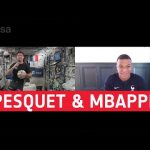
ESA astronaut Thomas Pesquet talked to French national football team player Kylian Mbappé from the International Space Station during the Alpha mission in 2021.
They talked about science, life in space, teamwork, international collaboration, performing under pressure, stress, risk, life behind the scenes and the parallels between professional sport and being an astronaut.
Thomas has often said that sport taught him the values of team spirit and respecting team mates, and no astronaut is an island – if one profession is an example of teamwork it is being an astronaut. It takes a team to ensure they are at their best.
Credits: @UEFA
★ Subscribe: http://bit.ly/ESAsubscribe and click twice on the bell button to receive our notifications.
We are Europe’s gateway to space. Our mission is to shape the development of Europe’s space capability and ensure that investment in space continues to deliver benefits to the citizens of Europe and the world. Check out https://www.esa.int/ to get up to speed on everything space related.
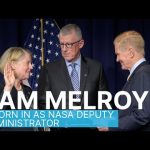
NASA Deputy Administrator Pam Melroy took office Monday after she was given the oath of office by NASA Administrator Bill Nelson during a ceremony at the Mary W. Jackson NASA Headquarters building in Washington on June 21, 2021.
Melroy was nominated in April by President Biden and confirmed by the Senate on June 17. Along with Nelson, Melroy is responsible for providing overall leadership, planning, and policy direction for NASA.
One of only two women to command a space shuttle, Melroy logged more than 38 days in space. All three of her missions were assembly missions to build the International Space Station. After serving more than two decades in the Air Force and as a NASA astronaut, Melroy took on a number of leadership roles, including at Lockheed Martin, the Federal Aviation Administration, the Defense Advanced Research Projects Agency, Nova Systems Pty, Australia, and as an advisor to the Australian Space Agency. She currently is an independent consultant and a member of the National Space Council’s Users Advisory Group.
Video Producer: Lacey Young Music Credit: Universal Production Music
🚩 Video Sponsored by Ridge Wallet: https://www.ridge.com/HISTORY 🚩 Use Code “HISTORY ” for 10% off your order 👇 Push down for more cool stuff 👇
🚩The Battle of the Field of Blood and the broader struggle for Aleppo was an intensely complex affair, drawing in many factions—Frankish, Turkish, Armenian, Arab, and Byzantine. Like so many of the Crusader States’ wars, it was rarely a simple matter of Christians versus Muslims.
SPACEWALK COMING SOON: Join us live from space on Sun. June 20 at 6:30 a.m. EDT (10:30 UTC) to cheer on NASA astronaut Shane Kimbrough and European Space Agency astronaut Thomas Pesquet as they continue work installing new, roll-up solar arrays on the International Space Station. Once their spacesuits are set to battery power around 8 a.m. EDT (12:00 UTC), the duo will spend about 6.5 hours in the vacuum of space on this demanding task.
Set a reminder to watch this special job performed live!
Installing new solar arrays for the space station, updating launch and landing dates for Commercial Crew, and NASA’s new deputy administrator is confirmed … a few of the stories to tell you about – This Week at NASA!
We are Europe’s gateway to space. Our mission is to shape the development of Europe’s space capability and ensure that investment in space continues to deliver benefits to the citizens of Europe and the world. Check out https://www.esa.int/ to get up to speed on everything space related.
Prezentarea este o invitație la întâlnirea cu unul dintre cele mai fascinante și de aventură exerciții de gândire pe care îl face umanitate în nevoia de a cunoaște și înțelege lumea din jur. Încă din dimineața apariției noastre pe Pământ ne-am lăsat fascinați de viațq din care facem parte, de diversitatea, splendoarea și misterul ei. După un lung, riscant și îndrăzneț drum, mintea umană a formulat unele dintre cele mai complexe și frumoase ipoteze și teorii despre viață. Testate și nuanțate de-a lungul timpului acestea au pus bazele științei moderne și ale Lumii în care trăim. Dincolo de implicațiile ei majore în medicină, sociologie și ecologie, teoria evoluției vieții, marchează fără să știm cotidianul nostru, răspunzând și clarificând multe din lucrurile mărunte pe care nu le înțelegem, în timp ce ne poate sprijini, de asemenea, în confruntarea noastră cu marile întrebări existențiale: Cine suntem? De unde venim?”.
Alexandru N. Stermin, lector la Facultatea de Biologie și Geologie a Universității Babeș-Bolyai. Licențiat în biologie și teologie, a absolvit un masterat în filosofie. Preda cursurile de Anatomia comparată a Vertebratelor, Etologie, Bioetică și Ecologie Umană. A participat în expediții în jungla Americii de Sud și în Siberia, a fost bursier la Universitatea din Greifswald, Germania și Universitatea de Stat din Rio de Janeiro, Brazilia. Se implică activ în proiecte de conservare a naturii și comunicarea a științei. Contribuie cu textele sale în paginile revistelor Sinteza și National Geographic.
Emisiune realizată de Ciprian Mihali și Cristian Presură
„Dicționarul de idei și ideologii” este o serie de dialoguri despre marile teme ale gândirii sociale, politice și culturale care au construit lumea în care trăim. Sunt invitați în aceste dialoguri personalități din România și din afara țării, cercetători români consacrați în domeniul lor, care expun unui public generalist modul în care au luat naștere cele mai importante sisteme de idei ale lumii moderne, cum s-au transformat ele in ideologii și cum au evoluat de-a lungul timpului până azi. Emisiunile vorbesc deopotrivă despre istoria conceptelor, despre Scopul realizatorilor acestei emisiuni este triplu: să ofere o cunoaștere de calitate, bine structurată, argumentată și comunicată, bazată pe referințe; să adune laolaltă și să prezinte publicului vorbitor de limbă română membri de excepție ai comunității academice și științifice din România și din diaspora; să propună un model de dialog public, bazat pe schimbul argumentat de idei și pe respectul tuturor participanților la acest dialog.
Join us on June 17, 2021 at 2 p.m. EDT for a conversation in honor of National LGBTQ+ Pride Month about what it means to be an ally, understanding some of the barriers faced by the lesbian, gay, bisexual, transgender, and queer community, and what you as an active ally can do to help break down those barriers. The panel discussion will be moderated by Charles Cockrell, associate director for strategy at NASA’s Glenn Research Center, and will feature:
• Melanie Saunders, NASA deputy associate administrator • Sarah J. Phillips, visual information specialist for the Image Technology Center at NASA’s Glenn Research Center • Ron Brade, retired associate center director at NASA’s Ames Research Center • Donna Shafer, associate center director at NASA’s Johnson Space Center
The event is sponsored by the LGBTQ+ Employee Alliance Group at NASA’s Langley Research Center, the LGBT Advisory Council at NASA’s Goddard Space Flight Center, Out & Allied at NASA’s Johnson Space Center; the LGBT Employee and Allies Network at NASA’s Kennedy Space Center, the LGBT Advisory Group at NASA’s Ames Research Center, the NASA HQ Pride Alliance; The Rainbow Alliance at NASA’s Glenn Research Center, Stennis Space Center, and the NASA Shared Services Center.
NASA has issued a Request for Information (RFI) to receive input from the public on NASA’s mission directorates’ programs, procurements, grants, regulations and policies. NASA will use this information to evaluate, implement, modify, expand, and streamline its programs, procurements, grants, regulations and policies to remove systemic inequitable barriers and challenges facing underserved communities.
Through the RFI process, NASA hopes to initiate vibrant, meaningful, and ongoing dialogues that will help the agency build and improve current agency policies, practices, and programs. The deadline for public comments to this RFI is Monday, July 12, but we encourage submission of comments as soon as possible to enable early analysis and follow-up discussions.
Video Producer: Sonnet Apple Music Credit: Universal Production Music
Have you ever done a science experiment and wondered “What would this be like if it were HUGE?” Welcome to Science Max, the exciting new series that turbocharges all the science experiments you’ve done at home.
After more than 20 years, the International Space Station is getting new solar arrays, and you have the chance to watch it LIVE during a spacewalk! On June 16, Shane Kimbrough of NASA Astronauts and Thomas Pesquet of the European Space Agency will venture into the vacuum of space for ~6.5 hours to install and deploy two roll-out solar arrays on the space station.
Coverage starts at 6:30 a.m. EDT (10:30 UTC). Set a reminder to watch this special job performed live!
An instrument destined for Jupiter orbit undergoes eight days of cryogenic radio-frequency testing using a new test facility at ESA’s ESTEC technical centre in the Netherlands. The Submillimetre Wave Instrument of ESA’s Juice mission will survey the churning atmosphere of Jupiter and the scanty atmospheres of its Galilean moons.
Testing took place in ESA’s custom-built Low-temperature Near-field Terahertz chamber, or Lorentz. The first chamber of its kind, the 2.8-m diameter Lorentz chamber can perform high-frequency radio-frequency testing in realistic space conditions, combining space-quality vacuum with ultra-low temperatures.
★ Subscribe: http://bit.ly/ESAsubscribe and click twice on the bell button to receive our notifications.
We are Europe’s gateway to space. Our mission is to shape the development of Europe’s space capability and ensure that investment in space continues to deliver benefits to the citizens of Europe and the world. Check out https://www.esa.int/ to get up to speed on everything space related.
Choose your player! NASA is holding a naming contest beginning Wednesday, June 16 for the manikin that will fly on an upcoming mission around the Moon.
As NASA gears up for the Artemis I mission around the Moon that will pave the way to send the first woman and the first person of color to the lunar surface, we have an important task for you (yes, you!). Artemis I will be an uncrewed flight test of the Space Launch System rocket and the Orion spacecraft ahead of the first flight with crew on Artemis II. We want your help to select a name for the suited manikin, or Moonikin in this case, that will fly aboard Orion to help gather data before missions with astronauts!
We have eight names to choose from, but only one can win. Every other day starting Wednesday, June 16, we will be asking you on @NASAArtemis Twitter, Facebook, and Instagram, to vote between one of two names. The winners of each bracket compete with one another until the final showdown on Monday, June 28.
The final name of the Moonikin will be announced on Tuesday, June 29!
For more information, go to: nasa.gov/namethemoonikin
William Shatner, Star Trek’s Captain Kirk, reads Ray Bradbury’s poem ‘Witness and Celebrate NASA’s Future.’ The poem was written by Bradbury in 2000 for the NASA Art Program.
Editor: Lacey Young Music: Universal Production Music
Making progress on our Artemis Moon rocket, images from a close encounter with a Jovian moon, and a ring of fire for our Moon … a few of the stories to tell you about – This Week at NASA!
We are Europe’s gateway to space. Our mission is to shape the development of Europe’s space capability and ensure that investment in space continues to deliver benefits to the citizens of Europe and the world. Check out https://www.esa.int/ to get up to speed on everything space related.
Teams across the country have been competing for years to be the first to engineer functional human tissue in a lab. Now, scientists have accomplished this medical feat by creating thick vascularized human organ tissue, which could have profound implications both on Earth and off. Join us LIVE on Wednesday, June 9 at 3:00 p.m. ET, as we announce the official winner of NASA’s Vascular Tissue Challenge. Have questions? Use #askNASA
Azi de la 21:00 (ora ro) am bucuria sa stau de vorba cu Marius Stan, cercetator in fizica si chimia materialelor la la divizia de Inginerie Nucleară de la Argonne National Laboratory. El este si actor, jucand rolul lui Bogdan Wolynetz în serialul de televiziune Breaking Bad. Intalnirea se poate urmari aici si pe youtube: https://youtu.be/TPBId5IMcuA
Transumanismul ne propune transcenderea condiției umane (mortalitatea, boala, limitările cognitive etc.) prin tehnologie, însă tehnologiile pe care le creăm riscă să ne devină competitori sau chiar adversari. Cum anume putem câștiga cursa dintre inteligența umană și cea artificială? Ce este singularitatea tehnologică, momentul în care am pierdut definitiv cursa? Cum putem să avem încredere și control asupra tehnologiilor pe care le creăm? Ce ne spune compasul nostru moral despre devierea de la natural? Ce este trans-omul: un demi-zeu sau un Frankenstein? Ce formă are trans-omul: un cyborg sau o nouă specie? Visul transcenderii condiției umane nu este nou, este prezent în toate miturile în care hybrisul uman e pedepsit de zei, ceea ce e nou este modalitatea prin care ne dobândim transcendența, și anume tehnologiile pe care inventăm. Ca să înțelegem transumanismul trebuie să înțelegem transformările tehnologice profunde care ne înconjoară deja și care ne vor asedia în viitorul apropiat.
Mihaela (Meia) Chita-Tegmark este absolventă a Facultății de Istorie și Filosofie (2008) și a Facultății de Litere (2009) din cadrul Universității Babeș-Bolyai. Și-a continuat studiile masterale la Harvard University și a obținut doctoratul in psihologie la Boston University. În prezent, lucrează în cercetare la Tufts University unde studiază teme legate de interacțiunea dintre oameni și roboți. Mihaela este interesată de o varietate de subiecte la intersecția dintre tehnologie și psihologie, cum ar fi utilizarea agenților sociali artificiali în medicină și terapie, și impactul tehnologiilor emergente asupra interacțiunilor sociale umane și a bunăstării emoționale. De asemenea ea este co-fondatoarea Institutului pentru Viitorul Vieții (Future of Life Institute), o organizație axată pe utilizarea pozitivă a tehnologiilor emergente și evitarea riscurilor tehnologice. Prin generozitatea unor finanțatori precum Elon Musk (Space X, Tesla), Vitalik Buterin (Ethereum), Jaan Tallinn (Skype) și Open Philanthropy Project, organizația dezvoltă programe de cercetare, educare a publicului și reglementare a tehnologiilor emergente precum inteligența artificială.
Emisiune realizată de Ciprian Mihali și Cristian Presură
„Dicționarul de idei și ideologii” este o serie de dialoguri despre marile teme ale gândirii sociale, politice și culturale care au construit lumea în care trăim. Sunt invitați în aceste dialoguri personalități din România și din afara țării, cercetători români consacrați în domeniul lor, care expun unui public generalist modul în care au luat naștere cele mai importante sisteme de idei ale lumii moderne, cum s-au transformat ele in ideologii și cum au evoluat de-a lungul timpului până azi. Emisiunile vorbesc deopotrivă despre istoria conceptelor, despre Scopul realizatorilor acestei emisiuni este triplu: să ofere o cunoaștere de calitate, bine structurată, argumentată și comunicată, bazată pe referințe; să adune laolaltă și să prezinte publicului vorbitor de limbă română membri de excepție ai comunității academice și științifice din România și din diaspora; să propună un model de dialog public, bazat pe schimbul argumentat de idei și pe respectul tuturor participanților la acest dialog.
NASA is more than astronauts. We are scientists, engineers, IT specialists, human resources specialists, accountants, writers, technicians, and many other kinds of people working together to break barriers to achieve the seemingly impossible.
Meet Hera, our very own asteroid detective. Together with two CubeSats – Milani the rock decoder and Juventas the radar visionary – Hera is off on an adventure to explore Didymos, a double asteroid system that is typical of the thousands that pose an impact risk to planet Earth.
Suitable for kids and adults alike, this episode of ‘The Incredible Adventures of Hera’ takes you on a fun and informative journey to visit Didymos together with Hera. Along the way, you will discover who the main characters are, why this mission is so important, what ESA hopes to achieve with Hera and much more.
We are Europe’s gateway to space. Our mission is to shape the development of Europe’s space capability and ensure that investment in space continues to deliver benefits to the citizens of Europe and the world. Check out https://www.esa.int/ to get up to speed on everything space related.
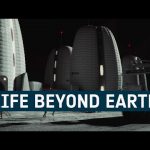
A detailed concept for a lunar habitat, created by one of the world’s leading architectural firms with ESA technical support, is currently on show at the Biennale in Venice. Skidmore, Owings & Merrill, originator of many of the world’s tallest skyscrapers, worked with ESA on a semi-inflatable habitat design which could be part of a long-term vision for an international Moon settlement.
The resulting design is on show at the 17th International Architecture Exhibition of La Biennale di Venezia (@BiennaleChannel). While the theme of the overall exhibition is ‘How will we live together?’, the SOM installation is called ‘Life Beyond Earth’, peering beyond our post-COVID-19 planet to show how human life can be sustained in the hostile space environment. The installation encompasses two large-scale, physical models and this film, bringing Biennale visitors on a journey from Earth to the Moon’s surface.
SOM designed a semi-inflatable shell structure to offer the highest possible volume to mass ratio. Once inflated on the lunar surface, it would reach approximately double its original internal volume.
A lot of work went into the four-storey habitat interior, in terms of lighting conditions, reconfigurable features, and a high floor to ceiling space, to allow crew members to take advantage of lunar one-sixth g using grabbing bars and other simple aids.
Its chosen site has been described as the most desirable real estate in the Solar System: the rim of Shackleton crater beside the lunar South Pole. Avoiding the crippling temperature extremes of the Moon’s two-week days and nights, this location offers near-continuous sunlight for solar power, an ongoing view of Earth and access to lunar water ice deposits in adjacent permanently-shadowed craters.
Credit: SOM
★ Subscribe: http://bit.ly/ESAsubscribe and click twice on the bell button to receive our notifications.
We are Europe’s gateway to space. Our mission is to shape the development of Europe’s space capability and ensure that investment in space continues to deliver benefits to the citizens of Europe and the world. Check out https://www.esa.int/ to get up to speed on everything space related.
Learn about two new future missions to Venus and other reasons why the State of NASA is strong and exciting, launching supplies to the space station, and more good news for OSIRIS-REx … a few of the stories to tell you about – This Week at NASA!
NASA is introducing the Earth System Observatory – an array of satellites, instruments and missions that are going to collect a series of critical observations. These observations will better inform us of how our planet is changing with greater precision on unimaginable scales – from entire continents down to individual trees.
Each mission in itself will deliver important environmental measurements. Taken together, as a single Observatory, we will have a holistic, 3-dimensional understanding of our Earth’s systems – how they work together, how one change can influence another.
We are Europe’s gateway to space. Our mission is to shape the development of Europe’s space capability and ensure that investment in space continues to deliver benefits to the citizens of Europe and the world. Check out https://www.esa.int/ to get up to speed on everything space related.
Venus, our planetary neighbor, is a hot, hellish unforgiving world. Its toxic atmosphere and sweltering surface make it a challenging place to study, and it’s been over 3 decades since NASA visited Earth’s evil twin…until now! NASA is sending two bold new missions to study this inferno-like world: DAVINCI+ and VERITAS. Join mission experts Thursday, June 3 at 3:00 p.m. ET on #NASAScience Live and submit your questions for them to answer using #askNASA.
Meet the experts: Dr. James Garvin is the Principal Investigator for the DAVINCI+ mission. His lifelong passion for Venus began in the Fall of 1979 and he says having the DAVINCI+ mission selected is a dream come true. Dr. Garvin is looking forward to exploring many exciting areas of Venus but says that it will be epic to see the Venus mountains at human scales in 3D with DAVINCI+. When he’s not dreaming about going to Venus, Dr. Garvin loves taking walks with his wife and their dog Glenda and watching ice hockey.
Dr. Susanne Smrekar is the Principal Investigator for the VERITAS mission. She was first hooked on the incredible intrigue of Venus when she was ‘in the room’ with the great minds of geology and geophysics, watching data arrive from the Magellan mission over 30 years ago. It has been her lifelong quest to understand how Earth and Venus have diverged. In her free time, she loves to mountain bike, run, hike and be outside.