Exploring outer space doesn’t come without rules. In this episode of Meet the Experts, Thea Flem Dethlefsen discusses the laws that govern space to ensure that all states have equal, fair and sustainable access in the present and the future.
We are Europe’s gateway to space. Our mission is to shape the development of Europe’s space capability and ensure that investment in space continues to deliver benefits to the citizens of Europe and the world. Check out http://www.esa.int/ESA to get up to speed on everything space related.
Have you ever done a science experiment and wondered “What would this be like if it were HUGE?” Welcome to Science Max, the exciting new series that turbocharges all the science experiments you’ve done at home.
This year marks the 100th anniversary of the adoption of the 19th Amendment to the U.S. Constitution, guaranteeing women the right to vote. “Past, Present, and Future of Women in Space,” is an inspirational program to reflect on the stories and contributions of women in space and STEM through the lens of the past, present, and future.
In addition to special guests, you’ll hear from a panel of NASA’s own female “firsts” and pioneers, including astronaut Stephanie Wilson; Clara Ma, NASA’s Curiosity rover naming contest winner; Charlie Blackwell-Thompson, launch director at Kennedy Space Center; and moderator Dr. Christyl Johnson, Deputy Director for Technology and Research Investments at Goddard Space Flight Center.
Cameras outside the International Space Station captured views of Tropical Storm Laura from approximately 250 miles above. The space station passed directly over the tropical system on Sunday, August 23, prior to the storm making landfall on Cuba. The National Hurricane Center is projecting Laura to strengthen into a hurricane once in the Gulf of Mexico, with landfall expected on the U.S. Gulf Coast later this week. Follow our coverage: https://blogs.nasa.gov/hurricanes.
🚩 Start playing WOTs now! Register into the game through the link below https://tanks.ly/33vyfYq , activate the invite code TANKTASTIC and get a huge starter pack of: Premium Tank: T-127 (Soviet – tier 3) — 7 premium days — 500 Gold
👇 Push down for more cool stuff 👇
Cartea “Descifrarea Universului” de Lucy si Stephen Hawking a aparut la Editura Humanitas si poate fi comandata de aici: https://www.rebrand.ly/yt4e9di
Chiar dacă există alte dimensiuni undeva în universul nostru sau în altele, ar trebui să călătorim într-un loc care să le includă, oamenii de știință nu sunt atât de siguri că le putem experimenta. Creierul nostru poate fi incapabil pentru accesarea lor. Matematic, putem descrie a 4-a dimensiune, dar este posibil să nu o experimentăm niciodată pe tărâmul fizic.
Chiar și așa, asta nu ne-ar împiedicat să căutăm dovezi ale altor dimensiuni mai mari 5d-6d de ce nu.
Targeting the next U.S. launch of astronauts, another successful space station resupply mission, and honoring pilots for National Aviation Day … a few of the stories to tell you about – This Week at NASA!
Beneath its icy surface, Saturn’s icy moon Enceladus has many surprises: a reservoir of liquid water, organic chemical compounds, and hydrothermal vents. Find out what you need to know about Enceladus, an ocean world which may have conditions friendly to life.
Flying 400km above our heads, the International Space Station (ISS) is the world’s laboratory in space. But what kind of research is done there and how does it affect our lives on Earth? ESA expert Dr. Jason Hatton discusses notable research from the ISS and how the unique location of this facility allows us to explore never-before-seen phenomena in this episode of Meet the Experts.
We are Europe’s gateway to space. Our mission is to shape the development of Europe’s space capability and ensure that investment in space continues to deliver benefits to the citizens of Europe and the world. Check out http://www.esa.int/ESA to get up to speed on everything space related.
It turns out Beck, NASA and artificial intelligence have a lot in common!
NASA spacecraft and observatories have been imaging our solar system and our universe for over 60 years. The NASA archives host a wealth of images that showcase and educate. Beck’s latest music videos for the album Hyperspace, created by Osk Studios, use artificial intelligence to interpret our NASA images. We’ve also used our databases of Mars images to train our new Mars rover Perseverance to help it land, drive and explore with autonomy. In this episode of #AskNASA, Beck joins NASA-JPL engineer Farah Alibay and Osk designers Isabelle Albuquerque and Jon Ray to answer social media questions about A.I. in art and science.
Have you ever done a science experiment and wondered “What would this be like if it were HUGE?” Welcome to Science Max, the exciting new series that turbocharges all the science experiments you’ve done at home.
Theodor Nenu este absolvent de calculatoare si filozofie al Universitatii din Oxford si doctorand la Universitarea din Bristol. Aboneaza-te la canalul lui de Youtube “Philosophical Trials” : https://www.youtube.com/channel/UC3ZZCY4WfvJ2c-WQiV4EV0w
Our planet is a beautiful water-filled world, teeming with life. But did you know that Earth is not the only world in our solar system with an ocean? Here’s what you need to know about Ocean Worlds.
Aceste raspunsuri au fost date LIVE pe https://www.discord.gg/presura dupa lectia de fizica 6. Energia câmpului electromagnetic, pe care o puteti urmari aici: https://www.youtube.com/watch?v=cx4dVJmv3_o
1. Sunt și alte particule care formează câmp magnetic?
2. Apare electroliza și prin efect de inducție magnetică?
3. Se poate încălzi apa prin inducție magnetică?
4. Există câmp electromagentic în jurul unui laser?
5. Ce este curentul alternativ?
6. Care este diferența dintre undele radio și cele wireless?
7. De ce se consumă o baterie chiar dacă nu e folosită?
Closing in on a hot fire test for Artemis I, a tiny hitchhiker headed for a near-Earth destination, and a final rehearsal for OSIRIS-REx … a few of the stories to tell you about – This Week at NASA!
Astrobiologists study ancient lakes on Earth in order to help us search for life in our solar system and beyond. Subscribe to our “Gravity Assist” podcast for this episode and more: www.nasa.gov/gravityassist
As the Perseverance Rover flies toward Jezero Crater on Mars, which once hosted water, astrobiologists are interested in places on Earth that are similar to the rover landing site. Kennda Lynch, scientist at the Lunar and Planetary Institute in Houston, Texas, has been doing fieldwork in an ancient lake location in Utah called the Pilot Valley Playa. In this episode of Gravity Assist, she describes her recent discoveries and why she’s excited about Perseverance. She also explains how all life forms create waste products, even bacteria, that could leave tracers or “biosignatures” for scientists to detect. By looking at how microbes survive in extreme environments on Earth, scientists can explore the bigger question of how life could sustain itself on other planetary bodies like Mars and Jupiter’s moon Europa.
Image Credits:
NASA
Vox/ YouTube Original -“Glad You Asked”
Brocken Inaglory/Wikimedia Commons
Alexander Gerst/Wikimedia Commons
Paul Hermans/Wikimedia Commons
Have you ever done a science experiment and wondered “What would this be like if it were HUGE?” Welcome to Science Max, the exciting new series that turbocharges all the science experiments you’ve done at home.
Will robots replace humans one day? When it comes to space exploration, robots are our precursors, gathering data to prepare humans for deep space. ESA robotics engineer Martin Azkarate discusses some of the upcoming missions involving robots and the unique science they will perform in this episode of Meet the Experts.
We are Europe’s gateway to space. Our mission is to shape the development of Europe’s space capability and ensure that investment in space continues to deliver benefits to the citizens of Europe and the world. Check out http://www.esa.int/ESA to get up to speed on everything space related.
“What if we built a bridge, between and above all nations, to jointly discover the galaxy’s great unknowns?” Join us this fall as we prepare to celebrate the 20th anniversary of the International Space Station. As a global endeavor, 240 people from 19 countries have visited the unique microgravity laboratory, which has hosted more than 2,800 research investigations from scientists in over 100 nations.
NASA Astronauts Robert Behnken and Douglas Hurley splashed down in the Dragon Endeavour capsule at 2:48 p.m. EDT on Sunday, Aug. 2, off the coast of Pensacola, Florida.
Demo-2 is SpaceX’s final test flight and is providing data on the performance of the Falcon 9 rocket, Crew Dragon spacecraft and ground systems, as well as in-orbit, docking, splashdown, and recovery operations. The data will inform NASA’s certification of the SpaceX crew transportation system for regular flights carrying astronauts to and from the space station. SpaceX is readying the hardware for the first rotational mission that will occur following NASA certification, which is expected to take about six weeks.
How do rockets lift off from the ground and how fast do they go? Can we launch rockets from other planets? ESA rocket scientist Kate Underhill answers these questions and offers more fun facts about launchers in this episode of Meet The Experts.
We are Europe’s gateway to space. Our mission is to shape the development of Europe’s space capability and ensure that investment in space continues to deliver benefits to the citizens of Europe and the world. Check out http://www.esa.int/ESA to get up to speed on everything space related.
A safe splashdown for an historic test flight, a major milestone for a future mission, and remembering a champion for Earth Science … a few of the stories to tell you about – This Week at NASA!
Join ESA astronauts Thomas Pesquet and Matthias Maurer at NASA’s Johnson Space Center in Houston, Texas, USA. In part four of this video series, the astronauts discuss taking photos on the International Space Station.
Though mission details and dates are yet to be confirmed, Thomas and Matthias are the next two European astronauts in line for flights. Thomas has flown to the International Space Station before, while Matthias will fly for the first time.
Prior to a mission, astronauts train extensively to ensure they are familiar with the vast array of systems and operations on board. In this video, the pair reflect on the images Thomas took during his first mission and how he plans to approach space photography the second time around.
This video was filmed in June 2020. At that time, the platform Thomas and Matthias were standing on – in front of a full-scale mock-up of the International Space Station – was the only place at NASA’s JSC that they could interact without face masks. Despite this, the pair were required to maintain social distance at all times as a precaution.
We are Europe’s gateway to space. Our mission is to shape the development of Europe’s space capability and ensure that investment in space continues to deliver benefits to the citizens of Europe and the world. Check out http://www.esa.int/ESA to get up to speed on everything space related.
Have you ever done a science experiment and wondered “What would this be like if it were HUGE?” Welcome to Science Max, the exciting new series that turbocharges all the science experiments you’ve done at home.
NASA is enabling safe, reliable, and cost-effective crew transportation to and from the International Space Station from two private companies – Spacex and Boeing. NASA’s Commercial Crew Program represents a revolutionary approach to government and commercial collaborations for the advancement of space exploration.
For the first time in history, NASA astronauts launched from American soil in a commercially built and operated American crew spacecraft to the space station. The SpaceX Crew Dragon spacecraft carrying NASA astronauts Robert Behnken and Douglas Hurley launched May 31 on the company’s Falcon 9 rocket from Launch Complex 39A at NASA’s Kennedy Space Center in Florida. They returned to Earth and splashed down in the Dragon Endeavor capsule on Sunday, Aug. 2, off the coast of Pensacola, Florida.
Known as NASA’s SpaceX Demo-2, the mission is an end-to-end test flight to validate the SpaceX crew transportation system, including launch, in-orbit, docking and landing operations. The program demonstrates NASA’s commitment to investing in commercial companies through public-private partnerships and builds on the success of American companies, including SpaceX, already delivering cargo to the space station. Boeing will also complete an uncrewed flight test followed by a crewed flight test for certification to fly NASA astronauts to the space station.
Satellite navigation is a big part of our daily lives. How do our phones and cars know where to go? Nicola de Quattro, head of engineering and innovation at Vitrociset Belgium, explains how sat nav works along with its present and future applications in this episode of Meet the Experts.
We are Europe’s gateway to space. Our mission is to shape the development of Europe’s space capability and ensure that investment in space continues to deliver benefits to the citizens of Europe and the world. Check out http://www.esa.int/ESA to get up to speed on everything space related.
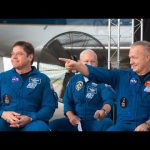
The #LaunchAmerica mission aboard SpaceX’s Crew Dragon “Endeavour” spacecraft that brought NASA astronauts Robert Behnken and Douglas Hurley back to Earth marked the first splashdown of an American crew spacecraft in 45 years. Tune in at 4:30 p.m. EDT to hear Bob and Doug talk about this milestone in human spaceflight.
Did you know that astronauts on the International Space Station send pictures from space to ground over amateur radio that you yourself can get at home using your computer? Let us show you how to get them, step by step.
Jump to the video tutorial on how to receive SSTV pictures from the International Space Station using:
– Mac OSX: https://youtu.be/VOPxJ7UpUAI
This project would not have been possible without the support of ESA Education, ESERO Ireland, ESERO Denmark, ESERO Spain, ESERO Portugal, ESERO Romania, ESERO Italy, ARISS and Goonhilly Earth Station.
★ Subscribe: http://bit.ly/ESAsubscribe and click twice on the bell button to receive our notifications.
We are Europe’s gateway to space. Our mission is to shape the development of Europe’s space capability and ensure that investment in space continues to deliver benefits to the citizens of Europe and the world. Check out http://www.esa.int/ESA to get up to speed on everything space related.
Is there a planet like our Earth out there? Scientists have discovered over 4000 exoplanets, or planets outside of our Solar System, that ESA’s CHEOPS satellite will study in depth. Project scientist Kate Isaak discusses the types of exoplanets discovered and what we can learn from them.
We are Europe’s gateway to space. Our mission is to shape the development of Europe’s space capability and ensure that investment in space continues to deliver benefits to the citizens of Europe and the world. Check out http://www.esa.int/ESA to get up to speed on everything space related.
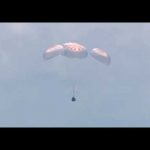
(No Audio) Raw footage of the 2:48 p.m. EDT, Sunday, Aug. 2, splashdown of SpaceX’s Crew Dragon Endeavour spacecraft in the Gulf of Mexico off the coast of Pensacola, Florida. NASA astronauts Bob Behnken and Doug Hurley are aboard, returning from the International Space Station. Dragon’s parachutes slowed the spacecraft to a speed of about 15mph for splashdown.
🚩 Watch thousands of documentaries for FREE on CuriosityStream: http://go.thoughtleaders.io/1601120200705 – Use the code “historymarche” to get a 30-day free trial!
👇 Push down for more cool stuff 👇
Today we made history as NASA Astronauts Robert Behnken and Douglas Hurley safely and successfully splashed down into the Gulf of Mexico after two months on board the International Space Station. This completes the flight demonstration of the SpaceX Dragon Endeavour spacecraft, which will now be used to ferry astronauts to and from the space station from American soil. Now that our #LaunchAmerica crew has returned to Earth, join us in welcoming them as they fly into Ellington Field, home of our astronaut corps: