The Copernicus Sentinel-2 mission takes us over Victoria Falls, one of the world’s greatest natural wonders, which lies along the course of the Zambezi River, in this week’s edition of the Earth from Space programme.
We are Europe’s gateway to space. Our mission is to shape the development of Europe’s space capability and ensure that investment in space continues to deliver benefits to the citizens of Europe and the world. Check out http://www.esa.int/ESA to get up to speed on everything space related.
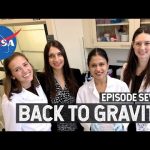
With the experiment’s journey complete, Elaine Horn-Ranney Ph.D. and Parastoo Khoshaklagh Ph.D. now join the thousands of scientists who’ve performed research aboard the International Space Station, making the most of what microgravity has to teach us.
Although the thrill of the rocket launch may be over, our scientists still have one of the most exciting parts of their journey ahead: sharing their results with the world.
Artemis: the twin sister of Apollo and the name of our program to return astronauts to the Moon by 2024. In honor of Women’s History Month, musician Lindsey Stirling performed her song, Artemis, on top of the Launch Control Center at NASA’s Kennedy Space Center. This video features facts about some out-of-this-world women at NASA and information about NASA’s Artemis program. The Artemis program will send the first woman and next man to walk on the surface of the Moon and build a sustainable base to prepare for missions to Mars and beyond.
A new name for our next Mars rover, a new space station resupply mission, and how you can join the Artemis Generation … a few of the stories to tell you about – This Week at NASA!
This video is available for download from NASA’s Image and Video Library: https://images.nasa.gov/details-NHQ_2020_0307_A%20New%20Name%20for%20Our%20Next%20Mars%20Rover%20on%20This%20Week%20@NASA%20%E2%80%93%20March%207,%202020
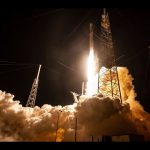
Watch SpaceX launch its 20th resupply mission to the International Space Station, carrying 5,600 pounds of science investigations and supplies. NASA TV coverage starts Friday, March 6, at 11:30 p.m. EST. Launch is scheduled for 11:50 p.m. EST.
We are Europe’s gateway to space. Our mission is to shape the development of Europe’s space capability and ensure that investment in space continues to deliver benefits to the citizens of Europe and the world. Check out http://www.esa.int/ESA to get up to speed on everything space related.
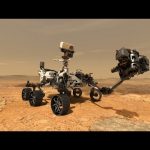
NASA’s next Mars rover has a new name: Perseverance. After sorting through more than 28,000 submissions from K-12 students from every U.S. state and territory, one name was chosen. Alexander Mather, a 13-year-old student from Virginia who submitted the winning name, explains why he chose Perseverance as the name of NASA’s next robotic scientist to visit the Red Planet.
This month, we celebrate Women’s History Month by honoring the thousands of women both in the spotlight and behind the scenes here at NASA. In the past year alone, we’ve done everything from conducting the first all-woman spacewalk to leading missions to places we’ve only dreamed of and so much more.
Now that our researchers’ experiment is on the International Space Station, it’s time to test how their samples behave in microgravity. This week on NASA Explorers, the astronauts conduct science in space, while a team back here on Earth runs their own piece of the project.
NASA is hiring more new Artemis generation astronauts. Will you be next?
NASA’s latest astronaut class shares their journey.
To join them, astronaut candidates must have earned a master’s degree from an accredited institution in engineering, biological science, physical science, computer science or mathematics. The requirement for the master’s degree can also be met by:
• Two years (36 semester hours or 54 quarter hours) of work toward a Ph.D.
program in a related science, technology, engineering or math field;
• A completed doctor of medicine or doctor of osteopathic medicine degree;
• Completion (or current enrollment that will result in completion by June 2021) of a
nationally recognized test pilot school program.
Candidates also must have at least two years of related, progressively responsible professional experience, or at least 1,000 hours of pilot-in-command time in jet aircraft. Astronaut candidates must pass the NASA long-duration spaceflight physical.
Apply to be an astronaut by 31.
For more information about a career as a NASA astronaut, and application requirements, visit: http://www.nasa.gov/astronauts
NASA’s newest Mars Rover’s name – and student behind it – will be announced LIVE on Thursday, March 5 at 1:30 p.m. EST.
The Mars 2020 rover was the subject of a nationwide naming contest in 2019 that drew more than 28,000 essays by K-12 students from every U.S. state and territory. Nearly 4,700 volunteer judges – educators, professionals, and space enthusiasts from around the country – helped narrow the pool down to 155 semifinalists. A second round of judging selected the nine finalist essays that were open to an online public poll before Thomas Zurbuchen, associate administrator of NASA’s Science Mission Directorate, made the final selection.
The High Definition Earth-Viewing (HDEV) experiment on the International Space Station has experienced a loss of data, and ground computers are no longer receiving communications from the payload. A team of engineers are reviewing the available health and status information from HDEV to identify what may have occurred. Additional updates will be published as they become available.
As NASA prepares to launch American astronauts this year on American rockets from American soil to the International Space Station – with an eye toward the Moon and Mars – NASA is accepting applications March 2 to 31 for the next class of Artemis Generation astronauts.
The basic requirements to apply include United States citizenship and a master’s degree in a STEM field, including engineering, biological science, physical science, computer science, or mathematics, from an accredited institution. Candidates also must have at least two years of related, progressively responsible professional experience, or at least 1,000 hours of pilot-in-command time in jet aircraft. Astronaut candidates must pass the NASA long-duration spaceflight physical.
As part of the application process, applicants will, for the first time, be required to take an online assessment that will require up to two hours to complete.NASA expects to select the new class of astronaut candidates in mid-2021 to begin training as the next class of Artemis Generation astronauts.
For more information about a career as a NASA astronaut, and application requirements, visit:
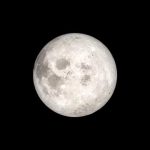
This video uses data gathered from the Lunar Reconnaissance Orbiter spacecraft to recreate some of the stunning views of the Moon that the Apollo 13 astronauts saw on their perilous journey around the farside in 1970. These visualizations, in 4K resolution, depict many different views of the lunar surface, starting with earthset and sunrise and concluding with the time Apollo 13 reestablished radio contact with Mission Control. Also depicted is the path of the free return trajectory around the Moon, and a continuous view of the Moon throughout that path. All views have been sped up for timing purposes — they are not shown in “real-time.”
Credits:
Data Visualization by: Ernie Wright (USRA)
Video Produced & Edited by: David Ladd (USRA)
Music provided by Universal Production Music: “Visions of Grandeur” – Frederick Wiedmann
This video is public domain and along with other supporting visualizations can be downloaded from the Scientific Visualization Studio at: http://svs.gsfc.nasa.gov/13537
Though it has been fifty years since humans first stepped on the Moon, we haven’t forgotten about Earth’s natural satellite. Several missions since Apollo have taught us so much about the Moon and have paved the way for humankind to return. ESA Moon scientist James Carpenter gives us an overview of these missions and future exploration of the Moon.
We are Europe’s gateway to space. Our mission is to shape the development of Europe’s space capability and ensure that investment in space continues to deliver benefits to the citizens of Europe and the world. Check out http://www.esa.int/ESA to get up to speed on everything space related.
The Apollo Mission proved humans can work on the lunar surface but the longest lunar spacewalk lasted a total of 22 hours. Could humans spend longer amounts of time on the Moon? How about live there, as they do on the International Space Station? Lunar technology expert Bérengère Houdou describes living on the Moon.
We are Europe’s gateway to space. Our mission is to shape the development of Europe’s space capability and ensure that investment in space continues to deliver benefits to the citizens of Europe and the world. Check out http://www.esa.int/ESA to get up to speed on everything space related.
Remembering a NASA pioneer, how Artemis Generation astronauts train, and a critical safety test for Orion … a few of the stories to tell you about – This Week at NASA!
This video is available for download from NASA’s Image and Video Library: https://images.nasa.gov/details-NHQ_2020_0228_Remembering%20Space%20Pioneer%20Katherine%20Johnson%20on%20This%20Week%20@NASA%20%E2%80%93%20February%2028,%202020
We are Europe’s gateway to space. Our mission is to shape the development of Europe’s space capability and ensure that investment in space continues to deliver benefits to the citizens of Europe and the world. Check out http://www.esa.int/ESA to get up to speed on everything space related.
We can 3D print just about anything these days, from tools and buildings to cells and even food. But that’s on Earth, where materials are readily available. What about in space or on the Moon? Could we 3D print a lunar base? ESA engineer Advenit Makaya walks us through the process.
We are Europe’s gateway to space. Our mission is to shape the development of Europe’s space capability and ensure that investment in space continues to deliver benefits to the citizens of Europe and the world. Check out http://www.esa.int/ESA to get up to speed on everything space related.
The day has finally arrived. After years of work, our team of scientists is at the Kennedy Space Center in the hopes of seeing their research liftoff to the International Space Station. Join us this week on NASA Explorers for the countdown, the emotion and, hopefully, the launch.
See more NASA Explorers season 4 bonus content: https://go.nasa.gov/2FKavmn
Stay up to date with ISS Research on Twitter: https://twitter.com/ISS_Research
Watch all NASA Explorers season 4 episodes: https://www.youtube.com/playlist?list=PL2aBZuCeDwlQDM6x6FpHE_X0iL7hvoRpR
#S4E5
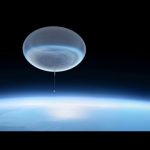
Let’s talk about science! Watch the fifth episode of our #EZScience series to learn how NASA uses balloon science to better understand our planet and universe.
ABOUT THE SERIES: In our #EZScience video series with the National Air and Space Museum, NASA’s associate administrator for science Dr. Thomas Zurbuchen and Museum director Dr. Ellen Stofan talk about the latest in planetary science and exploration.
Pioneering NASA mathematician Katherine Johnson has died at the age of 101. Johnson was part of a group of African-American women who worked on critical mathematical calculations in the early days of human spaceflight, as chronicled in the best-selling book and hit movie “Hidden Figures.”
“She was an American hero and her pioneering legacy will never be forgotten,” said NASA Administrator Jim Bridenstine.
Pioneering NASA mathematician Katherine Johnson has died at the age of 101. Johnson was part of a group of African-American women who worked on critical mathematical calculations in the early days of human spaceflight, as chronicled in the best-selling book and hit movie “Hidden Figures.”
“She was an American hero and her pioneering legacy will never be forgotten,” said NASA Administrator Jim Bridenstine.
Vice President Pence visits our Langley Research Center, science results related to water on Jupiter, and studying the darkest areas of the Moon … a few of the stories to tell you about – This Week at NASA!
This video is available for download from NASA’s Image and Video Library: https://images.nasa.gov/details-NHQ_2020_0221_Vice%20President%20Pence%20Visits%20Langley%20for%20Artemis%20Update%20on%20This%20Week%20@NASA%20%E2%80%93%20February%2021,%202020
The Copernicus Sentinel-1 mission takes us over Houston, the most populous city in Texas and the fourth largest in the US, in this week’s edition of the Earth from Space programme.
We are Europe’s gateway to space. Our mission is to shape the development of Europe’s space capability and ensure that investment in space continues to deliver benefits to the citizens of Europe and the world. Check out http://www.esa.int/ESA to get up to speed on everything space related.
It’s common knowledge that the Moon is a cratered ball of rock. Stunning as it is in the night sky or in photographs taken from orbit the landscape is barren, grey, dusty and dark. Are there other things to be found than meets the eye? Moon scientist Alexandre Meurisse explains which resources can be found on the Moon.
We are Europe’s gateway to space. Our mission is to shape the development of Europe’s space capability and ensure that investment in space continues to deliver benefits to the citizens of Europe and the world. Check out http://www.esa.int/ESA to get up to speed on everything space related.
Join NASA Psyche Mission Co-Investigator Dr. Tim McCoy as he takes us on a journey from his first geology class to his current role as Curator-in-Charge of the US National Meteorite Collection at the Smithsonian National Museum of Natural History and his role on the Psyche Mission Science Team. Along the way, McCoy highlights the significance of studying a metallic asteroid and what it may be able to tell us about the formation of the solar system and our own planet. It’s the journey of a lifetime, and he didn’t want to miss it.
Psyche is both the name of an asteroid orbiting the Sun between Mars and Jupiter — and the name of a NASA space mission to visit that asteroid, led by Arizona State University.
Humanity’s return to the Moon with our Artemis program will be a forerunner to future human missions to Mars.
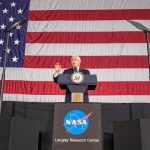
Watch this video to hear about America’s future in space from Vice President Mike Pence, along with NASA Administrator Jim Bridenstine during a visit to our Langley Research Center in Hampton, Virginia on Wednesday, Feb. 19.
Our team of scientists is just days away from their research being loaded onto a SpaceX rocket that will carry their experiment to the International Space Station. This week on #NASAExplorers, we are following along with them in the busy days leading up to launch at Kennedy Space Center, as they do all of the last-minute preparations to get their experiment ready for microgravity.
See more NASA Explorers season 4 bonus content: https://go.nasa.gov/2FKavmn
Stay up to date with ISS Research on Twitter: https://twitter.com/ISS_Research
Watch all NASA Explorers season 4 episodes: https://www.youtube.com/playlist?list=PL2aBZuCeDwlQDM6x6FpHE_X0iL7hvoRpR
#S4E4
Europe’s Spaceport lies northeast of South America in French Guiana, an overseas department of France. This location near the equator enables the Ariane, Soyuz and Vega launch vehicles operated at the Spaceport to complete a wide range of missions to any orbit for clients from around the globe.
The Spaceport comes under the responsibility of the French space agency CNES while infrastructures are funded by the European Space Agency.
ESA owns the launcher and satellite preparation buildings, launch operation facilities and a plant for making solid propellant and integrating solid rocket motors.
ESA also finances new facilities, such as launch complexes and industrial production facilities for new launchers such as Vega-C and Ariane 6.
★ Subscribe: http://bit.ly/ESAsubscribe and click twice on the bell button to receive our notifications.
We are Europe’s gateway to space. Our mission is to shape the development of Europe’s space capability and ensure that investment in space continues to deliver benefits to the citizens of Europe and the world. Check out http://www.esa.int/ESA to get up to speed on everything space related.
Watch a cargo spacecraft lift off from NASA’s Wallops Flight Facility in Virginia on a resupply mission to the International Space Station! 🚀
On Sat., Feb. 15 at 3:21 p.m. EST, Northrop Grumman’s 13th commercial resupply services mission launched on a resupply mission to the station. A previous launch attempt on Feb. 9 was scrubbed after off-nominal readings from a ground support sensor. The Cygnus cargo spacecraft, loaded with approximately 7,500 pounds of research, supplies and hardware, lifted off atop an Antares rocket from the Mid-Atlantic Regional Spaceport. This Cygnus spacecraft is named the S.S. Robert H. Lawrence in honor of the first African American to be selected as an astronaut.
Our alien friend Paxi went to visit American astronaut Anne McClain on board the International Space Station. Anne shares some fun facts about the ISS with Paxi.
★ Subscribe: http://bit.ly/ESAsubscribe and click twice on the bell button to receive our notifications.
We are Europe’s gateway to space. Our mission is to shape the development of Europe’s space capability and ensure that investment in space continues to deliver benefits to the citizens of Europe and the world. Check out http://www.esa.int/ESA to get up to speed on everything space related.
“She always taught us that there’s no reason you can’t do these things.” NASA astronaut Dr. Jeanette Epps recalls who encouraged her to reach for the stars and talks about inspiring the #Artemis generation of young girls.
A budget for a new era of space exploration, do you have what it takes to be an astronaut? And Christina Koch reflects on her record-setting mission … a few of the stories to tell you about – This Week at NASA!
This video is available for download from NASA’s Image and Video Library: https://images.nasa.gov/details-NHQ_2020_0214_%20A%20Budget%20for%20a%20New%20Era%20of%20Space%20Exploration%20on%20This%20Week%20@NASA%20%E2%80%93%20February%2014,%202020
The Copernicus Sentinel-2 mission takes us over a beautiful heart-shaped geographical formation in the dramatic landscape of the southern highlands of Bolivia to celebrate Valentine’s Day, in this week’s edition of the Earth from Space programme.
We are Europe’s gateway to space. Our mission is to shape the development of Europe’s space capability and ensure that investment in space continues to deliver benefits to the citizens of Europe and the world. Check out http://www.esa.int/ESA to get up to speed on everything space related.
Matthew Bailey is the operations manager for the National Transonic Facility Complex at NASA’s Langley Research Center in Hampton, Virginia. Bailey began his career at NASA as an intern and now works in a management role. He oversees the operations at two cryogenic wind tunnels that specialize in high Reynolds number or flight Reynolds number testing – world’s best at matching scaling effects of aerodynamic problems. The facility is currently testing a model of the Space Launch System, the rocket that will send humans to the Moon by 2024.
As anticipated, Pine Island Glacier, known as PIG for short, in Antarctica has just spawned a huge iceberg. At over 300 sq km, about the size of Malta, this huge berg very quickly broke into many ‘piglet’ pieces the largest of which is dubbed B-49. Thanks to images the Copernicus Sentinel satellite missions, two large rifts in the glacier were spotted last year and scientists have been keeping a close eye on how quickly these cracks were growing. This animation uses 57 radar images captured by the Copernicus Sentinel-1 mission between February 2019 and February 2020 (the last frame is from yesterday, 10 February 2020) and shows just how quickly the emerging cracks grew and led to this calving event.
Pine Island Glacier, along with its neighbour Thwaites Glacier, connect the centre of the West Antarctic Ice Sheet with the ocean – together discharging significant quantities of ice into the ocean. These two glaciers have been losing ice over the last 25 years. Owing to their extremely remote location, satellites play a critical role in measuring and monitoring Antarctic glaciology – revealing the timing and pace of glacial retreat in Antarctica. Since the early 1990s, the Pine Island Glacier’s ice velocity has increased dramatically to values which exceed 10 m a day. Its floating ice front, which has an average thickness of approximately 500 metres, has experienced a series of calving events over the past 30 years, some of which have abruptly changed the shape and position of the ice front.
These changes have been mapped by ESA-built satellites since the 1990s, with calving events occurring in 1992, 1995, 2001, 2007, 2013, 2015, 2017, 2018, and now 2020.
Mark Drinkwater, senior scientist and cryosphere specialist remarked, “The Copernicus twin Sentinel-1 all-weather satellites have established a porthole through which the public can watch events like this unfold in remote regions around the world. What is unsettling is that the daily data stream reveals the dramatic pace at which climate is redefining the face of Antarctica.”
We are Europe’s gateway to space. Our mission is to shape the development of Europe’s space capability and ensure that investment in space continues to deliver benefits to the citizens of Europe and the world. Check out http://www.esa.int/ESA to get up to speed on everything space related.
Astronauts train all over the world, including at NASA’s Johnson Space Center in Houston, Texas. Here, they learn not just how to live in space, but also how to conduct science in microgravity. Astronauts serve as the eyes and hands of researchers while their experiments are aboard the space station, so they must be trained in everything from using a microscope, to maintaining the equipment for combustion experiments.
Follow along with #NASAExplorers as we go to class with NASA astronaut Mike Fincke.
See more NASA Explorers season 4 bonus content here: https://go.nasa.gov/2FKavmn
Stay up to date with ISS Research on Twitter: https://twitter.com/ISS_Research
#S4E3