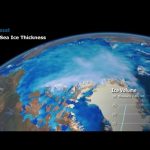
This animation shows changes in ice volume in Antarctica, Greenland and the Arctic ocean measured by the CryoSat satellite, 2010–15. CryoSat’s readings also contribute to our knowledge of global ocean depth.
NASA commemorated the many contributions of retired mathematician Katherine Johnson to America’s space program during a building dedication ceremony on May 5, at the agency’s Langley Research Center in Hampton, Virginia. Langley’s new Katherine G. Johnson Computational Research Facility was formally dedicated to the venerated mathematician and Presidential Medal of Freedom recipient.
Johnson worked at Langley from 1953 until her retirement in 1986, beginning as a research mathematician — part of a pool of women hired to perform mathematical equations and calculations by hand for engineers. She quickly distinguished herself and was permanently assigned to the branch that would later calculate the launch windows for NASA’s first Project Mercury flights.
Notable accomplishments include her computation, by hand, of the launch window and trajectory for Alan Shepard’s maiden space voyage aboard Freedom 7 in 1961, and verification, also by hand, of calculations made by the first computers for John Glenn’s history-making orbit around the Earth in 1962. She also calculated the trajectory for the historic Apollo 11 first moon landing flight in 1969.
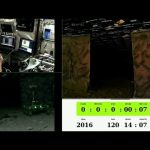
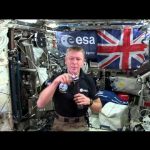
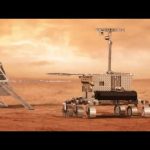
On 29 April 2016, ESA astronaut Tim Peake on the International Space Station took control of a rover, nicknamed ‘Bridget’, in the UK and over two hours drove it into a simulated cave and found and identified targets despite the dark and limited feedback information.
Before and after Tim came online from the orbiting Station, control of the rover was passed several times between engineers at the Airbus D&S ‘Mars Yard’ in Stevenage, UK, Belgium’s ISS User Support Centre in Brussels and ESA’s ESOC operations centre in Darmstadt, Germany. This complex real-time choreography was possible thanks to the ‘Internet in space’ – a network that tolerates disruptions – put in place by teams at ESOC. This network enables remote control of rovers or other devices in the difficult environment of space, with its long distances and frequent connection blackouts inevitable with orbital motion.
During the experiment, a representative mission scenario was set up in which the rover was commanded to go from a lit environment into a challenging dark location (simulating a cave or a shaded crater) and identified a number of science targets. The Mars yard (30 x 13 m) was split into two areas, one lit and one in the dark. From one end of the yard, Bridget was commanded from ESOC until it reached the edge of the shaded area. Then at the edge of the ‘cave’, control was passed to astronaut Tim Peake, on board the Station, who controlled Bridget to drive across the yard, avoiding obstacles and identifying potential science targets, which were marked with a distinctive ultraviolet fluorescent marker. Once the targets were identified and mapped, Tim drove the rover out of the shaded area and handed control back to ESOC, who drove the rover back to its starting point.
This video is a compressed extract that includes highlights of the experiment and includes scenes of the network control centre at ESOC, the Mars Yard at Stevenage and Tim Peake on the ISS. On audio, the voices of astronaut Time Peake, Lionel Ferra, the Eurocom ‘capcom’ controller at ESA’s Astronaut Centre in Cologne, Germany, and Kim Nergaard, the ground segment manager at ESOC, can be heard periodically.
After a successful launch from Kazakhstan’s Baikonur Cosmodrome in March, the ExoMars spacecraft is making good progress on its 500 million km trip to Mars.
The joint European and Russian mission will perform science, test lander and descent technology, and may help solve the mystery of why there is methane on Mars. The gas could indicate a geological origin or past or present life – most likely from microbes. The mission carries four scientific packages with Russia developing one of the three spectrometers on board the orbiter’s Atmospheric Chemistry Suite.
This film provides an update of ExoMars’ journey. It includes the first test image from the Trace Gas Orbiter’s high-resolution camera and looks ahead to a major course correction manoeuvre in July. The spacecraft will then be lined up for arrival at Mars on 19 October 2016.
Includes interviews with Thomas Passvogel, Head of Science Projects, ESA (English); Oleg Korablev, ACS Experiment Principal Investigator (Russian); Nicolas Thomas, CaSSIS Experiment Principal Investigator, University of Bern (English).
‘A Beautiful Planet’ stars Earth as seen from space by astronauts and cosmonauts aboard the orbiting laboratory. Shooting spanned multiple expeditions with NASA astronauts Kjell Lindgren, Terry Virts, and Barry “Butch” Wilmore as well as former NASA astronaut Scott Kelly volunteering as filmmakers during their time on station.
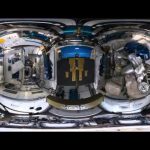
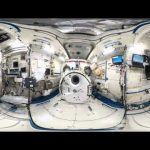
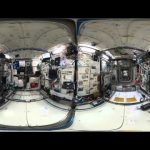
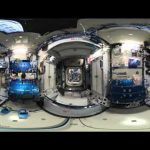
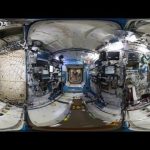
Explore the International Space Station’s Tranquility module from all angles on your mobile phone or headset
Node-3 Tranquility provides life-support for the International Space Station. Part of Tranquility is ESA’s Cupola observation module, a seven-window dome-shaped structure from where the Space Station’s robotic arm, Canadarm 2, is operated as it offers a panoramic view of space and Earth. Launched on Space Shuttle flight STS-130 in February 2010, Node-3 was attached to the port side of Node-1 Unity. Read more on ESA’s Node-3 minisite: http://www.esa.int/Our_Activities/Human_Spaceflight/Node-3_Cupola
Explore Node 3 in Flickr, Facebook or YouTube format with your mobile phone and virtual-reality headset, or take the full tour including all Space Station modules with videos and extra information below. This is the final Space Station module in 360°.
On 24 April 2016, the mission control team was in the Main Control Room at ESOC, ESA’s mission control centre in Darmstadt, Germany, preparing for the liftoff of Soyuz flight VS14. Their job was to assume control of the rocket’s main passenger, the Sentinel-1B radar-sensing satellite.
In this Periscope, video host Thomas Ormston, a spacecraft operations engineer at ESOC, spoke with some of the team working ‘on console’ to find out details on how they get ready to send a satellite into space.
NOTE: About 75 minutes after recording this Periscope, the launch countdown was halted due to an an anomaly with the launcher. The countdown was restarted the next day, with liftoff set for 23:02 CEST, 25 April 2016.
At the Danish Air Ambulance base in Billund, satellite navigation is a true lifesaver in the sky.
The air ambulance service, operated by the Norwegian Air Ambulance in Denmark, is among the first to use a new European satellite system, EGNOS, that makes it safer to fly in low visibility.
Explore Japan’s Kibo space laboratory with your mobile phone or VR headset in this panorama.
This 360° panorama lets you explore the International Space Station’s seventh module, Kibo. It was launched in three parts in 2008 and 2009 aboard Space Shuttles Atlantis and Endeavour.
The laboratory is renowned for its volume and extra features such as its external robotic arm, an airlock to send experiments outside, and an external facility to expose experiments to space. Nanosats can be launched from Kibo through the airlock, making the Station a base for deploying satellites as well as a weightless research centre for biology, physics and medicine.
Explore Kibo in YouTube, Flickr or Facebook format with your mobile phone and virtual-reality headset, or take the full tour including all Space Station modules with videos and extra information below. We will release a new Space Station module in 360° every week on Thursday.
On April 22nd, Earth Day is an annual world wide celebration in support of environmental protection. NASA undertakes various efforts to protect and understand our home planet. NASA wants to capture what people all around the world are doing to protect, improve and celebrate Earth… So, where on EARTH will you be? http://www.nasa.gov/24Seven #24Seven
ESA’s Asteroid Impact Mission, currently under study for launch in 2020 and arrival in 2022, would be humanity’s first probe to a double asteroid system. Targeting an approximately 180-m diameter asteroid – around the same size as the Great Pyramid of Giza – AIM would spend a busy six months gathering data on its surface and inner structure.
It would then perform before-and-after measurements as the NASA-led Double Asteroid Redirection Test spacecraft impacts straight into it, in an attempt to change the asteroid’s orbital period – marking the very first time that humanity shifts a Solar System object in a measurable way. Success would make it possible to consider carrying out such an operation again if an incoming asteroid ever threatened our planet. The two missions combined are called the Asteroid Impact & Deflection Assessment, or ‘AIDA’ for short.
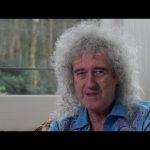
But why do we need to plan such a ground-breaking experiment? Astrophysicist and Queen guitarist Brian May, ESA astronaut Luca Parmitano, the UK’s Astronomer Royal Sir Martin Rees and Canadian astronaut Chris Hadfield share their own thoughts.
NASA Television’s newest offering, NASA TV UHD, brings ultra-high definition video to a new level with the kind of imagery only the world’s leader in space exploration could provide.
Harmonic produced this show exclusively for NASA TV UHD, using time-lapses shot from the International Space Station, showing both the Aurora Borealis and Aurora Australis phenomena that occur when electrically charged electrons and protons in the Earth’s magnetic field collide with neutral atoms in the upper atmosphere.
Gonzalo Martín-de-Mercado specialises in optical telecommunications. He speaks about how his academic background helps him to support collaboration between ESA and companies.
Explore Europe’s Columbus space laboratory with your mobile phone or VR headset in this panorama.
This 360° panorama lets you explore the International Space Station’s sixth module, Columbus. It was launched on 7 February 2008 on Space Shuttle Atlantis. The laboratory is ESA’s largest single contribution to the Station, and Europe’s first permanent research facility in space.
The state-of-the-art facility offers 75 cubic metres of workspace and contains a suite of research equipment. External platforms support experiments and applications in space science, Earth observation and technology.
Columbus offers European scientists full access to a weightless environment that cannot be duplicated on Earth.
Explore Columbus in Flickr, Facebook or YouTube format with your mobile phone and virtual-reality headset, or take the full tour including all Space Station modules with videos and extra information below. We will release a new Space Station module in 360° every week on Thursday.
ESA astronaut Tim Peake shares his views of Earth and his six-month Principia mission while on the International Space Station. Narrated by Tim himself taken from interviews while in space, this video shows the best views, experiments and shares the experience of Tim’s life in space.
Aboard the International Space Station, Expedition 47 Commander Tim Kopra and Flight Engineer Jeff Williams of NASA discussed the pace of research on the orbital lab and recent cargo vehicle deliveries in an in-flight interview April 7 with NBC News’ website Today.com. Kopra is in the second half of a six-month mission on the station while Williams, who is in his third long duration flight on the complex, is nearing the completion of the first month of his half-year stay on the outpost.
Explore the International Space Station’s Harmony module in this full panorama with your mobile phone or VR headset.
This 360° panorama lets you explore the International Space Station’s fifth module, Harmony. It was launched on 23 October 2007 aboard Space Shuttle Discovery to link the Columbus, Kibo and Destiny laboratories.
Harmony was developed for NASA under an ESA contract with European industry. Its structure is based on that of the Multi-Purpose Logistics Modules and the Europe’s Columbus.
Explore Harmony in YouTube, Flickr or Facebook format with your mobile phone and virtual-reality headset, or take the full tour including all Space Station modules with videos and extra information below. We will release a new Space Station module in 360° every week on Thursday.
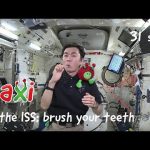
Our alien friend Paxi, ESA Education’s mascot, went to visitJapanese astronaut Kimiya Yui on board the International Space Station. Kimiya shows Paxi whatit’s like to brush your teeth in weightlessness, an important part of the daywhen living on the ISS.
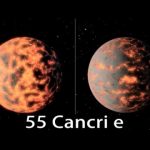
Engineers at Johnson Space Center in Houston are using a mockup of NASA’s Orion spacecraft to evaluate how well astronauts are able to operate Orion’s rotational hand controller and cursor control device, while dressed in spacesuits. The controllers operate the displays and control system used to maneuver and interact with the spacecraft. The testing aims to provide data that can be used to make adjustments needed to ensure future Orion crews can interact appropriately with the spacecraft’s control system during deep space missions. Also, Milestone for Spaceport of the Future, Russian Supply Ship Launches to ISS, Team Selected to Build Planet-Hunting Instrument, First Heat Map of Super Earth and Milestone for Green Propellant Mission!
Earth from Space is presented by Malì Cecere from the ESA Web-TV virtual studios. The one hundred eightieth edition features a Sentinel-3A image of the River Nile and surroundings.
Explore NASA’s space laboratory for the International Space Station from every angle in this panorama.
This 360° panorama lets you explore the International Space Station’s fourth module, Destiny. Launched on 7 February 2001 on Space Shuttle Atlantis, the American module is the heart of the non-Russian part of the Station according to ESA astronaut Samantha Cristoforetti (who took the pictures to create this view). The module allows experiments to be performed in many disciplines, from biology to physics, including a rack for burning liquids in weightlessness and the European Microgravity Science Glovebox.
Explore Destiny in Flickr, Facebook or YouTube format with your mobile phone and virtual-reality headset, or take the full tour including all Space Station modules with videos and extra information below. We will release a new Space Station module in 360° every week on Thursday.
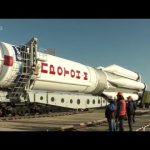
Timelapse movie following the preparations of the ExoMars 2016 spacecraft in the lead up to launch on 14 March 2016. The movie includes the integration of the entry, descent and landing demonstrator module, Schiaparelli, with the Trace Gas Orbiter, and the journey of the spacecraft inside the Proton rocket as it is moved to the launch pad and raised to a vertical position.
ExoMars launched from Baikonur, Kazakhstan at 09:31 GMT on 14 March. It will arrive at the Red Planet on 19 October. Its mission is to address unsolved mysteries of the planet’s atmosphere that could indicate present-day geological – or even biological – activity, and to demonstrate the landing technologies needed for future missions to Mars.
¿Existe la vida en Marte? La misión ExoMars intenta responder a esta pregunta. Aquí, en el Cosmódromo de Baikonur, en Kazajistán, nos reunimos con los científicos que trabajan en este proyecto. El cohete de la misión ExoMars se dirige hacia el planeta rojo para buscar buscar potenciales pruebas de actividad biológica.
Al cosmodromo di Bajkonur, in Kazakhstan, euronews ha seguito l’avvio di ExoMars,missione sviluppata dall’ESA, l’Agenzia Spaziale Europea ESA e da Roscosmos, Agenzia Spaziale Russa.
L’obiettivo di ExoMars è lo studio dell’ambiente biologico della superficie del pianeta ma anche la ricerca di eventuali tracce di vita, passata o presente.
Bajkonur, a Csillagváros a kazah sztyeppéken, az űrkutatás történelmi helyszíne, ahonnan az első ember felszállt az űrbe – itt kezdődik az Exomars-kaland.
A megfigyelőplatform három kilométerre van a kilövőállástól. Európai és orosz mérnökök figyelik, hogyan indulnak el az általuk éveken át tervezett és épített műszerek a Marsra.
Explore the heart of the Russian segment of the International Space Station in this global view.
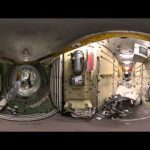
This 360° panorama allows you to explore the International Space Station’s third module, Zvezda. Launched on 12 July 2000, the Russian module supplies life support for the Station and crewquarters. All five of Europe’s Automated Transfer Vehicles docked with the module.
The images to create this view were taken by ESA astronaut Samantha Cristoforetti during her Futura mission in 2015; the cosmonaut in the picture is Gennady Padalka.
Explore Zvezda in Flickr, Facebook or YouTube format with your mobile phone and virtual-reality headset, or take the full tour including all Space Station modules with videos and extra information below. We will release a new Space Station module in 360° every week on Thursday.
Pascal Lecomte speaks about the history and the aims of the ESA Climate Office which is located in Harwell, Oxfordshire. He also explains how he began and pursued his career with ESA.
Almost 50 years since man first walked on the lunar surface, the head of the European Space Agency explains his vision for living and working on the Moon.
Johann-Dietrich Woerner believes the next giant leap for humankind could be an international collaboration of space faring nations in the form of a Moon village. This village would be a permanent lunar base for science, business, tourism or even mining.
Woerner explains how using the Moon’s own natural resources could help build and sustain a base by 3D printing a structure or building element. Robotic rovers could inflate protective domes for astronauts. He also discusses the potential hazards of living on the Moon as well as the possible locations of he lunar base and the advantages of a new global space project.
Gyroscopes form an important in keeping the International Space Station and satellites pointing the right way as they orbit our planet.
ESA astronaut Tim Peake shows how gyroscopes can be used to keep spacecraft stable during his six-month Principia mission.
There is no up or down in space. Satellites track their pointing direction using the same approach as on submarines and aircraft: fast-spinning gyroscopes that maintain a fixed orientation in the same way as a child’s spinning top. The International Space Station has four big gyroscopes which are used for stabilization of the Station.
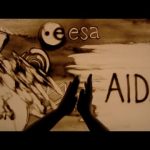
ESA’s Asteroid Impact Mission and the US Double Asteroid Redirection Test together make up AIDA – the Asteroid Impact and Deflection Assessment (AIDA), a pioneering planetary defence test that will attempt to shift the orbit of an asteroid in 2022. Artist Didi Rodan performed a unique depiction of this initiative in sand, a highlight of a recent conference on AIM hosted by the GMV company in Madrid.
“If I have seen further, it is by standing on the shoulders of giants” is the famous quote by renowned scientist Sir Isaac Newton. This is particularly apt as a title for this video summary of ESA astronaut Tim Peake’s Principia mission – named after Newton’s monumental work Philosophiae Naturalis Principia and now building on the work of previous European astronaut missions, while being supported by a huge team of scientists and engineers on the ground.
The music accompanying this video was chosen by Tim, coming from the soundtrack of one of his favourite films, the 2004 movie Layer Cake. This piece is called ‘Drive to the Boatyard’, by internationally known British film composer Ilan Eshkeri. Ilan provided a slightly extended piece specially for ESA.
Tim comments: “I’m delighted with this video, which captures the essence of human spaceflight and natural beauty of our planet from space – all put to Ilan’s inspiring soundtrack!”
Danish ESA astronaut Andreas Mogensen congratulates the European Space Camp on its 20th Anniversary. The first Space Camp took place at the Andøya Space Center, Norway, in 1996, with 20 participants from across Scandinavia in attendance. After this initial success, the European Space Camp quickly became an annual event and over the past 20 years, has attracted over 440 participants from over 30 countries across the world.
During the space camp, students go through every aspect of a rocket launch campaign, including building internal circuitry for a rocket, telemetry, and launching a fully-fledged sounding rocket at the end of the week. Participants attend lectures from some of Europe’s top scientists and researchers on topics as diverse as the Large Hadron Collider at CERN to the physics behind aurora. At the end of an unforgettable week, a multitude of social activities await the participants, including a sea safari, mountain hiking or swimming under the midnight sun.
Two ESA scholarships are available for the European Space Camp 2016 for all applicants with a nationality from an ESA Member State or Cooperating State.Apply now at http://www.spacecamp.no/.
During a March 10 hearing of the U.S. Senate Appropriations Subcommittee on Commerce, Justice, Science and Related Agencies, NASA Administrator Charlie Bolden testified about the $19 billion dollar Fiscal Year 2017 budget proposed for the agency by President Obama. In his remarks, the Administrator outlined the many benefits that this investment in NASA’s present will yield for the future. The funding will enable a future where we send American astronauts to Mars in the 2030s; where more Americans work in good-paying Science, Technology, Engineering and Math (STEM) based careers; where future generations can breathe cleaner air, drink cleaner water, and fly on cleaner, greener, more fuel-efficient aircraft; and a future where humankind has a deeper understanding of our universe, our place in it, and our own planet. Also, First SLS Flight Engine Test, New SLS Rocket Test Stand “Topped Out”, Crew Previews Upcoming Mission to ISS, Total Solar Eclipse, and Dawn’s Anniversary Image of Ceres
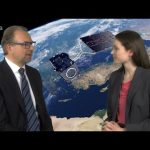
Earth from Space is presented by Kelsea Brennan-Wessels from the ESA Web-TV virtual studios. The Mediterranean island of Cyprus is featured in the one hundred seventy-seventh edition.
Explore the Space Station’s first module with your mobile phone or virtual-reality headset
This 360° video allows you to explore the International Space Station’s first module, Zarya. Launched on 20 November 1998, it was joined three weeks later by the US Unity module. Also known as the Functional Cargo Block, the module is now mainly used for storage.
ESA astronaut Samantha Cristoforetti took the pictures to form these images in June 2015 at the end of her 199-day Futura mission.
Explore this module in Flickr, Facebook or Youtube format with your mobile phone or take the full International Space Station tour on the ESA website with videos and extra information.
The ExoMars 2016 spacecraft will build on past missions to Mars. From the pioneering Viking missions onwards, our knowledge of Mars has been transformed and we now have an extraordinarily detailed picture of the planet. There are dust storms, polar ice caps and four distinct seasons. Mars has the largest volcanic mountain in our solar system and a canyon stretching over 5000 kilometres.
This film covers what we have learnt in particular from Europe’s Mars Express mission. Since its arrival in 2003, it has found evidence of water on Mars, discovered methane in the planet’s atmosphere, mapped the structure and composition of the south polar ice cap, discovered auroras and made the closest ever flybys of Phobos, one of Mars’ two moons. Mars Express also helped scientists select the landing site for the NASA Mars Curiosity rover, which arrived in Gale crater in 2012.
More remains to be learnt from Mars. Not least, whether the methane results from geological activity or past or present life.
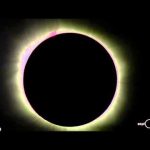
NASA collaborated with the Exploratorium in San Francisco and the National Science Foundation to provide live coverage of the 2016 total solar eclipse from Micronesia, on March 8. The fully eclipsed sun was visible from only a few Pacific islands, but the live broadcast made the phenomenon available to millions of people around the world.
Discover more about our planet with the Earth from Space video programme. In this special edition, ESA’s Josef Aschbacher joins the show to discuss the past, present and future of the Copernicus environment monitoring programme and its Sentinel satellites.