Category: Astronomie

  • Day and night

    Day and night

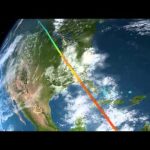
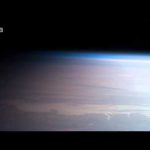
    It takes 90 minutes for an astronaut on the International Space Station to circle Earth completely, passing from daytime to nighttime and back again. This video taken by ESA astronaut Alexander Gerst shows the view from space in under one minute. Each orbit the Station moves around 2200 km to the West in relation to 90 minutes before.

    Astronauts often use normal consumer digital cameras to take pictures of Earth through Europe’s observatory module Cupola in their spare time. Setting the camera to take an image every few seconds and then playing the images back quickly create this timelapse effect.

    Alexander worked as a geophysicist and volcanologist before he was chosen as an ESA astronaut in 2009. His Blue Dot mission includes an extensive scientific programme of experiments in physical science, biology, and human physiology as well as radiation research and technology demonstrations. All experiments chosen make use of the out-of-this-world laboratory to improve life on Earth or prepare for further human exploration of our Solar System.

    Read more about his mission at http://www.esa.int/Our_Activities/Human_Spaceflight/Blue_dot

    Follow Alexander here: http://alexandergerst.esa.int/

  • AIDA: Asteroid Impact and Deflection Assessment study

    AIDA: Asteroid Impact and Deflection Assessment study

    The Asteroid Impact and Deflection Assessment (AIDA) study examines ways to potentially deflect asteroids from trajectories that could lead to them impacting Earth. The Johns Hopkins University Applied Physics Laboratory would work with NASA and ESA on the mission, which includes two independent spacecraft: an impactor (to be built by APL for NASA) and an impact monitor (to be built by ESA).

    The target of this mission is the binary asteroid system Didymos. The impactor would strike the smaller secondary of Didymos, while the monitor would observe and measure any change in the relative orbit.

    Learn more:
    http://www.esa.int/Our_Activities/Technology/NEO/Asteroid_Impact_Deflection_Assessment_AIDA_study
    http://neo.jpl.nasa.gov/
    http://www.neoshield.net/en/index.htm

  • NASA Chooses Boeing and SpaceX Companies to Transport U.S. Astronauts to ISS

    NASA Chooses Boeing and SpaceX Companies to Transport U.S. Astronauts to ISS

    NASA officials at the agency’s Kennedy Space Center in Florida announced Sept. 16 the selection of Boeing and SpaceX to develop and certify crew transportation systems that will transport U.S. astronaut crews from American soil to and from the International Space Station. Participants in the announcement included NASA Administrator Charles Bolden, Kennedy Director Bob Cabana, Commercial Crew Program Manager Kathy Lueders, and Astronaut Mike Fincke.

  • Rocket welding tool ready on This Week @NASA – September 12, 2014

    Rocket welding tool ready on This Week @NASA – September 12, 2014

    NASA Administrator Charlie Bolden, other NASA officials and representatives from The Boeing Company participated in a September 12 ribbon cutting for the new 170-foot-high Vertical Assembly Center at NASA’s Michoud Assembly Facility in New Orleans. The Vertical Assembly Center is a new tool that will be used to assemble parts of NASA’s Space Launch System rocket that will send humans to an asteroid and Mars. The administrator also visited Stennis Space Center in nearby Bay St. Louis, Mississippi, where engineers plan to test the RS-25 engines that will power the core stage of SLS. Also, Orion moved for fueling, Curiosity to climb Martian mountain, Possible geological activity on Europa, Expedition 40 returns, Earth Science on ISS and Hurricane-hunting aircraft!

  • Philae’s descent and science on the surface

    Philae’s descent and science on the surface

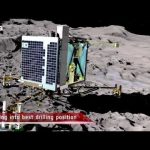
    Annotated version of the Philae’s mission at comet 67P animation.

    The animation begins with the deployment of Philae from Rosetta at comet 67P/Churyumov–Gerasimenko in November 2014. It will take several hours for it to reach the surface. Because of the comet’s extremely low gravity, landing gear will absorb the small forces of landing while ice screws in the probe’s feet and a harpoon system will lock the probe to the surface. At the same time a thruster on top of the lander will push it down to counteract the impulse of the harpoon imparted in the opposite direction.

    Once it is anchored to the comet, the lander will begin its primary science mission, based on its 64-hour initial battery lifetime. The animation shows a number of the science instruments in action on the surface.

    Rosetta’s Philae lander is provided by a consortium led by DLR, MPS, CNES and ASI.

    Credits: ESA/ATG medialab

  • Earth images from Alexander Gerst in 4K

    Earth images from Alexander Gerst in 4K

    This timelapse video was made from images taken by ESA astronaut Alexander Gerst orbiting Earth on the International Space Station.

    The video is offered in Ultra High Definition, the highest available to consumers. Be sure to change the settings in YouTube if your computer or television can handle it for the full effect.

    The montage is made from a long sequence of still photographs taken at a resolution of 4256 x 2832 pixels at a rate of one every second. The high resolution allowed the ESA production team to create a 3840 x 2160 pixel movie, also known as Ultra HD or 4K.

    Playing these sequences at 25 frames per second, the film runs 25 times faster than it looks for the astronauts in space.

    The artistic effects of the light trails from stars and cities at night are created by superimposing the individual images and fading them out slowly.

    Alexander Gerst is a member of the International Space Station Expedition 40 crew. He is spending five and a half months living and working on the ISS for his Blue Dot mission.

  • Rosetta’s imaging and spectroscopy instruments

    Rosetta’s imaging and spectroscopy instruments

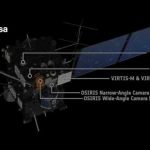
    Animation highlighting the imaging and spectroscopy instruments on ESA’s Rosetta spacecraft. The animation focuses on the wavelengths and the fields of view of the Alice, MIRO, OSIRIS and VIRTIS instruments.

    Credit: ESA

  • Earth from Space: Lake Chad

    Earth from Space: Lake Chad

    Earth from Space is presented by Kelsea Brennan-Wessels from the ESA Web-TV virtual studios. In the one-hundred-fifteenth edition, discover this important water source for over 60 million people in Chad, Cameroon, Niger and Nigeria.

    See also http://www.esa.int/spaceinimages/Images/2014/09/Lake_Chad to download the image.

  • IXV separation test

    IXV separation test

    ESA’s Intermediate eXperimental Vehicle, IXV, is put to the test at ESA’s technical centre, ESTEC, in the Netherlands. During the actual flight, at an altitude of 320 km, a pyrotechnic device will fire to open a clamp band for springs to push IXV away from the upper stage. This test shows mission planners that it can withstand the mechanical shock of the pyrotechnic detonation, mimicking the moment the craft separates from the Vega rocket.

    To be launched on Vega in early November 2014, IXV will test in flight the technologies and critical systems for Europe’s future automated re-entry vehicles returning from low orbit.

  • Delivering global navigation information

    Delivering global navigation information

    The Navigation Support Office is based at ESOC’s Navigation Facility, which provides products and services related to global navigation satellite systems in support of ESA missions and to European customers such as Eumetsat and to worldwide customers through its participation in the International Global Navigation Satellite Systems (IGNSS) Services group.

    The core service consists of calculating and predicting highly accurate GPS, Galileo and GLONAS satellite orbits, in near-real time, every six hours, around the clock. These data are then used to improve GPS position accuracy, paving the way to even more sophisticated applications such as scientific studies, large-scale climate monitoring and tracking of long-term changes in Earth’s geology.

    More about ESA Navigation Support Office:
    http://www.esa.int/Our_Activities/Operations/Ground_Systems_Engineering/ESA_Navigation_Support_Office

  • ESAHangout: Where will Philae land?

    ESAHangout: Where will Philae land?

    Join us to talk about the possible landing sites on comet 67P/Churyumov-Gerasimenko for Rosetta’s lander Philae.

    The Hangout will also include a live draw for participants who took part in our ‘Rosetta, are we there yet?’ photo contest – watch to see if you win ESA swag!

    Our hosts will be joined by:
    Fred Jansen – Rosetta Mission Manager and/or Matt Taylor – Rosetta Project Scientist [TBC]
    Andrea Accomazzo – Rosetta Flight Director
    Barbara Cozzoni and/or Valentina Samodelov – Philae Operations Engineer, +DLR, German Aerospace Center [TBC]

    Send us your questions before or during the hangout by posting a  comment on this event – or on Twitter using #AskRosetta

    #ESAhangout #Rosetta #Philae #hangoutsonair

  • Orion’s protective backshell installed on This Week @NASA – August 25, 2014

    Orion’s protective backshell installed on This Week @NASA – August 25, 2014

    Engineers at Kennedy Space Center have finished installing the Orion spacecraft’s backshell – the black protective tiles on the cone-shaped sides of NASA’s new deep space capsule. The backshell tiles are the same type that protected the underside of space shuttles — and will not only provide protection from debris while in space but from extreme temperatures in that area of the spacecraft as it returns from space – which could exceed 31-hundred degrees Fahrenheit. Also, SLS anti-geyser testing, Webb’s replica backplane, Arctic Sea ice loss, Ancient Earth, Alien Earths and more!

  • Flying through an Aurora

    Flying through an Aurora

    This timelapse was created from photographs taken from on board the International Space Station by the Expedition 40 crew.

    ESA astronaut Alexander Gerst commented: “We flew right through a massive aurora after last week’s solar mass ejection.”

    Credit: ESA/NASA

  • SCUBA diving in the NBL

    SCUBA diving in the NBL

    ESA astronaut Andreas Mogensen’s latest update on training for his mission to the International Space Station in 2015. Andreas is joined by ESA astronaut Luca Parmitano as they observe activities in NASA’s Neutral Buoyancy Lab (NBL), a giant swimming pool at Johnson Space Center in Houston. The NBL contains submerged full-sized mockups of ISS modules and is used to train for spacewalks on the real thing.

  • Inflight call with Alexander Gerst for #callAlex

    Inflight call with Alexander Gerst for #callAlex

    Replay of an inflight call with ESA astronaut Alexander Gerst on the International Space Station. Forty of his social media followers were invited to the European Astronaut Centre in Cologne, Germany, for a SocialSpace event to watch the call to the ISS live. A handful of the participants also got to ask a question to Alexander.

  • Galileo deployment phase

    Galileo deployment phase

    On 21 August, at 12:31 UTC/14:31 CEST, a Soyuz rocket will launch the fifth and six Galileo satellites from Europe’s Spaceport in Kourou, French Guiana.

    These are the first ‘Full Operational Capability’ satellites for the deployment phase of Galileo, following the so-called ‘In Orbit Validation’ (IOV) phase, which allowed the European Space Agency to make sure that the design of the Galileo system provided its expected performance both in space and on the ground.

    Now it is time to build the full Galileo constellation, allowing full deployment to take place, the IOV satellites having paved the way for this European navigation programme, the first civilian system with worldwide services.

    This phase of the Galileo programme is being managed and funded by the European Commission, with ESA acting as design and procurement agent on behalf of the Commission.

    This video recalls the success of the In Orbit Validation phase and explains what will be the mission of these fifth and sixth Galileo satellites.

    It includes an interview with Sylvain Loddo, Galileo Ground Segment Manager.

    More about launching Galileo:
    http://www.esa.int/Our_Activities/Navigation/The_future_-_Galileo/Launching_Galileo

  • Shaking ESA’s IXV spaceplane

    Shaking ESA’s IXV spaceplane

    ESA’s Intermediate eXperimental Vehicle, IXV, is put to the test at ESA’s Technical Centre, ESTEC, in the Netherlands. It has to withstand extreme vibrations during liftoff, so the spacecraft is shaken at different frequencies and for various lengths of time to ensure its technical and structural integrity throughout the mission.

    To be launched on Vega in early November 2014, IXV will test in flight the technologies and critical systems for Europe’s future automated re-entry vehicles returning from low orbit.

  • Docking of ATV Georges Lemaître to ISS

    Docking of ATV Georges Lemaître to ISS

    Highlights from the docking of ATV Georges Lemaître to the International Space Station. The fifth and final Automated Transfer Vehicle docked with the ISS at 13:30 UTC/15:30 CEST on 12 August 2014. The vehicle is carrying 6602 kg of freight, including 2680 kg of dry cargo and 3921 kg of water, propellants and gases.

  • ESA Euronews: Tschuri, die himmlische Badeente

    ESA Euronews: Tschuri, die himmlische Badeente

    Die Rosetta-Sonde hat ihren Zielkometen Tschuri erreicht. Damit hat für die Wissenschaftler von der ESA, die Rosetta vor zehn Jahren ins All geschickt haben, ein Wettlauf gegen die Zeit begonnen. Denn nun müssen sie den Kometen kartografieren und Daten sammeln, bevor sie im November den Landeroboter aus Rosetta ausklinken und auf Tschuri landen lassen. Dafür muss nun eine geeignete Landestelle gefunden werden – keine leichte Aufgabe. In der aktuellen Ausgabe von euronews Space zeigen uns die Kometen-Jäger in Darmstadt, wie man um einen Kometen fliegt, wie Rosetta ihr Ziel “sieht” und welche Bedeutung das ganze Projekt für die Wissenschaft und das Team hat.

  • ESA Euronews: Comet Hunters: Rosetta’s race to map 67P

    ESA Euronews: Comet Hunters: Rosetta’s race to map 67P

    The Rosetta mission is now on a race against time to prepare maps and collect data before the Philae lander is due to be sent down to the surface of comet 67P in November. In this edition of Euronews Space, the ‘Comet Hunters’ show us how to orbit a comet, how Rosetta ‘sees’ its target, and what the mission means to the world of science, and to this team in particular.

    This video is available in the following languages:
    Spanish: http://youtu.be/YBsk_qWuC8M
    Portuguese: http://youtu.be/gVXQTYVjhkQ
    Greek: http://youtu.be/PEbdC0FB1n8
    Italian: http://youtu.be/D7RoCVKSYjg
    German: http://youtu.be/AOdQc_vapF0
    French: http://youtu.be/HF3Y6eKciLk
    Hungarian soon!

  • Orion recovery test update on This Week @NASA – August 8, 2014

    Orion recovery test update on This Week @NASA – August 8, 2014

    NASA wrapped up its second Underway Recovery Test Aug. 4 with the Orion spacecraft, off the coast of San Diego, California. The agency teamed with Lockheed Martin, the U.S. Navy and the Department of Defense’s Human Space Flight Support Detachment 3 to evaluate primary and alternative methods to recover Orion after the spacecraft safely splashes down in the ocean at the conclusion of future deep space missions. Orion’s first spaceflight test with a splashdown in the Pacific Ocean is targeted for December. Also, Low-Density Supersonic Decelerator update, 2nd anniversary: 7 Minutes of Terror, Bolden visits MMS at Naval Research Lab, Scanning for algal blooms, Earth science showcase, and more!

  • Alexander Gerst talks about Rosetta

    Alexander Gerst talks about Rosetta

    ESA astronaut Alexander Gerst talks with US media about the Rosetta mission, amongst other topics. Alexander is onboard the International Space Station at a member of the Expedition 40 crew and is living and working on the ISS for five and a months for the Bluedot mission. On 6 August, ESA’s comet chaser Rosetta arrived at comet 67P/Churyumov-Gerasimenko after a 10-year journey.

  • How to orbit a comet

    How to orbit a comet

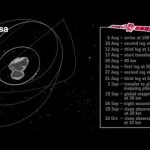
    What happens after Rosetta arrives at comet 67P/Churyumov–Gerasimenko? This animation describes the key dates for the next set of manoeuvres that will bring Rosetta even closer to the comet between August and October.

    After arriving on 6 August, Rosetta will follow a set of two, three-legged triangular trajectories that require a small thruster burn at each apex. The legs are about 100 km long and it will take Rosetta between three and four days to complete each one.

    The first triangle is conducted at a distance of about 100 km from the comet, the second at around 50 km. Then Rosetta will switch to a ‘global mapping phase’ at an altitude of about 30 km. During this period, it will make a ‘night excursion’, whereby the ground track of the spacecraft will be on the night-side of the comet (with the spacecraft still fully illuminated the Sun).

    In October Rosetta will transfer to a close mapping phase to observe the comet from a distance of 10 km. The spacecraft will move even closer to dispatch lander Philae to the surface in November.

    In this animation the comet is an artist’s impression and is not to scale with the spacecraft. The comet rotation is not representative (67P rotates once per 12.4 hours). Dates may be subject to change.

    Credits: ESA

  • Philae’s mission at comet 67P

    Philae’s mission at comet 67P

    Extended version of Philae touchdown animation to include visualisations of some of the science experiments on the lander.

    The animation begins with the deployment of Philae from Rosetta at comet 67P/Churyumov–Gerasimenko in November 2014. Rosetta will come to within about 10 km of the nucleus to deploy Philae, which will take several hours to reach the surface. Because of the comet’s extremely low gravity, landing gear will absorb the small forces of landing while ice screws in the probe’s feet and a harpoon system will lock the probe to the surface. At the same time a thruster on top of the lander will push it down to counteract the impulse of the harpoon imparted in the opposite direction. Once it is anchored to the comet, the lander will begin its primary science mission, based on its 64-hour initial battery lifetime. The animation then shows five of Philae’s 10 instruments in action: CIVA, ROLIS, SD2, MUPUS and APXS.

    Rosetta’s Philae lander is provided by a consortium led by DLR, MPS, CNES and ASI.

    Also watch:
    Philae touchdown animation: http://youtu.be/BzfJlXHiagw
    Philae’s panoramic camera (CIVA): http://youtu.be/k1IFU6kxcD8
    Science on the comet: http://youtu.be/Pi0rwJktEF8

    Credits: ESA/ATG medialab

  • Rosetta Spacecraft at ESA’s ESTEC Test Centre

    Rosetta Spacecraft at ESA’s ESTEC Test Centre

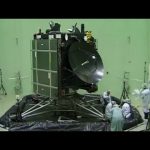
    The road to humankind’s first rendezvous with a comet began at ESA’s technical centre in the Netherlands. The pioneering Rosetta spacecraft and its Philae lander were tested in simulated space conditions to ensure they could withstand the difficult journey.

    Credits: ESA

  • Mars 2020 Rover and Beyond News Teleconference from NASA Headquarters in Washington DC

    Mars 2020 Rover and Beyond News Teleconference from NASA Headquarters in Washington DC

    During a July 31 briefing at NASA headquarters, agency officials announced seven science instruments, out of fifty-eight proposed, have been selected to be part of the next rover NASA will send to Mars in 2020. The Mars 2020 rover will be a new version of the Curiosity rover currently operating on Mars – with more sophisticated hardware to conduct unprecedented science and exploration technology investigations, including geological assessments, habitability of the environment and searching for signs of past life on the Red Planet.

  • NASA Astronaut ISS Crew Member Reid Wiseman Discusses Life in Space with ABC’s “Nightline”

    NASA Astronaut ISS Crew Member Reid Wiseman Discusses Life in Space with ABC’s “Nightline”

    Aboard the International Space Station, Expedition 40 Flight Engineer Reid Wiseman of NASA discussed the status of his five and a half month mission on the orbital laboratory with the ABC News “Nightline” program during an in-flight interview July 31. Wiseman, who has garnered international attention for his enthusiastic involvement in social media, arrived on the station in late May and will remain in orbit until November, when he returns to Earth in a Russian Soyuz spacecraft.

  • #RosettaAreWeThereYet – Fabulous fables and tales of tails

    #RosettaAreWeThereYet – Fabulous fables and tales of tails

    Long, long ago men and women on Earth gazed in wonder at comets that appeared in the sky. What where these mysterious objects? Rosetta and Philae learn about the history of comets from their grandfather, Giotto.

    This video is also available in the following languages:
    German: http://youtu.be/TCUPKctIJcs
    Spanish: http://youtu.be/07PjU9kJ7uI
    Italian: http://youtu.be/UoHSiDz8u38
    French: http://youtu.be/LArEprzylNY

    More videos in the series are available in this playlist:
    https://www.youtube.com/playlist?list=PLbyvawxScNbui_Ncl9uQ_fXLOjS4sNSd8 />
    Credit: ESA

  • Samantha Cristoforetti, ESA astronaut training in Houston

    Samantha Cristoforetti, ESA astronaut training in Houston

    Samantha Cristoforetti from Italy joined ESA’s Astronaut Corps in 2009. An experienced fighter pilot and Captain in the Italian Air Force, she’s been proposed by the Italian Space Agency ASI to fly to the International Space Station later this year. After extensive international training she’ll be launched from Baikonur Cosmodrome in Kazakhstan, becoming the eighth ESA astronaut to participate in a long-duration mission onboard the ISS.

    Connect with Samantha on social media at http://samanthacristoforetti.esa.int

  • ATV-5 separation from Ariane 5

    ATV-5 separation from Ariane 5

    These images were taken by cameras on the Ariane 5 launcher that rocketed skywards on 29 July 2014 with Europe’s last cargo vessel to visit the International Space Station, ATV-5.

    The video shows the separation of ATV Georges Lemaîtres and its Ariane 5.

    From then on, it was a self-sufficient spacecraft heading towards the Space Station. The video also shows Ariane’s last stage manoeuvring out of the way.

    ATV-5 is carrying almost 6.6 tonnes of supplies to the International Space Station, including a record amount of dry cargo – 2682 kg.

  • ATV Johannes Kepler – Orbits and body motion in space

    ATV Johannes Kepler – Orbits and body motion in space

    This video is part of a series of educational videos that ESA is releasing based on the five visionaries that lent their name to Europe’s space freighters.

    Jules Verne, Johannes Kepler, Edoardo Amaldi, Albert Einstein and Georges Lemaître form the inspiration to explain the principles of physics to young and older audiences.

    Presented by Anu Ojha, this video offers a good basis to introduce schoolchildren and the general public to concepts of orbital mechanics.

    Accompanying these videos are also a new set of resources that ESA education is producing: Teach with Space, a large set of demonstrations and teacher guides intended to bring the excitement of space into the classroom to inspire the next generation.

    Classroom demos:
    http://www.esa.int/spaceinvideos/Videos/2014/07/Marble-ous_ellipses_-_classroom_demonstration_video_VP02
    http://www.esa.int/spaceinvideos/Videos/2014/07/Gravity_wells_-_classroom_demonstration_video_VP04

  • Chiedilo a Samantha: qual e’ la parte piu’ impegnativa dell’addestramento?

    Chiedilo a Samantha: qual e’ la parte piu’ impegnativa dell’addestramento?

    Due giovani terrestri hanno mandato una domanda per Samantha Cristoforetti per chiederle, secondo lei, quale parte del già’ difficile allenamento da astronauta e’ la più impegnativa.

  • ATV-5 Georges Lemaître mission

    ATV-5 Georges Lemaître mission

    ATV-5 is the last in the series to deliver supplies to the International Space Station. The fifth Automated Transfer Vehicle was launched from Europe’s Spaceport in French Guiana on 29 July 2014. It has been named Georges Lemaître as a tribute to the Belgian physicist, father of the Big Bang theory.

    After launch on an Ariane 5 from Kourou, ATV automatically navigates to a precision docking with the Station’s Russian Zvezda module. It remains attached to the ISS for up to six months before reentering the atmosphere and deliberately burning up together with several tonnes of Station waste.

  • #RosettaAreWeThereYet – Where are YOU going?

    #RosettaAreWeThereYet – Where are YOU going?

    We don’t know where you’re going, but we do know that Rosetta is about to arrive at comet 67P/Churyumov-Gerasimenko. Join the adventure and share your ‘are we there yet?’ photos to win great prizes.

    More details and competition rules at ‪http://www.esa.int/RosettaAreWeThereYet.

  • ATV-5: Georges Lemaître, Monseigneur Big Bang

    ATV-5: Georges Lemaître, Monseigneur Big Bang

    With ATV-5 George Lemaitre soon to be launched to the ISS from Europe’s Spaceport in Kourou, ESA pays tribute to George Lemaitre, the Belgian cleric and professor who was the first to conceive the idea of a big bang.

    The name of the man who proposed the prevailing ‘expansion’ theory on the beginning of the universe was proposed by Belgium’s delegation to ESA.

    This video explains who was Georges Lemaitre and how he contributed to modern Cosmology. It includes an interview in English and French with Professor Dominique Lambert, Theoretical physics – University of Namur

  • Apollo 11 celebration, Next Giant Leap anticipation on This Week @NASA

    Apollo 11 celebration, Next Giant Leap anticipation on This Week @NASA

    There was more celebration of Apollo 11’s 45th anniversary at several events around the country – and more opportunity for the agency to highlight its “next giant leap” to send humans to Mars. Those events included a ceremony during which Kennedy Space Center’s Operations and Checkout Building was renamed on July 21, in honor of Apollo 11 Commander Neil Armstrong, who passed away in 2012. The facility, which was used to process and test Apollo spacecraft, is now being used to assemble NASA’s Orion spacecraft. Also, ISS astronauts appear in the House, Space station cargo ships, Extreme underwater mission underway, RS-25 Engine installed for testing, and more!

  • NASA’s Next Giant Leap

    NASA’s Next Giant Leap

    It was 45 years ago that Neil Armstrong took the small step onto the surface of the moon that changed the course of history. The Apollo missions blazed a path for human exploration to the moon and today NASA is taking its Next Giant Leap to near-Earth asteroids, Mars and beyond. As we develop and test the new tools of 21st century spaceflight on the human path to Mars, we once again will change the course of history.

  • ESA astronaut Alexander Gerst greets German planetariums

    ESA astronaut Alexander Gerst greets German planetariums

    On 25 July, several German planetariums connected with ESA’s Astronaut Centre in Cologne, Germany, for a Google Hangout session.

    Usually, visitors to a planetarium are explore the starry night sky. But on the evening of 25 July eight German planetariums organised an event to talk about Alexander Gerst’s Blue Dot mission on the International Space Station, the European Astronaut Centre and about human spaceflight in general. A highlight of the evening was this message from Alexander Gerst in space.

  • Earth from Space: Cal Madow

    Earth from Space: Cal Madow

    Earth from Space is presented by Kelsea Brennan-Wessels from the ESA Web-TV virtual studios. In the one-hundred-thirteenth edition, visit the Cal Madow mountain range in northern Somalia.

    See also http://www.esa.int/spaceinimages/Images/2014/07/Cal_Madow_mountain_range_Somalia to download the image.

  • Apollo 11 Mission Audio – Day 1

    Apollo 11 Mission Audio – Day 1

    Audio highlights from the first day of the Apollo 11 mission.