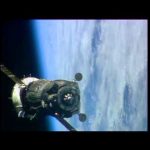
After launching earlier in the day in their Soyuz spacecraft from the Baikonur Cosmodrome in Kazakhstan, Expedition 38/39 Soyuz Commander Mikhail Tyurin of the Russian Federal Space Agency (Roscosmos), Flight Engineer Rick Mastracchio of NASA and Flight Engineer Koichi Wakata of the Japan Aerospace Exploration Agency arrived at the International Space Station on Nov. 7; docking their craft to the Rassvet module on the Russian segment of the complex.
Category: Astronomie
-
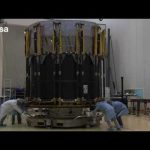
Gaia technology
Our Galaxy the Milky Way is made up of a hundred billion stars. To truly understand its evolution we need to know exactly where we stand in this mass of constantly moving and changing celestial objects. To do this, astrometry, the science of measuring the position, distance and movement of stars around us, is just about to take a giant leap forward with the launch of ESA’s new space telescope, Gaia. Gaia will make it possible to measure a billion stars of our Milky Way.
-
Mars Mission Briefed on This Week @NASA
During a news briefing at NASA headquarters officials and scientists discussed MAVEN, the agency’s next mission to Mars. Scheduled to launch November 18 from Cape Canaveral Air Force Station in Florida, MAVEN will study the history and change of Mars’ atmosphere, climate, and planetary habitability. Also, Bolden visits Langley, Power Up, Solar Flares, A busy time!, Free flight and Ice Flight!
-
ESA Euronews: Mapping the Milky Way
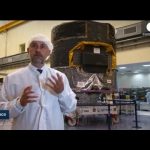
It has spawned a host of songs from crooners to alternative rock bands. One of the best loved chocolate bars in the United Kingdom is named after it. Yet how much to we really know about the Milky Way and just how important is it?
We could be close to many answers about the galaxy thanks to a new satellite named Gaia, being launched by the European Space Agency.
“One fundamental step to understand our universe is to understand our closer universe, which is the galaxy,” explained Guiseppe Sarri who is the project manager of ESA’s Gaia project.
Gaia will scan the sky with powerful new eyes, mapping the Milky Way in unprecedented detail. It will help produce a detailed 3D image of the galaxy, something which has never been done before.
-
ESA Euronews: Mapear a Via Láctea
Olhando para o céu durante a noite é possível ver milhares de estrelas. Mas muito para além das visíveis existem milhões de outras escondidas na escuridão. Mais fracas, mais distantes, e profundamente misteriosas.
Podemos estar perto de as descobrir graças a um novo satélite denominado Gaia, que está a ser lançado pela Agência Espacial Europeia.
“Um passo fundamental para compreender o universo é entender o nosso universo mais próximo, a galáxia”, explicou Guiseppe Sarri, gestor do projeto Gaia da Agência Espacial Europeia.
O Gaia vai conseguir ver o céu com uns poderosos novos olhos e criar um mapa detalhado da galáxia em 3D. Algo nunca antes visto na astronomia.
Os astrónomos estão entusiasmados já que o satélite promete uma revolução. Vai observar, mapear e medir mil milhões de estrelas no total.
Para isso o satélite vai transportar a maior câmera digital que alguma vez voou para o espaço. Como Guiseppe Sarri salientou: “Estamos a falar de estrelas que são 400 mil vezes mais fracas do que as que podemos ver a olho nu.”
O grande número de dados recolhidos na missão deve ajudar os astrónomos a resolver alguns dos maiores quebra-cabeças no universo. Tais como a forma exata da nossa galáxia e os mistérios da matéria negra – a força oculta que molda o universo. O mapa da Via Láctea do satélite Gaia vai deixar o universo um pouco menos misterioso, mas nem por isso menos belo.
-
ESA Euronews: Mission Gaia : la Voie lactée bientôt cartographiée
Les milliards d’étoiles de notre Voie lactée forment un labyrinthe dont nous avons du mal à appréhender l’étendue. Pour faire progresser les connaissances sur notre galaxie, l’Agence spatiale européenne mène la mission Gaia, du nom d’un satellite capable de scanner le ciel avec une précision extraordinaire, au moins mille fois supérieure à celle des observations depuis le sol.
L’engin construit par Astrium à Toulouse et lancé depuis Kourou en Guyane française va réaliser une première en astronomie en établissant une carte 3D détaillée de la Voie lactée : il calculera la position relative, la trajectoire et la vitesse d’un milliard d’étoiles. Ce qui correspond à 1% de l’ensemble des étoiles peuplant notre galaxie.
Pour l’aider dans ses observations, Gaia dispose de la plus grande caméra numérique jamais conçue pour une mission spatiale et comme point de référence, du plus grand téléscope de l’observatoire du Pic du Midi dans les Pyrénées.
Grâce à cette mission, les astronomes espèrent résoudre de grandes énigmes, notamment établir avec exactitude, la structure en spirale de la Voie lactée et trouver la trace de la matière noire, cette force invisible qui façonne notre univers.
-
NASA’s Next Mission to Mars
NASA hosted a news briefing at 2 p.m. EDT Monday, Oct. 28, to discuss the upcoming launch of the agency’s next mission to Mars and the first devoted to understanding the upper atmosphere of the Red Planet.
MAVEN is scheduled to launch at 1:28 p.m. EST Nov. 18 from Cape Canaveral Air Force Station in Florida. MAVEN’s data will be used to study the history and change of Mars’ atmosphere, climate, and planetary habitability.Briefing participants were:
– John Grunsfeld, associate administrator for the Science Mission Directorate, NASA Headquarters, Washington
– Jim Green, director, Planetary Science Division, Headquarters
– Lisa May, MAVEN program executive, Headquarters
– Kelly Fast, MAVEN program scientist, Headquarters
– Bruce Jakosky, MAVEN principal investigator, University of Colorado Boulder Laboratory for Atmospheric and Space Physics
– David Mitchell, MAVEN project manager, NASA’s Goddard Space Flight Center, Greenbelt, Md. -
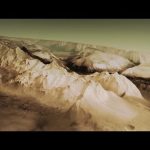
Mars showcase
From the highest volcano to the deepest canyon, from impact craters to ancient river beds and lava flows, this showcase of images from ESA’s Mars Express takes you on an unforgettable journey across the Red Planet.
Mars Express was launched on 2 June 2003 and arrived at Mars six-and-a-half months later. It has since orbited the planet nearly 12 500 times, providing scientists with unprecedented images and data collected by its suite of scientific instruments.
The data have been used to create an almost global digital topographic model of the surface, providing a unique visualisation and enabling researchers to acquire new and surprising information about the evolution of the Red Planet.
The images in this movie were taken by the High Resolution Stereo Camera and the video was released by the DLR German Aerospace Center as part of the ten years of Mars Express celebrations in June 2013. The music has been created by Stephan Elgner of DLR’s Mars Express planetary cartography team. DLR developed and is operating the stereo camera.
Read the original post on DLR’s website here: http://www.dlr.de/dlr/en/desktopdefault.aspx/tabid-10212/332_read-7208/year-all/332_page-2/#gallery/10805
Credit: ESA / DLR / FU Berlin (G. Neukum)
-
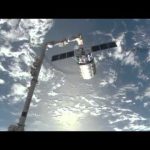
Back to Mission on This Week @NASA
With the government shutdown over, Administrator Charlie Bolden welcomed employees back to the work of NASA’s mission. Bolden visited Goddard Space Flight Center with Maryland Senator Barbara Mikulski for an update on several projects, including the Global Precipitation Measurement mission, the Magnetospheric Multiscale spacecraft and the James Webb Space Telescope. Bolden also visited Mississippi to thank employees at Stennis Space Center for their critical engineering and testing work on the agency’s next generation rocket engines and the staff of the NASA Shared Services Center for their support of the agency during the shutdown. Also, While we were away, Cygnus Completes!, MAVEN in Waiting, SLS Tests, and More Arctic Sea Ice!
-
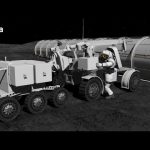
Advanced-concept robots
ESA is looking to the future of space exploration using robots ranging from small humanoid robots to larger construction robots with varying degrees of autonomy and flexibility.
This animation shows advanced concepts of robots designed to explore, prepare and help humans in the very harsh conditions found on the Moon and beyond. For many of the concepts shown, ESA has already developed real-life prototypes, including the multifunctional wheels seen on the first robot in this video.
-
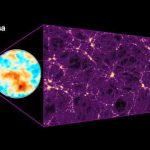
Planck’s view of the Universe
This animation highlights some of the many discoveries made by ESA’s Planck space telescope over its 4.5 year observing career, from new discoveries in our home Milky Way Galaxy stretching back to the first few moments after the Big Bang 13.82 billion years ago.
Credits: ESA
Read more on the ESA website:
http://www.esa.int/Our_Activities/Space_Science/Planck/Celebrating_the_legacy_of_ESA_s_Planck_mission -
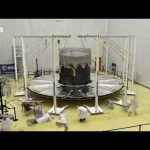
Gaia sunshield deployment time-lapse sequence
Time-lapse sequences from the deployment test of the Gaia Deployable Sunshield Assembly (DSA) on 10 October 2013, in the cleanroom at Europe’s spaceport in Kourou.
Since the DSA will operate in microgravity, it is not designed to support its own weight in the one-g environment at Earth’s surface. Therefore, during deployment testing on the ground, the DSA panels are attached to a system of support cables and counterweights that bears their weight, preventing damage and providing a realistic test environment.
Once in space, the sunshield has two purposes: to shade Gaia’s sensitive telescopes and cameras, and to provide power to operate the spacecraft. Gaia will always point away from the Sun, so the underside of the skirt is partially covered with solar panels to generate electricity.
Credit: ESA
-
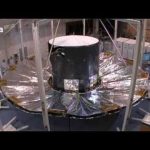
Gaia sunshield deployment test
Gaia Deployable Sunshield Assembly (DSA) integrated onto the spacecraft and undergoing deployment testing at Astrium Toulouse. Since the DSA will operate in microgravity, it is not designed to support its own weight in the one-g environment at Earth’s surface. During deployment testing, the DSA panels are attached to a system of support cables and counterweights that bears their weight, preventing damage and providing a realistic test environment. The support system is clearly visible in the video.
As the DSA deploys, the flight model thermal tent comes into view and the mechanically representative dummy payload can be seen through the aperture in the tent. Towards the end of the deployment sequence, the flight model service module comes into view.
This test demonstrated correctness of alignment following integration, confirmed the deployment functionality and verified the flatness of the deployed DSA.
The video shows an edited, time-lapse sequence from the deployment of the DSA during a test campaign; the entire deployment sequence takes about 20 minutes.
-

ESRIN: ESA’s Eye on Earth
Located in Frascati, Italy, ESRIN — known as the ESA Centre for Earth Observation — is one of the five ESA specialised centres situated in Europe.
The mission and payload operations of ESA’s Earth observation satellites are managed here and ESRIN is the primary source for the acquisition, distribution and exploitation of data from these and other non-ESA satellites.
Within ESRIN, a key role in Europe’s space effort has been undertaken with the development of the new small launcher, Vega, which took its maiden voyage in February 2012.
ESRIN designs and develops all ESA-wide software for corporate applications and is responsible for developing security measures for classified space programmes.
The European Centre for Space Records (ECSR) is also based at ESRIN. The ECSR appraises and preserves the valuable technical records of completed ESA projects together with their management archives to safeguard this valuable knowledge for generations to come.
Finally, ESRIN is home to ESA’s Near-Earth Object Coordination Centre. The centre serves as the central access point to a network of European near-Earth object data sources and information providers being established under ESA’s Space Situational Awareness (SSA) Programme.
For more information, visit http://www.esa.int/About_Us/ESRIN
-
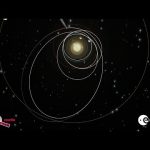
Rosetta’s twelve-year journey in space
This animation tracks Rosetta’s journey through the Solar System, using gravity slingshots from Earth and Mars to reach its final destination: Comet 67P/Churyumov–Gerasimenko. Rosetta made three flybys of Earth, on 4 March 2005, 13 November 2007 and 13 November 2009, and one of Mars, on 25 February 2007. Rosetta has also visited two asteroids, taking extensive close-up images of 2867 Steins on 5 September 2008 and 21 Lutetia on 10 July 2010. Once the spacecraft is woken up from deep space hibernation on 20 January 2014, it will head for rendezvous with the comet in May. In November the Philae probe will be deployed to the comet surface. Rosetta will follow the comet to its closest distance to the Sun on 13 August 2015 and as it moves back towards the outer Solar System. The nominal mission end is December 2015.
Credits: ESA(This replaces a previously published version)
-

ESA ESTEC Large Diameter Centrifuge
Video of the ESA ESTEC LDC from the central gondola, accelerating and decelerating.
Credits: Life & Physical Science, Instrumentation and Life Support Laboratory, TEC-MMG Department
-
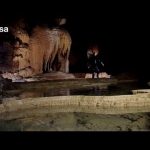
Caves 2013: Discovery
Members of the CAVES 2013 crew talk about exploring inside the Sa Grutta cave – comparing their experience to arriving on the surface of a planet like Mars, where you don’t quite know what to expect.
CAVES, ESA’s unique training programme for astronauts, takes place over a couple of weeks in Sardinia’s Supramonte. Six astronauts spend two weeks deep in caves, in the dark and cold. They are separated from the outside world, doing scientific research and daily tasks together, as a group, just like in space. Moving in the cave system is also comparable to spacewalking with the use of harnesses and safety devices.
Read more about CAVES on our dedicated website (esa.int/caves) and read more about the CAVES 2013 campaign in the blog (blogs.esa.int/CAVES2013)
ESA–V. Crobu & S. Sechi
(Italian subtitles also available)
-
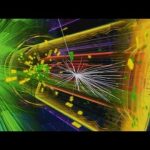
ESA Euronews: Planck, Higgs and the Big Bang
When it comes to the origins of the Universe, there’s one idea that really captures our imagination: everything, even time itself, started with the Big Bang.
The concept of the Big Bang is difficult to describe and problematic to measure, however that’s exactly what two major projects have set out to do: one on Earth, the Large Hadron Collider at CERN, the other in space, ESA’s Planck mission.
In this edition of Space, Euronews gets to the heart of the matter and attempts to discover how matter and everything in the Universe came into being.
We speak with experts from the CERN, Institut d’Astrophysique de Paris, Sorbonne University and ESA, all studying how the Universe works.
-
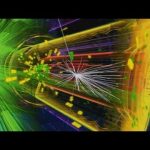
ESA Euronews: Big Bang: Εξερευνώντας πώς ξεκίνησε το σύμπαν
Πώς δημιουργήθηκε το σύμπαν; Πρόκειται για ένα αιώνιο ερώτημα, με απαντήσεις που ξεπερνούν κάθε φαντασία. Όλοι μιλούν για το περίφημο Big Bang. Τι είναι όμως αυτό; Τι ακριβώς συνέβη;
Ακόμα και οι επιστήμονες διαφωνούν. “Το Big Bang με τον σημερινό τρόπο σκέψης είναι κάτι σαν το σημείο εκκίνησης, η στιγμή που δημιουργήθηκε το σύμπαν”, λέει ένας, αλλά διευκρινίζει: “Πώς συνέβη αυτό και τι ακριβώς υπήρχε εκείνη τη χρονική στιγμή εκεί, είναι κάτι που δεν είναι ακόμη απόλυτα γνωστό”. Ωστόσο ένας άλλος επισημαίνει: “Το Big Bang θα έλεγα ότι είναι μια ιδέα. Δεν είναι μια χρονική στιγμή”.
Εάν είναι δύσκολο να περιγράψει κανείς αυτή καθεαυτή την έννοια του Big Bang, είναι ακόμα πιο δύσκολο να την μελετήσει με επιστημονικά πειράματα. Αλλά αυτό ακριβώς έχουν σκοπό να κάνουν δύο μεγάλα πειράματα της εποχής μας. Το ένα από αυτά είναι στη Γη, το άλλο στο διάστημα.
Στις εγκαταστάσεις του CERN, κοντά στην Γενεύη, έχει δημιουργηθεί ο Μεγάλος Επιταχυντής Αδρονίων. Εκεί ανακαλύφθηκε πέρυσι το μποζόνιο Χιγκς, το σωματίδιο που δίνει μάζα στην ύλη και αποδεικνύει την ύπαρξη του πεδίου Χιγκς. “Εάν δείτε το επίπεδο ενέργειας στο οποίο φτάνουμε και το είδος των μαζών που μπορούμε να δημιουργήσουμε με αυτό το πείραμα, θα πρέπει να πηγαίνουμε σε ένα σημείο, κάτι σαν ένα δισεκατομμυριοστό του δευτερολέπτου μετά το Big Bang, επομένως κοντά, πολύ κοντά στο Big Bang”, εξηγούν οι επιστήμονες του CERN.
Ενώ στο CERN συγκρούονται μικροσκοπικά σωματίδια, ο δορυφόρος Planck της Ευρωπαϊκής Υπηρεσίας Διαστημικής, προσπαθεί σε μια επική αναζήτηση να ανιχνεύσει τα απομεινάρια του φωτός από το Big Bang. Την άνοιξη η ομάδα του Planck δημοσιοποίησε αυτό που θεωρείται ως ο απόλυτος χάρτης της κοσμικής μικροκυματικής ακτινοβολίας.Δείχνει πώς ήταν το σύμπαν μόλις 380.000 χρόνια μετά το Big Bang.
Το φως που ταξιδεύει σε εμάς από την έναρξη του σύμπαντος και τα σωματίδια που σπάνε σε έναν γιγάντιο επιταχυντή είναι οι μαρτυρίες στις οποίες βασιζόμαστε για να αντιληφθούμε την θεωρία του Big Bang και όσων το ακολούθησαν. Αλλά λένε αυτές οι μαρτυρίες τα ίδια πράγματα; ή μήπως καταλήγουν σε διαφορετικά συμπεράσματα;
Η εικόνα μας για το πρώιμο σύμπαν απέχει ωστόσο ακόμα από το να είναι πλήρης. Υπάρχουν πολλά εκκρεμή ζητήματα και ανωμαλίες. Και αυτό είναι ένα ζήτημα στο οποίο ακόμα και οι ίδιοι οι επιστήμονες σε ορισμένες περιπτώσεις σηκώνουν τα χέρια ψηλά…
-
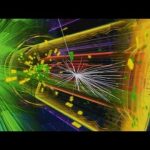
ESA Euronews: Planck, Higgs e a Teoria do Big Bang
Quando se trata da origem do universo, há uma ideia que realmente capta a nossa atenção. Que é a seguinte: tudo, até mesmo o próprio tempo, começou com o Big Bang. Se o conceito de Big Bang é difícil de descrever é ainda mais difícil de medir e testar através de uma experiência científica. Mas é exatamente isso que dois dos principais projetos do nosso tempo pretendem fazer. Um deles está na terra, o outro no espaço. Na Terra, essa experiência está no CERN, perto de Genebra.
-

Tracking spacecraft deep across the void
ESA operates some of the world’s most sophisticated deep-space tracking stations, enabling spacecraft to maintain contact with Earth while voyaging deep into our Solar System. The essential task of all ESA stations is to communicate with our missions, sending telecommands and receiving vital scientific data and spacecraft status information.
The Agency’s three Deep Space Antenna (DSA) stations are located in Australia, Spain and Argentina, and are centrally controlled from the ESOC Operations Centre in Germany. They are equipped with large, 35 m-diameter parabolic dish reflectors, weighing in at 610 tonnes, that can be rotated and pointed with extreme accuracy.
Using signal data from the stations and an advanced navigational technique known as ‘delta-DOR’, engineers can pinpoint the orbit of a spacecraft exploring Mars or Venus – a distance of over 100 million kilometres from Earth – to an accuracy within 1 kilometre.
-
NASA Astronaut and Fellow Crew Members Prepare for Soyuz Rocket Launch
At the Baikonur Cosmodrome in Kazakhstan, Expedition 37/38 Soyuz Commander Oleg Kotov and Flight Engineer Sergey Ryazanskiy of the Russian Federal Space Agency (Roscosmos) and NASA Flight Engineer Michael Hopkins conducted their final fit check “dress rehearsal” in their Soyuz TMA-10M spacecraft and conducted other ceremonial activities Sept. 20. The Soyuz spacecraft was mated to its booster rocket on Sept. 22, and moved to the launch pad on a railcar Sept. 23 for final preparations before launch to the International Space Station on Sept. 26, Kazakh time. The trio will spend five and a half months onboard ISS, joining station Commander Fyodor Yurchikhin of Roscosmos, Flight Engineer Karen Nyberg of NASA and Flight Engineer Luca Parmitano of the European Space Agency. The footage also includes interviews at the launch pad Sept. 23 with Joel Montalbano, Deputy ISS Program Manager, and Ellen Ochoa, Director of the Johnson Space Center.
-
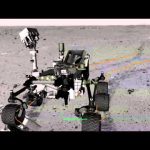
NASA Curiosity Rover Report — September 19, 2013
A NASA Mars Curiosity rover team member gives an update on developments and status of the planetary exploration mission. The Mars Science Laboratory spacecraft delivered Curiosity to its target area on Mars at 1:31:45 a.m. EDT on Aug. 6, 2012 which includes the 13.8 minutes needed for confirmation of the touchdown to be radioed to Earth at the speed of light. The rover will conduct a nearly two-year prime mission to investigate whether the Gale Crater region of Mars ever offered conditions favorable for microbial life.
Curiosity carries 10 science instruments with a total mass 15 times as large as the science payloads on NASA’s Mars rovers Spirit and Opportunity. Some of the tools, such as a laser-firing instrument for checking rocks’ elemental composition from a distance, are the first of their kind on Mars. Curiosity will use a drill and scoop, which are located at the end of its robotic arm, to gather soil and powdered samples of rock interiors, then sieve and parcel out these samples into the rover’s analytical laboratory instruments.
-
Cygnus Launched! On This Week @NASA
Orbital Sciences Corporation’s Cygnus cargo craft launched aboard the company’s Antares rocket from Wallops Flight Facility on a demonstration mission to the International Space Station. The Cygnus demo mission is part of NASA’s Commercial Orbital Transportation Services program to develop viable partnerships to resupply the space station. Also, Closing In On Launch, Curiosity Rover Update, Innovation & Tech Day, National Aerospace Week, A New Partner, Business to Business, Hip Hop Physics and more!
-
Voyager in Interstellar Space! On This Week @NASA
During a press briefing at NASA headquarters, scientists announced that the Voyager 1 spacecraft has officially left our solar bubble and has reached interstellar space. The Voyager Interstellar Mission (VIM) seeks to extend NASA’s exploration of the solar system beyond the outer planets — to the outer limits of the Sun’s sphere of influence, and possibly beyond. Voyager 1 and its twin Voyager 2 were launched 16 days apart in 1977. Also, Off the Earth, For the Earth, Comings and Goings, Flight Of Cygnus, Rockets 2 Racecars, InSight Landing Sites and more!
-

NASA’s Voyager 1 is in Interstellar Space
NASA’s Voyager 1 spacecraft has traveled beyond our solar bubble and has entered interstellar space. During a NASA Headquarters briefing, the Voyager team assessing the data determined the craft is in a transitional region immediately outside the solar bubble where some effects from our sun are still evident. New, unexpected data indicate that Voyager 1 has been traveling through the plasma, or ionized gas, that originates in the space between the stars. The spacecraft is now bathed in interstellar plasma, the material ejected from the death of nearby stars millions of years ago. Speakers on the occasion were – Ed Stone- Voyager project scientist, California Institute of Technology; Don Gurnett – Voyager plasma wave investigation principal investigator, University of Iowa; Suzanne Dodd – Voyager project manager, Jet Propulsion Laboratory; and Gary Zank, physics department chair, University of Alabama in Huntsville.
-
Earth from Space: Advancing science through CCI
During the Living Planet Symposium 2013 in Edinburgh, UK, Shubha Sathyendranath, Science Leader of the Ocean Colour CCI project, joined us to discuss ocean colour and the Climate Change Initiative.
-
Earth from Space: ESA and the UK Space Agency
Discover more about our planet with the Earth from Space video programme. During the Living Planet Symposium 2013 in Edinburgh, UK, David Parker, Chief Executive of the UK Space Agency, joined us to discuss the collaborative relationship with ESA.
(This replaces a previously published version – sound has been corrected)
-
LADEE Launches! On This Week @NASA
LADEE, the Lunar Atmosphere and Dust Environment Explorer robotic probe launched Friday night atop an Orbital Sciences Corporation Minotaur V rocket. The first deep space mission from Wallops Flight Facility, LADEE will orbit the moon to collect information about its atmosphere and environmental influences on lunar dust. Data from LADEE will help scientists better understand other planetary bodies in our solar system. Also, Antares Update, Asteroid Ideas Selected, MAVEN’s Wings, Next ISS Crew, Testing, Testing!, Lori Garver Farewell, Be Prepared! and more!
-
LADEE To The Moon and Remembering Gordon Fullerton on This Week @NASA
NASA prepares for the launch of the Lunar Atmosphere and Dust Environment Explorer or LADEE probe to the moon. Also, a new crew of ISS Astronauts meet the Media, and the Spitzer and WISE Telescopes get ready to help in the search for asteroids. These stories and more on This Week @NASA
-
Earth from Space: Salty Turkey
Earth from Space is presented by Kelsea Brennan-Wessels from the ESA Web-TV virtual studios. In the seventy-fifth edition, we explore Lake Tuz on the Anatolian peninsula.
Read more on the ESA Portal:
http://www.esa.int/Our_Activities/Observing_the_Earth/Earth_from_Space_Salty_Turkey -
ESA Euronews: Test d’ammaraggio per l’IXV il nuovo veicolo spaziale europeo
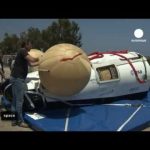
Nel mare di Sardegna, poco distante da Muravera in Costa Rei, è stato testato l’IXV, un nuovo veicolo spaziale europeo. La navicella è stata progettata per rientrare nell’atmosfera terrestre in modo più preciso rispetto alla Soyuz.
Durante il test l’Intermediate eXperimental Vehicle è stato sollevato da un elicottero e, a tremila metri di altitudine, è stato sganciato.
Dopo una prima parte di tragitto in caduta libera, la corsa della navetta verso il Mar Mediterraneo è stata frenata, come previsto, da un paracadute.
Ma qualcosa non ha funzionato. Nell’impatto con l’acqua non si sono aperti i dispositivi di galleggiamento che garantiscono stabilità all’IXV.
Secondo Giorgio Tumino e Roberto Angelini, i due manager che seguono il progetto, rispettivamente per ESA e per Thales Alenia Space, l’ammaraggio è stato talmente ‘morbido’ che i quattro palloni praticamente non se ne sono ‘accorti’. Per questo non si sono gonfiati.
Il primo lancio nello spazio dell’IXV, con conseguente rientro nell’orbita terrestre, è previsto per il 2014. Per quella data, garantiscono gli ingegneri, tutto sarà perfetto. -
ESA Euronews: Οι δοκιμές στη Μεσόγειο του νεότερου διαστημοπλοίου της Ευρώπης
Το νεότερο διαστημόπλοιο της Ευρώπης έκανε για μια κρίσιμη δοκιμή στα ανοικτά των ακτών της Σαρδηνίας. Πρόκειται για το IXV, που υποβάλλεται σε ένα πείραμα που θα δοκιμάσει τα όρια του μηχανήματος.
Όπως εξηγεί ο Ρομπέρτο Αντζελίνι, διευθυντής του όλου προγράμματος, “ένα από τα πιο δύσκολα ζητήματα στις διαδικασίες στο διάστημα είναι η επανείσοδος στην ατμόσφαιρα”. Και ο συνάφελφός του Τζόρτζιο Τουμίνο προσθέτει “Αυτές οι δοκιμές είναι πολύ σημαντικές για να βεβαιωθούμε ότι έχουμε έναν στιβαρό σχεδιασμό για να αντέξει τις τελευταίες φάσεις μιας αποστολής”.
Σε κάθε του βήμα, το διαστημόπλοιο παρακολουθείται και γίνονται αναλύσεις. Η αποστολή καταλήγει με την προσθαλάσσωση, “κάτι που η Ευρώπη δεν έχει ξανακάνει ποτέ στο παρελθόν και για αυτό είναι ένα πολύ δύσκολο εγχείρημα”, όπως εξηγεί ο Αντζελίνι.
Ιταλοί στρατιώτες και μερικοί ανήσυχοι μηχανικοί, ειδικοί για τέτοιες διαστημικές αποστολές, βρίσκονται πάνω σε ένα σκάφος στις ακτές της Σαρδηνίας, εκεί όπου δοκιμάστηκε το νέο διαστημόπλοιο, που είναι γνωστό σαν IXV. Αφού πρώτα βεβαιώνονται οι υπεύθυνοι ότι δεν είναι κανένας στη θάλασσα σε όλη την έκταση της δοκιμής, ένα ελικόπτερο παίρνει από την στρατιωτική βάση το πρωτότυπο σκάφος και από ύψος 3.000 μέτρων το αφήνει να πέσει στο κενό.
Πολλές είναι οι φιλοδοξίες για αυτό το πρωτότυπο σκάφος, δεδομένου ότι αντιπροσωπεύει ένα νέο κεφάλαιο στην τεχνολογία των διαστημικών πτήσεων για τον Ευρωπαϊκό Οργανισμό Διαστήματος.
Ο σκοπός είναι να δημιουργηθεί ένα προσιτό, μικρό διαστημόπλοιο που θα μπορεί να εισέλθει στην τροχιά της Γης και στη συνέχεια να προσγειωθεί σε μια συγκεκριμένη στοχευμένη περιοχή.
Ένα βήμα προς αυτήν την κατεύθυνση είναι και το συγκεκριμένο πείραμα. Όμως το 2014 το διαστημόπλοιο IXV θα ξεκινήσει το ταξίδι του στο διάστημα και στη συνέχεια θα επανέλθει στην γήινη ατμόσφαιρα.
Σε αντίθεση όμως με τις κάψουλες που χρησιμοποιούνταν μέχρι τώρα για τις επανεισόδους στην ατμόσφαιρα, το IXV είναι πολύ πιο εύκολο να ελιχθεί. -
NASA Remembers Neil Armstrong
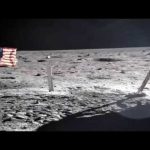
One year after his death, NASA is remembering Apollo 11 commander Neil Armstrong, the first man to set foot on another world.
As part of the tribute, Grammy-nominated artist Eric Brace, with some video assistance from NASA, honors Armstrong with an original composition, “Tranquility Base.”
-

NASA Briefing Previews Lunar Mission
During a televised news briefing from NASA Headquarters on Thursday, Aug. 22, panelists discussed the agency’s next mission to the moon, and the first lunar mission launching from the Virginia coast. NASA’s Lunar Atmosphere and Dust Environment Explorer (LADEE) mission is scheduled to launch at 11:27 p.m. Friday, Sept. 6, from NASA’s Wallops Flight Facility on Wallops Island, Va. Data from the mission will provide unprecedented information about the environment around the moon and give scientists a better understanding of other planetary bodies in our solar system and beyond.
-
Winter at the Concordia station in Antarctica
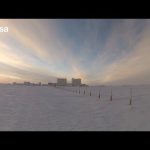
The long Antarctic winter is turning to spring at the Franco-Italian Concordia research station, which has resisted the brutal forces of nature about 1200 km inland on top of an icy plateau 3000 m above sea level. During winter, the Sun doesn’t rise above the horizon for about three months, and temperatures can drop down to -80°C.
This video shows the harsh but beautiful landscape around the station on one of the last sunny days in May and then how the darkness engulfed Concordia with its 12-strong winter-over team. Finally the Sun returned on 10 August — a memorable moment for the men and women who keep the station running and conduct the scientific work in those difficult, almost space-like conditions.
The video was shot by Olivier Delanoe and it includes excerpts from the letters sent by Antonio Litterio to ESA’s Concordia blog.
-

NASA Introduces Media to New Astronaut Candidates
Eight astronaut candidates who arrived at NASA’s Johnson Space Center in Houston this week to begin training participated in a news conference with NASA Administrator Charles Bolden on Tuesday, Aug. 20. The candidates were selected come from the second largest pool of applicants NASA has ever received — more than 6,000. During the next two years, the group will participate in a variety of technical training activities at space centers and remote locations around the globe to prepare for missions that will help the agency push the boundaries of exploration and travel to new destinations in the solar system.
-

Luca Parmitano’s spacesuit
Luca Parmitano explains his Extravehicular Mobility Unit (EMU) spacesuit and how he does an Extra-vehicular activity (EVA) / spacewalk.
-
Luca Parmitano and Chris Cassidy explain what happened during EVA 23
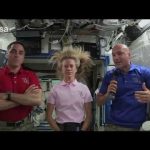
Italian astronaut Luca Parmitano and NASA astronaut Chris Cassidy were hard at work outside the International Space Station (ISS) for the second time, when water started to leak into Luca Parmitano’s space suit helmet, immediately resulting in the duo heading back to the Quest Airlock to terminate the EVA. Luca and Chris explain the events that happened during EVA # 23.
-
One Year on Mars! On This Week @NASA
So what can a planetary rover do with a year on Mars? All NASA’s Curiosity rover did was beam back over 190 gigabits of data, more than 36-thousand images and zap 75-thousand-plus laser shots at science targets … and oh by the way, it also completed the mission’s main science goal by finding evidence that life was possible on Mars in the past. The agency celebrated the one year anniversary of Curiosity’s landing on Mars with live events from the Jet Propulsion Laboratory — featuring rover team members. And at NASA Headquarters — a discussion about how Curiosity and other robotic projects are benefitting future human space exploration. Also, Maven Arrives, Garver Leaving NASA, Great Ball of Fire, Supply Ship Arrives Safely, Carbon Copy, The First Barrel Segment and more!