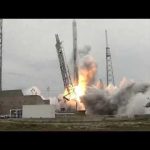
Approximately 2.4 tons of NASA science investigations and cargo were launched to the International Space Station aboard SpaceX’s Dragon spacecraft. The launch aboard the company’s Falcon 9 rocket took place from Space Launch Complex 40 at Cape Canaveral Air Force Station in Florida on Monday, April 18 at 3:25 p.m. EDT. Dragon’s cargo will support more than 150 experiments that will be conducted during space station Expeditions 39 and 40. The spacecraft will be grappled at 7:11 a.m. on Wednesday, April 16 by Expedition 39 Commander Koichi Wakata of the Japan Aerospace Exploration Agency. Dragon is scheduled to depart the space station May 18 for a splashdown in the Pacific Ocean west of Baja California, bringing with it about 3,500 pounds of science and research, hardware, crew supplies and spacewalk tools from the space station.
Blog
-
The Dragon Takes Flight on This Week @NASA
SpaceX-3 launches to the International Space Station, Kepler finds a Earth-sized planet and LADEE ends its mission on the lunar surface. These stories and more on this week’s, This Week @NASA
-
Plants in space
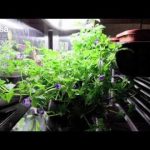
Growing plants for food was a significant step in the history of mankind. Growing plants for food in space and on other planets will be necessary for exploration of our Universe.
Javier Medina from the Spanish research council CSIC explains the attraction of plants for human exploration to supply oxygen and food.
He introduces current and future experiments on the International Space Station into plants and explains the logic of these greenhouses in space.
More about plant experiments on the International Space Station:
http://www.esa.int/Our_Activities/Human_Spaceflight/Research/Plants -

Flying Ping Pong Ball – Sick Science! #186
Amuse the neighbors for hours as you make objects float in midair. Believe it or not, the secret to this mystery of levitation is right in front of your nose. All you’ll need is a hairdryer and a ping pong ball to experience the power of air.
Want more experiments like this? Check out http://www.stevespanglerscience.com/product/naked-eggs-and-flying-potatoes
Sick Science™ is a trademark of Steve Spangler, inc.
© 2014 Steve Spangler Science all rights reserved
-

Onboard camera view: launch and separation of Sentinel-1A
Cameras mounted on the Soyuz Fregat upper stage that sent Sentinel-1A into space on 3 April 2014 captured this superb footage. It shows liftoff, the various stages in the rocket’s ascent and the Sentinel-1A satellite being released from the Fregat upper stage to start its life in orbit around Earth.
The 2.3 tonne satellite lifted off on a Soyuz rocket from Europe’s Spaceport in Kourou, French Guiana at 21:02 GMT (23:02 CEST). The first stage separated 118 sec later, followed by the fairing (209 sec), stage 2 (287 sec) and the upper assembly (526 sec). After a 617 sec burn, the Fregat upper stage delivered Sentinel into a Sun-synchronous orbit at 693 km altitude. The satellite separated from the upper stage 23 min 24 sec after liftoff.
Sentinel-1 is the first in the family of satellites for Europe’s Copernicus programme. It carries an advanced radar to scan Earth’s surface in all weather conditions and regardless of whether it is day or night. This new mission will be used to care for many aspects of our environment, from detecting and tracking oil spills and mapping sea ice to monitoring movement in land surfaces and mapping changes in the way land is used.
-

Soap Souffle – Sick Science! #185
Find out how Soap Souffle works here: http://www.stevespanglerscience.com/lab/experiments/soap-souffle
Want more experiments like this? Check out http://www.stevespanglerscience.com/product/naked-eggs-and-flying-potatoes
Sick Science™ is a trademark of Steve Spangler, inc.
© 2014 Steve Spangler Science all rights reserved
-
ESA astronauts training in Japan
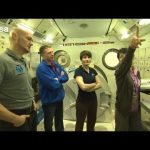
ESA astronauts have to train with all International Space Station partners: we often see images of them training at Star City in Russia or in Houston, in the US, but they also have to go to Japan during the preparations for their mission.
ESA astronauts Alexander Gerst and Samantha Cristoforetti were recently in Tsukuba, at the Japanese Aerospace Exploration Centre.
-
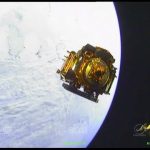
Sentinel-1A separation in space
This superb footage was acquired by cameras on the Soyuz Fregat upper stage that released Sentinel-1A into orbit on 3 April 2014. It shows the Sentinel-1A satellite separating from the Fregat to start its life in orbit around Earth.
The 2.3 tonne satellite lifted off on a Soyuz rocket from Europe’s Spaceport in Kourou, French Guiana at 21:02 GMT (23:02 CEST). The first stage separated 118 sec later, followed by the fairing (209 sec), stage 2 (287 sec) and the upper assembly (526 sec). After a 617 sec burn, the Fregat upper stage delivered Sentinel into a Sun-synchronous orbit at 693 km altitude. The satellite separated from the upper stage 23 min 24 sec after liftoff.
Sentinel-1 is the first in the family of satellites for Europe’s Copernicus programme. It carries an advanced radar to scan Earth’s surface in all weather conditions and regardless of whether it is day or night. This new mission will be used to care for many aspects of our environment, from detecting and tracking oil spills and mapping sea ice to monitoring movement in land surfaces and mapping changes in the way land is used.
Credits:
Arianespace/ESA/Roscosmos -
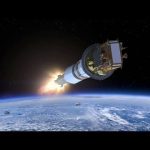
Sentinel-1 soundtrack
Sentinel-1A, the first satellite for Europe’s environmental monitoring Copernicus programme, is being launched from Europe’s Spaceport in Kourou, French Guiana on 3 April 2014. It will be lofted into orbit on a Soyuz rocket.
This animation shows some of the critical stages delivering Sentinel-1 into orbit around Earth. After separating from the Fregat upper stage, the satellite takes around 10 hours to deploy its 12 m-long radar and two 10 m-long solar wings. This deployment sequence is unique, choreographed to ensure that both deploy in the safest possible way. This approach also allows power from the wings to be available as soon as possible so that the satellite is independent.
Delivering vital information for numerous operational services, from monitoring ice in the polar oceans to tracking land subsidence, Sentinel-1 will play a key role in the largest civil Earth-observation programme ever conceived.
The animation is set to a track called Sentinel by Mike Oldfield, a world-renowned musician and big space fan.
Credits:
Graphics: ESA/ATG medialab; Music written by M. Oldfield/copyright EMI Virgin -
Why we need radar satellites
The launch of the first Sentinel-1 satellite marks a new paradigm in Earth observation focusing on operational missions to support users for decades to come. This first satellite for Europe’s environmental monitoring Copernicus programme carries an advanced radar to image Earth’s surface no matter what the weather or if it is day or night. Olaf Trieschmann from the European Maritime Safety Agency talks about the need for radar satellites and how data from Sentinel-1 will be used to monitor oil spills and for maritime surveillance. ESA’s Josef Aschbacher talks about how the wide range of services offered through Copernicus will make a step change in the way we manage the environment.
Credit: ESA/EMSA/European Parliament/DLR/ATG medialab/Funnelweb
-

Color Changing Powerade
THIS IS AN APRIL FOOL’S DAY PRANK AND DOES NOT ACTUALLY WORK!
Get everything you need to do this experiment here: http://www.stevespanglerscience.com/color-changing-powerade
Want more experiments like this? Check out http://www.stevespanglerscience.com/product/naked-eggs-and-flying-potatoes
Sick Science™ is a trademark of Steve Spangler, inc.
© 2014 Steve Spangler Science all rights reserved
-
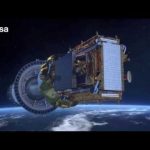
Sentinel-1: Radar mission
In early April, Sentinel-1A will be launched from Europe’s Spaceport in French Guiana on a Soyuz launcher. The radar mission is the first of the Copernicus programme, providing an all-weather, day-and-night supply of imagery for Copernicus user services.
-
Copernicus Monitoring the Earth
Accurate information about the environmental is crucial. It helps to understand how our planet and climate are changing, the role human activity play in these changes and how this affects our daily lives. Responding to these challenges, the EU and ESA have developed an Earth observation programme called Copernicus, formerly known as Global Monitoring for Environment and Security, – a programme that becomes operational with the launch of Sentinel-1A.
-

Bolden Testifies About the Budget on This Week @NASA
NASA Administrator Charlie Bolden responded to questions at a Congressional hearing about the agency’s $17.5 billion FY2015 budget proposal, which affirms the bi-partisan plan agreed to by Congress and the President for NASA to carry out an ambitious deep space exploration program. One that includes sending humans to an asteroid and Mars, extending use of the International Space Station to at least 2024, developing the Orion spacecraft and Space Launch System rocket and fostering commercial partnerships. Also, Asteroid Initiative Opportunities Forum, Nyberg and Parmitano in DC, Welcome to space! GPM’s first light, Exploration Design Challenge, Composite cryo tank delivered and Angry Nerd robot!
-
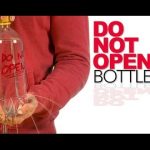
Do Not Open Bottle – Sick Science! #184
It’s the ultimate prank using the simplest of props… a plastic soda bottle filled with water. Even though the words “DO NOT OPEN” are printed on the bottle, people just can’t resist the temptation. Watch out, the fun is just beginning!
Want more experiments like this? Check out http://www.stevespanglerscience.com/product/naked-eggs-and-flying-potatoes
Sick Science™ is a trademark of Steve Spangler, inc.
© 2014 Steve Spangler Science all rights reserved
-
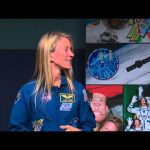
NASA Social with NASA Astronaut Karen Nyberg
NASA Astronaut Karen Nyberg spoke with social media followers and their guests at NASA Headquarters after recently returning from a 5.5-month stay aboard the International Space Station. Participants learned how Karen lived and worked from space, and as an artist, quilting and drawing http://www.nasa.gov/mission_pages/station/expeditions/expedition36/nyberg_profile.html#.UyMrRPldWSo during her off time; how she managed the unique aspects and challenges of parenting off the planet http://women.nasa.gov/karen-nyberg/ ; how as an astronaut and fitness lover, she exercised while on orbit http://www.youtube.com/watch?v=_ikouWcXhd0 ; current scientific experiments underway aboard the space station; how researchers study the effects of a weightless environment on the human body to help protect astronauts for long-duration spaceflight missions in the future; and how the space station is being used to test groundbreaking, new technologies that will help astronauts safely reach new deep space destinations, including an asteroid and eventually Mars.
-
NASA Observes World Water Day
On March 22, NASA will observe World Water Day. While our home planet is about 71 percent water, only 3 percent of that is available as fresh water. And many people do not have access to safe and clean water sources. On a water planet like Earth, “following the water” is a massive undertaking but one that is essential to predicting the future of our climate and the availability of water resources around the globe
-
Administrator Visits Aeronautics and Space Research Facilities on This Week @NASA
NASA Administrator Charlie Bolden visited aeronautics and space research facilities at Ames Research Center on March 17, including the laboratory for the volleyball-sized satellites called SPHERES, which are used onboard the International Space Station for space robotics and spacecraft navigation experiments. He also saw the high-fidelity airport control tower simulator called, “Future Flight Central”, used by NASA, the Federal Aviation Administration and other industry partners for joint research on next-generation air traffic management. Also, Rocket for Orion’s flight test highlighted, Future explorer celebrated at KSC, NASA’s new Chief Technologist, Coastal Flooding Challenge, Next space station crews , Hubble 24th anniversary image and more!
-

ESA Euronews: Copernicus offers a flood of disaster data
The recent floods in the UK saw a lot of the management of that disaster made possible by using information from satellites. But how? In this edition of Space we find out.
Flooding affects thousands of people every year across Europe, and this year one of them just happened to be a flood scientist – Spanish Research Fellow at Reading University in England, Javier García-Pintado.
His back garden looks onto the Thames, he explains: “This is the bank of the Thames, and this areas was severely affected by the recent flooding. Specifically in this little bit of land we are a tiny bit higher, and we didn’t have any problems, but our neighbours around here certainly did.”
García-Pintado knew his young family was safe at home, because he could count on his expert knowledge; his day job is using satellite data to improve flood models.
“As hydrologists we were pretty confident that this property wouldn’t have a problem, and we told our neighbours,” he told euronews.
Not everyone has a neighbour as knowledgeable as Javier, nor were they as lucky.
The whole area west of London was affected as England and Wales lived through their wettest winter in almost 250 years.
-
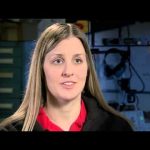
NASA Women’s History Month Profile, Karin Bozak – Glenn Research Center
Karin Bozak is an electrical engineer in the power systems branch at the NASA Glenn Research Center. In her current job she supports the design, integration, and test of a power-processing unit for NASA’s solar electric propulsion project.
-
Hook Challenge – Sick Science! #183
Want more experiments like this? Check out http://www.stevespanglerscience.com/product/naked-eggs-and-flying-potatoes
Sick Science™ is a trademark of Steve Spangler, inc.
© 2014 Steve Spangler Science all rights reserved
-
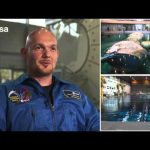
Training for Blue Dot
ESA astronaut Alexander Gerst recounts his training for his Blue Dot mission to the International Space Station in May 2014. Alexander spent over four years learning science, survival techniques, new languages, robotic operations and Space Station systems to prepare for his mission.
Alexander discusses basic training, overseeing docking of ESA’s Automated Transfer Vehicle space freighter, spacewalk training in swimming pools, the merits of US and Russian spacesuits and the scientific experiments he will conduct.
Alexander will spend six months on the Space Station performing experiments and maintaining the weightless laboratory. He is part of Expedition 40/41 to be launched May 2014 on a Soyuz spacecraft with cosmonaut commander Maxim Surayev and NASA astronaut Reid Wiseman.
-
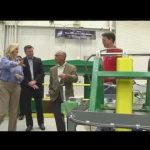
NASA Administrator Checks Out SLS Flight Avionics on This Week @NASA
NASA Administrator Charlie Bolden visited Marshall Space Flight Center to see work being done on the avionics and flight software for NASA’s Space Launch System rocket. Marshall’s System Integration Lab conducts flight simulations of the avionics system — including hardware, software and operating systems — that will guide the launch vehicle, to see how the SLS will perform during launch. Also, Dream Chaser agreement expanded, ISS crew returns safely, Senate Youth Program, More high marks for Morpheus, Asteroid Data Hunter challenge, SXSW Interactive and more!
-
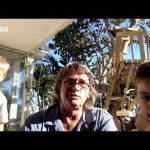
Mike Oldfield sends greeting to ESA and the Sentinel team
World-renowned musician Mike Oldfield, composer of the music used in ESA’s Sentinel-1 video, is a big space fan. From his home, Mike and his two sons (the future generation of space scientists and explorers) sent this message to ESA and the Sentinel-1 team with best wishes for the upcoming launch.
Sentinel-1 is an important mission, its launch will mark a new shift in Earth observation, focusing on operational missions to support users for decades to come. This first mission carries an advanced radar sensor to image Earth’s surface through cloud and rain and regardless of whether it is day or night.
Video copyright: ESA/M. Oldfield
Sentinel written by M. Oldfield
Graphics: ESA/ATG medialab
Music: copyright EMI Virgin -

Disappearing Color Wheel – Sick Science! #182
Find out how this works at: http://www.stevespanglerscience.com/lab/experiments/disappearing-color-wheel
When Sick Science! first got its start, we introduced an experiment called the Color Mixing Wheel. This spinning science toy was a great way to show you what happens when the primary colors blend together to make secondary colors. Our Sick Scientists have taken it a step further. What happens when you spin a wheel that has all 6 primary and secondary colors?
Want more experiments like this? Check out http://www.stevespanglerscience.com/product/naked-eggs-and-flying-potatoes
Sick Science™ is a trademark of Steve Spangler, inc.
© 2014 Steve Spangler Science all rights reserved
-
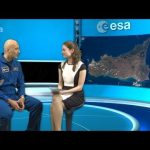
Earth from Space: Special edition
Discover more about our planet with the Earth from Space video programme. In this special edition, ESA astronaut Luca Parmitano joins the show to share his view of Earth from space while on the International Space Station.
More Earth from Space videos:
http://www.youtube.com/playlist?list=PL221A6233C4B4DD9E
More videos from Luca’s Volare Mission:
http://www.youtube.com/playlist?list=PLbyvawxScNbsm55jUs-r5JdC1vYI9qD8A -

Homemade Lung – Sick Science! #181
The human body is a magnificent machine. Every part serves a purpose that seems to work like magic (except maybe the appendix). The more science discovers and understands about the human body, the more opportunities we have to replicate their processes. With the Homemade Lung science project, you’ll learn how you can replicate a working lung with household objects. You’ll have a blast recreating this bodily function, and you don’t have to give up a lung to do it!
Find out how this works here: http://www.stevespanglerscience.com/lab/experiments/homemade-lung
Want more experiments like this? Check out http://www.stevespanglerscience.com/product/naked-eggs-and-flying-potatoes
Sick Science™ is a trademark of Steve Spangler, inc.
© 2014 Steve Spangler Science all rights reserved
-

The Beginning of Everything — The Big Bang
How did everything get started?
Has the universe a beginning or was it here since forever? Well, evidence suggests that there was indeed a starting point to this universe we are part of right now. But how can this be? How can something come from nothing? And what about time? We don’t have all the answers yet so let’s talk about what we know.
Also, we try to make this one not depressing. Tell us if we succeeded.
BY THE WAY. We have a website now. We’ll try to blog from time to time, show you guys how we make the videos and give more insight to our process. Also we sell stuff. We really don’t know where this whole kurzgesagt stuff leads us. But we are really thankful for all the attention and positive feedback and yeah, maybe we can make this our jobs — it would be pretty nice and we could do more content each month. But we’ll see. For now, thank you very much everybody for making this little adventure possible.
OUR CHANNELS
▀▀▀▀▀▀▀▀▀▀▀▀▀▀▀▀▀▀▀▀▀▀▀▀▀▀
German Channel: https://kgs.link/youtubeDE
Spanish Channel: https://kgs.link/youtubeESHOW CAN YOU SUPPORT US?
▀▀▀▀▀▀▀▀▀▀▀▀▀▀▀▀▀▀▀▀▀▀▀▀▀▀
This is how we make our living and it would be a pleasure if you support us!Get Merch designed with ❤ from https://kgs.link/shop
Join the Patreon Bird Army 🐧 https://kgs.link/patreonDISCUSSIONS & SOCIAL MEDIA
▀▀▀▀▀▀▀▀▀▀▀▀▀▀▀▀▀▀▀▀▀▀▀▀▀▀
Reddit: https://kgs.link/reddit
Instagram: https://kgs.link/instagram
Twitter: https://kgs.link/twitter
Facebook: https://kgs.link/facebook
Discord: https://kgs.link/discord
Newsletter: https://kgs.link/newsletterOUR VOICE
▀▀▀▀▀▀▀▀▀▀▀▀▀▀▀▀▀▀▀▀▀▀▀▀▀▀
The Kurzgesagt voice is from
Steve Taylor: https://kgs.link/youtube-voiceOUR MUSIC ♬♪
▀▀▀▀▀▀▀▀▀▀▀▀▀▀▀▀▀▀▀▀▀▀▀▀▀▀
700+ minutes of Kurzgesagt Soundtracks by Epic Mountain:Spotify: https://kgs.link/music-spotify
Soundcloud: https://kgs.link/music-soundcloud
Bandcamp: https://kgs.link/music-bandcamp
Youtube: https://kgs.link/music-youtube
Facebook: https://kgs.link/music-facebookIf you like the MUSIC of the video, you can get it here: http://bit.ly/1fCOlLI
Thomas did an aweful good job again. 🙂Next Video: April. (as soon as we can but we kind of have to make a living and visit college) Topic: Nuclear Energy (probably, if we finish the research in time — if not something else)
Short videos, explaining things. For example Evolution, the Universe, Time, the Stock Exchange or controversial topics like Fracking. Because we love science.
We’re a bunch of Information designers from munich, visit us on our website, twitter, facebook or behance to say hi!
The Beginning of Everything — The Big Bang
Help us caption & translate this video!
http://www.youtube.com/timedtext_cs_panel?c=UCsXVk37bltHxD1rDPwtNM8Q&tab=2
-
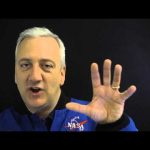
NASA Astronaut Mike Massimino on “Gravity” Award Win
NASA Astronaut Mike Massimino congratulates the filmmakers and actors of the Academy Award-winning film “Gravity” on their achievement.
-
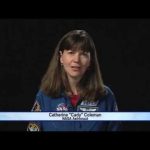
NASA Astronaut Cady Coleman on ‘Gravity’ Oscar Win
NASA Astronaut Cady Coleman congratulates the cast and crew of the Academy Award-winning film “Gravity” on their achievement. Coleman lived aboard the International Space Station during Expedition 27, while “Gravity” was being filmed, and spoke with the film’s star, Sandra Bullock, from space. Coleman thanks the filmmakers for “sharing that world and that view with everyone.”
-
NASA and the Japanese Aerospace Agency Launch GPM Satellite
From the Tanegashima Space Center near the southernmost tip of Japan, NASA and the Japanese Aerospace Exploration Agency (JAXA) launched a joint mission to study global measurements of rainfall and snowfall abroad JAXA’s H-IIA rocket. The Global Precipitation Measurement (GPM) Core Observatory is a new NASA built science satellite that will link data from a constellation of current and planned satellites and produce the most precise observations of rain and snow every three hours from anywhere on the globe. The GPM Core Observatory will fly 253 miles (407 kilometers) above Earth in an orbit inclined at 65-degrees to the equator and will begin normal operations in about 60 days after launch. Data will be downlinked through NASA’s Tracking and Data Relay Satellite System to the agency’s Goddard Space Flight Center’s Precipitation Processing Center in Greenbelt, Md., where it will be processed and distributed over the Internet.
-
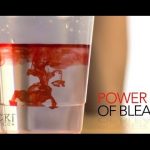
Power of Bleach – Sick Science! #180
Find out how this works here: http://www.stevespanglerscience.com/lab/experiments/the-power-of-bleach
Water and bleach: historically, this pair go together pretty well, namely in the world of cleanliness. Bleach is a remarkably caustic base that, when diluted with water, can clean stains from whites and linoleum. However, apart from their similarly clear appearance, water and bleach are very dissimilar. Bleach is very alkaline, but water is a neutral pH. Chemically, that is saying a lot. But what does that have to do with vivid colors?
Want more experiments like this? Check out http://www.stevespanglerscience.com/product/naked-eggs-and-flying-potatoes
Sick Science™ is a trademark of Steve Spangler, inc.
© 2014 Steve Spangler Science all rights reserved
-
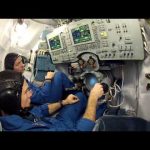
Soyuz Simulator
Learning to fly the Soyuz with ESA astronauts Andreas Mogensen and Thomas Pesquet in the Soyuz simulator at Star City, near Moscow. Latest installment from Andreas’ video diary during his training for a mission to the International Space Station in 2015.
-

ESA Euronews: Accidents and Asteroids
How real is the threat of an asteroid hitting Earth, and is there anything we can do to prevent it from happening? Asteroid impacts are nothing new. Only last year, one exploded over the city of Chelyabinsk in Russia injuring 1500 people and damaging some 7,000 buildings.
“It was a pretty nasty event, luckily nobody was killed, but it just shows the sort of force that these things have,” says Alan Harris, Senior Scientist, DLR Institute of Planetary Research Berlin.
While there was surprise nobody saw it coming, the asteroid itself wasn’t that big, measuring no more than 20 metres across. It was tricky to spot, arriving into Earth’s atmosphere backlit by the Sun.
In fact, much bigger threats lurk out in space. Just a few days ago another asteroid 270 metres wide passed near Earth. That kind of object could cause much more damage.
“Something with the size of a hundred metres for instance, which still isn’t very big, you’re talking about something that would fit into a football field, and that could actually completely destroy an urban area in the worst case. So those are the things that we’re really looking out for, and that we’re trying to find ways to tackle,” says Harris.
Action to address the asteroid threat is already underway. Earlier in February, space scientists and policy experts from all the major space-faring nations held talks to create a framework for action.
-
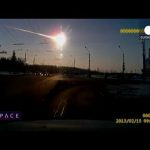
ESA Euronews: Enfrentar a ameaça dos asteroides
Qual é o perigo real das colisões de asteroides e satélites? A cidade de Chelyabinsk, na Rússia, viveu momentos dramáticos há um ano, com a explosão de um asteróide. O fenómeno deixou 15 pessoas feridas e mais de sete mil edifícios danificados. Foi surpreendente e ninguém estava à espera.
Não era um grande asteroide, com cerca de 20 metros de diâmetro, e entrou na atmosfera ofuscado pelo Sol. Há poucos dias, um asteroide com 270 metros de diâmetro passou perto da Terra.
O impacto de um objeto como este pode significar uma verdadeira catástrofe: “Algo com cerca de cem metros, por exemplo, que não é muito grande, estamos a falar de algo que cabe num campo de futebol, pode destruir por completo uma área urbana, no pior dos casos.
São esses asteróides que procuramos e estamos a estudar meios de os neutralizar”, explica Alan Harris, do Instituto de Estudos Planetários de Berlim. O trabalho já está em marcha.
No início de fevereiro, este encontro reuniu cientistas espaciais e especialistas políticos da maioria das potências espaciais do planeta, com o objetivo de criar um quadro de ação. “No ano passado, estávamos ainda numa situação em que, se um asteróide estivesse a ameaçar a terra, não teríamos um processo de reação.
-
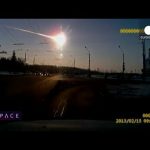
ESA Euronews: Harc az aszteroidák ellen
Valós-e veszélye annak, hogy aszteroidák és műholdak ütköznek össze az űrben?
Drámai pillanat volt, amikor egy aszteroida fölrobbant az oroszországi Cseljabinszk fölött, egy évvel ezelőtt. A robbanásban 1500 ember megsérült, és több mint 7000 épület megrongálódott.Meglepő módon senki nem látta, hogy az aszteroida közelít. Nem volt nagy, csak húsz méter széles, és úgy érkezett a légkörbe, hogy a Nap hátulról megvilágította. A világűrben sokkal nagyobb veszélyek is leselkednek ránk. Néhány nappal ezelőtt egy 270 méter széles aszteroida haladt el nem messze a Földtől. Egy ilyen tárgy sokkal nagyobb károkat okozhat.
– Egy néhány száz méter nagyságú tárgy, amely még mindig nem számít igazán nagynak, hiszen olyasmiről beszélünk, ami egy futballpályán elfér, legrosszabb esetben teljesen elpusztíthat egy lakóövezetet. Ezekre az esetekre próbálunk fölkészülni, és kitalálni, hogyan előzzük meg őket – mondja Alan Harris brit kutató.
Már tettek is lépéseket azért, hogy elhárítsák az aszteroidaveszélyt. Február elején a nagy űrkutató nemzetek tudósai és szakértői tanácskoztak, hogy akciótervet dolgozzanak ki. A csoportot az ENSZ támogatja. Miközben a tudósok azon dolgoznak, hogy fölfedezzék a Föld közelében lévő aszteroidákat, ez a csoport dönt arról, mi a teendőnk, ha komoly veszély alakul ki.
-
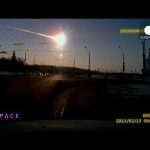
ESA Euronews: Asteroid wird Erde treffen
Es wird passieren, ob wir wollen oder nicht: Eines Tages wird ein Asteroid die Erde treffen, die Zerstörung könnte enorm sein. Was lässt sich dagegen tun? Im vergangenen Jahr erhielten wir einen kleinen Vorgeschmack, welch zerstörerische Wucht ein Asteroidentreffer auf der Erde haben kann. Über der russischen Stadt Tscheljabinsk explodierte ein solches Himmelsgeschoss. 1500 Menschen wurden verletzt, 7000 Gebäude beschädigt.
Alan Harris arbeitet am Deutschen Zentrum für Luft- und Raumfahrt in Berlin. Er erinnert sich an Tscheljabinsk: “Das war ein ziemlich heftiges Ereignis, bei dem zum Glück niemand umkam. Doch es zeigte, welche Kraft diese Dinger haben.”
Vor allem aber hat niemand den Einschlag kommen seien. Mit seinen rund 19 Metern Durchmesser war der Asteroid nicht sonderlich groß, es war praktisch unmöglich, ihn gegen die Sonne zu entdecken. Dabei gibt es tausende deutlich größere Asteroiden in Umlaufbahnen rund um die Erde, und nicht wenige von ihnen könnten zu einer Gefahr für uns werden.
Harris: “Ein Hundert-Meter-Asteroid wäre noch nicht ein mal sonderlich groß, er würde auf ein Fußballfeld passen, und doch könnte er im schlimmsten Fall eine ganze Großstadt vernichten. Das sind die Dinger, nach denen wir Ausschau halten, und wir müssen Wege finden, mit ihnen umzugehen.”
*Mensch gegen Meteor*
Um diese Wege zu finden, wurde am Raumfahrtzentrum der ESA in Darmstadt eine Expertengruppe zur Asteroidenabwehr ins Leben gerufen. An ihr sind Forscher aus den wichtigsten Raumfahrtnationen beteiligt.
-
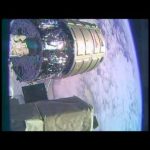
U.S. resupply ship released from ISS
Orbital Sciences’ Cygnus cargo craft was detached and released from the International Space Station Feb. 18, more than a month after delivering a ton of supplies and experiments to the Expedition 38 crew. Cygnus will be commanded by Orbital Sciences’ flight controllers to fire its engines Feb. 19, which will send it into a destructive reentry into the Earth’s atmosphere.
-

Homemade Kaleidoscope – Sick Science! #179
Find out what is happening here: http://www.stevespanglerscience.com/lab/experiments/homemade-kaleidoscope
Kaleidoscopes are an incredible tool for witnessing the effects of refracting light, but putting your own kaleidoscope together can be a pain. We’ve simplified the process using our famous Rainbow Peepholes. Witness a literal rainbow of colors when you build your own kaleidoscope with the Homemade Kaleidoscope experiment.
Want more experiments like this? Check out http://www.stevespanglerscience.com/product/naked-eggs-and-flying-potatoes
Sick Science™ is a trademark of Steve Spangler, inc.
© 2014 Steve Spangler Science all rights reserved
-
NASA Mars Curiosity Rover Report — February 14, 2014
A NASA Mars Curiosity rover team member gives an update on developments and status of the planetary exploration mission. The Mars Science Laboratory spacecraft delivered Curiosity to its target area on Mars at 1:31:45 a.m. EDT on Aug. 6, 2012 which includes the 13.8 minutes needed for confirmation of the touchdown to be radioed to Earth at the speed of light. The rover will conduct a nearly two-year prime mission to investigate whether the Gale Crater region of Mars ever offered conditions favorable for microbial life.
Curiosity carries 10 science instruments with a total mass 15 times as large as the science payloads on NASA’s Mars rovers Spirit and Opportunity. Some of the tools, such as a laser-firing instrument for checking rocks’ elemental composition from a distance, are the first of their kind on Mars. Curiosity will use a drill and scoop, which are located at the end of its robotic arm, to gather soil and powdered samples of rock interiors, then sieve and parcel out these samples into the rover’s analytical laboratory instruments.