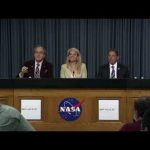
During a press briefing at The Kennedy Space Center on May 19, SpaceX President Gwynne Shotwell and NASA Commercial Crew and Cargo Program Manager Alan Lindenmoyer discussed the launch abort of the SpaceX Falcon 9 rocket and Dragon capsule on a demonstration flight to the International Space Station. Early data shows that high chamber pressure in Engine #5 caused a cutoff of all nine engines at T- 0.5 seconds. SpaceX will continue to look at the data and inspect the engine before setting a new launch date. The next possible opportunity is May 22 from Cape Canaveral Air Force Station in Florida.
Blog
-
NASA/SpaceX Hold NASA Social for Falcon 9 Launch
NASA and Space Exploration Technologies invited a group of their social media followers to a NASA Social at NASA’s Kennedy Space Center in Florida. The event was in anticipation of the launch of SpaceX’s second Commercial Orbital Transportation Services (COTS) demonstration flight. SpaceX’s Falcon 9 rocket is targeted to lift off at 4:55 a.m. EDT on May 19, in an attempt to become the first commercial company to send a spacecraft to the International Space Station.
-
Drag Racing Cups – Sick Science! #088
Read the full experiment at http://www.stevespanglerscience.com/experiment/drag-racing-coffee-cups
What do Starbucks, Dunkin Donuts, and Einstein Bros. have in common? They all use disposable cups. What do these disposable cups have to do with Sick Science? They make awesome drag racers! In the Drag Racing Cups experiment, you’ll construct a simple and fun racer that converts potential energy into kinetic energy. Now if your parents would hurry up with their caramel macchiatos…Want more experiments like this? Check out http://www.stevespanglerscience.com/product/naked-eggs-and-flying-potatoes
Sick Science™ is a trademark of Steve Spangler, inc.
© 2012 Steve Spangler Science all rights reserved
-

Sir Elton John greets the ‘Rocket Men’
This video was specially recorded during Sir Elton John’s Million Dollar Piano Show in Las Vegas, on 17 April 2012, 40 years to the day after his single Rocket Man was released around the world.
Continuing the celebration of ESA astronaut André Kuipers’ music in space, British rock legend Sir Elton sent a special message to ESA, André and the crew of the ISS on the 40th anniversary of this classic song.
Sir Elton said, “When I was a boy Dan Dare was a comic book hero, and space travel just a romantic idea, not a reality. I was 14 years old when Yuri Gagarin became the first man in space; my songwriting partner Bernie Taupin was just 11. Bernie and I did not meet until 1967, and two years after we met, Neil Armstrong became the first man to step on to the moon.
“Our generation was smitten with the glory and excitement of space travel. ‘Rocket Man’ – and indeed ‘Dan Dare’ on the Rock of the Westies album – came from those boyhood dreams of travelling beyond the stars and looking back on Earth.
“Not long after the Rocket Man single was released, my band and I were invited to the NASA headquarters in Texas and shown around by Al Worden, Apollo 15 command module pilot. It was thrilling to find that real astronauts liked our song, Rocket Man, which was about an imaginary astronaut.
“Now, 40 years later, it’s amazing to hear from the astronauts at the European Space Agency that they like the song and that it has been on the playlist on the International Space Station. I send my best wishes to ESA and all the crew, and my thanks for keeping those boyhood dreams alive.”
André said, “This song has been an inspiration to many people who are interested in space, and especially those who wanted to become astronauts, including myself. It is certainly one of the most played songs here on the ISS, and we know it will accompany more astronauts into space in the future.”
Rocket Man appeared on Elton John’s album Honky Château, released also 40 years ago next week, on 19 May 1972.
Video copyright ESA/Rocket Music
Rocket Man written by E. John and B. Taupin
Music and concert excerpts, courtesy Rocket Music
Video produced by ESA/J. Makinen -
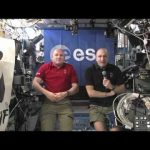
ESA astronaut André Kuipers and astronaut Don Pettit greet WWF
ESA astronaut and World Wildlife Fund (WWF) ambassador André Kuipers and his Expedition 31 crewmate, NASA astronaut Don Pettit, took part in a video call with the WWF annual meeting that took place in Rotterdam, the Netherlands on 8 May 2012.
WWF representatives worldwide heard what André and Don had to say about our planet. Their unique vantage point on the International Space Station and ESA’s Earth observation satellites help us understand how fragile our planet is.
The Dutch branch of the WWF — Wereld Natuur Fonds — is celebrating its 50th anniversary this year.
-

NASA Asian-American History Month Profile — Allen Chen
Allen Chen is a systems engineer in the Entry, Descent, and Landing (EDL) Systems and Advanced Technologies group at NASA’s Jet Propulsion Laboratory, Pasadena, Calif. (JPL). On the Mars Science Laboratory (MSL) team, he is the lead for EDL operations and Flight Dynamics, co-leads the joint science/engineering Mars atmosphere characterization team. Chen has been a member of the MSL EDL Systems Engineering Team and the MSL Flight System Systems Engineering Team since his arrival at JPL in 2002. He also worked on the Mars Exploration Rovers project, performing EDL reconstruction analysis and testing. He holds a bachelor’s and master’s degree in Aeronautics and Astronautics from the Massachusetts Institute of Technology, Cambridge, Mass. and an M.B.A. from the University of California, Los Angeles.
-
NASA’s Dawn Defines Vesta’s Role in Solar System History
During a NASA Television Science briefing, scientists discussed the findings of the first global analysis of the giant asteroid Vesta by NASA’s Dawn spacecraft. The Dawn mission has confirmed Vesta’s status as a special fossil of the early solar system and revealed a more varied, diverse world than originally thought. Dawn has shown Vesta is the only known intact, layered planetary building block with an iron core surviving from the earliest days of the solar system. It therefore more closely resembles a small planet or Earth’s moon, not another asteroid.
-
Mousetraps in Motion – Sick Science! #087
Read the full experiment at http://www.stevespanglerscience.com/experiment/mousetraps-in-motion Use the spring-loaded action of a mousetrap to make a real working car. A mousetrap is a stellar example of converting potential energy to kinetic energy. The spring of the mousetrap is held back with a bunch of potential energy and, once released, snaps forward in a burst of kinetic energy. What if you could harness the release of energy to power a car? We’ll show you how with the Mousetraps in Motion experiment.
Want more experiments like this? Check out http://www.stevespanglerscience.com/product/fire-bubbles-exploding-toothpaste-book
Sick Science™ is a trademark of Steve Spangler, inc.
© 2012 Steve Spangler Science all rights reserved
-
Dream team – ESA assistants
Dream team – ESA assistants Kerstin, Marita and Tatiana talk about the daily challenges of their jobs.
-

Wind Up Racer – Sick Science #086
Read the full experiment at http://www.stevespanglerscience.com/experiment/wind-up-racer
Finding creative, hands-on ways to demonstrate the difference between potential and kinetic energy can be difficult. Not to worry… that’s why you have us! With some simple household items and a little creativity, the Wind Up Racer will have you racing a spool across the room in no time!Want more experiments like this? Check out http://www.stevespanglerscience.com/product/naked-eggs-and-flying-potatoes
Sick Science™ is a trademark of Steve Spangler, inc.
© 2012 Steve Spangler Science all rights reserved
-
NASA Transports Space Shuttle Enterprise to New York
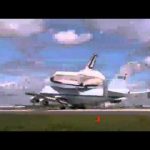
On Friday, April 27 Enterprise, the first NASA space shuttle was transported atop a 747 Shuttle Carrier Aircraft from Dulles International Airport, near Washington, D.C. to New York’s John F. Kennedy International Airport. Enterprise eventually will be displayed at New York’s Intrepid Sea, Air and Space Museum. Though Enterprise, the first space shuttle orbiter never flew in space, it was crucial to the Space Shuttle Program because its series of approach and landing tests in 1977 proved the orbiter could fly in the atmosphere and land like an airplane, except without power — like a glider. Includes footage of Enterprise on the ground at Dulles and takeoff from Dulles.
-
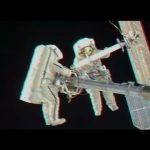
Space walks in 3D and other recent imagery from the ISS
ESA astronaut André Kuipers’ stay on the International Space Station (ISS) started on 23 December 2011 and continues until 1 July 2012. Apart from his demanding tasks as Flight Engineer for Expeditions 30/31, André is providing us with amazing imagery of Earth and of life and work on the ISS. For the first time, digital 3D still photos have been taken of cosmonauts carrying out extravehicular activities in their spacesuits. This short clip collects a selection of 3D images footage taken with the Erasmus Recording Binocular (ERB-2) and some 3D stills from a Fuji W3 camera. Stereoscopic images are a unique tool for providing viewers with a sense of presence in the constrained and dense habitat in which the astronauts live.
Stereoscopic 3D glasses are required to properly enjoy the full 3D effect of this footage.
-

Earth from Space: The future of Earth observation
Earth from Space is presented by Kelsea Brennan-Wessels from the ESA Web-TV virtual studios.
In the nineteenth edition we look at an example of what a high-resolution image could look like from the future Sentinel-2 mission — envisaged for launch next year. The mockup was constructed using 82 images from the German RapidEye satellites.
-
Washing Soda Stalactite – Cave Pillar – Sick Science! #084
Read the full experiment at http://www.stevespanglerscience.com/experiment/cave-pillar-experiment
This crazy cave pillar forms in days, not centuries. If you’ve ever ventured into a naturally formed cave, you probably saw pillars stretching from the ceiling to the floor. They’re called stalactites and they take hundreds and thousands of years to form as precipitation drips from down from the cave’s ceiling. In the Washing Soda Stalactite experiment, you’ll cut the stalactite formation process down to just a couple of days.Want more experiments like this? Check out http://www.stevespanglerscience.com/product/fire-bubbles-exploding-toothpaste-book
Sick Science™ is a trademark of Steve Spangler, inc.
© 2012 Steve Spangler Science all rights reserved
-
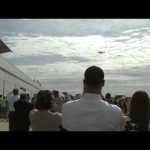
Discovery Flyovers Delight D.C. Area as Seen From NASA Headquarters
Space Shuttle Discovery, atop its Shuttle Carrier Aircraft, NASA 905, is shown from various vantage points around the National Capital region on April 17 on the final leg of its ferry flight from NASA’s Kennedy Space Center in Florida to Dulles International Airport in Virginia.
-

NASA Features FameLab Finalists
The finals of the NASA-sponsored Astrobiology FameLab showcase up-and-coming new scientists who’ve honed their skills in communicating complex scientific concepts. Held at the Georgia Tech Hotel and Conference Center in Atlanta. Nichelle Nichols, known for her portrayal of Lt. Uhura in the original “Star Trek” television series, serves as host.
-

NASA Doctor Discusses Providing Medical Care to Astronauts in Space
In an interview aired on NASA Television during the International Space Station Update hour, NASA Flight Surgeon Ed Powers discussed how flight doctors work with crew members on board the station to keep the astronauts healthy. Powers also talked about some of the difficulties encountered in diagnosing patients who are not there in person and about the impacts of space medicine to life here on earth.
-
Kool-Aid Squeeze Rocket Launcher – Sick Science! #083
Read the full experiment at http://www.stevespanglerscience.com/content/experiment/squeeze-bottle-rocket It’s easy to turn a juice bottle into a rocket launcher. How? Grab a few straws of different sizes, some modeling clay, and an empty juice bottle to make a launcher that will send the straw rocket soaring across the room. Don’t worry, you aren’t just playing. You’ll learn something about Newton’s Third Law of Motion at the same time.
Want more experiments like this? Check out http://www.stevespanglerscience.com/product/naked-eggs-and-flying-potatoes
Sick Science™ is a trademark of Steve Spangler, inc.
© 2012 Steve Spangler Science all rights reserved
-

Incredible Egg Geode – Sick Science! #082
Read the full experiment at http://www.stevespanglerscience.com/content/experiment/incredible-egg-geode Forgive the wordplay, but we love to do “eggs-periments.” Get it? We’ve made naked eggs, put eggs in a bottle, folded eggs, and we’ve even shown you how to determine whether an egg is hard-boiled or raw. We want to find something new and amazing to do with eggs, and the Incredible Egg Geode is “eggs-actly” what we are looking for.
Thanks to Jim “Figgy” Noonan for the experiment idea. Check it out here http://www.marthastewart.com/343344/crystal-egg-geodes
Want more experiments like this? Check out http://www.stevespanglerscience.com/product/naked-eggs-and-flying-potatoes
Sick Science™ is a trademark of Steve Spangler, inc.
© 2012 Steve Spangler Science all rights reserved
-
NASA Centers rumble in FIRST Robotics Regional action
The annual FIRST Robotics competition is in full swing with some 60-thousand high school students competing in regional challenges using robots they built in six weeks from a common kit of parts. NASA is the largest sponsor of the national FIRST program, supporting five regional competitions and more than 280 teams. Since January, high school FIRST Robotics teams across the country have worked tirelessly to build, program and test robots in preparation for this year’s challenge called Rebound Rumble.
-
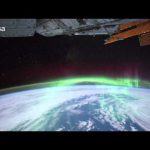
Aurora Australis from Space Station
André took this video of Aurora Australis from the European Cupola module in the Space Station. The beautiful phenomenon is caused by bursts of particles from the Sun pouring down Earth’s magnetic field into the atmosphere.
-
The Spangler Effect – April Fools Day Science! Season 01 Episode 09
On this episode of The Spangler Effect, Steve shares a few of his favorite science pranks to pull on April Fools Day! With a magnet, baby diaper, spray can and a Starbucks cup, you too can have your own fun on April 1st!
Watching on a mobile device? Check out the Water Gel episode at http://www.youtube.com/watch?v=XesjdbwbNJQ#t=2m45s
Looking for Water Gel? Check out http://www.stevespanglerscience.com/product/water-gel
Need a Neodymium Magnet? Check out http://www.stevespanglerscience.com/product/neodymium-magnet
-

Self-Driving Car Test: Steve Mahan
We announced our self-driving car project in 2010 to make driving safer, more enjoyable, and more efficient. Having safely completed over 200,000 miles of computer-led driving, we wanted to share one of our favorite moments. Here’s Steve, who joined us for a special drive on a carefully programmed route to experience being behind the wheel in a whole new way. We organized this test as a technical experiment, but we think it’s also a promising look at what autonomous technology may one day deliver if rigorous technology and safety standards can be met.
A version of this video with audio captions is available here:
http://youtu.be/peDy2st2XpQMusic: The Album Leaf – “We Need Help”
-
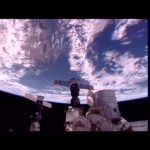
ORBITAL DEBRIS SAFELY PASSES INTERNATIONAL SPACE STATION
A small piece of Cosmos 2251 satellite debris safely passed by the International Space Station at 2:38a.m. EDT, Saturday March 24 allowing the six Expedition 30 crew members onboard the orbiting complex to exit their Soyuz spacecraft and resume normal activities.
The crew sheltered in the two Soyuz spacecraft as a precaution, the third time in station history that a crew has had to shelter in place due to the possibility of a conjunction with orbital debris and the first since June 2011. NASA’s Expedition 30 Commander Dan Burbank and Russian cosmonauts Anton Shkaplerov and Anatoly Ivanishin were in their Soyuz TMA-22 spacecraft attached to the Poisk module on the space-facing side of the Zvezda service module, while cosmonaut Oleg Kononenko, NASA’s Don Pettit and Andre Kuipers of the European Space Agency were in their Soyuz TMA-03M spacecraft on the Earth-facing side of the Zarya module.
The piece of debris was a remnant of a Feb. 10, 2009 collision between the dormant Cosmos 2251 satellite and an operational Iridium 33 communications satellite. The collision added about 2,000 trackable items to the orbital debris catalog. At the time of closest approach, the debris was moving from left to right in front of the station at an estimated overall miss distance of between 11 and 14 kilometers and a radial miss distance of 120 meters.
-
Supply Mission to Station on This Week @ NASA
The European Space Agency has successfully launched its third Automated Transfer Vehicle. The cargo ferry, named Edoardo Amaldi for the Italian physicist and spaceflight pioneer, was sent on its way to the International Space Station atop an Ariane 5 rocket from Europe’s Spaceport in Kourou, French Guiana. The ATV brings essential supplies and propellant to the ISS, as well as the ability to re-boost the station’s altitude. ATV Edoardo Amaldi follows the two highly successful supply missions carried out by ATV Jules Verne in March 2008 and ATV Johannes Kepler in February of last year. Also, members of the International Space Station’s Expedition 32 crew discuss their upcoming mission aboard the orbiting laboratory with the media, Engineers at the Marshall Space Flight Center test fire a scaled down solid rocket booster for NASA’s Space Launch System, or SLS, the 100th anniversary of the birth of a space pioneer and more!
-
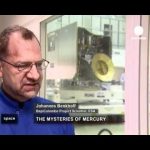
ESA Euronews: The mysteries of Mercury
Mercury has always been something of a puzzle for planetary scientists. Its close position to the Sun means it is very difficult to observe, but now a series of satellites is getting up close to this fascinating planet. The European Space Agency’s BepiColombo mission is among them, and it will offer an unprecedented level of information about the mysterious world of Mercury.
-

ESA astronaut Samantha Cristoforetti addresses Space Lab winners
YouTube Space Lab is a campaign initiated by YouTube, NASA, Space Adventures and Lenovo that challenges students around the world to design a science experiment for the International Space Station.
The winning experiments will be conducted in space on the International Space Station, making it the Universe’s largest science lesson, streamed live for the world to see via YouTube.
-
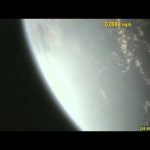
“Riding the Booster” Never Sounded Better
From launch to landing, a space shuttle’s solid rocket booster journey is captured, with sound mixed and enhanced by Skywalker Sound.
-
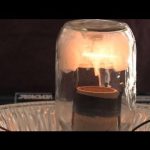
Build a Light Bulb – Sick Science! #079
Read the full experiment at http://www.stevespanglerscience.com/content/experiment/build-a-light-bulb-circuit-science When you are conducting experiments and demonstrations using electricity, you’ll use the science of circuits. Amazing things are possible with circuits including alarms, radios, and lights. In the Build a Light Bulb experiment, you’ll use household items to construct a complete circuit that results in a homemade light bulb.
Want more experiments like this? Check out http://www.stevespanglerscience.com/product/fire-bubbles-exploding-toothpaste-book
Sick Science™ is a trademark of Steve Spangler, inc.
© 2012 Steve Spangler Science all rights reserved
-
A job like no other…Micha Schmidt on his career @ ESA
Micha Schmidt is a Spacecraft Operations Manager at ESA. In this video he talks about his involvement in the Herschel project and the many phases of development that exist in all ESA projects. Micha also talks about his fascination for space as a boy and what a great experience it has been to live in various European countries whilst working for ESA.
-
How to become an astronaut
‘How do I become an astronaut?’ is a question that Frank Danesy has been asked many, many times. In this video Frank talks about the qualities needed to become an astronaut, the selection campaigns and the rigorous training involved for the lucky few who are eventually chosen.
-
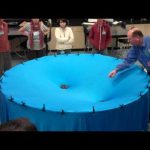
Gravity Visualized
Help Keep PTSOS Going, Click Here: https://www.gofundme.com/ptsos
Dan Burns explains his space-time warping demo at a PTSOS workshop at Los Gatos High School, on March 10, 2012. Thanks to Shannon Range from the Gravity Probe B program for creating the original demonstration which he shared with Dan in 2004.
Information on how to make your own Spacetime Simulator can be found here: https://youtu.be/2JOf1ub9US0 -
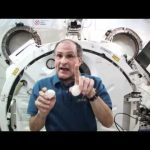
Angry Birds & Pigs Go Weightless!!!
In cooperation with NASA, Finland-based Rovio Entertainment, creator of the Angry Birds franchise, has announced its newest game, “Angry Birds Space.” Game developers have incorporated concepts of human space exploration into the new game. From the weightlessness of space to the gravity wells of nearby planets, players use physics as they explore the various levels of the game set both on planets and in microgravity. Aboard the International Space Station, Flight Engineer Don Pettit of NASA created a video using Angry Birds Space to explain how physics works in space, including demonstrating trajectories in microgravity by catapulting an Angry Bird through the space station.
-

Kara – Heavy Rain’s Dev Trailer
This is the new tech developer Quantic Dream is working with — but it’s not Quantic Dream’s new game. Never the less, this near flawless cinematic will turn many heads, so stay tuned as we will have more to come!
See all of IGN’s coverage at GDC here:
http://www.ign.com/events/gdcSubscribe to IGN’s channel for reviews, news, and all things gaming: http://www.youtube.com/subscription_center?add_user=ignentertainment
-
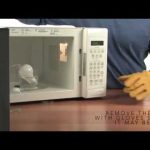
Microwave Light Bulb – Sick Science! #078
Read the full experiment at http://www.stevespanglerscience.com/experiment/microwave-lightbulb
We love to see what microwaves do to common household items. We’ve shrunk potato chip bags and turned Ivory Soap into a fluffy soap souffle. What more could we want to do? We heard that it’s possible to actually make a lightbulb light-up if you do it right. And sure enough, we figured it out.Want more experiments like this? Check out http://www.stevespanglerscience.com/product/fire-bubbles-exploding-toothpaste-book
Sick Science™ is a trademark of Steve Spangler, inc.
© 2012 Steve Spangler Science all rights reserved
-
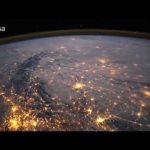
Timelapse of Western Europe seen from onboard the ISS
Western Europe in timelapse as seen from the International Space Station by ESA astronaut André Kuipers, during his long-duration mission to the ISS, PromISSe
-
We Are the Explorers
Why do we explore? Simply, it is part of who we are, something we’ve done throughout history. NASA’s new video, “We Are the Explorers,” looks at that tradition of reaching for things just beyond our grasp, and how it’s helping lay the foundation for our greatest journeys ahead.
-
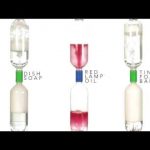
Tornado in a Bottle – Sick Science! #077
Learn more at http://www.stevespanglerscience.com/experiment/tornado-in-a-bottle How long does it take to empty a soda bottle full of water? You’ll amaze your dinner guests and explore some of the scientific properties of air and water when you learn how to empty a full bottle of water in just a few seconds!
Want more experiments like this? Check out http://www.stevespanglerscience.com/product/naked-eggs-and-flying-potatoes
Sick Science™ is a trademark of Steve Spangler, inc.
© 2012 Steve Spangler Science all rights reserved
-
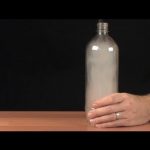
Cloud in a Bottle – Sick Science! #076
Get the supplies! http://www.stevespanglerscience.com/product/cloud-in-a-bottle
Learn more at http://www.stevespanglerscience.com/experiment/cloud-in-a-bottle-experiment Have you ever wondered how clouds form? Moist air rises in the atmosphere, cools, and water droplets form into clouds. Making your own cloud is a popular experiment in many science books, but it can be a little tricky. Sometimes the results are a little hard to see, but practice always makes perfect.
Want more experiments like this? Check out http://www.stevespanglerscience.com/product/fire-bubbles-exploding-toothpaste-book
Sick Science™ is a trademark of Steve Spangler, inc.
© 2012 Steve Spangler Science all rights reserved
-
NASA African-American History Month Profile – Darrius Lewis
Darrius Lewis is an Emergency Preparedness Officer and Continuity of Operations Program Manager at NASA Headquarters. He is responsible for overseeing the Continuity Of Operations Program at NASA Headquarters as well as the functionality of the Emergency Notification System. He is charged with strategically planning for man-made and natural disasters to minimize any impact to NASA personnel, so that NASA workers and leadership can continue to conduct the business of NASA.