An update on our Artemis I mission, test firing an Artemis rocket engine, and a resupply mission delivers to the space station … a few of the stories to tell you about – This Week at NASA!
Producer: Andre Valentine Editor: David Anderson Music: Universal Production Music
0:00 Introduction 0:14 Update on Preparations for Artemis I Moon Mission 0:59 Artemis Rocket Engine Test Series Continues 1:21 Commercial Mission Delivers Cargo to Space Station 1:58 The Next GOES Series Earth-Observing Satellite 2:37 60th Anniversary of Glenn’s Historic Flight on Friendship 7
As always, a new year brings new and exciting missions and launches for ESA. In science the world looks forward to the first image releases of the recently launched James Webb Space Telescope and the third data release for Gaia, both teaching us more about our galaxy and Universe. ESA’s new Mars rover will be launched with the ExoMars mission, and we will also see the maiden flights of Vega-C, Ariane 6 and the Artemis I flight. Astronaut Samantha Cristoforetti will return to the ISS for her second mission and a new class of astronauts will be presented to the world. After the groundwork has been laid in 2021 a new Ministerial Council Meeting will gather to look at the future of ESA, and the need for ESA and Europe to accelerate space and integrated space technology into the fabric of our lives.
★ Subscribe: http://bit.ly/ESAsubscribe and click twice on the bell button to receive our notifications.
We are Europe’s gateway to space. Our mission is to shape the development of Europe’s space capability and ensure that investment in space continues to deliver benefits to the citizens of Europe and the world. Check out https://www.esa.int/ to get up to speed on everything space related.
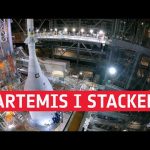
Time lapse of the stacking of the Orion spacecraft on top of the fully assembled Space Launch System (SLS) rocket at NASA’s Kennedy Space Center in Florida, on 21 October 2021, in preparation for the uncrewed Artemis I launch.
For Artemis I, the European Service Module will take the spacecraft more than 64 000 km beyond the Moon in a test flight to demonstrate its capabilities.
The European Service Module is ESA’s contribution to NASA’s Orion spacecraft that will send astronauts to the Moon and beyond. It provides electricity, water, oxygen and nitrogen as well as keeping the spacecraft at the right temperature and on course.
We are Europe’s gateway to space. Our mission is to shape the development of Europe’s space capability and ensure that investment in space continues to deliver benefits to the citizens of Europe and the world. Check out https://www.esa.int/ to get up to speed on everything space related.
The European Space Agency is playing a vital role in humankind’s return to the Moon. In a few months @NASA will launch Artemis I from the Kennedy Space Center. The uncrewed mission will carry NASA’s Orion spacecraft incorporating ESA’s European Service Module (ESM-1), built and tested by Airbus Bremen, in Germany, with the help of 10 European nations. ESM-1’s main engine and 32 thrusters will propel Orion into orbit around the Moon and return it to Earth.
As Artemis I prepares for launch, the second European Service Module (ESM-2) is about to ship to the US with ESM-3 also currently under construction. The second Artemis mission, however, has a crucial difference: it will carry four astronauts for a lunar flyby. ESM-2 will provide propulsion, power, oxygen, water and life support as well as controlling the temperature in the orbiting crew module. ESM-3 will go one step further and put the first person on the Moon for 50 years.
We are Europe’s gateway to space. Our mission is to shape the development of Europe’s space capability and ensure that investment in space continues to deliver benefits to the citizens of Europe and the world. Check out https://www.esa.int/ to get up to speed on everything space related.
Every element of NASA’s Orion spacecraft, Space Launch System rocket, and ground systems is now at Kennedy Space Center — the final stop on planet Earth before the uncrewed Artemis I mission around the Moon. These critical components are being primed for flight through final assembly, stacking, and fueling operations. The first in a series of increasingly complex missions, the Artemis I flight test will provide a foundation for human deep space exploration, and demonstrate our commitment and capability to extend human existence to the Moon and beyond.
Choose your player! NASA is holding a naming contest beginning Wednesday, June 16 for the manikin that will fly on an upcoming mission around the Moon.
As NASA gears up for the Artemis I mission around the Moon that will pave the way to send the first woman and the first person of color to the lunar surface, we have an important task for you (yes, you!). Artemis I will be an uncrewed flight test of the Space Launch System rocket and the Orion spacecraft ahead of the first flight with crew on Artemis II. We want your help to select a name for the suited manikin, or Moonikin in this case, that will fly aboard Orion to help gather data before missions with astronauts!
We have eight names to choose from, but only one can win. Every other day starting Wednesday, June 16, we will be asking you on @NASAArtemis Twitter, Facebook, and Instagram, to vote between one of two names. The winners of each bracket compete with one another until the final showdown on Monday, June 28.
The final name of the Moonikin will be announced on Tuesday, June 29!
For more information, go to: nasa.gov/namethemoonikin
Artemis 1 will be the first integrated test of NASA’s deep space exploration systems: the Orion spacecraft, Space Launch System (SLS) rocket and the ground systems at Kennedy Space Center in Cape Canaveral, Florida. The first in a series of increasingly complex missions, Artemis I will be an uncrewed flight test that will provide a foundation for human deep space exploration, and demonstrate our commitment and capability to extend human existence to the Moon and beyond.
During this flight, the spacecraft will launch on the most powerful rocket in the world and fly farther than any spacecraft built for humans has ever flown. It will travel 280,000 miles from Earth, thousands of miles beyond the Moon over the course of about a three-week mission. Orion will stay in space longer than any ship for astronauts has done without docking to a space station and return home faster and hotter than ever before.
With this first exploration mission, NASA is leading the next steps of human exploration into deep space where astronauts will build and begin testing the systems near the Moon needed for lunar surface missions and exploration to other destinations farther from Earth, including Mars.
From the @Airbus integration halls in Bremen, Germany, this replay of a live event shows a sneak peek of the two European Service Modules that will power astronauts to the Moon and back as part of @NASA’s Orion spacecraft.
Orion is NASA’s next exploration spacecraft to send astronauts farther into space than ever before, beyond the Moon to asteroids and even Mars.
ESA has contracted and is overseeing the development of the European Service Module, the part of the Orion spacecraft that provides air, electricity and propulsion. Much like a train engine pulls passenger carriages and supplies power, the European Service Module will power the Orion crew module to its destination and back to Earth.
The programme includes Andreas Hammer, Head of @Airbus Defence and Space Exploration showing the European Service Modules in production, ESA Director General Jan Wörner announcing future developments, a statement by ESA’s head of European Service Module programme Philippe Deloo, a statement by Airbus head of European Service Module programme Didier Radola, a Moon missions overview with ESA astronaut Alexander Gerst and ESA’s head of Space Transportation Nico Dettmann on how ESA is building Orion with industry.
★ Subscribe: http://bit.ly/ESAsubscribe and click twice on the bell button to receive our notifications.
We are Europe’s gateway to space. Our mission is to shape the development of Europe’s space capability and ensure that investment in space continues to deliver benefits to the citizens of Europe and the world. Check out https://www.esa.int/ to get up to speed on everything space related.
NASA is targeting the final test in the Green Run series, the hot fire, for Sat., Jan.16. The hot fire is the culmination of the Green Run test series, an eight-part test campaign that gradually brings the core stage of the Space Launch System (SLS) — the deep space rocket that will power the Artemis program’s human missions to the Moon — to life for the first time. All four of the stage’s RS-25 engines will be fired simultaneously for up to eight minutes to simulate the core stage’s performance during launch.
The next time this core stage will be fired is during the launch of Artemis I, the first integrated flight of SLS and Orion, and the first mission of the agency’s Artemis program.
2020 has been another year of progress for ESA. The launch and commissioning of Solar Orbiter heralded a new era of space science, whilst Eutelsat Konnect revolutionised telecommunications. The new Vega SSMS began a cost-effective new launch system for small satellites, deploying exciting new technologies such as PhiSat and ESAIL. ESA’s Earth Observation activities were also showcased, with the launch of Sentinel-6 and an international effort to monitor the environmental and economic impact of COVID-19. Gaia and Cheops yielded new findings about our universe; ESA astronaut Luca Parmitano returned successfully from orbit. With a lunar programme agreement signed and new steps being taken to control debris, ESA is set to begin 2021 at the forefront of space exploration.
★ Subscribe: http://bit.ly/ESAsubscribe and click twice on the bell button to receive our notifications.
We are Europe’s gateway to space. Our mission is to shape the development of Europe’s space capability and ensure that investment in space continues to deliver benefits to the citizens of Europe and the world. Check out https://www.esa.int/ to get up to speed on everything space related.
The Orion spacecraft with European Service Module will fly farther from Earth than any human-rated vehicle has ever flown before. This video gives an overview of the first mission – without astronauts – for Artemis, focussing on ESA’s European Service Module that powers the spacecraft.
The spacecraft will perform a flyby of the Moon, using lunar gravity to gain speed and propel itself 70 000 km beyond the Moon, almost half a million km from Earth – further than any human has ever travelled.
On its return journey, Orion will do another flyby of the Moon before heading back to Earth. The total trip will take around 20 days, ending with a splashdown in the Pacific Ocean without the European Service Module – it separates and burns up harmlessly in the atmosphere.
The second Artemis mission will have a similar flight plan but with astronauts. The third Artemis mission will see astronauts taken to the lunar surface.
The European Service Module is ESA’s contribution to NASA’s Orion spacecraft that will send astronauts to the Moon and beyond. It provides electricity, water, oxygen and nitrogen as well as keeping the spacecraft at the right temperature and on course.
The European Service Module has 33 thrusters, 11 km of electrical wiring, four propellant and two pressure tanks that all work together to supply propulsion and everything needed to keep astronauts alive far from Earth – there is no room for error.
★ Subscribe: http://bit.ly/ESAsubscribe and click twice on the bell button to receive our notifications.
We are Europe’s gateway to space. Our mission is to shape the development of Europe’s space capability and ensure that investment in space continues to deliver benefits to the citizens of Europe and the world. Check out https://www.esa.int/ to get up to speed on everything space related.
The European Space Agency and NASA signed a Memorandum of Understanding (MoU) to take Europe to the Moon.
This historic agreement will see ESA Member States contribute a number of essential elements to the first human outpost in lunar orbit, known as the Gateway.
It confirms ESA’s commitment to delivering at least two European Service Modules that provide electricity, water, oxygen and nitrogen to NASA’s Orion spacecraft – with more to come. ESA will also receive three flight opportunities for European astronauts to travel to and work on the Gateway.
ESA’s head of the Legal Services, Marco Ferrazzani, explains how these agreements will take us forward to the Moon.
We are Europe’s gateway to space. Our mission is to shape the development of Europe’s space capability and ensure that investment in space continues to deliver benefits to the citizens of Europe and the world. Check out https://www.esa.int/ to get up to speed on everything space related.
The Vice President introduces the Artemis team of astronauts, progress on hardware for upcoming Artemis missions, and the science priorities for our next human mission on the Moon … a few of the stories to tell you about – This Week at NASA!
NASA astronaut Kate Rubins is a member of the Artemis Team, a select group of astronauts charged with focusing on the development and training efforts for early Artemis missions.
Through the Artemis program NASA and a coalition of international partners will return to the Moon to learn how to live on other worlds for the benefit of all. With Artemis missions NASA will send the first woman and the next man to the Moon in 2024 and about once per year thereafter.
Through the efforts of humans and robots, we will explore more of the Moon than ever before; to lead a journey of discovery that benefits our planet with life changing science, to use the Moon and its resources as a technology testbed to go even farther and to learn how to establish and sustain a human presence far beyond Earth.
Learn more: www.nasa.gov/ArtemisTeam
Video Credits: Producer: Paul Wizikowski Directors: Ryan Cristelli and Paul Wizikowski Editor: Hunter Brothers
What progress have we made on returning to the Moon to build a sustainable human presence there? Tune in starting at 12:30pm ET, Wed., Dec. 9 for the eighth meeting of the National Space Council, including a news update from Vice President Pence and NASA Administrator Jim Bridenstine on our Artemis program to send the first woman and next man to the Moon by 2024. The National Space Council advises the president on America’s space policy and strategy and reviews the nation’s long-range goals for space activities.
NASA astronaut Christina Koch is a member of the Artemis Team, a select group of astronauts charged with focusing on the development and training efforts for early Artemis missions.
Through the Artemis program NASA and a coalition of international partners will return to the Moon to learn how to live on other worlds for the benefit of all. With Artemis missions NASA will send the first woman and the next man to the Moon in 2024 and about once per year thereafter.
Through the efforts of humans and robots, we will explore more of the Moon than ever before; to lead a journey of discovery that benefits our planet with life changing science, to use the Moon and its resources as a technology testbed to go even farther and to learn how to establish and sustain a human presence far beyond Earth.
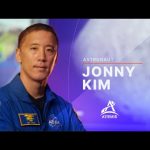
NASA astronaut Jonny Kim is a member of the Artemis Team, a select group of astronauts charged with focusing on the development and training efforts for early Artemis missions.
Through the Artemis program NASA and a coalition of international partners will return to the Moon to learn how to live on other worlds for the benefit of all. With Artemis missions NASA will send the first woman and the next man to the Moon in 2024 and about once per year thereafter.
Through the efforts of humans and robots, we will explore more of the Moon than ever before; to lead a journey of discovery that benefits our planet with life changing science, to use the Moon and its resources as a technology testbed to go even farther and to learn how to establish and sustain a human presence far beyond Earth.
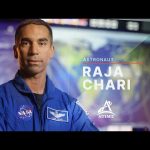
NASA astronaut Raja Chari is a member of the Artemis Team, a select group of astronauts charged with focusing on the development and training efforts for early Artemis missions.
Through the Artemis program NASA and a coalition of international partners will return to the Moon to learn how to live on other worlds for the benefit of all. With Artemis missions NASA will send the first woman and the next man to the Moon in 2024 and about once per year thereafter.
Through the efforts of humans and robots, we will explore more of the Moon than ever before; to lead a journey of discovery that benefits our planet with life changing science, to use the Moon and its resources as a technology testbed to go even farther and to learn how to establish and sustain a human presence far beyond Earth.
NASA astronaut Jessica Watkins is a member of the Artemis Team, a select group of astronauts charged with focusing on the development and training efforts for early Artemis missions.
Through the Artemis program NASA and a coalition of international partners will return to the Moon to learn how to live on other worlds for the benefit of all. With Artemis missions NASA will send the first woman and the next man to the Moon in 2024 and about once per year thereafter.
Through the efforts of humans and robots, we will explore more of the Moon than ever before; to lead a journey of discovery that benefits our planet with life changing science, to use the Moon and its resources as a technology testbed to go even farther and to learn how to establish and sustain a human presence far beyond Earth.
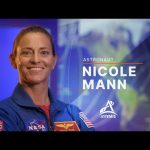
NASA astronaut Nicole Mann is a member of the Artemis Team, a select group of astronauts charged with focusing on the development and training efforts for early Artemis missions.
Through the Artemis program NASA and a coalition of international partners will return to the Moon to learn how to live on other worlds for the benefit of all. With Artemis missions NASA will send the first woman and the next man to the Moon in 2024 and about once per year thereafter.
Through the efforts of humans and robots, we will explore more of the Moon than ever before; to lead a journey of discovery that benefits our planet with life changing science, to use the Moon and its resources as a technology testbed to go even farther and to learn how to establish and sustain a human presence far beyond Earth.
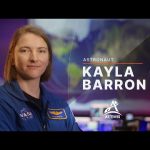
NASA astronaut Kayla Barron is a member of the Artemis Team, a select group of astronauts charged with focusing on the development and training efforts for early Artemis missions.
Through the Artemis program NASA and a coalition of international partners will return to the Moon to learn how to live on other worlds for the benefit of all. With Artemis missions NASA will send the first woman and the next man to the Moon in 2024 and about once per year thereafter.
Through the efforts of humans and robots, we will explore more of the Moon than ever before; to lead a journey of discovery that benefits our planet with life changing science, to use the Moon and its resources as a technology testbed to go even farther and to learn how to establish and sustain a human presence far beyond Earth.
NASA astronaut Jasmin Moghbeli is a member of the Artemis Team, a select group of astronauts charged with focusing on the development and training efforts for early Artemis missions.
Through the Artemis program NASA and a coalition of international partners will return to the Moon to learn how to live on other worlds for the benefit of all. With Artemis missions NASA will send the first woman and the next man to the Moon in 2024 and about once per year thereafter.
Through the efforts of humans and robots, we will explore more of the Moon than ever before; to lead a journey of discovery that benefits our planet with life changing science, to use the Moon and its resources as a technology testbed to go even farther and to learn how to establish and sustain a human presence far beyond Earth.
NASA astronaut Victor Glover is a member of the Artemis Team, a select group of astronauts charged with focusing on the development and training efforts for early Artemis missions.
Through the Artemis program NASA and a coalition of international partners will return to the Moon to learn how to live on other worlds for the benefit of all. With Artemis missions NASA will send the first woman and the next man to the Moon in 2024 and about once per year thereafter.
Through the efforts of humans and robots, we will explore more of the Moon than ever before; to lead a journey of discovery that benefits our planet with life changing science, to use the Moon and its resources as a technology testbed to go even farther and to learn how to establish and sustain a human presence far beyond Earth.
NASA astronaut Stephanie Wilson is a member of the Artemis Team, a select group of astronauts charged with focusing on the development and training efforts for early Artemis missions.
Through the Artemis program NASA and a coalition of international partners will return to the Moon to learn how to live on other worlds for the benefit of all. With Artemis missions NASA will send the first woman and the next man to the Moon in 2024 and about once per year thereafter.
Through the efforts of humans and robots, we will explore more of the Moon than ever before; to lead a journey of discovery that benefits our planet with life changing science, to use the Moon and its resources as a technology testbed to go even farther and to learn how to establish and sustain a human presence far beyond Earth.
At NASA, we have always answered the innate call to explore and our achievements have changed the course of history. Now, we’re returning to the Moon under the Artemis program to learn to live and work on another world for the benefit of humanity.
NASA has selected an initial team of astronauts – the Artemis Team – to help pave the way for our next human missions on and around the Moon. The Artemis program includes sending the first woman and next man to walk on the lunar surface. Let’s meet the team!
NASA astronaut Anne McClain is a member of the Artemis Team, a select group of astronauts charged with focusing on the development and training efforts for early Artemis missions.
Through the Artemis program NASA and a coalition of international partners will return to the Moon to learn how to live on other worlds for the benefit of all. With Artemis missions NASA will send the first woman and the next man to the Moon in 2024 and about once per year thereafter.
Through the efforts of humans and robots, we will explore more of the Moon than ever before; to lead a journey of discovery that benefits our planet with life changing science, to use the Moon and its resources as a technology testbed to go even farther and to learn how to establish and sustain a human presence far beyond Earth.
Making ready for the first Artemis mission around the Moon and back, the space station is getting a new doorway to space, and how to know when and where you can look up to spot the station … a few of the stories to tell you about – This Week at NASA!
An update to plans for Artemis, the next space station crew trains for its mission, and collaboration in the interest of space … a few of the stories to tell you about – This Week at NASA!
NASA completed a full-scale booster test for NASA’s Space Launch System rocket in Promontory, Utah, on Sept. 2.
The full-scale booster firing was conducted with new materials and processes that may be used for NASA’s Space Launch System (SLS) rocket boosters. NASA and Northrop Grumman, the SLS boosters lead contractor, will use data from the test to evaluate the motor’s performance using potential new materials and processes for Artemis missions beyond the initial Moon landing in 2024.
The SLS boosters are the largest, most powerful boosters ever built for flight. The two boosters on the rocket provide more than 75% of the thrust needed to launch NASA’s future deep space missions through NASA’s Artemis lunar program. Northrop Grumman is the lead contractor for the SLS boosters.
For a little over two minutes — the same amount of time that the boosters power the SLS rocket during liftoff and flight for each Artemis mission — the five-segment flight support booster fired in the Utah desert, producing more than 3 million pounds of thrust.
NASA and Northrop Grumman have previously completed three development motor tests and two qualification motor tests. Today’s test, called Flight Support Booster-1 (FSB-1), builds on prior tests with the introduction of propellant ingredients from new suppliers for boosters on SLS rockets to support flights after Artemis III.
The Artemis programme is bringing humans back to the Moon. It depends heavily on NASA’s Orion spacecraft that consists of a crew module and the European Service Module, which will provide propulsion, life support, environmental control and electrical power. Main contractor Airbus has just been green-lighted by ESA to develop a third European Service Module.
We are Europe’s gateway to space. Our mission is to shape the development of Europe’s space capability and ensure that investment in space continues to deliver benefits to the citizens of Europe and the world. Check out http://www.esa.int/ESA to get up to speed on everything space related.
NASA has selected three American companies – Blue Origin, Dynetics and SpaceX – to design and develop human landing systems for the Artemis program. With these awards, NASA is on track to land the next astronauts on the lunar surface by 2024, and establish sustainable human exploration of the Moon by the end of the decade.
Our Artemis program will return U.S. astronauts to the surface of the Moon, a goal announced by Vice President Mike Pence on March 26, 2019. Take a look at all we’ve accomplished since then, from testing our Orion spacecraft and building our Space Launch System rocket to graduating a new Artemis Generation class of astronauts and creating partnerships with private industry.
A record-setting astronaut returns safely to Earth, practicing for the first launch of Artemis, and honoring a member of a legendary group of aviators … a few of the stories to tell you about – This Week at NASA!
This video is available for download from NASA’s Image and Video Library: https://images.nasa.gov/details-NHQ_2020_0207_A%20Safe%20Return%20to%20Earth%20for%20a%20Record-Setting%20Astronaut%20on%20This%20Week%20@NASA%20%E2%80%93%20February%207,%202020
The first flight of the Artemis programme, which will see humans return to the Moon, is scheduled to begin soon. The lunar spacecraft consists of NASA’s Orion crew module and the European Service Module, or ESM. Developed by ESA and building on technology from its Automated Transfer Vehicle (ATV), the ESM will provide propulsion, life support, environmental control and electrical power to Orion. The Artemis 1 spacecraft modules are undergoing thermal vacuum and electromagnetic interference tests in the world’s largest space simulation vacuum chamber at the Glenn Research Centre’s Plum Brook Station in Sandusky, Ohio, USA.
We are Europe’s gateway to space. Our mission is to shape the development of Europe’s space capability and ensure that investment in space continues to deliver benefits to the citizens of Europe and the world. Check out http://www.esa.int/ESA to get up to speed on everything space related.
The first class of astronauts in the Artemis Generation have graduated after two years of astronaut training. These 13 men and women from both the U.S. and Canada are now ready to travel to the International Space Station, the Moon and beyond.
The Helmet was created by the talented folks at NASA’s Ames Research Center. You can download it and other models from NASA’s 3D Model page: https://nasa3d.arc.nasa.gov/models
Our little Spiders are here to represent. This is the 50th Anniversary of Apollo, and Apollo 9 had the first Lunar Module to be deployed in space; and its name was “Spider”: https://images.nasa.gov/details-as09-21-3183.html
At NASA Headquarters on Oct. 15, 2019, Administrator Jim Bridenstine introduced the Exploration Extravehicular Mobility Unit (xEMU) and Orion Crew Survival System suit which will be will be worn by first woman and next man as they explore the Moon as part of the #Artemis program.
Space travel is hard and unforgiving, but we have never been more ready to meet the unknown.
Team members from NASA’s #Artemis program share the risks and rewards of this next era of exploration. Artemis will push the boundaries of human exploration and send the first woman and next man to the Moon by 2024, preparing for missions to Mars and beyond.
Our Artemis program will return humans to the Moon by 2024. Artemis I, the first Artemis mission, will test all of the human rated systems in deep space — including the Orion spacecraft and Space Launch System rocket. This is its 26 day journey… in 30 seconds.
NASA astronaut Serena M. Auñón-Chancellor answers the question ‘What is Artemis?’ Comment on this video using #AskNASA with your questions for upcoming episodes!
Dr. Auñón-Chancellor reveals more about the program to land American astronauts, including the first woman and the next man, on the Moon by 2024. She also shares her experience in long-duration spaceflight aboard the International Space Station on the Expedition 56/57 missions.