Five cool physics tricks, but how do they work?
Explanations: http://youtu.be/jIMihpDmBpY
Check out Audible.com: http://bit.ly/AudibleVe
Leave your ideas in the comments below or subscribe for the answers next week.
Graffiti Research Lab first introduced us to the awesome throwie idea, and we loved it. Ever since, we’ve been playing around with the idea of using light-emitting diodes (LED) and throwies as a great hands-on method to teaching science. You can do it, too, and we’ll show you how!
Smartphones are used more frequently than for watching videos than ever before, but sometimes you just want a bigger viewing area. For those strapped for cash or in the mood to do something creative, you can construct your own Homemade Projector. All the project takes is a cardboard box, a smart phone, and a few basic tools. The result is a real, working projector that you’ve made with your own hands!
We’ve found an awesome new science activity that uses Cartesian divers. No, it’s not Hook or Squidy, although they are pretty awesome, too. We’re talking about the Five Divers experiment. This project features, you guessed it, five individual Cartesian divers, but they’re all in the same bottle. Give the bottle a squeeze and watch as more divers sink as the pressure increases. Try it for yourself!
Notebooks are a necessity in every science setting. Graphs, observations, procedures… all of science falls by the wayside without a way of recording the information. Here’s a fun fact: two notebooks are even better than one! When you intertwine two notebooks, page by page, they become Inseparable Books! Check out this hands-on activity and see if you can overpower the friction between the books!
Photographic paper has long been a popular warm weather activity for kids and adults, but did you know that you can use fabric, too? With Sun Sensitive Fabric, just lay objects on the UV reactive cloth and expose it to the sun’s rays. After ten minutes, rinse the fabric with water and lock the images in place. You even have multiple colors to choose from! Try making images from red, green, or even yellow fabric. Get out in the sun and enjoy Sun Sensitive Fabric!
Just imagine if the solution to an oil spill was this simple: Sprinkle a small amount of a non-toxic powder onto the layer of oil and in seconds the powder bonds to the oil, forming a sponge-like material that can be easily removed from the surface of the water. It’s more than just a dream… a new form of superabsorbent polymer technology is changing the way environmental scientists approach oil spills and waste management problems. The results are amazing!
It’s a popular topping at your local frozen yogurt store… popping boba balls. But how to do make them? Our science guy, Steve Spangler, introduces us to a kind of food science that is sweeping trendy restaurants throughout the country.
Steve Spangler is a celebrity teacher, science toy designer, speaker, author and an Emmy award-winning television personality. Spangler is probably best known for his Mentos and Diet Coke geyser experiment that went viral in. Spangler is the founder of www.SteveSpanglerScience.com, a Denver-based company specializing in the creation of science toys, classroom science demonstrations, teacher resources and home for Spangler’s popular science experiment archive and video collection. Spangler is a frequent guest on the Ellen DeGeneres Show and Denver 9 News where he takes classroom science experiments to the extreme. For teachers, parents or DIY Science ideas – check out other sources of learning:
Do you think you can successfully perform the Steve Spangler Science inertia challenge? Balance a yellow ring on the mouth of an empty 1 or 2 liter bottle and place a hex nut or other heavy object on top of the ring. When the yellow ring is removed, the hex nut will drop straight into the bottle. It might take a little bit of practice, but you’ll get it. Inertia rings are a perfect tool for introducing students to physics, motion, and inertia.
If you’ve ever needed to clean a coin like a nickel or a dime, you might have used vinegar. That’s a perfect combination, unless you forget to dry the vinegar off of the coin! With the Colorful Coins activity, you’ll see how there is more to a shiny nickel or dime that initially meets the eyes.
You may have seen your favorite circus performers or magicians perform the classic Bed of Nails Trick… but what is the secret? Using a smaller version of the bed and a clear balloon, you can see the science behind the trick.
When you swing a bucket of water over your head, you probably expect a big, wet rush of water to soak you as the bucket goes upside down. However, if you were swinging the bucket fast enough, nothing happens. What in the world?!? Well, we have a pretty incredible physics demonstration to help you understand just why you remain dry. It’s called the Centripetal Force Board, and it will help you experience the physics and forces at play when three plastic cups of water leave you high, dry, and with new hands-on science topics in mind.
One balloon is blown up inside of another when you use a magnifying glass to focus light onto their surfaces. You expect the balloons to pop, but only the balloon on the inside bursts. What’s going on here? The Mystery Balloon Pop is a tremendous lesson in the power of the sun’s rays and the absorption of light and heat. Did we mention you’re popping balloons for science? Get started!
It’s the ultimate prank using the simplest of props… a plastic soda bottle filled with water. Even though the words “DO NOT OPEN” are printed on the bottle, people just can’t resist the temptation. Watch out, the fun is just beginning!
Water and bleach: historically, this pair go together pretty well, namely in the world of cleanliness. Bleach is a remarkably caustic base that, when diluted with water, can clean stains from whites and linoleum. However, apart from their similarly clear appearance, water and bleach are very dissimilar. Bleach is very alkaline, but water is a neutral pH. Chemically, that is saying a lot. But what does that have to do with vivid colors?
Plug the drain, fill the sink with water, and take the plunge with Steve Spangler’s floating science challenge. We all know that certain things float in water while other things sink, but why? Do all heavy things sink? Why does a penny sink and an aircraft carrier float? Think you know the answers? Well, get ready for a few amazing surprises!
There’s something very important about oil that you need to know: oil doesn’t mix with water! That’s why oil spills in the ocean float on the surface and why throwing water on a grease fire is just going to make the fire worse. Now that you recognize that oil and water just don’t mix, let’s have some fun with them.
Carbon dioxide is a gas that we interact with every day. For instance, CO2 enables plants to perform photosynthesis, you exhale CO2 when you breathe, and CO2 can extinguish fire. You probably knew all those facts, but did you know that you can get really science-y and extremely creative when putting out flames with CO2? It’s as simple as pouring the gas onto fire. Pouring? You better believe it!
With freezing cold temperatures crossing the nation, The Spangler Effect takes a look at the phenomenon of instant freezing water and the dangers of leaving unopened soda bottles out in the cold.
Did you know that the majority of burps are simply caused by swallowed air? It’s true! Burping is a natural human phenomenon, but it’s also possible for a bottle to burp. Say what?! Believe it… bottles can belch just like a human. All it takes is a bit of science know-how, especially when it comes to the properties of air and water.
Table tricks are all the rage when it comes to post-dinner “oohs” and “ash.” That’s why you need to keep the hits coming! For instance, give the Balancing Glass Trick a try. All you need are some knives, bottles, and a drinking glass. Before you know it, you’ll be wowing your audience with a glass that seems to defy gravity and the laws of physics.
Slime is a staple of Halloween, chemistry, and science, in general. What could be better than stretching a glob of goo between your hands or letting it run between your fingers? Well, if you’re like us, you want to be able to eat it. With this Edible Slime recipe, that’s exactly what you can do. What are you waiting for? Mix up a batch of your own.
Steve Spangler is a celebrity teacher, science toy designer, speaker, author and an Emmy award-winning television personality. Spangler is probably best known for his Mentos and Diet Coke geyser experiment that went viral in. Spangler is the founder of www.SteveSpanglerScience.com, a Denver-based company specializing in the creation of science toys, classroom science demonstrations, teacher resources and home for Spangler’s popular science experiment archive and video collection. Spangler is a frequent guest on the Ellen DeGeneres Show and Denver 9 News where he takes classroom science experiments to the extreme. For teachers, parents or DIY Science ideas – check out other sources of learning:
Blowing up balloons can be quite the task. You’ll spend a ton of time huffing and puffing while blowing your breath into the rubbery orb. Don’t waste all of that time and energy making yourself light-headed! Try dropping a piece of dry ice into a balloon instead, and watch what happens.
Everyone knows that water can’t flow uphill. Not so fast… When a small amount of Polyox (polyethylene oxide) is mixed with water, it dissolves, forming a thick, slippery, gooey, mucous-like gel. Oh, the visual imagery! When the gel is poured back and forth between two beakers, the gel mysteriously siphons from the higher held beaker to the lower one. Maybe water can flow uphill. You have to play with the stuff to believe it.
It’s a demonstration that almost has to be seen in person to believe. Otherwise, you’re likely to say, “It’s fake… there’s no way that could happen!” As you’re watching the video, please remember that there is absolutely no trick photography. When disbelievers see the demonstration performed, the reaction is nothing short of astonishing. Based on our past experience, we know that color mixing is not a reversible process. Mix red and blue and you make purple. Separating the colors back into their original form is not only tricky but incomprehensible for many of us. Watch the video… you’ll see why we call it a “Twist in Time.”
As a penny balances precariously on the hook of a wire hanger, you might think any sort of movement would send the penny flying. With a bit of physics know-how, you can spin the entire hanger around in a circle without losing the 1¢ coin. When it comes down to it, you just need to thank Sir Isaac Newton.
The Energy Stick makes quite the “buzz” when you’re using it. To the untrained eye, it appears to be a plastic tube with a jumble of wires inside and two silver bands at each end. Well, those silver bands are actually electrodes. All the wires on the inside? They’re a solid state sensing circuit, tone generator, sound transducer, battery power supply, and LED lights. The perfect use for the Energy Stick is as a simple, yet fun, tool for learning about continuity and circuits. So… how do you turn it on?
Do square bubbles really exist? That’s the question of the day and the answer is yes… if you know the science secret. Square bubbles are easy to make and serve as a great learning tool as students explore the concepts of soap films and surface tension. Get ready to amaze your friends.
Have you ever seen a blue flame? What about green or purple? When you’re expecting a regular flame, these colorful changes can be an incredible surprise! What you may not know is these spectacular colors result from the presence of specific metals. We’re going to show you a couple of household materials that contain metals that are easily identifiable during a Flame Test!
We’ve been performing the Mentos Soda Geyser here at Steve Spangler Science for years. We’ve launched so many geysers, in fact, that we created a tool to help streamline the process of creating the eruption. While the Geyser Tube is, hands-down, the best way to create a soda geyser that can be 30 feet tall, you might not be able to get your hands on one right away. So we’re going to teach you how to create a Homemade Geyser Tube with stuff you have at home.
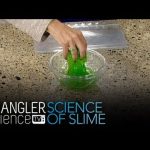
Our science guy, Steve Spangler, is an expert at making science fun, but you get an extra dose of fun when the science is ooey, gooey and slimy. Steve is with Kim today to uncover the real science behind making the perfect batch of slime.
Steve Spangler is a celebrity teacher, science toy designer, speaker, author and an Emmy award-winning television personality. Spangler is probably best known for his Mentos and Diet Coke geyser experiment that went viral in. Spangler is the founder of www.SteveSpanglerScience.com, a Denver-based company specializing in the creation of science toys, classroom science demonstrations, teacher resources and home for Spangler’s popular science experiment archive and video collection. Spangler is a frequent guest on the Ellen DeGeneres Show and Denver 9 News where he takes classroom science experiments to the extreme. For teachers, parents or DIY Science ideas – check out other sources of learning:
Bubbles usually only come as individual spheres of soap and water. Sometimes, if you’re lucky, you can get a whole bunch of bubbles in one cluster… but it always seems random. Luckily, we’ve found a spectacular way to create entires snakes made of bubbles and teach you how to make them in all the colors of the rainbow!