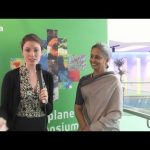
During the Living Planet Symposium 2013 in Edinburgh, UK, Shubha Sathyendranath, Science Leader of the Ocean Colour CCI project, joined us to discuss ocean colour and the Climate Change Initiative.
Tag: earth
-
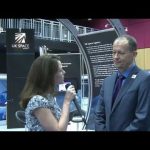
Earth from Space: ESA and the UK Space Agency
Discover more about our planet with the Earth from Space video programme. During the Living Planet Symposium 2013 in Edinburgh, UK, David Parker, Chief Executive of the UK Space Agency, joined us to discuss the collaborative relationship with ESA.
(This replaces a previously published version – sound has been corrected)
-
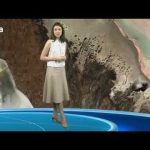
Earth from Space: Salty Turkey
Earth from Space is presented by Kelsea Brennan-Wessels from the ESA Web-TV virtual studios. In the seventy-fifth edition, we explore Lake Tuz on the Anatolian peninsula.
Read more on the ESA Portal:
http://www.esa.int/Our_Activities/Observing_the_Earth/Earth_from_Space_Salty_Turkey -
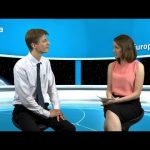
Earth from Space: Special edition
Discover more about our planet with the Earth from Space video programme. This special edition is dedicated to the International Charter Space and Major Disasters. Charter Secretary Jens Danzeglocke, from the DLR German Aerospace Center, joins the show to tell us more.
-
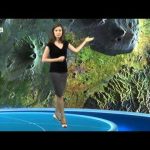
Earth from Space: Explosive land
Earth from Space is presented by Kelsea Brennan-Wessels from the ESA Web-TV virtual studios. The Virunga Mountains that stretch across Rwanda’s northern border with Uganda and east into the Democratic Republic of the Congo are featured in the seventy-third edition.
See also http://www.esa.int/Our_Activities/Observing_the_Earth/Earth_from_Space_Explosive_land to download the image.
-
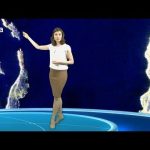
Earth from Space: Crete
Earth from Space is presented by Kelsea Brennan-Wessels from the ESA Web-TV virtual studios.
Greece’s largest and most populous island is featured in the sixty-seventh edition.See also the following link to download the image:
http://www.esa.int/Our_Activities/Observing_the_Earth/Earth_from_Space_Crete -
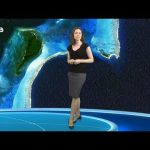
Earth from Space: Great Blue Hole
Earth from Space is presented by Kelsea Brennan-Wessels from the ESA Web-TV virtual studios.
In the sixty-third edition, we look at an underwater sinkhole in the Belize Barrier Reef.Use the following link to view and download the full size image:
http://www.esa.int/Our_Activities/Observing_the_Earth/Earth_from_Space_Great_Blue_Hole -
NASA Celebrates Earth Month 2013: NASA Science Eyes
NASA’s fleet of science satellites and research aircraft are at work around the world 24/7 helping scientists discover just how our living planet really works. Take a look at some of the insights and don’t forget to celebrate Earth Day on April 22!
-

NASA Celebrates Earth Month 2013: The View from Orbit
Take a look at the beauty and wonder of our home planet as seen from space by astronauts on the International Space Station. And don’t forget to celebrate Earth Day on April 22!
-

NASA Long-Distance Google+ Hangout to Connect with Space Station
In a first for the agency, NASA hosted a Google+ Hangout live with the International Space Station on Feb. 22, 2013 from 10:30 a.m EST to 11:30 a.m. EST. Google+ Hangouts allow people to chat face-to-face while thousands more can tune in to watch the conversation live on Google+ or YouTube. This unique opportunity connected you, our fans, with astronauts living and working on the orbiting laboratory 240 miles above the Earth.
During the event, several video questions were selected and answered by astronauts on the space station and on the ground. Additionally, NASA asked real-time questions submitted by our followers on Google+, Twitter, and Facebook. During the hangout, astronauts Kevin Ford, Chris Hadfield and Tom Marshburn will answer questions and provide insights about life aboard the station. Station crews conduct a variety of science experiments and perform station maintenance during their six-month stay on the outpost. Their life aboard the station in near-weightlessness requires unique approaches to everyday activities such as eating, sleeping and exercising.
-
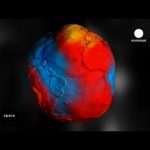
ESA Euronews: Gravity’s grip on Earth
Gravity is one of the fundamental forces of nature, its invisible grip governing our planet – from the rocks inside to the seas on the surface.
In this edition of Space, we begin our adventure in a massive cave in northern Italy, a space beneath the surface of the Earth that is so big it has an effect on the local gravity field. If you parked a car weighing one tonne above this cave, it would weigh five grammes less than elsewhere.
However, getting a grip on gravity on a global scale can only be done from space, and that’s something ESA’s GOCE satellite mission has been doing since 2009. One of the ultimate goals of GOCE is to improve our knowledge of the geoid, a kind of ‘gravity map’ of the planet, that is essential for oceanographers, surveyors, engineers and Earth-science researchers.
Also tracking invaluable information about the Earth’s gravity field is the GRACE mission. While this pair of satellites don’t have the high precision of other missions, they offer something unique: a monthly survey of the gravity field. This US-German mission has been tracking the loss of ice mass over Greenland for the past decade, offering useful evidence for those studying climate change.
-
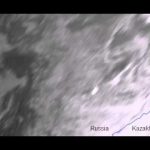
Satellite sees Russian meteor explosion from space
The meteor that exploded over the Urals of central Russia was seen by Eumetsat’s Meteosat-9, at the edge of the satellite view. Hundreds of people were reportedly injured as the meteor’s massive sonic boom caused widespread damage.
Credit: Eumetsat
-
ESA – Space to Relax / Earth & Mars: 2 Planets, 1 Blueprint
Watch landscapes easily blend from one world to the other in this gallery of Earth and Mars images taken from space.
Images: ESA/DLR/FU Berlin
Music: Crystals licensed by Ambient Music Garden. -
Earth from Space: Special edition
Discover more about our planet with the Earth from Space video programme. In this special edition, Andrew Shepherd from the University of Leeds and Erik Ivins from NASA’s Jet Propulsion Laboratory join the show to discuss our planet’s polar ice sheets.
Their new research shows that melting of the Antarctic and Greenland ice sheets has contributed 11.1 millimetres to global sea levels since 1992.
For more information, see article Clearest evidence yet of polar ice losses at http://www.esa.int/esaEO/SEMFN0EQZ9H_index_0.html
-
Meet ESA, the space agency for Europe
You, together with your 500 million fellow citizens from ESA’s 20* European member nations, are the collective owners of one of the world’s leading space agencies.
The European Space Agency is an intergovernmental organisation, a cooperative coming together of its Member States in their national interest and common good.
This new video offers a quick introduction: Europe, meet ESA.
(*As of February 2015, 22 Member States)
-
Earth from Space: Gulf of Guinea
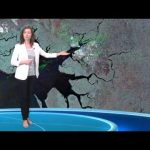
Earth from Space is presented by Kelsea Brennan-Wessels from the ESA Web-TV virtual studios.
In the thirty-fifth edition, we explore West Africa, the Gulf of Guinea and the Cameroon Volcanic Line. -
ESA astronaut André Kuipers’ tour of the International Space Station
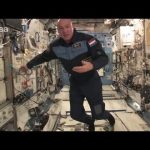
ESA astronaut Andre Kuipers invites you to follow a guided tour of the complete International Space Station. Andre himself is the tour guide during this unique visit to the Station.
In the space of one hour Andre shows every module of the International Space Station and explains the ins and outs of living in the largest laboratory in space. This video gives a wonderful glimpse of how life is for an astronaut living in the Station. From science and maintenance to operating robotic arms and finding lost equipment, Andre takes you from the Japanese research module via the Station’s cellar and ‘garden’ to the Russian segment, ending his tour with breath-taking views of Earth from the European-built Cupola observation module.
This video was recorded during the end of ESA’s PromISSe mission. Andre spent a total of 193 days in space before returning to Earth on 1 July 2012.
-
Ariane 5 performs 50th successful launch in a row
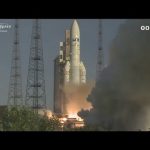
Thursday 2 August 2012 marked the 50th successful Ariane flight in a row: an Ariane 5 was launched from Europe’s Spaceport in French Guiana to perform a dual deployment of two telecommunications satellites, Intelsat 20 and Hylas-2, into their planned transfer orbits.
Lift off of flight VA208 took place at 22:54 CEST; 17:54 French Guiana time. This was Ariane 5’s fourth launch of 2012, continuing a line of launch successes unbroken since 2003.
-

Kuipers landing highlights
On 1 July 2012, ESA astronaut André Kuipers, NASA astronaut Don Pettit and Russian Cosmonaut Oleg Kononenko returned to Earth in their Soyuz capsule. It marks the end of PromISSe, the fourth ESA long-duration mission aboard the International Space Station.
-
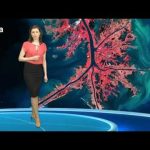
Earth from Space: Mississippi River Delta
Earth from Space is presented by Kelsea Brennan-Wessels from the ESA Web-TV virtual studios.
In the twenty-fourth edition we look at the Mississippi River Delta, where the largest river in the United States empties into the Gulf of Mexico. -

Earth from Space: The future of Earth observation
Earth from Space is presented by Kelsea Brennan-Wessels from the ESA Web-TV virtual studios.
In the nineteenth edition we look at an example of what a high-resolution image could look like from the future Sentinel-2 mission — envisaged for launch next year. The mockup was constructed using 82 images from the German RapidEye satellites.
-
ESA Euronews: Klein aber fein
Sie haben die Größe einer Waschmaschine, doch sie beschaffen wertvolle Informationen bei der Beobachtung der Erde und der Sonne. Die Rede ist von Mikrosatelliten mit dem Namen Proba.
-
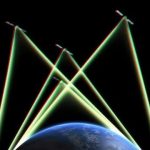
Galileo — Europe leads the way… in 3D!
A 3D presentation of the Galileo satellite navigation system, a joint development by the European Union and European Space Agency. This constellation of satellites will allow users to pinpoint their location anywhere on Earth — their launches commencing on 20 October 2011.
Use red/blue 3D glasses to experience the full 3D experience of this clip.
-
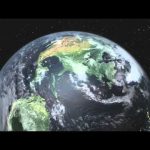
NASA Season’s Greetings 2010
NASA Television’s 2010 Season’s Greetings ID takes us on a journey through some of Hubble’s most beautiful images and ends with a view of a peaceful Earth through the cupola of the International Space Station. This piece was created by Mark R. Hailey, NASA Television’s Art Director with piano accompaniment by Michael Chao.
-
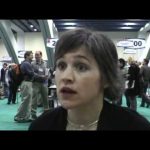
NASA Science on the Road: Oceans, Carbon, and Climate
The annual gathering of Earth and space scientists in San Francisco at the American Geophysical Union meeting draws thousands of researchers from around the world, including many involved with NASA research. Galen McKinley of the University of Wisconsin-Madison talks about her work with carbon in the global oceans and the Great Lakes.
-

ESA Space Scientist Detlef Koschny explains why he originally built Rosetta in LEGO®
Space missions are complicated pieces of orbital choreography. When planning a mission, spacecraft engineers must calculate how to point the solar panels towards the Sun, the main antenna towards Earth and the instruments towards the target. ESA Space Scientist Detlef Koschny build a LEGO model of Rosetta mission in order to visualise these precise orientations.
Copyright © Lightcurve Films/Maarten Roos, ESA, DLR, Europlanet, LEGO
-
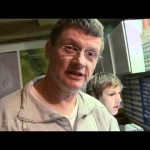
ESA Space Scientist Detlef Koschny demonstrates the prototype LEGO® Philae lander
Built using LEGO Mindstorms, the Philae lander model can be controlled using a home computer. It can rotate and move the drill up and down to simulate the behaviour of the real lander. As part of ESA’s Rosetta space mission, Philae will land on comet Churyumov-Gerasimenko in November 2014 to study its composition.
Copyright © Lightcurve Films/Maarten Roos, ESA, DLR, Europlanet, LEGO
-
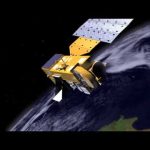
“Avatar” Director in NASA Earth Science Exploration PSAs
James Cameron, director of “Avatar,” talks about many of the contributions that NASA’s Earth science program has made in regards to environmental awareness and exploration of our home planet. “A Planet in Peril” is one of three public service announcements featuring “Avatar” film imagery and computer animations and data from NASA’s fleet of Earth-observing satellites. NASA has 14 science satellites in orbit making cutting-edge global observations of the entire global system including the atmosphere, oceans, land surface, snow and ice.
-

Ariane 30th birthday
On 24 December 1979, Ariane made its first flight from French Guiana, marking the beginning of 30 years of success and giving Europe a guaranteed independent access to space. With Ariane, ESA could develop its own programmes in many different domains: telecommunications, Earth observation, science and exploration. Europe was the pioneer in the civil launch space market, with the creation of Arianespace, the world-leading space transportation company.
-

Our Moon: Earth’s only natural satellite
The Moon has fascinated mankind throughout the ages. Discover how our Moon was formed, probably by a collision with a huge object when Earth was very young.
-
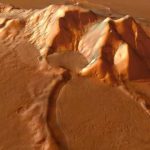
ESA / Mars 3D
3D visualization of the Mars surface based on Mars-Express HRSC data and Mars Observer Camera and Mars Orbiter Laser Altimeter data.
3D-Visualisierung des Mars von 3D RealityMaps.
-

Space for Europe
Space touches us all on Earth – it is used for protecting our environment, for improving our everyday lives, for safety and security, and for stimulating our need for knowledge. Space is a key asset for Europe to face global challenges, for boosting our economic growth, for building our future.
-
Space: for protecting our environment
Space touches us all on Earth – it is used for protecting our environment, for improving our everyday lives, for safety and security, and for stimulating our need for knowledge. Space is a key asset for Europe to face global challenges, for boosting our economic growth, for building our future.