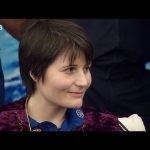
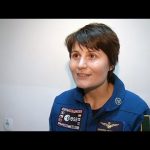
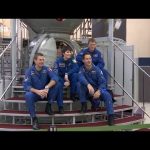
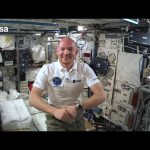
ESA astronaut Samantha Cristoforetti, NASA astronaut Terry Virts and Russian commander Anton Shkaplerov landed in the Kazakh steppe after a three-hour ride in their Soyuz spacecraft 11 June 2015.
Shortly after landing the crew were welcomed back to Earth in a traditional Kazakh ceremony held for all astronauts who return from space on a Soyuz spacecraft.
Intervista con l’astronauta dell’ESA Samantha Cristoforetti, nelle prime
ore dell’11 giugno, poco dopo l’atterraggio nelle steppe del Kazakistan.
Samantha, insieme al comandante russo Anton Shkaplerov ed all’astronauta della NASA Terry Virts, è atterrata alle 13:44 GMT (15:44 CEST), con la stessa navicella Soyuz TMA-15M che il 23 novembre li aveva portati sulla Stazione Spaziale Internazionale.
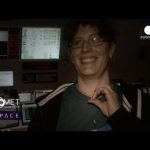
Interview with ESA astronaut Samantha Cristoforetti shortly after returning from a six and a half month stay on the International Space Station.
Samantha, together with Russian commander Anton Shkaplerov and NASA astronaut Terry Virts, landed with their the Soyuz TMA-15M spacecraft in the Kazakh steppe at 15:44 CEST (13:44 GMT) on 11 June 2015.
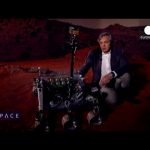
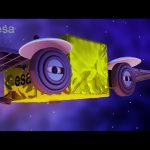
The ExoMars 2016 mission will try to answer one of the toughest and most intriguing questions in our Solar System: is there, or has there ever been, life on Mars?
Getting to Mars, landing there safely, and then beginning the search for life is a huge scientific and technical challenge for the large team behind ExoMars, a joint ESA and Roscosmos project to search for life on Mars. It is the world’s biggest ever mission to the red planet.The ExoMars mission could reveal if there is, or has ever been, life on Mars by the end of the decade.
Maurizio Capuano e Richard Bessudo fanno il conto alla rovescia per il lancio di una delle più grandi missioni al mondo sul Pianeta Rosso. Fanno parte del team di ExoMars, un progetto congiunto di ESA e di Roscosmos che intende cercare segni di vita su Marte. La prima astronave è quasi pronta.
Maurizio Capuano, manager del programma ExoMars 2016, ThalesAleniaSpace: “Questo è Exomars 2016 che l’anno prossimo arriverà sul pianeta rosso. La parte bassa si metterà in orbita marziana aprendo i suoi pannelli solari per prendere l’energia dal sole, la parte superiore è il cosiddetto lander che atterrerà direttamente sulla superficie marziana completamente autonomo”.
ExoMars è composto da due missioni, che saranno lanciate rispettivamente nel 2016 e nel 2018. Al ThalesAleniaSpace nel sud della Francia, la navicella spaziale è sottoposta a un rigoroso programma di test, visto che le finestre di lancio non sono frequenti, come spiega Richard Bessudo, manager del programma ExoMars Trace Gas Orbiter. “Per andare su Marte occorre ottenere le condizioni favorevoli di congiunzione tra Terra e Marte. Tenuto conto delle orbite dei due pianeti, le congiunzioni favorevoli si riproducono soltanto ogni 26 mesi”.
Una volta su Marte, l’astronave si separa in due parti. Il satellite resta in orbita e il lander si dirige sulla superficie. L’ESA spera che questa capsula porterà a termine il primo atterraggio controllato europeo su Marte.
NASA and its international partners are making changes to the International Space Station’s schedule of arriving and departing spacecraft, following the Russian Federal Space Agency’s preliminary findings on its recent loss of the Progress 59 cargo craft. Exact dates will be announced in the coming weeks, with a Roscosmos update about the Progress 59 investigation expected May 22. The schedule adjustments mean NASA’s Terry Virts and Expedition 43 crewmates, Samantha Cristoforetti of ESA and Russian cosmonaut Anton Shkaplerov – now will return to Earth in June instead of May. NASA’s Kjell Lindgren, who is conducting pre-flight training in Russia with the other members of Expedition 44, now will launch to the station in July. Also, Small satellite launch services, Latest images of Ceres, Europa’s sea salt? Antarctica Ice Shelf Nearing Its Final Act and No major U.S. hurricanes in nine years!
Plymouth is one of England’s historic port cities, a place from which sailors, soldiers and scientists have set off to sea for centuries. Today there’s a new twist to the tale though, as oceanographers now have a huge fleet of satellites in space to add to their list of high quality data sources in order to study and understand our seas.
The field of satellite ocean observation is due to get a boost later this year as ESA’s Sentinel-3 will join the fleet of Earth observers already in orbit. It’s part of Europe’s Copernicus programme, and heralds a new era in ocean observation by offering an uninterrupted flow of data from its speedy polar orbit, now and well into the future.
Az Európai Űrügynökség hamarosan felbocsátja a Sentinel-3 műholdat, amelynek egyik fő feladata az lesz, hogy az óceánokról gyűjtsön adatokat.
Régóta tudjuk hogy az óceánok alapvető fontosságúak a földi élet szempontjából, és ezek szabályozzák az időkárást és a klímát. De most a műholdak segítségével ezt globális léptékben figyelhetjük meg. Egy műhold egy nap alatt annyi adatot szolgáltat az óceánokról, mint egy hajó egy év alatt. Ezeket az ismereteket azonban össze kell vetni a felszínen végzett mérésekkel.
Hogyan is történik mindez: például az űrből megfigyelhető az óceán színe, ami következtetni enged a fitoplankton, egy apró algaféle mennyiségére. Ezek az apró jószágok bocsátják ki a Föld oxigéntermelésének felét, ezek a tengeri ökoszisztéma alapvető építőkockái, ugyanakkor jelzőrendszerként is funkcionálnak, mert nagyon érzékenyen reagálnak a környezet változásaira. Ugyanakkor csak mintavétellel lehet megmondani, hogy mi is az, amit a műhold a a földkörüli pályáról lát.
Ezeknek a kutatásoknak köszönhetően tudjuk, hogyan változik a vízsszint, az óceánok hőmérséklete, az élővilág állapota: ha kellő mennyiségű adat gyűlik össze, abból sokkal inkább megérthetjük a Föld klimatikus viszonyait és folyamatait, mint bármi másból.
In preparation for his 10-day Iriss mission to the International Space Station in September this year, ESA astronaut Andreas Mogensen is at ESA’s technical centre, ESTEC, in Noordwijk, the Netherlands, visiting the Telerobotics and Haptics Laboratory. In this second part of his video diary, Andreas meets Bill Carey to talk about the Meteron project. Andreas will participate in Meteron during his ISS mission.
In preparation for his 10-day Iriss mission to the International Space
Station in September this year, ESA astronaut Andreas Mogensen is at
ESA’s technical centre, ESTEC, in Noordwijk, the Netherlands, visiting
the Telerobotics and Haptics Laboratory. Andreas catches up with Andre
Schiele, head of the laboratory, to learn more about the robotics
activities he will be participating in during his mission.
This month’s Space focuses on startups in Europe that are finding everyday Earthly applications for space innovations.
There’s a long tradition of transferring technology from one sector to another to improve life on our planet, and in the case of space that can lead to some unlikely links between science success stories such as the Philae lander, and the hunt for bedbugs in hotel rooms, or between the Smart-1 moon mission and the efficiency of geothermal energy. We visit two of the 11 ESA business incubation centres around Europe, one in Barcelona, the other near Oxford.
Este mes Space visita varias empresas europeas de reciente creación que buscan aplicar la tecnología espacial aquí en la Tierra.
Las misiones espaciales fuerzan los límites de la ingeniería y ese conocimiento se ha trasladado, desde hace años, a nuestra vida diaria a través de aparatos e inventos innovadores.
Hemos visitado dos de las once incubadoras de empresas que la ESA posee en Europa, una en Barcelona y otra cerca de Oxford. Allí hemos descubierto varios proyectos que ya están, literalmente, despegando.
Replay of the liftoff of Vega VV04 with ESA’s Intermediate eXperimental Vehicle, IXV, launched from Kourou, French Guiana on 11 February 2015.
IXV was launched 340 km into space atop a Vega rocket, VV04, from Kourou in French Guiana on 11 February 2015. After separation from Vega, IXV coasted to 412 km before beginning a punishing glide back through the atmosphere. During its autonomous flight, IXV tested the latest technologies and critical systems to extend Europe’s capability for space exploration.
This time-lapse video shows IXV’s preparation, fairing encapsulation, transfer to the Vega mobile gantry and upper composite integration on the Vega launcher, at Europe’s Spaceport in Kourou, French Guiana, in January 2015. IXV will be launched 340 km into space on top of a Vega rocket, flight VV04, climbing to 412 km before beginning a long glide back through the atmosphere. During the flight, IXV will test the latest technologies and critical systems to help guide the design of future spaceplanes.
All we can see around us, from planet Earth to distant galaxies, represents just five per cent of the Universe – the rest is dark energy or dark matter. So what do we know and what do we not know about these elusive components of the cosmos?
The simple answer is that we don’t know much about dark matter and even less about dark energy.
However, that could change quite soon thanks to groundbreaking research being done by scientists at ESA and CERN, home to the world’s foremost particle accelerator, the Large Hadron Collider. The LHC’s discovery three years ago of the Higgs Boson set researchers on a voyage of discovery to the dark side of the Universe. They are about to fire up the colossal accelerator again this year, and for the first time at full power. That extra energy is what’s giving optimism for new revelations about dark energy and dark matter. One scientists tells Space: “we might have a discovery even in the first days, if not in the first weeks.”
At the same time ESA is building a new space telescope called Euclid which will watch how the gravity of dark matter acts on galaxies, and how dark energy is pushing the expansion of our Universe.
Find out how science is unraveling the dark mysteries of the cosmos.
Une chose est sûre : aujourd’hui encore, notre compréhension de l’univers reste très lacunaire.
Ce que nous pouvons voit autour de nous – de la planète Terre aux lointaines galaxies – ne représente ainsi que 5 % de l’univers.
Alors, qu’y-a-t-il au-delà ?
De la matière noire et de l’énergie sombre, nous disent les scientifiques sans pour autant en avoir percé le mystère.
Deux outils sont à leur disposition pour essayer de résoudre cette énigme cosmique.
À commencer par le Grand collisionneur de hadrons ou LHC.
C’est l’accélérateur de particules le plus grand et le plus puissant du monde et se trouve au CERN, près de Genève.
Il y a trois ans, c’est lui, par exemple, qui a détecté le Boson de Higgs.
En 2015, il est fin prêt pour d’autres prouesses scientifiques. Dans quelque temps, le LHC va, en effet, tourner à plein régime pour la première fois et donc être en mesure d’identifier de la matière noire.
Deuxième outil : Euclid, le télescope spatial construit actuellement par l’ESA, l’Agence spatiale européenne.
Sa mission : étudier l’action de la gravitation de la matière noire sur les galaxies et dire comment cette matière noire contribue à l’expansion de notre univers.
Car oui, l’univers est en constante expansion tout comme l’énergie sombre.
Derzeit wissen wir nur wenig über dunkle Materie und fast nichts über dunkle Energie, aber all das könnte sich bald ändern. Physiker und Kosmologen versuchen mit Weltraumteleskop und Teilchenbeschleuniger der dunklen Energie und der dunklen Materie auf die Spur zu kommen.
Das Kernforschungszentrum CERN in der Nähe von Genf beheimatet den großen Hadronenbeschleuniger. Vor drei Jahren entdeckte er das Higgs-Teilchen. Dieses Jahr hat er sich viel vorgenommen. Die Physiker hoffen mit ihm zum ersten Mal Partikel der dunklen Materie zu produzieren.
Eine solche Entdeckung würde wahrhaft kosmische Folgen haben, denn alles – Planeten, Sterne und Galaxien – steht unter dem Einfluss von dunkler Materie und dunkler Energie. Die neuen Erkenntnisse werden wir nicht nur dem Hadronenbeschleuniger zu verdanken haben. Die Europäische Weltraumorganisation, ESA, baut Euclid, ein neues Weltraumteleskop. Es soll die Tiefen des Universums neu vermessen und beobachten, wie sich die Gravität der dunklen Materie auf die Galaxien auswirkt und wie die dunkle Energie unser Universum immer weiter ausdehnt.
Was die Wissenschaftler bisher herausgefunden haben, ist unglaublich: normale Materie macht nur fünf Prozent des Universums aus. Rund 68 Prozent des Universums besteht aus dunkler Energie und 27 Prozent besteht aus dunkler Materie.
Die Forscher machen stetig Fortschritte. Was die dunkle Materie anbelangt, sind sie sich ziemlich sicher, dass es sich um ein geheimnisvolles Teilchen handelt, das sie früher oder später identifizieren werden.
In the afterglow of the Rosetta mission’s success in landing on a comet, the member states of ESA met in Luxembourg in early December to look forward to future challenges. Among the priorities is the development and construction of the new rocket, Ariane 6, which is seen as essential to maintaining Europe’s lead in the launcher market. Then there’s the ExoMars mission to further explore the ‘Red Planet’ and look for signs of life. But it’s not just about probes – ESA’s manned spaceflight programme also has momentum, with new astronauts currently in training and due to fly in 2015 and 2016. So, as the agency marks a half century of Europe’s space sector, it’s onwards and upwards for the next 50 years.
Dans le sillage du succès de la mission Rosetta qui a fait se poser la sonde Philae sur une comète, les Etats membres de l’Agence spatiale européenne ont réuni leurs ministres à Luxembourg début décembre pour définir les défis de demain. Parmi les priorités, le développement et la construction de la nouvelle fusée européenne Ariane 6, perçue comme essentielle au maintien de l’Europe en position de leader sur le marché des lanceurs. Autre priorité : la mission ExoMars qui vise à rechercher des traces de vie sur la planète rouge. Mais tout ne tourne pas uniquement autour des sondes. Le programme de vols habités reprend de l’élan avec l’envoi de deux nouveaux astronautes européens sur la Station spatiale internationale en 2015 et 2016. Alors que l’agence célèbre le demi-siècle du secteur spatial européen, l’aventure continue toujours plus loin, toujours plus haut pour les cinquante années à venir.
Izgalmas időket élünk az űrben – új űrhajósok, új missziók és új rakéták indulnak a világűrbe. Az európai űrszektor vezetőivel arra keressük a választ, hogy mi lesz az űrkutatás jövője Európában. 2014 rendkívüli év volt a naprendszerünkben. Sikerült leszállni egy üstökösön, új űrhajósok mentek föl az űrbe, és kölönféle missziókat terveznek. Merre is tartunk? Mi a jövője az űrkutatásnak Európában?
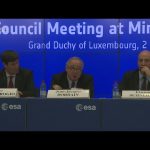
Watch a replay of the press conference that took place after the conclusion of the ESA Council Meeting at Ministerial Level, Luxembourg, on 2 December 2014.
Ministers in charge of space activities within the 20 ESA Member States and Canada met in Luxembourg on 2 December to take key decisions on Europe’s launcher programmes, the European Participation in the ISS Exploitation Programme, the future European strategy for exploration and the evolution of ESA.
Ministers in charge of space activities within the 20 ESA Member States and Canada will meet in Luxembourg on 2 December to take key decisions, in particular on Europe’s Launcher Programmes and the new Ariane 6 design should then be unveiled, a next generation launcher being required for an increasingly competitive market.
This video covers why it is important for Europe to have independent access to space and maintain its leadership in the world’s commercial satellite launch market.
If final approval on its development is given at the forthcoming Ministerial, Ariane 6 will launch from Kourou at the start of the next decade.
The Philae lander may be in hibernation mode on the surface of a comet, but it’s still very much alive in the hearts of the Comet Hunters, the team who helped Rosetta become the most famous space mission since the Moon landings. In this special edition of Euronews Space we have an extended episode of our Comet Hunters series, filmed during and after the comet landing at ESA’s base in Darmstadt and at the DLR’s Philae control room in Köln.
El módulo de aterrizaje Philae puede que esté en modo hibernación allá lejos, en la superficie del cometa, pero aún está muy vivo en los corazones de los Cazadores de cometas. El equipo ha hecho que Rosetta se convierta en una de las misiones espaciales más famosas desde que el hombre llegó a la Luna. En esta edición especial de Space, en Euronews, veremos un largo episodio de nuestra serie Cazadores de cometas, filmado durante y después del aterrizaje de Philae en el cometa desde la base de la Agencia Espacial Europea en Darmstadt y en la sala de control del Centro Aeroespacial Alemán en Colonia.
Mercoledì 12 novembre, il D-Day per Rosetta e Philae: un giorno che i cacciatori di comete non dimenticheranno mai.
Matt Taylor, scienziato del progetto Rosetta, ESA: “Ieri iero rilassato, ora invece c’è questo aumento esponenziale di stress ed eccitazione. Sono al massimo adesso”. “Questa è la mia previsione per oggi, ecco quanto mi sento sicuro”, dice Taylor mostrando un tatuaggio del lander sulla gamba.
Paolo Ferri, direttore della missione Rosetta, ESA: “Sono estremamente stressato, la notte non è trascorsa tranquillamente come speravo. Le attività di preparazione del lander hanno richiesto molto più tempo, abbiamo dovuto rifare delle cose”.
Ma poi la buona notizia è arrivata, Rosetta ha ricevuto un segnale da Philae, e poi, dopo alcune ore di tensione, la missione è compiuta. Matt Taylor, scienziato del progetto Rosetta, ESA: “Siamo atterrati su una cometa!”
Το ρομποτικό σκάφος Philae προσγειώθηκε στον κομήτη 67P γράφοντας μία νέα σελίδα στη διαστημική ιστορία
To euronews είχε εξ αρχής προνομιακή πρόσβαση στο κέντρο ελέγχου των επιχειρήσεων. Η προσεδάφιση του Philae στον κομήτη κέντρισε το ενδιαφέρον όλου του κόσμου. Η 12η Νοεμβρίου είναι μία ημέρα που η επιστημονική ομάδα δεν πρόκειται να ξεχάσει ποτέ. Πάμε να γνωρίσουμε τους πρωταγωνιστές της επιχείρησης Ροζέτα και να ρίξουμε μία παρασκηνιακή ματιά στο κέντρο των επιχειρήσεων στο Ντάρμσταντ της Γερμανίας. «Χθες ήμουν χαλαρός. Τώρα έχω και πάλι άγχος αλλά και μεγάλο ενθουσιασμό. Με το τατουάζ μου που απεικονίζει την προσεδάφιση του Philae κάνω την πρόβλεψή μου. Είμαι σίγουρος ότι όλα θα πάνε καλά», δηλώνει ο Ματ Τέιλορ, επιστήμονας της ESA στην επιχείρηση Ροζέτα. «Είχα απίστευτο άγχος καθώς η νύχτα δεν εξελισσόταν όσο ομαλά ήλπιζα. Οι ενέργειες για την προετοιμασία προσεδάφισης μας πήρανε περισσότερο χρόνο, γιατί έπρεπε να ξανακάνουμε κάποια πράγματα», διηγείται ο διευθυντής του εγχειρήματος Πάολο Φέρι. Τέλος καλό, όλα καλά. Η κούραση και το στρες εξαφανίστηκαν, όταν η Ροζέτα έλαβε το πρώτο σήμα από το ρομποτικό σκάφος Philae. Οι συντελεστές πανηγύρισαν τη μεγάλη επιτυχία τους. Την επόμενη ημέρα τα τηλεοπτικά συνεργεία που πολιόρκησαν το κέντρο επιχειρήσεων άρχισαν να μαζεύουν τον εξοπλισμό τους. Στην αίθουσα ελέγχου του Ευρωπαϊκού Οργανισμού Διαστήματος η επιστημονική ομάδα προσπαθεί να εντοπίσει το Philae πάνω στον κομήτη. Το ρομποτικό σκάφος αναπήδησε δύο φορές και προσγειώθηκε σε μία σκοτεινή ρωγμή. Αυτό δεν το εμπόδισε να στείλει σημαντικές πληροφορίες.
With ESA astronaut Alexander Gerst due to return on 10 November after six months onboard the ISS, Samantha Cristoforetti is set to fly to the station for a long-duration mission on 24 November. She will launch from Baikonur in Kazakhstan, and is currently joined at Star City by three other ESA astronauts – whose first missions are scheduled for 2015 and 2016.
Re-entry is the make or break moment for spacecraft. It’s the time when satellites burn up and astronauts hold on for the ride of their lives. A new ESA spacecraft, called IXV Intermediate eXperimental Vehicle, will be launched into space in November 2014 in a bid to feed precious new data to engineers as they try to master the difficult transition between space and planet Earth. In this episode of Space, IXV programme manager Giorgio Tumino shows us around the spacecraft, while rarely-seen archive footage brings the heat, drama and danger of re-entry to life.
Subir até ao espaço é considerado normalmente o cerne da questão. Mas e o regresso à Terra? A reentrada na atmosfera é, na verdade, um dos maiores desafios da aventura espacial. Por isso, os europeus criaram uma nave chamada IXV que irá testar novas possibilidades precisamente no reencontro com o nosso planeta. É uma viagem única, até porque é impossível de recriar artificialmente a experiência. As aprendizagens têm sido feitas através de descidas efetivas. E é precisamente isso que a mais recente nave da Agência Espacial Europeia (ESA) vai fazer em novembro, como explica o coordenador de projeto, Giorgio Tumino: “O objetivo da missão do IXV é o de passar a controlar aquelas zonas cinzentas que desconhecemos acerca da reentrada atmosférica.”
Il rientro dallo spazio è pericoloso per le navicelle spaziali e i loro passeggeri. Una nuovo veicolo dell’ESA, la European Space Agency, chiamato “IXV”, sarà lanciato nello spazio a novembre per affrontare in modo diretto la sfida del rientro. Gli ingegneri vogliono dominare la difficile transizione tra lo spazio e il pianeta terra.
Pour les véhicules spatiaux, la rentrée dans l’atmosphère, c’est le moment où – pourrait-on dire – ça passe ou ça casse. C’est la phase où les satellites s’enflamment et où les astronautes retiennent leur souffle.
Un nouveau vaisseau de l’ESA baptisé IXV sera lancé dans l’espace en novembre 2014 dans l’objectif de fournir de nouvelles données aux ingénieurs alors qu’ils tentent de maîtriser cette délicate transition entre l’espace et la planète Terre.
Dans cette édition de Space sur euronews, le manager du programme IXV Giorgio Tumino nous présente le véhicule. Nous abordons aussi, images rares à l’appui, les conditions et les risques de cette rentrée atmosphérique.
ESA astronaut Alexander Gerst sends his greetings to the Euro-Space-Day in Saarbrücken, Germany. The tri-national (FR-LU-DE) event will bring together students, scientific institutions and space industry.
Clean Space is the European Space Agency’s initiative to safeguard the terrestrial and orbital environments, while boosting the innovation and competitiveness of Europe’s space sector. This animated guide follows a newly-launched satellite as it first enters orbit, in the process explaining the various branches of the Clean Space effort and the different future Clean Space aims to build.
Now with English, French, German, Dutch, Italian, Greek, Romanian and Swedish subtitles. More languages will be added as they become available.
Clad in U.S. spacesuits, Expedition 41 Flight Engineers Reid Wiseman of NASA and Alexander Gerst of the European Space Agency conducted a spacewalk outside the International Space Station Oct. 7 to relocate a failed cooling pump and to install a power cable device designed to provide backup electrical capability to the station’s rail car system. The spacewalk was the 182nd in support of station assembly and maintenance and the first for both Wiseman and Gerst.
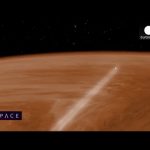
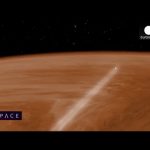
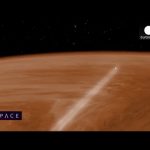
Venus is our mysterious neighbour, a strange world where the Sun rises in the west and sets in the east, and a day lasts longer than a year. ESA’s Venus Express mission has spent the last eight years gathering data to offer science a fresh insight into the atmosphere and climate of the planet, including a daring aerobraking manœuvre this summer that revealed previously unknown waves in the upper atmosphere.
A Vénusz a Föld legközelebbi szomszédja, amelyről ehhez képest elég keveset tudunk. Különleges világ, ahol a Nap Nyugaton kel és Keleten megy le, egy nap pedig tovább tart, mint egy év. Az Európai Űrügynökség – az ESA Vénusz Expressz missziója az elmúlt évben nagy mennyiségű adatot gyűjtött össze, a bolygó légköréről és klímájáról. Egy kockázatos légfékezési manőverrel pedig korábban ismeretlen hullámzást fedeztek fel a bolygó sűrű atmoszférájának felső rétegeiben.
Η Αφροδίτη είναι ο μυστηριώδης γείτονάς μας. Ένας παράξενος κόσμος, όπου ο ήλιος ανατέλλει στη Δύση, δύει στην Ανατολή και μία ημέρα διαρκεί περισσότερο από ένα έτος. Η αποστολή “Venus Express” του Ευρωπαϊκού Οργανισμού Διαστήματος συγκεντρώνει τα τελευταία οκτώ χρόνια στοιχεία, που προσφέρουν μία ανανεωμένη εικόνα για την ατμόσφαιρα και το κλίμα στον πλανήτη Αφροδίτη. Η τολμηρή αεροπέδηση αποκαλύπτει άγνωστα κύματα στα ανώτερα στρώματα της ατμόσφαιρας.
Venus, un misterioso vecino. Un extraño mundo donde el Sol sale por el oeste y se oculta por el este y el día dura más de un año terrestre. La misión de la ESA Venus Express ha pasado 8 años recogiendo datos sobre la atmósfera y el clima de este planeta tan singular. Gracias a la técnica del “aerobraking”, la nave pudo acercarse a la atmósfera de Venus revelando la existencia de olas desconocidas hasta ahora.
Die Rosetta-Sonde hat ihren Zielkometen Tschuri erreicht. Damit hat für die Wissenschaftler von der ESA, die Rosetta vor zehn Jahren ins All geschickt haben, ein Wettlauf gegen die Zeit begonnen. Denn nun müssen sie den Kometen kartografieren und Daten sammeln, bevor sie im November den Landeroboter aus Rosetta ausklinken und auf Tschuri landen lassen. Dafür muss nun eine geeignete Landestelle gefunden werden – keine leichte Aufgabe. In der aktuellen Ausgabe von euronews Space zeigen uns die Kometen-Jäger in Darmstadt, wie man um einen Kometen fliegt, wie Rosetta ihr Ziel “sieht” und welche Bedeutung das ganze Projekt für die Wissenschaft und das Team hat.
The Rosetta mission is now on a race against time to prepare maps and collect data before the Philae lander is due to be sent down to the surface of comet 67P in November. In this edition of Euronews Space, the ‘Comet Hunters’ show us how to orbit a comet, how Rosetta ‘sees’ its target, and what the mission means to the world of science, and to this team in particular.