
Le 30 septembre prochain, la sonde Rosetta s’écrasera lentement et délibérément sur la comète autour de laquelle elle orbite depuis deux ans. Or elle n’a pas été conçue pour cela. L’issue sera fatale. Mais avant cette dernière manoeuvre, les scientifiques ont prévu d’effectuer des relevés inédits à l’approche de “Tchouri”.
Tag: Euronews
-
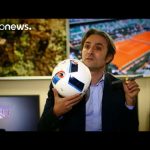
ESA Euronews: Sport and Internet via satellite
Dozens of Euro 2016 matches are being beamed via satellite to television sets and phones all over the world this summer. But did you know that there is a technology, based on internet and satellite, that allows even a small football club to live stream their games and target a new audience?
Claudio Rosmino and the Space team travelled to Italy to see this innovation in action – and also to France to explore the science behind the technology.
This video is available in the following languages:
English: https://www.youtube.com/watch?v=sI9He-OCyY0
French: https://www.youtube.com/watch?v=PS6HbTzUvkE
German: https://www.youtube.com/watch?v=tFys7MGwrVk
Italian: https://www.youtube.com/watch?v=T82rBP-bBow
Spanish: https://www.youtube.com/watch?v=c-gJxC7ch1Y
Portuguese: https://www.youtube.com/watch?v=hmVgrd5CoXY
Greek: https://www.youtube.com/watch?v=h41xGsJ745Y
Hungarian: https://www.youtube.com/watch?v=nKhGZKaXnmQ -
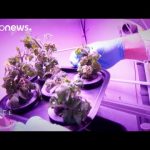
ESA Euronews: Growing food in space
Is is possible to produce food to eat and air to breathe while in space? The short answer: it’s not easy, but it can be done.
Right now, if you’re an astronaut, you’re given pre-prepared food that was cooked on Earth and sent into space on a rocket. But if humankind wants to realise its ambition of travelling much further into the solar system it needs to find ways to create food and air while surrounded by the nothingness of space.
This video is also available in the following languages:
French: https://www.youtube.com/watch?v=rInfAI-dRWY
German: https://www.youtube.com/watch?v=WGmxOz3YsrA
Italian: https://www.youtube.com/watch?v=DwQY0ne2oTo
Spanish: https://www.youtube.com/watch?v=Wh_RiJp3kCU
Portuguese: https://www.youtube.com/watch?v=-0lFwmb6xcU
Hungarian: https://www.youtube.com/watch?v=87J0azIBnYE
Greek: https://www.youtube.com/watch?v=Lufj1HnomQo -
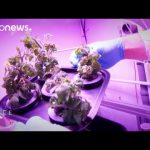
ESA Euronews: Mezőgazdaság az űrben
Ha manapság valaki kiruccan az űrbe, egyfajta űrmenüt kap enni. A Földön gyártják, csomagolják, majd kilövik az űrbe egy rakétán. Ez működik is addig, amíg a Föld körüli pályán keringünk, de mi van, ha valaki messzebbre akar utazni? Ehhez élelmet és levegőt kellene előállítani az űrhajón. Lehetséges ez? A Space Brémában és Barcelonában próbált utánajárni.
Nem könnyű élelmiszert termelni az űrben, de nem is lehetetlen. Orosz űrhajósok fogyasztottak először űrgabonát 2003-ban, és tavaly augusztusban amerikai kozmonauták majszolták el az első űrben termett salátát. De egy hosszú űrutazáshoz ennél több kell. A Melissa konzorcium – az Európai Űrügynökség támogatásával készült – kutatásából kiderült, pontosan mennyi.
-
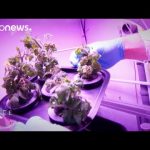
ESA Euronews: Comida espacial
¿A qué se parece la comida espacial? Iremos a Bremen y Barcelona para conocer la respuesta.
No es fácil producir comida en el espacio pero es posible. Cosmonautas rusos le hincaron el diente al primer cultivo experimental en 2003 y, el pasado mes de agosto, astronautas estadounidenses se deleitaron con la primera lechuga espacial. Pero aventurarse a ser agricultor espacial no es tan fácil.
-
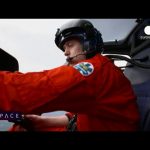
ESA Euronews: EGNOS – navigation and security
At the Danish Air Ambulance base in Billund, satellite navigation is a true lifesaver in the sky.
The air ambulance service, operated by the Norwegian Air Ambulance in Denmark, is among the first to use a new European satellite system, EGNOS, that makes it safer to fly in low visibility.
More about EGNOS:
http://www.esa.int/Our_Activities/Navigation/The_present_-_EGNOS/What_is_EGNOSThis video is also available in the following languages:
French: https://youtu.be/JieHXRiy7HQ
German: https://youtu.be/b9KpTz_goPI
Spanish: https://youtu.be/W9vBQIUk9OI
Portuguese: https://youtu.be/K-f1l040IAo
Italian: https://youtu.be/rOX0jMx2nYQ
Hungarian: https://youtu.be/Z5IrvJh5SZU
Greek: https://youtu.be/-A3dA0IlFhw -
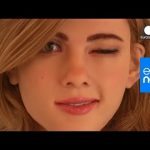
$50,000 humanoid robot built from scratch in Hong Kong
Like innumerable children with imaginations fired by animated films, Hong Kong product and graphic designer Ricky Ma grew up watching cartoons featuring the adventures of robots, and dreamed of building his own one day.
Unlike most, however, Ma has realised his childhood dream at the age of 42, by successfully constructing a life-sized robot from scratch on the balcony of his home.
The fruit of his labours of a year-and-a-half, and a budget of more than $50,000, is a female robot prototype he calls the Mark 1, modelled after a Hollywood star whose name he wants to keep under wraps. It responds to a set of programmed verbal commands spoken into a microphone.
What are the top stories today? Click to watch: https://www.youtube.com/playlist?list=PLSyY1udCyYqBeDOz400FlseNGNqReKkFd
euronews: the most watched news channel in Europe
Subscribe! http://www.youtube.com/subscription_center?add_user=euronewseuronews is available in 13 languages: https://www.youtube.com/user/euronewsnetwork/channels
In English:
Website: http://www.euronews.com/news
Facebook: https://www.facebook.com/euronews
Twitter: http://twitter.com/euronews
Google+: http://google.com/+euronews
VKontakte: http://vk.com/en.euronews -
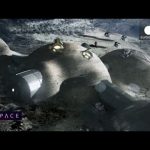
ESA Euronews: Un village sur la Lune ?
Le directeur général de l’Agence spatiale européenne dit vouloir construire une base permanente sur la Lune. Ce projet incroyable prend peu à peu forme à mesure que les scientifiques européens commencent à sérieusement y réfléchir. Nous avons rencontré quelques-uns de ceux qui pourraient faire de ce rêve, une réalité, notamment au Centre européen des astronautes à Cologne.
“J’ai l’intention de construire une base permanente sur la Lune : ce sera une station ouverte pour différents Etats participants, des pays des quatre coins du monde,” explique posément le nouveau directeur général de l’Agence spatiale européenne.
-
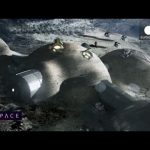
ESA Euronews: Bald ein Dorf auf dem Mond?
Die Europäische Weltraumorganisation ESA will ein tollkühnes Projekt in Angriff nehmen: Sie will ein Dorf auf dem Mond bauen. Die permanente Station soll an dem Ort entstehen, an dem einst die Russen landeten und die Amerikaner erste Schritte machten. ESA-Chef Jan Woerner hat eine Vision: “Ich will eine permanente Mondstation bauen. Es wäre eine offene Station für mehrere Länder aus der ganzen Welt.”
Die Apollo-Ära hat gezeigt, dass Träume Wirklichkeit werden können. Die Forscher damals hatten ein klares Ziel vor Augen: die Mondlandung. ESA-Astronaut Andreas Mogensen scheint zuversichtlich: “In den 1960er Jahren haben sie das innerhalb von zehn Jahren geschafft. Heute sind wir technologisch gesehen viel weiter. Wir können es also noch einmal machen.”
Die Mondstation würde die Internationale Raumstation, ISS, ablösen. Sie wäre das neue gemeinsame Raumfahrt-Projekt, an dem alle teilnehmen könnten. “Die Amerikaner, die Russen, die Chinesen, die Inder und die Japaner werden mitmachen. Und andere Länder werden ebenfalls etwas beisteuern,” so Woerner.
-
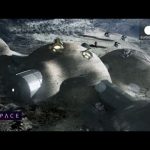
ESA Euronews: Holdbázis – egy hosszú út kezdete
– Feltett szándékom egy állandó bázisállomás építése a Holdra – mondja az Európai Űrügynökség vezetője, Jan Woerner. – Ez egy közös bázis lenne a partnereinkkel, amit a világ más országaival közösen építenénk és használnánk. Benne lesznek az amerikaiak, az oroszok, a kínaiak az indiaiak, a japánok és kisebb hozzájárulással más országok is.
A jelenlegi helyzetben a Holdbázis álomnak tűnik – de az Apolló-program során már kiderült, hogy megfelelő költségvetés mellett óriási technológiai ugrások lehetségesek. A tervek szerint ez lenne az új globális űrprojekt a Nemzetközi Űrállomás után.
-
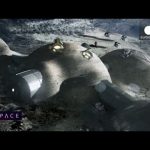
ESA Euronews: Si torna sulla Luna
Tornare sulla Luna? La prossima tappa dell’esplorazione spaziale, dopo l’esperienza della Stazione Spaziale Internazionale, prevede molto di più. L’Agenzia spaziale europea ha un nuovo obiettivo: costruire una base permanente sulla luna.
I russi furono i primi a lanciare una missione sulla luna mentre gli americani i primi a camminare sulla sua superficie. Oggi la luna continua ad essere al centro di ambiziose ricerche come ci conferma anche il direttore generale dell’Agenzia spaziale europea Jan Wörner. Una base internazionale, una stazione aperta ai diversi Stati membri dell’Agenzia e ai paesi di tutto il mondo.
Un sogno animato dalla stessa passione che ha portato il primo uomo sulla Luna. Certo finora nessuno ha mai realizzato un progetto simile. Dalla missione spaziale Apollo sono stati fatti passi da gigante.
-
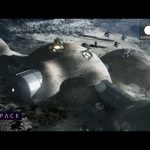
ESA Euronews: Como a ESA pretende construir uma aldeia na Lua
O homem que está à frente da Agência Espacial Europeia (ESA) tem um ambicioso objetivo: construir uma base permanente na Lua. É no Centro Europeu de Astronautas em Colónia, na Alemanha, que estão a ser dados os primeiros passos nessa direção.
Em 1959, os russos conseguiram aterrar uma nave não tripulada na Lua; dez anos mais tarde, os americanos passearam na sua superfície. Hoje em dia, o plano é ficar. _”O meu objetivo é construir uma base permanente na Lua. Uma estrutura aberta à participação de diferentes países”_, declara Jan Wörner, diretor geral da ESA. A ideia é criar um projeto global à semelhança da Estação Espacial Internacional.
O Centro Europeu de Astronautas em Colónia organizou um workshop precisamente sobre como erguer uma espécie de pequena aldeia sobre a superfície lunar. A presença de certos metais, minerais e de água gelada pode representar um contributo valioso. Segundo Bernard Foing, diretor do Grupo Internacional de Exploração Lunar, _”a Lua tem imensos recursos. Encontrámos gelo nos polos, encontrámos áreas que estão quase constantemente expostas ao Sol. São zonas que nos podem fornecer recursos para utilizarmos na construção ou na manutenção da vida dos astronautas na base lunar.”_
-
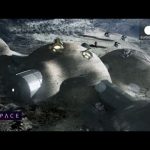
ESA Euronews: ¿Listos para construir una base permanente en la Luna?
La nueva cúpula de la Agencia Espacial Europea (ESA) quiere construir una base permanente en la Luna. El lugar donde hace medio siglo los rusos llegaron por primera vez y los estadounidenses dieron sus primeros pasos. Se trata de un proyecto muy ambicioso en el que ya está trabajando el Centro Europeo de Astronautas con sede en la ciudad alemana de Colonia.
“Mi intención es construir una base permanente en la luna, una estación abierta a diferentes estados miembros de todo el mundo”, asegura Jan Woerner, director de la ESA.
-
ESA Euronews: O gigantesco mundo dos nanossatélites
Os nanossatélites são pequenos cubos que prometem determinar o futuro da exploração espacial, desde as incursões a Marte até à observação de asteróides potencialmente perigosos para a Terra. No Centro Espacial Mektory de Tallin, na Estónia, um grupo de estudantes está precisamente a construir um destes concentrados de tecnologia.
Também conhecidos como cubesats, os nanossatélites abrem um sem número de possibilidades na aventura espacial. Daí que o seu desenvolvimento desperte o interesse tanto das grandes agências espaciais, como das universidades, como esta na capital estoniana, que integra o centro de inovação Mektory.
-
ESA Euronews: CubeSat, a satellite in a shoe box
Tiny satellites the size of a small cube, jam-packed with the most advanced nanotechnologies: is this the future of Space missions?
To find out, ESA Euronews went to Tallin, Estonia, where students at the Mektory Space Centre are preparing the launch of their first nanosatellite.
Nanosatellites – tiny cubes of 10cm x 10cm x 10cm, full of nanotechnologies — are going to be more and more important in the future of space exploration, from Mars missions, to the surveillance of asteroids, which could potentially be dangerous for our planet.
Also known as ‘CubeSats’ these tiny satellites open up a whole world of possibilities for those who want to explore space.
This video is also available in the following languages:
French: https://www.youtube.com/watch?v=RFVJ0ZGW2nI
German: https://www.youtube.com/watch?v=rOdjO5bhoiU
Italian: https://www.youtube.com/watch?v=5cP0baTNDYo
Spanish: https://www.youtube.com/watch?v=NlZSt0WfMTo
Portuguese: https://www.youtube.com/watch?v=6tM5AXZtY18
Greek: https://www.youtube.com/watch?v=WIIVLxcOlT0
Hungarian: https://www.youtube.com/watch?v=XAlfhpzadWc -
ESA Euronews: De mi az a nanoműhold?
A nanoműholdak egyre fontosabbak lesznek az űrkutatásban, a Mars megfigyelésétől a Földre veszélyt jelentő aszteroidák felkutatásáig. A bennük rejlő potenciált mindenki igyekszik kiaknázni, a nagy űrügynökségektől a tudományos diákkörökig. Ez a helyzet a Mektory Űrközpontban, az észt főváros, Talinn műszaki egyetemén, ahol a diákok az első nanoműholdjuk Föld körüli pályára állítását készítik elő.
– Azt hittem, soha nem fogok műholdat építeni, hiszen ilyesmit csak a NASA-nál csinálnak. Most meg műholdat építek az egyetemi laborban – hitetlenkedett az Euronewsnak Marta Hang, az űrközpont programasszisztense.
A Mektory nanoműhold-programja egy nemzetközi egyetemi kezdeményezés, amelyben az oktatók és a hallgatók együttműködnek az űrkutatásban érdekelt és más technológiai cégekkel. A cél az, hogy felkészítsék a hallgatókat arra, hogy az űriparban helyezkedjenek el. A csapat jelenleg az első űrküldetését tervezi.
– Egy kockaműholdat fejlesztünk, amely egy egységből áll, és távérzékelési célokat szolgál, vagyis képeket készít majd a Földről – magyarázza a Mektory Űrközpont igazgatója, Mart Vihmand.
-

ISS Crew Discusses Life in Space
Aboard the International Space Station, the new Expedition 43 Commander Terry Virts of NASA and Flight Engineer Samantha Cristoforetti of ESA (European Space Agency) discussed the progress of their mission and key activities in the weeks ahead in a pair of in-flight interviews March 13 with WTOP Radio in Washington, D.C,. and Euronews. Virts took over command of the station March 10 from NASA’s Barry Wilmore, who returned to Earth March 12 aboard a Russian Soyuz spacecraft with two Russian cosmonaut crewmates.
-
ESA Euronews – Rosetta: The Comet Hunter Awakes
The exploits of comet-hunting spacecraft Rosetta are generating intense interest as it speeds towards a dramatic climax this autumn.
The craft will catch up with comet 67p/Churyumov–Gerasimenko, fly alongside, and put a lander on its surface. Throughout this fantastic voyage, Euronews will have special access to the engineers and scientists who are making it happen.
On 20th January Rosetta woke up from two and a half years of hibernation. It was a moment of extreme tension for everyone at ESA’s European Space Operations Centre in Darmstadt, Germany. Strained, nervous faces searched for a signal from a probe in deep space.
After some 45 minutes of anxiety the all-important first signal came through. The scientists burst into energetic applause.
-
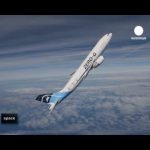
ESA Euronews: Flying Zero-G
If you fly a plane in the right way at the right speed, you can be weightless for a few seconds. By throwing the aircraft into an orbit-like path within Earth’s atmosphere, you can enter the wonderful world of weightlessness.
It is one of the best ways to simulate the environment of space, and a valuable experimental tool for scientists with a special interest in microgravity. If they want to find out how the brain works, study the natural posture of humans in space, or how water boils in a weightless environment, this is the way to do it.
Take a journey into a free-floating world of the parabola in this edition of Space. -
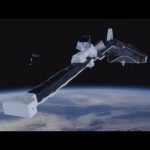
ESA Euronews: Measuring earth’s vital magnetic field
Earth’s magnetosphere is an invisible shield, protecting our planet from harmful solar radiation.
Many living organisms – from bacteria to insects or birds – seem to rely on Earth’s magnetic field to navigate. Man has been doing so for a thousand years since the invention of the compass.
But research shows the magnetic field is weakening and scientists are trying to understand why.
Some believe it signals a pole reversal in progress, not an uncommon phenomenon in the history of our planet.
As ground observatories fail to grasp the whole picture, we are sending magnetometers into orbit to try to measure the magnitude and the direction of the magnetic field.
Find out more, this week, in Space.
-
ESA Euronews: Private Space
Boldly going where no private company has gone before.
On 25 May 2012 the first commercial spacecraft berthed with the International Space Station. A private company achieved something only national agencies have ever done before: flying and recovering an orbital craft. With private companies launching their own spaceships and designing their own orbital stations, it’s the dawn of commercial spacefaring.
We talk to people involved in that development and we explore the world’s first commercial spaceport. -
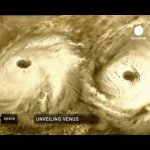
ESA Euronews: Desvelando los secretos de Venus
Es conocido como el lucero del alba o la estrella de la mañana, pero no es una estrella: es un planeta. Venus es, junto con Marte, nuestro vecino más cercano, y al mismo tiempo, un gran desconocido. Levantamos el velo que esconde los misterios del planeta ardiente.
-

ESA Euronews: Quand Vénus se dévoile
On l’appelle l’étoile du berger ou encore l’étoile du matin, mais c’est tout sauf une étoile. C’est même une planète de notre voisinage immédiat. Vénus est, avec Mars, la plus proche planète de la Terre. Proche peut-être mais au combien différente. On commence tout juste à lever quelques pans du voile qui entoure le mystère de la planète brûlante.
-

ESA Euronews: Unveiling Venus
It can be called the morning or evening star, depending on where you are or what time it is, but it is anything but a star. In fact, it is one of our nearest planetary neighbours. Venus and Mars may be Earth’s close cousins, but they are oh-so different. Only now are we starting to peer through Venus’ clouds to reveal the burning planet’s secrets.
-
ESA Euronews: A star rocket is born
The family of European rockets is growing. The next one is the youngest, called Vega, soon to be launched from Europe’s Spaceport in French Guiana.
This new rocket complements the range that Europe already has to offer in the commercial market. -
ESA Euronews: Nasce una stella tra i lanciatori spaziali europei
La famiglia dei vettori spaziali europei si allarga con il prossimo lancio di Vega dalla base europea della Guyana francese. Questo nuovo lanciatore va a completare l’offerta della gamma europea nell’ambito dei razzi commerciali. Ne parliamo nella rubrica Space.
-
ESA Euronews: Klein aber fein
Sie haben die Größe einer Waschmaschine, doch sie beschaffen wertvolle Informationen bei der Beobachtung der Erde und der Sonne. Die Rede ist von Mikrosatelliten mit dem Namen Proba.
-
ESA Euronews: Soyuz descola pela primeira vez do Porto Espacial da Europa
Lançou o Sputnik e Gagarin para o espaço. O mítico foguetão russo Soyuz conta já com mais de 1700 voos. O lançamento do Porto Espacial Europeu, na Guiana Francesa, abre um novo capítulo na sua longa carreira.
-

ESA Euronews: La storia di un satellite
Tutto ha una fine. Per gli uomini ma anche per i satelliti. Dopo sedici anni di fedele servizio, il satellite d’osservazione ERS 2 è condannato a trasformarsi in luce e calore. È l’argomento di questa puntata di Space.
-
ESA Euronews: La Agencia Espacial Europea se despide de una de sus mejores creaciones
Nada dura eternamente. Eso es igual para las personas como para los satélites. Después de 16 años de un precioso y preciso trabajo, el satélite de observación terrestre ERS 2 está condenado a convertirse en polvo y fuego. En Space.
-
ESA Euronews: A satellite’s story
Everything must come to an end — including satellites. After 16 years of loyal service observing Earth, the ERS-2 satellite has retired.
This edition of Space tells the life story of the venerable satellite. -
ESA Euronews: Transbordador espacial: el último viaje
Un capítulo de la aventura espacial se cierra con el lanzamiento de la nave estadounidense Atlantis, con el que se pone punto y final a las misiones del transbordador. Ha pervivido durante 30 años, una historia de momentos felices y trágicos.
-
ESA Euronews: Addio, Space Shuttle
Si chiude un capitolo dell’epopea spaziale, con il lancio della navetta americana Atlantis che segna la fine delle missioni dello Space Shuttle. Una storia lunga trent’anni che ha conosciuto i suoi momenti di gloria e le sue tragedie.
-
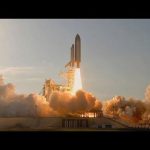
ESA Euronews: Letzter Flug für das Space Shuttle
Mit dem letzten Start der Weltraumfähre “Atlantis” geht zugleich ein Kapitel in der Geschichte der Weltraumfahrt zuende. Denn der 135. Space-Shuttle-Flug ist der Letzte seiner Art. Zurück liegen drei Jahrzehnte mit ihren Höhepunkten sowie mit ihren Tragödien. Mehr darüber in unserer Rubrik Space.
-
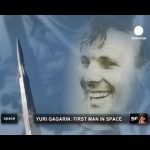
ESA Euronews: Yuri Gagarin: o primeiro Homem no espaço
Esta semana, há 50 anos, pela primeira vez na história da humanidade, um homem deixou a Terra e viajou para o Espaço. Quem foi Yuri Gagarin? Como é que aquele voo mudou a sua vida e a da humanidade?
-

ESA Euronews: Gagarin, pionero en órbita
Hace 50 años, por primera vez en la historia, un hombre viajó al espacio.
¿Quién era Yuri Gagarin? ¿Cómo fue el vuelo que cambió su vida y el devenir de la humanidad? -

ESA Euronews: First Man in Space
50 years ago, for the first time in history, a human travelled into space.
Who was Yuri Gagarin ? How did this flight change his life and the future of humankind? -
ESA Euronews: Alla ricerca delle origini
Tredici miliardi e settecento milioni di anni fa nasceva l’Universo. Si tratta del Big Bang. Cos’è? Esisteva qualcosa prima? A quest’interrogativo si comincia a dare delle risposte grazie alla missione spaziale Planck.
-
ESA Euronews: Searching for the origins
The universe was born 13.7 billion years ago with the Big Bang. But what is the Big Bang and what was there before?
Scientists are starting to get an answer thanks to the time-travelling Planck mission. -
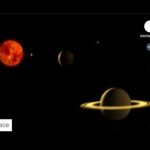
ESA Euronews: A caccia di esopianeti!
Pegaso 51 B è il nome che è stato dato al primo pianeta extra sistema solare scoperto nel 1995. Da allora ne sono stati scoperti altri 500. Space è andato a perlustare i recessi della ricerca su queste porzioni di universo.