Space exploration is a major global issue and Europe wants to be in the driving seat. It therefore needs to develop a global vision and a strategic action plan.
Tag: European Space Agency
-
ESA Euronews: Europe and space exploration (Français)
Space exploration is a major global issue and Europe wants to be in the driving seat. It therefore needs to develop a global vision and a strategic action plan.
-
ESA Euronews: Europe and space exploration (Deutsch)
Space exploration is a major global issue and Europe wants to be in the driving seat. It therefore needs to develop a global vision and a strategic action plan.
-
ESA Euronews: Europe and space exploration
Space exploration is a major global issue and Europe wants to be in the driving seat. It therefore needs to develop a global vision and a strategic action plan.
-
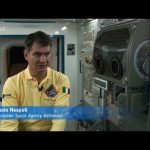
Counting down for ESA’s MagISStra mission
ESA’s Director of Human Spaceflight Simonetta Di Pippo together with ESA’s astronaut Paolo Nespoli introduce the MagISStra mission which is going to be launched in December 2010 from Baikonur Cosmodrome, Kazakhstan. This is the third six-month duration mission a European astronaut takes part to.
-
ESA Euronews: Ciência e ficção científica
Júlio Verne, Arthur C. Clark e muitos outros imaginaram mundos, máquinas e viagens fantásticas. Contudo muito do que então era ficção científica, tornou-se realidade. “Ciência e ficção científica” é o tema desta
edição de Space -
ESA Euronews: A can-size challenge for European students (Español)
Flying your very own rocket with its model satellite – this was the challenge facing high-school students from all over Europe this summer for the first ever European CanSat competition in Norway.
-
ESA Euronews: A can-size challenge for European students (Português)
Flying your very own rocket with its model satellite – this was the challenge facing high-school students from all over Europe this summer for the first ever European CanSat competition in Norway.
-
ESA Euronews: A can-size challenge for European students
Flying your very own rocket with its model satellite – this was the challenge facing high-school students from all over Europe this summer for the first ever European CanSat competition in Norway.
-
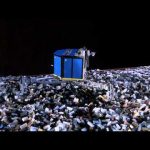
Using LEGO® to simulate ESA’s touchdown on a comet
Comets are primeval leftovers from the origins of the Solar System. To fully understand these ancient objects and perhaps the origins of life on Earth, ESA’s Rosetta mission will rendezvous with comet Churyumov-Gerasimenko in 2014. In November of that year, Rosetta’s Philae lander will touchdown on the comet and thoroughly investigate its composition.
Copyright © Lightcurve Films/Maarten Roos, ESA, DLR, Europlanet, LEGO
-

ESA Space Scientist Detlef Koschny explains why he originally built Rosetta in LEGO®
Space missions are complicated pieces of orbital choreography. When planning a mission, spacecraft engineers must calculate how to point the solar panels towards the Sun, the main antenna towards Earth and the instruments towards the target. ESA Space Scientist Detlef Koschny build a LEGO model of Rosetta mission in order to visualise these precise orientations.
Copyright © Lightcurve Films/Maarten Roos, ESA, DLR, Europlanet, LEGO
-
ESA Space Scientist Detlef Koschny demonstrates the prototype LEGO® Philae lander
Built using LEGO Mindstorms, the Philae lander model can be controlled using a home computer. It can rotate and move the drill up and down to simulate the behaviour of the real lander. As part of ESA’s Rosetta space mission, Philae will land on comet Churyumov-Gerasimenko in November 2014 to study its composition.
Copyright © Lightcurve Films/Maarten Roos, ESA, DLR, Europlanet, LEGO
-

Mars500 video diary 1 – Diego’s guided tour
Diego Urbina (@diegou) takes us on tour inside the Mars500 facilities – see how the crew are living and working for the next 17 months in isolation.
-
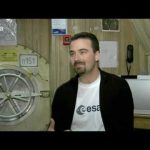
Interview with Romain Charles (ESA Mars500 participant)
Romain Charles of the Mars500 crew talks about his motivation for taking part in this adventure and how he’ll cope with his 520-day ‘mission to Mars’ .
-
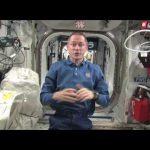
How do you feel after the first few months in orbit?
Frank De Winne is answering a few questions on the ISS submitted by the pupils of Class 7M from the Christian Morgenstern School in Hersching (Germany):
Question:
– Jerome (13): How do you feel in orbit after 2 months?
– Karina (13): How much time do you spend working outside the ISS?
– Tamara: Do you have any real free time in the ISS, and how can you spend this time? How often do you contact your family?
– Antoine (13): Have you ever felt scared in orbit? Has there ever been a moment that you wished to be back on Earth?
– Regina (14): Has anything strange happened on the ISS that none of your colleagues have been able to explain?
– Flavu: Which kind of education and qualification do you need for this kind of work? -
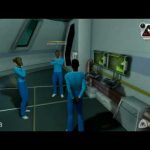
ESA highlights online games as key future technology
Video gaming has become one of the globes most popular pastimes. Fans say games are often educational, their detractors answer they are anything but. Might ESA have something to learn from gaming? A new Agency study says the answer is yes.
http://www.esa.int/esaCP/SEMHGBFKZ6G_index_0.html -
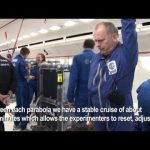
Airbus Zero G
Operated for ESA by the French company Novespace, the Zero-G aircraft flies parabolic arcs so that its passengers and cargo experience periods of freefalling weightlessness.
-

Ariane 30th birthday
On 24 December 1979, Ariane made its first flight from French Guiana, marking the beginning of 30 years of success and giving Europe a guaranteed independent access to space. With Ariane, ESA could develop its own programmes in many different domains: telecommunications, Earth observation, science and exploration. Europe was the pioneer in the civil launch space market, with the creation of Arianespace, the world-leading space transportation company.
-
What does a typical working day on the ISS look like?
Frank De Winne is answering a question on the ISS submitted by Thomas Kern from Germany:
What does a typical working day on the ISS look like? -

Can you feel the speed at which the ISS travels?
Frank De Winne is answering a question on the ISS submitted by Paul from Portugal:
When you do your EVA (space walk), can you feel the speed (28.000 Km/h) at which the ISS is travelling? -
The ISS: a work in progress!
Highlights of ESA astronaut Christer Fuglesang’s 14-day Alissé mission to the International Space Station between 29 August and 12 September 2009. Fuglesang was part of the seven-strong STS-128 crew launched to the ISS with Space Shuttle Discovery. STS-128 delivered new supplies and equipment to the ISS. The crew also performed three spacewalks to continue Station construction.
-
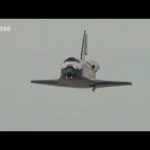
Space Shuttle Discovery returns to Earth
Space Shuttle Discovery lands at Edwards Air Force Base, California, on 12 September concluding ESA astronaut Christer Fuglesang’s 14-day Alissé mission to the the International Space Station.
-
ESA astronauts working on the ISS
ESA astronauts Frank De Winne and Christer Fuglesang met up on the International Space Station in September 2009. Fuglesang was visiting the ISS during his 14-day Alissé mission. De Winne, on his six-month OasISS mission, was already on the ISS as part of the resident ISS Expedition 20 crew.
-
How do you wash your clothes in space?
Frank De Winne is answering a question on the ISS submitted by Herman from Belgium:
– How do you wash your clothes in space?
– Do you use washing powder to wash your clothes in space? -
How does food stay fresh on the ISS?
Frank De Winne is answering a question on the ISS submitted by Cedric from Belgium:
– How do you occupy yourself during the 2-day Soyuz journey to the ISS?
– How does food stay fresh in space, since there is no fridge on the ISS? -
Vega: ESA’s new small launcher
Building Costs are being kept to a minimum by using advanced low-cost technologies and existing production facilities used for Ariane launchers, making access to space easier, quicker and cheaper.
-
ESA Satellite Telecommunications
Global communications underpin modern society and represent an important commercial sector. Satellites are a fundamental part of global telecommunications networks, providing all kind of services, efficiently and seamlessly, over almost every region of our planet.
-

What medical conditions would stop you becoming an astronaut?
Frank De Winne is answering a question on the ISS submitted by Mrs. Shahi from Birmingham (United Kingdom):
What medical conditions would stop you becoming an astronaut? -
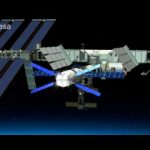
ATV: ‘Trucking’ in space
The ISS depends on regular deliveries of experiments and spare parts, as well as food, air and water for its permanent crew. ESA’s Automated Transfer Vehicle is one of the ISS’s indispensable supply spaceships.
-
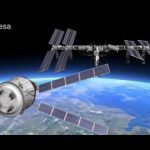
ARV: Europe’s space ferry
With ATV’s cargo hold replaced by a re-entry capsule equipped with a heatshield, the Advanced Re-entry Vehicle will be able to bring back hundreds of kilograms of cargo and valuable experiments.
-
Frank De Winne: ESA astronaut
Astronaut Frank De Winne talks about his OasISS mission, being the first European commander of the International Space Station, about living in space… and missing a few home comforts, like a shower or a glass of wine!
-
New ESA Astronaut: Thomas Pesquet
Thomas is French, an aeronautical engineer and commercial arline pilot, born in 1978
-
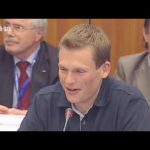
New ESA Astronaut: Andreas Mogensen
33-year-old Andreas is from Denmark, a space navigation & control engineer.
-
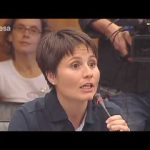
New ESA Astronaut: Samantha Cristoforetti
32-year-old Samantha is a fighter pilot in the Italian air force.
-

Understanding the Universe with ESA’s next science missions
Herschel will investigate how stars and galaxies formed and how they continue to form in our own and other galaxies, meanwhile Planck will look back at the dawn of time, helping astronomers to study the birth and evolution of the Universe.
-

Our Moon: Earth’s only natural satellite
The Moon has fascinated mankind throughout the ages. Discover how our Moon was formed, probably by a collision with a huge object when Earth was very young.
-
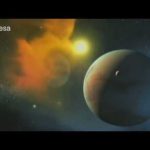
Cosmic Impact: Comet Shoemaker-Levy 9 crashes into Jupiter
Spectacular images of Jupiter during and after impacts, when over twenty fragments of Comet Shoemaker-Levy 9 smashed into the planet in July 1994.
-
ESA space music
For its Introduction video, ESA chose a piece of music called ‘The Reaktor Song’, by a German band called Eclipse Sol-Air. Complementing the images, the solo violin and piano evoke the pioneering history of European exploration, then the contemporary bass and drums capture the excitement of modern-day exploration and advanced technology.