Tag: ExoMars

  • Mini capsule’s supersonic test!💥

    Mini capsule’s supersonic test!💥

    A miniature capsule shoots off at 4000 km per hour, mimicking the aerodynamics of a Mars atmospheric entry before crashing at supersonic speeds into a wall.

    The tiny replica of the Entry, Descent and Landing Module (EDLM) blasts off from a smooth bore gun faster than a speeding bullet. This video has been slowed down 60 times – the actual flight lasted just half a second.

    This activity is part of a series of free-flight experiments with a scaled-down version of the ExoMars landing module – measuring just 8 cm in diameter compared to the actual 3.8-metre spacecraft that will carry the Rosalind Franklin rover.

    These tests provide critical data on how the spacecraft will behave during its entry into the martian atmosphere. Following a two-year journey to the Red Planet, the ExoMars descent module will approach Mars at a speed of 21 000 km per hour, relying on heat shields, parachutes and retro rockets to land safely.

    The first set of tests took place in March at the French-German Research Institute of Saint-Louis(ISL), a front-line research centre with facilities for investigating the aerodynamics of vehicles like reentry capsules.

    Engineers equipped the mini ExoMars landing capsule with internal electronics to monitor its 400-metre flight path. The test models were mounted in special sabots that detached from the capsules when fired from the smooth powder gun. Test speeds ranged from 1800 to 4300 kilometres per hour.

    The team used 20 models during the tests. Each model carried several sensors to collect flight data. Teams used shadowgraph imaging, magnetometers, accelerometers, and radar to analyse the capsule’s movement, trajectory and stability.

    📹 European Space Agency (ESA)
    📸 Thales Alenia Space Italia, Ariane Group, Fluid Gravity Engineering Ltd, French-German Research Institute of Saint-Louis

    #ESA #Space #Mars

  • Drilling into Mars | ExoMars Rosalind Franklin mission (episode 3)

    Drilling into Mars | ExoMars Rosalind Franklin mission (episode 3)

    The ExoMars Rosalind Franklin rover will drill deeper than any other mission has ever attempted on the Red Planet.

    The third episode in the series shows how the rover will extract, collect and analyse martian samples in a high-fidelity simulation.

    Rosalind Franklin will be the first rover to reach a depth of up to two metres deep below the surface, acquiring samples that have been protected from harsh surface radiation and extreme temperatures.

    The drill system combines multiple precission mechanisms in an intricate automated sequence. It uses three extension rods that connect tor form a two-metre “drill string”.

    As the rover drills, it will simultaneously investigate the borehole using infrared spectroscopy to study mineral composition.

    The ExoMars Rosalind Franklin mission is part of Europe’s ambitious exploration journey to search for past and present signs of life on Mars.

    Credits: ESA – European Space Agency
    Production: Mlabspace for ESA
    3D animation: ESA/Mlabspace
    Music composed by Valentin Joudrier

    ★ Subscribe: http://bit.ly/ESAsubscribe and click twice on the bell button to receive our notifications.

    Check out our full video catalog: http://bit.ly/SpaceInVideos
    Follow us on Twitter: http://bit.ly/ESAonTwitter
    On Facebook: http://bit.ly/ESAonFacebook
    On Instagram: http://bit.ly/ESAonInstagram
    On LinkedIn: https://bit.ly/ESAonLinkedIn
    On Pinterest: https://bit.ly/ESAonPinterest
    On Flickr: http://bit.ly/ESAonFlickr

    We are Europe’s gateway to space. Our mission is to shape the development of Europe’s space capability and ensure that investment in space continues to deliver benefits to the citizens of Europe and the world. Check out https://www.esa.int/ to get up to speed on everything space related.

    Copyright information about our videos is available here: https://www.esa.int/ESA_Multimedia/Terms_and_Conditions

    #ESA #ExoMars #Mars
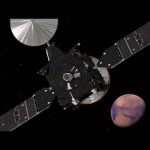
  • Below the surface | ExoMars Rosalind Franklin mission

    Below the surface | ExoMars Rosalind Franklin mission

    Watch the second episode of the ExoMars Rosalind Franklin rover mission – Europe’s ambitious exploration journey to search for past and present signs of life on Mars.

    This episode starts with Rosalind searching for traces of life below the martian surface using a ground penetrating radar and a set of cameras.

    The rover will dig, collect, and investigate the chemical composition of material collected by a drill. Rosalind Franklin will be the first rover to reach a depth of up to two metres deep below the surface, acquiring samples that have been protected from surface radiation and extreme temperatures.

    Rosalind Franklin uses the WISDOM radar to help scientists on Earth decide where to drill. Besides identifying the most promising targets for sampling, WISDOM will help the rover avoid potential hazards, such as the presence of buried rocks that could damage the drill.
    The scientific eyes of the rover are set on the Panoramic Camera suite known as PanCam. The Close-UP Imager (CLUPI) sits on the side of the drill box, a camera designed to acquire high-resolution, colour, close-up images of outcrops, rocks and soils. PanCam and CLUPI will help scientists find the most promising spots to drill. These instruments can also investigate very fine outcrop details and image drill samples before they are sent into the rover’s laboratory.
    After the rover retracts its drill, the sample is in a special chamber at the tip. Under the reduced martian gravity (38% of Earth’s), the material drops onto a special “hand” that the rover can extend to the front to collect drill samples.
    The mission will serve to demonstrate key technologies that Europe needs to master for future planetary exploration missions.

    The ExoMars rover series show the rover and martian landscapes as true to reality as possible for a simulation.

    Check ESA’s ExoMars website and our frequently asked questions for the latest updates.

    Credits: ESA – European Space
    Production: Mlabspace for ESA
    3D animation: ESA/Mlabspace
    Video footage: ESA/NASA, Shutterstock
    Music composed by Valentin Joudrier

    ★ Subscribe: http://bit.ly/ESAsubscribe and click twice on the bell button to receive our notifications.

    Check out our full video catalog: http://bit.ly/SpaceInVideos
    Follow us on Twitter: http://bit.ly/ESAonTwitter
    On Facebook: http://bit.ly/ESAonFacebook
    On Instagram: http://bit.ly/ESAonInstagram
    On LinkedIn: https://bit.ly/ESAonLinkedIn
    On Pinterest: https://bit.ly/ESAonPinterest
    On Flickr: http://bit.ly/ESAonFlickr

    We are Europe’s gateway to space. Our mission is to shape the development of Europe’s space capability and ensure that investment in space continues to deliver benefits to the citizens of Europe and the world. Check out https://www.esa.int/ to get up to speed on everything space related.

    Copyright information about our videos is available here: https://www.esa.int/ESA_Multimedia/Terms_and_Conditions

    #ESA #ExoMars #Mars

  • Scouting the Red Planet with ExoMars

    Scouting the Red Planet with ExoMars

    Watch the first episode of the ExoMars Rosalind Franklin rover mission – Europe’s ambitious exploration journey to search for past and present signs of life on Mars.

    This episode starts after a successful descent and landing on the Red Planet in 2030.

    Rovers on Mars have previously been caught in loose soils, and turning the wheels dug them deeper, just like a car stuck in sand. To avoid this, Rosalind Franklin has a unique wheel-walking locomotion mode to overcome difficult terrains, as well as autonomous navigation software.

    A major goal of the mission is to understand the geological context and identify minerals formed in the presence of water that could be good targets for drilling into and collecting samples for analysis.

    The scientific eyes of the rover are set atop the mast on the Panoramic Camera suite, known as PanCam. From its vantage point about two metres above the ground, PanCam cameras come into play to get a whole picture of the site with high resolution imaging.

    Enfys, meaning rainbow in Welsh, is an infrared spectrometer to study mineral composition. Enfys and PanCam work in synergy. PanCam is used to obtain colour, visual information of what lies around the rover. Enfys’ job is to inform scientists what the minerals are.

    Rosalind Franklin will be the first rover to reach a depth of up to two metres deep below the surface, acquiring samples that have been protected from surface radiation and extreme temperatures.

    The mission will serve to demonstrate key technologies that Europe needs to master for future planetary exploration missions.

    This episode shows the spacecraft, the rover and martian landscapes are as true to reality as possible for a simulation.

    Check ESA’s ExoMars website and our frequently asked questions for the latest updates.

    Credits:
    Production: Mlabspace for ESA

    3D animation: ESA/Mlabspace

    Video footage: ESA/NASA, Shutterstock

    Music composed by Valentin Joudrier

    ★ Subscribe: http://bit.ly/ESAsubscribe and click twice on the bell button to receive our notifications.

    Check out our full video catalog: http://bit.ly/SpaceInVideos
    Follow us on Twitter: http://bit.ly/ESAonTwitter
    On Facebook: http://bit.ly/ESAonFacebook
    On Instagram: http://bit.ly/ESAonInstagram
    On LinkedIn: https://bit.ly/ESAonLinkedIn
    On Pinterest: https://bit.ly/ESAonPinterest
    On Flickr: http://bit.ly/ESAonFlickr

    We are Europe’s gateway to space. Our mission is to shape the development of Europe’s space capability and ensure that investment in space continues to deliver benefits to the citizens of Europe and the world. Check out https://www.esa.int/ to get up to speed on everything space related.

    Copyright information about our videos is available here: https://www.esa.int/ESA_Multimedia/Terms_and_Conditions

    #ESA #ExoMars #Mars

  • A mission for the Rosalind Franklin rover

    A mission for the Rosalind Franklin rover

    Trailer of the ExoMars Rosalind Franklin mission.

    In 2028, ESA will launch its most ambitious exploration mission to search for past and present signs of life on Mars.

    Enjoy the ExoMars Rosalind Franklin mission in minute detail – everything down to the colour and size of the wires, sticky tape and scratches. The spacecraft, the rover and martian landscapes are as true to reality as possible for a simulation. The visuals show the spacecraft structural engineering with a faithful robotic appearance. The martian landscape has been simulated with meticulous realism.

    The story begins with the rover exploring the surface of the Red Planet. There is science to be done. Join the adventure.

    This trailer provides a first taste for the most accurate animation series made so far of a Mars mission.

    ESA’s Rosalind Franklin rover has unique scientific potential to search for evidence of past life on Mars thanks to its drill and scientific instruments. It will be the first rover to reach a depth of up to two metres deep below the surface, acquiring samples that have been protected from surface radiation and extreme temperatures. The drill will retrieve soils from ancient parts of Mars and analyse them in situ with its onboard laboratory.

    The mission will also serve to demonstrate key technologies that Europe needs to master for future planetary exploration missions. This includes the capability to land safely on a planet, to move autonomously on the surface, and to perform drilling and sample processing and analysis automatically. The rover will use novel driving techniques including wheel-walking to overcome difficult terrains, as well as autonomous navigation software.

    Check ESA’s ExoMars website [https://www.esa.int/Science_Exploration/Human_and_Robotic_Exploration/Exploration/ExoMars] and our frequently asked questions [https://www.esa.int/Science_Exploration/Human_and_Robotic_Exploration/Exploration/ExoMars/FAQ_The_rebirth_of_ESA_s_ExoMars_Rosalind_Franklin_mission] for the latest updates.

    Credits: ESA/Mlabspace

    ★ Subscribe: http://bit.ly/ESAsubscribe and click twice on the bell button to receive our notifications.

    Check out our full video catalog: http://bit.ly/SpaceInVideos
    Follow us on Twitter: http://bit.ly/ESAonTwitter
    On Facebook: http://bit.ly/ESAonFacebook
    On Instagram: http://bit.ly/ESAonInstagram
    On LinkedIn: https://bit.ly/ESAonLinkedIn
    On Pinterest: https://bit.ly/ESAonPinterest
    On Flickr: http://bit.ly/ESAonFlickr

    We are Europe’s gateway to space. Our mission is to shape the development of Europe’s space capability and ensure that investment in space continues to deliver benefits to the citizens of Europe and the world. Check out https://www.esa.int/ to get up to speed on everything space related.

    Copyright information about our videos is available here: https://www.esa.int/ESA_Multimedia/Terms_and_Conditions

    #ESA
    #Mars
    #Rover

  • Bringing Mars rock samples back to Earth 🌍 #shorts

    Bringing Mars rock samples back to Earth 🌍 #shorts

    Missions to Mars have made many exciting discoveries that have transformed our understanding of the planet, but the next step is to bring samples to Earth for detailed analysis in sophisticated laboratories.

    🎥 ESA – European Space Agency

    #ESA
    #Mars
    #MarsRover

  • Picking up lightsabres for Mars

    Picking up lightsabres for Mars

    Detect, fetch and collect. A seemingly easy task is being tested to find the best strategy to collect samples on the martian surface, some 290 000 million km away from home.

    Testing technologies for Mars exploration is part of the daily job of Laura Bielenberg, an ESA graduate trainee for the Mars Sample Return campaign.

    The test takes place at the rock-strewn recreation of the Red Planet at ESA’s ESTEC technical centre in Noordwijk, the Netherlands. The nickname of this test site is the ‘Mars Yard’ and is part of the Planetary Robotics Laboratory.

    The tube is a replica of the sample caches that NASA’s Perseverance rover is leaving on Mars hermetically sealed with precious martian samples inside. They are called RSTA, an acronym of Returnable Sample Tube Assembly, and to most people on Earth they look like lightsabers.
    Laura is investigating sample tube collection strategies, from autonomous detection to pose estimation of sample tubes on Mars, with a testbed called the RABBIT (RAS Bread Boarding In-house Testbed).

    The Sample Transfer Arm will need to load the tubes from the martian surface for delivery towards Earth. ESA’s robotic arm will collect them from the Perseverance rover, and possibly others dropped by sample recovery helicopters as a backup.

    Besides cameras and sensors, the team relies on neural networks to detect the tubes and estimate their pose. Inspired by the way the human brain works, neural networks mimic the way biological neurons signal to one another.

    More news about the Mars Sample Return campaign on ESA’s To Mars and Back blog: https://blogs.esa.int/to-mars-and-back/

    Credits: ESA/NASA/JPL-Caltech/GSFC/MSFC

    ★ Subscribe: http://bit.ly/ESAsubscribe and click twice on the bell button to receive our notifications.

    Check out our full video catalog: http://bit.ly/SpaceInVideos
    Follow us on Twitter: http://bit.ly/ESAonTwitter
    On Facebook: http://bit.ly/ESAonFacebook
    On Instagram: http://bit.ly/ESAonInstagram
    On LinkedIn: https://bit.ly/ESAonLinkedIn
    On Pinterest: https://bit.ly/ESAonPinterest
    On Flickr: http://bit.ly/ESAonFlickr

    We are Europe’s gateway to space. Our mission is to shape the development of Europe’s space capability and ensure that investment in space continues to deliver benefits to the citizens of Europe and the world. Check out https://www.esa.int/ to get up to speed on everything space related.

    Copyright information about our videos is available here: https://www.esa.int/ESA_Multimedia/Terms_and_Conditions

    #ESA
    #Mars
    #MarsRover

  • ExoMars | Back on track for the Red Planet

    ExoMars | Back on track for the Red Planet

    A year has passed since the launch of the ESA’s Rosalind Franklin rover mission was put on hold, but the work has not stopped for the ExoMars teams in Europe.

    In this programme, the ESA Web TV crew travel back to Turin, Italy to talk to the teams and watch as new tests are being conducted with the rover’s Earth twin Amalia while the real rover remains carefully stored in an ultra-clean room.

    The 15-minute special programme gives an update on what happened since the mission was cancelled in 2022 because of the Russian invasion of Ukraine, the plan ahead, the new challenges, the latest deep drilling test and the stringent planetary protection measures in place.

    ESA’s Rosalind Franklin rover has unique drilling capabilities and an on-board science laboratory unrivalled by any other mission in development. Its twin rover Amalia was back on its wheels and drilled down 1.7 metres into a martian-like ground in Italy – about 25 times deeper than any other rover has ever attempted on Mars. The rover also collected samples for analysis under the watchful eye of European science teams.

    ESA, together with international and industrial partners, is reshaping the ExoMars Rosalind Franklin Mission with new European elements, including a lander, and a target date of 2028 for the trip to Mars.

    The newly shaped Rosalind Franklin Mission will recover one of the original objectives of ExoMars – to create an independent European capability to access the surface of Mars with a sophisticated robotic payload.

    More information: https://www.esa.int/ExoMars

    Credits: ESA

    ★ Subscribe: http://bit.ly/ESAsubscribe and click twice on the bell button to receive our notifications.

    Check out our full video catalog: http://bit.ly/SpaceInVideos
    Follow us on Twitter: http://bit.ly/ESAonTwitter
    On Facebook: http://bit.ly/ESAonFacebook
    On Instagram: http://bit.ly/ESAonInstagram
    On LinkedIn: https://bit.ly/ESAonLinkedIn
    On Pinterest: https://bit.ly/ESAonPinterest
    On Flickr: http://bit.ly/ESAonFlickr

    We are Europe’s gateway to space. Our mission is to shape the development of Europe’s space capability and ensure that investment in space continues to deliver benefits to the citizens of Europe and the world. Check out https://www.esa.int/ to get up to speed on everything space related.

    Copyright information about our videos is available here: https://www.esa.int/ESA_Multimedia/Terms_and_Conditions

    #ESA
    #Mars
    #Space

  • Media session – ESA Council extraordinary meeting

    Media session – ESA Council extraordinary meeting

    ESA Director General Josef Aschbacher shares the outcome of the ESA Council extraordinary meeting in this virtual Q&A with journalists. Additional updates are provided on ESA’s main programmes, the overall rollout of Agenda 2025 on the way to the ESA Ministerial Meeting in November 2022 as well as further implications of the current geopolitical situation on ESA’s activities.

    Learn more: https://www.esa.int/Newsroom/Press_Releases/Redirecting_ESA_programmes_in_response_to_geopolitical_crisis

    ★ Subscribe: http://bit.ly/ESAsubscribe and click twice on the bell button to receive our notifications.

    Check out our full video catalog: http://bit.ly/SpaceInVideos
    Follow us on Twitter: http://bit.ly/ESAonTwitter
    On Facebook: http://bit.ly/ESAonFacebook
    On Instagram: http://bit.ly/ESAonInstagram
    On LinkedIn: https://bit.ly/ESAonLinkedIn
    On Pinterest: https://bit.ly/ESAonPinterest
    On Flickr: http://bit.ly/ESAonFlickr

    We are Europe’s gateway to space. Our mission is to shape the development of Europe’s space capability and ensure that investment in space continues to deliver benefits to the citizens of Europe and the world. Check out https://www.esa.int/ to get up to speed on everything space related.

    Copyright information about our videos is available here: https://www.esa.int/ESA_Multimedia/Terms_and_Conditions

    #ESA
    #Space
    #MediaSession

  • ESA preview 2022

    ESA preview 2022

    As always, a new year brings new and exciting missions and launches for ESA. In science the world looks forward to the first image releases of the recently launched James Webb Space Telescope and the third data release for Gaia, both teaching us more about our galaxy and Universe. ESA’s new Mars rover will be launched with the ExoMars mission, and we will also see the maiden flights of Vega-C, Ariane 6 and the Artemis I flight. Astronaut Samantha Cristoforetti will return to the ISS for her second mission and a new class of astronauts will be presented to the world. After the groundwork has been laid in 2021 a new Ministerial Council Meeting will gather to look at the future of ESA, and the need for ESA and Europe to accelerate space and integrated space technology into the fabric of our lives.

    ★ Subscribe: http://bit.ly/ESAsubscribe and click twice on the bell button to receive our notifications.

    Check out our full video catalog: http://bit.ly/SpaceInVideos
    Follow us on Twitter: http://bit.ly/ESAonTwitter
    On Facebook: http://bit.ly/ESAonFacebook
    On Instagram: http://bit.ly/ESAonInstagram
    On Flickr: http://bit.ly/ESAonFlickr

    We are Europe’s gateway to space. Our mission is to shape the development of Europe’s space capability and ensure that investment in space continues to deliver benefits to the citizens of Europe and the world. Check out https://www.esa.int/ to get up to speed on everything space related.

    Copyright information about our videos is available here: https://www.esa.int/ESA_Multimedia/Terms_and_Conditions

    #ESA
    #2022Preview
    #EuropeanSpaceAgency

  • Drop tests for touchdown on Mars

    Drop tests for touchdown on Mars

    The ExoMars team have performed important parachute drop tests as crucial preparation for a safe touchdown on Mars in 2023. The European Rosalind Franklin rover will search for signs of past life beneath the surface of Mars with its unique two metre drill and onboard laboratory. The Russian surface science platform Kazachok will study the environment at the landing site. Landing on Mars is always a challenging endeavour and all possible parameters are taken into account.

    More information on ExoMars: http://www.esa.int/exomars

    ★ Subscribe: http://bit.ly/ESAsubscribe and click twice on the bell button to receive our notifications.

    Check out our full video catalog: http://bit.ly/SpaceInVideos
    Follow us on Twitter: http://bit.ly/ESAonTwitter
    On Facebook: http://bit.ly/ESAonFacebook
    On Instagram: http://bit.ly/ESAonInstagram
    On Pinterest: https://bit.ly/ESAonPinterest
    On Flickr: http://bit.ly/ESAonFlickr

    We are Europe’s gateway to space. Our mission is to shape the development of Europe’s space capability and ensure that investment in space continues to deliver benefits to the citizens of Europe and the world. Check out https://www.esa.int/ to get up to speed on everything space related.

    Copyright information about our videos is available here: https://www.esa.int/ESA_Multimedia/Terms_and_Conditions

    #ESA
    #ExoMars
    #RosalindTheRover

  • 3D print your own Mars rover with ExoMy

    3D print your own Mars rover with ExoMy

    Europe’s Rosalind Franklin ExoMars rover has a younger ’sibling’, ExoMy. The blueprints and software for this mini-version of the full-size Mars explorer are available for free so that anyone can 3D print, assemble and program their own ExoMy.

    Learn more at www.esa.int/exomy

    ★ Subscribe: http://bit.ly/ESAsubscribe and click twice on the bell button to receive our notifications.

    Check out our full video catalog: http://bit.ly/SpaceInVideos
    Follow us on Twitter: http://bit.ly/ESAonTwitter
    On Facebook: http://bit.ly/ESAonFacebook
    On Instagram: http://bit.ly/ESAonInstagram
    On Flickr: http://bit.ly/ESAonFlickr

    We are Europe’s gateway to space. Our mission is to shape the development of Europe’s space capability and ensure that investment in space continues to deliver benefits to the citizens of Europe and the world. Check out https://www.esa.int/ to get up to speed on everything space related.

    Copyright information about our videos is available here: https://www.esa.int/ESA_Multimedia/Terms_and_Conditions

    #ESA
    #3DPrinting
    #ExoMy

  • ESA Preview 2020

    ESA Preview 2020

    The year 2020 will see new and exciting European space missions, from journeys to the Sun and back to Mars, and from innovative telecommunications satellites to the continuing operation of Copernicus Earth observation satellites. The second ExoMars mission will see a  European rover on the ‘Red Planet’ and the ESA/NASA Solar Orbiter mission will be launched around the Sun. This year marks probably the last time an ESA astronaut flies on a Russian Soyuz spacecraft – future European astronaut flights are likely to be on the new US spacecraft, in particular the NASA Orion vehicles, which feature European-built Service Modules, now being prepared for flights to the Moon and beyond. The year also sees the first flight of ESA’s new Vega-C launcher from Europe’s Spaceport in French Guiana, where Ariane 6 operations are also taking shape for its first flight.

    ★ Subscribe: http://bit.ly/ESAsubscribe and click twice on the bell button to receive our notifications.

    Check out our full video catalog: http://bit.ly/SpaceInVideos
    Follow us on Twitter: http://bit.ly/ESAonTwitter
    On Facebook: http://bit.ly/ESAonFacebook
    On Instagram: http://bit.ly/ESAonInstagram
    On Flickr: http://bit.ly/ESAonFlickr

    We are Europe’s gateway to space. Our mission is to shape the development of Europe’s space capability and ensure that investment in space continues to deliver benefits to the citizens of Europe and the world. Check out http://www.esa.int/ESA to get up to speed on everything space related.

    Copyright information about our videos is available here: http://www.esa.int/spaceinvideos/Terms_and_Conditions

    #ESA
    #HappyNewYear
    #2020Preview

  • ExoMars progress update

    ExoMars progress update

    ExoMars 2020 has passed a number of milestones. The European carrier module was delivered in March. The European rover, which contains nine instruments, has been assembled by Airbus UK and is under environmental testing in Toulouse. It should be integrated with the spacecraft by the end of the year. The spacecraft is now in the Thales Alenia Space test facilities in Cannes to start the environmental and performance verification test campaign that will last until February 2020.

    However, there remain some important challenges ahead for the parachute system of the descent module. Recent balloon high-altitude drop tests were unsuccessful. As a result, the next and final two drop tests, scheduled between January and March 2020, must be fully successful otherwise the mission cannot launch in 2020.

    The joint ESA and Russian mission consists of four elements: a carrier module to propel the spacecraft to Mars, a descent module, a surface science platform and the Rosalind Franklin rover, which will use its drill up to depths of two meters to search for signs of life.

    More information on ExoMars: http://www.esa.int/exomars

    ★ Subscribe: http://bit.ly/ESAsubscribe and click twice on the bell button to receive our notifications.

    Check out our full video catalog: http://bit.ly/SpaceInVideos
    Follow us on Twitter: http://bit.ly/ESAonTwitter
    On Facebook: http://bit.ly/ESAonFacebook
    On Instagram: http://bit.ly/ESAonInstagram
    On Flickr: http://bit.ly/ESAonFlickr

    We are Europe’s gateway to space. Our mission is to shape the development of Europe’s space capability and ensure that investment in space continues to deliver benefits to the citizens of Europe and the world. Check out http://www.esa.int/ESA to get up to speed on everything space related.

    Copyright information about our videos is available here: http://www.esa.int/spaceinvideos/Terms_and_Conditions

    #ESA
    #ExoMars
    #RosalindTheRover

  • ExoMars – Protection for life on Mars

    ExoMars – Protection for life on Mars

    The ExoMars mission foresees Rosalind Franklin the rover and its surface platform Kazachok landing on the Red Planet in 2021. The rover will move across many types of terrain, collect samples with a 2 m-long drill and analyse them with instruments in its onboard laboratory.
    This episode about ExoMars shows the integration of the locomotion system and the science payload to the rover in a specially designed, fit-for-purpose cleanroom at Airbus Defence and Space in Stevenage, United Kingdom.
    Mars is a primary target in the search for evidence of extraterrestrial life, past or present. There are stringent planetary protection requirements in place to make sure that ExoMars does not introduce terrestrial biological contamination to the Red Planet. ESA ensures planetary protection according to the legal obligations of the United Nations Outer Space Treaty.
    Microbiological contamination is strictly controlled during the assembly of the rover. The cleanroom is amongst the cleanest places on Earth, cleaner than a standard hospital operating theatre thanks to filtered air, application of rigorous cleanliness procedures and workers who remain fully shrouded within ‘bunny suits’.
    The rover spent 18 months at Stevenage before departing for Airbus Toulouse, France at the end of August, for four months of environmental testing to confirm it is ready for the conditions on Mars.

    More information on ExoMars: http://www.esa.int/exomars
    Credits: ESA, Airbus Defence and Space UK, ESA/DLR/FU Berlin (CC BY-SA 3.0 IGO)

    ★ Subscribe: http://bit.ly/ESAsubscribe and click twice on the bell button to receive our notifications.

    Check out our full video catalog: http://bit.ly/SpaceInVideos
    Follow us on Twitter: http://bit.ly/ESAonTwitter
    On Facebook: http://bit.ly/ESAonFacebook
    On Instagram: http://bit.ly/ESAonInstagram
    On Flickr: http://bit.ly/ESAonFlickr

    We are Europe’s gateway to space. Our mission is to shape the development of Europe’s space capability and ensure that investment in space continues to deliver benefits to the citizens of Europe and the world. Check out http://www.esa.int/ESA to get up to speed on everything space related.

    Copyright information about our videos is available here: http://www.esa.int/spaceinvideos/Terms_and_Conditions

    #ESA
    #ExoMars
    #RosalindTheRover

  • ExoMars – Moving on Mars

    ExoMars – Moving on Mars

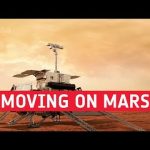
    The ExoMars mission will see Rosalind Franklin the rover and its surface platform Kazachok land on the Red Planet in 2021. From fine-grained soil to large boulders and slopes, the rover has to be able to move across many types of terrain, collect samples with a 2 m-long drill and analyse them with instruments in its onboard laboratory.

    This second episode about ExoMars features the challenges of leaving the surface platform, overcoming obstacles and walking on dunes.

    ESA, Roscosmos, Thales, Airbus and RUAG engineers put a full-sized model through a series of tests to fine-tune how the rover will move from its landing platform onto the martian terrain.

    Rovers on Mars have previously been caught in sand, and turning the wheels dug them deeper – just like a car stuck in mud or snow. To avoid this, Rosalind the rover has a unique locomotion mode called ‘wheel walking’.

    More information on ExoMars: http://www.esa.int/exomars

    Credits: ESA

    ★ Subscribe: http://bit.ly/ESAsubscribe and click twice on the bell button to receive our notifications.

    Check out our full video catalog: http://bit.ly/SpaceInVideos
    Follow us on Twitter: http://bit.ly/ESAonTwitter
    On Facebook: http://bit.ly/ESAonFacebook
    On Instagram: http://bit.ly/ESAonInstagram
    On Flickr: http://bit.ly/ESAonFlickr

    We are Europe’s gateway to space. Our mission is to shape the development of Europe’s space capability and ensure that investment in space continues to deliver benefits to the citizens of Europe and the world. Check out http://www.esa.int/ESA to get up to speed on everything space related.

    Copyright information about our videos is available here: http://www.esa.int/spaceinvideos/Terms_and_Conditions

    #ESA
    #ExoMars
    #RosalindTheRover

  • ExoMars rover science laboratory fitted

    ExoMars rover science laboratory fitted

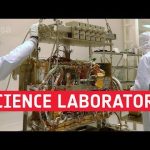
    The ExoMars rover’s Analytical Laboratory Drawer (ALD) was integrated into the rover at Airbus, Stevenage, UK in May 2019. The video is shown at 18 times real speed; in reality the sequence of events took around 11.5 minutes.

    The ExoMars rover, named Rosalind Franklin, will be the first of its kind to both roam the Mars surface and to study it at depth. Rosalind Franklin will drill down to two metres into the surface to sample the soil, analyse its composition and search for evidence of past – and perhaps even present – life hidden underground. A miniature laboratory inside the rover – the ALD – will analyse the samples with three different instruments, with some baked in the onboard oven to release gases for analysis, a technique used to search for traces of organic compounds.

    The rover will relay its data back to Earth via the ExoMars Trace Gas Orbiter, which is already conducting its science mission from Mars orbit.

    The ExoMars programme is a joint endeavour between ESA and Roscosmos.

    More about ALD: http://bit.ly/ExoMarsALD

    More about ExoMars: http://bit.ly/ExoMarsESA

    Credits: Airbus

    ★ Subscribe: http://bit.ly/ESAsubscribe and click twice on the bell button to receive our notifications.

    Check out our full video catalog: http://bit.ly/SpaceInVideos
    Follow us on Twitter: http://bit.ly/ESAonTwitter
    On Facebook: http://bit.ly/ESAonFacebook
    On Instagram: http://bit.ly/ESAonInstagram
    On Flickr: http://bit.ly/ESAonFlickr

    We are Europe’s gateway to space. Our mission is to shape the development of Europe’s space capability and ensure that investment in space continues to deliver benefits to the citizens of Europe and the world. Check out http://www.esa.int/ESA to get up to speed on everything space related.

    Copyright information about our videos is available here: http://www.esa.int/spaceinvideos/Terms_and_Conditions

    #ESA
    #ExoMars
    #RosalindTheRover

  • ExoMars Rover: from concept to reality

    ExoMars Rover: from concept to reality

    The second part of the ExoMars programme is ongoing.

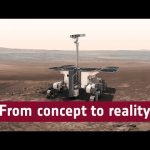
    In Stevenage, UK, a rover is being built that will carry a drill and a suite of instruments dedicated to exobiology and geochemistry research. It will be the first mission to combine the capability to move across the surface and to study Mars at depth.

    The primary goal of the ExoMars programme is to address the question of whether life has ever existed on the red planet.

    The first part of the programme was launched in March 2016 with the Trace Gas Orbiter. The second part is planned for launch in 2020 and comprises the rover and surface science platform

    ExoMars is a joint endeavour between ESA and the Russian space agency, Roscosmos.

    ★ Subscribe: http://bit.ly/ESAsubscribe and click twice on the bell button to receive our notifications.

    Check out our full video catalog: http://bit.ly/SpaceInVideos
    Follow ESA on Twitter: http://bit.ly/ESAonTwitter
    On Facebook: http://bit.ly/ESAonFacebook
    On Instagram: http://bit.ly/ESAonInstagram
    On Flickr: http://bit.ly/ESAonFlickr

    ESA is Europe’s gateway to space. Our mission is to shape the development of Europe’s space capability and ensure that investment in space continues to deliver benefits to the citizens of Europe and the world. Check out http://www.esa.int/ESA to get up to speed on everything space related.

    Copyright information about our videos is available here: http://www.esa.int/spaceinvideos/Terms_and_Conditions

    #ExoMars
    #Mars
    #PlanetaryScience

  • ESA Euronews: Looking for life on Mars with ExoMars

    ESA Euronews: Looking for life on Mars with ExoMars

    ExoMars is the first mission to head to the Red Planet to seek signs of life, now or in the past. It’s a massive scientific and technical challenge, and Euronews meets some of the team involved in this joint ESA-Roscosmos project in this month’s edition of Space.

    Learn more about #ExoMars: http://bit.ly/ESAExoMars

    This video is also available in the following languages:
    German: https://youtu.be/FW2nteHwxEg
    French: https://youtu.be/3zzz0jFt9xY
    Italian: https://youtu.be/pDkt0Af3LNE
    Spanish: https://youtu.be/gWKr26f3WGI
    Portuguese: https://youtu.be/9FGBJsBHISc
    Greek: https://youtu.be/SH47tRiPeuY
    Hungarian: https://youtu.be/1BaSoeIzpto

    ★ Subscribe: http://bit.ly/ESAsubscribe

    Check out our full video catalog: http://bit.ly/SpaceInVideos
    Follow ESA on Twitter: http://bit.ly/ESAonTwitter
    On Facebook: http://bit.ly/ESAonFacebook
    On Instagram: http://bit.ly/ESAonInstagram
    On Flickr: http://bit.ly/ESAonFlickr

    ESA is Europe’s gateway to space. Our mission is to shape the development of Europe’s space capability and ensure that investment in space continues to deliver benefits to the citizens of Europe and the world. Check out http://www.esa.int/ESA to get up to speed on everything space related.

    Copyright information about our videos is available here: http://www.esa.int/spaceinvideos/Terms_and_Conditions

  • ESA Euronews: Mit ExoMars nach dem Leben auf dem Mars suchen

    ESA Euronews: Mit ExoMars nach dem Leben auf dem Mars suchen

    Bei der ExoMars-Mission, die nach Leben auf dem roten Planeten sucht, wächst die Spannung: Denn bereits der erste Satellit dieses europäisch-russischen Projekts entdeckte viel mehr Wassereis knapp unter der Marsoberfläche, als irgendjemand erwartet hatte. Jetzt arbeiten die Ingenieure fieberhaft daran, den Rover rechtzeitig zum Start im Jahr 2020 fertigzustellen.

    ★ Subscribe: http://bit.ly/ESAsubscribe

    Check out our full video catalog: http://bit.ly/SpaceInVideos
    Follow ESA on Twitter: http://bit.ly/ESAonTwitter
    On Facebook: http://bit.ly/ESAonFacebook
    On Instagram: http://bit.ly/ESAonInstagram
    On Flickr: http://bit.ly/ESAonFlickr

    ESA is Europe’s gateway to space. Our mission is to shape the development of Europe’s space capability and ensure that investment in space continues to deliver benefits to the citizens of Europe and the world. Check out http://www.esa.int/ESA to get up to speed on everything space related.

    Copyright information about our videos is available here: http://www.esa.int/spaceinvideos/Terms_and_Conditions

  • ESA Euronews: Buscando vida en Marte con ExoMars

    ESA Euronews: Buscando vida en Marte con ExoMars

    Los científicos e ingenieros que trabajan en ExoMars lo hacen a contrarreloj para finalizar un todoterreno y una plataforma de aterrizaje que les permitirán, en 2021, explorar la superficie y el subsuelo de Marte y comprobar si hay o ha habido vida en el Planeta Rojo.
    Euronews ha viajado hasta el Reino Unido y Bélgica para hablar con los científicos e ingenieros que trabajan en ExoMars, un equipo europeo y ruso.

    ★ Subscribe: http://bit.ly/ESAsubscribe

    Check out our full video catalog: http://bit.ly/SpaceInVideos
    Follow ESA on Twitter: http://bit.ly/ESAonTwitter
    On Facebook: http://bit.ly/ESAonFacebook
    On Instagram: http://bit.ly/ESAonInstagram
    On Flickr: http://bit.ly/ESAonFlickr

    ESA is Europe’s gateway to space. Our mission is to shape the development of Europe’s space capability and ensure that investment in space continues to deliver benefits to the citizens of Europe and the world. Check out http://www.esa.int/ESA to get up to speed on everything space related.

    Copyright information about our videos is available here: http://www.esa.int/spaceinvideos/Terms_and_Conditions

  • ESA Euronews: À la recherche de la vie sur Mars avec ExoMars

    ESA Euronews: À la recherche de la vie sur Mars avec ExoMars

    Space fait le point sur l’avancée de la mission ExoMars dont le deuxième volet consistera à envoyer prochainement un rover capable de forer le sol martien à la recherche d’éventuelles traces de vie.

    ★ Subscribe: http://bit.ly/ESAsubscribe

    Check out our full video catalog: http://bit.ly/SpaceInVideos
    Follow ESA on Twitter: http://bit.ly/ESAonTwitter
    On Facebook: http://bit.ly/ESAonFacebook
    On Instagram: http://bit.ly/ESAonInstagram
    On Flickr: http://bit.ly/ESAonFlickr

    ESA is Europe’s gateway to space. Our mission is to shape the development of Europe’s space capability and ensure that investment in space continues to deliver benefits to the citizens of Europe and the world. Check out http://www.esa.int/ESA to get up to speed on everything space related.

    Copyright information about our videos is available here: http://www.esa.int/spaceinvideos/Terms_and_Conditions

  • ESA Euronews: Ψάχνετε για ζωή στον Άρη με το ExoMars

    ESA Euronews: Ψάχνετε για ζωή στον Άρη με το ExoMars

    Στη Βρετανία επιστήμονες και μηχανικοί εργάζονται για την αποστολή ExoMars, την κοινή Ευρωπαϊκή και ρωσική προσπάθεια που θα ταξιδέψει στον κόκκινο πλανήτη, ψάχνοντας για ζωή.
    Ο Μπρούνο, είναι το ρόβερ που θα πάει στον Άρη. Είναι ένα όχημα με έξι ρόδες που μπορεί να αναπτύξει ταχύτητα δύο εκατοστών το δευτερόλεπτο και μπορεί να κινηθεί ημιαυτόνομα στην επιφάνεια του πλανήτη. Τις δοκιμές κάνουν οι μηχανικοί της Airbus, που είναι υπεύθυνοι για την κατασκευή του πρώτου οχήματος που θα ψάξει για ζωή στον κόκκινο πλανήτη.

    ★ Subscribe: http://bit.ly/ESAsubscribe

    Check out our full video catalog: http://bit.ly/SpaceInVideos
    Follow ESA on Twitter: http://bit.ly/ESAonTwitter
    On Facebook: http://bit.ly/ESAonFacebook
    On Instagram: http://bit.ly/ESAonInstagram
    On Flickr: http://bit.ly/ESAonFlickr

    ESA is Europe’s gateway to space. Our mission is to shape the development of Europe’s space capability and ensure that investment in space continues to deliver benefits to the citizens of Europe and the world. Check out http://www.esa.int/ESA to get up to speed on everything space related.

    Copyright information about our videos is available here: http://www.esa.int/spaceinvideos/Terms_and_Conditions

  • ESA Euronews: Procurando vida em Marte com ExoMars

    ESA Euronews: Procurando vida em Marte com ExoMars

    À procura de vida em Marte, a Agência Espacial Europeia (ESA, na sigla em inglês) e a congénere russa Roscosmos estão a ultimar a próxima missão ExoMars, a qual vai integrar também tecnologia de origem portuguesa.
    A Euronews deslocou-se a Stevenage, a norte de Londres, no Reino Unido, onde a Airbus está a desenvolver um novo veículo com o objetivo específico de procurar sinais de vida no planeta vermelho, o “vizinho” mais próximo da Terra no Sistema Solar.

    ★ Subscribe: http://bit.ly/ESAsubscribe

    Check out our full video catalog: http://bit.ly/SpaceInVideos
    Follow ESA on Twitter: http://bit.ly/ESAonTwitter
    On Facebook: http://bit.ly/ESAonFacebook
    On Instagram: http://bit.ly/ESAonInstagram
    On Flickr: http://bit.ly/ESAonFlickr

    ESA is Europe’s gateway to space. Our mission is to shape the development of Europe’s space capability and ensure that investment in space continues to deliver benefits to the citizens of Europe and the world. Check out http://www.esa.int/ESA to get up to speed on everything space related.

    Copyright information about our videos is available here: http://www.esa.int/spaceinvideos/Terms_and_Conditions

  • Mars sample return

    Mars sample return

    Spacecraft in orbit and on Mars’s surface have made many exciting discoveries, transforming our understanding of the planet and unveiling clues to the formation of our Solar System, as well as helping us understand our home planet. The next step is to bring samples to Earth for detailed analysis in sophisticated laboratories where results can be verified independently and samples can be reanalysed as laboratory techniques continue to improve.

    Bringing Mars to Earth is no simple undertaking—it would require at least three missions from Earth and one never-been-done-before rocket launch from Mars.

    A first mission, NASA’s 2020 Mars Rover, is set to collect surface samples in pen-sized canisters as it explores the Red Planet. Up to 31 canisters will be filled and readied for a later pickup – geocaching gone interplanetary.

    In the same period, ESA’s ExoMars rover, which is also set to land on Mars in 2021, will be drilling up to two meters below the surface to search for evidence of life.

    A second mission with a small fetch rover would land nearby and retrieve the samples in a Martian search-and-rescue operation. This rover would bring the samples back to its lander and place them in a Mars Ascent Vehicle – a small rocket to launch the football-sized container into Mars orbit.

    A third launch from Earth would provide a spacecraft sent to orbit Mars and rendezvous with the sample containers. Once the samples are safely collected and loaded into an Earth entry vehicle, the spacecraft would return to Earth, release the vehicle to land in the United States, where the samples will be retrieved and placed in quarantine for detailed analysis by a team of international scientists.

    Credits: NASA/ESA

    ★ Subscribe: http://bit.ly/ESAsubscribe
    Learn more: http://bit.ly/BringingMartianSoilToEarth

  • ExoMars low-altitude parachute drop test

    ExoMars low-altitude parachute drop test

    The video features footage taken of the parachute deployment as seen from the ground, as well as from onboard GoPros fixed to the drop test vehicle and looking up at the parachute. The test focused on the deployment and inflation of the second main stage 35m-wide parachute, which will be the largest to fly on Mars.

    Discussing the test are Stephane Langlois, ESA ExoMars engineer, and John Underwood, principal engineer at Vorticity.

    The test was carried out by Vorticity Ltd under supervision of Thales Alenia Space France, Thales Alenia Space Italy and ESA, in Kiruna, Sweden, on 2 March 2018.

    Credits: ESA & Vorticity Ltd

  • ExoMars Trace Gas Orbiter completes aerobraking

    ExoMars Trace Gas Orbiter completes aerobraking

    Since arriving at Mars in October 2016, the ExoMars Trace Gas Orbiter has been aerobraking its way into a close orbit of the Red Planet by using the top of the atmosphere to create drag and slow down. It is almost in the right orbit to begin observations – only a few hundred kilometres to go! With aerobraking complete, additional manoeuvres will bring the craft into a near-circular two-hour orbit, about 400 km above the planet, by the end of April. The mission’s main goal is to take a detailed inventory of the atmosphere, sniffing out gases like methane, which may be an indicator of active geological or biological activity. The camera will help to identify surface features that may be related to gas emissions. The spacecraft will also look for water-ice hidden below the surface, which could influence the choice of landing sites for future exploration. It will also relay large volumes of science data from NASA’s rovers on the surface back to Earth and from the ESA–Roscosmos ExoMars rover, which is planned for launch in 2020.

    Visit our website to learn more about ExoMars: https://www.esa.int/Our_Activities/Space_Science/ExoMars

  • ExoMars – A promising future

    ExoMars – A promising future

    2016 has been an eventful and promising year for ESA’s ExoMars mission. After successfully placing the Trace Gas Orbiter into Mars’ orbit on 19 October, the orbiter has sent back its first images, tested its instruments and performed in orbit calibration measurements and health checks.

    The Schiaparelli lander collected almost all of its expected data before its unexpected crash landing on the Martian surface. Crucial lessons will be learnt from this for the recently approved 2020 ExoMars mission, which will put Europe’s first rover on Mars.

    The precise cause of the lander loss is still being investigated but preliminary technical investigations have found that the atmospheric entry and slowing down in the early phases went exactly as planned.

    In all, since its launch in March 2016, the ExoMars mission has been a mixture of successes and one unexpected set back. Looking ahead, the Trace Gas Orbiter will start aerobraking in March 2017 to gradually slow down over the following months. By the end of 2017, the orbiter will be in a lower, near circular orbit of 400 kms and ExoMars’ primary science mission can begin.

    More about ExoMars:
    http://www.esa.int/exomars

  • ESA Euronews: Ministerial 2016, Europe’s future in space

    ESA Euronews: Ministerial 2016, Europe’s future in space

    Lucerne offered a scenic backdrop to ESA’s space summit – the crucial ministerial meeting held every two years when the agency’s 22 member states spend 48 hours debating one subject – Europe’s future in space.

    After posing for the family photo, the leaders of the European space sector closed the doors to begin debating the big questions – ExoMars and the International Space Station.

    This video is available in the following languages:
    Spanish: https://www.youtube.com/watch?v=556Cu6ltE94
    Portuguese: https://www.youtube.com/watch?v=cIcEywRwoTw
    Greek: https://www.youtube.com/watch?v=GRznfZWQVxs
    Italian: https://www.youtube.com/watch?v=d2udiXhc-oo
    Hungarian: https://www.youtube.com/watch?v=pF-ED0NzEh8
    German: https://www.youtube.com/watch?v=EdzNFyYTnoU
    French: https://www.youtube.com/watch?v=YnLPv-sHicY

  • ESA Euronews: Europas Zukunft in der Raumfahrt

    ESA Euronews: Europas Zukunft in der Raumfahrt

    Europas Raumfahrtminister haben sich für ein Gipfeltreffen in Luzern getroffen, um über die Zukunft einiger der wichtigsten Missionen wie die Internationale Raumstation (ISS) und die ExoMars-Mission zu sprechen.

    Luzern bot eine malerische Kulisse für den Weltraumgipfel der ESA – das wichtige Ministertreffen, das alle zwei Jahre stattfindet, und die 22-EU-Mitgliedstaaten, die 48 Stunden über ein Thema reden: Europas Zukunft im Weltraum.

    Nach dem Gruppenfoto wurden die Türen geschlossen, um über die großen Themen zu diskutieren: die Zukunft der ExoMars-Mission und der ISS.

  • ESA Euronews: Fontos döntések az európai űrkutatás jövőjéről

    ESA Euronews: Fontos döntések az európai űrkutatás jövőjéről

    A luzerni csúcstalálkozón az Európai Űrügynökség (ESA) 22 tagállamának miniszterei tárgyaltak 48 órán át arról, milyen legyen Európa jövője az űrben.

    A családi fotó után nagy kérdéseket kezdtek megvitatni – az ExoMarsot és a Nemzetközi Űrállomást.

  • ESA Euronews: ExoMars at Mars

    ESA Euronews: ExoMars at Mars

    Scientists and engineers on the ExoMars project had their hearts in their mouths as the ExoMars mission reached the red planet, with the Schiaparelli probe going missing in action at the end of its descent just as the TGO mothership swept into a perfectly timed orbit.

    The rollercoaster ride of arrival at Mars is the first installment in this ambitious Russian and European project that aims for the first time to directly search for signs of life on Mars.

    The plight of Schiaparelli remains unclear. It is certainly on the Martian surface, but may well have hit the red dust much harder then engineers had planned, and nothing has been heard from it since.

    Data relayed during the lander’s descent shows the initial high-speed entry to the Martian atmosphere went well, with the heatshield slowing the craft and the parachute deploying. However once the back heat shield and parachute were ejected the flow of events did not go to plan.

    This video is available in the following languages:
    English https://www.youtube.com/watch?v=S3eIilSYrok
    French https://www.youtube.com/watch?v=mEXA_Fo7ABg
    German https://www.youtube.com/watch?v=jCCFOjP0ocw
    Spanish https://www.youtube.com/watch?v=bMnSKkSLLbA
    Italian https://www.youtube.com/watch?v=wqi7XU0ojqI
    Portuguese https://www.youtube.com/watch?v=-VyaoG_f51s
    Hungarian https://www.youtube.com/watch?v=S7QLUBb5QbI
    Greek https://www.youtube.com/watch?v=hlrNu0vselk

  • Schiaparelli’s descent to Mars in real time

    Schiaparelli’s descent to Mars in real time

    Visualisation of the ExoMars Schiaparelli module entering and descending through the atmosphere to land on Mars. The animation follows a simulated timeline of the module, starting when it enters the atmosphere at an altitude of 121 km at 14:42 GMT. In six minutes it will use a heatshield, parachute and thrusters to brake from 21 000 km/h to a near standstill 2 m above the surface, where a crushable structure on its underside will absorb the final shock.

    The key operational milestones are highlighted in the animation at the predicted times at which they have been calculated to occur. However, the actual times may vary depending on the atmospheric conditions on the day, the final path through the atmosphere and the speed at which the module descends.

    The times indicated in the animation are onboard spacecraft times at Mars. The one-way signal travel time on 19 October is just under 10 minutes, meaning that signals relayed by spacecraft at Mars are received on Earth about 10 minutes after the event itself has happened on the Red Planet.

    Both Schiaparelli and the Mars scenery in this animation are computer-generated.

  • ExoMars: From separation to landing

    ExoMars: From separation to landing

    On 16 October, seven months and 500 million km after launching from Baikonur in Kazakhstan, the joint European and Russian ExoMars 2016 mission reaches a crucial phase.

    The Trace Gas Orbiter will release its Schiaparelli lander for a three day coast and a six minute descent to the Martian surface.The lander, which was designed to demonstrate technologies for entry, descent and landing on Mars, is heading for the Meridiani Planum. This is an area that is currently being studied by NASA’s Opportunity rover and Europe’s Mars Express orbiter.

    On 19 October, the Schiaparelli lander will be activated a few hours before reaching the Martian atmosphere, when it will be travelling at some 21 000 km/h. The front heatshield – covered with 90 insulating tiles – will be subjected to temperatures of up to 1500 degrees Celsius.

    This video covers the separation, descent and landing procedures, as well as the orbiter’s critical burn to avoid crashing on the surface of Mars.

  • ExoMars at Mars

    ExoMars at Mars

    Three days before arriving at Mars on 19 October 2016, the ExoMars Trace Gas Orbiter (TGO) will release its entry, descent and landing demonstrator, Schiaparelli, towards the Red Planet. ExoMars is several missions in one. Its orbiter is a science and relay mission. The TGO will search for evidence of gases, such as methane, that may be associated with geological or biological processes. The Schiaparelli lander is a technology demonstrator to test key technologies for future missions to Mars.

    The landing site is an elliptical region close to the equator about 100 km long and 15 km wide in the planet’s Meridiani Planum area. It is relatively flat, smooth and well studied as NASA’s Opportunity rover is on the ground and ESA’s Mars Express spacecraft, which will also act as one of the data relay orbiters, has been overhead since 2003.

    This video covers the landing and orbital manoeuvres, including the use of aerobraking – which ESA is using for the first time at Mars.

  • Schiaparelli’s descent to Mars

    Schiaparelli’s descent to Mars

    Visualisation of the ExoMars Schiaparelli module entering and descending through the martian atmosphere to land on Mars.

    Schiaparelli will enter the atmosphere at about 21 000 km/h and in less than six minutes it will use a heatshield, a parachute and thrusters to slow its descent before touching down in the Meridiani Planum region close to the equator, absorbing the final contact with a crushable structure.

    The entire process will take less than six minutes: the animation has been sped up.

    Schiaparelli is set to separate from the Trace Gas Orbiter on 16 October, after a seven-month cruise together through space, and will enter the atmosphere on 19 October at 14:42 GMT.

    For an overview of the key timings and altitudes corresponding to the events portrayed in this animation see the Schiaparelli descent sequence graphic: http://www.esa.int/spaceinimages/Images/2016/02/ExoMars_2016_Schiaparelli_descent_sequence_16_9

    Both Schiaparelli and the Mars scenery in this animation were computer generated.

    More about ExoMars:
    http://www.esa.int/exomars

    ExoMars FAQ:
    http://www.esa.int/Our_Activities/Space_Science/ExoMars/ExoMars_frequently_asked_questions

  • Space science: everything starts here

    Space science: everything starts here

    How did it all begin? What are the origins of our planet? To understand our place in the Universe we need to explore space. Find out how we’re doing this with ESA’s incredible fleet of space science missions to study our Sun and chart the stars around us, probe the dark matter and dark energy of the Universe, and tour various planets, moons and other small bodies in our Solar System.

  • ExoMars/TGO Deep Space Hangout

    ExoMars/TGO Deep Space Hangout

    Google hangout with ExoMars mission experts for an update on the cruise to Mars, the crucial mid-course manoeuvre on 28 July and the upcoming preparations for the arrival phase. The hangout was held on 26 July at 16:00 CEST/14:00 GMT.

    Since launch on 14 March, ESA’s ExoMars Trace Gas Orbiter and the Schiaparelli landing demonstration module have been en route to the Red Planet.

    The hangout included mission updates and a live Q&A with ESA experts and scientists, focusing on the crucial milestones during the spacecraft’s seven-month cruise to the Red Planet.  

    The hangout was hosted by Daniel Scuka (ESA Spacecraft Operations Editor) who was joined by:

    ** Michel Denis – ExoMars Flight Director, ESOC
    ** Silvia Sangiorgi – ExoMars Deputy Spacecraft Operations Manager, ESOC
    ** Michael Khan – Mission Analyst, ESOC
    ** Ian Thomas – NOMAD (spectrometer) Project Manager, Royal Belgian Institute for Space Aeronomy

    Background info on #ExoMars :
    http://www.esa.int/Our_Activities/Space_Science/ExoMars
    http://www.esa.int/Our_Activities/Operations/ExoMars_TGO_operations

  • ExoMars is on its way

    ExoMars is on its way

    After a successful launch from Kazakhstan’s Baikonur Cosmodrome in March, the ExoMars spacecraft is making good progress on its 500 million km trip to Mars.

    The joint European and Russian mission will perform science, test lander and descent technology, and may help solve the mystery of why there is methane on Mars. The gas could indicate a geological origin or past or present life – most likely from microbes. The mission carries four scientific packages with Russia developing one of the three spectrometers on board the orbiter’s Atmospheric Chemistry Suite.

    This film provides an update of ExoMars’ journey. It includes the first test image from the Trace Gas Orbiter’s high-resolution camera and looks ahead to a major course correction manoeuvre in July. The spacecraft will then be lined up for arrival at Mars on 19 October 2016.

    Includes interviews with Thomas Passvogel, Head of Science Projects, ESA (English); Oleg Korablev, ACS Experiment Principal Investigator (Russian); Nicolas Thomas, CaSSIS Experiment Principal Investigator, University of Bern (English).

    More about ExoMars:
    http://www.esa.int/exomars

  • ExoMars prepares for liftoff (4K timelapse)

    ExoMars prepares for liftoff (4K timelapse)

    Timelapse movie following the preparations of the ExoMars 2016 spacecraft in the lead up to launch on 14 March 2016. The movie includes the integration of the entry, descent and landing demonstrator module, Schiaparelli, with the Trace Gas Orbiter, and the journey of the spacecraft inside the Proton rocket as it is moved to the launch pad and raised to a vertical position.

    ExoMars launched from Baikonur, Kazakhstan at 09:31 GMT on 14 March. It will arrive at the Red Planet on 19 October. Its mission is to address unsolved mysteries of the planet’s atmosphere that could indicate present-day geological – or even biological – activity, and to demonstrate the landing technologies needed for future missions to Mars.

    Find out more: http://www.esa.int/exomars

    Credits: Directed by Stephane Corvaja, ESA; Edited by Manuel Pedoussaut, Zetapress; Music by Hubrid-Time