Plans for human space exploration in the next decades are to leave Earth orbit and go to destinations such as the Moon and Mars. But what are the challenges associated with human survival in space and what kind of research is needed to address these challenges?
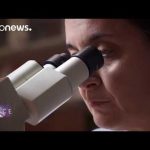
Life-support systems expert Lucie Poulet participated in four Mars analogue missions as a crew member and has over eight years of experience working on regenerative life-support systems with various groups such as the Micro-Ecological Life-Support System Alternative (MELiSSA) project and the German Aerospace Center, DLR, in Bremen, Germany.
Space Bites hosts the best talks on space exploration from the most inspiring and knowledgeable speakers from the field. Held at the technical heart of the European Space Agency in The Netherlands, the lectures illustrate challenges of space.
We are Europe’s gateway to space. Our mission is to shape the development of Europe’s space capability and ensure that investment in space continues to deliver benefits to the citizens of Europe and the world. Check out https://www.esa.int/ to get up to speed on everything space related.
NASA Explorers: Apollo is an audio series that tells stories of the Moon and the people who explore it. During the Apollo program, the Moon became a part of the human domain. Twelve astronauts walked on the lunar surface, conducted research there and collected Moon rocks to bring back to Earth for study. Fifty years after humanity’s first steps on the Moon, today’s lunar scientists are searching for answers to the big questions: How did the Moon form? How did our solar system evolve? Did the Moon help life on Earth get its start?
Meet a Moon detective, scientists who study space rocks and people from all over the world whose lives were shaped by the epic adventures of the Apollo program. You can listen to NASA Explorers: Apollo on Apple Podcasts, SoundCloud, Google Play and Facebook Watch.
Kaliah Hobbs (GSFC Interns): Lead Producer
Haley Reed (ADNET): Lead Producer
Katie Atkinson (GSFC Interns): Narrator
Katie Atkinson (GSFC Interns): Producer
Micheala Sosby (NASA/GSFC): Producer
Aaron E. Lepsch (ADNET): Technical Support
Music credits: “Tycho’s Daydream” by Daniel Wyantis
This video is public domain and along with other supporting visualizations can be downloaded from the Scientific Visualization Studio at: https://svs.gsfc.nasa.gov/13204
Working with industry to develop new lunar landers, testing resumes with our Space Launch System rocket engine, and after a job well done – the end of the line for one of our Mars rovers … a few of the stories to tell you about – This Week at NASA!
This video is available for download from NASA’s Image and Video Library: https://images.nasa.gov/details-NHQ_2019_0215_Discussing%20Lunar%20Exploration%20Plans%20on%20This%20Week%20@NASA%20%E2%80%93%20February%2015,%202019.html
50 years after the first human landed on the Moon, what is next? The exploration of our Moon is a global endeavour with Europeans and commercial actors playing a large role. The European Space Agency has developed an exploration programme based on four main missions.
Luna Resurs is a partnership with the Russian agency Roscosmos that will carry European technology to land precisely and safely on the Moon (PILOT) and to extract and analyse samples of the lunar terrain (PROSPECT).
Orion and the European Service Module will return humans to the Moon and take advantage of the new technology for human space transportation. Orion, the NASA spacecraft, will bring humans farther than they have never been before. ESA is providing the service modules that will provide propulsion, life support, power, air and water, and control the temperature in the crew module.
ISRU aims to extract and process resources on the Moon into useful products and services: “In-situ resource utilisation”. A mission to explore lunar resources could be a reality from 2025. The goal is to produce drinkable water or breathable oxygen on the Moon.
The Heracles mission could take of in 2028 to allow us to gain knowledge on human-robotic interaction while landing a spacecraft on the Moon, collecting samples with a rover operated from the lunar Gateway and send samples back to Earth.
ESA is Europe’s gateway to space. Our mission is to shape the development of Europe’s space capability and ensure that investment in space continues to deliver benefits to the citizens of Europe and the world. Check out http://www.esa.int/ESA to get up to speed on everything space related.
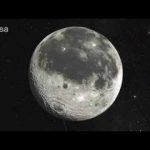
The Moon has been circling the Earth for over four billion years, but where did it come from?
In this video, Ralf Jaumann, planetary geologist at the German Aerospace Centre, DLR, discusses the four theories that could explain the origin of the Earth-Moon system.
There are four theories about the origin of the Earth-Moon system.
The first is that Earth captured a celestial body in its orbit. Another possibility is that a rapidly rotating Earth could have thrown material out to form the Moon around it. A third theory is that Earth and the Moon formed at the same time out of the same material. Today, most scientists believe the Moon is ‘Earth’s child’ – a large body collided with Earth, destroying our planet’s mantle and sending material into orbit from which the Moon formed. This ‘big splash’ theory would explain why the Moon’s rocks are similar to those on Earth.
ESA is Europe’s gateway to space. Our mission is to shape the development of Europe’s space capability and ensure that investment in space continues to deliver benefits to the citizens of Europe and the world. Check out http://www.esa.int/ESA to get up to speed on everything space related.
Over the last two decades, space agencies have created more comfortable conditions on the International Space Station, but we need to explore the concept of ‘living in space’ much further if humans are to ever live and work on another world, such as the Moon or Mars.
ESA’s Discovery and Preparation Programme works to prepare ESA for the future of space exploration. As part of this programme, ESA has worked with academic and industrial partners on a huge number of studies that lay the groundwork for living in space.
The technology that exists today could easily take us to the Moon and beyond, but it is studies like those carried out under the Discovery and Preparation Programme that will make a trip resourceful, sustainable and productive.
★ Subscribe: http://bit.ly/ESAsubscribe and click twice on the bell button to receive our notifications.
ESA is Europe’s gateway to space. Our mission is to shape the development of Europe’s space capability and ensure that investment in space continues to deliver benefits to the citizens of Europe and the world. Check out http://www.esa.int/ESA to get up to speed on everything space related.
The universe is incredibly old, astoundingly vast and populated by trillions of planets — so where are all the aliens? Astronomer Stephen Webb has an explanation: we’re alone in the universe. In a mind-expanding talk, he spells out the remarkable barriers a planet would need to clear in order to host an extraterrestrial civilization — and makes a case for the beauty of our potential cosmic loneliness. “The silence of the universe is shouting, ‘We’re the creatures who got lucky,’” Webb says.
The TED Talks channel features the best talks and performances from the TED Conference, where the world’s leading thinkers and doers give the talk of their lives in 18 minutes (or less). Look for talks on Technology, Entertainment and Design — plus science, business, global issues, the arts and more.
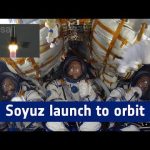
This unique video shows a full launch of the Soyuz MS-09: from liftoff to orbit.
Watch the launch from inside the crew capsule with first-ever shots from outside the spacecraft recorded by cameras fixed to the exterior of the Soyuz.
The intense launch lasts less than ten minutes whereby the Soyuz spacecraft is propelled 1640 km and gains 210 km altitude. Every second for nine minutes, the spacecraft accelerates 50 km/h on average as the rocket’s boosters burn their fuel and are discarded.
See the astronaut’s reactions and what the spacecraft looks like as the main steps are carried out to get into orbit:
-00:12 Launch command issued
-00:10 Engine turbopumps at flight speed
-00:05 Engines at maximum thrust
00:00 Launch
+1:54 Separation of emergency rescue system
+1:57 First stage separation
+2:38 Fairing separation
+4:48 Second stage separation
+4:58 Tail adapter separation
+8:45 Third stage engine cut off having arrived in orbit
+8:49 Soyuz separation, deploy solar arrays and antennae
The astronauts, from left to right, are NASA astronaut Serena Auñón-Chancellor, Roscosmos commander Sergei Prokopyev and ESA astronaut and flight engineer Alexander Gerst launched in the Soyuz MS-09 spacecraft from the Baikonur cosmodrome in Kazakhstan to the International Space Station on 6 June 2018. ESA astronaut Matthias Maurer and ESA television host Richard Hollingham provide commentary taken from the live event.
Hunched in their Sokol flight suits that offer protection in case of fire or depressurisation, the trio stay in the crew capsule of the Soyuz – the only module that is also designed to survive a return to Earth. The bags above their heads contain supplies for the International Space Station as every bit of space is used.
During a Soyuz launch astronauts typically experience forces of up to 4g – having to work while being pressed into their seats with a force that is four times more than the gravity felt on Earth. The Soyuz commander uses a stick to press buttons as they are too far away from the control panel.
The fluffy toys above the astronauts’ heads are mascots and good luck charms but also serve as a simple but effective test to see when the spacecraft is in orbit: when they start to float the spacecraft is weightless and orbiting Earth. Above Sergei is the mascot for the 2018 FIFA soccer World Cup held in Russia. Alexander took German children television icon “Die Maus” with him.
The launch went as planned as the 50-m tall Soyuz rocket propelled the astronauts to their cruising speed of around 28 800 km/h.
For this launch the astronauts took 34 orbits of Earth over two days to arrive at their destination spending their time in the cramped orbital module of the Soyuz that is no larger than a car. With limited communications and living space the astronauts had time to adapt to weightlessness and reflect on their mission ahead. They aligned their spacecraft with the International Space Station and approached the orbital outpost for docking on 8 June 2018. The files for this video were downloaded by the astronauts after arriving at the Space Station.
Alexander is a returning visitor to the International Space Station, the first of ESA’s 2009 class of astronauts to be sent into space for a second time. During the second part of his mission Alexander will take over as commander of the International Space Station, only the second time an ESA astronaut will take on this role so far.
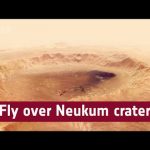
This movie, based on images taken by ESA’s Mars Express, showcases the 102 km wide Neukum Crater in the southern hemisphere of Mars.
The crater is named for the German physicist and planetary scientist, Gerhard Neukum, one of the founders of ESA’s Mars Express mission who inspired and led the development of the high-resolution stereo camera on Mars Express.
This complex impact crater has a diverse geologic history, as indicated by various features on the crater rim and floor. Particularly striking are the dark dune fields, likely made up of volcanic material blown in and shaped by strong winds.
The crater’s shallow interior has been infilled by sediments over its history. It is also marked with two irregular depressions that may be a sign of a weaker material that has since eroded away, leaving behind some islands of more resistant material.
Over time the crater rim has undergone varying degrees of collapse, with landslides and slumped material visible in the crater walls. Many smaller craters have also overprinted the rim and pockmarked the interior since Neukum Crater was formed, highlighting its long history.
Neukum Crater is situated in Noachis Terra, one of the oldest known regions on Mars, dating back to at least 3.9 billion years.
Credits: Animation: ESA/DLR/FU Berlin, CC BY-SA 3.0 IGO; Music: Coldnoise, CC BY-SA 4.0 and Adrian Neesemann
Spacecraft in orbit and on Mars’s surface have made many exciting discoveries, transforming our understanding of the planet and unveiling clues to the formation of our Solar System, as well as helping us understand our home planet. The next step is to bring samples to Earth for detailed analysis in sophisticated laboratories where results can be verified independently and samples can be reanalysed as laboratory techniques continue to improve.
Bringing Mars to Earth is no simple undertaking—it would require at least three missions from Earth and one never-been-done-before rocket launch from Mars.
A first mission, NASA’s 2020 Mars Rover, is set to collect surface samples in pen-sized canisters as it explores the Red Planet. Up to 31 canisters will be filled and readied for a later pickup – geocaching gone interplanetary.
In the same period, ESA’s ExoMars rover, which is also set to land on Mars in 2021, will be drilling up to two meters below the surface to search for evidence of life.
A second mission with a small fetch rover would land nearby and retrieve the samples in a Martian search-and-rescue operation. This rover would bring the samples back to its lander and place them in a Mars Ascent Vehicle – a small rocket to launch the football-sized container into Mars orbit.
A third launch from Earth would provide a spacecraft sent to orbit Mars and rendezvous with the sample containers. Once the samples are safely collected and loaded into an Earth entry vehicle, the spacecraft would return to Earth, release the vehicle to land in the United States, where the samples will be retrieved and placed in quarantine for detailed analysis by a team of international scientists.
A challenge for the next generation of explorers, an eye-popping virtual tour of the Moon, and introducing the public to a universe of discovery – a few of the stories to tell you about – This Week at NASA!
This video is available for download from NASA’s Image and Video Library: https://images.nasa.gov/details-NHQ_2018_0413_Human%20Exploration%20Rover%20Challenge%20on%20This%20Week%20@NASA%20%E2%80%93%20April%2013,%202018.html
The Rio Tinto river snakes through the Spanish countryside for 100 kilometres, a dark, blood-red stain of acid water and rusty-looking rocks that scientists love to study. Both ESA and NASA experts regularly spend weeks in the Rio Tinto, examining the life underground, and using it as a test bed to look for life on Mars.
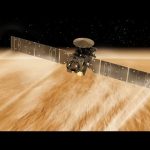
Since arriving at Mars in October 2016, the ExoMars Trace Gas Orbiter has been aerobraking its way into a close orbit of the Red Planet by using the top of the atmosphere to create drag and slow down. It is almost in the right orbit to begin observations – only a few hundred kilometres to go! With aerobraking complete, additional manoeuvres will bring the craft into a near-circular two-hour orbit, about 400 km above the planet, by the end of April. The mission’s main goal is to take a detailed inventory of the atmosphere, sniffing out gases like methane, which may be an indicator of active geological or biological activity. The camera will help to identify surface features that may be related to gas emissions. The spacecraft will also look for water-ice hidden below the surface, which could influence the choice of landing sites for future exploration. It will also relay large volumes of science data from NASA’s rovers on the surface back to Earth and from the ESA–Roscosmos ExoMars rover, which is planned for launch in 2020.
This is NASA’s 2018 ‘To Do’ list.
The work we do, which will continue in 2018, helps the United States maintain its world leadership in space exploration and scientific discovery.
Launches, discoveries and more exploration await in the year ahead.
This video is available for download from NASA’s Image and Video Library:
images-assets.nasa.gov/video/NHQ_2017_1219_NASA 2018 TO DO LIST_FINAL/NHQ_2017_1219_NASA 2018 TO DO LIST_FINAL~orig.mp4
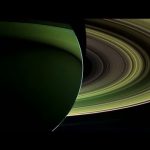
Cassini-Huygens was launched on 15 October 1997 from Cape Canaveral, Florida.After nearly 13 years in orbit around Saturn, the international Cassini-Huygens mission is going through its final chapter: NASA’s Cassini spacecraft is performing a series of daring dives between the planet and its rings, leading to a dramatic final plunge into Saturn’s atmosphere on 15 September.
On 14 January 2005, ESA’s Huygens probe, which hitched a ride to the Saturn system attached to Cassini during the seven-year voyage, entered the history books by descending to the surface of Titan, Saturn’s largest moon. This was humanity’s first successful attempt to land a probe on another world in the outer Solar System.
Huygens made a 21-day solo cruise toward the haze-shrouded moon. Plunging into Titan’s atmosphere, the probe touched down safely on Titan’s frozen surface.
Huygens provided a stream of data representing a unique treasure trove of in situ measurements from the planet-sized satellite which scientists are still mining today.
This video recalls the ‘one of a kind’ journey of Huygens.
‘The Moon – ESA’s interactive guide’ is a web documentary with over 40 videos narrated by scientists involved in lunar research. The platform allows you to explore your own path and discover the science, technology and the missions around our moon. An engaging space to satisfy your curiosity, learn and be inspired.
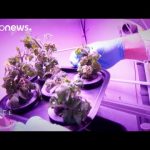
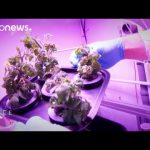
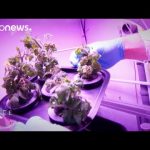
Is is possible to produce food to eat and air to breathe while in space? The short answer: it’s not easy, but it can be done.
Right now, if you’re an astronaut, you’re given pre-prepared food that was cooked on Earth and sent into space on a rocket. But if humankind wants to realise its ambition of travelling much further into the solar system it needs to find ways to create food and air while surrounded by the nothingness of space.
Ha manapság valaki kiruccan az űrbe, egyfajta űrmenüt kap enni. A Földön gyártják, csomagolják, majd kilövik az űrbe egy rakétán. Ez működik is addig, amíg a Föld körüli pályán keringünk, de mi van, ha valaki messzebbre akar utazni? Ehhez élelmet és levegőt kellene előállítani az űrhajón. Lehetséges ez? A Space Brémában és Barcelonában próbált utánajárni.
Nem könnyű élelmiszert termelni az űrben, de nem is lehetetlen. Orosz űrhajósok fogyasztottak először űrgabonát 2003-ban, és tavaly augusztusban amerikai kozmonauták majszolták el az első űrben termett salátát. De egy hosszú űrutazáshoz ennél több kell. A Melissa konzorcium – az Európai Űrügynökség támogatásával készült – kutatásából kiderült, pontosan mennyi.
¿A qué se parece la comida espacial? Iremos a Bremen y Barcelona para conocer la respuesta.
No es fácil producir comida en el espacio pero es posible. Cosmonautas rusos le hincaron el diente al primer cultivo experimental en 2003 y, el pasado mes de agosto, astronautas estadounidenses se deleitaron con la primera lechuga espacial. Pero aventurarse a ser agricultor espacial no es tan fácil.
After a successful launch from Kazakhstan’s Baikonur Cosmodrome in March, the ExoMars spacecraft is making good progress on its 500 million km trip to Mars.
The joint European and Russian mission will perform science, test lander and descent technology, and may help solve the mystery of why there is methane on Mars. The gas could indicate a geological origin or past or present life – most likely from microbes. The mission carries four scientific packages with Russia developing one of the three spectrometers on board the orbiter’s Atmospheric Chemistry Suite.
This film provides an update of ExoMars’ journey. It includes the first test image from the Trace Gas Orbiter’s high-resolution camera and looks ahead to a major course correction manoeuvre in July. The spacecraft will then be lined up for arrival at Mars on 19 October 2016.
Includes interviews with Thomas Passvogel, Head of Science Projects, ESA (English); Oleg Korablev, ACS Experiment Principal Investigator (Russian); Nicolas Thomas, CaSSIS Experiment Principal Investigator, University of Bern (English).
Almost 50 years since man first walked on the lunar surface, the head of the European Space Agency explains his vision for living and working on the Moon.
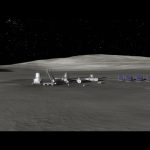
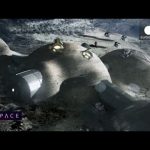
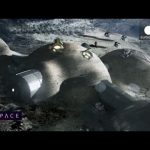
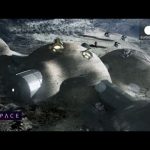
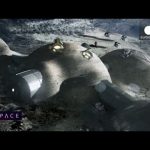
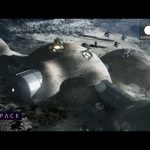
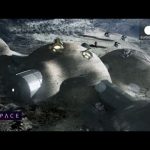
Johann-Dietrich Woerner believes the next giant leap for humankind could be an international collaboration of space faring nations in the form of a Moon village. This village would be a permanent lunar base for science, business, tourism or even mining.
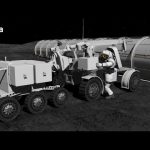
Woerner explains how using the Moon’s own natural resources could help build and sustain a base by 3D printing a structure or building element. Robotic rovers could inflate protective domes for astronauts. He also discusses the potential hazards of living on the Moon as well as the possible locations of he lunar base and the advantages of a new global space project.
Jan Woerner, Director General of the European Space Agency, has a bold new vision for space exploration. “My intention is to build up a permanent base station on the Moon,” he tells Euronews from the agency’s main control room in Darmstadt. “Meaning that it’s an open station, for different member states, for different states around the globe.”
Mankind has never had a permanent lunar presence, and so this new vision, that Woerner likes to call the ‘Moon village’, would represent a giant leap in space exploration.
Le directeur général de l’Agence spatiale européenne dit vouloir construire une base permanente sur la Lune. Ce projet incroyable prend peu à peu forme à mesure que les scientifiques européens commencent à sérieusement y réfléchir. Nous avons rencontré quelques-uns de ceux qui pourraient faire de ce rêve, une réalité, notamment au Centre européen des astronautes à Cologne.
“J’ai l’intention de construire une base permanente sur la Lune : ce sera une station ouverte pour différents Etats participants, des pays des quatre coins du monde,” explique posément le nouveau directeur général de l’Agence spatiale européenne.
Die Europäische Weltraumorganisation ESA will ein tollkühnes Projekt in Angriff nehmen: Sie will ein Dorf auf dem Mond bauen. Die permanente Station soll an dem Ort entstehen, an dem einst die Russen landeten und die Amerikaner erste Schritte machten. ESA-Chef Jan Woerner hat eine Vision: “Ich will eine permanente Mondstation bauen. Es wäre eine offene Station für mehrere Länder aus der ganzen Welt.”
Die Apollo-Ära hat gezeigt, dass Träume Wirklichkeit werden können. Die Forscher damals hatten ein klares Ziel vor Augen: die Mondlandung. ESA-Astronaut Andreas Mogensen scheint zuversichtlich: “In den 1960er Jahren haben sie das innerhalb von zehn Jahren geschafft. Heute sind wir technologisch gesehen viel weiter. Wir können es also noch einmal machen.”
Die Mondstation würde die Internationale Raumstation, ISS, ablösen. Sie wäre das neue gemeinsame Raumfahrt-Projekt, an dem alle teilnehmen könnten. “Die Amerikaner, die Russen, die Chinesen, die Inder und die Japaner werden mitmachen. Und andere Länder werden ebenfalls etwas beisteuern,” so Woerner.
– Feltett szándékom egy állandó bázisállomás építése a Holdra – mondja az Európai Űrügynökség vezetője, Jan Woerner. – Ez egy közös bázis lenne a partnereinkkel, amit a világ más országaival közösen építenénk és használnánk. Benne lesznek az amerikaiak, az oroszok, a kínaiak az indiaiak, a japánok és kisebb hozzájárulással más országok is.
A jelenlegi helyzetben a Holdbázis álomnak tűnik – de az Apolló-program során már kiderült, hogy megfelelő költségvetés mellett óriási technológiai ugrások lehetségesek. A tervek szerint ez lenne az új globális űrprojekt a Nemzetközi Űrállomás után.
Tornare sulla Luna? La prossima tappa dell’esplorazione spaziale, dopo l’esperienza della Stazione Spaziale Internazionale, prevede molto di più. L’Agenzia spaziale europea ha un nuovo obiettivo: costruire una base permanente sulla luna.
I russi furono i primi a lanciare una missione sulla luna mentre gli americani i primi a camminare sulla sua superficie. Oggi la luna continua ad essere al centro di ambiziose ricerche come ci conferma anche il direttore generale dell’Agenzia spaziale europea Jan Wörner. Una base internazionale, una stazione aperta ai diversi Stati membri dell’Agenzia e ai paesi di tutto il mondo.
Un sogno animato dalla stessa passione che ha portato il primo uomo sulla Luna. Certo finora nessuno ha mai realizzato un progetto simile. Dalla missione spaziale Apollo sono stati fatti passi da gigante.
O homem que está à frente da Agência Espacial Europeia (ESA) tem um ambicioso objetivo: construir uma base permanente na Lua. É no Centro Europeu de Astronautas em Colónia, na Alemanha, que estão a ser dados os primeiros passos nessa direção.
Em 1959, os russos conseguiram aterrar uma nave não tripulada na Lua; dez anos mais tarde, os americanos passearam na sua superfície. Hoje em dia, o plano é ficar. _”O meu objetivo é construir uma base permanente na Lua. Uma estrutura aberta à participação de diferentes países”_, declara Jan Wörner, diretor geral da ESA. A ideia é criar um projeto global à semelhança da Estação Espacial Internacional.
O Centro Europeu de Astronautas em Colónia organizou um workshop precisamente sobre como erguer uma espécie de pequena aldeia sobre a superfície lunar. A presença de certos metais, minerais e de água gelada pode representar um contributo valioso. Segundo Bernard Foing, diretor do Grupo Internacional de Exploração Lunar, _”a Lua tem imensos recursos. Encontrámos gelo nos polos, encontrámos áreas que estão quase constantemente expostas ao Sol. São zonas que nos podem fornecer recursos para utilizarmos na construção ou na manutenção da vida dos astronautas na base lunar.”_
La nueva cúpula de la Agencia Espacial Europea (ESA) quiere construir una base permanente en la Luna. El lugar donde hace medio siglo los rusos llegaron por primera vez y los estadounidenses dieron sus primeros pasos. Se trata de un proyecto muy ambicioso en el que ya está trabajando el Centro Europeo de Astronautas con sede en la ciudad alemana de Colonia.
“Mi intención es construir una base permanente en la luna, una estación abierta a diferentes estados miembros de todo el mundo”, asegura Jan Woerner, director de la ESA.
The ExoMars spacecraft is almost complete. A joint mission between ESA and Roscosmos, it begins with the launch of the ExoMars orbiter in 2016 and carries an aerodynamically designed capsule containing a robotic lander.
Getting to Mars, landing there safely and searching for life is a huge scientific and technical challenge. ExoMars 2016 will send back information about the Martian atmosphere and the lander’s findings. These will inform the second part of the mission, in 2018, when a European rover will drill into the Martian surface, up to two metres down. The rover will be trying to detect traces of organic molecules that indicate the presence of past or present life on Mars.
This video includes interviews with Jorge Vago, ExoMars Project Scientist, ESA and Pietro Baglioni, ExoMars Rover Manager, ESA. It shows ExoMars 2016 nearing construction in its clean room at Thales Alenia Space in France and a prototype ExoMars rover in the ExoMars test yard at ESA’s ESTEC facility in the Netherlands.
This 8-minute film gives an overview of the past, present, and future of Moon exploration, from the Lunar cataclysm to ESA’s vision of what Lunar exploration could be.
Why is the Moon important for science? What resources does the Moon have? Is there water? Why should we go back and how will we do it?
In the afterglow of the Rosetta mission’s success in landing on a comet, the member states of ESA met in Luxembourg in early December to look forward to future challenges. Among the priorities is the development and construction of the new rocket, Ariane 6, which is seen as essential to maintaining Europe’s lead in the launcher market. Then there’s the ExoMars mission to further explore the ‘Red Planet’ and look for signs of life. But it’s not just about probes – ESA’s manned spaceflight programme also has momentum, with new astronauts currently in training and due to fly in 2015 and 2016. So, as the agency marks a half century of Europe’s space sector, it’s onwards and upwards for the next 50 years.
An April 29 exploration forum aired on NASA Television from NASA headquarters, featured Administrator Charles Bolden and other agency leadership showcasing NASA’s human exploration path to Mars. NASA is developing the capabilities needed to send astronauts to an asteroid by 2025 and Mars in the 2030s.
ESA is looking to the future of space exploration using robots ranging from small humanoid robots to larger construction robots with varying degrees of autonomy and flexibility.
This animation shows advanced concepts of robots designed to explore, prepare and help humans in the very harsh conditions found on the Moon and beyond. For many of the concepts shown, ESA has already developed real-life prototypes, including the multifunctional wheels seen on the first robot in this video.
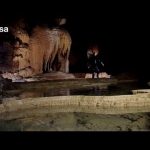
Members of the CAVES 2013 crew talk about exploring inside the Sa Grutta cave – comparing their experience to arriving on the surface of a planet like Mars, where you don’t quite know what to expect.
CAVES, ESA’s unique training programme for astronauts, takes place over a couple of weeks in Sardinia’s Supramonte. Six astronauts spend two weeks deep in caves, in the dark and cold. They are separated from the outside world, doing scientific research and daily tasks together, as a group, just like in space. Moving in the cave system is also comparable to spacewalking with the use of harnesses and safety devices.
Read more about CAVES on our dedicated website (esa.int/caves) and read more about the CAVES 2013 campaign in the blog (blogs.esa.int/CAVES2013)
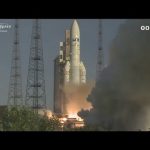
Thursday 2 August 2012 marked the 50th successful Ariane flight in a row: an Ariane 5 was launched from Europe’s Spaceport in French Guiana to perform a dual deployment of two telecommunications satellites, Intelsat 20 and Hylas-2, into their planned transfer orbits.
Lift off of flight VA208 took place at 22:54 CEST; 17:54 French Guiana time. This was Ariane 5’s fourth launch of 2012, continuing a line of launch successes unbroken since 2003.
Lunar Lander mission, from launch to landing and exploring the Moon.
Lunar Lander is a robotic explorer that will demonstrate key European technologies and conduct science experiments.
The mission is a forerunner to future human and robotic exploration of the Moon and Mars. It will establish European expertise to allow strong international partnerships in exploration.
ESA has updated its application for iPhone and iPad.
With the launch of the ESA App V2, users can see ESA’s latest satellite imagery from Envisat in near-real time, complementing the latest news and discoveries in space exploration and Earth observation.
Making full use of the iPhone and iPad touch features, ESA App V2 puts videos, images, facts and figures, ESA’s Twitter feeds, YouTube links and other information in a convenient mobile package.
Download ESA App V2 here: http://itunes.apple.com/us/app/esa-european-space-agency/id441518639?mt=8