The first mission to the Trojan asteroids, a prelaunch milestone for our Artemis I mission, and highlighting a few of our NASA centers … a few of the stories to tell you about – This Week at NASA!
On Oct. 16, 2021, our Lucy spacecraft will begin its journey to visit a record-breaking number of asteroids. The 12-year mission starts from NASA’s Kennedy Space Center where it’ll launch aboard a United Launch Alliance Atlas V 401 rocket. From there, Lucy will be the first spacecraft to visit a record number of destinations in independent orbits around the sun – one main belt asteroid and seven of Jupiter’s Trojan Asteroids. Like the mission’s namesake – the fossilized human ancestor, “Lucy,” whose skeleton provided unique insight into humanity’s evolution – Lucy will revolutionize our knowledge of planetary origins and the formation of the solar system.
Lucy’s first launch attempt in its 21-day launch window is scheduled for 5:34 a.m. EDT on Oct. 16. Launch coverage starts at 5 a.m. EDT on NASA TV, the NASA app, and @NASA social media. Be a part of Lucy’s historic launch day by using the hashtag #LucyMission!
Producer/Editor: Lacey Young Music: Universal Production Music
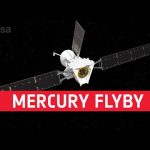
Visualisation of BepiColombo flying by Mercury on 1 October 2021. The spacecraft makes nine gravity assist manoeuvres (one of Earth, two of Venus and six of Mercury) before entering orbit around the innermost planet of the Solar System.
The closest approach is at 23:34 UTC on 1 October (01:34 CEST 2 October) at a distance of about 200 km.
BepiColombo is an international collaboration between #ESA and #JAXA.
Credit: ESA/ATG medialab
★ Subscribe: http://bit.ly/ESAsubscribe and click twice on the bell button to receive our notifications.
We are Europe’s gateway to space. Our mission is to shape the development of Europe’s space capability and ensure that investment in space continues to deliver benefits to the citizens of Europe and the world. Check out https://www.esa.int/ to get up to speed on everything space related.
🗡️ Behold a new golden age in Conqueror’s Blade. Play Season VIII: Dynasty today and enjoy a FREE 7 day premium account! https://bit.ly/3xZJyEH Sponsored by MY.GAMES 👇 Push down for more cool stuff 👇
🚩The battle of Badr has been described as one of the most important battles in Islamic history. And for good reason. Its outcome transformed the Muslims from a marginal religious movement to political contenders on the western coast of Arabia.
ESA’s first Earth observation mission dedicated to understanding our planet, the European Remote Sensing satellite (ERS-1), was launched into orbit on 17 July 1991. At the time, it was the most sophisticated Earth observation spacecraft developed and launched by Europe.
Thirty years ago, as the team went through the launch and early-orbit phase, the first synthetic aperture radar images were awaited in Kiruna and Fucino. Featuring video footage taken in 1991, the team involved tells the story of the anxious moments and important breakthroughs they made as the first images arrived. Get an insider view into the problem-solving moments from inside one of ESA’s processing rooms.
We are Europe’s gateway to space. Our mission is to shape the development of Europe’s space capability and ensure that investment in space continues to deliver benefits to the citizens of Europe and the world. Check out https://www.esa.int/ to get up to speed on everything space related.
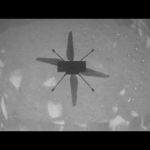
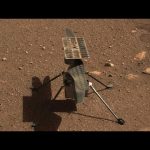
Today, the Ingenuity #MarsHelicopter became the first aircraft in history to make a powered, controlled flight on another planet.
Join us for a news briefing at 2 p.m. ET (1800 UTC) for an analysis of Ingenuity’s first flight and what this means for NASA.
The participants are: * Thomas Zurbuchen, associate administrator of NASA’s Science Mission Directorate * Michael Watkins, JPL director * MiMi Aung, Ingenuity Mars Helicopter project manager at JPL * Bob Balaram, Ingenuity Mars Helicopter chief engineer at JPL * Håvard Grip, Ingenuity Mars Helicopter chief pilot at JPL * Justin Maki, Perseverance Mars rover imaging scientist and deputy principal investigator of Mastcam-Z instrument at JPL
Up, up, and away! The Ingenuity #MarsHelicopter is set to make history. It will make the first attempt at powered flight on another planet on Monday, April 19. Don’t miss your chance to watch live with helicopter team in mission control beginning at 6:15 a.m. EDT (10:15 a.m. UTC) as they receive the data and find out if they were successful.
Preparing for first flight on Mars, making a splash with Orion, and the space station’s next crew prepares for launch … a few of the stories to tell you about – This Week at NASA!
New video from NASA’s Mars 2020 Perseverance rover chronicles major milestones during the final minutes of its entry, descent and landing (EDL) on the Red Planet on Feb. 18 as the spacecraft plummeted, parachuted, and rocketed toward the surface of Mars.
From the moment of parachute inflation, the camera system covers the entirety of the descent process, showing some of the rover’s intense ride to Mars’ Jezero Crater. The footage from high-definition cameras aboard the spacecraft starts 7 miles (11 kilometers) above the surface, showing the supersonic deployment of the most massive parachute ever sent to another world and ends with the rover’s touchdown in the crater.
Producer Credit: Sonnet Apple Music: “DMC 12″/Universal Production Music
The first space station spacewalk of the new year, a new date for a commercial crew test flight, and our next landing on Mars is fast approaching … a few of the stories to tell you about – This Week at NASA!
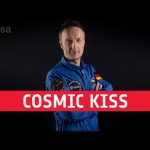
ESA astronaut Matthias Maurer from Germany has been assigned his first mission to the International Space Station. He is expected to fly to the Space Station in the autumn of 2021. The mission is called Cosmic Kiss and Maurer will spend six months in orbit, carrying out vital science and operations on behalf of researchers and international partners worldwide.
We are Europe’s gateway to space. Our mission is to shape the development of Europe’s space capability and ensure that investment in space continues to deliver benefits to the citizens of Europe and the world. Check out https://www.esa.int/ to get up to speed on everything space related.
ESA has signed an €86 million contract with an industrial team led by Swiss start-up ClearSpace SA to purchase a unique service: the first-ever removal of an item of space debris from orbit.
As a result, in 2025, ClearSpace will launch the first active debris removal mission, ClearSpace-1, which will rendezvous, capture and take down for reentry the upper part of a Vespa (Vega Secondary Payload Adapter) used with Europe’s Vega launcher. This object was left in an approximately 801 km by 664 km-altitude gradual disposal orbit, complying with space debris mitigation regulations, following the second flight of Vega back in 2013.
★ Subscribe: http://bit.ly/ESAsubscribe and click twice on the bell button to receive our notifications.
We are Europe’s gateway to space. Our mission is to shape the development of Europe’s space capability and ensure that investment in space continues to deliver benefits to the citizens of Europe and the world. Check out https://www.esa.int/ to get up to speed on everything space related.
The First Crusade was one of the most extraordinary, bloody and significant episodes in medieval history. It began with an appeal for aid from the Christian Byzantine Empire, threatened by the rising power of the Muslim Seljuk Turks. But when Pope Urban II preached a sermon at Clermont in 1095, the result was unlike anything ever seen before. The Pope offered spiritual salvation to those willing to go east to aid their fellow Christians in a holy war, and help liberate Jerusalem from Muslim rule. Knights and peasants alike signed up in their thousands, leading to the disastrous People’s, or Peasants’, Crusade, then to a much more organised and powerful Princes’ Crusade. Their forces gathered at Constantinople, where they made an uneasy alliance with Byzantine Emperor Alexius I Comnenus. Entering Anatolia, they helped to win back the city of Nicaea, then won a decisive but hard-fought victory at Dorlyaeum, before marching on the great city of Antioch…
Music with thanks to Filmstro: https://filmstro.com/?ref=7765
Get 20% off an annual license! Use our exclusive coupon code: EPICHISTORYTV_ANN
Image credits – via Flickr under Creative Commons CC-BY-SA 2.0
Sky – Anyul Rivas
Wooded Hills – Alexander Annenkov
Dramatic Fields – Antonio Caiazzo
Twin peaks of Mount Ararat – Adam Jones
🚩 Start playing WOTs now! Register into the game through the link below https://tanks.ly/33vyfYq , activate the invite code TANKTASTIC and get a huge starter pack of: Premium Tank: T-127 (Soviet – tier 3) — 7 premium days — 500 Gold
👇 Push down for more cool stuff 👇
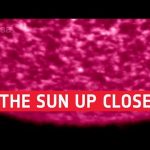
ESA’s Solar Orbiter spacecraft has sent back its first images of the Sun. At 77 million kilometres from the surface, this is the closest a camera has ever flown to our nearest star. The pictures reveal features on the Sun’s exterior that have never been seen in detail before.
Launched on 10 February 2020, the spacecraft completed its commissioning phase and first close-approach to the Sun in mid-June. Since then, science teams have been processing and examining this early data.
The spacecraft is currently in its cruise phase, on its way to Venus, but will eventually get even closer to the Sun.
We are Europe’s gateway to space. Our mission is to shape the development of Europe’s space capability and ensure that investment in space continues to deliver benefits to the citizens of Europe and the world. Check out http://www.esa.int/ESA to get up to speed on everything space related.
➤ Watch more than 2500 awesome documentaries on CuriosityStream: https://curiositystream.com/historymarche
Register with the promo code “historymarche” to get a 30-day free trial!
Go to http://www.audible.com/historymarche or text ‘HISTORYMARCHE’ to 500 500 to get one free audiobook, 2 free Audible originals & a 30-day free trial!
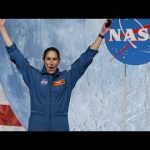
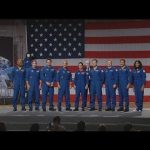
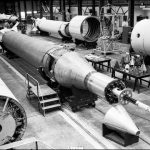
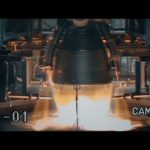
The first graduating class of Artemis astronauts, getting ready to Green Run our SLS rocket, and intriguing discoveries in our solar system – and beyond … a few of the stories to tell you about – This Week at NASA!
This video is available for download from NASA’s Image and Video Library: https://images.nasa.gov/details-NHQ_2019_0110_The%20First%20Graduating%20Class%20of%20Artemis%20Astronauts%20on%20This%20Week%20@NASA%20%E2%80%93%20January%2010,%202020
Come let’s play with Tacto-Lab…..
Registration Age group 9 to 16 or class 6th to 12th
Online Session is also available….!!!!
So kids make your future with new technologies with Tacto-Lab…
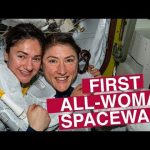
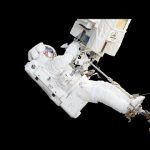
On Oct 18, NASA astronauts Jessica Meir and Christina Koch performed the first all-woman spacewalk. Koch & Meir replaced a faulty battery charge/discharge unit that failed to activate after a previous spacewalk. This was the fourth spacewalk for Christina Koch and the first for Jessica Meir.
A first aboard the space station, some gear well-suited for the Artemis generation, and ensuring astronaut safety … a few of the stories to tell you about – This Week at NASA!
This video is available for download from NASA’s Image and Video Library: https://images.nasa.gov/details-NHQ_2019_1018_The%20First%20All-Woman%20Spacewalk%20Outside%20the%20Space%20Station%20on%20This%20Week%20@NASA%20%E2%80%93%20October%2018,%202019
Our Artemis program will return humans to the Moon by 2024. Artemis I, the first Artemis mission, will test all of the human rated systems in deep space — including the Orion spacecraft and Space Launch System rocket. This is its 26 day journey… in 30 seconds.
The first commercial robotic lunar landers to support our Artemis program, discussing our exploration goals, and a breakdown of the Apollo Moon landings … a few of the stories to tell you about – This Week at NASA!
This video is available for download from NASA’s Image and Video Library: https://images.nasa.gov/details-NHQ_2019_0531_The%20First%20Commercial%20Moon%20Landing%20Service%20Providers%20on%20This%20Week%20@NASA%20%E2%80%93%20May%2031,%202019.html
What could be the first sound of a marsquake, helping astronauts bust the dust on future missions to the Moon, and celebrating our home planet … a few of the stories to tell you about – This Week at NASA!
This video is available for download from NASA’s Image and Video Library: https://images.nasa.gov/details-NHQ_2019_0426_The%20First%20Possible%20Sound%20of%20a%20Marsquake%20on%20This%20Week%20@NASA%20%E2%80%93%20April%2026,%202019.html
Just hours after returning from his Horizons mission on the International Space Station, ESA astronaut Alexander Gerst gives a short interview at the German Aerospace Centre’s ‘:envihab’ facility in Cologne, Germany.
Alexander returned to Earth alongside crew mates Serena Auñón-Chancellor and Sergei Prokopyev on 20 December 2018 in the same Soyuz MS-09 spacecraft that flew them to the Station on 6 June 2018.
The trio’s landing in the Kazakh steppe marked the successful conclusion of over six months in space during which Alexander conducted over 60 European experiments, became the second ever European commander of the International Space Station, welcomed six resupply vehicles, installed the first commercial facility for research in the Columbus laboratory, delivered an important message on climate change for leaders at the COP24 climate change conference, captured real-time footage of a Soyuz launch abort and much, much more.
#Horizons was Alexander’s second mission to the International Space Station – the first was Blue Dot in 2014.
Now back in Cologne, Alexander will take his time to readapt to Earth’s gravity supported by ESA’s team of space medicine experts. He will also continue to provide ground-based data for researchers to support experiments performed in space.
ESA is Europe’s gateway to space. Our mission is to shape the development of Europe’s space capability and ensure that investment in space continues to deliver benefits to the citizens of Europe and the world. Check out http://www.esa.int/ESA to get up to speed on everything space related.
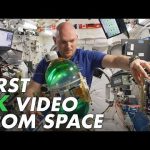
Science gets scaled up with the first 8K ultra high definition (UHD) video from the International Space Station. Get closer to the in-space experience and see how the international partnership-powered human spaceflight is improving lives on Earth, while enabling humanity to explore the universe. More: https://go.nasa.gov/2zgPY5o Special thanks to the European Space Agency, the ISS National Lab, and astronauts Alexander Gerst, Serena Auñón-Chancellor, Ricky Arnold and Drew Feustel.
Featured investigations and facilities:
0:01, 2:36 BEST seeks to advance use of sequencing DNA and RNA in space. https://go.nasa.gov/2tNntKu
0:13 The Minus Eighty-Degree Laboratory Freezer for ISS (MELFI) is a cold storage unit that maintains experiment samples at ultra-cold temperatures throughout a mission. https://go.nasa.gov/2RkJAl5
0:21 The Advanced Plant Habitat (APH), a recent addition to the space station, is the largest growth chamber aboard the orbiting laboratory. https://go.nasa.gov/2JCi8vV
0:33 Canadarm2 is part of Canada’s contribution to the space station. This 17-metre-long robotic arm was extensively involved in the assembly of the orbiting laboratory. https://go.nasa.gov/2ReaU42
0:41 Crew Earth Observations record how the planet is changing over time, from human-caused changes like urban growth and reservoir construction, to natural dynamic events such as hurricanes, floods and volcanic eruptions. https://go.nasa.gov/2KLFAaq
0:49 The Light Microscopy Module (LMM) is a modified commercial, highly flexible, state-of-the-art light imaging microscope facility that provides researchers with powerful diagnostic hardware and software onboard the space station. https://go.nasa.gov/2RfdYwS
0:53 ACE-T-2 looks at the assembly of complex structures from micron-scale colloidal particles interacting via tunable attractive interactions. https://go.nasa.gov/2Re2ppS
0:57 Plant Habitat-1 comprehensively compares differences in genetics, metabolism, photosynthesis, and gravity sensing between plants grown in space and on Earth. https://go.nasa.gov/2MdDBfc
1:05 The Cupola provides an observation and work area for the International Space Station crew that gives visibility to support the control of the station’s robotic arms, and a beautiful view of the Earth, celestial objects and visiting vehicles. https://go.nasa.gov/2CRsxCT
1:14 Atomization observes the disintegration processes of low-speed water jets under various conditions to improve spray combustion processes inside rocket and jet engines. https://go.nasa.gov/2RkKrlN
1:30 BCAT-CS focuses on the study of forces between particles that cluster together by studying sediments of quartz and clay particles. https://go.nasa.gov/2p6WBSV
1:38 Functional Immune analyzes blood and saliva samples to determine the changes taking place in crew members’ immune systems during flight. https://go.nasa.gov/2RfUMz1
2:03 Life Support Rack (LSR) is a technology demonstrator for closed loop air revitalization. https://go.nasa.gov/2Rdfi3C
2:15 The Japanese Experiment Module Airlock is used to deliver science experiments to external platforms, and prepare small satellites for deployment from station. https://go.nasa.gov/2RdcBik
2:23 SPHERES Tether Slosh combines fluid dynamics equipment with robotic capabilities aboard the space station to investigate automated strategies for steering passive cargo that contain fluids. https://go.nasa.gov/2RfQPdQ
On October 11th, 1968, just 15 months from President Kennedy’s deadline for a moon landing, NASA launched its first Apollo crew into space. Apollo 7’s Wally Schirra, Donn Eisele, and Walter Cunningham spent 11 days in low Earth orbit, thoroughly testing the Apollo Command and Service Module’s systems. The crew also won an Emmy for the first live television broadcasts from an American spacecraft.
Humanity’s first mission to touch the Sun, Administrator Bridenstine visits Kennedy Space Center, and historic California wildfires seen from space … a few of the stories to tell you about – This Week at NASA!
This video is available for download from NASA’s Image and Video Library: https://images.nasa.gov/details-NHQ_2018_0811_Humanity%E2%80%99s%20first%20mission%20to%20touch%20the%20Sun%20on%20This%20Week%20@NASA%20%E2%80%93%20August%2011,%202018.html
Astronauts named to the first commercial crew flights, using Earth science data to benefit society, and California wildfires seen from space … a few of the stories to tell you about – This Week at NASA!
This video is available for download from NASA’s Image and Video Library: https://images.nasa.gov/details-NHQ_2018_0803_Astronauts%20Assigned%20to%20First%20Commercial%20Crew%20Flights%20on%20This%20Week%20@NASA%20%E2%80%93%20August%203,%202018.html
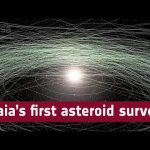
Animated view of 14 099 asteroids in our Solar System, as viewed by ESA’s Gaia satellite using information from the mission’s second data release. The orbits of the 200 brightest asteroids are also shown, as determined using Gaia data.
In future data releases, Gaia will also provide asteroid spectra and enable a complete characterisation of the asteroid belt. The combination of dynamical and physical information that is being collected by Gaia provides an unprecedented opportunity to improve our understanding of the origin and the evolution of the Solar System.
Credit: ESA/Gaia/DPAC, CC BY SA 3.0 IGO
Acknowledgement: Gaia Data Processing and Analysis Consortium (DPAC); Orbits: Gaia Coordinating Unit 4; P. Tanga, Observatoire de la Côte d’Azur, France; F. Spoto, IMCCE, Observatoire de Paris, France; Animation: Gaia Sky; S. Jordan / T. Sagristà, Astronomisches Rechen-Institut, Zentrum für Astronomie der Universität Heidelberg, Germany
On Jan. 31, 1958, at 10:48 p.m. EST, Explorer 1 launched into space, hurtling into Earth’s orbit in seven and a half minutes. Read more: https://go.nasa.gov/2nwic63
The next day’s front-page news declared that the United States was now officially in the Space Age.
Music: Look Forward by Laurent Dury, The Space Between by Max Concors, Picking Locks by James Alexander Dorman and Foraging At Dusk by Benjamin James Parsons. Complete transcript available.
This video is public domain and along with other supporting visualizations can be downloaded from the Scientific Visualization Studio at: http://svs.gsfc.nasa.gov/12837
Credit: NASA’s Goddard Space Flight Center/LK Ward
The first hot firing of Ariane 6’s Vulcain 2.1 main engine was performed in January 2018 at the DLR German Aerospace Center test facility in Lampoldshausen, Germany.
The engine, developed by ArianeGroup, has a simplified and more robust nozzle, a gas generator made through additive manufacturing, and an oxygen heater for oxygen tank pressurisation. These features lower the cost of the engine and simplify manufacturing.
For the first time, NASA scientists have detected light tied to a gravitational-wave event. The gravitational wave – caused by an explosive merger of two neutron stars, about 130 million light-years from Earth – produced a gamma-ray burst and a rarely seen flare-up called a “kilonova”. The phenomenon was captured by our Fermi, Swift, Hubble, Chandra and Spitzer missions, along with dozens of NASA-funded ground-based observatories. Also, Trio of Station Spacewalks Completed, Fresh Findings from Cassini, and Test of SLS RS-25 Flight Engine!
ESA astronaut Paolo Nespoli is currently living and working on the International Space Station as part of his VITA mission. This video shows highlights from his first month.
The mission is part of ESA’s vision to use Earth-orbiting spacecraft as a place to live and work for the benefit of European society while using the experience to prepare for future voyages of exploration further into the Solar System.
Launched in December 2013, Gaia is destined to create the most accurate map yet of the Milky Way. By making accurate measurements of the positions and motions of stars in the Milky Way, it will answer questions about the origin and evolution of our home galaxy.
The first intermediate data release, containing among other things three-dimensional positions and two-dimensional motions of a subset of two million stars, demonstrates that Gaia’s measurements are as precise as planned, paving the way to create the full map of one billion stars to be released towards the end of 2017.
Launched in December 2013, Gaia is destined to create the most accurate map yet of the Milky Way.
By making accurate measurements of the positions and motions of roughly 1% of the total population of stars in the Milky Way, it will answer questions about the origin and evolution of our home galaxy.
The first intermediate data release, containing, among other things, three-dimensional positions and two dimensional motions of a subset of two million stars, demonstrates that Gaia’s measurements are as precise as planned, paving the way to create the full map of one billion stars to be released towards the end of 2017.
This interview with ESA astronaut Tim Peake was recorded in Cologne, Germany, one day after his return from a six-month stay on the International Space Station.
Tim Peake, NASA astronaut Tim Kopra and commander Yuri Malenchenko landed in the steppe of Kazakhstan on Saturday, 18 June in their Soyuz TMA-19M spacecraft at 09:15 GMT. The trio spent 186 days on the International Space Station.
The landing brings Tim Peake’s Principia mission to an end but the research continues. Tim is the eighth ESA astronaut to complete a long-duration mission in space. He was the third after Alexander Gerst and Andreas Mogensen to fly directly to ESA’s astronaut home base in Cologne, Germany, for medical checks and for researchers to collect more data on how Tim’s body and mind have adapted to living in space.
The first news conference with ESA astronaut Tim Peake on return to Earth after spending 186 days in space on the International Space Station on his Principia mission.
The media event was held at ESA’s astronaut centre in Cologne, Germany, 21 July just three days after landing on Earth. The European Astronaut Centre is the home base of all ESA astronauts
Tim Peake, NASA astronaut Tim Kopra and commander Yuri Malenchenko landed in the steppe of Kazakhstan on Saturday, 18 June in their Soyuz TMA-19M spacecraft.
The landing brings Tim Peake’s Principia mission to an end but the research continues. Tim is the eighth ESA astronaut to complete a long-duration mission in space. He is the third after Alexander Gerst and Andreas Mogensen to fly directly to the European Astronaut Centre for medical checks and for researchers to collect more data on how Tim’s body and mind have adapted to living in space.
The successful first flight test of NASA’s Orion spacecraft on Dec. 5 not only was a historic moment for the agency – but also was a critical step on NASA’s Journey to Mars. Orion rode to space from Cape Canaveral Air Force Station on a Delta IV heavy rocket with no crew, but loaded with about 1,200 sensors. The flight test basically was a compilation of the riskiest events that will happen when astronauts fly on Orion on deep space missions. Also, Journey to Mars briefing, 1st SLS flight barrel and Commercial crew milestone.
NASA’s Orion spacecraft launched successfully atop a United Launch Alliance Delta IV Heavy rocket Dec. 5 at 7:05 a.m. EST from Space Launch Complex 37 at Cape Canaveral Air Force Station in Florida. Orion’s Exploration Flight Test-1 (EFT-1), is the first flight test for NASA’s new deep space capsule and is a critical step on NASA’s journey to Mars. The 4.5 hour flight is scheduled to conclude with the splashdown of Orion in the Pacific Ocean.