A critical milestone for commercial crew, resupply spacecraft delivers to the space station, and a new wide-eyed view of the southern sky … a few of the stories to tell you about – This Week at NASA!
This video is available for download from NASA’s Image and Video Library: https://images.nasa.gov/details-NHQ_2019_1108_A%20Critical%20Milestone%20for%20Commercial%20Crew%20on%20This%20Week%20@NASA%20%E2%80%93%20November%208,%202019
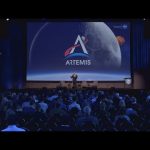
International partnerships for the Moon and Mars, an update on that historic all-woman spacewalk, and a milestone for the James Webb Space Telescope … a few of the stories to tell you about –- This Week at NASA!
This video is available for download from NASA’s Image and Video Library: https://images.nasa.gov/details-NHQ_2019_1025_International%20Partnership%20for%20the%20Moon%20and%20Mars%20on%20This%20Week%20@NASA%20%E2%80%93%20October%2025,%202019
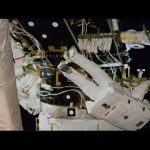
This timelapse video from the International Space Station shows ESA astronaut Luca Parmitano helping NASA astronauts Andrew Morgan and Christina Koch prepare for a spacewalk on 6 October 2019.
Andrew and Christina worked outside in the vacuum of space for seven hours and one minute to begin the latest round of upgrading the station’s large nickel-hydrogen batteries with newer, more powerful lithium-ion batteries.
This spacewalk is one of many scheduled for October and November. The first all-female spacewalk is expected to take place during the week of 14 October and Luca is expected to complete his first spacewalk of the Beyond mission later in November.
During his November spacewalks, Luca will work to repair and enhance the Alpha Magnetic Spectrometer – a particle physics experiment module that was never designed to be maintained in orbit.
The music accompanying this timelapse is I Go Blind 2 sourced from Audio Network.
We are Europe’s gateway to space. Our mission is to shape the development of Europe’s space capability and ensure that investment in space continues to deliver benefits to the citizens of Europe and the world. Check out http://www.esa.int/ESA to get up to speed on everything space related.
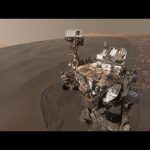
The ExoMars mission foresees Rosalind Franklin the rover and its surface platform Kazachok landing on the Red Planet in 2021. The rover will move across many types of terrain, collect samples with a 2 m-long drill and analyse them with instruments in its onboard laboratory.
This episode about ExoMars shows the integration of the locomotion system and the science payload to the rover in a specially designed, fit-for-purpose cleanroom at Airbus Defence and Space in Stevenage, United Kingdom.
Mars is a primary target in the search for evidence of extraterrestrial life, past or present. There are stringent planetary protection requirements in place to make sure that ExoMars does not introduce terrestrial biological contamination to the Red Planet. ESA ensures planetary protection according to the legal obligations of the United Nations Outer Space Treaty.
Microbiological contamination is strictly controlled during the assembly of the rover. The cleanroom is amongst the cleanest places on Earth, cleaner than a standard hospital operating theatre thanks to filtered air, application of rigorous cleanliness procedures and workers who remain fully shrouded within ‘bunny suits’.
The rover spent 18 months at Stevenage before departing for Airbus Toulouse, France at the end of August, for four months of environmental testing to confirm it is ready for the conditions on Mars.
More information on ExoMars: http://www.esa.int/exomars
Credits: ESA, Airbus Defence and Space UK, ESA/DLR/FU Berlin (CC BY-SA 3.0 IGO)
★ Subscribe: http://bit.ly/ESAsubscribe and click twice on the bell button to receive our notifications.
We are Europe’s gateway to space. Our mission is to shape the development of Europe’s space capability and ensure that investment in space continues to deliver benefits to the citizens of Europe and the world. Check out http://www.esa.int/ESA to get up to speed on everything space related.
A new parking spot for future flights to the International Space Station, the sixth meeting of the National Space Council, and work in Ohio on our Moon to Mars effort … a few of the stories to tell you about – This Week at NASA!
This video is available for download from NASA’s Image and Video Library: https://images.nasa.gov/details-NHQ_2019_0823_A%20Parking%20Spot%20for%20Future%20Commercial%20Flights%20to%20the%20Space%20Station%20on%20This%20Week%20@NASA%20%E2%80%93%20August%2023,%202019.html
An detailed introduction to https://machinelearningforkids.co.uk – a free tool for school children to learn about artificial intelligence and machine learning by making their own machine learning-powered projects.
I demonstrate some of the projects that children have made, and describe the lessons they learned through making them.
This is an updated version of a video I recorded a couple of years ago (https://www.youtube.com/watch?v=2drwelVD4Qw) – updated to reflect things like:
– changes in the tool’s UI
– move from Scratch 2 to Scratch 3
– support for sound machine learning models
– support for Python projects
– MIT App Inventor integration
– support for using the site without registration
In the first episode of our ‘Fit for space’ training series, ESA astronauts Samantha Cristoforetti and Luca Parmitano share how crewmembers prepare for their journey to the International Space Station in the Russian Soyuz spacecraft.
Training for the critical moments of Soyuz spaceflight – launch, ascent, docking and landing – take place at Roscosmos’ Gagarin Cosmonaut Training Centre (GCTC) in Star City, Russia. Here, astronauts use sophisticated Soyuz simulators to practice procedures and respond to emergency situations.
The Soyuz simulators at GCTC are designed to act and be operated in exactly the same way as the spacecraft itself. Astronauts must demonstrate their proficiency in manually controlling the Soyuz to prepare for the unlikely event that automated and ground-based operations fail.
They also prepare for emergency events that could occur onboard the International Space Station itself.
★ Subscribe: http://bit.ly/ESAsubscribe and click twice on the bell button to receive our notifications.
We are Europe’s gateway to space. Our mission is to shape the development of Europe’s space capability and ensure that investment in space continues to deliver benefits to the citizens of Europe and the world. Check out http://www.esa.int/ESA to get up to speed on everything space related.
We are Europe’s gateway to space. Our mission is to shape the development of Europe’s space capability and ensure that investment in space continues to deliver benefits to the citizens of Europe and the world. Check out http://www.esa.int/ESA to get up to speed on everything space related.
Developing a space mission is a long process that involves a lot of tests, sometimes in harsh environments. An airborne campaign was recently carried out in the Arctic between Greenland, Iceland and Svalbard. Enduring temperatures of 30 degrees below zero, a team tested an airborne version of an imaging microwave radiometer to support the development of a potential satellite mission for Europe’s Copernicus programme.
★ Subscribe: http://bit.ly/ESAsubscribe and click twice on the bell button to receive our notifications.
We are Europe’s gateway to space. Our mission is to shape the development of Europe’s space capability and ensure that investment in space continues to deliver benefits to the citizens of Europe and the world. Check out http://www.esa.int/ESA to get up to speed on everything space related.
The first ever Spin Your Thesis! Human Edition campaign took place in DLR’s Short Arm Human Centrifuge facility in Cologne, Germany. Three teams comprised of 16 students from seven different universities participated in this new ESA Education’s hands-on programme for graduate students.
The Music For Space team from Hungarian and French universities used scientific methods to find the perfect tailored music for astronauts which should help physiologically and phsychologically during long spaceflights, thus merging science and art to help reduce stress.
★ Subscribe: http://bit.ly/ESAsubscribe and click twice on the bell button to receive our notifications.
ESA is Europe’s gateway to space. Our mission is to shape the development of Europe’s space capability and ensure that investment in space continues to deliver benefits to the citizens of Europe and the world. Check out http://www.esa.int/ESA to get up to speed on everything space related.
Satellites provide vast quantities of data. While these data are processed and used by scientists and analysts to understand and monitor Earth, they are also carefully archived. Through its Heritage Data Programme, we ensures the preservation of and access to archived Earth observation satellite data for scientists, policy makers and value-adding companies. This allows us to look back at the history of planet Earth, and plan for the future.
★ Subscribe: http://bit.ly/ESAsubscribe and click twice on the bell button to receive our notifications.
We are Europe’s gateway to space. Our mission is to shape the development of Europe’s space capability and ensure that investment in space continues to deliver benefits to the citizens of Europe and the world. Check out http://www.esa.int/ESA to get up to speed on everything space related.
Javier Arroyo is an EdTech entrepreneur working to build a better future for children through education. He is the co-founder of Smartick, an adaptive afterschool maths programme which uses Artificial Intelligence to study a child’s learning style and adapt to their needs.
Over 32,000 students in 100 countries have used Smartick in the past five years. Hear from this influential changemaker as he talks about his life, his work, and why he believes educational technology can change the world.
An important step for the Commercial Crew Program, more testing with our Space Launch System rocket engine, and a new show that explores how we do, what we do … a few of the stories to tell you about – This Week at NASA!
This video is available for download from NASA’s Image and Video Library: https://images.nasa.gov/details-NHQ_2019_0301_An%20Important%20Step%20for%20Commercial%20Crew%20on%20This%20Week%20@NASA%20%E2%80%93%20March%202,%202019.html
Startup Youcode Intelligence Solutions Artificial Intelligence for Kids (#AI4KIDS) campaign in India with Dandora
India has a serious Skill Problem, which is more prevalent in Small towns and Villages. GOI is doing a lot through SKILL INDIA, but Govt alone cant fix, there needs radical new ideas from Startup community, So the Startup YouCode Intelligence solutions
What is the Startup Youcode Intelligence solutions Unique Approach?
AI4KIDS campaign to Reach out to the Unreached Village Kids and have a Awareness campaign on AI. Build Kids consumable AI content, which are fun, interactive, easy to understand and Learn through Google AIY Kit, Amazon AWS DeepLens and Microsoft Vision AI developer Kit
Why Indian Village Kids has to be Empowered on AI?
Since the students of today will need to work in a future where AI is the reality, it’s important to expose village and small town students ( Major chunk of Indian students Population) to use the AI based technology very early on and make them understand and Learn
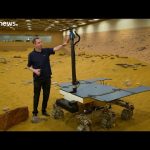
ExoMars is the first mission to head to the Red Planet to seek signs of life, now or in the past. It’s a massive scientific and technical challenge, and Euronews meets some of the team involved in this joint ESA-Roscosmos project in this month’s edition of Space.
ESA is Europe’s gateway to space. Our mission is to shape the development of Europe’s space capability and ensure that investment in space continues to deliver benefits to the citizens of Europe and the world. Check out http://www.esa.int/ESA to get up to speed on everything space related.
During ESA’s ɸ-week on 12–16 November in Italy, Patrick Helber from the German Research Center for Artificial Intelligence explains how artificial intelligence is being trained with Earth observation data and images such as that from the Copernicus Sentinel-2 mission so features can be detected automatically. This can then be used to classify land cover types automatically, for example.
ESA is Europe’s gateway to space. Our mission is to shape the development of Europe’s space capability and ensure that investment in space continues to deliver benefits to the citizens of Europe and the world. Check out http://www.esa.int/ESA to get up to speed on everything space related.
The mission has ended for NASA’s Dawn spacecraft, but the science lives on. Dawn was an intrepid explorer of the asteroid belt and the first mission to orbit two worlds beyond Earth: https://go.nasa.gov/2zl1Y5T. For more info on the mission, visit https://dawn.jpl.nasa.gov
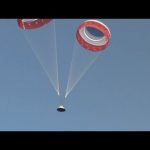
Watch as NASA tests a new parachute for landing the Mars 2020 rover on the Red Planet. On Sept. 7, NASA’s ASPIRE project broke a record when its rocket-launched parachute deployed in 4-10ths of a second—the fastest inflation of this size chute in history: https://go.nasa.gov/2Ro4eAL
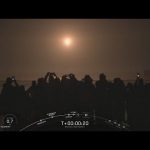
Revisit the April 18, 2018, launch of NASA’s Transiting Exoplanet Survey Satellite (TESS) aboard a SpaceX Falcon 9 rocket. TESS is already scanning the skies, identifying planet candidates that may be orbiting distant stars. https://go.nasa.gov/2Q3J9ei
TESS is NASA’s next step in the search for planets outside of our solar system, including those that could support life. The mission will find exoplanets that periodically block part of the light from their host stars, events called transits. TESS will survey 200,000 of the brightest stars near the sun to search for transiting exoplanets.
At the end of 2019 Vega-C will be launched from Europe’s Spaceport in French Guiana increasing performance from Vega’s current 1.5 t to about 2.2 t in its reference 700 km polar orbit, with no increase in launch costs.
Vega-C’s first stage is based on the P120, the largest single segment carbon fibre solid-propellant rocket motor ever built. It was successfully tested in July 2018. Its development relies on new technologies derived from Vega’s current first stage P80 motor. Two or four P120C motors will also be used for the liftoff boosters on Ariane 6.
Vega-C’s 3.3 m diameter fairing will accommodate larger payloads such as Earth observation satellites of more than two tonnes, and ESA’s Space Rider reentry vehicle.
The Vega launch pad and mobile gantry are being modified to accommodate Vega-C leading into a period when launch facilities will accommodate both vehicles.
ESA is Europe’s gateway to space. Our mission is to shape the development of Europe’s space capability and ensure that investment in space continues to deliver benefits to the citizens of Europe and the world. Check out http://www.esa.int/ESA to get up to speed on everything space related.
An update on our Mars rovers, continued progress for our Moon to Mars effort, and a look back at Dawn – in its twilight … a few of the stories to tell you about – This Week at NASA!
This video is available for download from NASA’s Image and Video Library: https://images.nasa.gov/details-NHQ_2018_0907_Clearing%20Skies%20for%20our%20Rovers%20on%20Mars%20on%20This%20Week%20@NASA%20%E2%80%93%20September%207,%202018.html
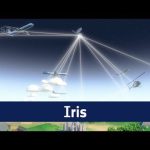
Iris will provide a safe and secure text-based data link between pilots and air traffic control (ATC) networks using satellite technology.
The programme is developed under a public-private partnership between ESA and Inmarsat, and will help relieve pressure on the aviation sector’s congested radio frequency communication channels.
It will so as part of the European Commission’s Single European Sky ATM Research (SESAR) masterplan to modernise Europe’s air traffic management.
5G, the next generation of communication services, will deliver ultra-fast speeds, connect all people and devices to the internet and minimise delays. It will affect everybody, changing the way we communicate, work and interact with technology.
Space has an invaluable role to play in the 5G ecosystem. Satellites can extend, enhance, and provide reliability and security to 5G like no other, helping to deliver its promise of global, ubiquitous connectivity, with no noticeable difference to the end-user. ESA’s Satellite for 5G (S45G) programme aims promote the value-added benefits of space to 5G, by developing and demonstrating integrated satellite- and terrestrial-based 5G services, across multiple markets and use cases.
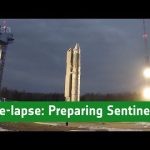
See in this time-lapse how the Sentinel-3B satellite was prepared for its liftoff on 25 April 2018 from Plesetsk in Russia.
Sentinel-3B joined its twin, Sentinel-3A, in orbit. The pairing of identical satellites provides the best coverage and data delivery for Europe’s Copernicus programme – the largest environmental monitoring programme in the world. The satellites carry the same suite of cutting-edge instruments to measure oceans, land, ice and atmosphere.
Credits: Directed by Stephane Corvaja, ESA; Edited by Manuel Pedoussaut, Zetapress; Music by Hubrid-Rockot
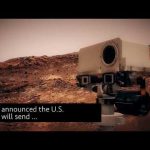
Sending a helicopter to Mars, a busy week for our new Administrator, and showcasing how technology enables exploration – a few of the stories to tell you about – This Week at NASA!
This video is available for download from NASA’s Image and Video Library: https://images.nasa.gov/details-NHQ_2018_0511_A%20Copter%20Companion%20for%20the%20Mars%202020%20Rover%20on%20This%20Week%20@NASA%20%E2%80%93%20May%2011,%202018.html
On 25 April 2018, ESA’s Gaia mission will publish its much awaited second data release, including high-precision measurements of nearly 1.7 billion stars in our Galaxy.
Scientists who have been working on creating and validating the data contained in the catalogue tell us why they are waiting for this extraordinary release.
Featured in the video: Antonella Vallenari (INAF, Astronomical Observatory of Padua), Anthony Brown (Leiden University), Timo Prusti (European Space Agency), Annie Robin (Institut UTINAM, OSU THETA Franche-Comté-Bourgogne), Laurent Eyer (University of Geneva) and Federica Spoto (IMCCE, Observatory of Paris).
A media briefing on the second Gaia data release will be held at the ILA Berlin Air and Space Show in Germany on 25 April 11:00-12:15 CEST. Watch the webstream at www.esa.int/live
Motivated by the urge to help one of his own, Senthil kumar a man of great intellect took it upon
himself to find the solution to a problem that stared right at the face of mankind.
Senthil Kumar M hailing from Madurai, Tamil Nadu, India, has a great passion for innovating
through technology to solve real-life problems.
His vision is to build technology-enabled self-sustaining communities. He actively engages in
community empowerment and education initiatives especially among girls through
‘MetooMentor’ – an NPO that mentors young women to innovate through technology.
The ingenious device developed by him monitors and tracks the vitals of pregnant women living
in the remote villages of India, transmitting the collected data over the cloud to the nearest health
center by incorporating AI and DEEP LEARNING algorithms.
Watch him speaking about the experiences and challenges he encountered throughout his
journey!! Senthil Kumar M hailing from Madurai has a great passion for innovating through technology to solve real-life problems. He worked in fields like a wireless network, defence, maternal healthcare, and safety solutions and filed nearly 10 patents for the same. He began his career as an engineer in – Samsung | Qualcomm, but he quit his job to found two tech startups, GeoMeo and JioVio, in urban infrastructure and healthcare sector respectively. His vision is to build technology-enabled self-sustaining communities. He believes that we can achieve this only by bridging the digital divide in the society and by empowering the powerless/vulnerable.He actively engages in community empowerment and education initiatives especially among girls through ‘MetooMentor’ – an NPO that mentors young women to innovate through technology.With a handful of dedicated volunteers, He reached over 1000 girls in Madurai.He has been honoured as the top 5 Technology Explorers in India by Nasscom. This talk was given at a TEDx event using the TED conference format but independently organized by a local community. Learn more at https://www.ted.com/tedx
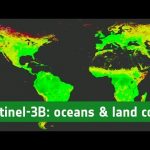
Following its launch in February 2016 and subsequent commissioning phase, the Copernicus Sentinel-3A satellite has been systematically measuring our oceans, land, ice and atmosphere. The information feeds a range of practical applications and is used for monitoring and understanding large-scale global dynamics. Sentinel-3A will soon be joined in orbit by its identical twin, Sentinel-3B. Both satellites carry a suite of cutting-edge instruments to supply a new generation of data products, which are particularly useful for marine applications. For example, they monitor ocean-surface temperatures for ocean and weather forecasting services, aquatic biological productivity, ocean pollution and sea-level change. The mission also delivers unique and timely information about changing land cover, vegetation, urban heat islands, and for tracking wildfires. With the two satellites in orbit, global coverage and data delivery will be optimised.
On September 11, 2017, the Deming Center at Columbia Business School partnered with the School for Engineering and Applied Science to host an event on Artificial Intelligence just for the children of faculty, staff and friends of the Center. More than 50 kids ages 6 to 16 gathered to hear Professor of Mechanical Engineering and Director of the Creative Machines Lab Hod Lipson speak to the past, present and future of AI.
Impressing on them that their lives would be profoundly impacted by advances in AI and Machine Learning, Professor Lipson took the children on a journey through the history of the field, bringing them up to speed on the incredible advances of the last 50 years. He then explored all of the ways in which AI is being used today from simply playing a game of Tic Tac Toe and painting portraits to diagnosing diseases and synthesizing the vast amounts of data being generated by computers, algorithms and images that affect our daily lives. They then turned their attention to all of the ways in which AI would permeate their lives in the near future from driverless cars to robotic traffic police.
The children asked creative, probing questions throughout compelling the adults in the room to think outside-of-the-box and consider the deep nuances their questions asked. From 6-year old Aziz who was curious as to whether Artificial Intelligence can exist in water to 12-year old Christina’s question about how AI will affect terrorism and war in the future, children and parents alike were left with a sense of wonder and excitement about the future.
In Bonn, Germany, two ESA astronauts recently went through a brand new training programme which could be very useful in case of no contact with the ground or when communication might be delayed.
Samantha Cristoferetti and Matthias Maurer were taught basic mechanical, electronic, electrical and pneumatic skills and how to use these skills to troubleshoot their equipment in space.
This new training, commissioned by ESA, has been developed by the Dr. Reinold-Hagen Foundation and by Space Application Services.
I was just making another video but got an unexpected call from an alien world. In this video, I help a girl named North from another planet help find a missing device using Artificial Intelligence. We use machine learning/deep learning technologies to help find the device in the mountain of data. Using programming, we’ll try to search for it. This video is made for the young and young at heart.
Coding challenge winners, i’ll announce you guys in a separate video this weekend. To everyone, Please Subscribe! And like. And comment. That’s what keeps me creating.
On September 11, 2017, the Deming Center at Columbia Business School partnered with the School for Engineering and Applied Science to host an event on Artificial Intelligence just for the children of faculty, staff and friends of the Center. More than 50 kids ages 6 to 16 gathered to hear Professor of Mechanical Engineering and Director of the Creative Machines Lab Hod Lipson speak to the past, present and future of AI.
Impressing on them that their lives would be profoundly impacted by advances in AI and Machine Learning, Professor Lipson took the children on a journey through the history of the field, bringing them up to speed on the incredible advances of the last 50 years. He then explored all of the ways in which AI is being used today from simply playing a game of Tic Tac Toe and painting portraits to diagnosing diseases and synthesizing the vast amounts of data being generated by computers, algorithms and images that affect our daily lives. They then turned their attention to all of the ways in which AI would permeate their lives in the near future from driverless cars to robotic traffic police.
The children asked creative, probing questions throughout compelling the adults in the room to think outside-of-the-box and consider the deep nuances their questions asked. From 6-year old Aziz who was curious as to whether Artificial Intelligence can exist in water to 12-year old Christina’s question about how AI will affect terrorism and war in the future, children and parents alike were left with a sense of wonder and excitement about the future.
Intel, in an attempt to gain relevance in the quickly growing artificial-intelligence and machine-learning markets, is rolling out a new product family called Nervana.
jael.ai is a fully integrated real time artificial intelligence chatbot that can coordinate care for victims of domestic violence at the point of trauma. jael.ai is training to respond to men and women in dangerous situations by helping them find a safe place for themselves and their families, contact the nearest shelter, and understand the many resources that are available according to the time and location they are needing help. jael.ai is building a national database with heavily curated information about organizations and resources for victims of domestic violence. By having direct access to the most up-to-date data jael.ai can give the most relevant help to people reaching out for assistance.
Brian Davis
AXIOM88
Brian Russel Davis is the founder of Axiom88, an emerging business with a team of 20 developers in four offices worldwide. Previously, Brian was a Pandora engineer working exclusively for the Creative team. A child of Trinidadian-Guyanese parents, born in Brooklyn, New York, and raised in Sacramento, California, Brian started mixing art and technology early, coding in 5th grade and beginning formal art training at 12. He holds a BA in philosophy with a focus in analytical logic from Morehouse College in Atlanta, Georgia.
ESA’s first mission to Mercury, BepiColombo, is now set for final thermal tests before launching to the hottest planet in our Solar System in October 2018. Europe said farewell to the spacecraft in July when it was at the European Space Research and Technology Centre (ESTEC) in Noordwijk, the Netherlands, in its launch configuration.
BepiColombo is a joint mission to Mercury between the ESA and the Japan Aerospace Exploration Agency (JAXA) and consists of two science orbiters: ESA’s Mercury Planetary Orbiter and JAXA’s Mercury Magnetospheric Orbiter.
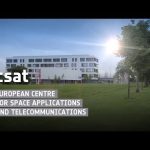
ECSAT (European Centre for Space Applications and Telecommunications) is the European Space Agency’s centre in the UK. With a commercially driven ethos, it supports European and Canadian industry in developing commercial satcom products and services, downstream applications and the ‘spin-out’ of space into non-space sectors.
ECSAT also the home of ESA’s Climate Office and has units dedicated to space exploration and technology development, one of which oversees the ESA–Rutherford Appleton Laboratory Advanced Manufacturing Laboratory.
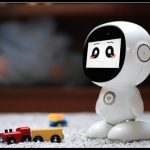
There are plenty of cool robots and robotics gadgets or toy robots that kids will absolutely love. Robot toys are best tech toys that will keep your kids entertained and maybe even spark their interest in robotics.We have created a shortlist of the top five robot toys for kids. 5 Best Robots for Kids : Games, Fun and Learning
*********************************************
Welcome to ZedIOptimA
* Thanks for Watching If You Like my Content Please please
* Subscribe my channel :- https://goo.gl/CG0awN
* Hit Like
* Comment for encourage us
* Favorite in your list
* Share with your friends and family
—————————————-———————
Sentinel-2B will be launched by a Vega rocket from Europe’s Spaceport, French Guiana.
Lift off is scheduled at 01:49 GMT (02.49 CET) on 7 March, 22:49 on 6 March in Kourou.
It will join its sister satellite Sentinel-2A and the other Sentinels part of the Copernicus programme, the most ambitious Earth observation programme to date.
Sentinel-2A and 2B will be supplying ‘colour vision’ for Copernicus and together they can cover all land surfaces once every five days thus optimising global coverage and the data delivery for numerous applications.
The data provided by these Sentinel-2 satellites is particularly suited for agricultural purposes, such as managing administration and precision farming.
ESA is currently working with the European Commission and National stakeholders to understand the full range of opportunities Earth Observation can contribute in particular to modernise and simplify the Common Agricultural Policy. This video shows how agriculture benefits from the use of the Sentinel data in the Czech Republic.
The world is changing and is changing fast. Many of today’s traditional #jobs are at risk. With #AI becoming more predominant, how can we ensure that our children and their children can thrive in this future?
With all of the exciting A.I. stuff happening, there are lots of people eager to start tinkering with machine learning technology. That’s why we’ve created A.I. Experiments, a site that showcases simple experiments that let anyone play with this technology hands-on, and resources for creating your own experiments.
Various visualizations featured in video made by Gene Kogan. Additional footage by Sarah Riazati.