Tag: hubble

  • 𝐅𝐑𝐔𝐌𝐔𝐒𝐄𝐓̦𝐄𝐀 𝐂𝐎𝐒𝐌𝐎𝐒𝐔𝐋𝐔𝐈!

    𝐅𝐑𝐔𝐌𝐔𝐒𝐄𝐓̦𝐄𝐀 𝐂𝐎𝐒𝐌𝐎𝐒𝐔𝐋𝐔𝐈!

    Accesează https://surfshark.com/presura sau folosește codul PRESURA la finalizarea comenzii pentru a primi 4 luni extra de Surfshark VPN!

    ❗Primește răspunsuri direct pe whatsapp ► https://patreon.com/cristianpresura
    ❗Devino membru ► https://tinyurl.com/membruyoutube

    🔸 PAYPAL ► paypal.me/cristianpresura
    🔸 DONORBOX ► https://donorbox.org/cristianpresura

    ❗Alege TU următorul subiect! ► https://tinyurl.com/cristianpresura
    ❗TikTok ► https://www.tiktok.com/@cristian.presura
    ❗Facebook ► https://www.facebook.com/presura
    ❗Facebook page ► https://www.facebook.com/stiintaclub
    ❗Instagram ► https://www.instagram.com/cristianpresura/
    ❗Twitch ► https://www.twitch.tv/cristian_presura
    ❗Discord ► https://www.discord.gg/presura
    ❗Reddit ► https://www.reddit.com/r/presura/

    📙 Carte ► “Fizica Povestita”: https://bit.ly/2YsKaAc
    📙 Carte ► “O calatorie prin Univers”: https://bit.ly/3pdOfGp
    📙 Carte ► “Care e diferența dintre un copil și un laptop?” https://bit.ly/3h4auLZ

    🔊 Spotify Podcast ► https://spoti.fi/3dbvYo6
    🔊 MixCloud Podcas ► https://www.mixcloud.com/StiintaClub/
    ❗Asociația “Știinta pentru toți” ► https://www.presura.ro/

    Seria Fizica Cool #seriacool https://tinyurl.com/2s437srj
    Seria shorts: https://tinyurl.com/yw8b4sab
    Seria carte “Fizica Povestită” #fizicapovestita https://tinyurl.com/966kzam9
    Seria „Dicţionarul de idei şi ideologii (#2i)”: https://tinyurl.com/muryddb5
    Seria “Deschis la cercetare”: https://tinyurl.com/2p9dtb6k
    Fizica pentru începători: https://tinyurl.com/4xbc67c2
    Fizica cuantică: https://tinyurl.com/mr2d7acu
    Fizica nucleara: https://tinyurl.com/3yv3kr5r
    Fizica spațiului: https://tinyurl.com/3kc5jz95
    Călătorie prin Univers: https://tinyurl.com/mv6sxxrb
    Teoria relativității: https://tinyurl.com/2m8umyew
    Fizica simplă: https://tinyurl.com/24j6ekje
    Fizica avansată: https://tinyurl.com/39chd56e
    Fizica mediului inconjurator: https://tinyurl.com/5n86xdzc
    Cum sa ne protejam? https://tinyurl.com/mmyvr3n7
    Fizica 5G: https://tinyurl.com/2p9b3j6r
    Podcast “Întâlnirea cu fizica”: https://tinyurl.com/5n8hsswe
    algoritm:”Pământul, văzut din spațiu, pare liniștit, ascuns de zgomotul civilizației. Atmosfera sa subțire menține viața, ridicând apa în nori și punând în mișcare vânturile, uneori până la formarea uriașelor cicloane. Astronauții de pe Stația Spațială Internațională, care ocolește planeta într-o oră și jumătate, privesc răsăriturile peste oceane, curburile albastre ale Pământului și aurorele polare dansând la poli.

    Dincolo de atmosferă începe vidul cosmic, rece până la câțiva Kelvin, în timp ce în adâncurile planetei temperaturile ating mii de grade. Locul nostru de existență rămâne doar o fâșie fragilă, câteva zeci de kilometri de aer și lumină.

    Privirea se ridică apoi spre instrumentele care ne-au deschis universul. Telescopul Hubble, reparat în 2009 de astronauții navetei Atlantis, a devenit ochiul nostru veșnic spre stele. Saturn V, colosul creat de Wernher von Braun, a purtat omenirea până pe Lună, unde astronauții au făcut primii pași și au adunat probe cu bucuria copilăriei.

    În spațiu strălucesc stele reci și fierbinți: roșiaticele giganti ca Betelgeuse abia ating 3000 °C, în timp ce albastrele ca Rigel depășesc 20.000 °C. În nebuloasele colorate – Clepsidra, Stâlpii Creației, Carina sau Laguna – gazul și praful cosmic nasc noi sori. Supernove precum Nebuloasa Crab lasă în urmă pulsați neutronici și filamente strălucitoare.

    Telescopul James Webb, urmașul lui Hubble, ne arată în infraroșu detalii ascunse: norii lui Neptun, aurorele lui Jupiter, inelele lui Uranus, roiuri de galaxii și primele structuri formate la câteva sute de milioane de ani după Big Bang. Lentilele gravitaționale măresc galaxii îndepărtate, dezvăluind coliziuni, stele tinere și găuri negre supermasive.

    Aceasta este povestea Pământului și a cerului: o fâșie subțire de viață, înconjurată de infinit, explorată cu ochii noștri mecanici, dar înțeleasă prin uimirea omului care privește în sus.”

    #stiinta #fizica #science #tehnologie #technology #cristianpresura #ad
  • 100 galaxii legendare și poveștile lor 🌌  De la Andromeda la Sombrero

    100 galaxii legendare și poveștile lor 🌌 De la Andromeda la Sombrero

    Accesează https://surfshark.com/presura sau folosește codul PRESURA la finalizarea comenzii pentru a primi 4 luni extra de Surfshark VPN!

    ❗Alege TU următorul subiect! ► https://tinyurl.com/cristianpresura
    ❗Devino membru ► https://tinyurl.com/membruyoutube
    ❗Primește răspunsuri direct pe whatsapp ► https://patreon.com/cristianpresura

    🔸 PAYPAL ► paypal.me/cristianpresura
    🔸 DONORBOX ► https://donorbox.org/cristianpresura

    ❗TikTok ► https://www.tiktok.com/@cristian.presura
    ❗Facebook ► https://www.facebook.com/presura
    ❗Facebook page ► https://www.facebook.com/stiintaclub
    ❗Instagram ► https://www.instagram.com/cristianpresura/
    ❗Twitch ► https://www.twitch.tv/cristian_presura
    ❗Discord ► https://www.discord.gg/presura
    ❗Reddit ► https://www.reddit.com/r/presura/

    📙 Carte ► “Fizica Povestita”: https://bit.ly/2YsKaAc
    📙 Carte ► “O calatorie prin Univers”: https://bit.ly/3pdOfGp
    📙 Carte ► “Care e diferența dintre un copil și un laptop?” https://bit.ly/3h4auLZ

    🔊 Spotify Podcast ► https://spoti.fi/3dbvYo6
    🔊 MixCloud Podcas ► https://www.mixcloud.com/StiintaClub/
    ❗Asociația “Știinta pentru toți” ► https://www.presura.ro/

    Seria Fizica Cool #seriacool https://tinyurl.com/2s437srj
    Seria shorts: https://tinyurl.com/yw8b4sab
    Seria carte “Fizica Povestită” #fizicapovestita https://tinyurl.com/966kzam9
    Seria „Dicţionarul de idei şi ideologii (#2i)”: https://tinyurl.com/muryddb5
    Seria “Deschis la cercetare”: https://tinyurl.com/2p9dtb6k
    Fizica pentru începători: https://tinyurl.com/4xbc67c2
    Fizica cuantică: https://tinyurl.com/mr2d7acu
    Fizica nucleara: https://tinyurl.com/3yv3kr5r
    Fizica spațiului: https://tinyurl.com/3kc5jz95
    Călătorie prin Univers: https://tinyurl.com/mv6sxxrb
    Teoria relativității: https://tinyurl.com/2m8umyew
    Fizica simplă: https://tinyurl.com/24j6ekje
    Fizica avansată: https://tinyurl.com/39chd56e
    Fizica mediului inconjurator: https://tinyurl.com/5n86xdzc
    Cum sa ne protejam? https://tinyurl.com/mmyvr3n7
    Fizica 5G: https://tinyurl.com/2p9b3j6r
    Podcast “Întâlnirea cu fizica”: https://tinyurl.com/5n8hsswe
    algoritm:”Galaxiile spirale par să danseze în spațiu, deformate de interacțiuni gravitaționale. Centrul lor luminos adăpostește adesea o gaură neagră supermasivă, care modelează mișcarea stelelor din jur. Într-un colț al Universului, două galaxii intră în coliziune directă, iar la zona de contact se nasc stele noi. Alte galaxii lasă dâre de materie în urma lor, oprită parțial de mediul intergalactic.

    Privind cerul, vedem doar galaxii, fiecare aflată la miliarde de ani-lumină. Sunt fosile ale Universului timpuriu. Unele apar roșii și mici din cauza expansiunii cosmice și deplasării spre roșu a luminii. În interiorul lor, vedem contrastul dintre stelele albastre tinere din brațele spiralate și cele bătrâne, roșii, din centru. Unele galaxii propulsează jeturi de electroni la distanțe uriașe.

    Galaxiile vin în multe forme: eliptice, spiralate, ciudat distorsionate de fuziuni. Unele formează clustere galactice, altele fuzionează și creează cozi stelare. De fiecare dată, gravitația este sculptorul nevăzut. Inelul lui Einstein apare când lumina unei galaxii este curbată de gravitația altei galaxii din față, creând imagini arcuit deformate.

    Galaxia Sombrero, Andromeda, M87 – fiecare are propria poveste, propria structură internă. În galaxiile tinere, se formează stele din norii de gaz și praf, iar în galaxiile bătrâne, vedem doar urma trecutului.

    Ne întrebăm dacă undeva, printre miliardele de stele, există viață inteligentă. Poate chiar în acele filamente roșii de gaz sau în grupuri de galaxii care ne privesc din depărtare. Unele galaxii par să-și ascundă nucleul, protejat de câmpuri magnetice puternice.

    Universul este un vast spectacol de lumină, gravitație și materie. Suntem praf de stele, născuți din fuziuni nucleare. Să înțelegem toate aceste lumi poate fi misiunea inteligenței artificiale – căci mintea omului pare uneori prea mică în fața infinitului.”

    #stiinta #fizica #science #tehnologie #technology #cristianpresura #ad
  • Hubble celebrates 35 years in orbit with 4 stunning new images! ✨

    Hubble celebrates 35 years in orbit with 4 stunning new images! ✨

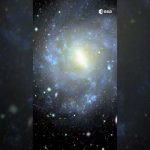
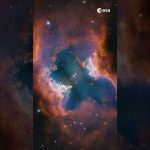
    In celebration of the NASA/ESA Hubble Space Telescope’s 35 years in Earth orbit, an assortment of images that were recently taken by Hubble has been released today. This stretches from the planet Mars to images of stellar birth and death, and a magnificent neighbouring galaxy. After over three decades of scrutinising our Universe, Hubble remains a household word as the most well-recognised telescope in scientific history.

    📹 European Space Agency (ESA)
    📸 ESA/NASA

    #ESA #Space #Hubble

  • Relax and drift through the Andromeda Galaxy 💫

    Relax and drift through the Andromeda Galaxy 💫

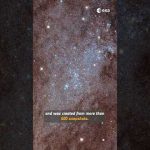
    Witness the breathtaking beauty of our cosmic neighbor—the Andromeda galaxy—located 2.5 million light-years away. This spiral disk galaxy appears elliptical from Earth due to its tilted orientation. In this panoramic view, young blue stars shimmer along the galaxy’s outer rim, while older yellowish stars cluster toward the bright central hub, resembling the yolk of a cosmic fried egg. 🍳💫

    This vibrant portrait is the result of over 10 years of observations and more than 600 snapshots captured by the Hubble Space Telescope. Altogether, it reveals the mesmerizing glow of 200 million stars scattered across the galaxy’s immense 200,000-light-year-wide disk. As the camera zooms into the central region, a dense sea of ancient stars comes into view. Panning across the galaxy’s expanse, we see intricate patterns of dark dust clouds weaving through space, while vibrant blue star clusters stand out along the edges, signaling regions of ongoing star formation. 🌌✨

    Prepare to be amazed as we explore one of the largest and most detailed galactic images ever captured—offering a glimpse into the heart of a distant galaxy, yet eerily similar to our own Milky Way.

    📸 NASA, ESA, B. Williams (University of Washington), G. Bacon (STScI)
    🎶 Rain Clouds – Beautiful Visions

    #ESA #AndromedaGalaxy #Hubble

  • Zoom into the Dumbbell Nebula 🔎 #shorts

    Zoom into the Dumbbell Nebula 🔎 #shorts

    This video takes the viewer on a journey to the 34th anniversary image of the launch of the legendary NASA/ESA Hubble Space Telescope: the Little Dumbbell Nebula (also known as Messier 76, M76, or NGC 650/651). The object is located 3400 light-years away in the northern circumpolar constellation Perseus. The photogenic nebula is a favourite target of amateur astronomers.

    Credit: NASA, ESA, STScI, A. Pagan (STScI)
    Acknowledgment: D. Crowson, A. Fujii, Digitized Sky Survey.

    #ESA #Hubble #DumbbellNebula

  • Webb shed new light on a decade-long mystery ✨ #shorts

    Webb shed new light on a decade-long mystery ✨ #shorts

    At present it’s as though the distance ladder observed by Hubble and Webb has firmly set an anchor point on one shoreline of a river, and the afterglow of the Big Bang observed by our Planck mission from the beginning of the Universe is set firmly on the other side. How the Universe’s expansion was changing in the billions of years between these two endpoints has yet to be directly observed.

    📹 ESA – European Space Agency
    📸 NASA, ESA, CSA, Space Telescope Science Inst., A. Riess (JHU/STScI)

    #ESA #Webb #Hubble

  • Hubble and Webb’s views of the Crab Nebula 🤩 #shorts

    Hubble and Webb’s views of the Crab Nebula 🤩 #shorts

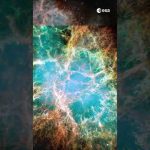
    The first image shown in this video is the 2005 Hubble optical wavelength image of the Crab Nebula. This is followed by a new image of the object from the James Webb Space Telescope’s NIRCam (Near-Infrared Camera) and MIRI (Mid-Infrared Instrument) instruments that has revealed new details in infrared light.

    In Webb’s infrared observation, a crisp, cage-like structure of fluffy red-orange filaments and knots of dust surround the object’s central area. However, some aspects of the inner workings of the Crab Nebula become more prominent and increase in detail in infrared light. In particular, Webb highlights what is known as synchrotron emission, seen here with a milky smoke-like appearance throughout the majority of the Crab Nebula’s interior.

    Credit: NASA, ESA, CSA, STScI, T. Temim (Princeton University), N. Bartmann (ESA/Webb), A. Loll/J. Hester (Arizona State University)
    Music: Stellardrone – The Night Sky in Motion

    #ESA
    #Webb
    #Space

  • Zoom into the cosmic seahorse 🔍 #shorts

    Zoom into the cosmic seahorse 🔍 #shorts

    This image was captured by NIRCam, Webb’s primary near-infrared camera, and contains the lensing galaxy cluster SDSS J1226+2149. It lies at a distance of around 6.3 billion light-years from Earth, in the constellation Coma Berenices. By combining Webb’s sensitivity with the magnifying effect of gravitational lensing, astronomers were able to use this gravitational lens to explore the earliest stages of star formation in distant galaxies. To do so, they relied on earlier studies by the NASA/ESA Hubble Space Telescope, which provided the ‘prescription’ for this gravitational lens.

    Credit: ESA/Webb, NASA & CSA, J. Rigby
    Music: Stellardrone – Twilight

    #ESA
    #Webb
    #Cosmic

  • Zoom into NGC 5068 🔍 #shorts

    Zoom into NGC 5068 🔍 #shorts

    This video takes the viewers on a journey to the barred spiral galaxy NGC 5068, whose bright central bar is visible in the upper left of this image. NGC 5068 lies around 17 million light-years from Earth in the constellation Virgo.

    With its ability to peer through the gas and dust enshrouding newborn stars, the NASA/ESA/CSA James Webb Space Telescope is the perfect telescope to explore the processes governing star formation. Stars and planetary systems are born amongst swirling clouds of gas and dust that are opaque to visible-light observatories like Hubble or the VLT. The keen vision at infrared wavelengths of two of Webb’s instruments — MIRI and NIRCam — allowed astronomers to see right through the gargantuan clouds of dust in NGC 5068 and capture the processes of star formation as they happened. This image combines the capabilities of these two instruments, providing a truly unique look at the composition of NGC 5068.

    You can learn more about this image here 👉 https://esawebb.org/images/potm2305a/

    Credit: ESA/Webb, NASA, CSA, J. Lee and the PHANGS-JWST Team, Dark Energy Survey/DOE/FNAL/NOIRLab/NSF/AURA, DSS, N. Bartmann (ESA/Webb), E. Slawik, N. Risinger, D. de Martin (ESA/Webb), M. Zamani (ESA/Webb)

    Music: Tonelabs – The Red North

    ★ Subscribe: http://bit.ly/ESAsubscribe and click twice on the bell button to receive our notifications.

    Check out our full video catalog: http://bit.ly/SpaceInVideos
    Follow us on Twitter: http://bit.ly/ESAonTwitter
    On Facebook: http://bit.ly/ESAonFacebook
    On Instagram: http://bit.ly/ESAonInstagram
    On LinkedIn: https://bit.ly/ESAonLinkedIn
    On Pinterest: https://bit.ly/ESAonPinterest
    On Flickr: http://bit.ly/ESAonFlickr

    We are Europe’s gateway to space. Our mission is to shape the development of Europe’s space capability and ensure that investment in space continues to deliver benefits to the citizens of Europe and the world. Check out https://www.esa.int/ to get up to speed on everything space related.

    Copyright information about our videos is available here: https://www.esa.int/ESA_Multimedia/Terms_and_Conditions

    #ESA
    #Webb
    #Space

  • Zoom into NGC 1333 🔍 #shorts

    Zoom into NGC 1333 🔍 #shorts

    Astronomers are celebrating the NASA/ESA Hubble Space Telescope’s 33rd launch anniversary with an ethereal photo of a nearby star-forming region, NGC 1333. The nebula is in the Perseus molecular cloud, and is located approximately 960 light-years away.

    This video takes the viewer on a journey through space to NGC 1333.

    Credit: NASA, ESA, STScI, KPNO/NOIRLab/NSF/AURA, N. Bartmann (ESA/Hubble), E. Slawik, N. Risinger, T.A. Rector (University of Alaska Anchorage), H. Schweiker (NOIRLab), M. Zamani (ESA/Hubble)

    Music: Tonelabs – Happy Hubble (http://www.tonelabs.com)

    ★ Subscribe: http://bit.ly/ESAsubscribe and click twice on the bell button to receive our notifications.

    Check out our full video catalog: http://bit.ly/SpaceInVideos
    Follow us on Twitter: http://bit.ly/ESAonTwitter
    On Facebook: http://bit.ly/ESAonFacebook
    On Instagram: http://bit.ly/ESAonInstagram
    On LinkedIn: https://bit.ly/ESAonLinkedIn
    On Pinterest: https://bit.ly/ESAonPinterest
    On Flickr: http://bit.ly/ESAonFlickr

    We are Europe’s gateway to space. Our mission is to shape the development of Europe’s space capability and ensure that investment in space continues to deliver benefits to the citizens of Europe and the world. Check out https://www.esa.int/ to get up to speed on everything space related.

    Copyright information about our videos is available here: https://www.esa.int/ESA_Multimedia/Terms_and_Conditions

    #ESA
    #Hubble
    #Space

  • Zooming Into II ZW 96 🔍 #shorts

    Zooming Into II ZW 96 🔍 #shorts

    This image takes the viewer to space to finish at Webb’s view of the galaxy merger II ZW 96.

    This pair of galaxies is roughly 500 million light-years from Earth and lies in the constellation Delphinus, close to the celestial equator. As well as the wild swirl of the merging galaxies, a menagerie of background galaxies are dotted throughout the image. Learn more about the object here.

    Credit: ESA/Webb, NASA, CSA, L. Armus, A. Evans, SDSS, E. Slawik, N. Risinger, M. Zamani (ESA/Webb), N. Bartmann (ESA/Webb)
    Music: Tonelabs – The Red North

    ★ Subscribe: http://bit.ly/ESAsubscribe and click twice on the bell button to receive our notifications.

    Check out our full video catalog: http://bit.ly/SpaceInVideos
    Follow us on Twitter: http://bit.ly/ESAonTwitter
    On Facebook: http://bit.ly/ESAonFacebook
    On Instagram: http://bit.ly/ESAonInstagram
    On LinkedIn: https://bit.ly/ESAonLinkedIn
    On Pinterest: https://bit.ly/ESAonPinterest
    On Flickr: http://bit.ly/ESAonFlickr

    We are Europe’s gateway to space. Our mission is to shape the development of Europe’s space capability and ensure that investment in space continues to deliver benefits to the citizens of Europe and the world. Check out https://www.esa.int/ to get up to speed on everything space related.

    Copyright information about our videos is available here: https://www.esa.int/ESA_Multimedia/Terms_and_Conditions

    #ESA
    #Space
    #jameswebbspacetelescope

  • These might be two water worlds 💧 #shorts

    These might be two water worlds 💧 #shorts

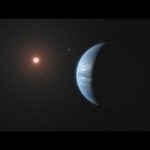
    Researchers have found evidence for the existence of a new type of planet they have called a “water world,” where water makes up a large fraction of the entire planet. These worlds, discovered in a planetary system 218 light-years away, are unlike any planets in our Solar System.

    📹 @europeanspaceagency
    🖥️ @nasa , ESA, L. Hustak

    ★ Subscribe: http://bit.ly/ESAsubscribe and click twice on the bell button to receive our notifications.

    Check out our full video catalog: http://bit.ly/SpaceInVideos
    Follow us on Twitter: http://bit.ly/ESAonTwitter
    On Facebook: http://bit.ly/ESAonFacebook
    On Instagram: http://bit.ly/ESAonInstagram
    On LinkedIn: https://bit.ly/ESAonLinkedIn
    On Pinterest: https://bit.ly/ESAonPinterest
    On Flickr: http://bit.ly/ESAonFlickr

    We are Europe’s gateway to space. Our mission is to shape the development of Europe’s space capability and ensure that investment in space continues to deliver benefits to the citizens of Europe and the world. Check out https://www.esa.int/ to get up to speed on everything space related.

    Copyright information about our videos is available here: https://www.esa.int/ESA_Multimedia/Terms_and_Conditions

    #ESA
    #Hubble
    #ExoPlanet

  • Hubble finds hungry black hole twisting captured star into donut shape #shorts

    Hubble finds hungry black hole twisting captured star into donut shape #shorts

    These are termed “tidal disruption events.” But the wording belies the complex, raw violence of a black hole encounter. There is a balance between the black hole’s gravity pulling in star stuff, and radiation blowing material out. In other words, black holes are messy eaters. Astronomers are using Hubble to find out the details of what happens when a wayward star plunges into the gravitational abyss.

    Learn more: https://esahubble.org/images/opo2301a/

    ★ Subscribe: http://bit.ly/ESAsubscribe and click twice on the bell button to receive our notifications.

    Check out our full video catalog: http://bit.ly/SpaceInVideos
    Follow us on Twitter: http://bit.ly/ESAonTwitter
    On Facebook: http://bit.ly/ESAonFacebook
    On Instagram: http://bit.ly/ESAonInstagram
    On LinkedIn: https://bit.ly/ESAonLinkedIn
    On Pinterest: https://bit.ly/ESAonPinterest
    On Flickr: http://bit.ly/ESAonFlickr

    We are Europe’s gateway to space. Our mission is to shape the development of Europe’s space capability and ensure that investment in space continues to deliver benefits to the citizens of Europe and the world. Check out https://www.esa.int/ to get up to speed on everything space related.

    Copyright information about our videos is available here: https://www.esa.int/ESA_Multimedia/Terms_and_Conditions

    #ESA
    #Hubble
    #BlackHole

  • Zooming Into NGC 346 🔍 #shorts

    Zooming Into NGC 346 🔍 #shorts

    This video takes the viewer on a journey to NGC 346, one of the most dynamic star-forming regions in nearby galaxies, as seen by the NASA/ESA/CSA James Webb Space Telescope.

    NCG 346 is located in the Small Magellanic Cloud (SMC), a dwarf galaxy close to our Milky Way.

    Credit: ESA/Webb, NASA, CSA, ESO, ESA/Hubble, Digitized Sky Survey 2, A. Nota, N. Bartmann, M. Zamani
    Music: Music for the Zoom: Tonelabs – The Red North

    ★ Subscribe: http://bit.ly/ESAsubscribe and click twice on the bell button to receive our notifications.

    Check out our full video catalog: http://bit.ly/SpaceInVideos
    Follow us on Twitter: http://bit.ly/ESAonTwitter
    On Facebook: http://bit.ly/ESAonFacebook
    On Instagram: http://bit.ly/ESAonInstagram
    On LinkedIn: https://bit.ly/ESAonLinkedIn
    On Pinterest: https://bit.ly/ESAonPinterest
    On Flickr: http://bit.ly/ESAonFlickr

    We are Europe’s gateway to space. Our mission is to shape the development of Europe’s space capability and ensure that investment in space continues to deliver benefits to the citizens of Europe and the world. Check out https://www.esa.int/ to get up to speed on everything space related.

    Copyright information about our videos is available here: https://www.esa.int/ESA_Multimedia/Terms_and_Conditions

    #ESA
    #Space
    #jameswebbspacetelescope

  • And yet another first for Webb 🟠 #shorts

    And yet another first for Webb 🟠 #shorts

    Researchers have confirmed the presence of an exoplanet, a planet that orbits another star, using James Webb Space Telescope for the first time. Formally classified as LHS 475 b, the planet is almost exactly the same size as our own, clocking in at 99% of Earth’s diameter.

    Among all operating telescopes, only Webb is capable of characterising the atmospheres of Earth-sized exoplanets. The team attempted to assess what is in the planet’s atmosphere by analysing its transmission spectrum. Although the data show that this is an Earth-sized terrestrial planet, they do not yet know if it has an atmosphere.

    Webb also revealed that the planet is a few hundred degrees warmer than Earth, so if clouds are detected it may lead the researchers to conclude that the planet is more like Venus, which has a carbon dioxide atmosphere and is perpetually shrouded in thick cloud.

    📹 @EuropeanSpaceAgency
    🖥️ @NASA , ESA, @canadianspaceagency , L. Hustak

    ★ Subscribe: http://bit.ly/ESAsubscribe and click twice on the bell button to receive our notifications.

    Check out our full video catalog: http://bit.ly/SpaceInVideos
    Follow us on Twitter: http://bit.ly/ESAonTwitter
    On Facebook: http://bit.ly/ESAonFacebook
    On Instagram: http://bit.ly/ESAonInstagram
    On LinkedIn: https://bit.ly/ESAonLinkedIn
    On Pinterest: https://bit.ly/ESAonPinterest
    On Flickr: http://bit.ly/ESAonFlickr

    We are Europe’s gateway to space. Our mission is to shape the development of Europe’s space capability and ensure that investment in space continues to deliver benefits to the citizens of Europe and the world. Check out https://www.esa.int/ to get up to speed on everything space related.

    Copyright information about our videos is available here: https://www.esa.int/ESA_Multimedia/Terms_and_Conditions

    #ESA
    #Exoplanet
    #JamesWebbSpaceTelescope

  • Three faces of a supernova 💥 #shorts

    Three faces of a supernova 💥 #shorts

    Three different moments in a far-off supernova explosion were captured in a single snapshot by the NASA/ESA Hubble Space Telescope. The progenitor star exploded more than 11 billion years ago, when the Universe was less than a fifth of its current age of 13.8 billion years.

    📹 @EuropeanSpaceAgency

    📸 @NASA, ESA, STScI, Wenlei Chen (UMN), Patrick Kelly (UMN), Hubble Frontier Fields

    ★ Subscribe: http://bit.ly/ESAsubscribe and click twice on the bell button to receive our notifications.

    Check out our full video catalog: http://bit.ly/SpaceInVideos
    Follow us on Twitter: http://bit.ly/ESAonTwitter
    On Facebook: http://bit.ly/ESAonFacebook
    On Instagram: http://bit.ly/ESAonInstagram
    On LinkedIn: https://bit.ly/ESAonLinkedIn
    On Pinterest: https://bit.ly/ESAonPinterest
    On Flickr: http://bit.ly/ESAonFlickr

    We are Europe’s gateway to space. Our mission is to shape the development of Europe’s space capability and ensure that investment in space continues to deliver benefits to the citizens of Europe and the world. Check out https://www.esa.int/ to get up to speed on everything space related.

    Copyright information about our videos is available here: https://www.esa.int/ESA_Multimedia/Terms_and_Conditions

    #ESA
    #Hubble
    #Supernova

  • Hubble sees supergiant star Betelgeuse recovering after blowing its top #shorts

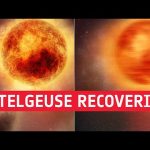
    Hubble sees supergiant star Betelgeuse recovering after blowing its top #shorts

    The first clue came when the star mysteriously darkened in late 2019. An immense cloud of obscuring dust formed from the ejected surface as it cooled. Astronomers have now pieced together a scenario for the upheaval. And the star is still slowly recovering; the photosphere is rebuilding itself. And the interior is reverberating like a bell that has been hit with a sledgehammer, disrupting the star’s normal cycle. This doesn’t mean the monster star is going to explode any time soon, but the late-life convulsions may continue to amaze astronomers.

    Learn more: https://esahubble.org/images/opo22037a/

    ★ Subscribe: http://bit.ly/ESAsubscribe and click twice on the bell button to receive our notifications.

    Check out our full video catalog: http://bit.ly/SpaceInVideos
    Follow us on Twitter: http://bit.ly/ESAonTwitter
    On Facebook: http://bit.ly/ESAonFacebook
    On Instagram: http://bit.ly/ESAonInstagram
    On LinkedIn: https://bit.ly/ESAonLinkedIn
    On Pinterest: https://bit.ly/ESAonPinterest
    On Flickr: http://bit.ly/ESAonFlickr

    We are Europe’s gateway to space. Our mission is to shape the development of Europe’s space capability and ensure that investment in space continues to deliver benefits to the citizens of Europe and the world. Check out https://www.esa.int/ to get up to speed on everything space related.

    Copyright information about our videos is available here: https://www.esa.int/ESA_Multimedia/Terms_and_Conditions

    #ESA
    #Hubble
    #Betelgeuse

  • Webb and Hubble inspect the Phantom Galaxy #shorts

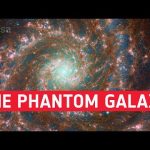
    Webb and Hubble inspect the Phantom Galaxy #shorts

    New images of the spectacular Phantom Galaxy, M74, showcase the power of space observatories working together in multiple wavelengths. In this case, data from the @NASA / ESA / @canadianspaceagency James Webb Space Telescope and the NASA/ESA Hubble Space Telescope compliment each other to provide a comprehensive view of the galaxy.

    Download these images: https://www.esa.int/Science_Exploration/Space_Science/Webb/Webb_inspects_the_heart_of_the_Phantom_Galaxy

    ★ Subscribe: http://bit.ly/ESAsubscribe and click twice on the bell button to receive our notifications.

    Check out our full video catalog: http://bit.ly/SpaceInVideos
    Follow us on Twitter: http://bit.ly/ESAonTwitter
    On Facebook: http://bit.ly/ESAonFacebook
    On Instagram: http://bit.ly/ESAonInstagram
    On LinkedIn: https://bit.ly/ESAonLinkedIn
    On Pinterest: https://bit.ly/ESAonPinterest
    On Flickr: http://bit.ly/ESAonFlickr

    We are Europe’s gateway to space. Our mission is to shape the development of Europe’s space capability and ensure that investment in space continues to deliver benefits to the citizens of Europe and the world. Check out https://www.esa.int/ to get up to speed on everything space related.

    Copyright information about our videos is available here: https://www.esa.int/ESA_Multimedia/Terms_and_Conditions

    #ESA
    #Webb
    #Hubble

  • 5,000 Exoplanets: Listen to the Sounds of Discovery (360 Video)

    5,000 Exoplanets: Listen to the Sounds of Discovery (360 Video)

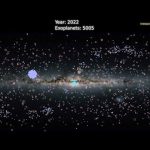
    On March 21, 2022, the number of known exoplanets passed 5,000 according to the NASA Exoplanet Archive. This 360-degree animation and sonification tracks humanity’s discovery of the planets beyond our solar system over time. Turning NASA data into sounds allows users to hear the pace of discovery with additional information conveyed by the notes themselves.

    As each exoplanet is discovered, a circle appears at its position in the sky. The size of the circle indicates the relative size of the planet’s orbit and the color indicates which planet detection method was used to discover it. The music is created by playing a note for each newly discovered world. The pitch of the note indicates the relative orbital period of the planet. Planets that take a longer time to orbit their stars are heard as lower notes, while planets that orbit more quickly are heard as higher notes.

    Exoplanet detection methods: radial velocity (pink); transit (purple); imaging (orange); microlensing (green); timing variations (red); orbital brightness modulation (yellow); astrometry (gray); disk kinematics (blue).

    Please note: Not all browsers support viewing 360 videos. YouTube supports their playback on computers using Chrome, Firefox, MS Edge, and Opera browsers. For the best experience on a mobile device, play this video in the YouTube app.

    Credit: NASA/JPL-Caltech/M. Russo, A. Santaguida (SYSTEM Sounds)

  • 5,000 Exoplanets: Listen to the Sounds of Discovery (NASA Data Sonification)

    5,000 Exoplanets: Listen to the Sounds of Discovery (NASA Data Sonification)

    On March 21, 2022, the number of known exoplanets passed 5,000 according to the NASA Exoplanet Archive. This animation and sonification tracks humanity’s discovery of the planets beyond our solar system over time. Turning NASA data into sounds allows users to hear the pace of discovery, with additional information conveyed by the notes themselves.

    As each exoplanet is discovered, a circle appears at its position in the sky. The size of the circle indicates the relative size of the planet’s orbit and the color indicates which planet detection method was used to discover it. The music is created by playing a note for each newly discovered world. The pitch of the note indicates the relative orbital period of the planet. Planets that take a longer time to orbit their stars are heard as lower notes, while planets that orbit more quickly are heard as higher notes.

    Credit: NASA/JPL-Caltech/M. Russo, A. Santaguida (SYSTEM Sounds)

  • #AskNASA┃ What is Hubble revealing about the universe?

    #AskNASA┃ What is Hubble revealing about the universe?

    This year, NASA is celebrating the Hubble Space Telescope’s 30 years of unlocking the beauty and mystery of space.
    Hubble is revolutionizing modern astronomy for scientists, while taking the public on a wondrous journey of exploration and discovery. Hubble’s never-ending, breathtaking celestial snapshots provide a visual shorthand for Hubble’s top scientific achievements. Unlike any space telescope before it, Hubble made astronomy relevant, engaging and accessible for people of all ages. The space telescope’s iconic imagery has redefined our view of the universe and our place in time and space.

    For Hubble ‘At Home’ resources, visit this website for activities.
    https://www.nasa.gov/content/hubble-inspires-online-activities/

    Send your questions to our experts using #AskNASA.

    For more information about Artemis:
    https://www.nasa.gov/what-is-artemis

    This video is available for download from NASA’s Image and Video Library: https://images.nasa.gov/details-NHQ_2020_0429_AskNASA_202_Hubble

  • Hubble’s Collection of Anniversary Images

    Hubble’s Collection of Anniversary Images

    Each year, the NASA/ESA Hubble Space Telescope dedicates a small portion of its precious observing time to taking a special anniversary image, showcasing particularly beautiful and meaningful objects. These images continue to challenge scientists with exciting new surprises and to enthral the public with ever more evocative observations.

    To celebrate Hubble’s 30th anniversary, let’s look back at the beauty and science behind each of the anniversary images unveiled as of 2005. In this video, we will also feature the very special 2020 Hubble Space Telescope 30th anniversary image.

    Learn more: http://bit.ly/HubbleCelebratesIts30thAnniversaryWithATapestreOfBlazingStarbirth

    Credit:
    Directed by: Bethany Downer
    Visual design and editing: Martin Kornmesser
    Written by: Bethany Downer
    Narration: Sara Mendes da Costa
    Images & VIdeos: NASA, ESA, M.Kornmesser, L. Calçada, ESO, NAOJ, G. Bacon, L. Frattare, Z. Levay and F. Summers (STScI/AURA), D. Lennon and E. Sabbi (ESA/STScI), J. Anderson, S.E. de Mink, R. van der Marel, T. Sohn, and N. Walborn (STScI), L. Bedin (INAF, Padua), C. Evans (STFC), H. Sana (Amsterdam), N. Langer (Bonn), P. Crowther (Sheffield), A. Herrero (IAC, Tenerife), N. Bastian (USM, Munich), and E. Bressert (ESO), the Hubble Heritage Team, T. Davis, L. Frattare, Z. Levay, (Viz 3D team, STScI), J. Anderson (STScI), the Hubble Heritage Team (STScI/AURA), A. Nota (ESA/STScI), and the Westerlund 2 Science Team, Eckhard Slawik (e.slawik@gmx.net).
    Music: Johan B. Monell (www.johanmonell.com
    Web and technical support: Raquel Yumi Shida
    Executive producer: Mariya Lyubenova

    ★ Subscribe: http://bit.ly/ESAsubscribe and click twice on the bell button to receive our notifications.

    Check out our full video catalog: http://bit.ly/SpaceInVideos
    Follow us on Twitter: http://bit.ly/ESAonTwitter
    On Facebook: http://bit.ly/ESAonFacebook
    On Instagram: http://bit.ly/ESAonInstagram
    On Flickr: http://bit.ly/ESAonFlickr

    We are Europe’s gateway to space. Our mission is to shape the development of Europe’s space capability and ensure that investment in space continues to deliver benefits to the citizens of Europe and the world. Check out http://www.esa.int/ESA to get up to speed on everything space related.

    Copyright information about our videos is available here: http://www.esa.int/spaceinvideos/Terms_and_Conditions

    #ESA
    #Hubble
    #Hubble30

  • 30 Years of Science with the Hubble Space Telescope

    30 Years of Science with the Hubble Space Telescope

    On 24 April 1990 the NASA/ESA Hubble Space Telescope was sent into orbit aboard the space shuttle Discovery, the first space telescope of its kind. It offered a new view of the Universe and has, for 30 years, reached and surpassed all expectations, beaming back data and images that have changed scientists’ understanding of the Universe and the public’s perception of it. Hubble’s discoveries have revolutionised nearly all areas of current astronomical research, from planetary science to cosmology, and its pictures are unmistakably out of this world.

    This video revisits some of Hubble’s biggest science discoveries throughout its three decades of operation to celebrate the telescope’s 30th anniversary.

    Learn more: http://bit.ly/HubbleCelebratesIts30thAnniversaryWithATapestreOfBlazingStarbirth

    Credit:
    Directed by: Bethany Downer
    Visual design and editing: Martin Kornmesser
    Written by: Bethany Downer
    Narration: Sara Mendes da Costa
    Images & Videos: NASA, ESA, M.Kornmesser, L. Calçada, ESO, G. Bacon (STScI), theHubble Heritage Team (STScI/AURA)-ESA/Hubble Collaboration, and H. Bond (STScI and Pennsylvania State University), A. Feild (STScI), and A. Riess (STScI/JHU), D. Jewitt (UCLA), F. Summers, Z. Levay, J. DePasquale, L. Hustak, L. Frattare, M. Robberto (STScI), R. Hurt (Caltech/IPAC) Acknowledgement: R. Gendler, spaceengine.org.
    Music: Johan B. Monell (www.johanmonell.com)
    Web and technical support: Raquel Yumi Shida
    Executive producer: Mariya Lyubenova

    ★ Subscribe: http://bit.ly/ESAsubscribe and click twice on the bell button to receive our notifications.

    Check out our full video catalog: http://bit.ly/SpaceInVideos
    Follow us on Twitter: http://bit.ly/ESAonTwitter
    On Facebook: http://bit.ly/ESAonFacebook
    On Instagram: http://bit.ly/ESAonInstagram
    On Flickr: http://bit.ly/ESAonFlickr

    We are Europe’s gateway to space. Our mission is to shape the development of Europe’s space capability and ensure that investment in space continues to deliver benefits to the citizens of Europe and the world. Check out http://www.esa.int/ESA to get up to speed on everything space related.

    Copyright information about our videos is available here: http://www.esa.int/spaceinvideos/Terms_and_Conditions

    #ESA
    #Hubble
    #Hubble

  • Hubble: 30 years unveiling the universe

    Hubble: 30 years unveiling the universe

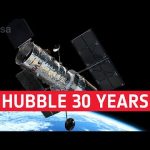
    This month marks the 30th anniversary of the international Hubble Space Telescope.

    Launched on 24 April 1990, and deployed from the Space Shuttle Discovery cargo bay a day later (25 April 1990), the telescope has given us a new perspective on the Universe.

    The joint NASA/ESA mission has shown us distant galaxies and spectacular nebulae. It has revealed supermassive black holes and planets in distant solar systems; and has proved that the Universe is not only expanding, the expansion is accelerating.

    Hubble’s mission has also been eventful. When it was first launched, a defect in the mirror meant it sent back blurry images. Since then, five servicing missions have enabled the telescope to be improved and upgraded. Today, it is still going strong.

    Learn more: http://bit.ly/HubbleCelebratesIts30thAnniversaryWithATapestreOfBlazingStarbirth

    ★ Subscribe: http://bit.ly/ESAsubscribe and click twice on the bell button to receive our notifications.

    Check out our full video catalog: http://bit.ly/SpaceInVideos
    Follow us on Twitter: http://bit.ly/ESAonTwitter
    On Facebook: http://bit.ly/ESAonFacebook
    On Instagram: http://bit.ly/ESAonInstagram
    On Flickr: http://bit.ly/ESAonFlickr

    We are Europe’s gateway to space. Our mission is to shape the development of Europe’s space capability and ensure that investment in space continues to deliver benefits to the citizens of Europe and the world. Check out http://www.esa.int/ESA to get up to speed on everything space related.

    Copyright information about our videos is available here: http://www.esa.int/spaceinvideos/Terms_and_Conditions

    #ESA
    #Hubble
    #Hubble30

  • #EZScience Episode 6: NASA’s Hubble Space Telescope — Our Window to the Stars

    #EZScience Episode 6: NASA’s Hubble Space Telescope — Our Window to the Stars

    Let’s talk about science! Watch the sixth episode of our #EZScience series to learn about the 30th anniversary of NASA’s Hubble Space Telescope. As the first major optical telescope to be placed in space, Hubble has changed our fundamental understanding of the universe.

    ABOUT THE SERIES: In our #EZScience video series with the National Air and Space Museum, NASA’s associate administrator for science Dr. Thomas Zurbuchen and Museum director Dr. Ellen Stofan talk about the latest in planetary science and exploration.

    Learn more about the series: https://www.nasa.gov/ezscience
    Discover more about Hubble: https://www.nasa.gov/hubble

  • Ce formă are Universul?

    Ce formă are Universul?

    interviu cu Corina Negrea in cadrul emisiunii de radio Stiinta 360, Radio Romania Cultural.
    Fizica Povestita: https://bit.ly/2YsKaAc
    “O calatorie prin Univers”: t.ly/RkRED
    Patreon: https://patreon.com/cristianpresura
    In fiecare zi lucratoare, de la 19:00, stau de vorba (voce) pe Discord: https://discordapp.com/invite/presura
    https://www.facebook.com/presura
    https://www.facebook.com/pg/stiintaclub/posts/
    https://www.instagram.com/cristianpresura/

  • An Exoplanet Discovery from Hubble on This Week @NASA – September 13, 2019

    An Exoplanet Discovery from Hubble on This Week @NASA – September 13, 2019

    Hubble makes an exoplanet discovery, the next space station crew gets ready to launch, and back to work in Florida after weathering the storm … a few of the stories to tell you about – This Week at NASA!

    This video is available for download from NASA’s Image and Video Library: https://images.nasa.gov/details-NHQ_2019_0913_An%20Exoplanet%20Discovery%20from%20Hubble%20on%20This%20Week%20@NASA%20%E2%80%93%20September%2013,%202019.html

  • Testing Orion’s “Powerhouse” on This Week @NASA – August 9, 2019

    Testing Orion’s “Powerhouse” on This Week @NASA – August 9, 2019

    A critical test of the “powerhouse” for our Orion spacecraft, Curiosity is still going strong after seven Earth years on Mars, and Hubble’s new portrait of Jupiter … a few of the stories to tell you about – This Week at NASA!

    This video is available for download from NASA’s Image and Video Library: https://images.nasa.gov/details-NHQ_2019_0809_Testing%20Orion%E2%80%99s%20%E2%80%9CPowerhouse%E2%80%9D%20on%20This%20Week%20@NASA%20-%20August%209,%202019.html

  • Sonification of a Hubble Deep Space Image

    Sonification of a Hubble Deep Space Image

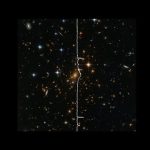
    Space becomes “sonified” in this visualization of a cluster of galaxies imaged by NASA’s Hubble Space Telescope. Time flows left to right, and the frequency of sound changes from bottom to top, ranging from 30 to 1,000 hertz. Objects near the bottom of the image produce lower notes, while those near the top produce higher ones. Most of the visible specks are galaxies housing countless stars. A few individual stars shine brightly in the foreground. Stars and compact galaxies create short, clear tones, while sprawling spiral galaxies emit longer notes that change pitch. The higher density of galaxies near the center of the image — the heart of this galaxy cluster, known as RXC J0142.9+4438 — results in a swell of mid-range tones halfway through the video. Hubble’s Advanced Camera for Surveys and Wide Field Camera 3 acquired this image on Aug. 13, 2018.

    Download this video:
    https://svs.gsfc.nasa.gov/cgi-bin/details.cgi?aid=13061

    Credit: NASA/Hubble/SYSTEM Sounds (Matt Russo/Andrew Santaguida)

  • Science at ESA

    Science at ESA

    Science is the underpinning theme of ESA, driving the spiral of inspiration, innovation, infor­mation exchange and interaction with our stakeholders. In this video, Günther Hasinger, ESA Director of Science, reflects on the growth of ESA’s space science programme over the past decades, as well as on its current and future challenges. He also highlights the importance of long-term strategic planning and international cooperation in these endeavours, and finally looks back at some recent successes of ESA’s space science missions.

    Learn more about ESA’s space science missions: http://www.esa.int/science

    Science is everywhere at ESA. As well as exploring the Universe and answering the big questions about our place in space we develop the satellites, rockets and technologies to get there. Science also helps us to care for our home planet. All this week we’re highlighting different aspects of science at ESA. Join the conversation with #ScienceAtESA.

    Credits: ESA/NASA/JPL/University of Arizona (Huygens landing); ESA/Rosetta/Philae/ROLIS/DLR, Stefano Mottola (Philae landing); ESA/Planck Collaboration (cosmic microwave background); ESA/Gaia/DPAC (Milky Way); MPG/ESO (Eagle Nebula, visible); ESA/Herschel/PACS/SPIRE/Hill, Motte, HOBYS Key Programme Consortium (Eagle Nebula, far-infrared); ESA/XMM-Newton/EPIC/XMM-Newton-SOC/Boulanger (Eagle Nebula, X-rays); NASA, ESA/Hubble and the Hubble Heritage Team (Pillars of Creation); ESO (Pillars of Creation, ground-based view); Koppelman, Villalobos & Helmi, Kapteyn Astronomical Institute, University of Groningen (Milky Way simulation); ESA/XMM-Newton/F. Nicastro et al./R. Cen (warm-hot intergalactic medium); ESA/DLR/FU Berlin, CC BY-SA 3.0 IGO (Mars surface); ESA/NASA/JPL/ASI/Univ. Rome (Mars, liquid water under south pole); NASA/JPL-Caltech (Mars view); ESO, M. Kornmesser, L. Calcada (`Oumuamua animation)

    ★ Subscribe: http://bit.ly/ESAsubscribe and click twice on the bell button to receive our notifications.

    Check out our full video catalog: http://bit.ly/SpaceInVideos
    Follow ESA on Twitter: http://bit.ly/ESAonTwitter
    On Facebook: http://bit.ly/ESAonFacebook
    On Instagram: http://bit.ly/ESAonInstagram
    On Flickr: http://bit.ly/ESAonFlickr

    ESA is Europe’s gateway to space. Our mission is to shape the development of Europe’s space capability and ensure that investment in space continues to deliver benefits to the citizens of Europe and the world. Check out http://www.esa.int/ESA to get up to speed on everything space related.

    Copyright information about our videos is available here: http://www.esa.int/spaceinvideos/Terms_and_Conditions

    #ESA
    #ScienceAtESA
    #SpaceScience

  • 5 of the Biggest Puzzles about the Universe

    5 of the Biggest Puzzles about the Universe

    Test yourself! How well can you solve some of the biggest cosmic puzzles? You get one clue: redshift.
    SUBSCRIBE: https://www.youtube.com/WhatThePhysics?sub_confirmation=1

    Host, Producer: Greg Kestin
    Filming: Greg Kestin
    Research, Writing: Greg Kestin, Samia Bouzid
    Editing, Animating: Daniel Thomson
    Editorial Input from: Julia Cort, Ari Daniel
    Science consultant: Susana Deustua
    Media: Shutterstock, NASA, ESA
    Special thanks: Entire NOVA team
    From the producers of PBS NOVA © WGBH Educational Foundation Funding provided by FQXi Music provided by APM
    Music: APM

  • How Redshift Revealed the Universe

    How Redshift Revealed the Universe

    One small clue revealed the biggest secrets of the universe!
    SUBSCRIBE: https://www.youtube.com/WhatThePhysics?sub_confirmation=1

    Host, Producer: Greg Kestin
    Filming: Greg Kestin
    Research, Writing: Greg Kestin, Samia Bouzid
    Editing, Animating: Samia Bouzid, Greg Kestin
    Editorial Input from: Julia Cort, Ari Daniel
    Science consultant: Susana Deustua
    Media: Shutterstock, NASA, ESA
    Special thanks: Entire NOVA team
    From the producers of PBS NOVA © WGBH Educational Foundation Funding provided by FQXi Music provided by APM

  • Flight Through Orion Nebula in Visible and Infrared Light

    Flight Through Orion Nebula in Visible and Infrared Light

    By combining the visible and infrared capabilities of the Hubble and Spitzer space telescopes, astronomers and visualization specialists from NASA’s Universe of Learning program have created a spectacular, three-dimensional, fly-through movie of the magnificent Orion nebula, a nearby stellar nursery. Using actual scientific data along with Hollywood techniques, a team at the Space Telescope Science Institute in Baltimore, Maryland, and the Caltech/IPAC in Pasadena, California, has produced the best and most detailed multi-wavelength visualization yet of the Orion nebula.
    Credits: Space Telescope Science Institute
    More: https://www.nasa.gov/feature/goddard/2018/hubble-yields-new-discoveries-at-the-winter-aas-meeting
    Download: http://hubblesite.org/news_release/news/2018-04

  • First Light Detected from Gravitational Wave Event on This Week @NASA – October 20, 2017

    First Light Detected from Gravitational Wave Event on This Week @NASA – October 20, 2017

    For the first time, NASA scientists have detected light tied to a gravitational-wave event. The gravitational wave – caused by an explosive merger of two neutron stars, about 130 million light-years from Earth – produced a gamma-ray burst and a rarely seen flare-up called a “kilonova”. The phenomenon was captured by our Fermi, Swift, Hubble, Chandra and Spitzer missions, along with dozens of NASA-funded ground-based observatories. Also, Trio of Station Spacewalks Completed, Fresh Findings from Cassini, and Test of SLS RS-25 Flight Engine!

    This video is available for download from NASA’s Image and Video Library: https://images.nasa.gov/#/details-NHQ_20171023_This%20Week%20@%20NASA.html

  • Tracking Hurricane Maria from Space on This Week @NASA – September 22, 2017

    Tracking Hurricane Maria from Space on This Week @NASA – September 22, 2017

    Satellite data continues to enable weather forecasters to look inside and outside of powerful hurricanes. Imagery from NOAA’s GOES East satellite, captured Sept. 17 to Sept. 20, shows Hurricane Jose along the U.S. east coast, and Hurricane Maria, as it moved through the Leeward Islands, strengthening to a Category 5 hurricane, and making landfall in Puerto Rico. Meanwhile, The Global Precipitation Measurement (GPM) satellite found rain falling inside Maria at a rate of over 6.44 inches per hour in powerful storms that reached above 9.7 miles high. Also, SpaceX Dragon Returns with Science, Katherine Johnson Research Facility Opened, Earth’s Gravity Assist to OSIRIS-REx, Hubble Spots Asteroids Orbiting Each Other, and Engineering the Future!

    This video is available for download from NASA’s Image and Video Library: https://images.nasa.gov/#/details-NHQ_2017_0922_This%20Week%20@NASA.html

  • 25 years of Hubble on This Week @NASA-April 24, 2015

    25 years of Hubble on This Week @NASA-April 24, 2015

    On April 24, 1990, NASA’s Hubble Space Telescope rode to space aboard space shuttle Discovery – on a mission to do just that – discover. The results over the past 25 years have been nothing short of remarkable.
    The storied and historic journey into the cosmos that Hubble’s eyes have taken us on, has led to groundbreaking discoveries, captivated imaginations and given humans a better understanding of our place in the universe. NASA celebrated Hubble’s Silver anniversary with a variety of events including the unveiling of the official Hubble 25th anniversary image at the Newseum in Washington and a gala at the Smithsonian’s National Air and Space Museum, during which many of the astronauts, scientists, engineers, technicians, educators, and others who have contributed to Hubble’s success were honored. Also, NASA celebrates Earth Day, 3-D printed copper engine part and more!

  • NASA’s Documentary Film: Hubble25

    NASA’s Documentary Film: Hubble25

    In its quarter-century in orbit, the Hubble Space Telescope has transformed the way we understand the Universe, helped us find our place among the stars, and paved the way to incredible advancements in science and technology. The Hubble story is a human story. Hubble overcame much adversity early on in its mission and demonstrated the great heights NASA is capable of achieving against all odds. Much of that is thanks to the “Hubble Heroes”, including scientists, engineers, and the brave astronauts who flew five Space Shuttle missions to service Hubble.

    Join NASA Television in celebrating the 25th anniversary of the Hubble Space Telescope in orbit April 24, 2015.

  • Images From Comet’s Mars Flyby On This Week @NASA- October 24, 2014

    Images From Comet’s Mars Flyby On This Week @NASA- October 24, 2014

    Several Mars-based NASA spacecraft had prime viewing positions for comet Siding Spring’s October 19 close flyby of the Red Planet. Early images included a composite photo from NASA’s Hubble Space Telescope that combined shots of Mars, the comet, and a star background to illustrate Siding Spring’s distance from Mars at closest approach. Also, images from the Mars Reconnaissance Orbiter’s HiRISE camera, which represent the highest-resolution views ever acquired of a comet that came from the Oort Cloud, at the outer fringe of the solar system. The comet flyby – only about 87,000 miles from Mars – was much closer than any other known comet flyby of a planet. Also, Partial solar eclipse, Space station spacewalk, Preparing to release Dragon, Cygnus launch update, Welding begins on SLS, Astronaut class visits Glenn and more!

  • Administrator Visits Aeronautics and Space Research Facilities on This Week @NASA

    Administrator Visits Aeronautics and Space Research Facilities on This Week @NASA

    NASA Administrator Charlie Bolden visited aeronautics and space research facilities at Ames Research Center on March 17, including the laboratory for the volleyball-sized satellites called SPHERES, which are used onboard the International Space Station for space robotics and spacecraft navigation experiments. He also saw the high-fidelity airport control tower simulator called, “Future Flight Central”, used by NASA, the Federal Aviation Administration and other industry partners for joint research on next-generation air traffic management. Also, Rocket for Orion’s flight test highlighted, Future explorer celebrated at KSC, NASA’s new Chief Technologist, Coastal Flooding Challenge, Next space station crews , Hubble 24th anniversary image and more!

  • The Beginning of Everything — The Big Bang

    The Beginning of Everything — The Big Bang

    How did everything get started?

    Has the universe a beginning or was it here since forever? Well, evidence suggests that there was indeed a starting point to this universe we are part of right now. But how can this be? How can something come from nothing? And what about time? We don’t have all the answers yet so let’s talk about what we know.

    Also, we try to make this one not depressing. Tell us if we succeeded.

    BY THE WAY. We have a website now. We’ll try to blog from time to time, show you guys how we make the videos and give more insight to our process. Also we sell stuff. We really don’t know where this whole kurzgesagt stuff leads us. But we are really thankful for all the attention and positive feedback and yeah, maybe we can make this our jobs — it would be pretty nice and we could do more content each month. But we’ll see. For now, thank you very much everybody for making this little adventure possible.

    OUR CHANNELS
    ▀▀▀▀▀▀▀▀▀▀▀▀▀▀▀▀▀▀▀▀▀▀▀▀▀▀
    German Channel: https://kgs.link/youtubeDE
    Spanish Channel: https://kgs.link/youtubeES

    HOW CAN YOU SUPPORT US?
    ▀▀▀▀▀▀▀▀▀▀▀▀▀▀▀▀▀▀▀▀▀▀▀▀▀▀
    This is how we make our living and it would be a pleasure if you support us!

    Get Merch designed with ❤ from https://kgs.link/shop
    Join the Patreon Bird Army 🐧 https://kgs.link/patreon

    DISCUSSIONS & SOCIAL MEDIA
    ▀▀▀▀▀▀▀▀▀▀▀▀▀▀▀▀▀▀▀▀▀▀▀▀▀▀
    Reddit: https://kgs.link/reddit
    Instagram: https://kgs.link/instagram
    Twitter: https://kgs.link/twitter
    Facebook: https://kgs.link/facebook
    Discord: https://kgs.link/discord
    Newsletter: https://kgs.link/newsletter

    OUR VOICE
    ▀▀▀▀▀▀▀▀▀▀▀▀▀▀▀▀▀▀▀▀▀▀▀▀▀▀
    The Kurzgesagt voice is from
    Steve Taylor: https://kgs.link/youtube-voice

    OUR MUSIC ♬♪
    ▀▀▀▀▀▀▀▀▀▀▀▀▀▀▀▀▀▀▀▀▀▀▀▀▀▀
    700+ minutes of Kurzgesagt Soundtracks by Epic Mountain:

    Spotify: https://kgs.link/music-spotify
    Soundcloud: https://kgs.link/music-soundcloud
    Bandcamp: https://kgs.link/music-bandcamp
    Youtube: https://kgs.link/music-youtube
    Facebook: https://kgs.link/music-facebook

    If you like the MUSIC of the video, you can get it here: http://bit.ly/1fCOlLI
    Thomas did an aweful good job again. 🙂

    Next Video: April. (as soon as we can but we kind of have to make a living and visit college) Topic: Nuclear Energy (probably, if we finish the research in time — if not something else)

    Short videos, explaining things. For example Evolution, the Universe, Time, the Stock Exchange or controversial topics like Fracking. Because we love science.

    We’re a bunch of Information designers from munich, visit us on our website, twitter, facebook or behance to say hi!

    The Beginning of Everything — The Big Bang

    Help us caption & translate this video!

    http://www.youtube.com/timedtext_cs_panel?c=UCsXVk37bltHxD1rDPwtNM8Q&tab=2