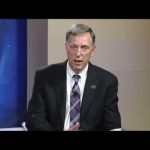
Vice President Mike Pence offered his thanks Monday to employees working on NASA’s human spaceflight programs during a tour of the agency’s Marshall Space Flight Center in Huntsville, Alabama. The Vice President saw the progress being made on NASA’s Space Launch System (SLS), the world’s most powerful deep space rocket, that will send astronauts on missions around the Moon and ultimately to Mars. He also visited Marshall’s Payload Operations Integration Center, where the agency manages all research aboard the International Space Station.
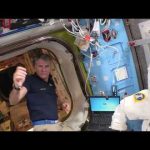
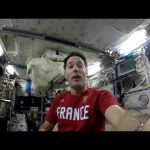
ESA astronaut Paolo Nespoli is currently living and working on the International Space Station as part of his VITA mission. This video shows highlights from his first month.
The mission is part of ESA’s vision to use Earth-orbiting spacecraft as a place to live and work for the benefit of European society while using the experience to prepare for future voyages of exploration further into the Solar System.
More info: Aperture Value: 2,971 Color Space: sRGB Contrast: Normal Custom Rendered: Normal process Date Time Digitized: 20 Aug 2017 19:55:00 Digital Zoom Ratio: 1 Exif Version: 2.2.1 Exposure Bias Value: 0 Exposure Mode: Manual exposure Exposure Program: Manual Exposure Time: 1/0 File Source: DSC Flash: No Flash FNumber: 2,8 Focal Length: 16 Focal Length In 35mm Film: 16 Focal Plane Resolution Unit: centimeters Focal Plane X Resolution: 1.368,889 Focal Plane Y Resolution: 1.368,889 Gain Control: High gain up ISO Speed Ratings: 5.000 Lens Model: 16.0 mm f/2.8 Lens Specification: 16, 16, 2,8, 2,8 Light Source: unknown Max Aperture Value: 3 Metering Mode: Pattern Pixel X Dimension: 4.928 Pixel Y Dimension: 3.280 Saturation: Normal Scene Capture Type: Standard Scene Type: A directly photographed image Sensing Method: One-chip color area sensor SensitivityType: Recommended exposure index (REI) Sharpness: Normal Shutter Speed Value: 1/0 Subject Distance Range: unknown Sub-second Time: 00 Sub-second Time Digitized: 00 Sub-second Time Original: 00 User Comment: NASA 2071135 77.8F White Balance: Auto white balance Image Number: 96.021 Lens ID: 52 Lens Info: 16, 16, 2,8, 2,8 Lens Model: 16.0 mm f/2.8
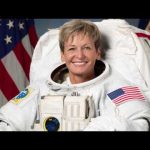
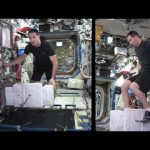
Aboard the International Space Station, Expedition 52 Flight Engineers Peggy Whitson, Jack Fischer and Randy Bresnik of NASA conducted a question and answer session with the agency’s newest class of astronauts during an in-flight “orientation” session Aug. 22 with the new selectees. Twelve new astronauts were announced by NASA on June 7 and will begin extensive training this year for future flight assignments.
It’s an age when many of us would be considering winding down, and cutting back on physical exertion. Not so for Paolo Nespoli, who is about to embark on his third space mission at the age of 60, which makes him Europe’s oldest astronaut. At the end of July he will voyage to the International Space Station (ISS), where he will remain for some months.
Visions and clips from ESA’s future for human spaceflight and robotic exploration. Exploring is about visiting new places and coming back with new experiences and knowledge to help us on Earth.
Our strategy includes three destinations where humans will work with robots to gather new knowledge: low-Earth orbit on the International Space Station, the Moon – our closest neighbour, and our third destination Mars.
The exploration programme includes Europe’s service module for NASA’s Orion spacecraft around the Moon, a landing on the Moon with Roscomos’ Luna lander and ESA’s Exomars rover on Mars.
A deep-space gateway farther afield than the International Space Station is considered as a springboard for exploration beyond the Moon.
ESA’s vision for human spaceflight and robotic exploration is part of humanity’s road to the stars. Exploring is about visiting new places and coming back with new experiences and knowledge to help us on Earth.
Our strategy includes three destinations where humans will work with robots to gather new knowledge: low-Earth orbit on the International Space Station, the Moon – our closest neighbour, and our third destination Mars.
The exploration programme includes Europe’s service module for NASA’s Orion spacecraft around the Moon, a landing on the Moon with Roscomos’ Luna lander and ESA’s Exomars rover on Mars.
A deep-space gateway farther afield than the International Space Station is considered as a springboard for exploration beyond the Moon.
Thomas Pesquet reflects on living on the International Space Station after his six-month Proxima mission. Beyond science and technology the voyage often reveals more than the destination. A message for all humans.
As Marcel Proust wrote in his book The Prisoner: “The only true voyage of discovery, … would be not to visit strange lands but to possess other eyes, to behold the universe through the eyes of another, of a hundred others, to behold the hundred universes that each of them beholds, that each of them is.”
The footage was shot with the Space Station’s highest resolution camera at resolutions between 4K and 6K and available here in Ultra High Definition (3840×2160 pixels). Download the full high-resolution file from ESA’s video archive: http://www.esa.int/spaceinvideos/Videos/2017/05/New_eyes
During Proxima, Thomas performed around 50 scientific experiments for ESA and France’s space agency CNES as well as take part in many research activities for the other Station partners.
The mission is part of ESA’s vision to use Earth-orbiting spacecraft as a place to live and work for the benefit of European society while using the experience to prepare for future voyages of exploration further into the Solar System.
Thomas Pesquet will shortly be returning to Earth after a six-month stay onboard the International Space Station. Named Proxima, this mission is the ninth long-duration flight for an ESA astronaut.
Thomas’s in-orbit schedule includes around 50 experiments for ESA and the French Space Agency CNES, and he’s so far carried out two maintenance spacewalks alongside station commander Shane Kimbrough.
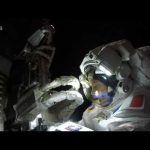
On May 12, Peggy Whitson and Jack Fischer conducted a spacewalk outside the International Space Station. This was the 200th spacewalk in support of station assembly and maintenance. Prior to the outing, during their pre-breathe activities in the airlock, the spacewalkers had to share Whitson’s service and cooling umbilical (SCU), due to an issue with the SCU connected to Fischer’s suit. That device provides electricity, cooling and communications during the pre-breathe phase of a spacewalk. Despite a late start, the pair completed the primary task of replacing an avionics box that supplies electricity and data connections to the science experiments on the orbital laboratory. It was Whitson’s ninth spacewalk and the first for Fischer. Also, Exploration Mission-1 Announcement, Future Space Station Crew Previews Mission, Humans to Mars Summit 2017, James Webb Space Telescope at JSC, and Martian New Year in Mars, PA!
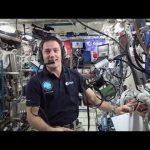
ESA astronaut Thomas Pesquet takes us on a six-minute tour of the International Space Station, recorded 23 March 2017 during his Proxima mission.
During his Proxima mission, Thomas will perform around 50 scientific experiments for ESA and France’s space agency CNES as well as take part in many research activities for the other Station partners.
The mission is part of ESA’s vision to use Earth-orbiting spacecraft as a place to live and work for the benefit of European society while using the experience to prepare for future voyages of exploration further into the Solar System.
On April 24 aboard the International Space Station, NASA astronaut Peggy Whitson set a new record for cumulative time spent in space by a U.S. astronaut. President Donald Trump marked the milestone with a call from the Oval Office, with First Daughter Ivanka Trump, and NASA astronaut Kate Rubins – to the station, where Whitson was joined by NASA’s Jack Fischer. Whitson, who in 2008 became the first woman to command the space station, also holds the record for most spacewalks by a female astronaut. NASA worked with the Department of Education, on behalf of the White House, to make the president’s call to the station available to schools across America. Whitson encouraged students to think about how the steps they take in the classroom today could someday help NASA make the next giant leap in space exploration. Also, First Live 4K Broadcast from Space, Kate Rubins Visits National Institutes of Health, Cassini Begins its Grand Finale, and 2017 Astrobiology Science Conference!
On April 18, Orbital ATK’s Cygnus cargo space craft launched from Cape Canaveral Air Force Station in Florida aboard a United Launch Alliance rocket, on Orbital ATK’s seventh resupply mission to the International Space Station. Cygnus is packed with 7,600 pounds of supplies and research for the crew aboard the orbiting laboratory.
This unedited video without sound lasts over five hours and shows almost all of ESA astronaut Thomas Pesquet’s spacewalk outside the International Space Station.
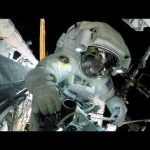
NASA astronaut Shane Kimbrough and Thomas left the International Space Station airlock 24 March 2017 on their second spacewalk together. Thomas and Shane worked separately throughout their sortie.
Thomas was tasked to inspected the Station’s cooling system for leaks. He took photos and videos as he patted and prodded the cooling pipes to see if any coolant leaked out. This video starts when he turns on the camera used to record cooling system inspection for analysis by ground control.
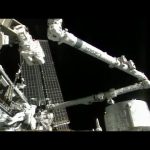
Thomas’ second task was to maintain the multipurpose robotic hand Dextre – he had the laborious job of applying lubricant. After setting up a foot restraint to allow him to work with both hands, NASA astronaut Peggy Whitson moved Dextre into position using the controls inside the Station.
The video ends with Thomas returning to the Quest airlock – the spacewalk lasted six hours and 34 minutes in total with time spent in the airlock included.
The mission is part of ESA’s vision to use Earth-orbiting spacecraft as a place to live and work for the benefit of European society while using the experience to prepare for future voyages of exploration further into the Solar System.
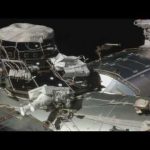
Work continues aboard the International Space Station on upgrades to prepare it for future operational activities. Ground controllers, using the station’s robotic arm, moved the Pressurized Mating Adapter-3 (PMA-3) from the Tranquility module to the station’s Harmony module March 26. PMA-3 will be outfitted with one of two International Docking Adapters to accommodate U.S. commercial spacecraft carrying astronauts on future missions. Four days after the PMA-3 move, NASA’s Shane Kimbrough and Peggy Whitson conducted the second in a series of three planned spacewalks to complete work related to the upgrades. The third spacewalk is planned in April. Also, James Webb Space Telescope Completes Acoustic and Vibration Tests, MAVEN Data Helps Measure Loss of Mars’ Atmosphere, Getting Excited About STEM, and New NASA App for Amazon Fire TV!
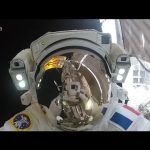
GoPro footage of ESA astronaut Thomas Pesquet working outside the International Space Station during a spacewalk on 24 March 2017.
Thomas is seen performing his spacewalk tasks. Firstly he inspected the Station’s cooling system for leaks. He took photos and recorded video images as he patted and prodded the cooling pipes to see if any coolant leaked out. No leak was found, but ground control can now analyse the images in detail.
Thomas’ second task was to maintain the multipurpose robotic hand Dextre – he had the laborious job of applying lubricant. The footage concludes when he has set up a foot restraint and is preparing to start work on Dextre – backdropped by a spectactular view of our planet.
For this spacewalk, Thomas and NASA astronaut Shane Kimbrough spent six hours and 34 minutes outside the Station.
Thomas is spending six months on the International Space Station as part of his Proxima mission. During Proxima, Thomas will perform around 50 scientific experiments for ESA and France’s space agency CNES as well as take part in many research activities for the other Station partners.
The mission is part of ESA’s vision to use Earth-orbiting spacecraft as a place to live and work for the benefit of European society while using the experience to prepare for future voyages of exploration further into the Solar System.
Music: ’Oaxaca’ Written by M. Cherry, C. Dennis, G. Fuchs, C. McNeal, S. Moore Performed by Maserati Published by Rough Trade Publishing Courtesy of Temporary Residence Ltd. By Arrangement with Bank Robber Music
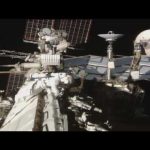
Expedition 50 Commander Shane Kimbrough of NASA and Flight Engineer Thomas Pesquet of the European Space Agency conducted a spacewalk outside the International Space Station March 24 to disconnect cables and electrical connections on Pressurized Mating Adapter-3 (PMA-3), lubricate the latching end effector on the Canadarm2 robotic arm and replace a computer relay box on the station’s truss. PMA-3 will be robotically relocated March 30 by ground controllers from the port side of the Tranquility module to the space-facing side of the Harmony module for the future installation of a second International Docking Adapter that will accommodate the arrivals of commercial crew vehicles. The spacewalk is the first of three planned in a two-week period for station crewmembers that will see PMA-3 reconnected to its new location on Harmony and an avionics box replaced that routes electricity and data to station experiments.
ESA astronaut Thomas Pesquet gives a guided tour of the International Space Station’s exercise machines. Staying fit is important on Earth but even more so in space as bones and muscle are used less in microgravity and tend to waste away. Astronauts spend around two hours every day doing fitness routines.
The Space Station has three types of exercise machines: a treadmill (T2), an exercise bicycle (CEVIS) and a weight-lifting machine (ARED).
Thomas is spending six months on the International Space Station as part of his Proxima mission. During Proxima, Thomas will perform around 50 scientific experiments for ESA and France’s space agency CNES as well as take part in many research activities for the other Station partners.
The mission is part of ESA’s vision to use Earth-orbiting spacecraft as a place to live and work for the benefit of European society while using the experience to prepare for future voyages of exploration further into the Solar System.
On March 2, NASA’s acting Administrator, Robert Lightfoot spoke at the U.S. Chamber of Commerce’s Aviation Summit in Washington, about how the agency’s technology advancements have helped transform the aviation industry. Lightfoot was then joined by Canadian Minister of Transport Marc Garneau, who is a former astronaut and Canadian Space Agency president, and Carol Hallett, counselor to the chamber, for a discussion with NASA’s Shane Kimbrough and Peggy Whitson, via satellite from the International Space Station. The two talked about the vast array of research and technology development conducted aboard the station. Also, Anniversary of One-Year Crew’s Return, IceCube SmallSat Ready for Launch, Orion Propulsion Qualification Module Installed, Small Business Industry Awards, and African American Pioneers in Aviation and Space!
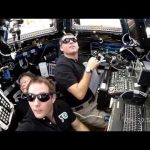
ESA astronaut Thomas Pesquet with NASA astronauts Shane Kimbrough and Peggy Whitson in the Cupola observatory using the International Space Station’s 16-m robotic arm to grapple the SpaceX Dragon cargo spaceship.
The video is sped up 20 times with this recording lasting 45 minutes 30 seconds at normal speed. It shows Shane and Thomas monitoring the spacecraft’s approach scanning the monitors, ready to step in if necessary. Thomas took manual control of the robotic arm and extended it to grapple the vehicle when 11 m from the Station. The Dragon CRS-10 flight was launched on 19 February 2017 and berthed with the Space Station four days later.
The spacecraft carried over 1500 kg of supplies including NASA’s Stratospheric Aerosol and Gas Experiment, or SAGE III, to monitor aerosols, ozone and other gases in Earth’s high atmosphere by looking at the sunlight and moonlight as they pass through. SAGE III is mounted on ESA’s Hexapod – a six-legged tracker that points the facility in the right direction.
Inside the spacecraft was also France’s CNES space agency Fluidics experiment to probe how fluids behave in weightlessness. Thomas is spending six months on the International Space Station as part of his Proxima mission. During Proxima, Thomas will perform around 50 scientific experiments for ESA and France’s space agency CNES as well as take part in many research activities for the other Station partners.
The mission is part of ESA’s vision to use Earth-orbiting spacecraft as a place to live and work for the benefit of European society while using the experience to prepare for future voyages of exploration further into the Solar System.
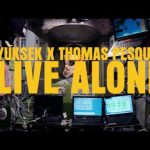
This music video, directed by Jérôme de Gerlache, is a collaboration between French musician Yuksek and ESA astronaut Thomas Pesquet on the International Space Station.
The friends came up for the concept of this film to show both ships of creation: Yuksek’s studio where he composed the music inspired by Thomas Pesquet’s flight, and the spaceship where Thomas is performing science for the benefit of humanity.
Illustrating their everyday working life, they are brought together by music that crosses borders and travels easily from Earth to space. Music connects people anywhere, it is universal and that is its intrinsic beauty.
Thomas is spending six months on the International Space Station as part of his Proxima mission. During Proxima, Thomas will perform around 50 scientific experiments for ESA and France’s space agency CNES as well as take part in many research activities for the other Station partners. The mission is part of ESA’s vision to use Earth-orbiting spacecraft as a place to live and work for the benefit of European society while using the experience to prepare for future voyages of exploration further into the Solar System.
Music: Yuksek « Live Alone feat Roman Rappak »
Directed by Jérôme de Gerlache
Director of photography [space] Thomas Pesquet
Director of photography [earth] Jacques Ballard
Editor Nicolas Capus
Colorgrading Arthur Paux
Thanks to Emilien Lazaron.
Many thanks to Partyfine, Universal Music, Have a great day films, Sparks seeker
NASA astronaut Randy Bresnik, Paolo Nespoli of ESA (European Space Agency), and Sergey Ryazanskiy of the Russian space agency Roscosmos, who are scheduled to launch to the International Space Station in late spring, participated in a news conference Jan. 25, at the agency’s Johnson Space Center in Houston.
This will be Bresnik’s second trip to the space station, the second expedition for Ryazanskiy, and Nespoli’s third trip to the space station. They will be part of Expeditions 52 and 53.
ESA astronaut Thomas Pesquet completed his first spacewalk 13 January 2017 together with NASA astronaut Shane Kimbrough to complete a battery upgrade to the outpost’s power system.
Thomas recorded the spacewalk for the first time with a camera in a space-proof casing that was mounted to a bracket on his chest called the mini work station. This video shows scenes from the spacewalk using this camera.
The spacewalk went as planned and, even better, Shane and Thomas performed a number of extra tasks once they had installed the batteries. They retrieved a failed camera, installed a protective cover on an unused docking port, moved handrails in preparation for future spacewalks and took pictures of external facilities for ground control.
The duo spent five hours and 58 minutes outside the International Space Station.
Thomas is spending six months on the International Space Station as part of his Proxima mission. During Proxima, Thomas will perform around 50 scientific experiments for ESA and France’s space agency CNES as well as take part in many research activities for the other Station partners. The mission is part of ESA’s vision to use Earth-orbiting spacecraft as a place to live and work for the benefit of European society while using the experience to prepare for future voyages of exploration further into the Solar System.
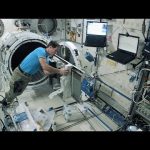
ESA astronaut Thomas Pesquet working in the Kibo laboratory to prepare a CubeSat launch – at 30 times increased speed.
The cylinder in the back is the mini-airlock that allows objects to be sent outside the Space Station. First Thomas and NASA astronaut Shane Kimbrough retrieved the Robotics External Leak Locator and wrapped it up for storage.
Afterwards Thomas installs the platform that the robotic arm grabs. The pointy bit is the connector for the robotic arm.
This video was recorded in December 2016 and was the first step for launching the CubeSats on 16 January 2017. Later Thomas put the satellite launcher on the platform and a third step is to connect the satellites themselves.
Thomas is spending six months on the International Space Station as part of his Proxima mission. During Proxima, Thomas will perform around 50 scientific experiments for ESA and France’s space agency CNES as well as take part in many research activities for the other Station partners. The mission is part of ESA’s vision to use Earth-orbiting spacecraft as a place to live and work for the benefit of European society while using the experience to prepare for future voyages of exploration further into the Solar System.
Thomas Pesquet from France has been onboard the International space Station since 19 November 2016. He is about to take part in his first Extra-Vehicular Activity (EVA, or spacewalk), performing maintenance outside the Space Station to upgrade its batteries to newer lithium-ion versions. Intensive preparations for this procedure took place in the months leading up to launch, with classroom sessions at NASA’s Johnson Space Centre in conjunction with underwater training in NASA’s Neutral Buoyancy Lab.
En tant qu’ambassadeur UNICEF, l’astronaute de l’ESA Thomas Pesquet, actuellement à bord de la Station spatiale internationale dans le cadre de l’Expédition 50, souhaite attirer l’attention sur le besoin de protéger et soutenir les jeunes générations, à l’heure où le changement climatique met toujours plus en péril leur avenir.
In his role as an ambassador for UNICEF France, ESA astronaut Thomas Pesquet, who is currently on the International Space Station as part of the Expedition 50 crew, spreads the message about the need to protect and support children in a time when climate change increasingly endangers their lives.
On Jan. 4, NASA held a press briefing at the agency’s Johnson Space Center in Houston to preview a pair of planned spacewalks to perform a complex upgrade to the International Space Station’s power system. NASA’s Shane Kimbrough and Peggy Whitson will conduct the spacewalk on Jan. 6. The second spacewalk, on Jan. 13, will be performed by Kimbrough and Thomas Pesquet of ESA (European Space Agency). Working on the right side truss of the space station, the crew members will install adapter plates and hook up electrical connections for six new lithium-ion batteries that were delivered to the station in December.
ESA astronaut Thomas Pesquet gives a tour of the International Space Station’s kitchen and the special food will share with his crewmates in space.
Astronauts get so-called “bonus food” for special occasions such as Christmas and New Year’s dinner. Thomas’ bonus food was prepared by ESA and France’s space agency CNES together with French chefs Thierry Marx and Alain Ducasse.
The Expedition 50/51 crew, including NASA astronaut Peggy Whitson, launched aboard a Soyuz spacecraft from the Baikonur Cosmodrome in Kazakhstan Nov. 17 eastern time, to begin a two-day flight to the International Space Station. Whitson, Oleg Novitskiy of the Russian space agency Roscosmos and Thomas Pesquet of ESA (European Space Agency) are scheduled to join Expedition 50 commander Shane Kimbrough of NASA and Roscosmos cosmonauts Sergey Ryzhikov and Andrey Borisenko, who all have been aboard the orbiting laboratory since October. Whitson will assume command of the station in February – making her the first woman to command the space station twice. Whitson and her Expedition 50 crewmates are scheduled to return to Earth next spring. Also, Supermoon Shines Bright, Newman Participates in Operation IceBridge, and Advanced Weather Satellite Mission Previewed!
On Oct. 17, Orbital ATK launched its Cygnus cargo spacecraft atop an Antares rocket to the International Space Station. The spacecraft launched from the Mid-Atlantic Regional Spaceport at NASA’s Wallops Flight Facility in Virginia. This is the sixth cargo mission to the International Space Station for Orbital ATK.
An Oct. 11 opinion article written by President Barack Obama and published by CNN, outlined a vision for the future of space exploration. In it, the president echoed the words in his 2015 State of the Union address about the importance of sending humans on a roundtrip mission to Mars by the 2030s, and developing technology to help us stay on the Red Planet for an extended time. That same day in a blog post, NASA Administrator Charlie Bolden and John Holdren, assistant to the President for Science and Technology, discussed two NASA initiatives that build on the president’s vision and use public-private partnerships to enable humans to live and work in space in a sustainable way. The first was the selection of six companies to develop habitation systems as part of the agency’s Next Space Technologies for Exploration Partnerships or “NextSTEP” program, designed to lay the groundwork for deep space missions. And this fall as part of the second initiative, NASA will start the process of providing companies with a potential opportunity to add their own modules and other capabilities to the International Space Station. The move is in-line with NASA’s plan to support and foster the growing community of scientists and entrepreneurs conducting research and growing businesses in space. Also, White House Frontiers Conference, Kennedy Reopens After Hurricane Matthew, Orion Service Module Vibration Tests, SLS Liquid Hydrogen Fuel Tank Completed, and Aviation Safety Reporting System Turns 40!
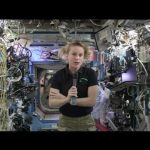
Aboard the International Space Station, Expedition 49 Flight Engineer Kate Rubins of NASA discussed research aboard the orbital laboratory with patients from the MD Anderson Cancer Center in Houston and center officials visiting mission control during an in-flight event Sept. 16. Rubins wore a suit flown to the station that she helped to fabricate pre-flight, illustrating the need for a heightened awareness of cancer research.
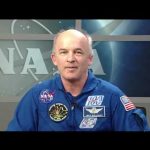
During a live satellite interview Sept. 14 on NASA TV, astronaut and Expedition 48 Commander Jeff Williams spoke about his recent record-breaking mission aboard the International Space Station.
Williams and Russian crewmates Alexey Ovchinin and Oleg Skripochka, of the Russian space agency Roscosmos, returned to Earth Sept. 6 in Kazakhstan (7:13 a.m. Sept. 7, Kazakhstan time) to wrap up a 172 day mission aboard the station. Williams now has spent 534 days in space, making him first on the all-time NASA astronaut list. During the mission, Williams was instrumental in preparing the station for the future arrival of U.S. commercial crew spacecraft. The first International Docking Adapter was installed during a spacewalk by Williams and fellow NASA astronaut Kate Rubins Aug. 19. Outfitted with a host of sensors and systems, the adapter’s main purpose is to connect spacecraft bringing astronauts to the station in the future. Its first users are expected to be Boeing’s CST-100 Starliner and SpaceX’s Crew Dragon spacecraft, now in development in partnership with NASA.
Aboard the International Space Station, Expedition 49 Flight Engineer Kate Rubins of NASA discussed life and research aboard the orbital laboratory with students at the Vintage High School in Napa, California during an in-flight educational event Sept. 14. Rubins, who is in the third month of a four-month mission on the station, is a 1996 graduate of Vintage High School. She recently conducted two spacewalks outside the outpost to install the first International Docking Adapter that U.S. commercial crew spacecraft will link up to in the future, as well as new high definition cameras on the station’s truss.
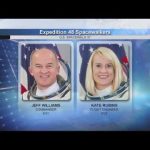
Outside the International Space Station, Expedition 48 Commander Jeff Williams and Flight Engineer Kate Rubins of NASA conducted a spacewalk Sept. 1 to retract a thermal radiator, install the first of several enhanced high definition cameras on the station’s truss and tighten bolts on a joint that enables one of the station’s solar arrays to rotate. This was the second spacewalk for the pair in just 13 days. They installed the station’s first international docking adapter during their previous spacewalk on Aug. 19. The adapter will provide a parking place for new U.S. commercial crew spacecraft delivering astronauts to the station on future missions. Also, Space Station Cameras Capture Hurricanes, Future Space Station Crews Prepare for Missions, Record-Breaking Galaxy Cluster Discovered, Up-Close with Jupiter, and more!
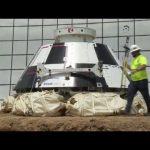
The SpaceX Dragon cargo spacecraft left the International Space Station on August 26. The Dragon departed the station five weeks after delivering almost 5,000 pounds of supplies, experiments and equipment to the orbital complex – including an international docking adapter for use by future American commercial crew spacecraft transporting astronauts to the station. The station’s Canadarm2 robotic arm was used to grapple the Dragon, move it away from the ISS, and release it for its return trip to Earth. The capsule is returning with about 3,000 pounds of cargo and experiments for researchers and investigators. Also, New U.S. Endurance Record in Space, Next U.S. Spacewalk Previewed, Boeing CST-100 Starliner Land Drop Test, SLS Liquid Hydrogen Test Tank Moved, and Celebrating National Parks, from Space!
NASA TV aired a briefing from the agency’s Johnson Space Center in Houston on Monday, August 15, to preview the August 19 spacewalk to install a new gateway for American commercial crew spacecraft at the International Space Station — a significant milestone in NASA’s work to return crew launches to U.S. soil. Experts from the ISS and commercial crew programs discussed the process and significance of installing and connecting the first of the two international docking adapters (IDAs), which was launched on a SpaceX Dragon cargo spacecraft and arrived at the station July 20. Expedition 48 Commander Jeff Williams and Flight Engineer Kate Rubins of NASA will conduct the spacewalk to install the equipment. Coverage of the spacewalk will begin at 6:30 a.m. EDT Aug. 19, on NASA TV and the agency’s website, with the spacewalk scheduled to begin at 8:05 a.m.
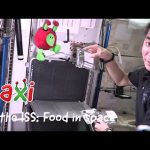
Our alien friend Paxi, ESA Education’s mascot, went to visit Japanese astronaut Kimiya Yui on board the International Space Station. Kimiya shows Paxi what it’s like to prepare and eat food in weightlessness, an important part of the day when living on the ISS.
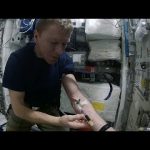
ESA astronaut Tim Peake shows how to draw blood for research on the International Space Station. Researchers often request samples before, during and after a spaceflight to examine differences.
The tubes of blood are put in a refrigerated centrifuge and then stored in the International Space Station’s –80°C freezer called MELFI for later analysis on Earth.