Tag: introducing

  • Introducing the Smile mission | Let’s Smile (episode 1)

    Introducing the Smile mission | Let’s Smile (episode 1)

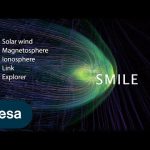
    Smile is the Solar wind Magnetosphere Ionosphere Link Explorer, a brand-new space mission currently in the making. It will study space weather and the interaction between the solar wind and Earth’s environment.

    Unique about Smile is that it will take the first X-ray images and videos of the solar wind slamming into Earth’s protective magnetic bubble, and its complementary ultraviolet images will provide the longest-ever continuous look at the northern lights.

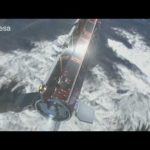
    In this first of several short videos, David Agnolon (Smile Project Manager) and Philippe Escoubet (Smile Project Scientist) talk about the why and the how of Smile. You’ll see scenes of the building and testing of the spacecraft’s payload module by Airbus in Madrid, including the installation of one of the European instruments, the Soft X-ray Imager from the University of Leicester.

    Smile is a 50–50 collaboration between the European Space Agency (ESA) and the Chinese Academy of Sciences (CAS). ESA provides the payload module of the spacecraft, which carries three of the four science instruments, and the Vega-C rocket which will launch Smile to space. CAS provides the platform module hosting the fourth science instrument, as well as the service and propulsion modules.

    Credit: ESA/Lightcurve Films

    Acknowledgements: Direction, main camera, sound, editing, post-production by Lightcurve Films. Original music by William Zeitler. Artwork shown in the video is by Eryka Isaak and CAS.

    ★ Subscribe: http://bit.ly/ESAsubscribe and click twice on the bell button to receive our notifications.

    Check out our full video catalog: http://bit.ly/SpaceInVideos
    Follow us on Twitter: http://bit.ly/ESAonTwitter
    On Facebook: http://bit.ly/ESAonFacebook
    On Instagram: http://bit.ly/ESAonInstagram
    On LinkedIn: https://bit.ly/ESAonLinkedIn
    On Pinterest: https://bit.ly/ESAonPinterest
    On Flickr: http://bit.ly/ESAonFlickr

    We are Europe’s gateway to space. Our mission is to shape the development of Europe’s space capability and ensure that investment in space continues to deliver benefits to the citizens of Europe and the world. Check out https://www.esa.int/ to get up to speed on everything space related.

    Copyright information about our videos is available here: https://www.esa.int/ESA_Multimedia/Terms_and_Conditions

    #ESA #Smile #Documentary

  • Introducing the Crew of our Artemis II Moon Mission on This Week @NASA – April 7, 2023

    Introducing the Crew of our Artemis II Moon Mission on This Week @NASA – April 7, 2023

    Introducing the crew of our Artemis II Moon mission, lighting up an Artemis rocket engine, and a new image of a distant planet. A few of the stories to tell you about – This Week at NASA!

    Link to download this video:
    https://images.nasa.gov/details/Introducing%20the%20Crew%20of%20Our%20Artemis%20II%20Moon%20Mission%20on%20This%20Week%20@NASA%20–%20April%207,%202023

    Video Producer: Andre Valentine
    Video Editor: Andre Valentine
    Narrator: Andre Valentine
    Music: Universal Production Music

    Credit: NASA

  • Introducing the Copernicus Data Space Ecosystem

    Introducing the Copernicus Data Space Ecosystem

    The Copernicus Data Space Ecosystem offers immediate access to a wide range of open and free Earth observation data and services. Following from the success of the current Copernicus Data Hub distribution, the new service ensures continuity and extends the portfolio for data access and data processing possibilities.

    The Copernicus Data Space Ecosystem represents a significant leap forward in the way users can access and work with Earth observation data. The service aims to further improve access and exploitation of the Copernicus satellites data.

    Discover more about the Copernicus Data Space Ecosystem and access the data via https://dataspace.copernicus.eu.

    ★ Subscribe: http://bit.ly/ESAsubscribe and click twice on the bell button to receive our notifications.

    Check out our full video catalog: http://bit.ly/SpaceInVideos
    Follow us on Twitter: http://bit.ly/ESAonTwitter
    On Facebook: http://bit.ly/ESAonFacebook
    On Instagram: http://bit.ly/ESAonInstagram
    On LinkedIn: https://bit.ly/ESAonLinkedIn
    On Pinterest: https://bit.ly/ESAonPinterest
    On Flickr: http://bit.ly/ESAonFlickr

    We are Europe’s gateway to space. Our mission is to shape the development of Europe’s space capability and ensure that investment in space continues to deliver benefits to the citizens of Europe and the world. Check out https://www.esa.int/ to get up to speed on everything space related.

    Copyright information about our videos is available here: https://www.esa.int/ESA_Multimedia/Terms_and_Conditions

    #ESA
    #Copernicus
    #EarthObservation

  • Introducing NASA’s NEW Earth System Observatory

    Introducing NASA’s NEW Earth System Observatory

    NASA is introducing the Earth System Observatory – an array of satellites, instruments and missions that are going to collect a series of critical observations. These observations will better inform us of how our planet is changing with greater precision on unimaginable scales – from entire continents down to individual trees.

    Each mission in itself will deliver important environmental measurements. Taken together, as a single Observatory, we will have a holistic, 3-dimensional understanding of our Earth’s systems – how they work together, how one change can influence another.

    Learn more here:
    https://www.nasa.gov/press-release/new-nasa-earth-system-observatory-to-help-address-mitigate-climate-change

    Download Link: https://images.nasa.gov/details-Introducing%20NASA%E2%80%99s%20NEW%20Earth%20System%20Observatory

    Voice Over: Soledad O’Brien
    Video Producer: Sonnet Apple
    Music Credit: Universal Production Music

  • Introducing the Artemis Team of Astronauts on This Week @NASA – December 11, 2020

    Introducing the Artemis Team of Astronauts on This Week @NASA – December 11, 2020

    The Vice President introduces the Artemis team of astronauts, progress on hardware for upcoming Artemis missions, and the science priorities for our next human mission on the Moon … a few of the stories to tell you about – This Week at NASA!

    Download Link: https://images.nasa.gov/details-Introducing%20the%20Artemis%20Team%20of%20Astronauts%20on%20This%20Week%20@NASA%20%E2%80%93%20December%2011,%202020

  • Introducing NASA Explorers: Apollo, an Audio Series

    Introducing NASA Explorers: Apollo, an Audio Series

    NASA Explorers: Apollo is an audio series that tells stories of the Moon and the people who explore it. During the Apollo program, the Moon became a part of the human domain. Twelve astronauts walked on the lunar surface, conducted research there and collected Moon rocks to bring back to Earth for study. Fifty years after humanity’s first steps on the Moon, today’s lunar scientists are searching for answers to the big questions: How did the Moon form? How did our solar system evolve? Did the Moon help life on Earth get its start?

    Meet a Moon detective, scientists who study space rocks and people from all over the world whose lives were shaped by the epic adventures of the Apollo program. You can listen to NASA Explorers: Apollo on Apple Podcasts, SoundCloud, Google Play and Facebook Watch.

    You can find the series, soundtrack, artwork, and more here: https://www.nasa.gov/nasa-explorers-apollo

    Join the NASA Explorers community on Facebook: https://www.facebook.com/NASAExplorersSeries/

    Credit: NASA’s Goddard Space Flight Center

    Kaliah Hobbs (GSFC Interns): Lead Producer
    Haley Reed (ADNET): Lead Producer
    Katie Atkinson (GSFC Interns): Narrator
    Katie Atkinson (GSFC Interns): Producer
    Micheala Sosby (NASA/GSFC): Producer
    Aaron E. Lepsch (ADNET): Technical Support

    Music credits: “Tycho’s Daydream” by Daniel Wyantis

    This video is public domain and along with other supporting visualizations can be downloaded from the Scientific Visualization Studio at: https://svs.gsfc.nasa.gov/13204

  • Introducing Sentinel-5P

    Introducing Sentinel-5P

    The preparations of ESA’s latest Earth observation satellite Sentinel-5P, also known as Sentinel-5 Precursor, are finished, and the satellite has been shipped to the Plesetsk Cosmodrome in Russia for launch in October 2017.

    Sentinel-5P will ensure continued data is gathering on Earth’s atmosphere and is the intermediary satellite to fill the gap between the past generation of atmospheric monitoring satellites and the future generation of Sentinel-4 and 5, which will be launched early in the next decade. Sentinel-5P is part of Copernicus,the world’s largest environmental monitoring programme which is operated bythe European Commission.

    This video contains interviews with: Josef Aschbacher, ESA Director of Earth observation programmes, Kevin McMullan, ESA Sentinel-5P Project Manager and Claus Zehner, ESA Sentinel-5P Mission Manager

    More about Sentinel-5P
    http://www.esa.int/Our_Activities/Observing_the_Earth/Copernicus/Sentinel-5P

  • Introducing ESA’s new astronaut Matthias Maurer

    Introducing ESA’s new astronaut Matthias Maurer

    Matthias Maurer, from Germany, has started his astronaut training as part of ESA’s astronaut corps.

    Matthias was among the 10 finalists in 2009 selection, and is now undergoing basic training at the European Astronaut Centre in Cologne, Germany.

    A new recruit for ESA’s astronaut corps:
    http://www.esa.int/Our_Activities/Human_Spaceflight/Astronauts/A_new_recruit_for_ESA_s_astronaut_corps

  • Introducing Spot Classic (previously Spot)

    Introducing Spot Classic (previously Spot)

    Spot Classic is a four-legged robot designed for indoor and outdoor operation. It is electrically powered and hydraulically actuated. Spot Classic has a sensor head that helps it navigate and negotiate rough terrain. Spot Classic weighs about 160 lbs.

  • Introducing the GOCE Earth Explorer satellite

    Introducing the GOCE Earth Explorer satellite

    To achieve its crucial scientific objectives, ESA’s ‘Gravity field and steady-state Ocean Circulation Explorer’, or GOCE, satellite must orbit as low as possible, in order to sense minute variations in the Earth’s gravitational field – at the edge of space and the limits of the atmosphere at only 268 km!