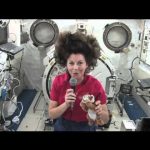
Expedition 26 NASA Flight Engineer Cady Coleman discusses what daily life is like aboard an orbiting space laboratory on CBS’ news program “The Talk” on January 18, 2011.
Tag: iss
-
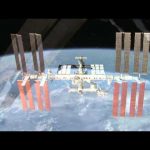
NASA’S Mission Control and ISS Crew Observe National Moment of Silence
At Mission Control at the Johnson Space Center in Houston and aboard the International Space Station, flight controllers and the Expedition 26 crew paused to observe a National Moment of Silence Jan. 10, 2011. The event was held for the victims of the shootings in Tucson, Ariz., Jan. 8 that left six people dead and more than a dozen wounded, including Rep. Gabrielle Giffords (D-AZ). Station Commander Scott Kelly, Giffords’ brother-in-law, led the station crew in its observance from 220 miles above the Earth.
-

Space Station Crew Uses HAM Radio to Call Earth
Inside the International Space Station, Expedition 25 commander Doug Wheelock gave a tour of the Russian segment of the orbiting complex, including the Soyuz spacecraft docked there. Wheelock showed off the station’s HAM radio, using the call sign “NA1SS,” to talk with people on the ground as the station flies overhead at 17,500 miles per hour. Wheelock, and Flight Engineers Shannon Walker and Fyodor Yurchickin all will return home to Earth this Thursday, Nov. 25.
-

New Shuttle Launch Date Tops This Week @NASA
A new target launch date has been selected for STS-133, allowing ample time for repairs to space shuttle Discovery. Also, NASA’s chief technologist and planetary science director were among more than 20 speakers featured at the second TEDxNASA conference in Newport News, Virginia. Hosted by the Langley Research Center, TEDx focused on education, innovation, family, technology, art and space travel. Plus, X-15 astronaut Joe Wagner joins Aerospace Hall of Fame; HQ Honor Awards; and Herrington helps celebrate American Indian & Alaska Native Heritage Month.
-
ESA Euronews: Europe and space exploration (Português)
Space exploration is a major global issue and Europe wants to be in the driving seat. It therefore needs to develop a global vision and a strategic action plan.
-
ESA Euronews: Europe and space exploration (Italiano)
Space exploration is a major global issue and Europe wants to be in the driving seat. It therefore needs to develop a global vision and a strategic action plan.
-
ESA Euronews: Europe and space exploration (Français)
Space exploration is a major global issue and Europe wants to be in the driving seat. It therefore needs to develop a global vision and a strategic action plan.
-
ESA Euronews: Europe and space exploration (Deutsch)
Space exploration is a major global issue and Europe wants to be in the driving seat. It therefore needs to develop a global vision and a strategic action plan.
-
ESA Euronews: Europe and space exploration
Space exploration is a major global issue and Europe wants to be in the driving seat. It therefore needs to develop a global vision and a strategic action plan.
-

U2 in Space and On Tour with NASA
A year’s worth of collaboration between NASA and U2 both in space and on the Irish rock band’s “360” world tour is highlighted in a new video produced by the group. In 2009, U2 approached NASA with the idea to include the crew of the International Space Station in its shows, and the astronauts agreed to participate in this unique experience. Bono, The Edge, Adam Clayton and Larry Mullen, Jr. spoke with the Expedition 20 crew on the space station several times before the astronauts recorded a video segment that U2 incorporated into its concerts. The crew members include Michael Barratt of NASA, Frank De Winne of the European Space Agency, Bob Thirsk of the Canadian Space Agency, Koichi Wakata of the Japan Aerospace Exploration Agency, and Gennady Padalka and Roman Romanenko of the Russian Federal Space Agency.
-
How do you feel after the first few months in orbit?
Frank De Winne is answering a few questions on the ISS submitted by the pupils of Class 7M from the Christian Morgenstern School in Hersching (Germany):
Question:
– Jerome (13): How do you feel in orbit after 2 months?
– Karina (13): How much time do you spend working outside the ISS?
– Tamara: Do you have any real free time in the ISS, and how can you spend this time? How often do you contact your family?
– Antoine (13): Have you ever felt scared in orbit? Has there ever been a moment that you wished to be back on Earth?
– Regina (14): Has anything strange happened on the ISS that none of your colleagues have been able to explain?
– Flavu: Which kind of education and qualification do you need for this kind of work? -

Happy Thanksgiving from NASA
The 2009 NASA Thanksgiving Promo. Inspired by the NASA Television footage of the Astronauts enjoying meals together aboard the International Space Station.
Mark R. Hailey, NASA Televisions Art Director, created this piece
-
What does a typical working day on the ISS look like?
Frank De Winne is answering a question on the ISS submitted by Thomas Kern from Germany:
What does a typical working day on the ISS look like? -

Can you feel the speed at which the ISS travels?
Frank De Winne is answering a question on the ISS submitted by Paul from Portugal:
When you do your EVA (space walk), can you feel the speed (28.000 Km/h) at which the ISS is travelling? -
The ISS: a work in progress!
Highlights of ESA astronaut Christer Fuglesang’s 14-day Alissé mission to the International Space Station between 29 August and 12 September 2009. Fuglesang was part of the seven-strong STS-128 crew launched to the ISS with Space Shuttle Discovery. STS-128 delivered new supplies and equipment to the ISS. The crew also performed three spacewalks to continue Station construction.
-
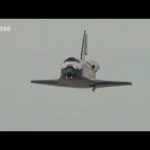
Space Shuttle Discovery returns to Earth
Space Shuttle Discovery lands at Edwards Air Force Base, California, on 12 September concluding ESA astronaut Christer Fuglesang’s 14-day Alissé mission to the the International Space Station.
-
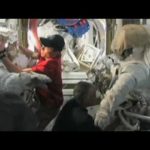
ESA astronauts working on the ISS
ESA astronauts Frank De Winne and Christer Fuglesang met up on the International Space Station in September 2009. Fuglesang was visiting the ISS during his 14-day Alissé mission. De Winne, on his six-month OasISS mission, was already on the ISS as part of the resident ISS Expedition 20 crew.
-
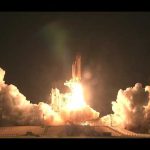
STS-128 HD Launch
With seven astronauts and a host of experiments and equipment on board, space shuttle Discovery completed a flawless ascent into orbit Friday night to begin a two-day chase of the International Space Station. With Commander Rick “C.J. ” Sturckow at the controls, the shuttle lifted off on-time at 11:59 p.m. EDT from NASA’s Kennedy Space Center in Florida. The crew will rendezvous and dock with the station Sunday and the crew will begin transferring equipment to the outpost during the 13-day mission.
After flying up on Discovery, Nicole Stott will trade places with station resident Tim Kopra, who went into space last month aboard Endeavour. Equipment and science racks for the orbiting laboratory are riding inside the Leonardo cargo module, which is secured tightly inside Discovery’s payload bay. The module will be lifted out of Discovery and locked onto the station so the crew can transfer the gear efficiently. The treadmill named for comedian Stephen Colbert also is aboard Discovery and destined for the station.
-
How do you wash your clothes in space?
Frank De Winne is answering a question on the ISS submitted by Herman from Belgium:
– How do you wash your clothes in space?
– Do you use washing powder to wash your clothes in space? -
How does food stay fresh on the ISS?
Frank De Winne is answering a question on the ISS submitted by Cedric from Belgium:
– How do you occupy yourself during the 2-day Soyuz journey to the ISS?
– How does food stay fresh in space, since there is no fridge on the ISS? -

What medical conditions would stop you becoming an astronaut?
Frank De Winne is answering a question on the ISS submitted by Mrs. Shahi from Birmingham (United Kingdom):
What medical conditions would stop you becoming an astronaut? -
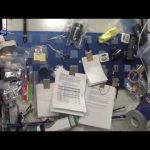
NASA ASTRONAUT LEADS TOUR OF SPACE STATION IN HD
Expedition 20 Flight Engineer Michael Barratt provides a 20-minute tour of the International Space Station, documenting the full 167 feet of the space station’s pressurized modules. Barratts commentary describes to Mission Control in Houston how equipment and supplies are arranged and stored, and provides engineers with a detailed assessment of each module-to-module hatchway.
-
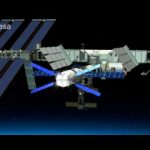
ATV: ‘Trucking’ in space
The ISS depends on regular deliveries of experiments and spare parts, as well as food, air and water for its permanent crew. ESA’s Automated Transfer Vehicle is one of the ISS’s indispensable supply spaceships.
-
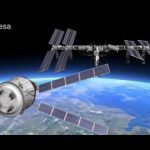
ARV: Europe’s space ferry
With ATV’s cargo hold replaced by a re-entry capsule equipped with a heatshield, the Advanced Re-entry Vehicle will be able to bring back hundreds of kilograms of cargo and valuable experiments.
-
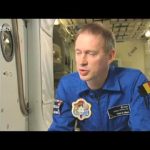
Frank De Winne: ESA astronaut
Astronaut Frank De Winne talks about his OasISS mission, being the first European commander of the International Space Station, about living in space… and missing a few home comforts, like a shower or a glass of wine!
-
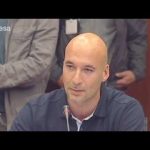
New ESA Astronaut: Luca Parmitano
33-year-old Luca is an experimental test pilot in the Italian air force.
-
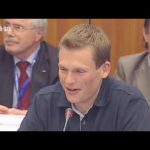
New ESA Astronaut: Andreas Mogensen
33-year-old Andreas is from Denmark, a space navigation & control engineer.
-
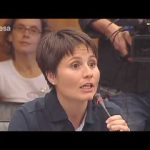
New ESA Astronaut: Samantha Cristoforetti
32-year-old Samantha is a fighter pilot in the Italian air force.
-

Space for Europe
Space touches us all on Earth – it is used for protecting our environment, for improving our everyday lives, for safety and security, and for stimulating our need for knowledge. Space is a key asset for Europe to face global challenges, for boosting our economic growth, for building our future.
-
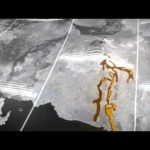
Space: for protecting our environment
Space touches us all on Earth – it is used for protecting our environment, for improving our everyday lives, for safety and security, and for stimulating our need for knowledge. Space is a key asset for Europe to face global challenges, for boosting our economic growth, for building our future.
-
Columbus: ESA’s real estate’ in space
In February 2008, the Columbus module was launched on the Space Shuttle Atlantis, creating space history when it was attached to the International Space Station as the first European laboratory dedicated to long-term research in microgravity.
-
European missions to the International Space Station
Capturing the excitement of three highlights of European manned spaceflight in 2007 and 2008, these clips feature Paolo Nespoli’s STS-120 flight, the Columbus laboratory, and finally the ATV Jules Verne, Europe’s first space ferry.
-
ESA’s space ferry: The Automated Transfer Vehicle
The International Space Station (ISS) depends on regular deliveries of equipment, food, air and water for its crews. Since the arrival of the first Automated Transfer Vehicle in April 2008, it has become one of the Stations indispensable supply ships.