ESA’s Proba-3 mission lifted off on its PSLV-XL rocket from Satish Dhawan Space Centre in Sriharikota, India, on Thursday, 5 December, at 11:34 CET (10:34 GMT, 16:04 local time).
📸 ISRO – NSIL
#ESA #Proba-3#Rocket
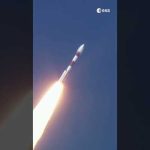
ESA’s Proba-3 mission lifted off on its PSLV-XL rocket from Satish Dhawan Space Centre in Sriharikota, India, on Thursday, 5 December, at 11:34 CET (10:34 GMT, 16:04 local time).
📸 ISRO – NSIL
#ESA #Proba-3#Rocket

At 1:47 a.m. EST (6:47 UTC) on Nov. 16, 2022, NASA’s Orion spacecraft launched atop the SLS (Space Launch System) rocket from historic Launch Pad 39B at NASA’s Kennedy Space Center in Florida on a path to the Moon, officially beginning the Artemis I mission.
Over the course of 25.5 days, Orion performed two lunar flybys, coming within 80 miles (129 kilometers) of the lunar surface. At its farthest distance during the mission, Orion traveled nearly 270,000 miles (435,000 kilometers) from our home planet. On Dec. 11, 2022, NASA’s Orion spacecraft successfully completed a parachute-assisted splashdown in the Pacific Ocean at 9:40 a.m. PST (12:40 p.m. EST) as the final major milestone of the Artemis I mission.
Artemis I set new performance records, exceeded efficiency expectations, and established new safety baselines for humans in deep space. This is a prelude to what comes next—following the success of Artemis I, human beings will fly around the Moon on Artemis II.
We have demonstrated our ability to go farther and faster than ever before, opening the door to explore Mars and other destinations throughout the solar system. This is the story of Artemis I.
Writer and Director: Paul Wizikowski
Director of Photography and Editor: Phil Sexton
Producers: Barbara Zelon and Lisa Allen
Credit: NASA

Celebrating 65 years, NASA is a symbol of human creativity and exploration. NASA has consistently pushed boundaries, from the historic Apollo missions that landed the first humans on the Moon to the Space Shuttle program that built the International Space Station. Missions like Landsat and Cassini have deepened our understanding of Earth and our solar system. With NASA launching the James Webb Space Telescope, the future holds even more exciting discoveries. Throughout all these adventures, NASA’s commitment to exploration and science continues to lead the way.
Today, the Artemis missions herald a new chapter, aiming to return humanity to the Moon and laying robust foundations for expeditions to Mars and beyond. As we honor NASA’s storied past, we anticipate a future filled with discoveries, technologies, and deep-space exploration encouraged by a new generation of dedicated explorers. Here’s to NASA, commemorating 65 years of cosmic exploration, innovation, and the undying quest to expand our universal frontier.
Link to download this video: https://images.nasa.gov/details/NHQ_2023_1002_NASA%2065th%20Anniversary%20A%20Journey%20Beyond%20the%20Stars
Producer/Editor: Jori Kates
Music: Universal Music Group
Credit: NASA

How did rocky planets form? We’re launching a mission to find out.
NASA’s Psyche spacecraft is preparing to lift off on Oct. 5 to embark on a 2.2-billion-mile journey to a unique metal-rich asteroid named Psyche. The mission could help us understand the early formation of rocky planets in our solar system, like Earth.
Join experts on Wednesday, Aug. 23, for an opportunity to learn more about Psyche. Submit your questions in the live chat using #AskNASA for a chance to have them answered live during the show.
Get up to speed on this heavy metal mission: https://nasa.gov/psyche
Credit: NASA
ESA’s wind mission Aeolus is coming home. After five years of improving weather forecasts, the satellite will return in a first-of-its-kind assisted reentry. At ESA’s Space Operations Centre in Germany, mission control will use the satellite’s remaining fuel to steer Aeolus during its return to Earth.
Find out more about the mission, its successes and how Aeolus is paving the way for safe reentries. 👉 https://www.esa.int/Aeolus
Credits: ESA – European Space Agency
★ Subscribe: http://bit.ly/ESAsubscribe and click twice on the bell button to receive our notifications.
Check out our full video catalog: http://bit.ly/SpaceInVideos
Follow us on Twitter: http://bit.ly/ESAonTwitter
On Facebook: http://bit.ly/ESAonFacebook
On Instagram: http://bit.ly/ESAonInstagram
On LinkedIn: https://bit.ly/ESAonLinkedIn
On Pinterest: https://bit.ly/ESAonPinterest
On Flickr: http://bit.ly/ESAonFlickr
We are Europe’s gateway to space. Our mission is to shape the development of Europe’s space capability and ensure that investment in space continues to deliver benefits to the citizens of Europe and the world. Check out https://www.esa.int/ to get up to speed on everything space related.
Copyright information about our videos is available here: https://www.esa.int/ESA_Multimedia/Terms_and_Conditions
#ESA
#Reentry
#Aeolus
Watch a replay of the launch broadcast for ESA’s Euclid.
ESA’s Euclid mission was launched into space on a SpaceX Falcon 9 from Cape Canaveral in Florida, USA, on 1 July 2023. It is now on its way to Sun-Earth Lagrange point L2.
By observing billions of galaxies out to 10 billion light-years, the space telescope will create the most detailed 3D-map of the Universe, with time as the third dimension.
The launch broadcast programme includes live segments from the launch site and ESA’s European Spacecraft Operations Centre (ESOC) in Darmstadt, Germany.
Credits: ESA/SpaceX
00:00 – 45:35 Pre-launch programmes
45:35 – 55:00 Lift-off
55:00 – 01:27:00 Booster landing in the ocean
01:27:00 – 01:31:00 Euclid space craft separation
01:31:00 – 01:42:29 Acquisition of Signal (AOS)
★ Subscribe: http://bit.ly/ESAsubscribe and click twice on the bell button to receive our notifications.
Check out our full video catalog: http://bit.ly/SpaceInVideos
Follow us on Twitter: http://bit.ly/ESAonTwitter
On Facebook: http://bit.ly/ESAonFacebook
On Instagram: http://bit.ly/ESAonInstagram
On LinkedIn: https://bit.ly/ESAonLinkedIn
On Pinterest: https://bit.ly/ESAonPinterest
On Flickr: http://bit.ly/ESAonFlickr
We are Europe’s gateway to space. Our mission is to shape the development of Europe’s space capability and ensure that investment in space continues to deliver benefits to the citizens of Europe and the world. Check out https://www.esa.int/ to get up to speed on everything space related.
Copyright information about our videos is available here: https://www.esa.int/ESA_Multimedia/Terms_and_Conditions
#ESA
#Euclid
#DarkMatter
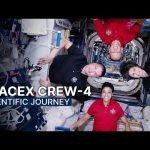
After months aboard the International Space Station, the astronauts of NASA’s SpaceX Crew-4 mission are returning home.
Traveling back to Earth inside a SpaceX Dragon capsule are NASA astronauts Kjell Lindgren, Robert Hines, and Jessica Watkins, along with ESA (European Space Agency) astronaut Samantha Cristoforetti. During their time aboard the orbiting laboratory, these crew members contributed to ongoing and new scientific investigations and technology demonstrations, work that is helping to prepare humans for future space exploration missions and generating innovations and benefits for humanity on Earth.
Learn more: https://go.nasa.gov/3Sv0vkE
Credit: NASA
#space #iss #spacex

We reached 10 million subscribers on YouTube! NASA would like to thank all of YOU. Thank you for supporting us, subscribing and embracing your love of science.
So whether you’re interested in launches, flight innovations, climate science, investigating the wonders of the universe or sending humans to the Moon and Mars, we will continue to create the content you crave.
Join us as we explore the secrets of the universe for the benefit of ALL. https://nasa.gov
Video Producer: Sonnet Apple
Music: Universal Production Music
Credit: NASA
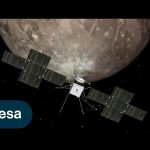
ESA’s Jupiter Icy Moons Explorer, Juice, is set to embark on an eight-year cruise to Jupiter starting April 2023. The mission will investigate the emergence of habitable worlds around gas giants and the Jupiter system as an archetype for the numerous giant planets now known to orbit other stars.
This animation depicts Juice’s journey to Jupiter and highlights from its foreseen tour of the giant planet and its large ocean-bearing moons. It depicts Juice’s journey from leaving Earth’s surface in a launch window 5–25 April 2023 and performing multiple gravity assist flybys in the inner Solar System, to arrival at Jupiter (July 2031), flybys of the Jovian moons Europa, Callisto and Ganymede, orbital insertion at Ganymede (December 2034), and eventual impact on this moon’s surface (late 2035).
An Ariane 5 will lift Juice into space from Europe’s Spaceport in Kourou. A series of gravity assist flybys of Earth, the Earth-Moon system and Venus will set the spacecraft on course for its July 2031 arrival at Jupiter. These flybys are shown here in order – Earth-Moon (August 2024), Venus (August 2025), Earth (September 2026, January 2029) – interspersed by Juice’s continuing orbits around the Sun. Juice’s flyby of the Earth-Moon system, known as a Lunar-Earth gravity assist (LEGA), is a world first: by performing this manoeuvre – a gravity assist flyby of the Moon followed just 1.5 days later by one of Earth – Juice will save a significant amount of propellant on its journey.
Juice will start its science mission about six months prior to entering orbit around Jupiter, making observations as it approaches its destination. Once in the Jovian system, a gravity assist flyby of Jupiter’s largest moon Ganymede – also the largest moon in the Solar System – will help Juice enter orbit around Jupiter, where the spacecraft will spend four years observing the gas giant and three of its moons: Ganymede, Callisto and Europa.
Juice will make two flybys of Europa (July 2032), which has strong evidence for an ocean of liquid water under its icy shell. Juice will look at the moon’s active zones, its surface composition and geology, search for pockets of liquid water under the surface, and study the plasma environment around Europa, also exploring the moon’s tiny atmosphere and hunting for plumes of water vapour (as have been previously detected erupting to space).
A sequence of Callisto flybys will be used to study this ancient, cratered world that may too harbour a subsurface ocean, also changing the angle of Juice’s orbit with respect to Jupiter’s equator, making it possible to explore Jupiter’s higher latitudes (2032–2034).
A sequence of Ganymede and Callisto flybys will adjust Juice’s orbit – properly orienting it while minimising the amount of propellant expended – so that it can enter orbit around Ganymede in December 2034, making it the first spacecraft to orbit another planet’s moon. Juice’s initial elliptical orbit will be followed by a 5000 km-altitude circular orbit, and later a 500 km-altitude circular orbit.
Ganymede is the only moon in the Solar System to have a magnetosphere. Juice will investigate this phenomenon and the moon’s internal magnetic field, and explore how its plasma environment interacts with that of Jupiter. Juice will also study Ganymede’s atmosphere, surface, subsurface, interior and internal ocean, investigating the moon as not only a planetary object but also a possible habitat.
Over time, Juice’s orbit around Ganymede will naturally decay due to lack of propellant, and it will make a grazing impact onto the surface (late 2035).
The Juice launch itself will be a historical milestone for more reasons than one. It will be the final launch for Ariane 5, ending the launcher’s nearly three-decade run as one of the world’s most successful heavy-lift rockets. Its duties are being taken over by Ariane 6.
Learn more about Juice: https://bit.ly/JuiceESAScience
Credit: ESA/Lightcurve Films/R. Andres
★ Subscribe: http://bit.ly/ESAsubscribe and click twice on the bell button to receive our notifications.
Check out our full video catalog: http://bit.ly/SpaceInVideos
Follow us on Twitter: http://bit.ly/ESAonTwitter
On Facebook: http://bit.ly/ESAonFacebook
On Instagram: http://bit.ly/ESAonInstagram
On Flickr: http://bit.ly/ESAonFlickr
We are Europe’s gateway to space. Our mission is to shape the development of Europe’s space capability and ensure that investment in space continues to deliver benefits to the citizens of Europe and the world. Check out https://www.esa.int/ to get up to speed on everything space related.
Copyright information about our videos is available here: https://www.esa.int/ESA_Multimedia/Terms_and_Conditions
#ESA
#Jupiter
#JuiceMission
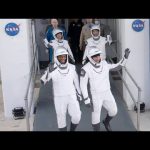
The journey of Resilience to the space station, the next ocean-observing satellite, and an update on a critical rocket test series for our Artemis missions … a few of the stories to tell you about – This Week at NASA!
Download link: images-assets.nasa.gov/video/The Journey of Resilience to The Space Station on This Week @NASA – November 21 2020/The Journey of Resilience to The Space Station on This Week @NASA – November 21 2020~orig.mp4
Producer: Andre Valentine
Editor: Sonnet Apple
Music: Universal Production Music
The day has finally arrived. After years of work, our team of scientists is at the Kennedy Space Center in the hopes of seeing their research liftoff to the International Space Station. Join us this week on NASA Explorers for the countdown, the emotion and, hopefully, the launch.
See more NASA Explorers season 4 bonus content: https://go.nasa.gov/2FKavmn
Stay up to date with ISS Research on Twitter: https://twitter.com/ISS_Research
Watch all NASA Explorers season 4 episodes: https://www.youtube.com/playlist?list=PL2aBZuCeDwlQDM6x6FpHE_X0iL7hvoRpR
#S4E5
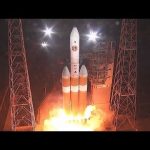
Our mission to touch the Sun is on its way, Administrator Bridenstine visits NASA spaceflight facilities, and an update on our first-ever asteroid sample return mission … a few of the stories to tell you about – This Week at NASA!
This video is available for download from NASA’s Image and Video Library: https://images.nasa.gov/details-Our%20Journey%20to%20Touch%20the%20Sun%20is%20Underway%20on%20This%20Week%20@NASA%20%E2%80%93%20August%2017,%202018.html
Enjoy this animation visualising BepiColombo’s launch and cruise to Mercury. Some aspects have been simplified for the purpose of this animation.
The joint ESA-JAXA mission comprises the European Mercury Planetary Orbiter and Japan’s Mercury Magnetospheric Orbiter, which will be transported to the innermost planet by the Mercury Transfer Module. The animation highlights several key milestones, including the solar array and antenna deployments once in space, through to the arrival at Mercury seven years later. When approaching Mercury, the transfer module will separate and the two science orbiters, still together, will be captured into orbit around the planet. Their altitude will be adjusted until the Magnetospheric Orbiter’s desired orbit is reached. Then the Planetary Orbiter will separate and descend to its lower orbit, and the two craft will begin their scientific exploration of Mercury and its environment.
More information: http://bit.ly/ESAsBepiColombo
Credits: ESA/ATG medialab
★ Subscribe: http://bit.ly/ESAsubscribe

Meet our new space explorers, the spacecraft of the BepiColombo mission, as they begin their adventure to planet Mercury. But first, they have to navigate through Amsterdam Schiphol airport to reach Europe’s spaceport in Kourou, French Guiana.
The spacecraft really do depart from Schiphol; along with essential ground-support equipment they are scheduled to fly in a series of Antonov aircraft during the last week of April and first week of May. Upon arrival at Kourou, an intensive six-months of preparations will prepare the mission for launch. The launch window opens 5 October until 29 November 2018.
Find out more about the BepiColombo mission on esa.int/bepicolombo
Credits: ESA
★ Subscribe: http://bit.ly/ESAsubscribe
Follow Bepi: http://bit.ly/BepiTwitter
Follow MMO: http://bit.ly/MMOTwitter
Follow MTM: http://bit.ly/MTMtwitterESA
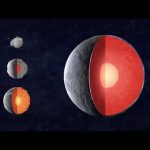
Psyche is both the name of an asteroid orbiting the Sun between Mars and Jupiter — and the name of a NASA space mission to visit that asteroid, led by Arizona State University. Join the Psyche team to explore why this mission was selected for NASA’s Discovery Program, how we’ll get to the asteroid, what we hope to learn from Psyche, and the importance of scientific discovery.
Credits: NASA/JPL-Caltech/Arizona State Univ./Peter Rubin/SSL
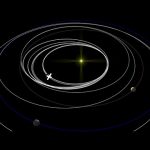
Animation visualising BepiColombo’s 7.2 year journey to Mercury.
This animation is based on a launch date of 5 October, marking the start of the launch window in October 2018. It illustrates the gravity assist flybys that the spacecraft will make at Earth, Venus and Mercury before arriving at Mercury in December 2025.
More about the journey:
http://www.esa.int/Our_Activities/Space_Science/BepiColombo/Journey_to_Mercury
Right now the Cassini spacecraft is flying between the rings of Saturn and the planet itself, a daring trajectory chosen to conclude a unique exploration mission.
To find out what that orbit means, and to look back at some of Cassini-Huygens finest moments, we met up with key members of the science team in the UK for this edition of Space.
This video is also available in the following languages:
German https://www.youtube.com/watch?v=aXeX4xDy32U
Italian https://www.youtube.com/watch?v=h5ptu4qs1Oc
French https://www.youtube.com/watch?v=2dpvBbYa358
Spanish https://www.youtube.com/watch?v=fJPsi61AnkY
Portuguese https://www.youtube.com/watch?v=MZq2LywHs04
Hungarian https://www.youtube.com/watch?v=JVvTZ9Ij02k
Greek https://www.youtube.com/watch?v=RUQ4_Md1eZ0

Space debris – a journey to Earth (3D stereoscopic version) takes the audience on a journey from the outer solar system back to our home planet. The objects encountered along the way are manmade. Originally designed to explore the universe, these are now a challenge for modern space flight. An estimated number of 700,000 objects larger than 1 cm and 170 million objects larger than 1mm are expected to reside in Earth orbits.
The video gives a closer look at the different regions used for space flight and explains how mitigation and removal measures could preserve future usage of these orbits.
A 2D version of this video is available at: https://www.youtube.com/watch?v=zT7typHkpVg
Produced for the 7th European Conference on Space Debris, 18-21 April 2017.
Follow the conference live via: https://livestream.com/esa/spacedebris2017
Credit: ESA/ID&Sense/ONiRiXEL, CC BY-SA 3.0 IGO (https://creativecommons.org/licenses/by-sa/3.0/igo/)

Space debris – a journey to Earth takes the audience on a journey from the outer solar system back to our home planet. The objects encountered along the way are manmade. Originally designed to explore the universe, these are now a challenge for modern space flight. An estimated number of 700,000 objects larger than 1 cm and 170 million objects larger than 1mm are expected to reside in Earth orbits.
The video gives a closer look at the different regions used for space flight and explains how mitigation and removal measures could preserve future usage of these orbits.
Produced for the 7th European Conference on Space Debris, 18-21 April 2017.
A 3D stereoscopic version of this video is available here: https://www.youtube.com/watch?v=EzrMHWjQCtc
Follow the conference live via: https://livestream.com/esa/spacedebris2017
Credit: ESA/ID&Sense/ONiRiXEL, CC BY-SA 3.0 IGO (https://creativecommons.org/licenses/by-sa/3.0/igo/)
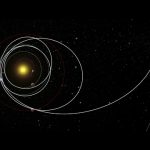
This animation shows the proposed trajectory of ESA’s Jupiter Icy Moons Explore (Juice) mission to Jupiter.
Based on a launch in June 2022, the spacecraft will make a series of gravity-assist flybys at Earth (May 2023, September 2024 and November 2026), Venus (October 2023) and Mars (February 2025) before arriving in the Jupiter system in October 2029.
The animation ends at the Jupiter orbit insertion point, but the planned 3.5 year mission will see Juice not only orbit Jupiter, but also make dedicated flybys of the moons Europa, Callisto and Ganymede, before orbiting the largest moon, Ganymede.
More about Juice:
http://sci.esa.int/juice/
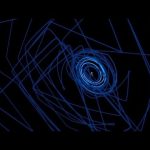
Animation visualising Rosetta’s trajectory around Comet 67P/Churyumov–Gerasimenko, from arrival to mission end.
The animation begins on 31 July 2014, during Rosetta’s final approach to the comet after its ten-year journey through space. The spacecraft arrived at a distance of 100 km on 6 August, from where it gradually approached the comet and entered initial mapping orbits that were needed to select a landing site for Philae. These observations also enabled the first comet science of the mission.The manoeuvres in the lead up to, during and after Philae’s release on 12 November are seen, before Rosetta settled into longer-term science orbits.
In February and March 2015 the spacecraft made several flybys. One of the closest triggered a ‘safe mode’ that forced it to retreat temporarily until it was safe to draw gradually closer again.
The comet’s increased activity in the lead up to and after perihelion in August 2015 meant that Rosetta remained well beyond 100 km for several months.In June 2015, contact was restored with Philae again – albeit temporary, with no permanent link able to be maintained, despite a series of dedicated trajectories flown by Rosetta for several weeks.
Following the closest approach to the Sun, Rosetta made a dayside far excursion some 1500 km from the comet, before re-approaching to closer orbits again, enabled by the reduction in the comet’s activity.
In March–April 2016 Rosetta went on another far excursion, this time on the night side, followed by a close flyby and orbits dedicated to a range of science observations.
In early August the spacecraft started flying elliptical orbits that brought it progressively closer to the comet. On 24 September Rosetta left its close, flyover orbits and switched into the start of a 16 x 23 km orbit that was used to prepare and line up for the final descent.
On the evening of 29 September Rosetta manoeuvred onto a collision course with the comet, beginning the final, slow descent from an altitude of 19 km. It collected scientific data throughout the descent and gently struck the surface at 10:39 GMT on 30 September in the Ma’at region on the comet’s ‘head’, concluding the mission.
The trajectory shown in this animation is created from real data, but the comet rotation is not. Distances are given with respect to the comet centre (except for the zero at the end to indicate completion), but may not necessarily follow the exact comet distance because of natural deviations from the comet’s gravity and outgassing. An arrow indicates the direction to the Sun as the camera viewpoint changes during the animation.
More about the Rosetta mission:
http://rosetta.esa.int

Experience what it’s like to leave Earth, traveling to over 90,000 feet into the stratosphere. Never before has a 360 video been recorded at these heights – so buckle up and enjoy the view as Seeker takes you on a journey to the Edge of Space.
Subscribe to Seeker VR ►►► http://bit.ly/2cPGh2u
Download the Discovery VR app!
iTunes: https://itunes.apple.com/us/app/id1030815031
Google Play: http://bit.ly/2cFGia8
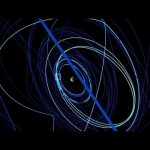
Animation visualising Rosetta’s two-year journey around Comet 67P/Churyumov–Gerasimenko.
The animation begins on 31 July 2014, during Rosetta’s final approach to the comet after its ten-year journey through space. The spacecraft arrived at a distance of 100 km on 6 August whereupon it gradually approached the comet and entered initial mapping orbits that were needed to select a landing site for Philae. These observations also enabled the first comet science of the mission. The manoeuvres in the lead up to, during and after Philae’s deployment on 12 November are seen, before Rosetta settled into longer-term science orbits.
In February and March 2015 the spacecraft made several flybys. One of the closest flybys triggered a ‘safe mode’ event that forced it to retreat temporarily until it was safe to gradually draw closer again. The comet’s increased activity in the lead up to and after perihelion in August 2015 meant that Rosetta remained well beyond 100 km distances for several months.
In June 2015, contact was restored with Philae again – albeit temporary, with no permanent link able to be maintained, despite a series of dedicated trajectories flown by Rosetta for several weeks.
Following perihelion, Rosetta performed a dayside far excursion some 1500 km from the comet, before re-approaching to closer orbits again, enabled by the reduction in the comet’s activity. In March–April 2016 Rosetta went on another far excursion, this time on the night side, followed by a close flyby and orbits dedicated to a range of science observations.
The animation finishes at 9 August 2016, before the details of the end of mission orbits were known. A visualisation of the trajectories leading to the final descent to the surface of the comet on 30 September will be provided once available.
The trajectory shown in this animation is created from real data, but the comet rotation is not. An arrow indicates the direction to the Sun as the camera viewpoint changes during the animation.
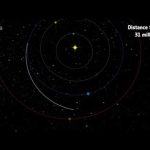
The journey that the ExoMars 2016 spacecraft will take from Earth to Mars. ‘Distance to Mars’ is the straight-line distance between the spacecraft and Mars, and not the actual distance that the spacecraft will travel.
The mission is scheduled for launch in the 14–25 March window. The Trace Gas Orbiter and the Schiaparelli entry, descent and landing demonstrator module will separate on 16 October. Schiaparelli is set to enter the martian atmosphere on 19 October, while TGO will enter orbit around Mars.
More about the ExoMars mission:
http://www.esa.int/exomars
Credits: ESA/ATG medialab
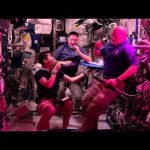
During an Oct. 28 keynote speech at the Center for American Progress, in Washington, NASA Administrator Charlie Bolden spoke about the advancement made on the journey to Mars and what lies ahead for future administrations and policy makers. NASA’s recently released report “Journey to Mars: Pioneering Next Steps in Space Exploration,” outlines its plan to reach Mars in phases – with technology demonstrations and research aboard the International Space Station, followed by hardware and procedure development in the proving ground around the moon, before sending humans to the Red Planet. Also, Space station spacewalk, Another record in space for Kelly, Mars Landing Sites/ Exploration Zones Workshop, Cassini’s “deep dive” flyby and more!
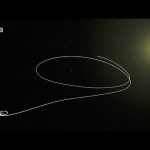
The journey and final orbit of LISA Pathfinder, ESA’s technology demonstration mission that will pave the way for future gravitational-wave observatories in space.
LISA Pathfinder is scheduled for launch on 2 December 2015 on a Vega rocket from Europe’s Spaceport in French Guiana. Vega will place the spacecraft into an elliptical orbit, with a perigee (closest approach to Earth) of 200 km, apogee (furthest point) of 1540 km, with the path angled at 6.5º to the equator.
Then, once Vega’s final stage is jettisoned, LISA Pathfinder will continue under its own power, beginning a series of six apogee-raising manoeuvres over the next two weeks.
The last burn will set LISA Pathfinder on its way towards its final orbiting location. The cruise will last about six weeks, and the propulsion module will be discarded along the way four weeks in.
Eventually, the spacecraft will circle the L1 Sun–Earth Lagrangian point. There, LISA Pathfinder will begin its six months of demonstrating key technologies for space-based observation of gravitational waves.
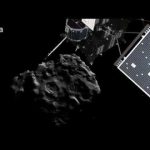
Rosetta’s deployment of Philae to land on Comet 67P/Churyumov–Gerasimenko.
The animation begins with Philae still on Rosetta, which will come to within about 22.5 km of the centre of the nucleus to release the lander on 12 November 2014.
The animation then shows Philae being ejected by Rosetta and deploying its own three legs, and follows the lander’s descent until it reaches the target site on the comet about seven hours later.
The animation is speeded up, but the comet rotation is true: in the time it takes for Philae to descend, the nucleus has rotated by more than 180º (the comet’s rotation period is 12.4 hours).
The final steps of Philae’s descent towards the comet are shown as seen by a hypothetical observer close to the landing site on the comet.
Acknowledgement: The background image of the sequence showing Philae closing in on the landing site was taken by Rosetta’s OSIRIS narrow-angle camera (ESA/Rosetta/MPS for OSIRIS Team MPS/UPD/LAM/IAA/SSO/INTA/UPM/DASP/IDA) on 14 September 2014 from a distance of about 30 km.
Philae was provided by a consortium led by DLR, MPS, CNES and ASI.
Credit: ESA/ATG medialab
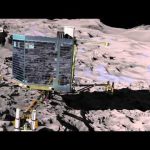
Rosetta’s deployment of Philae to land on Comet 67P/Churyumov–Gerasimenko.
The animation begins with Philae still on Rosetta, which will come to within about 22.5 km of the centre of the nucleus to release the lander on 12 November 2014.
The animation then shows Philae being ejected by Rosetta and deploying its own three legs, and follows the lander’s descent until it reaches the target site on the comet about seven hours later.
The animation is speeded up, but the comet rotation is true: in the time it takes for Philae to descend, the nucleus has rotated by more than 180º (the comet’s rotation period is 12.4 hours).
The final steps of Philae’s descent towards the comet are shown as seen by a hypothetical observer close to the landing site on the comet.
Finally, the animation shows Philae landing on the comet.
Because of the comet’s extremely low gravity, landing gear will absorb the small forces of landing while ice screws in the probe’s feet and a harpoon system will lock the probe to the surface. At the same time a thruster on top of the lander will push it down to counteract the impulse of the harpoon imparted in the opposite direction. Once it is anchored to the comet, the lander will begin its primary science mission, based on its 64-hour initial battery lifetime. The animation shows a number of the science instruments in action on the surface.
Acknowledgement: The background image of the sequence showing Philae closing in on the landing site was taken by Rosetta’s OSIRIS narrow-angle camera (ESA/Rosetta/MPS for OSIRIS Team MPS/UPD/LAM/IAA/SSO/INTA/UPM/DASP/IDA) on 14 September 2014 from a distance of about 30 km.
Philae was provided by a consortium led by DLR, MPS, CNES and ASI.
Credit: ESA/ATG medialab
A summary of Rosetta’s journey – from its launch on 2 March 2004 – to the planned landing on comet 67P/Churyumov-Gerasimenko on 12 November 2014. The journey has included four gravitational assists from Mars and the Earth, flybys with asteroids Steins and Lutetia, and the spacecraft’s temporary hibernation and successful wake up on 20 January 2014.
In May Rosetta put on the brakes and performed rendezvous manoeuvres for several months. During this period, images from the onboard cameras revealed the comet’s unusual ‘space duck’ shape.
Rosetta arrived at its destination on 6 August and became the first spacecraft to orbit a comet. The primary landing site was announced in September and Rosetta is now on schedule to release its Philae lander onto the comet’s surface in November.
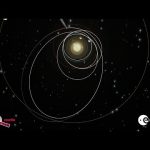
This animation tracks Rosetta’s journey through the Solar System, using gravity slingshots from Earth and Mars to reach its final destination: Comet 67P/Churyumov–Gerasimenko. Rosetta made three flybys of Earth, on 4 March 2005, 13 November 2007 and 13 November 2009, and one of Mars, on 25 February 2007. Rosetta has also visited two asteroids, taking extensive close-up images of 2867 Steins on 5 September 2008 and 21 Lutetia on 10 July 2010. Once the spacecraft is woken up from deep space hibernation on 20 January 2014, it will head for rendezvous with the comet in May. In November the Philae probe will be deployed to the comet surface. Rosetta will follow the comet to its closest distance to the Sun on 13 August 2015 and as it moves back towards the outer Solar System. The nominal mission end is December 2015.
Credits: ESA
(This replaces a previously published version)
The crew of STS-135, the final space shuttle mission, talks about the vibrancy of the International Space Station as a stepping stone for NASA’s plans for future human exploration beyond low-Earth orbit.