A few days after his one-year mission to study the effects of long duration spaceflight on the human body began aboard the International Space Station, Expedition 43 Flight Engineer Scott Kelly was congratulated by NASA Administrator Charlie Bolden from Washington DC. Also on the call – Kelly’s twin brother and former astronaut Mark. The pair will be studied during the mission as part of a science investigation. White House science advisor John Holdren also joined the call and echoed the importance of the mission. Kelly and Russian cosmonaut Mikhail Kornienko will conduct the one-year research mission through March 2016. Also, Super typhoon seen from space, Asteroid mission milestone, LDSD spin test and Sniffing the history of the Martian atmosphere!
Tag: mission
-
The State of NASA on This Week @NASA
NASA Administrator Charles Bolden, speaking during his Feb. 2 “State of NASA” address at Kennedy Space Center in Florida after the release of President Obama’s Fiscal Year 2016 $18.5 billion budget proposal for NASA said, “I can unequivocally say that the State of NASA is strong.” The proposed budget is a half-billion-dollar increase over last year’s enacted budget, which, the Administrator noted, “is a clear vote of confidence to you – the employees of NASA and the ambitious exploration program you are executing.” The budget facilitates NASA’s plan moving forward, which includes development of new vehicles and technologies needed for unprecedented human missions to an asteroid and to Mars, commercial partnerships to provide transportation to and from the International Space Station from the United States and research on the station for the benefit of future deep space travelers and people living on our home planet. Also, New views of Pluto, Soil moisture mission underway and Virginia Aerospace Day!
-
SpaceX CRS-5 mission on This Week @NASA
The SpaceX Dragon spacecraft is loaded with more than 5,000 pounds of supplies and experiments for delivery to the International Space Station on CRS-5 – the company’s fifth resupply mission to the ISS. One of the experiments, the Cloud Aerosol Transport System – or CATS, is designed to study the global distribution of clouds and aerosols in our atmosphere. Launch from Cape Canaveral Air Force Station is no earlier than Jan. 10. Also, NASA astronomical findings, Soil moisture mission previewed, Weaving the way to Mars and more!
-

Testing ESA’s Mercury mission
Europe’s Mercury mission is moved through ESA’s ESTEC Test Centre in this new video, positioning it for testing inside the largest vacuum chamber in Europe, for a trial by vacuum.
BepiColombo, Europe’s first mission to study Mercury, is a joint mission with Japan. Two spacecraft – the Mercury Planetary Orbiter and the Mercury Magnetospheric Orbiter – will fly in two different paths around the planet to study it from complementary perspectives.
Flight hardware for the mission is undergoing testing at ESA’s Technical Centre, ESTEC, in Noordwijk, the Netherlands, the largest spacecraft test facility in Europe, to prepare for its 2016 launch.
The Mercury Planetary Orbiter was placed inside the chamber in late October for ‘thermal–vacuum’ testing. It will sit in vacuum until early December, subjected to the equivalent temperature extremes that will be experienced in Mercury orbit.
Liquid nitrogen runs through the walls of the chamber to recreate the chill of empty space, while an array of lamps focuses simulated sunlight 10 times more intense than on Earth.
-

Blue Dot mission summary
ESA astronaut Alexander Gerst spent 166 days in space with NASA astronaut Reid Wiseman and Roscosmos commander Max Suraev in 2014.
This ten-minute video shows highlights of his Blue Dot mission, from docking spacecraft to science and spacewalks Alexander worked to improve the International Space Station and life on Earth.
From launch to landing, look at the experiments and beautiful images Alexander shared with us.
For more about the Blue Dot mission go to:
http://www.esa.int/Our_Activities/Human_Spaceflight/Blue_dotConnect with Alexander at http://alexandergerst.esa.int
-
Philae’s mission at comet 67P
Extended version of Philae touchdown animation to include visualisations of some of the science experiments on the lander.
The animation begins with the deployment of Philae from Rosetta at comet 67P/Churyumov–Gerasimenko in November 2014. Rosetta will come to within about 10 km of the nucleus to deploy Philae, which will take several hours to reach the surface. Because of the comet’s extremely low gravity, landing gear will absorb the small forces of landing while ice screws in the probe’s feet and a harpoon system will lock the probe to the surface. At the same time a thruster on top of the lander will push it down to counteract the impulse of the harpoon imparted in the opposite direction. Once it is anchored to the comet, the lander will begin its primary science mission, based on its 64-hour initial battery lifetime. The animation then shows five of Philae’s 10 instruments in action: CIVA, ROLIS, SD2, MUPUS and APXS.
Rosetta’s Philae lander is provided by a consortium led by DLR, MPS, CNES and ASI.
Also watch:
Philae touchdown animation: http://youtu.be/BzfJlXHiagw
Philae’s panoramic camera (CIVA): http://youtu.be/k1IFU6kxcD8
Science on the comet: http://youtu.be/Pi0rwJktEF8Credits: ESA/ATG medialab
-
ATV-5 Georges Lemaître mission
ATV-5 is the last in the series to deliver supplies to the International Space Station. The fifth Automated Transfer Vehicle was launched from Europe’s Spaceport in French Guiana on 29 July 2014. It has been named Georges Lemaître as a tribute to the Belgian physicist, father of the Big Bang theory.
After launch on an Ariane 5 from Kourou, ATV automatically navigates to a precision docking with the Station’s Russian Zvezda module. It remains attached to the ISS for up to six months before reentering the atmosphere and deliberately burning up together with several tonnes of Station waste.
-
Carbon Observing Mission Launches on This Week @NASA
NASA’s Orbiting Carbon Observatory-2 mission is underway. Launched from California’s Vandenberg Air Force Base, OCO-2 will help track our impact on the amount of carbon dioxide in the atmosphere and help us better understand the various human-made and natural sources of CO-2. This is one of five Earth-observing missions scheduled in 2014 — the most Earth-focused missions launched in a single year, in more than a decade. Also, Saucer-shaped vehicle tested, Cygnus Orb-2 launch update, Space Launch System model tests and 10 years exploring Saturn.
-
Sentinel-1: Radar mission
In early April, Sentinel-1A will be launched from Europe’s Spaceport in French Guiana on a Soyuz launcher. The radar mission is the first of the Copernicus programme, providing an all-weather, day-and-night supply of imagery for Copernicus user services.
-
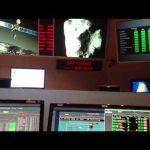
ESOC Main Mission Control counts down to #wakeuprosetta
The clock inside ESOC’s Main Mission Control counts down to 10:00 GMT (11:00 CET) on 20 January 2014 – the moment when ESA’s Rosetta spacecraft was woken from a 31-month deep space hibernation.
-

Rosetta — the story so far
This short movie tells the story of Rosetta’s journey through the Solar System so far, through the voices of some of the many people involved in this exciting mission. ESA’s Rosetta spacecraft launched in March 2004 and has since been chasing down comet 67P/Churyumov-Gerasimenko, where it will become the first space mission to orbit a comet, the first to attempt a landing on a comet’s surface, and the first to follow a comet as it swings around the Sun. In the last ten years Rosetta has made 3 flybys of Earth and 1 of Mars, and passed by and imaged asteroids Steins and Lutetia. Operating on solar energy alone, in June 2011 Rosetta was placed into deep space hibernation as it cruised nearly 800 million kilometres from the warmth of the Sun, close to the orbit of Jupiter. On 20 January, Rosetta will wake up at 673 million kilometres from the Sun and about 9 million km from the comet, ready for the next leg of its epic adventure.
Credits: ESA
-
Mars Mission Briefed on This Week @NASA
During a news briefing at NASA headquarters officials and scientists discussed MAVEN, the agency’s next mission to Mars. Scheduled to launch November 18 from Cape Canaveral Air Force Station in Florida, MAVEN will study the history and change of Mars’ atmosphere, climate, and planetary habitability. Also, Bolden visits Langley, Power Up, Solar Flares, A busy time!, Free flight and Ice Flight!
-
ESA Euronews: Mission Gaia : la Voie lactée bientôt cartographiée
Les milliards d’étoiles de notre Voie lactée forment un labyrinthe dont nous avons du mal à appréhender l’étendue. Pour faire progresser les connaissances sur notre galaxie, l’Agence spatiale européenne mène la mission Gaia, du nom d’un satellite capable de scanner le ciel avec une précision extraordinaire, au moins mille fois supérieure à celle des observations depuis le sol.
L’engin construit par Astrium à Toulouse et lancé depuis Kourou en Guyane française va réaliser une première en astronomie en établissant une carte 3D détaillée de la Voie lactée : il calculera la position relative, la trajectoire et la vitesse d’un milliard d’étoiles. Ce qui correspond à 1% de l’ensemble des étoiles peuplant notre galaxie.
Pour l’aider dans ses observations, Gaia dispose de la plus grande caméra numérique jamais conçue pour une mission spatiale et comme point de référence, du plus grand téléscope de l’observatoire du Pic du Midi dans les Pyrénées.
Grâce à cette mission, les astronomes espèrent résoudre de grandes énigmes, notamment établir avec exactitude, la structure en spirale de la Voie lactée et trouver la trace de la matière noire, cette force invisible qui façonne notre univers.
-
NASA’s Next Mission to Mars
NASA hosted a news briefing at 2 p.m. EDT Monday, Oct. 28, to discuss the upcoming launch of the agency’s next mission to Mars and the first devoted to understanding the upper atmosphere of the Red Planet.
MAVEN is scheduled to launch at 1:28 p.m. EST Nov. 18 from Cape Canaveral Air Force Station in Florida. MAVEN’s data will be used to study the history and change of Mars’ atmosphere, climate, and planetary habitability.Briefing participants were:
– John Grunsfeld, associate administrator for the Science Mission Directorate, NASA Headquarters, Washington
– Jim Green, director, Planetary Science Division, Headquarters
– Lisa May, MAVEN program executive, Headquarters
– Kelly Fast, MAVEN program scientist, Headquarters
– Bruce Jakosky, MAVEN principal investigator, University of Colorado Boulder Laboratory for Atmospheric and Space Physics
– David Mitchell, MAVEN project manager, NASA’s Goddard Space Flight Center, Greenbelt, Md. -
Back to Mission on This Week @NASA
With the government shutdown over, Administrator Charlie Bolden welcomed employees back to the work of NASA’s mission. Bolden visited Goddard Space Flight Center with Maryland Senator Barbara Mikulski for an update on several projects, including the Global Precipitation Measurement mission, the Magnetospheric Multiscale spacecraft and the James Webb Space Telescope. Bolden also visited Mississippi to thank employees at Stennis Space Center for their critical engineering and testing work on the agency’s next generation rocket engines and the staff of the NASA Shared Services Center for their support of the agency during the shutdown. Also, While we were away, Cygnus Completes!, MAVEN in Waiting, SLS Tests, and More Arctic Sea Ice!
-

ESA – Space to Relax / MagISStra City Views: Photos by Paolo Nespoli
A breathtaking collection of photos taken by ESA Astronaut Paolo Nespoli during his 6-month MagISStra mission on the International Space Station 25 December 2010 – 24 May 2011.
Music: Dream Elements by Green Sun licensed by Ambient Music Garden.
Video produced for Lufthansa inflight entertainment (released June 2011). -
New NASA Mission to Study Space Weather
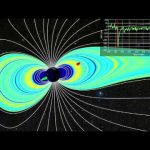
With 14 days until its launch, the Radiation Belt Storm Probes mission is previewed by scientists at NASA Headquarters in Washington. RBSP will study the role of the Earth’s radiation belts in producing space weather that can adversely affect communications and electronic systems.
-
Lunar Lander mission
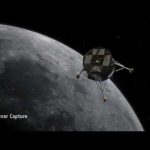
Lunar Lander mission, from launch to landing and exploring the Moon.
Lunar Lander is a robotic explorer that will demonstrate key European technologies and conduct science experiments.
The mission is a forerunner to future human and robotic exploration of the Moon and Mars. It will establish European expertise to allow strong international partnerships in exploration. -

Rosetta’s view of Lutetia, July 2010
This movie shows a sequence of images taken as ESA’s Rosetta spacecraft flew past the main-belt asteroid (21) Lutetia, during the spacecraft’s 10-year journey towards comet 67P/Churyumov-Gerasimenko.
The flyby took place on 10 July 2010, when Rosetta flew past the asteroid at a distance of 3168.2 km and at a relative speed of 15 km/s. The first image shown in the sequence was taken nine and a half hours before closest approach, from a distance of 500 000 km to Lutetia; the last image was taken six minutes after closest approach, at 6300 km from the asteroid.
The OSIRIS camera on board Rosetta has surveyed the part of Lutetia that was visible during the flyby – about half of its entire surface, mostly coinciding with the asteroid’s northern hemisphere. These unique, close-up images have allowed scientists to study the asteroid’s surface morphology, composition and other properties in unprecedented detail.
-
Supply Mission to Station on This Week @ NASA
The European Space Agency has successfully launched its third Automated Transfer Vehicle. The cargo ferry, named Edoardo Amaldi for the Italian physicist and spaceflight pioneer, was sent on its way to the International Space Station atop an Ariane 5 rocket from Europe’s Spaceport in Kourou, French Guiana. The ATV brings essential supplies and propellant to the ISS, as well as the ability to re-boost the station’s altitude. ATV Edoardo Amaldi follows the two highly successful supply missions carried out by ATV Jules Verne in March 2008 and ATV Johannes Kepler in February of last year. Also, members of the International Space Station’s Expedition 32 crew discuss their upcoming mission aboard the orbiting laboratory with the media, Engineers at the Marshall Space Flight Center test fire a scaled down solid rocket booster for NASA’s Space Launch System, or SLS, the 100th anniversary of the birth of a space pioneer and more!
-
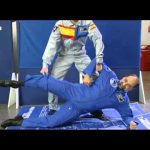
Mission 1: Newton in Space (Español)
While on board the ISS, Pedro Duque was filmed conducting demonstrations explaining Newton’s Three Laws of Motion – the subject of ISS DVD Lesson 1.
-
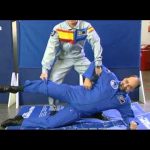
Mission 1: Newton in Space (Português)
While on board the ISS, Pedro Duque was filmed conducting demonstrations explaining Newton’s Three Laws of Motion – the subject of ISS DVD Lesson 1.
-
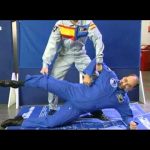
Mission 1: Newton in Space (Italiano)
While on board the ISS, Pedro Duque was filmed conducting demonstrations explaining Newton’s Three Laws of Motion – the subject of ISS DVD Lesson 1.
-
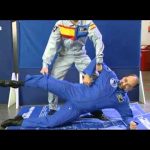
Mission 1: Newton in Space
While on board the ISS, Pedro Duque was filmed conducting demonstrations explaining Newton’s Three Laws of Motion – the subject of ISS DVD Lesson 1.
-
Mission 1: Newton in Space (Deutsch)
While on board the ISS, Pedro Duque was filmed conducting demonstrations explaining Newton’s Three Laws of Motion – the subject of ISS DVD Lesson 1.
-

Mission 2: Body Space (Italiano)
During the DELTA Mission, André Kuipers performed a number of physiology demonstrations showing the effects of weightlessness on the human body – the theme of DVD Lesson 2.
-
Juno Mission Launches to Jupiter
NASA’s Juno spacecraft is on its way to Jupiter after being launched aboard an Atlas V rocket from the Cape Canaveral Air Force Station, Florida on August 5 at 11:25 a.m. Eastern. The solar-powered spacecraft will arrive at Jupiter in July 2016 and orbit its poles 33 times to find out more about the gas giant’s interior, atmosphere and aurora. Scientists believe Jupiter holds the key to better understanding the origins of our solar system.
-
STS-134: Space Shuttle Endeavour’s last Mission
The best of the best, it’s a compilation of the featured moments captured by NASA Television during the mission of Endeavour and its six-man crew to the International Space Station.
-
STS-133: Discovery’s Farewell
Join Commander Steve Lindsey and his crew of Pilot Eric Boe, and Mission Specialists Alvin Drew, Steve Bowen, Mike Barratt and Nicole Stott as they journey to and from the International Space Station. Set to music, the video celebrates the final mission of space shuttle Discovery as it logs the last of its 365 days in flight.
-
NASA Mission Sheds New Light on Full Sun
For the first time, NASA’s Solar Terrestrial Relations Observatory, or STEREO, spacecraft, has provided a view of the entire sun, including its far side. Scientists can now gain a better understanding of the dynamic nature of our star and give earlier predictions of space weather events that can impact our technological infrastructure.
-
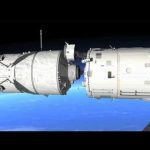
ATV-2 mission profile with ESA Mission Director Kris Capelle
ESA’s lead ATV-2 Mission Director Kris Capelle talks us through all phases of this complex mission – from launch preparation and lift-off to rendezvous and docking with the ISS through the attached phase, undocking and reentry.
-
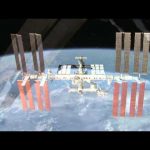
NASA’S Mission Control and ISS Crew Observe National Moment of Silence
At Mission Control at the Johnson Space Center in Houston and aboard the International Space Station, flight controllers and the Expedition 26 crew paused to observe a National Moment of Silence Jan. 10, 2011. The event was held for the victims of the shootings in Tucson, Ariz., Jan. 8 that left six people dead and more than a dozen wounded, including Rep. Gabrielle Giffords (D-AZ). Station Commander Scott Kelly, Giffords’ brother-in-law, led the station crew in its observance from 220 miles above the Earth.
-
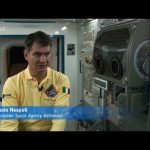
Counting down for ESA’s MagISStra mission
ESA’s Director of Human Spaceflight Simonetta Di Pippo together with ESA’s astronaut Paolo Nespoli introduce the MagISStra mission which is going to be launched in December 2010 from Baikonur Cosmodrome, Kazakhstan. This is the third six-month duration mission a European astronaut takes part to.
-
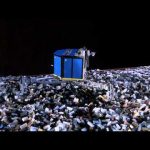
Using LEGO® to simulate ESA’s touchdown on a comet
Comets are primeval leftovers from the origins of the Solar System. To fully understand these ancient objects and perhaps the origins of life on Earth, ESA’s Rosetta mission will rendezvous with comet Churyumov-Gerasimenko in 2014. In November of that year, Rosetta’s Philae lander will touchdown on the comet and thoroughly investigate its composition.
Copyright © Lightcurve Films/Maarten Roos, ESA, DLR, Europlanet, LEGO
-

ESA Space Scientist Detlef Koschny explains why he originally built Rosetta in LEGO®
Space missions are complicated pieces of orbital choreography. When planning a mission, spacecraft engineers must calculate how to point the solar panels towards the Sun, the main antenna towards Earth and the instruments towards the target. ESA Space Scientist Detlef Koschny build a LEGO model of Rosetta mission in order to visualise these precise orientations.
Copyright © Lightcurve Films/Maarten Roos, ESA, DLR, Europlanet, LEGO
-
ESA Space Scientist Detlef Koschny demonstrates the prototype LEGO® Philae lander
Built using LEGO Mindstorms, the Philae lander model can be controlled using a home computer. It can rotate and move the drill up and down to simulate the behaviour of the real lander. As part of ESA’s Rosetta space mission, Philae will land on comet Churyumov-Gerasimenko in November 2014 to study its composition.
Copyright © Lightcurve Films/Maarten Roos, ESA, DLR, Europlanet, LEGO
-
NASA STS-129 Mission Highlights
Astronaut Nicole Stott returned to Earth aboard shuttle Atlantis on Nov. 27 after 91 days in space. She had spent 87 days aboard the International Space Station and 80 days as an Expedition 20/21 flight engineer. She is the last astronaut who will be transported to or from the space station by a space shuttle. Atlantis landed at NASA’s Kennedy Space Center, Fla., to end its STS-129 mission to the station.
For more info: www.nasa.gov/shuttle
-
What does a typical working day on the ISS look like?
Frank De Winne is answering a question on the ISS submitted by Thomas Kern from Germany:
What does a typical working day on the ISS look like? -

Can you feel the speed at which the ISS travels?
Frank De Winne is answering a question on the ISS submitted by Paul from Portugal:
When you do your EVA (space walk), can you feel the speed (28.000 Km/h) at which the ISS is travelling?