Tag: Moon

  • What is ESA’s Moonlight initiative?

    What is ESA’s Moonlight initiative?

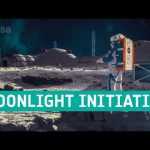
    Going to the Moon was the first step. Staying there is the next ambition.

    ESA is a key partner in NASA’s Artemis programme, which aims to return people to the Moon by the end of the decade. Dozens of other international public and private missions are setting their sights on the lunar surface in the coming years.

    But to achieve a permanent and sustainable presence on the Moon, reliable and autonomous lunar communications and navigation services are required.

    This is why ESA is working with its industrial partners on the Moonlight initiative, to become the first off-planet commercial telecoms and satellite navigation provider.

    Following their launch, three or four satellites will be carried into lunar orbit by a space tug and deployed one by one, to form a constellation of lunar satellites. The number and specification of these satellites are currently being defined.

    The constellation’s orbits are optimised to give coverage to the lunar south pole, whose sustained sunlight and polar ice make it the focus of upcoming missions.

    Moonlight will provide data capacities sufficient to serve these planned and future missions, with a navigation service that enables accurate real-time positioning for all lunar missions.

    ★ Subscribe: http://bit.ly/ESAsubscribe and click twice on the bell button to receive our notifications.

    Check out our full video catalog: http://bit.ly/SpaceInVideos
    Follow us on Twitter: http://bit.ly/ESAonTwitter
    On Facebook: http://bit.ly/ESAonFacebook
    On Instagram: http://bit.ly/ESAonInstagram
    On Flickr: http://bit.ly/ESAonFlickr

    We are Europe’s gateway to space. Our mission is to shape the development of Europe’s space capability and ensure that investment in space continues to deliver benefits to the citizens of Europe and the world. Check out https://www.esa.int/ to get up to speed on everything space related.

    Copyright information about our videos is available here: https://www.esa.int/ESA_Multimedia/Terms_and_Conditions

    #ESA
    #Moon
    #MoonLight

  • The James Webb Space Telescope captures Neptune’s rings #shorts

    The James Webb Space Telescope captures Neptune’s rings #shorts

    Most striking about Webb’s new image is the crisp view of the planet’s dynamic rings — some of which haven’t been seen at all, let alone with this clarity, since the Voyager 2 flyby in 1989. In addition to several bright narrow rings, the Webb images clearly show Neptune’s fainter dust bands. Webb’s extremely stable and precise image quality also permits these very faint rings to be detected so close to Neptune.
    Download these images: https://esawebb.org/news/weic2214/

    ★ Subscribe: http://bit.ly/ESAsubscribe and click twice on the bell button to receive our notifications.

    Check out our full video catalog: http://bit.ly/SpaceInVideos
    Follow us on Twitter: http://bit.ly/ESAonTwitter
    On Facebook: http://bit.ly/ESAonFacebook
    On Instagram: http://bit.ly/ESAonInstagram
    On LinkedIn: https://bit.ly/ESAonLinkedIn
    On Pinterest: https://bit.ly/ESAonPinterest
    On Flickr: http://bit.ly/ESAonFlickr

    We are Europe’s gateway to space. Our mission is to shape the development of Europe’s space capability and ensure that investment in space continues to deliver benefits to the citizens of Europe and the world. Check out https://www.esa.int/ to get up to speed on everything space related.

    Copyright information about our videos is available here: https://www.esa.int/ESA_Multimedia/Terms_and_Conditions

    #ESA
    #Webb
    #Astronomy

  • 10 facts about the European Service Module | Artemis #shorts

    10 facts about the European Service Module | Artemis #shorts

    The European Service Module is ESA’s contribution to @NASA’s Orion spacecraft that will send astronauts to the Moon and beyond. It provides electricity, water, oxygen and nitrogen as well as keeping the spacecraft at the right temperature and on course.

    Learn more about the European Service Module: https://www.esa.int/Science_Exploration/Human_and_Robotic_Exploration/Orion/Orion_European_Service_Module_media_kit

    ★ Subscribe: http://bit.ly/ESAsubscribe and click twice on the bell button to receive our notifications.

    Check out our full video catalog: http://bit.ly/SpaceInVideos
    Follow us on Twitter: http://bit.ly/ESAonTwitter
    On Facebook: http://bit.ly/ESAonFacebook
    On Instagram: http://bit.ly/ESAonInstagram
    On LinkedIn: https://bit.ly/ESAonLinkedIn
    On Pinterest: https://bit.ly/ESAonPinterest
    On Flickr: http://bit.ly/ESAonFlickr

    We are Europe’s gateway to space. Our mission is to shape the development of Europe’s space capability and ensure that investment in space continues to deliver benefits to the citizens of Europe and the world. Check out https://www.esa.int/ to get up to speed on everything space related.

    Copyright information about our videos is available here: https://www.esa.int/ESA_Multimedia/Terms_and_Conditions

    #ESA
    #ESM
    #Artemis

  • Media briefing: Artemis I getting ready for launch

    Media briefing: Artemis I getting ready for launch

    The Artemis I mission is almost ready for launch: it will send an uncrewed spacecraft beyond the Moon and back. Join this virtual Q&A to learn more about Europe’s contribution to the mission: ESA is overseeing the development of the European Service Module, that provides air, electricity and propulsion to the spacecraft. Participants to this media briefing include Josef Aschbacher, ESA Director General ; David Parker, ESA Director for Human and Robotic Exploration ; Jean-Marc Nasr, @Airbus EVP Space Systems and Marc Steckling, Airbus Head of Space Exploration.

    Learn more about Artemis I: https://www.esa.int/Science_Exploration/Human_and_Robotic_Exploration/Orion/Artemis_I

    ★ Subscribe: http://bit.ly/ESAsubscribe and click twice on the bell button to receive our notifications.

    Check out our full video catalog: http://bit.ly/SpaceInVideos
    Follow us on Twitter: http://bit.ly/ESAonTwitter
    On Facebook: http://bit.ly/ESAonFacebook
    On Instagram: http://bit.ly/ESAonInstagram
    On LinkedIn: https://bit.ly/ESAonLinkedIn
    On Pinterest: https://bit.ly/ESAonPinterest
    On Flickr: http://bit.ly/ESAonFlickr

    We are Europe’s gateway to space. Our mission is to shape the development of Europe’s space capability and ensure that investment in space continues to deliver benefits to the citizens of Europe and the world. Check out https://www.esa.int/ to get up to speed on everything space related.

    Copyright information about our videos is available here: https://www.esa.int/ESA_Multimedia/Terms_and_Conditions

    #ESA
    #Orion
    #Artemis

  • Artemis I – European Service Module perspective

    Artemis I – European Service Module perspective

    The Orion spacecraft with European Service Module will fly farther from Earth than any human-rated vehicle has ever flown before. This video gives an overview of the first mission – without astronauts – for Artemis, focussing on ESA’s European Service Module that powers the spacecraft.

    The spacecraft will perform a flyby of the Moon, using lunar gravity to gain speed and propel itself 70 000 km beyond the Moon, almost half a million km from Earth – further than any human has ever travelled, where it will inject itself in a Distant Retrograde Orbit around the Moon.

    On its return journey, Orion will do another flyby of the Moon before heading back to Earth.

    The total trip will take around 20 days, ending with a splashdown in the Pacific Ocean without the European Service Module – it separates and burns up harmlessly in the atmosphere.

    The second Artemis mission will have a simplified flight plan with only a flyby of the Moon but with four astronauts. The third Artemis mission will see astronauts taken to the lunar surface.

    The European Service Module is ESA’s contribution to @NASA’s Orion spacecraft that will send astronauts to the Moon and beyond. It provides electricity, water, oxygen and nitrogen as well as keeping the spacecraft at the right temperature and on course.

    The European Service Module has 33 thrusters, 11 km of electrical wiring, four propellant and two pressure tanks that all work together to supply propulsion and everything needed to keep astronauts alive far from Earth – there is no room for error.

    ★ Subscribe: http://bit.ly/ESAsubscribe and click twice on the bell button to receive our notifications.

    Check out our full video catalog: http://bit.ly/SpaceInVideos
    Follow us on Twitter: http://bit.ly/ESAonTwitter
    On Facebook: http://bit.ly/ESAonFacebook
    On Instagram: http://bit.ly/ESAonInstagram
    On Flickr: http://bit.ly/ESAonFlickr

    We are Europe’s gateway to space. Our mission is to shape the development of Europe’s space capability and ensure that investment in space continues to deliver benefits to the citizens of Europe and the world. Check out https://www.esa.int/ to get up to speed on everything space related.

    Copyright information about our videos is available here: https://www.esa.int/ESA_Multimedia/Terms_and_Conditions

    #ESA
    #Orion
    #Artemis

  • Europe ready for Artemis

    Europe ready for Artemis

    ESA and NASA are working hand in hand before the first Artemis mission to the Moon through a series of joint mission simulations. Teams based at the Erasmus Support Facility (ESF) at ESA’s ESTEC facility in The Netherlands, the German Space Operations Centre at ESA’s Columbus Control Centre in Oberphfaffenhofen and NASA’s Johnson Space Center in Houston are combining their expertise in a series of exercises to ensure a successful launch.

    When it comes to simulations, it’s important that not everything goes perfectly right as it recreates – in real time – different stages of the mission to monitor the spacecraft’s position, propulsion, power, avionics and thermal properties. The European team, consisting of 40 people from ESA and industry, apply their considerable expertise from working on the European Service Module (ESM) to any unexpected problems. The ESM will provide power for the Orion spacecraft and propel it along its orbit to the Moon.

    Learn more about Artemis: https://bit.ly/Artemis1ESA

    ★ Subscribe: http://bit.ly/ESAsubscribe and click twice on the bell button to receive our notifications.

    Check out our full video catalog: http://bit.ly/SpaceInVideos
    Follow us on Twitter: http://bit.ly/ESAonTwitter
    On Facebook: http://bit.ly/ESAonFacebook
    On Instagram: http://bit.ly/ESAonInstagram
    On Flickr: http://bit.ly/ESAonFlickr

    We are Europe’s gateway to space. Our mission is to shape the development of Europe’s space capability and ensure that investment in space continues to deliver benefits to the citizens of Europe and the world. Check out https://www.esa.int/ to get up to speed on everything space related.

    Copyright information about our videos is available here: https://www.esa.int/ESA_Multimedia/Terms_and_Conditions

    #ESA
    #Orion
    #Artemis

  • Moon cheesecake – a recipe for lunar geology

    Moon cheesecake – a recipe for lunar geology

    An informative and creative trip into lunar geology using a very special cheesecake recipe in the context of ESA’s Moon Bread recipe challenge. Planetary scientist and ESA Young Graduate Trainee Xiaochen Zhang explains how the Moon formed and evolved using live baking examples.

    ESA invites all bakers to try out a special banana bread recipe that contains the main chemical elements found on the Moon. The social media initiative is set to heat up ovens across Europe in the countdown to the first Artemis mission to lunar orbit – one that gets its temperature and power under control by the European Service Module.

    More information about the contest: https://blogs.esa.int/exploration/bake-the-moon/

    ★ Subscribe: http://bit.ly/ESAsubscribe and click twice on the bell button to receive our notifications.

    Check out our full video catalog: http://bit.ly/SpaceInVideos
    Follow us on Twitter: http://bit.ly/ESAonTwitter
    On Facebook: http://bit.ly/ESAonFacebook
    On Instagram: http://bit.ly/ESAonInstagram
    On LinkedIn: https://bit.ly/ESAonLinkedIn
    On Pinterest: https://bit.ly/ESAonPinterest
    On Flickr: http://bit.ly/ESAonFlickr

    We are Europe’s gateway to space. Our mission is to shape the development of Europe’s space capability and ensure that investment in space continues to deliver benefits to the citizens of Europe and the world. Check out https://www.esa.int/ to get up to speed on everything space related.

    Copyright information about our videos is available here: https://www.esa.int/ESA_Multimedia/Terms_and_Conditions

  • Bake the Moon at home 🌝 #shorts

    Bake the Moon at home 🌝 #shorts

    ESA invites all bakers to try out a special banana bread recipe courtesy of Sens’Astro that contains the main chemical elements found on the Moon with a social media challenge inspired by World Baking Day, celebrated on 17 May.

    Bakers of all ages are invited to share their results with pictures or videos on social media using the hashtag #ESABakes. The deadline for pastry chefs to submit their cakes is 24 May 2022.

    Here are the ingredients:
    – 3 bananas
    – 2 eggs
    – 1 yoghurt (125 ml)
    – 80 g wheat flour
    – 30 g oat flour
    – 40 g almond powder
    – 100 g chocolate chips
    – 2 tablespoons maple syrup
    – 1 teaspoon vanilla extract
    – 1 teaspoon baking powder
    – 1 pinch of salt
    – 1 handful of nuts

    Have fun and enjoy a nutritious Moon!

    Get all the details: https://blogs.esa.int/exploration/bake-the-moon/

    ★ Subscribe: http://bit.ly/ESAsubscribe and click twice on the bell button to receive our notifications.

    Check out our full video catalog: http://bit.ly/SpaceInVideos
    Follow us on Twitter: http://bit.ly/ESAonTwitter
    On Facebook: http://bit.ly/ESAonFacebook
    On Instagram: http://bit.ly/ESAonInstagram
    On LinkedIn: https://bit.ly/ESAonLinkedIn
    On Pinterest: https://bit.ly/ESAonPinterest
    On Flickr: http://bit.ly/ESAonFlickr

    We are Europe’s gateway to space. Our mission is to shape the development of Europe’s space capability and ensure that investment in space continues to deliver benefits to the citizens of Europe and the world. Check out https://www.esa.int/ to get up to speed on everything space related.

    Copyright information about our videos is available here: https://www.esa.int/ESA_Multimedia/Terms_and_Conditions

    #WorldBakingDay

  • Rovers compete in lunar Space Resources Challenge

    Rovers compete in lunar Space Resources Challenge

    Wheeled, tracked and walking rovers competed to survey a shadowy analogue of the polar lunar surface for useable resources during the first field test of the ESA-ESRIC Space Resources Challenge. Some 12 teams from across Europe and Canada took part in the field test in the Netherlands, with five winners going on to the next phase of the contest.

    The Space Resources Challenge – supported by ESA and the European Space Resources Innovation Centre (ESRIC) in Luxembourg – asked European (and Canadian) researchers and institutions to develop and demonstrate a system of one or more vehicles capable of prospecting resources on the Moon in the near future.

    Working inside a former aircraft hangar, the competition organisers spread 200 tons of lava rock across an area equivalent to seven tennis courts, landscaping it into a Moon-like environment, including the main crater of interest. Then they scattered rocks, including a hundred simulated boulders larger than a metre across, whose positions were precisely geo-referenced.

    These measurements served as the basis of a map provided to the rover teams. The idea was to give them the equivalent level of local information from satellite imagery, while still leaving smaller-scale surprises. Once complete, the moonscape was kept concealed from the rover groups behind black curtains, so they would see it only through the cameras of their rovers. The 12 teams each made their prospecting attempt one at a time.

    The competing rovers had to navigate and map the whole test environment to prospect for useable resources – meaning first of all to track down their location, identify the best and safest passages and then to gather information about the characteristics and the composition of the rocks they located.

    Credit: ESA

    ★ Subscribe: http://bit.ly/ESAsubscribe and click twice on the bell button to receive our notifications.

    Check out our full video catalog: http://bit.ly/SpaceInVideos
    Follow us on Twitter: http://bit.ly/ESAonTwitter
    On Facebook: http://bit.ly/ESAonFacebook
    On Instagram: http://bit.ly/ESAonInstagram
    On LinkedIn: https://bit.ly/ESAonLinkedIn
    On Pinterest: https://bit.ly/ESAonPinterest
    On Flickr: http://bit.ly/ESAonFlickr

    We are Europe’s gateway to space. Our mission is to shape the development of Europe’s space capability and ensure that investment in space continues to deliver benefits to the citizens of Europe and the world. Check out https://www.esa.int/ to get up to speed on everything space related.

    Copyright information about our videos is available here: https://www.esa.int/ESA_Multimedia/Terms_and_Conditions

    #ESA
    #Robotics
    #SpaceResources

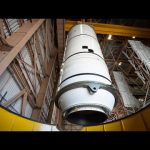
  • Artemis: crawling towards launch

    Artemis: crawling towards launch

    One of the many milestones in the leadup to the launch of Artemis is its rollout: this is when a crawler will carry the SLS rocket with Orion and ESM from the Vehicle Assembly Building to launchpad 39B. @NASA’s John Giles gives us a tour of the crawler and explains the adaptations made to this “wonderful piece of machinery” since it was first built for the Apollo programme in the 1960s. ESA is playing a key role in NASA’s Artemis programme, which will bring astronauts back to the Moon. The European Service Module – or ESM – will provide propulsion, power and thermal control for the Orion spacecraft.

    Learn more: https://bit.ly/Artemis1ESA

    Video credits: European Space Agency
    Thumbnail image credits: NASA/Leif Heimbold

    ★ Subscribe: http://bit.ly/ESAsubscribe and click twice on the bell button to receive our notifications.

    Check out our full video catalog: http://bit.ly/SpaceInVideos
    Follow us on Twitter: http://bit.ly/ESAonTwitter
    On Facebook: http://bit.ly/ESAonFacebook
    On Instagram: http://bit.ly/ESAonInstagram
    On Flickr: http://bit.ly/ESAonFlickr

    We are Europe’s gateway to space. Our mission is to shape the development of Europe’s space capability and ensure that investment in space continues to deliver benefits to the citizens of Europe and the world. Check out https://www.esa.int/ to get up to speed on everything space related.

    Copyright information about our videos is available here: https://www.esa.int/ESA_Multimedia/Terms_and_Conditions

    #ESA
    #Orion
    #Artemis

  • Artemis I stacked

    Artemis I stacked

    Time lapse of the stacking of the Orion spacecraft on top of the fully assembled Space Launch System (SLS) rocket at NASA’s Kennedy Space Center in Florida, on 21 October 2021, in preparation for the uncrewed Artemis I launch.

    For Artemis I, the European Service Module will take the spacecraft more than 64 000 km beyond the Moon in a test flight to demonstrate its capabilities.

    The European Service Module is ESA’s contribution to NASA’s Orion spacecraft that will send astronauts to the Moon and beyond. It provides electricity, water, oxygen and nitrogen as well as keeping the spacecraft at the right temperature and on course.

    Learn more about Orion: http://bit.ly/ESAOrion

    ★ Subscribe: http://bit.ly/ESAsubscribe and click twice on the bell button to receive our notifications.

    Check out our full video catalog: http://bit.ly/SpaceInVideos
    Follow us on Twitter: http://bit.ly/ESAonTwitter
    On Facebook: http://bit.ly/ESAonFacebook
    On Instagram: http://bit.ly/ESAonInstagram
    On LinkedIn: https://bit.ly/ESAonLinkedIn
    On Pinterest: https://bit.ly/ESAonPinterest
    On Flickr: http://bit.ly/ESAonFlickr

    We are Europe’s gateway to space. Our mission is to shape the development of Europe’s space capability and ensure that investment in space continues to deliver benefits to the citizens of Europe and the world. Check out https://www.esa.int/ to get up to speed on everything space related.

    Copyright information about our videos is available here: https://www.esa.int/ESA_Multimedia/Terms_and_Conditions

    #ESA
    #Orion
    #ForwardToTheMoon

  • European push to the Moon

    European push to the Moon

    The European Space Agency is playing a vital role in humankind’s return to the Moon. In a few months @NASA will launch Artemis I from the Kennedy Space Center. The uncrewed mission will carry NASA’s Orion spacecraft incorporating ESA’s European Service Module (ESM-1), built and tested by Airbus Bremen, in Germany, with the help of 10 European nations. ESM-1’s main engine and 32 thrusters will propel Orion into orbit around the Moon and return it to Earth.

    As Artemis I prepares for launch, the second European Service Module (ESM-2) is about to ship to the US with ESM-3 also currently under construction. The second Artemis mission, however, has a crucial difference: it will carry four astronauts for a lunar flyby. ESM-2 will provide propulsion, power, oxygen, water and life support as well as controlling the temperature in the orbiting crew module. ESM-3 will go one step further and put the first person on the Moon for 50 years.

    Learn more about Orion: https://bit.ly/ESAsOrion

    ★ Subscribe: http://bit.ly/ESAsubscribe and click twice on the bell button to receive our notifications.

    Check out our full video catalog: http://bit.ly/SpaceInVideos
    Follow us on Twitter: http://bit.ly/ESAonTwitter
    On Facebook: http://bit.ly/ESAonFacebook
    On Instagram: http://bit.ly/ESAonInstagram
    On Pinterest: https://bit.ly/ESAonPinterest
    On Flickr: http://bit.ly/ESAonFlickr

    We are Europe’s gateway to space. Our mission is to shape the development of Europe’s space capability and ensure that investment in space continues to deliver benefits to the citizens of Europe and the world. Check out https://www.esa.int/ to get up to speed on everything space related.

    Copyright information about our videos is available here: https://www.esa.int/ESA_Multimedia/Terms_and_Conditions

    #ESA
    #Orion
    #Artemis

  • NASA Science Live: Moon to Mars Ice and Prospecting Challenge

    NASA Science Live: Moon to Mars Ice and Prospecting Challenge

    NASA Science Live is back and we’re LIVE from the Moon to Mars Ice & Prospecting Challenge. Ten teams from across the country have been tasked with one goal: to extract ice beneath a simulated lunar or Martian surface. As we look forward to NASA’s Artemis program to the Moon and even one-day crewed missions to Mars, ideas from challenges like this will be essential in creating technology to access resources like water for humans to survive on other worlds. Join us on Sept 24th at 3:00 p.m. to hear from NASA experts and the teams.

    Meet the experts
    Alejandro Pensado is an Aerospace Engineer at NASA Langley Research Center. In 2018, Alejandro joined the Space Mission Analysis Branch at NASA Langley, working on in-situ resource utilization, propulsion, and Moon and Mars mission architectures. He says he loves the variety of his work and enjoys collaborating with creative and talented people which makes his job more fun. In his spare time, he loves photography, cooking, and traveling.

    Shelley Spears is the National Institute of Aerospace Director of Education and Outreach. As one of the organizers of the competition, Shelley says she loves the magnitude of impact her work has on society and its contribution to American competitiveness. In her spare time she loves boating, golfing, bird hunting with her dogs, traveling, staying fit, as well as cooking and entertaining with family and friends.

    Christopher Jones is a Senior Aerospace Engineer at NASA Langley Research Center. Ever since he was a young boy, Christopher always dreamt of working for NASA. Soon his opportunity came as he joined the Space Mission Analysis Branch at NASA Langley. He says he loves working on the diverse mix of projects that all support improving life on Earth through space. Outside of work, he spends his time playing racquetball, cooking, playing board games, and writing.

  • Life Beyond Earth: Venice Biennale lunar habitat

    Life Beyond Earth: Venice Biennale lunar habitat

    A detailed concept for a lunar habitat, created by one of the world’s leading architectural firms with ESA technical support, is currently on show at the Biennale in Venice. Skidmore, Owings & Merrill, originator of many of the world’s tallest skyscrapers, worked with ESA on a semi-inflatable habitat design which could be part of a long-term vision for an international Moon settlement.

    The resulting design is on show at the 17th International Architecture Exhibition of La Biennale di Venezia (@BiennaleChannel). While the theme of the overall exhibition is ‘How will we live together?’, the SOM installation is called ‘Life Beyond Earth’, peering beyond our post-COVID-19 planet to show how human life can be sustained in the hostile space environment.
    The installation encompasses two large-scale, physical models and this film, bringing Biennale visitors on a journey from Earth to the Moon’s surface.

    SOM designed a semi-inflatable shell structure to offer the highest possible volume to mass ratio. Once inflated on the lunar surface, it would reach approximately double its original internal volume.

    A lot of work went into the four-storey habitat interior, in terms of lighting conditions, reconfigurable features, and a high floor to ceiling space, to allow crew members to take advantage of lunar one-sixth g using grabbing bars and other simple aids.

    Its chosen site has been described as the most desirable real estate in the Solar System: the rim of Shackleton crater beside the lunar South Pole. Avoiding the crippling temperature extremes of the Moon’s two-week days and nights, this location offers near-continuous sunlight for solar power, an ongoing view of Earth and access to lunar water ice deposits in adjacent permanently-shadowed craters.

    Credit: SOM

    ★ Subscribe: http://bit.ly/ESAsubscribe and click twice on the bell button to receive our notifications.

    Check out our full video catalog: http://bit.ly/SpaceInVideos
    Follow us on Twitter: http://bit.ly/ESAonTwitter
    On Facebook: http://bit.ly/ESAonFacebook
    On Instagram: http://bit.ly/ESAonInstagram
    On Flickr: http://bit.ly/ESAonFlickr

    We are Europe’s gateway to space. Our mission is to shape the development of Europe’s space capability and ensure that investment in space continues to deliver benefits to the citizens of Europe and the world. Check out https://www.esa.int/ to get up to speed on everything space related.

    Copyright information about our videos is available here: https://www.esa.int/ESA_Multimedia/Terms_and_Conditions

    #ESA
    #MoonVillage
    #BiennaleArchitettura2021

  • See the European Service Modules taking humankind forward to the Moon

    See the European Service Modules taking humankind forward to the Moon

    From the @Airbus integration halls in Bremen, Germany, this replay of a live event shows a sneak peek of the two European Service Modules that will power astronauts to the Moon and back as part of @NASA’s Orion spacecraft.

    Orion is NASA’s next exploration spacecraft to send astronauts farther into space than ever before, beyond the Moon to asteroids and even Mars.

    ESA has contracted and is overseeing the development of the European Service Module, the part of the Orion spacecraft that provides air, electricity and propulsion. Much like a train engine pulls passenger carriages and supplies power, the European Service Module will power the Orion crew module to its destination and back to Earth.

    The programme includes Andreas Hammer, Head of @Airbus Defence and Space Exploration showing the European Service Modules in production, ESA Director General Jan Wörner announcing future developments, a statement by ESA’s head of European Service Module programme Philippe Deloo, a statement by Airbus head of European Service Module programme Didier Radola, a Moon missions overview with ESA astronaut Alexander Gerst and ESA’s head of Space Transportation Nico Dettmann on how ESA is building Orion with industry.

    ★ Subscribe: http://bit.ly/ESAsubscribe and click twice on the bell button to receive our notifications.

    Check out our full video catalog: http://bit.ly/SpaceInVideos
    Follow us on Twitter: http://bit.ly/ESAonTwitter
    On Facebook: http://bit.ly/ESAonFacebook
    On Instagram: http://bit.ly/ESAonInstagram
    On Flickr: http://bit.ly/ESAonFlickr

    We are Europe’s gateway to space. Our mission is to shape the development of Europe’s space capability and ensure that investment in space continues to deliver benefits to the citizens of Europe and the world. Check out https://www.esa.int/ to get up to speed on everything space related.

    Copyright information about our videos is available here: https://www.esa.int/ESA_Multimedia/Terms_and_Conditions

    #ESA
    #Artemis
    #Orion

  • NASA 2021: Let’s Go to the Moon

    NASA 2021: Let’s Go to the Moon

    Sending the first Artemis mission to the Moon in preparation for human missions, landing a new rover on Mars, and launching the James Webb Space Telescope into space, expanding our ability to see deep into the universe, are just a few of the things NASA has planned for 2021.

    To learn more about the missions mentioned in this video, take a deep dive into these links:

    To the Moon [00:12]
    Space Launch System: https://www.nasa.gov/sls
    Artemis I: https://www.nasa.gov/artemis
    Commercial Lunar Payload Services: https://www.nasa.gov/clps
    Human Landing System: https://www.nasa.gov/content/humans-on-the-moon-0
    Artemis Accords: https://www.nasa.gov/artemisaccords

    Exploring Beyond [00:47]
    Perseverance: https://www.nasa.gov/perseverance
    MOXIE: https://mars.nasa.gov/mars2020/spacecraft/instruments/moxie/
    Ingenuity: https://mars.nasa.gov/technology/helicopter/#Overview
    James Webb Space Telescope: https://www.nasa.gov/jwst
    DART: https://www.nasa.gov/dart
    LUCY: https://www.nasa.gov/lucy
    Landsat 9: https://landsat.gsfc.nasa.gov/landsat-9/landsat-9-overview

    Humans in Space [1:38]
    International Space Station: https://www.nasa.gov/iss
    Commercial Crew: https://www.nasa.gov/commercialcrew
    Astronaut Candidates: https://www.nasa.gov/astronauts

    Space Technology [2:07]
    CAPSTONE: https://www.nasa.gov/directorates/spacetech/small_spacecraft/capstone
    Laser Communications Relay Demonstration: https://www.nasa.gov/spacetech

    Pioneering Flight [2:28]
    X-57 Maxwell: https://www.nasa.gov/aero
    Advanced Air Mobility: https://www.nasa.gov/aero
    X-59 QUESST: https://www.nasa.gov/subject/7565/future-aircraft/

  • Artemis I – European Service Module perspective

    Artemis I – European Service Module perspective

    The Orion spacecraft with European Service Module will fly farther from Earth than any human-rated vehicle has ever flown before. This video gives an overview of the first mission – without astronauts – for Artemis, focussing on ESA’s European Service Module that powers the spacecraft.

    The spacecraft will perform a flyby of the Moon, using lunar gravity to gain speed and propel itself 70 000 km beyond the Moon, almost half a million km from Earth – further than any human has ever travelled.

    On its return journey, Orion will do another flyby of the Moon before heading back to Earth.
    The total trip will take around 20 days, ending with a splashdown in the Pacific Ocean without the European Service Module – it separates and burns up harmlessly in the atmosphere.

    The second Artemis mission will have a similar flight plan but with astronauts. The third Artemis mission will see astronauts taken to the lunar surface.

    The European Service Module is ESA’s contribution to NASA’s Orion spacecraft that will send astronauts to the Moon and beyond. It provides electricity, water, oxygen and nitrogen as well as keeping the spacecraft at the right temperature and on course.

    The European Service Module has 33 thrusters, 11 km of electrical wiring, four propellant and two pressure tanks that all work together to supply propulsion and everything needed to keep astronauts alive far from Earth – there is no room for error.

    ★ Subscribe: http://bit.ly/ESAsubscribe and click twice on the bell button to receive our notifications.

    Check out our full video catalog: http://bit.ly/SpaceInVideos
    Follow us on Twitter: http://bit.ly/ESAonTwitter
    On Facebook: http://bit.ly/ESAonFacebook
    On Instagram: http://bit.ly/ESAonInstagram
    On Flickr: http://bit.ly/ESAonFlickr

    We are Europe’s gateway to space. Our mission is to shape the development of Europe’s space capability and ensure that investment in space continues to deliver benefits to the citizens of Europe and the world. Check out https://www.esa.int/ to get up to speed on everything space related.

    Copyright information about our videos is available here: https://www.esa.int/ESA_Multimedia/Terms_and_Conditions

    #ESA
    #Artemis
    #Orion

  • ESA & NASA | Forward to the Moon

    ESA & NASA | Forward to the Moon

    The European Space Agency and NASA signed a Memorandum of Understanding (MoU) to take Europe to the Moon.

    This historic agreement will see ESA Member States contribute a number of essential elements to the first human outpost in lunar orbit, known as the Gateway.
    It confirms ESA’s commitment to delivering at least two European Service Modules that provide electricity, water, oxygen and nitrogen to NASA’s Orion spacecraft – with more to come. ESA will also receive three flight opportunities for European astronauts to travel to and work on the Gateway.

    ESA’s head of the Legal Services, Marco Ferrazzani, explains how these agreements will take us forward to the Moon.

    Learn more: https://bit.ly/GatewayMoUandArtemisAccords

    ★ Subscribe: http://bit.ly/ESAsubscribe and click twice on the bell button to receive our notifications.

    Check out our full video catalog: http://bit.ly/SpaceInVideos
    Follow us on Twitter: http://bit.ly/ESAonTwitter
    On Facebook: http://bit.ly/ESAonFacebook
    On Instagram: http://bit.ly/ESAonInstagram
    On Flickr: http://bit.ly/ESAonFlickr

    We are Europe’s gateway to space. Our mission is to shape the development of Europe’s space capability and ensure that investment in space continues to deliver benefits to the citizens of Europe and the world. Check out https://www.esa.int/ to get up to speed on everything space related.

    Copyright information about our videos is available here: https://www.esa.int/ESA_Multimedia/Terms_and_Conditions

  • Making Ready for the First Artemis Mission Around the Moon on This Week @NASA – November 27, 2020

    Making Ready for the First Artemis Mission Around the Moon on This Week @NASA – November 27, 2020

    Making ready for the first Artemis mission around the Moon and back, the space station is getting a new doorway to space, and how to know when and where you can look up to spot the station … a few of the stories to tell you about – This Week at NASA!

    Download Link: https://images.nasa.gov/details-Making%20Ready%20for%20the%20First%20Artemis%20Mission%20Around%20the%20Moon%20on%20This%20Week%20@NASA%20%E2%80%93%20November%2027,%202020

    Producer: Andre Valentine
    Editor: Sonnet Apple
    Music: Universal Production Music

  • NASA Asks Commercial Companies to Collect Moon Rocks

    NASA Asks Commercial Companies to Collect Moon Rocks

    While NASA is working aggressively to meet our near-term goal of landing the first woman and next man on the Moon by 2024, our Artemis program also is focused on taking steps that will establish a safe and sustainable lunar exploration architecture.

    NASA is taking a critical step forward by releasing a solicitation for commercial companies to provide proposals for the collection of space resources.

    To meet NASA’s requirements, a company will collect a small amount of Moon “dirt” or rocks from any location on the lunar surface, provide imagery to NASA of the collection and the collected material, along with data that identifies the collection location, and conduct an “in-place” transfer of ownership of the lunar regolith or rocks to NASA. After ownership transfer, the collected material becomes the sole property of NASA for our use.

    NASA’s goal is that the retrieval and transfer of ownership will be completed before 2024. The solicitation creates a full and open competition, not limited to U.S. companies, and the agency may make one or more awards. The agency will determine retrieval methods for the transferred lunar regolith at a later date.

    Over the next decade, the Artemis program will lay the foundation for a sustained long-term presence on the lunar surface and use the Moon to validate deep space systems and operations before embarking on the much farther voyage to Mars. The ability to conduct in-situ resources utilization (ISRU) will be incredibly important on Mars, which is why we must develop techniques and gain experience with ISRU on the surface of the Moon.

    For more information visit: https://blogs.nasa.gov/bridenstine/
    https://www.nasa.gov/isru

    Producer Credit: Sonnet Apple
    Music: “Landscape”/Universal Production Music

  • Thomas and Matthias astro chats: space photography | Episode 4

    Thomas and Matthias astro chats: space photography | Episode 4

    Join ESA astronauts Thomas Pesquet and Matthias Maurer at NASA’s Johnson Space Center in Houston, Texas, USA. In part four of this video series, the astronauts discuss taking photos on the International Space Station.

    Though mission details and dates are yet to be confirmed, Thomas and Matthias are the next two European astronauts in line for flights. Thomas has flown to the International Space Station before, while Matthias will fly for the first time.

    Prior to a mission, astronauts train extensively to ensure they are familiar with the vast array of systems and operations on board. In this video, the pair reflect on the images Thomas took during his first mission and how he plans to approach space photography the second time around.

    This video was filmed in June 2020. At that time, the platform Thomas and Matthias were standing on – in front of a full-scale mock-up of the International Space Station – was the only place at NASA’s JSC that they could interact without face masks. Despite this, the pair were required to maintain social distance at all times as a precaution.

    Learn more: https://bit.ly/HumanAndRoboticExplorationESA

    ★ Subscribe: http://bit.ly/ESAsubscribe and click twice on the bell button to receive our notifications.

    Check out our full video catalog: http://bit.ly/SpaceInVideos
    Follow us on Twitter: http://bit.ly/ESAonTwitter
    On Facebook: http://bit.ly/ESAonFacebook
    On Instagram: http://bit.ly/ESAonInstagram
    On Flickr: http://bit.ly/ESAonFlickr

    We are Europe’s gateway to space. Our mission is to shape the development of Europe’s space capability and ensure that investment in space continues to deliver benefits to the citizens of Europe and the world. Check out http://www.esa.int/ESA to get up to speed on everything space related.

    Copyright information about our videos is available here: http://www.esa.int/spaceinvideos/Terms_and_Conditions

    #ESA
    #MatthiasMaurer
    #ThomasPesquet

  • Perseverance Rover: How We Protect Mars From Earthly Germs

    Perseverance Rover: How We Protect Mars From Earthly Germs

    As we explore Mars and other places in the solar system that might have life, scientists who work in Planetary Protection are busy making sure that we don’t contaminate them. While engineers prepare the Perseverance Rover for launch, Lisa Pratt, NASA’s Planetary Protection Officer, is making sure that it’s not carrying too many spores — cells that could re-activate and transport Earthly bacteria to Mars. It’s especially important to keep Perseverance clean because it will collect samples on Mars that will one day return to Earth. Learn what your hand sanitizer has in common with NASA’s clean rooms, and how scientists are thinking about protecting Mars in terms of future human missions.

    Listen to episodes of the Gravity Assist podcast at https://www.nasa.gov/gravityassist

  • Thomas and Matthias astro chats: training | Episode 1

    Thomas and Matthias astro chats: training | Episode 1

    Join ESA astronauts Thomas Pesquet and Matthias Maurer at NASA’s Johnson Space Center in Houston, Texas, USA. In part one of this video series, the two astronauts compare notes on their journey to date as they prepare for missions to the International Space Station.

    Though mission details and dates are yet to be confirmed, Thomas and Matthias are the next two European astronauts in line for flights. Thomas has flown to the International Space Station before, while Matthias will fly for the first time.

    Prior to a mission, astronauts train extensively to ensure they are familiar with the vast array of systems and operations on board. In this video, the pair discuss how training for a second mission differs from a first mission, the challenges of training during a global pandemic, and how flying to the Station on US commercial crew vehicles may differ from flying on the Russian Soyuz spacecraft.

    This video was filmed in June 2020. At that time, the platform Thomas and Matthias were standing on – in front of a full-scale mock-up of the International Space Station – was the only place at NASA’s JSC that they could interact without face masks. Despite this, the pair were required to maintain social distance at all times as a precaution.

    Learn more: https://bit.ly/HumanAndRoboticExplorationESA

    ★ Subscribe: http://bit.ly/ESAsubscribe and click twice on the bell button to receive our notifications.

    Check out our full video catalog: http://bit.ly/SpaceInVideos
    Follow us on Twitter: http://bit.ly/ESAonTwitter
    On Facebook: http://bit.ly/ESAonFacebook
    On Instagram: http://bit.ly/ESAonInstagram
    On Flickr: http://bit.ly/ESAonFlickr

    We are Europe’s gateway to space. Our mission is to shape the development of Europe’s space capability and ensure that investment in space continues to deliver benefits to the citizens of Europe and the world. Check out http://www.esa.int/ESA to get up to speed on everything space related.

    Copyright information about our videos is available here: http://www.esa.int/spaceinvideos/Terms_and_Conditions

    #ESA
    #MatthiasMaurer
    #ThomasPesquet

  • 2019/20 Moon Camp winners webinar with ESA astronauts

    2019/20 Moon Camp winners webinar with ESA astronauts

    ESA astronauts Samantha Cristoforetti and Luca Parmitano join the 2019/20 Moon Camp Challenge winning teams for a 1-hour webinar. Connecting from all over the world, the teams have their questions answered live by the ESA astronauts.

    ★ Subscribe: http://bit.ly/ESAsubscribe and click twice on the bell button to receive our notifications.

    Check out our full video catalog: http://bit.ly/SpaceInVideos
    Follow us on Twitter: http://bit.ly/ESAonTwitter
    On Facebook: http://bit.ly/ESAonFacebook
    On Instagram: http://bit.ly/ESAonInstagram
    On Flickr: http://bit.ly/ESAonFlickr

    We are Europe’s gateway to space. Our mission is to shape the development of Europe’s space capability and ensure that investment in space continues to deliver benefits to the citizens of Europe and the world. Check out http://www.esa.int/ESA to get up to speed on everything space related.

    Copyright information about our videos is available here: http://www.esa.int/spaceinvideos/Terms_and_Conditions

    #ESA
    #MoonCamp
    #Webinar

  • European Service Module 3

    European Service Module 3

    The Artemis programme is bringing humans back to the Moon. It depends heavily on NASA’s Orion spacecraft that consists of a crew module and the European Service Module, which will provide propulsion, life support, environmental control and electrical power. Main contractor Airbus has just been green-lighted by ESA to develop a third European Service Module.

    Learn more: http://bit.ly/ESAOrion

    ★ Subscribe: http://bit.ly/ESAsubscribe and click twice on the bell button to receive our notifications.

    Check out our full video catalog: http://bit.ly/SpaceInVideos
    Follow us on Twitter: http://bit.ly/ESAonTwitter
    On Facebook: http://bit.ly/ESAonFacebook
    On Instagram: http://bit.ly/ESAonInstagram
    On Flickr: http://bit.ly/ESAonFlickr

    We are Europe’s gateway to space. Our mission is to shape the development of Europe’s space capability and ensure that investment in space continues to deliver benefits to the citizens of Europe and the world. Check out http://www.esa.int/ESA to get up to speed on everything space related.

    Copyright information about our videos is available here: http://www.esa.int/spaceinvideos/Terms_and_Conditions

    #ESA
    #Artemis
    #Orion

  • Meet the ESA experts – Future Moon exploration

    Meet the ESA experts – Future Moon exploration

    Though it has been fifty years since humans first stepped on the Moon, we haven’t forgotten about Earth’s natural satellite. Several missions since Apollo have taught us so much about the Moon and have paved the way for humankind to return. ESA Moon scientist James Carpenter gives us an overview of these missions and future exploration of the Moon.

    Join the challenge: http://www.esa.int/mooncamp

    ★ Subscribe: http://bit.ly/ESAsubscribe and click twice on the bell button to receive our notifications.

    Check out our full video catalog: http://bit.ly/SpaceInVideos
    Follow us on Twitter: http://bit.ly/ESAonTwitter
    On Facebook: http://bit.ly/ESAonFacebook
    On Instagram: http://bit.ly/ESAonInstagram
    On Flickr: http://bit.ly/ESAonFlickr

    We are Europe’s gateway to space. Our mission is to shape the development of Europe’s space capability and ensure that investment in space continues to deliver benefits to the citizens of Europe and the world. Check out http://www.esa.int/ESA to get up to speed on everything space related.

    Copyright information about our videos is available here: http://www.esa.int/spaceinvideos/Terms_and_Conditions

    #ESA
    #MoonCamp
    #MoonScience

  • Meet the ESA experts – Living on the Moon

    Meet the ESA experts – Living on the Moon

    The Apollo Mission proved humans can work on the lunar surface but the longest lunar spacewalk lasted a total of 22 hours. Could humans spend longer amounts of time on the Moon? How about live there, as they do on the International Space Station? Lunar technology expert Bérengère Houdou describes living on the Moon.

    Join the challenge: http://www.esa.int/mooncamp

    ★ Subscribe: http://bit.ly/ESAsubscribe and click twice on the bell button to receive our notifications.

    Check out our full video catalog: http://bit.ly/SpaceInVideos
    Follow us on Twitter: http://bit.ly/ESAonTwitter
    On Facebook: http://bit.ly/ESAonFacebook
    On Instagram: http://bit.ly/ESAonInstagram
    On Flickr: http://bit.ly/ESAonFlickr

    We are Europe’s gateway to space. Our mission is to shape the development of Europe’s space capability and ensure that investment in space continues to deliver benefits to the citizens of Europe and the world. Check out http://www.esa.int/ESA to get up to speed on everything space related.

    Copyright information about our videos is available here: http://www.esa.int/spaceinvideos/Terms_and_Conditions

    #ESA
    #MoonCamp
    #MoonScience

  • Meet the ESA experts – 3D Printing on the Moon

    Meet the ESA experts – 3D Printing on the Moon

    We can 3D print just about anything these days, from tools and buildings to cells and even food. But that’s on Earth, where materials are readily available. What about in space or on the Moon? Could we 3D print a lunar base? ESA engineer Advenit Makaya walks us through the process.

    Join the challenge: http://www.esa.int/mooncamp

    ★ Subscribe: http://bit.ly/ESAsubscribe and click twice on the bell button to receive our notifications.

    Check out our full video catalog: http://bit.ly/SpaceInVideos
    Follow us on Twitter: http://bit.ly/ESAonTwitter
    On Facebook: http://bit.ly/ESAonFacebook
    On Instagram: http://bit.ly/ESAonInstagram
    On Flickr: http://bit.ly/ESAonFlickr

    We are Europe’s gateway to space. Our mission is to shape the development of Europe’s space capability and ensure that investment in space continues to deliver benefits to the citizens of Europe and the world. Check out http://www.esa.int/ESA to get up to speed on everything space related.

    Copyright information about our videos is available here: http://www.esa.int/spaceinvideos/Terms_and_Conditions

    #ESA
    #MoonCamp
    #3DPrinting

  • Meet the ESA experts – Resources on the Moon

    Meet the ESA experts – Resources on the Moon

    It’s common knowledge that the Moon is a cratered ball of rock. Stunning as it is in the night sky or in photographs taken from orbit the landscape is barren, grey, dusty and dark. Are there other things to be found than meets the eye? Moon scientist Alexandre Meurisse explains which resources can be found on the Moon.

    Join the challenge: http://www.esa.int/mooncamp

    ★ Subscribe: http://bit.ly/ESAsubscribe and click twice on the bell button to receive our notifications.

    Check out our full video catalog: http://bit.ly/SpaceInVideos
    Follow us on Twitter: http://bit.ly/ESAonTwitter
    On Facebook: http://bit.ly/ESAonFacebook
    On Instagram: http://bit.ly/ESAonInstagram
    On Flickr: http://bit.ly/ESAonFlickr

    We are Europe’s gateway to space. Our mission is to shape the development of Europe’s space capability and ensure that investment in space continues to deliver benefits to the citizens of Europe and the world. Check out http://www.esa.int/ESA to get up to speed on everything space related.

    Copyright information about our videos is available here: http://www.esa.int/spaceinvideos/Terms_and_Conditions

    #ESA
    #MoonCamp
    #MoonScience

  • Moon stresses greater gov’t role in fostering AI technology

    Moon stresses greater gov’t role in fostering AI technology

    문 대통령, 새해 첫 부처 업무보고서 과학기술 통한 성장 강조

    President Moon Jae-in has called for the government to play a greater role in growing the country’s artificial intelligence sector… to boost the competitiveness of Korea’s IT sector globally.
    Shin Se-min reports.
    President Moon Jae-in has pressed for more governmental support to boost Korea’s information technology prowess, including its AI industry.
    During an annual policy review on Thursday, held at the state-funded Electronics and Telecommunications Research Institute in Daejeon,… the president said the country has the potential to become an AI powerhouse.
    “We must secure future jobs with information technology and become an innovative and inclusive nation. Korea has enough potential to become a science-technology power and the world leader in the AI field. Turning that potential into reality is the task the government should do.”
    Calling it the “infrastructure of Korea’s innovative growth,” the president said the country should complete the establishment of a nationwide 5G network by 2022.
    He also promised to lead the way in fostering AI-related unicorn firms through support with education and training.
    Backing that plan,… the Ministry of Science and ICT announced it will invest a trillion won, around 860 million U.S. dollars, to create more AI and software professionals.
    The first policy briefing focusing on scientific technology clearly reflects the administration’s resolve in boosting the nation’s competitiveness in advanced technology this year,… one of the core policy goals for 2020.
    The president, also stressing the importance of the role of broadcasting, said comprehensive policy measures are critical in trying to contain the spread of fake news,… something that has been rapidly growing in the new forms of media.
    Shin Se-min, Arirang News.

    #AI #technology #government

    Arirang News Facebook: http://www.facebook.com/arirangtvnews

  • Forward to the Moon with ESA

    Forward to the Moon with ESA

    The first flight of the Artemis programme, which will see humans return to the Moon, is scheduled to begin soon. The lunar spacecraft consists of NASA’s Orion crew module and the European Service Module, or ESM. Developed by ESA and building on technology from its Automated Transfer Vehicle (ATV), the ESM will provide propulsion, life support, environmental control and electrical power to Orion. The Artemis 1 spacecraft modules are undergoing thermal vacuum and electromagnetic interference tests in the world’s largest space simulation vacuum chamber at the Glenn Research Centre’s Plum Brook Station in Sandusky, Ohio, USA.

    Learn more about Orion: http://bit.ly/ESAOrion

    ★ Subscribe: http://bit.ly/ESAsubscribe and click twice on the bell button to receive our notifications.

    Check out our full video catalog: http://bit.ly/SpaceInVideos
    Follow us on Twitter: http://bit.ly/ESAonTwitter
    On Facebook: http://bit.ly/ESAonFacebook
    On Instagram: http://bit.ly/ESAonInstagram
    On Flickr: http://bit.ly/ESAonFlickr

    We are Europe’s gateway to space. Our mission is to shape the development of Europe’s space capability and ensure that investment in space continues to deliver benefits to the citizens of Europe and the world. Check out http://www.esa.int/ESA to get up to speed on everything space related.

    Copyright information about our videos is available here: http://www.esa.int/spaceinvideos/Terms_and_Conditions

    #ESA
    #Artemis
    #Orion

  • Apollo 12: The Pinpoint Mission

    Apollo 12: The Pinpoint Mission

    Apollo 12 launched from Cape Kennedy on Nov. 14, 1969, into a cloudy, rain-swept sky. Launch controllers lost telemetry contact at 36 seconds, and again at 52 seconds, when the Saturn V launch vehicle was struck by lightning.

    In addition to continuing Apollo’s lunar exploration tasks, Charles Conrad, Alan Bean, and Richard Gordon deployed the Apollo Lunar Surface Experiments Package, a set of investigations left on the Moon’s surface to gather data.

    This video is available for download from NASA’s Image and Video Library: https://images.nasa.gov/details-NHQ_2019_1114_Apollo%2012%20-%20The%20Pinpoint%20Mission

  • Locally-sourced on the Moon

    Locally-sourced on the Moon

    This month space experts from all over the world convened in Luxembourg for the first Space Resources Week to discuss how best to explore our Solar System sustainably and limit costly transport of resources from Earth – for example can we produce water and oxygen on the Moon?

    From extracting water to creating metals from lunar dust, preparing for the next century of exploration will take industry and commercial partnerships off Earth while using resources we find there.

    The first days of the convention included a professional course with space engineers, scientists and lawyers and economists followed by a space mining summit on the legal and business aspects and technical challenges of resource use.

    On the last two days of Space Resource Week ESA organised a workshop together with the Luxembourg Space Agency to plan the steps Europe will take in the next five years. With over 350 participants from a broad range of disciplines including academia, industry, mining and energy companies as well as politicians, entrepreneurs, investors and economists.

    This is just the beginning, humankind is returning to the Moon and we are setting the international collaboration required to do this sustainably and in partnership, we are an inter-disciplinary community of space resource personnel and will convene again next year to review the progress made towards some key breakthroughs, making Europe a leader in this field.

    ★ Subscribe: http://bit.ly/ESAsubscribe and click twice on the bell button to receive our notifications.

    Check out our full video catalog: http://bit.ly/SpaceInVideos
    Follow us on Twitter: http://bit.ly/ESAonTwitter
    On Facebook: http://bit.ly/ESAonFacebook
    On Instagram: http://bit.ly/ESAonInstagram
    On Flickr: http://bit.ly/ESAonFlickr

    We are Europe’s gateway to space. Our mission is to shape the development of Europe’s space capability and ensure that investment in space continues to deliver benefits to the citizens of Europe and the world. Check out http://www.esa.int/ESA to get up to speed on everything space related.

    Copyright information about our videos is available here: http://www.esa.int/spaceinvideos/Terms_and_Conditions

    #ESA
    #Space19plus
    #SpaceResourcesWeek

  • The First Artemis Flight Path Around the Moon

    The First Artemis Flight Path Around the Moon

    Our Artemis program will return humans to the Moon by 2024. Artemis I, the first Artemis mission, will test all of the human rated systems in deep space — including the Orion spacecraft and Space Launch System rocket. This is its 26 day journey… in 30 seconds.

    What is Artemis? https://go.nasa.gov/30P0EEq
    Download this video: https://images.nasa.gov/details-NHQ_2019_1010_Artemis%20I%20Mission%20Trajectory

  • Expedition 60 Crew Returns Safely from the Space Station on This Week @NASA – Oct 4, 2019

    Expedition 60 Crew Returns Safely from the Space Station on This Week @NASA – Oct 4, 2019

    A safe conclusion to the latest long-duration spaceflight, calling on industry to help us accelerate our return to the Moon, and practice makes perfect – before the real thing … a few of the stories to tell you about – This Week at NASA!

  • Becoming a planetary explorer with Matthias Maurer | Space Bites

    Becoming a planetary explorer with Matthias Maurer | Space Bites

    We are training astronauts to explore the lunar surface, collect samples, perform experiments and create an outpost in order to live and work on the Moon. But how will future lunar exploration differ from how Apollo astronauts explored and worked on the Moon?

    Our astronaut Matthias Maurer talks of the challenging training he went through during the new episode of Space Bites.

    Space Bites hosts the best talks on space exploration from the most inspiring and knowledgeable speakers from the field. Held at the technical heart of the European Space Agency in The Netherlands, the lectures illustrate the challenges of space.

    To learn more about the exploration of the Moon visit http://lunarexploration.esa.int

    More information on our telerobotics and haptics laboratory:
    http://bit.ly/TeleroboticsAndHapticsLaboratory including how the Centaur rover is used with sub-millimetre precision while operated from the International Space Station: https://youtu.be/6kMqt4sMFdM

    ★ Subscribe: http://bit.ly/ESAsubscribe and click twice on the bell button to receive our notifications.

    Check out our full video catalog: http://bit.ly/SpaceInVideos
    Follow us on Twitter: http://bit.ly/ESAonTwitter
    On Facebook: http://bit.ly/ESAonFacebook
    On Instagram: http://bit.ly/ESAonInstagram
    On Flickr: http://bit.ly/ESAonFlickr

    We are Europe’s gateway to space. Our mission is to shape the development of Europe’s space capability and ensure that investment in space continues to deliver benefits to the citizens of Europe and the world. Check out http://www.esa.int/ESA to get up to speed on everything space related.

    Copyright information about our videos is available here: http://www.esa.int/spaceinvideos/Terms_and_Conditions

    #ESA
    #SpaceBites
    #MatthiasMaurer

  • Science & Exploration: Answering the big questions

    Science & Exploration: Answering the big questions

    Where do we come from? Where are we going? Why are things the way they are? Space science and exploration are entering an ambitious new era, spanning the hunt for extraterrestrial planets and detecting the fundamental nature of our Universe to roving on Mars and returning to the Moon. However, we’re not simply acquiring new knowledge – we’re helping bring the benefits of these discoveries to European industry, through commercialisation in Earth orbit, integration with new space actors and cooperation on a global scale.

    ★ Subscribe: http://bit.ly/ESAsubscribe and click twice on the bell button to receive our notifications.

    Check out our full video catalog: http://bit.ly/SpaceInVideos
    Follow us on Twitter: http://bit.ly/ESAonTwitter
    On Facebook: http://bit.ly/ESAonFacebook
    On Instagram: http://bit.ly/ESAonInstagram
    On Flickr: http://bit.ly/ESAonFlickr

    We are Europe’s gateway to space. Our mission is to shape the development of Europe’s space capability and ensure that investment in space continues to deliver benefits to the citizens of Europe and the world. Check out http://www.esa.int/ESA to get up to speed on everything space related.

    Copyright information about our videos is available here: http://www.esa.int/spaceinvideos/Terms_and_Conditions

    #ESA
    #Space19plus
    #Exoplore

  • NASA Explorers: Apollo Story Roundup

    NASA Explorers: Apollo Story Roundup

    Throughout the series, you heard memories of the first Moon landing from people all over the world. In this bonus episode, we share a few more stories: a trip to Rome, a girl with binoculars and a reel-to-reel tape recorder.

    You can find the series, soundtrack, artwork, and more here: https://www.nasa.gov/nasa-explorers-apollo

    Join the NASA Explorers community on Facebook: https://www.facebook.com/NASAExplorersSeries/

    Credit: NASA’s Goddard Space Flight Center

    Elizabeth Tammi (GSFC Interns): Producer
    Katie Atkinson (GSFC Interns): Narrator
    Katie Atkinson (GSFC Interns): Producer
    Haley Reed (ADNET): Producer
    Micheala Sosby (NASA/GSFC): Producer
    Aaron E. Lepsch (ADNET): Technical Support

    Music by Lee Rosevere and Daniel Wytanis

    This video is public domain and along with other supporting visualizations can be downloaded from the Scientific Visualization Studio at: https://svs.gsfc.nasa.gov/13204

  • NASA Explorers: Moon Detective

    NASA Explorers: Moon Detective

    What happened to the lost data from the Apollo era? Get to know the “data detectives” who are tracking it down. The science experiments the Apollo astronauts conducted from the surface of the Moon provide a long-term data record that’s crucial to understanding our Moon as a complete system. Today’s scientists are looking forward to future human exploration of the Moon and the discoveries to follow.

    Ketan from Sugarland, Texas, tells us about his childhood in Mumbai, India, and how his father made sure his children got a firsthand look at the Moon landing.

    You can find the series, soundtrack, artwork, and more here: https://www.nasa.gov/nasa-explorers-apollo

    Join the NASA Explorers community on Facebook: https://www.facebook.com/NASAExplorersSeries/

    Credit: NASA’s Goddard Space Flight Center

    Katie Atkinson (GSFC Interns): Narrator
    Katie Atkinson (GSFC Interns): Producer
    Haley Reed (ADNET): Producer
    Micheala Sosby (NASA/GSFC): Producer
    Aaron E. Lepsch (ADNET): Technical Support

    Music by Lee Rosevere and Daniel Wytanis

    This video is public domain and along with other supporting visualizations can be downloaded from the Scientific Visualization Studio at: https://svs.gsfc.nasa.gov/13204

  • NASA Explorers: Moon Girl

    NASA Explorers: Moon Girl

    Meet the scientists who are making big discoveries by studying some very tiny rocks. The women of NASA’s Mid-Atlantic Noble Gas Research Laboratory (MNGRL) are getting ready to analyze never-before-seen Moon samples. These samples, collected by Apollo astronauts and brought back to Earth, have been carefully preserved for half a century so they could be studied by future generations of scientists.

    Sophie, a 13-year-old from Athens, Greece, shares how lunar exploration inspires her to become an astrophysicist.

    You can find the series, soundtrack, artwork, and more here: https://www.nasa.gov/nasa-explorers-apollo

    Join the NASA Explorers community on Facebook: https://www.facebook.com/NASAExplorersSeries/

    Credit: NASA’s Goddard Space Flight Center

    Katie Atkinson (GSFC Interns): Narrator
    Katie Atkinson (GSFC Interns): Producer
    Haley Reed (ADNET): Producer
    Micheala Sosby (NASA/GSFC): Producer
    Aaron E. Lepsch (ADNET): Technical Support

    Music by Lee Rosevere and Daniel Wytanis

    This video is public domain and along with other supporting visualizations can be downloaded from the Scientific Visualization Studio at: https://svs.gsfc.nasa.gov/13204