We are Europe’s gateway to space. Our mission is to shape the development of Europe’s space capability and ensure that investment in space continues to deliver benefits to the citizens of Europe and the world. Check out https://www.esa.int/ to get up to speed on everything space related.
Previewing our Artemis I mission to the Moon, a new image from our James Webb Space Telescope, and an anniversary for one of our explorers on Mars … a few of the stories to tell you about – This Week at NASA!
Launching a new mission around the Moon, preparing the Space Launch System for its first flight, and undocking a resupply spacecraft from the space station … a few of the stories to tell you about – This Week at NASA!
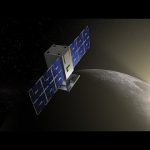
How can a satellite the size of a microwave oven help shape human missions to the Moon and beyond?
CAPSTONE will fly in a unique, halo-shaped orbit around the Moon before the orbit is used by Gateway, NASA’s future lunar outpost for our Artemis program. The CAPSTONE mission, short for Cislunar Autonomous Positioning System Technology Operations and Navigation Experiment, will validate navigation technologies and orbital dynamics for Gateway, which will one day serve as a staging area for missions to the Moon and potentially as a jumping point for missions to Mars.
The CubeSat will come within 1,000 miles of one lunar pole on its near pass and 43,500 miles from the other pole at its peak every seven days, requiring less propulsion capability for spacecraft flying to and from the Moon’s surface than other circular orbits. It’s a six-month mission that will help launch a new era of exploration.
CAPSTONE will lift off aboard a Rocket Lab Electron rocket from New Zealand. The mission is targeted to launch no earlier than June 25, 2002.
A new crew launches to the space station, another crew wraps up an historic mission to the station, and more time to explore for some planetary science missions … a few of the stories to tell you about – This Week at NASA!
Launching a new Earth-observing satellite, things continue to line up for the James Webb Space Telescope, and imagining the future of aviation … a few of the stories to tell you about – This Week at NASA!
Producer: Andre Valentine Editor: Lacey Young Music: Universal Production Music
Celebrate #WomensHistoryMonth with us as we pay tribute to scientists, engineers, astronauts, and leaders who continue to pave the way for future generations of explorers.
Get to know some of their stories: nasa.gov/women
Featured women: Annie Easley (00:16) Helen Ling (00:32) Dr. Patricia Cowings (00:41) Jackie Quinn, Ph.D (1:03) Ginger Kerrick (1:27)
As part of Agenda 2025, ESA will take preparatory steps towards a sample return mission from the moons of giant planets, and will foster innovation by challenging commercial companies to develop a next generation of competitively priced European space transportation systems.
Space science and planetary exploration have a unique inspirational power for engaging young generations in science, technology, engineering and maths, creating a highly educated workforce for the future.
Collaborating with the European space industry to foster innovation generates economic growth and new revenues, as well as creating new jobs for European citizens. All the money invested in space is spent on Earth.
We are Europe’s gateway to space. Our mission is to shape the development of Europe’s space capability and ensure that investment in space continues to deliver benefits to the citizens of Europe and the world. Check out https://www.esa.int/ to get up to speed on everything space related.
A new class of astronaut candidates, highlighting the next era of space communications, and a new x-ray satellite mission … a few of the stories to tell you about – This Week at NASA!
The world’s next generation cosmic observatory, the James Webb Space Telescope, is due for launch on an Ariane 5 from Europe’s Spaceport in French Guiana in late December.
Developed and constructed over more than 30 years, Webb is a remarkable feat of engineering and technology – with the largest astronomical mirror ever flown in space, sophisticated new scientific instruments, and a sunshield the size of a tennis court.
Webb is an international partnership between @NASA, ESA and the @Canadian Space Agency and will reveal the Universe in a whole new light. Optimised for infrared wavelengths, its detectors will be able to look back to shortly after the very dawn of time, revealing the formation of the first galaxies, as well as study stars and planets in our own Milky Way.
We are Europe’s gateway to space. Our mission is to shape the development of Europe’s space capability and ensure that investment in space continues to deliver benefits to the citizens of Europe and the world. Check out https://www.esa.int/ to get up to speed on everything space related.
We are Europe’s gateway to space. Our mission is to shape the development of Europe’s space capability and ensure that investment in space continues to deliver benefits to the citizens of Europe and the world. Check out https://www.esa.int/ to get up to speed on everything space related.
A new Earth-observing mission launches to space, a move to make room aboard the space station, and some valuable space station science returns to Earth … a few of the stories to tell you about – This Week at NASA!
The European Astro Pi Challenge offers young people from age 7 up to 19 years the chance to run their code in space. This year students can take their codes for Mission Space Lab to the next level thanks to two brand new Astro Pi computers offering new experiment capabilities.
We are Europe’s gateway to space. Our mission is to shape the development of Europe’s space capability and ensure that investment in space continues to deliver benefits to the citizens of Europe and the world. Check out https://www.esa.int/ to get up to speed on everything space related.
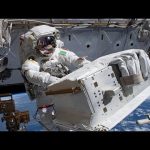
SPACEWALK COMING SOON: Join us live from space on Sun. June 20 at 6:30 a.m. EDT (10:30 UTC) to cheer on NASA astronaut Shane Kimbrough and European Space Agency astronaut Thomas Pesquet as they continue work installing new, roll-up solar arrays on the International Space Station. Once their spacesuits are set to battery power around 8 a.m. EDT (12:00 UTC), the duo will spend about 6.5 hours in the vacuum of space on this demanding task.
Set a reminder to watch this special job performed live!
Installing new solar arrays for the space station, updating launch and landing dates for Commercial Crew, and NASA’s new deputy administrator is confirmed … a few of the stories to tell you about – This Week at NASA!
After more than 20 years, the International Space Station is getting new solar arrays, and you have the chance to watch it LIVE during a spacewalk! On June 16, Shane Kimbrough of NASA Astronauts and Thomas Pesquet of the European Space Agency will venture into the vacuum of space for ~6.5 hours to install and deploy two roll-out solar arrays on the space station.
Coverage starts at 6:30 a.m. EDT (10:30 UTC). Set a reminder to watch this special job performed live!
Learn about two new future missions to Venus and other reasons why the State of NASA is strong and exciting, launching supplies to the space station, and more good news for OSIRIS-REx … a few of the stories to tell you about – This Week at NASA!
NASA is introducing the Earth System Observatory – an array of satellites, instruments and missions that are going to collect a series of critical observations. These observations will better inform us of how our planet is changing with greater precision on unimaginable scales – from entire continents down to individual trees.
Each mission in itself will deliver important environmental measurements. Taken together, as a single Observatory, we will have a holistic, 3-dimensional understanding of our Earth’s systems – how they work together, how one change can influence another.
For the first time in over a decade, the European Space Agency (ESA) is seeking new astronauts. This one-hour-long briefing with ESA experts and astronauts outlines the selection criteria and desirable traits for astronauts. It also provides further detail around the Parastronaut Feasibility Project and astronaut reserve, as well as ESA’s vision for the next 10 years of human and robotic exploration.
Participants: Jan Wörner, ESA Director General Samantha Cristoforetti, ESA astronaut Tim Peake, ESA astronaut David Parker, ESA Director of Human and Robotic Exploration Frank De Winne, Head of the European Astronaut Centre Jennifer Ngo-Anh, ESA Research and Payloads Programme Coordinator Lucy van der Tas, ESA Head of Talent Acquisition
Moderator: Ninja Menning, Communication Department
We are Europe’s gateway to space. Our mission is to shape the development of Europe’s space capability and ensure that investment in space continues to deliver benefits to the citizens of Europe and the world. Check out https://www.esa.int/ to get up to speed on everything space related.
A new source of power for the space station, targeting a second Green Run hot fire test, and another major boost for our Space Launch System rocket … a few of the stories to tell you about – This Week at NASA!
Few conflicts have rivaled the scale and destruction of the Punic wars fought between Rome and Carthage. In this first episode I set the stage for a conflict that will reshape history!
Sources:
“The Fall of Carthage” by Adrian Goldsworthy
“In the Name of Rome” by Adrian Goldsworthy
“The Rise of Rome” by Anthony Everitt
The gameplay comes from Total War: Rome 2
“Please note this is an unofficial video and is not endorsed by SEGA or the Creative Assembly in any way. For more information on Total War, please visit www.totalwar.com.”
New crew safely aboard the space station, a launch update on another space station mission, and an international agreement on Artemis … a few of the stories to tell you about – This Week at NASA!
Tune in LIVE as three space travelers launch to the International Space Station on Wednesday, Oct. 14, at 1:45 a.m. EDT.
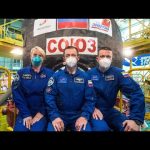
Astronaut Kate Rubins of NASA, and Sergey Ryzhikov and Sergey Kud-Sverchkov of the Russian space agency Roscosmos will lift off aboard the Soyuz MS-17 spacecraft for a two-orbit, three-hour journey to dock to the orbiting laboratory. Live coverage of the launch begins at 12:45 a.m. EDT.
This is the second trip to space for both Rubins and Ryzhikov, and the first for Kud-Sverchkov. During their six-month mission, they will welcome SpaceX Crew-1 astronauts Mike Hopkins, Victor Glover and Shannon Walker of NASA, and Soichi Noguchi of JAXA (Japan Aerospace Exploration Agency).
The Copernicus Sentinel-2 mission takes us over New York City – the most populous city in the United States, in this week’s edition of the Earth from Space programme.
We are Europe’s gateway to space. Our mission is to shape the development of Europe’s space capability and ensure that investment in space continues to deliver benefits to the citizens of Europe and the world. Check out http://www.esa.int/ESA to get up to speed on everything space related.
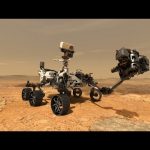
A new lead selected for our human spaceflight efforts, the new core capability of our next Mars rover, and news about our future VIPER lunar robot … a few of the stories to tell you about – This Week at NASA!
This video is available for download from NASA’s Image and Video Library: https://images.nasa.gov/details-A%20New%20Lead%20for%20Our%20Human%20Spaceflight%20Efforts%20on%20This%20Week%20@NASA%20%E2%80%93%20June%2012,%202020
Preparing to ‘Launch America,’ a cargo spacecraft arrives at the space station, and the detective capabilities of our next Mars rover … a few of the stories to tell you about – This Week at NASA!
This video is available for download from NASA’s Image and Video Library: https://images.nasa.gov/details-Preparing%20to%20Launch%20America%20into%20a%20New%20Era%20of%20Space%20Exploration%20on%20This%20Week%20@NASA%20May%2029,%202020
A new name for our next Mars rover, a new space station resupply mission, and how you can join the Artemis Generation … a few of the stories to tell you about – This Week at NASA!
This video is available for download from NASA’s Image and Video Library: https://images.nasa.gov/details-NHQ_2020_0307_A%20New%20Name%20for%20Our%20Next%20Mars%20Rover%20on%20This%20Week%20@NASA%20%E2%80%93%20March%207,%202020
A budget for a new era of space exploration, do you have what it takes to be an astronaut? And Christina Koch reflects on her record-setting mission … a few of the stories to tell you about – This Week at NASA!
This video is available for download from NASA’s Image and Video Library: https://images.nasa.gov/details-NHQ_2020_0214_%20A%20Budget%20for%20a%20New%20Era%20of%20Space%20Exploration%20on%20This%20Week%20@NASA%20%E2%80%93%20February%2014,%202020
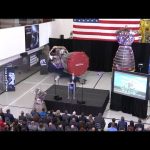
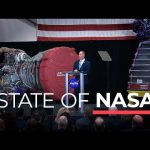
What have we accomplished and what’s ahead in our mission to explore the Moon, Mars and worlds beyond? On Feb. 10, NASA Administrator Jim Bridenstine unveils the “State of NASA” and shares details of the FY2021 Budget and more.
Bridenstine shared that “President Donald Trump’s Fiscal Year 2021 budget for NASA is worthy of 21st century exploration and discovery. The President’s budget invests more than $25 billion in NASA to fortify our innovative human space exploration program while maintaining strong support for our agency’s full suite of science, aeronautics, and technology work.”
“The budget proposed represents a 12 percent increase and makes this one of the strongest budgets in NASA history. The reinforced support from the President comes at a critical time as we lay the foundations for landing the first woman and the next man on the South Pole of the Moon by 2024. This budget keeps us firmly on that path.”
To learn more about NASA’s Fiscal Year 2021 budget, visit:
A new cooling system for a device on the space station, first results from the first spacecraft to touch the Sun, and preparing Orion for some critical testing … a few of the stories to tell you about – This Week at NASA!
This video is available for download from NASA’s Image and Video Library: https://images.nasa.gov/details-NHQ_2019_1206_New%20Cooling%20System%20for%20a%20Device%20on%20the%20Space%20Station%20on%20This%20Week%20@NASA%20%E2%80%93%20December%206,%202019
NASA has added five American companies — Blue Origin, Ceres Robotics, Sierra Nevada Corporation, SpaceX and Tyvak Nano-Satellite Systems Inc. — to the pool of vendors that will be eligible to bid on proposals to provide deliveries to the surface of the Moon through the agency’s Commercial Lunar Payload Services (CLPS) initiative. News release: https://go.nasa.gov/2Xr4MK9
At NASA Headquarters on Oct. 15, 2019, Administrator Jim Bridenstine introduced the Exploration Extravehicular Mobility Unit (xEMU) and Orion Crew Survival System suit which will be will be worn by first woman and next man as they explore the Moon as part of the #Artemis program.
New arrivals in low-Earth orbit – welcome aboard the space station! More research, supplies, and other cargo heads to the station, and a new partner for our Moon to Mars effort … a few of the stories to tell you about – This Week at NASA!
This video is available for download from NASA’s Image and Video Library:https://images.nasa.gov/details-NHQ_2019_0927_New%20Arrivals%20Welcomed%20Aboard%20the%20Space%20Station%20on%20This%20Week%20@NASA%20–%20September%2027,%202019.html
The latest opportunity for payload delivery services to the Moon, new partnerships to help advance the commercial space business, and a “hat trick” for one of our planet-hunting spacecraft … a few of the stories to tell you about – This Week at NASA!
This video is available for download from NASA’s Image and Video Library: https://images.nasa.gov/details-NHQ_2019_0802_A%20New%20Opportunity%20to%20Deliver%20Payloads%20to%20the%20Moon%20on%20This%20Week%20@NASA%20%E2%80%93%20August%202,%202019.html
We strive for the future of Europe in space and key to this endeavour is maintaining access to space.
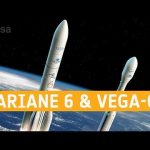
This objective is accomplished by supporting the development of new launch vehicles and next year will be an important year: Vega-C and Ariane 6 will fly for the first time.
Vega-C is an enhanced version of Europe’s current Vega, with increased power and capacity.
Ariane 6 is Europe’s next heavy-lift launcher which will replace Ariane 5. With Ariane 6 the approach is evolving for the assembly and production processes, and also in the sharing of responsibilities between us and Industry.
In parallel to preparing a new generation of launchers, we are also working on its first reusable spacecraft, Space Rider, that will fly on top of a Vega-C and which should be confirmed at Space19+, the Ministerial Conference in Seville in November 2019.
Already, the future of European Space transportation is clearly visible in Kourou where Vega-C and Ariane 6 are step-by-step becoming a reality.
★ Subscribe: http://bit.ly/ESAsubscribe and click twice on the bell button to receive our notifications.
We are Europe’s gateway to space. Our mission is to shape the development of Europe’s space capability and ensure that investment in space continues to deliver benefits to the citizens of Europe and the world. Check out http://www.esa.int/ESA to get up to speed on everything space related.
A key milestone for our lunar Gateway, “rolling out” for a critical Orion safety test, and a chance to send your name to Mars … a few of the stories to tell you about – This Week at NASA!
This video is available for download from NASA’s Image and Video Library: https://images.nasa.gov/details-NHQ_2019_0524_A%20New%20Partnership%20to%20Power%20The%20Lunar%20Gateway%20on%20This%20Week%20@NASA%20%E2%80%93%20May%2024,%202019.html
ESA is Europe’s gateway to space. Our mission is to shape the development of Europe’s space capability and ensure that investment in space continues to deliver benefits to the citizens of Europe and the world. Check out http://www.esa.int/ESA to get up to speed on everything space related.
Pollyanna is a best-selling 1913 novel by Eleanor H. Porter that is now considered a classic of children’s literature, with the title character’s name becoming a popular term for someone with the same very optimistic outlook:[1] a subconscious bias towards the positive is often described as the Pollyanna principle. The book was such a success that Porter soon produced a sequel, Pollyanna Grows Up (1915). Eleven more Pollyanna sequels, known as “Glad Books”, were later published, most of them written by Elizabeth Borton or Harriet Lummis Smith. Further sequels followed, including Pollyanna Plays the Game by Colleen L. Reece, published in 1997.
With our Moon to Mars effort underway, a new administrator takes over to lead the charge, and – oh yeah – we stuck another nearly flawless landing on Mars! All that and more as we look back at what happened This Year @ NASA!
This video is available for download from NASA’s Image and Video Library: https://images.nasa.gov/details-NHQ_2018_1217_NASA%20Begins%20America%E2%80%99s%20New%20Moon%20to%20Mars%20Exploration%20Approach%20in%202018%20-%20The%20Year%20@NASA.html
The space station’s newest crew members are safely onboard, our first asteroid sample return mission arrives at its destination, and the first sounds from Mars … a few of the stories to tell you about – This Week at NASA!
This video is available for download from NASA’s Image and Video Library: https://images.nasa.gov/details-NHQ_2018_1207_New%20Crewmembers%20Onboard%20the%20Space%20Station%20on%20This%20Week%20@NASA%20%E2%80%93%20December%207,%202018.html