In orbit for more than a decade, ESA’s Earth Explorer satellite SMOS has not only exceeded its planned lifespan, but also surpassed its original scientific goals. Built to demonstrate new technology in space and address gaps in our scientific understanding of how Earth works as a system, this remarkable mission is now also being used for a number of practical applications. With drought seemingly more commonplace, entrepreneurs are using information on soil moisture from SMOS and data from other satellites to generate commercial data products for the insurance market, ultimately bringing benefits to farmers.
★ Subscribe: http://bit.ly/ESAsubscribe and click twice on the bell button to receive our notifications.
We are Europe’s gateway to space. Our mission is to shape the development of Europe’s space capability and ensure that investment in space continues to deliver benefits to the citizens of Europe and the world. Check out http://www.esa.int/ESA to get up to speed on everything space related.
ESA astronauts Samantha Cristoforetti and Luca Parmitano join the 2019/20 Moon Camp Challenge winning teams for a 1-hour webinar. Connecting from all over the world, the teams have their questions answered live by the ESA astronauts.
★ Subscribe: http://bit.ly/ESAsubscribe and click twice on the bell button to receive our notifications.
We are Europe’s gateway to space. Our mission is to shape the development of Europe’s space capability and ensure that investment in space continues to deliver benefits to the citizens of Europe and the world. Check out http://www.esa.int/ESA to get up to speed on everything space related.
With around two and half hours set aside for exercise every day, skipping the gym is not an option for astronauts on the International Space Station. ESA’s team of astronaut trainers are responsible for developing specialised training programmes to prepare astronauts for spaceflight and combat the effects of microgravity on the body.Astronaut Fitness Expert, Dr. Nora Petersen, discusses training astronauts and how the programme may change for future missions to the Moon and Mars.
We are Europe’s gateway to space. Our mission is to shape the development of Europe’s space capability and ensure that investment in space continues to deliver benefits to the citizens of Europe and the world. Check out http://www.esa.int/ESA to get up to speed on everything space related.
** English and German subtitles are available for this clip under settings, subtitles/CC. **
ESA astronaut Matthias Maurer travelled to Houston, USA for training at NASA’s Johnson Space Center. In this video he shares his first few weeks of refresher training, with a glimpse behind the scenes.
Matthias travelled to Houston, USA from Europe with fellow ESA astronaut Thomas Pesquet. Thomas has flown to the International Space Station before, while Matthias is training for his first Space Station mission. Mission dates are yet to be confirmed, but as the next two ESA astronauts in line for flights, the pair are working to ensure they fully trained and ready.
Due to the current situation with COVID-19, all personnel are required to adhere to special safety precautions while training. These include wearing a mask – as seen in the clip.
Matthias will continue his training in Houston over the next weeks and months. Stay tuned for further footage of his training and experiences.
We are Europe’s gateway to space. Our mission is to shape the development of Europe’s space capability and ensure that investment in space continues to deliver benefits to the citizens of Europe and the world. Check out http://www.esa.int/ESA to get up to speed on everything space related.
We are Europe’s gateway to space. Our mission is to shape the development of Europe’s space capability and ensure that investment in space continues to deliver benefits to the citizens of Europe and the world. Check out http://www.esa.int/ESA to get up to speed on everything space related.
Soon a Vega will launch from Kourou carrying a payload of several satellites. These will be delivered into orbit by a new multi-payload system developed by ESA. Among these small satellites, E-SAIL. This microsatellite is dedicated to supporting maritime traffic and making seafaring safer. It is part of ESA’s SAT-AIS programme, which aims is to increase the coverage of the Automatic Identification System for ships. This system is a short-range coastal tracking system currently used on ships that makes traffic safer but which has a limited range. With microsatellites from the SAT-AIS programme such as E-SAIL maritime shipping can be made safer across the oceans.
★ Subscribe: http://bit.ly/ESAsubscribe and click twice on the bell button to receive our notifications.
We are Europe’s gateway to space. Our mission is to shape the development of Europe’s space capability and ensure that investment in space continues to deliver benefits to the citizens of Europe and the world. Check out http://www.esa.int/ESA to get up to speed on everything space related.
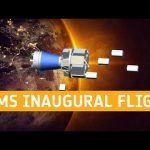
Multiple small satellites will be launched at once on the Vega VV16 mission from Europe’s Spaceport in Kourou, French Guiana. This flight will demonstrate the modular SSMS dispenser resting on its upper stage intended to bring routine affordable launch opportunities for light satellites from 0.2 kg CubeSats up to 400 kg minisatellites.
Until now the smallest classes of satellites – all the way down to tiny CubeSats, built from 10 cm modular boxes – have typically ‘piggybacked’ to orbit. They have to make use of any spare capacity as a single large satellite is launched, meaning their overall launch opportunities are limited.
The new Vega Small Spacecraft Mission Service switches this into a ‘rideshare’ model, with multiple small satellites being flown together, splitting the launch cost.
SAB Aeropsace in the Czech Republic and Bercella in Italy designed and manufactured this modular dispenser for ESA’s Vega prime contractor Avio. The component structures are made of very low-density aluminium ‘sandwich’ panels protected by carbon fibre reinforced polymer skins. This makes it very lightweight and rigid.
The SSMS comprises two main sections, the hexagonal lower section can hold six nanosatellites or up to a dozen CubeSat deployers while the upper section section is used for microsatellites, minisatellites and small satellites. The lower section can also be used independently, coupled with a larger satellite replacing the top section.
The hexagonal module, a central column, towers, a supporting platform and a set of standard satellite interface spacers are assembled to suit each mission and combination of satellites. For this flight, a configuration called Flexi-3 weighing just 330 kg is being used.
This demonstration flight aims to prove the technical and financial viability of the rideshare service. ESA has collaborated with the European Union, which has partly funded this mission within the Horizon 2020 programme. This is part of the Contribution Agreement between ESA and the EU on space technology activities signed on 16 April 2019.
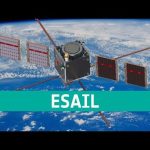
The animation shows the separation of the ESAIL mission which is a joint ESA LuxSpace project to extend the monitoring of maritime traffic beyond existing land-based tracking of Automatic Identification Systems (AIS) through the means of an array of microsatellites: SAT-AIS.
★ Subscribe: http://bit.ly/ESAsubscribe and click twice on the bell button to receive our notifications.
We are Europe’s gateway to space. Our mission is to shape the development of Europe’s space capability and ensure that investment in space continues to deliver benefits to the citizens of Europe and the world. Check out http://www.esa.int/ESA to get up to speed on everything space related.
Professionals in the space sector don’t try to predict the future, but a dedicated team prepares for it. The Advanced Concepts Team (ACT) is ESA’s multidisciplinary team of future concepts researchers that explore solutions to potential problems in space many decades from now. Young Graduate Trainee Belinda Rich works on Advanced Materials for Space Habitats and discusses the ACT’s work in this area as well as in artificial intelligence, fundamental physics, neuroscience, energy systems, mission analysis and more.
We are Europe’s gateway to space. Our mission is to shape the development of Europe’s space capability and ensure that investment in space continues to deliver benefits to the citizens of Europe and the world. Check out http://www.esa.int/ESA to get up to speed on everything space related.
We are Europe’s gateway to space. Our mission is to shape the development of Europe’s space capability and ensure that investment in space continues to deliver benefits to the citizens of Europe and the world. Check out http://www.esa.int/ESA to get up to speed on everything space related.
A lot goes into planning a space mission, including how to de-orbit the spacecraft once it completes its mission. Systems engineer Sara Morales Serrano of ESA’s Clean Space office discusses the problem of space debris and the tools available to clean up space.
We are Europe’s gateway to space. Our mission is to shape the development of Europe’s space capability and ensure that investment in space continues to deliver benefits to the citizens of Europe and the world. Check out http://www.esa.int/ESA to get up to speed on everything space related.
Workers are returning to Europe’s Spaceport in Kourou, French Guiana to resume preparations for Vega and Ariane 5 launches. Construction of the new Ariane 6 launch pad has also restarted.
COVID-19 lockdown measures introduced in March meant that all but safety-critical operations were suspended at the Spaceport and the vast site had to be secured. Strict new safety and hygiene procedures have now been introduced. Launch teams returning from mainland Europe will spend two weeks in quarantine.
Vega is due to return to flight this summer on its first rideshare mission dedicated to small satellites and Vega’s new dispenser called the Small Spacecraft Mission Service.
★ Subscribe: http://bit.ly/ESAsubscribe and click twice on the bell button to receive our notifications.
We are Europe’s gateway to space. Our mission is to shape the development of Europe’s space capability and ensure that investment in space continues to deliver benefits to the citizens of Europe and the world. Check out http://www.esa.int/ESA to get up to speed on everything space related.
Earth observation satellites are guardians of our planet. Thanks to remote sensing technology and daily data collection, researchers are able to better monitor our planet’s oceans and rising sea levels from space. ESA senior advisor for Earth Observation programmes Jérôme Beneviste explains how ocean views from space play a role in climate change studies and natural catastrophe predictions.
We are Europe’s gateway to space. Our mission is to shape the development of Europe’s space capability and ensure that investment in space continues to deliver benefits to the citizens of Europe and the world. Check out http://www.esa.int/ESA to get up to speed on everything space related.
The Copernicus Sentinel-2 mission takes us over part of Abu Dhabi – one of the seven emirates that constitute the United Arab Emirates (UAE), in this week’s edition of the Earth from Space programme.
We are Europe’s gateway to space. Our mission is to shape the development of Europe’s space capability and ensure that investment in space continues to deliver benefits to the citizens of Europe and the world. Check out http://www.esa.int/ESA to get up to speed on everything space related.
The Artemis programme is bringing humans back to the Moon. It depends heavily on NASA’s Orion spacecraft that consists of a crew module and the European Service Module, which will provide propulsion, life support, environmental control and electrical power. Main contractor Airbus has just been green-lighted by ESA to develop a third European Service Module.
We are Europe’s gateway to space. Our mission is to shape the development of Europe’s space capability and ensure that investment in space continues to deliver benefits to the citizens of Europe and the world. Check out http://www.esa.int/ESA to get up to speed on everything space related.
Cold, dark, remote, Antarctica is as close to space as you can get on Earth. Humans conduct research in Antarctic bases on a wide range of topics, from climate studies and astronomy to glaciology and human physiology and psychology. Dr. Stijn Thoolen, the ESA-sponsored research doctor based at the French/Italian Concordia research station in Antarctica, discusses life in isolation in what is often referred to as White Mars.
We are Europe’s gateway to space. Our mission is to shape the development of Europe’s space capability and ensure that investment in space continues to deliver benefits to the citizens of Europe and the world. Check out http://www.esa.int/ESA to get up to speed on everything space related.
NASA’s WFIRST mission will explore the universe, seeking answers to some of its biggest mysteries. From understanding the nature of dark energy to studying planets outside our solar system, this mission will expand our view of the cosmos. Join experts Wednesday, May 20 at 11 a.m. ET for an exciting announcement about the WFIRST mission.
With the Covid-19 pandemic halting our daily lives and forcing many countries and region into lockdown, the economic effects have been devastating. Closed borders have caused traffic jams and disrupted supply chains. In Europe, for example, the agriculture industry has suffered. Normally the industry relies on migrant labour to harvest crops, but as the lockdown continues, crops remain unpicked – putting farmers and the food supply under pressure. How can the food supply chain more sustainable?
★ Subscribe: http://bit.ly/ESAsubscribe and click twice on the bell button to receive our notifications.
We are Europe’s gateway to space. Our mission is to shape the development of Europe’s space capability and ensure that investment in space continues to deliver benefits to the citizens of Europe and the world. Check out http://www.esa.int/ESA to get up to speed on everything space related.
Unitevi all’astronauta ESA Samantha Cristoforetti per una visita guidata agli alloggi dell’equipaggio della Stazione Spaziale Internazionale – la camera da letto.
Dopo una giornata di lavoro ad eseguire esperimenti e a mantenere attivo il centro di ricerca in microgravità, gli astronauti possono ritirarsi nel proprio alloggio privato, che non è più grande di un un camerino. In questo piccolo spazio possono riporre oggetti personali, utilizzare un laptop per navigare in Internet e addormentarsi fluttuando nel proprio sacco a pelo.
We are Europe’s gateway to space. Our mission is to shape the development of Europe’s space capability and ensure that investment in space continues to deliver benefits to the citizens of Europe and the world. Check out http://www.esa.int/ESA to get up to speed on everything space related.
As the COVID-19 pandemic has disrupted lives across the globe, Earth-observing satellites take the pulse of our planet from space. While the global lockdown has had a massive impact on daily life and the economy, there have been environmental benefits that are visible from space. How can we preserve these positives when returning to ‘business as usual’?
★ Subscribe: http://bit.ly/ESAsubscribe and click twice on the bell button to receive our notifications.
We are Europe’s gateway to space. Our mission is to shape the development of Europe’s space capability and ensure that investment in space continues to deliver benefits to the citizens of Europe and the world. Check out http://www.esa.int/ESA to get up to speed on everything space related.
We are Europe’s gateway to space. Our mission is to shape the development of Europe’s space capability and ensure that investment in space continues to deliver benefits to the citizens of Europe and the world. Check out http://www.esa.int/ESA to get up to speed on everything space related.
Featuring how the Sentinel-5P mission of the European Union’s Copernicus Programme has become a game-changer for monitoring our atmosphere while being one of the most important sources of data for the Copernicus Atmosphere Monitoring Service.
★ Subscribe: http://bit.ly/ESAsubscribe and click twice on the bell button to receive our notifications.
We are Europe’s gateway to space. Our mission is to shape the development of Europe’s space capability and ensure that investment in space continues to deliver benefits to the citizens of Europe and the world. Check out http://www.esa.int/ESA to get up to speed on everything space related.
Join NASA ice experts as we discuss important science about Earth’s icy regions, and how it can impact us here in warmer environments. NASA’s ICESat-2 mission uses a laser instrument on a satellite to precisely measure ice and just released new findings about how Earth’s ice is changing. Scientists discovered that enough ice has melted from Antarctica and Greenland to rise sea level about half an inch over the last 16 years. We’ll talk to these researchers to see what that means, and then take you to the coast of Virginia to see the real-world impacts of Earth’s melting ice.
We are Europe’s gateway to space. Our mission is to shape the development of Europe’s space capability and ensure that investment in space continues to deliver benefits to the citizens of Europe and the world. Check out http://www.esa.int/ESA to get up to speed on everything space related.
Have you heard about an asteroid close-approach happening on April 29? Asteroid 1998 OR2 poses no threat to our planet, but we can still learn a lot by studying it. Don’t miss a special Planetary Defense episode of NASA Science Live on Monday, April 27 at 3:00 p.m. EDT to learn how we find, track and monitor asteroids and near-Earth Objects.
Take a break with ESA astronauts Alexander Gerst, Samantha Cristoforetti, Luca Parmitano and Thomas Pesquet as they discuss living and working in space. In this video, our astronauts talk about their experiences of landing in a Russian Soyuz spacecraft upon returning from the International Space Station.
During a shared coffee break, Luca compares his first landing to his most recent landing – the second of which he found much softer than the first. Thomas finds humour in his experience of landing horizontally, while Alex describes a particularly high gravitational load on his return to Earth.
This clip is part of a series of four filmed in February 2020, following Luca’s return from the ISS mission on 6 February. It was filmed in the crew quarters of the German Aerospace Center DLR’s :envihab facility next to ESA’s European Astronaut Centre in Cologne, Germany.
For more about Luca’s Beyond mission and other ESA astronaut-related content, visit the Exploration blog: https://blogs.esa.int/exploration/
★ Subscribe: http://bit.ly/ESAsubscribe and click twice on the bell button to receive our notifications.
We are Europe’s gateway to space. Our mission is to shape the development of Europe’s space capability and ensure that investment in space continues to deliver benefits to the citizens of Europe and the world. Check out http://www.esa.int/ESA to get up to speed on everything space related.
Each year, the NASA/ESA Hubble Space Telescope dedicates a small portion of its precious observing time to taking a special anniversary image, showcasing particularly beautiful and meaningful objects. These images continue to challenge scientists with exciting new surprises and to enthral the public with ever more evocative observations.
To celebrate Hubble’s 30th anniversary, let’s look back at the beauty and science behind each of the anniversary images unveiled as of 2005. In this video, we will also feature the very special 2020 Hubble Space Telescope 30th anniversary image.
Credit:
Directed by: Bethany Downer
Visual design and editing: Martin Kornmesser
Written by: Bethany Downer
Narration: Sara Mendes da Costa
Images & VIdeos: NASA, ESA, M.Kornmesser, L. Calçada, ESO, NAOJ, G. Bacon, L. Frattare, Z. Levay and F. Summers (STScI/AURA), D. Lennon and E. Sabbi (ESA/STScI), J. Anderson, S.E. de Mink, R. van der Marel, T. Sohn, and N. Walborn (STScI), L. Bedin (INAF, Padua), C. Evans (STFC), H. Sana (Amsterdam), N. Langer (Bonn), P. Crowther (Sheffield), A. Herrero (IAC, Tenerife), N. Bastian (USM, Munich), and E. Bressert (ESO), the Hubble Heritage Team, T. Davis, L. Frattare, Z. Levay, (Viz 3D team, STScI), J. Anderson (STScI), the Hubble Heritage Team (STScI/AURA), A. Nota (ESA/STScI), and the Westerlund 2 Science Team, Eckhard Slawik (e.slawik@gmx.net).
Music: Johan B. Monell (www.johanmonell.com
Web and technical support: Raquel Yumi Shida
Executive producer: Mariya Lyubenova
★ Subscribe: http://bit.ly/ESAsubscribe and click twice on the bell button to receive our notifications.
We are Europe’s gateway to space. Our mission is to shape the development of Europe’s space capability and ensure that investment in space continues to deliver benefits to the citizens of Europe and the world. Check out http://www.esa.int/ESA to get up to speed on everything space related.
On 24 April 1990 the NASA/ESA Hubble Space Telescope was sent into orbit aboard the space shuttle Discovery, the first space telescope of its kind. It offered a new view of the Universe and has, for 30 years, reached and surpassed all expectations, beaming back data and images that have changed scientists’ understanding of the Universe and the public’s perception of it. Hubble’s discoveries have revolutionised nearly all areas of current astronomical research, from planetary science to cosmology, and its pictures are unmistakably out of this world.
This video revisits some of Hubble’s biggest science discoveries throughout its three decades of operation to celebrate the telescope’s 30th anniversary.
Credit:
Directed by: Bethany Downer
Visual design and editing: Martin Kornmesser
Written by: Bethany Downer
Narration: Sara Mendes da Costa
Images & Videos: NASA, ESA, M.Kornmesser, L. Calçada, ESO, G. Bacon (STScI), theHubble Heritage Team (STScI/AURA)-ESA/Hubble Collaboration, and H. Bond (STScI and Pennsylvania State University), A. Feild (STScI), and A. Riess (STScI/JHU), D. Jewitt (UCLA), F. Summers, Z. Levay, J. DePasquale, L. Hustak, L. Frattare, M. Robberto (STScI), R. Hurt (Caltech/IPAC) Acknowledgement: R. Gendler, spaceengine.org.
Music: Johan B. Monell (www.johanmonell.com)
Web and technical support: Raquel Yumi Shida
Executive producer: Mariya Lyubenova
★ Subscribe: http://bit.ly/ESAsubscribe and click twice on the bell button to receive our notifications.
We are Europe’s gateway to space. Our mission is to shape the development of Europe’s space capability and ensure that investment in space continues to deliver benefits to the citizens of Europe and the world. Check out http://www.esa.int/ESA to get up to speed on everything space related.
This month marks the 30th anniversary of the international Hubble Space Telescope.
Launched on 24 April 1990, and deployed from the Space Shuttle Discovery cargo bay a day later (25 April 1990), the telescope has given us a new perspective on the Universe.
The joint NASA/ESA mission has shown us distant galaxies and spectacular nebulae. It has revealed supermassive black holes and planets in distant solar systems; and has proved that the Universe is not only expanding, the expansion is accelerating.
Hubble’s mission has also been eventful. When it was first launched, a defect in the mirror meant it sent back blurry images. Since then, five servicing missions have enabled the telescope to be improved and upgraded. Today, it is still going strong.
We are Europe’s gateway to space. Our mission is to shape the development of Europe’s space capability and ensure that investment in space continues to deliver benefits to the citizens of Europe and the world. Check out http://www.esa.int/ESA to get up to speed on everything space related.
The Copernicus Sentinel-2 mission takes us over part of the Namib Desert, considered the oldest desert on Earth, in this week’s edition of the Earth from Space programme.
We are Europe’s gateway to space. Our mission is to shape the development of Europe’s space capability and ensure that investment in space continues to deliver benefits to the citizens of Europe and the world. Check out http://www.esa.int/ESA to get up to speed on everything space related.
In these times of confinement, ESA astronaut support engineer Romain Charles shares nine tips on how to live in isolation – he spent 520 days locked in a mockup spacecraft and is a true expert on the subject.
Mars500 locked six ‘marsonauts’ in a simulated spaceship near Moscow, Russia for 520 days, the time it would take to fly to Mars and back plus 30 days spent exploring its surface. It was the first full-length, high-fidelity simulation of a human mission to our neighbouring planet. The crew went into lockdown on 3 June 2010, and they did not open the hatch until 17 months later on 4 November 2011.
Mars 500 was a success in that it proved that humans can survive the inevitable isolation that is needed for a mission to Mars and back. Psychologically, we can do it!
The crew had their ups and downs, but these were to be expected. In fact, scientists anticipated many more problems, but the crew did very well coping with the monotonous mission, with little variation in food and even a communication delay over 12 minutes one-way.
During their simulated mission, the crew lived in isolation without fresh food, sunlight or fresh air. The participants from Italy, Russia, China and France had no external cues such as the Sun going down at night to remind them when to sleep.
Their bodies are among the most researched in the world. Years of constant monitoring, prodding and taking blood allowed scientists examined how they reacted to the time in confinement with experiments focussing on their bodies, mental states and performance.
More on Mars 500: www.esa.int/Mars500
★ Subscribe: http://bit.ly/ESAsubscribe and click twice on the bell button to receive our notifications.
We are Europe’s gateway to space. Our mission is to shape the development of Europe’s space capability and ensure that investment in space continues to deliver benefits to the citizens of Europe and the world. Check out http://www.esa.int/ESA to get up to speed on everything space related.
Happy Earth Day! Join NASA experts on the 50th anniversary of Earth Day as we explore important discoveries made about our planet, talk with teams creating green technology that benefits life on Earth, explore a new type of aircraft making flight greener and cleaner, and hear from a NASA inventor who has turned coral reef science into an interactive app that allows you to participate in science from home. Celebrate #EarthDayatHome with NASA.
In summer 2018, ESA joined with the musician Vangelis and the family of scientist Prof. Stephen Hawking to beam a message marking his passing to the nearest black hole. On 22 April 2020, Earth Day, we’re transmitting this poignant message to all of planet Earth – as a message of hope, to say that, by working together, we can overcome this crisis and others facing humankind.
The message reads:
“I am very aware of the preciousness of time. Seize the moment. Act now.
“I have spent my life travelling across the Universe inside my mind. Through theoretical physics I have sought to answer some of the great questions but there are other challenges, other big questions which must be answered, and these will also need a new generation who are interested, engaged and with an understanding of science.
“How will we feed an ever-growing population, provide clean water, generate renewable energy, prevent and cure disease and slow down global climate change?
“I hope that science and technology will provide the answers to these questions, but it will take people, human beings with knowledge and understanding to implement the solution.
“One of the great revelations of the space age has been a perspective that has given humanity on ourselves. When we see the Earth from space we see ourselves as a whole; we see the unity and not the divisions. It is such a simple image, with a compelling message: one planet, one human race.
“We are here together, and we need to live together with tolerance and respect. We must become global citizens.
“I have been enormously privileged through my work to be able to contribute to our understanding of the Universe. But it would be an empty Universe indeed, if it were not for the people I love and who love me.
“We are all time travellers journeying together into the future. But let us work together to make that future a place we want to visit. Be brave, be determined, overcome the odds. It can be done.
We are Europe’s gateway to space. Our mission is to shape the development of Europe’s space capability and ensure that investment in space continues to deliver benefits to the citizens of Europe and the world. Check out http://www.esa.int/ESA to get up to speed on everything space related.
ESA astronaut Luca Parmitano tested new functionality for the astronaut aid Cimon relating to mood detection and enjoyed a few favourite songs on the first weekend of February 2020, his last weekend in space for the Beyond mission on the International Space Station.
Short for Crew Interactive Mobile CompanioN, Cimon is a 3D-printed plastic sphere designed to test human-machine interaction in space. It was developed and built by Airbus in Friedrichshafen and Bremen, Germany, on behalf of German aerospace centre DLR and uses artificial intelligence software by IBM Watson. Ludwig Maximilians University Clinic in Munich (LMU) is in charge of the project’s scientific aspects. Cimon was first used by ESA astronaut Alexander Gerst during his 2018 Horizons.
Cimon weighs around 5 kg on Earth and has a display screen at its centre. Its main aim is to support and increase astronaut efficiency by displaying and explaining information needed to carry out scientific experiments and repairs.
Other applications include mobile photography and videography and the ability to document experiments, search for objects and maintain an inventory. Cimon can also see, hear and understand what it observes and is equipped with an autonomous navigation system, allowing astronauts to issue voice commands like you would to virtual assistants like Alexa, Siri or Cortana on the ground.
Circling our planet at 28 800 km/h the International Space Station offers space for six astronauts to conduct experiments for researchers all over the world in weightlessness as well as test and demonstrate techniques needed to further explore our Solar System.
Europe’s laboratory Columbus was launched over 10 years ago and more than 200 experiments have been done inside. Columbus houses as many disciplines as possible in a small volume, from astrobiology to solar science through metallurgy and psychology. Countless papers have been published drawing conclusions from experiments performed in Columbus, and Cimon is another example of the research conducted in space.
We are Europe’s gateway to space. Our mission is to shape the development of Europe’s space capability and ensure that investment in space continues to deliver benefits to the citizens of Europe and the world. Check out http://www.esa.int/ESA to get up to speed on everything space related.
The Copernicus Sentinel-2 mission takes us over Montevideo – the capital and largest city of Uruguay, in this week’s edition of the Earth from Space programme.
We are Europe’s gateway to space. Our mission is to shape the development of Europe’s space capability and ensure that investment in space continues to deliver benefits to the citizens of Europe and the world. Check out http://www.esa.int/ESA to get up to speed on everything space related.
Is there life beyond Earth? How did life get started on Earth anyway? This season of NASA’s Gravity Assist podcast is about the origins of life on Earth and the search for life elsewhere. Subscribe at https://www.nasa.gov/gravityassist. See all NASA podcasts: www.nasa.gov/podcasts
Hosted by NASA’s Chief Scientist Jim Green, each episode features a conversation with a scientist who has researched some aspect of these questions. We’ll talk about the search for life on Mars, what kind of life might survive on Saturn’s moon Titan, and much more.
With a simple Google Cardboard-style virtual reality (VR) viewer, you can experience how it feels to be a spacecraft hurtling past Earth. This 360-degree VR simulation of a flyby manoeuvre performed by ESA’s Mercury-bound BepiColombo spacecraft takes you on a trip past Earth at the distance of only 12 700 km, closer than the orbit of Europe’s navigational satellites Galileo.
The simulation displays the field of view of two of BepiColombo’s science instruments (MERTIS and PHEBUS) and two of its three MCAM selfie cameras during the gravity-assist flyby at Earth on 10 April 2020.
The simulation was created using the SPICE software developed by NASA’s Jet Propulsion Laboratory and data generated by the European Space and Astronomy Centre (ESAC)in Spain.
BepiColombo, a joint mission of ESA and the Japan Aerospace Exploration Agency (JAXA), is on a seven-year cruise to Mercury, the smallest and innermost planet of the Solar System. Launched in October 2018, BepiColombo follows an intricate trajectory that involves nine gravity-assist flyby manoeuvres. In addition to the flyby at Earth, BepiColombo will perform two flybys at Venus and six at Mercury, its target planet. The manoeuvres slow down the spacecraft as it needs to constantly brake against the gravitational pull of the Sun in order to be able to enter the correct orbit around Mercury in 2025, ahead of commencing science operations in early 2026.
Credit: ESA SPICE Service/RHEA Group.
★ Subscribe: http://bit.ly/ESAsubscribe and click twice on the bell button to receive our notifications.
We are Europe’s gateway to space. Our mission is to shape the development of Europe’s space capability and ensure that investment in space continues to deliver benefits to the citizens of Europe and the world. Check out http://www.esa.int/ESA to get up to speed on everything space related.
Take a tour of the Ariane 6 launch complex and its various facilities filmed on 1 March 2020 at Europe’s Spaceport in French Guiana.
The 8200 tonne 90 metre-high mobile gantry stands over the launch pad. Take a look at the bogies that moved it there. Inside stand two mock-ups of the P120C boosters flanked by work platforms that will enable engineers to access the launch vehicle.
Delve deep under the launch table structure to see engineers working on the launch support systems.
Outside, tour past the liquid hydrogen and oxygen stores and on up to the assembly building where a mock-up of the Ariane 6 core stage is waiting at the entrance. Close by are additional service facilities, and the pumping station that will provide the water to quell the exhaust from the motors at liftoff.
We are Europe’s gateway to space. Our mission is to shape the development of Europe’s space capability and ensure that investment in space continues to deliver benefits to the citizens of Europe and the world. Check out http://www.esa.int/ESA to get up to speed on everything space related.
The Copernicus Sentinel-2 mission takes us over Finistère – a French department in the west of Brittany, in this week’s edition of the Earth from Space programme.
We are Europe’s gateway to space. Our mission is to shape the development of Europe’s space capability and ensure that investment in space continues to deliver benefits to the citizens of Europe and the world. Check out http://www.esa.int/ESA to get up to speed on everything space related.
During Luca’s Mission Beyond, we sent warm wishes to the astronaut on his birthday (27 September) onboard the ISS by gifting a virtual candle to blow out on an Astro Pi.
Astro Pi computers come with a set of sensors and gadgets that can be used to run great scientific experiments by means of computer coding. This set of sensors is called ‘Sense HAT’ (that stands for ‘Hardware Attached on Top’).
The Sense HAT add-on board was specially created for the Astro Pi competition. The board gives Astro Pi the ability to ‘sense’ and make many kinds of measurements, from temperature to movement, and to output information using a special display – the 8×8 LED matrix. The Astro Pis are also equipped with a joystick and buttons – just like a videogame console!
We are Europe’s gateway to space. Our mission is to shape the development of Europe’s space capability and ensure that investment in space continues to deliver benefits to the citizens of Europe and the world. Check out http://www.esa.int/ESA to get up to speed on everything space related.
L’astronauta dell’ESA Samantha Cristoforetti ci mostra come usare la parte meno affascinante, ma di cui spesso si chiede, della vita sulla Stazione Spaziale Internazionale: il bagno.
Un ventola crea aspirazione per evitare cattivi odori e il galleggiamento dei rifiuti. I rifiuti solidi vengono immagazzinati e caricati sulle navette cargo che bruciano quando il veicolo spaziale lascia la Stazione Spaziale. L’urina dell’astronauta viene riciclata – in acqua potabile.
We are Europe’s gateway to space. Our mission is to shape the development of Europe’s space capability and ensure that investment in space continues to deliver benefits to the citizens of Europe and the world. Check out http://www.esa.int/ESA to get up to speed on everything space related.