On Feb. 12, NASA centers across the country hosted “State of NASA” events, following President Trump’s Fiscal Year 2019 budget proposal delivery to the U.S. Congress. The events included an address, by acting NASA Administrator Robert Lightfoot, to the agency’s workforce, from NASA’s Marshall Space Flight Center, in Huntsville, Alabama. During his speech, Lightfoot highlighted how the budget would help the agency achieve its goals for space exploration.
Ginevra Favole is an ESAC research fellow working on the large-scale structures of the universe. Her main scientific field is emission-line galaxies, galaxy clustering and weak gravitational lensing. She also works with mock catalogues and N-body cosmological simulations.
Maggie Lieu is an ESAC research fellow working on Euclid, a visible and near-infrared space telescope due to launch in 2021. By measuring the shapes of distant galaxies we can determine the mass of the largest systems in the Universe, galaxy clusters. Euclid will achieve unprecedented shape measurements of galaxies covering almost half of the extragalactic sky.Maggie is developing statistical methods to deal with this upcoming big, noisy dataset, so that we can better understand the physics of galaxy clusters and theirrolein the Dark Universe.
We did something a little different in this episode and answered questions from you, our viewers. If you have a questions about the universe, past videos, or life as a scientist, leave a comment below!
On 7 February 2008, Space Shuttle Atlantis launched to the International Space Station. In its cargo bay, ESA’s laboratory module Columbus. Now for adecade Columbus has been a part of the ISS. It is the place where ESA astronauts have done countless experiments in microgravity and the scientific importance of the module can hardly be overstated.
How can you train yourself to be a quantum detector? Quantum interactions happen at impossibly small scales. But the life-size effects are all around you. You can detect quantum mechanics all over — if you know how to look for it.
ADVANCED SCIENTIFIC NOTE: Quantum mechanics would be much more obvious if we had very sensitive eyes. If your eyes identified each photon individually, you would see them land as described in the video, and only build up to this wave pattern. The pattern that we see can be explained classically by waves, it is *ultimately* a quantum phenomenon. The only reason it’s hard to tell is because our light detectors (eyes) aren’t quite sensitive enough.
NOVA has teamed up with Cook’s Illustrated to cook up a recipe for stars and black holes – a culinary “course” on how the most mysterious objects in the universe are created.
In episode #313 of Science Goes to the Movies, author and cosmologist Janna Levin joins the show to talk about mathematics in movies like “The Man Who Knew Infinity”—about the life and work of famous mathematician Srinivasa Ramanujan. Levin shares what it was that drove her to write her two books, “How the Universe Got its Spots and Black Hole Blues,” about Kip Thorne’s wild ambition to record the sound of two black holes colliding. She explains the spirit of generosity that compels scientific research and how a mathematical proof can transcend argument. Also included: Levin’s assessment of how black holes are depicted in the film, “Interstellar,” given the fact that no one has ever seen one.
The Moon is a destination, a laboratory for science, a place to learn the skills of planetary exploration, and a source of materials and energy for use on the Moon and in space to create new spacefaring capability.
Advocate of a human return on the Moon, Paul D. Spudis, Senior Staff Scientist at the Lunar and Planetary Institute in Houston (Texas, USA), takes us on a journey to rediscover the value of lunar exploration, a topic on which he has spent more than 40 years of study, thought and publications.
Space Bites hosts the best talks on space exploration from the most inspiring and knowledgeable speakers from the field. Held at the technical heart of the European Space Agency in the Netherlands, the lectures are now also available on YouTube. If you want to know about the present and future challenges of ESA, stay tuned for more.
We are Europe’s gateway to space. Our mission is to shape the development of Europe’s space capability and ensure that investment in space continues to deliver benefits to the citizens of Europe and the world. Check out https://www.esa.int/ to get up to speed on everything space related.
This is NASA’s 2018 ‘To Do’ list.
The work we do, which will continue in 2018, helps the United States maintain its world leadership in space exploration and scientific discovery.
Launches, discoveries and more exploration await in the year ahead.
This video is available for download from NASA’s Image and Video Library:
images-assets.nasa.gov/video/NHQ_2017_1219_NASA 2018 TO DO LIST_FINAL/NHQ_2017_1219_NASA 2018 TO DO LIST_FINAL~orig.mp4
ESA is taking advantage of Novespace’s latest ‘Zero-G’ aircraft to perform a number of experiments in microgravity. Twelve experiments – which include six by professional scientists and six by students as part of ESA’s Fly Your Thesis programme – took to the skies for three series of 31 parabolas off the coast of France. Conditions of microgravity, or weightlessness, are unique for research ranging from fundamental physics, testing Einstein’s weak equivalence principle, to psychology, neuroscience and the deployment of a balloon that may one day make measurements while falling through Mars’ atmosphere.
SCIENTIFIC NOTES:
* The relationship between information and energy comes from Landauer’s Principle, which connects the erasure of information and energy. But, more generally changes in information (e.g. recording information) are related to changes in energy. I will talk more about this in a future episode about the physics of memory, and why you will forget everything you ever knew! https://en.wikipedia.org/wiki/Landauer%27s_principle
* The numbers calculated in this video give a lower limit on the energy to record a particular amount of information, but to create a more permanent storage of information would require more energy.
* Retina display resolution, as it’s name implies, is similar to the eye’s resolution.
Breathable air is necessary to sustain humans both on Earth as well as in space.
NASA is working with the Robert Wood Johnson Foundation (RWJF) to sponsor the Earth and Space Air Prize competition for a solution that could improve air quality and health in space and on Earth. This project is a technology innovation challenge to promote development of robust, durable, inexpensive, efficient, lightweight, and easy-to-use aerosol sensors for space and Earth environments. The competition asks teams or individuals to design and develop specialized sensor technology that has the potential to be useful in spaceflight as well as on Earth anywhere outdoors in a community where people may be exposed to airborne particles.
To learn more about the rules and to register for the competition please visit www.earthspaceairprize.org
What makes a brain or machine conscious? Will robots become more conscious than we are? One theory, which can actually calculate consciousness, is beginning to provide some answers.
Subscribe: http://youtube.com/whatthephysics?sub_confirmation=1
↓Want more info?↓
Neuroscientist Greg Gage takes sophisticated equipment used to study the brain out of graduate-level labs and brings them to middle- and high-school classrooms (and, sometimes, to the TED stage.) Prepare to be amazed as he hooks up the Mimosa pudica, a plant whose leaves close when touched, and the Venus flytrap to an EKG to show us how plants use electrical signals to convey information, prompt movement and even count.
The TED Talks channel features the best talks and performances from the TED Conference, where the world’s leading thinkers and doers give the talk of their lives in 18 minutes (or less). Look for talks on Technology, Entertainment and Design — plus science, business, global issues, the arts and more.
360 video presentation of the EO Open Science conference in Frascati, Italy, 25-28 September 2017.
The conference will explore new challenges and opportunities for EO research created by the rapid advances in Information and Communications Technologies (ICT).
The video can be visualised on VR Cardboards, or can be played interactively on laptops using Firefox or Chrome.
Scientific notes:
Stellar mass black holes vs. supermassive black holes
* Stellar mass black holes form from the collapse of massive stars at the ends of their lives, so they have roughly the same mass as a star. Supermassive black holes are physically identical to their smaller counterparts, except they are 10 thousand to a billion times the size of the sun. However, their formation is more of a mystery. They may form from the merging of smaller black holes. http://astronomy.swin.edu.au/cosmos/S/Supermassive+Black+Hole
Supermassive black holes at the center of galaxies
* Almost every large galaxy has a supermassive black hole at its center, but researchers are not yet sure (https://jila.colorado.edu/research/astrophysics/black-holes-galaxies) why that’s the case, how they originate, and what their role is in the creation and evolution of galaxies.
Why are stars different colors?
* The color of a star depends on its temperature (http://www.atnf.csiro.au/outreach/education/senior/astrophysics/photometry_colour.html). The hotter a star, the higher energy its light will be. Higher energy/temperature corresponds with the blue end of the visible spectrum and lower energy/temperature corresponds with the red end.
How does dark matter make stars spin faster?
* In the 1960s, astronomers Vera Rubin and Kent Ford noticed that stars at the edges of galaxies were moving just as fast as stars at the center, which surprised them: it appeared that the force of gravity causing stars to orbit the center of the galaxy was not weakening over distance. Their observation implied that something else, distributed throughout the galaxy, was exerting a gravitation pull. We now know that that “something else,” now named dark matter, accounts for about 85% of the matter in the universe. (It existence was inferred in the 1930s, when the astronomer Fritz Zwicky(http://www2.astro.psu.edu/users/rbc/a1/week_10.html) noticed that galaxies in clusters were moving faster than they should.)
Size of the universe
* The universe is only 13.8 billion years old, but has a radius of about 46 billion light-years. If nothing can travel faster than the speed of light, how can that be? The expansion of the universe, driven by dark energy, is causing distances between objects to grow. Note that it is not moving those objects apart; rather, it is increasing the amount of space between them. https://phys.org/news/2015-10-big-universe.html
Cosmic webs
* Galaxies are not distributed randomly (http://skyserver.sdss.org/dr1/en/astro/structures/structures.asp) in space; instead, clusters of galaxies form web-like patterns. These webs consist of filaments, where dark matter and ordinary (baryonic) matter are concentrated, and voids, where galaxies are scarce. Researchers believe that these large-scale structures grew out of minor fluctuations in density at the beginning of the universe.
Composition of the early universe
* Moments after the Big Bang, the universe formed the nuclei for what would be come the universe’s hydrogen and helium atoms, with one helium nucleus for every 10 or 11 hydrogen (http://umich.edu/~gs265/bigbang.htm). When the first stars formed, there were no heavier elements — those elements formed inside stars.
String Theory Landscape
* The String Theory Landscape is a theory that the universe we live in is one of many universes. It attempts to explain how certain constants of nature seem “fine-tuned” for life, which contradicts the anthropic principle, or the notion that we humans hold a special place in the universe. https://www.scientificamerican.com/article/multiverse-the-case-for-parallel-universe/%0A
Disintegration of the universe
* In the future Degenerate Era of the universe, as space-time expands and stars burn up, all of the matter in stars will be consumed by black holes. But even black holes are not forever. Stephen Hawking theorized that black holes will slowly radiate away their mass in what is now called Hawking radiation until they too dissipate away. http://www.nytimes.com/books/first/a/adams-universe.html
______
MEDIA CREDITS:
Music provided by APM
Sound effects: Freesound.org
Additional Animations:
– Galaxy within Universe: Edgeworx;
– Stars at center of Milky Way – NASA/NCSA University of Illinois Visualization by Frank Summers, Space Telescope Science Institute, Simulation by Martin White and Lars Hernquist, Harvard University
The LISA Pathfinder mission ends on 18 July 2017 after a successful demonstration of the technology needed to detect gravitational waves in space. These vibrations in spacetime, first predicted by Einstein over a hundred years ago, are produced by huge astronomical events – such as two black holes colliding – and will allow scientists to open new windows into our universe.
The success of the LISA Pathfinder mission has paved the way for the newly selected LISA mission which, when built and launched, will detect gravitational waves from objects up to a million times larger than our Sun.
The film features interview soundbites from Dr Paul McNamara, LISA Pathfinder Project Scientist, at the European Space Agency’s European Technology and Science facility (ESTEC) in The Netherlands.
Google’s artificial intelligence company, DeepMind, has developed an AI that has managed to learn how to walk, run, jump, and climb without any prior guidance. The result is as impressive as it is goofy.
THANKS A LOT TO OUR LOVELY PATRONS FOR SUPPORTING US:
Brandon Eversole, Andrew Anglehart, Christian Ahlin, Kathleen Woolum, Estel Anahmias, Adam Schlender, Mike Luque, Encyclo, Stevie Taylor, Brent Yoder, Invisibleman, Jeff Lam, Christopher Hayes, Oliver Walker, gwendolyn bellermann, Matt Logan, Philip Chou, Brandon Young, Arlo Stewart, Thomas Hodnemyr, Viachaslau Hurmanau, Sam Cousins, Robin Hultgren, Jose Schroeder, Ched, Claustrophobya, Charles Wang, Dolan Dark, Casaro, Donglin Li, Sarah Thompson, Pamela Palmer, Fergal Harrington, Jonas Erath, Spencer, Zsuzsi Balai, Tyler Roberts, Allyssa Blalock, Robert Bishop, Carl-Johan Linde, Thomas Nielsen, Heather Pray, Marco Boneberger, Mehsotopes, Joe Johnston, ugo dubois, Keagan Boys, Miles Gard, Frantisek Sumsala, Scott, Tobias Theobald, Solar3ty Games, Nicholas Carr, K41N_of_2358, Daniel RodrÌguez, Pixlpit, Gytis Kirvela, Thomas Flanigan, Dwagon, Costin Graur, Mavis Everett, Kwiatkowski Robert, Huo Benpeng, Dan Gretton, Joshua Davison, Bryce Comp, Andrey Lipattsev, DEFECT DAVIS, Gurleen Saini, Andrew “FastLizard4” Adams, Isak Hietala, Leon Han, Sarah Johnson, Kieran Chakravorty, Hanna Khoury, Kimberly Martin, Jon Glass, Julius Wroblewski, Ben Zautner, Kester Falge, Juan Florez, Tad Moore
This video is part of “Escaping from Children’s Abuse of Social Robots,” by Dražen Brščić, Hiroyuki Kidokoro, Yoshitaka Suehiro, and Takayuki Kanda from ATR Intelligent Robotics and Communication Laboratories and Osaka University, and “Why Do Children Abuse Robots?”, by Tatsuya Nomura, Takayuki Uratani, Kazutaka Matsumoto, Takayuki Kanda, Hiroyoshi Kidokoro, Yoshitaka Suehiro, and Sachie Yamada from Ryukoku University, ATR Intelligent Robotics and Communication Laboratories, and Tokai University, presented at the 2015 ACM/IEEE International Conference on Human-Robot Interaction. Learn more: http://spectrum.ieee.org/automaton/robotics/artificial-intelligence/children-beating-up-robot
The first workshop in this series took place at ESA’s European Space Astronomy Center (ESAC) near Madrid on September 26-28, 2016. The main goal of this first workshop was to present to help prospective JWST users to select the best observing modes to achieve their science goals.
‘The Moon – ESA’s interactive guide’ is a web documentary with over 40 videos narrated by scientists involved in lunar research. The platform allows you to explore your own path and discover the science, technology and the missions around our moon. An engaging space to satisfy your curiosity, learn and be inspired.
BepiColombo, Europe’s first mission to Mercury, is currently being put through its paces at ESA’s European Space Research and Technology Centre (ESTEC) in the Netherlands. Mechanical and vibration tests will get underway in April with a view to a launch in October 2018. BepiColombo will arrive at Mercury, the smallest planet in our Solar System, in December 2025.
The ESA-led joint European and Japanese mission consists of two spacecraft – the Mercury Planetary Orbiter (MPO) and the Mercury Magnetospheric Orbiter (MMO) – as well as a sunshield and a Mercury Transfer Module, which will power its seven year journey using its solar electric propulsion engine. It will be a mission of further discovery after NASA’s Messenger spacecraft uncovered a number of surprises – including evidence of water ice at the closest planet to the Sun and a magnetic dipole field.
This video covers the mission status as well and its plan to follow up on Mercury’s unexpected features and properties. It includes an interview with Johannes Benkhoff, ESA BepiColombo project scientist.
Animation visualising Rosetta’s trajectory around Comet 67P/Churyumov–Gerasimenko, from arrival to mission end.
The animation begins on 31 July 2014, during Rosetta’s final approach to the comet after its ten-year journey through space. The spacecraft arrived at a distance of 100 km on 6 August, from where it gradually approached the comet and entered initial mapping orbits that were needed to select a landing site for Philae. These observations also enabled the first comet science of the mission.The manoeuvres in the lead up to, during and after Philae’s release on 12 November are seen, before Rosetta settled into longer-term science orbits.
In February and March 2015 the spacecraft made several flybys. One of the closest triggered a ‘safe mode’ that forced it to retreat temporarily until it was safe to draw gradually closer again.
The comet’s increased activity in the lead up to and after perihelion in August 2015 meant that Rosetta remained well beyond 100 km for several months.In June 2015, contact was restored with Philae again – albeit temporary, with no permanent link able to be maintained, despite a series of dedicated trajectories flown by Rosetta for several weeks.
Following the closest approach to the Sun, Rosetta made a dayside far excursion some 1500 km from the comet, before re-approaching to closer orbits again, enabled by the reduction in the comet’s activity.
In March–April 2016 Rosetta went on another far excursion, this time on the night side, followed by a close flyby and orbits dedicated to a range of science observations.
In early August the spacecraft started flying elliptical orbits that brought it progressively closer to the comet. On 24 September Rosetta left its close, flyover orbits and switched into the start of a 16 x 23 km orbit that was used to prepare and line up for the final descent.
On the evening of 29 September Rosetta manoeuvred onto a collision course with the comet, beginning the final, slow descent from an altitude of 19 km. It collected scientific data throughout the descent and gently struck the surface at 10:39 GMT on 30 September in the Ma’at region on the comet’s ‘head’, concluding the mission.
The trajectory shown in this animation is created from real data, but the comet rotation is not. Distances are given with respect to the comet centre (except for the zero at the end to indicate completion), but may not necessarily follow the exact comet distance because of natural deviations from the comet’s gravity and outgassing. An arrow indicates the direction to the Sun as the camera viewpoint changes during the animation.
NASA researchers are presenting new findings on a wide range of Earth and space science topics at the annual meeting of the American Geophysical Union this week in San Francisco. With about 24,000 attendees, the meeting is the largest gathering of Earth and space scientists in the world. The full range of NASA’s innovative science and technology is on display. Key findings include new evidence from NASA’s Curiosity rover of how ancient lakes and wet underground environments on Mars changed billions of years ago affecting their favorability for microbial life. A new Earth-observing satellite data set and imagery was released providing a near-real-time view of every large glacier and ice sheet on Earth. The meeting continues through Dec. 16.
Paxi has joined ESA Education’s Fly Your Thesis! 2016 campaign where 4 teams of university students are running their experiments in an environment of microgravity.
Dr. Canton sees the coming of more Artificial Intelligence uses in our everyday lives and in
solving global problems. He encourages us to think about its direction and how to maintain control of what we create.
Dr. James Canton is a leading global futurist, social scientist, keynote presenter, author, and visionary business advisor. For over 30 years, he has been insightfully predicting the key trends that have shaped our world. He is a leading authority on future trends with an emphasis on harnessing innovation. Dr. Canton has advised three White House Administrations and global business leaders.
This talk was given at a TEDx event using the TED conference format but independently organized by a local community. Learn more at http://ted.com/tedx
Visualisation of the ExoMars Schiaparelli module entering and descending through the martian atmosphere to land on Mars.
Schiaparelli will enter the atmosphere at about 21 000 km/h and in less than six minutes it will use a heatshield, a parachute and thrusters to slow its descent before touching down in the Meridiani Planum region close to the equator, absorbing the final contact with a crushable structure.
The entire process will take less than six minutes: the animation has been sped up.
Schiaparelli is set to separate from the Trace Gas Orbiter on 16 October, after a seven-month cruise together through space, and will enter the atmosphere on 19 October at 14:42 GMT.
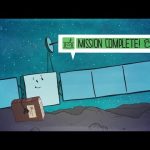
On the last day of her incredible mission, Rosetta slowly descends to the surface of Comet 67P/Churyumov-Gerasimenko. After having sent her extraordinary data back home, she is ready to join Philae for a well deserved rest on the comet. But is there one last surprise in store?
On the last day of her incredible mission, Rosetta slowly descends to the surface of Comet 67P/Churyumov-Gerasimenko. After having sent her extraordinary data back home, she is ready to join Philae for a well deserved rest on the comet. But is there one last surprise in store?
On the last day of her incredible mission, Rosetta slowly descends to the surface of Comet 67P/Churyumov-Gerasimenko. After having sent her extraordinary data back home, she is ready to join Philae for a well deserved rest on the comet. But is there one last surprise in store?