Tag: shuttle

  • Where were you 40 years ago? 🚀 #shorts

    Where were you 40 years ago? 🚀 #shorts

    On 28 November 1983, the first European-built Spacelab was launched from @NASAKennedy aboard Space Shuttle Columbia.

    Also on board was Ulf Merbold, who became our first astronaut in space. The 10-day Spacelab-1 mission marked our entry into human spaceflight activities.

    Under a cooperation agreement with @NASA, we were to build a modular research laboratory that would fit inside the Shuttle’s cargo bay.

    In 17 years, European Spacelab equipment flew on 36 missions. The two Spacelab modules eventually made 16 flights with five different Shuttle Orbiters.

    Many of Spacelab’s features live on in space hardware that is flying today. Europe’s Columbus laboratory on the Station evolved from Spacelab.

    ★ Subscribe: http://bit.ly/ESAsubscribe and click twice on the bell button to receive our notifications.

    Check out our full video catalog: http://bit.ly/SpaceInVideos
    Follow us on Twitter: http://bit.ly/ESAonTwitter
    On Facebook: http://bit.ly/ESAonFacebook
    On Instagram: http://bit.ly/ESAonInstagram
    On LinkedIn: https://bit.ly/ESAonLinkedIn
    On Pinterest: https://bit.ly/ESAonPinterest
    On Flickr: http://bit.ly/ESAonFlickr

    We are Europe’s gateway to space. Our mission is to shape the development of Europe’s space capability and ensure that investment in space continues to deliver benefits to the citizens of Europe and the world. Check out https://www.esa.int/ to get up to speed on everything space related.

    Copyright information about our videos is available here: https://www.esa.int/ESA_Multimedia/Terms_and_Conditions

    #ESA
    #SpaceHistory
    #Astronauts
  • NASA’s Final Space Shuttle Launch 10th Anniversary Replay

    NASA’s Final Space Shuttle Launch 10th Anniversary Replay

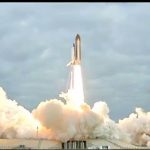
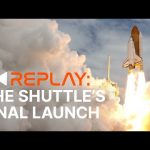
    Ten years ago, Atlantis rose from the launch pad on a plume of fire and parted the high clouds on its way to the International Space Station and to its place in history. The 11:29 a.m. EDT liftoff on July 8, 2011, marked the last time a space shuttle would climb from Kennedy’s seaside launch complex to soar toward the heavens.

    The crew of four veteran astronauts aboard Atlantis — Commander Chris Ferguson, Pilot Doug Hurley, and Mission Specialists Sandy Magnus and Rex Walheim — set off on the STS-135 mission to deliver a stockpile of supplies and parts to the space station.
    Download Link:
    https://images.nasa.gov/details-NHQ_2021_0708_NASA‘s%20Final%20Space%20Shuttle%20Launch%2010th%20Anniversary%20Replay

  • NASA Remembers Moonwalker, Shuttle Commander John Young

    NASA Remembers Moonwalker, Shuttle Commander John Young

    Astronaut John Young, who walked on the Moon during Apollo 16 and commanded the first space shuttle mission, has passed away at the age of 87.

    He is the only person to go into space as part of the Gemini, Apollo and space shuttle programs and was the first to fly into space six times — or seven times, when counting his liftoff from the Moon during Apollo 16.

    This video is available for download from NASA’s Image and Video Library: https://images.nasa.gov/details-NHQ_2018_0106_Remembering%20NASA%20Astronaut%20John%20Young,%201930-2018.html

  • Space Shuttle Endeavour Traveling Through the Streets of Los Angeles

    Space Shuttle Endeavour Traveling Through the Streets of Los Angeles

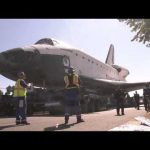
    Space Shuttle Endeavour’s two-day trip from Los Angeles International Airport through the streets of Los Angeles to the California Science Center is underway. The planned transport route of NASA’s youngest orbiter takes it past several well-known L.A. landmarks.

  • Space Shuttle Endeavour Over NASA’s Ames Research Center

    Space Shuttle Endeavour Over NASA’s Ames Research Center

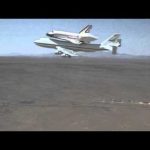
    NASA’s 747 Shuttle Carrier Aircraft, carrying space shuttle Endeavour, as it flew over NASA’s Ames Research Center in Mountain Valley, Calif. on Sept. 21.

  • Space Shuttle Endeavour Arrives at NASA’s Dryden Flight Research Center

    Space Shuttle Endeavour Arrives at NASA’s Dryden Flight Research Center

    NASA’s Shuttle Carrier Aircraft (SCA) with space shuttle Endeavour mounted atop arrived Sept. 20 at the agency’s Dryden Flight Research Center on Edwards Air Force Base in California.

    Following an overnight stay, the SCA and Endeavour will salute the Edwards Air Force Base area early Friday, Sept. 21 with a low flyby northbound to Sacramento and the San Francisco Bay area. Next the aircraft will travel south, making a pass over NASA’s Ames Research Center, Vandenberg Air Force Base and NASA’s Jet Propulsion Laboratory before heading into the Los Angeles area.

    Finally, the SCA and Endeavour will land about noon PDT at Los Angeles International Airport, for an arrival ceremony before Endeavour is taken off the SCA and transported to its permanent home at the California Science Center next month.

  • NASA Shuttle Carrier Aircraft Arrives at Kennedy Space Center

    NASA Shuttle Carrier Aircraft Arrives at Kennedy Space Center

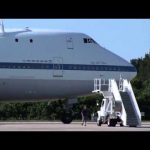
    NASA’s Shuttle Carrier Aircraft (SCA), a modified 747 jumbo jet, touched down just before 4 p.m. EDT on Tuesday at the Shuttle Landing Facility (SLF) at the agency’s Kennedy Space Center in Florida. The SCA, which is designated NASA 905, was the original shuttle carrier and was used in 1977 for the space shuttle approach and landing tests. This series of eight captive and five free flights with the orbiter prototype Enterprise, in addition to ground taxi tests, validated the aircraft’s performance as an SCA, in addition to verifying the glide and landing characteristics of the orbiter configuration — paving the way for orbital flights and ferry flights. NASA 905 now will fly the final ferry flight in Space Shuttle Program history.

  • “Riding the Booster” Never Sounded Better

    “Riding the Booster” Never Sounded Better

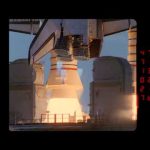
    From launch to landing, a space shuttle’s solid rocket booster journey is captured, with sound mixed and enhanced by Skywalker Sound.

  • Tribute to the Space Shuttle from the European astronauts

    Tribute to the Space Shuttle from the European astronauts

    Space Shuttle is perhaps the most complex technological system ever built. In 30 years, it has flown 135 times and helped humankind to dispatch and partially even return many satellites and deep-space probes, to build the International Space Station and to conduct out-of-this-world science. The Shuttle has transported also 24 European astronauts to Earth orbit on 25 missions.
    This video highlights these flights with European flavour – from STS-9 in 1983 to STS-134 in last May.

  • ESA Euronews: Transbordador espacial: el Ășltimo viaje

    ESA Euronews: Transbordador espacial: el Ășltimo viaje

    Un capítulo de la aventura espacial se cierra con el lanzamiento de la nave estadounidense Atlantis, con el que se pone punto y final a las misiones del transbordador. Ha pervivido durante 30 años, una historia de momentos felices y trågicos.

  • ESA Euronews: Addio, Space Shuttle

    ESA Euronews: Addio, Space Shuttle

    Si chiude un capitolo dell’epopea spaziale, con il lancio della navetta americana Atlantis che segna la fine delle missioni dello Space Shuttle. Una storia lunga trent’anni che ha conosciuto i suoi momenti di gloria e le sue tragedie.

  • ESA Euronews: Letzter Flug fĂŒr das Space Shuttle

    ESA Euronews: Letzter Flug fĂŒr das Space Shuttle

    Mit dem letzten Start der WeltraumfĂ€hre “Atlantis” geht zugleich ein Kapitel in der Geschichte der Weltraumfahrt zuende. Denn der 135. Space-Shuttle-Flug ist der Letzte seiner Art. ZurĂŒck liegen drei Jahrzehnte mit ihren Höhepunkten sowie mit ihren Tragödien. Mehr darĂŒber in unserer Rubrik Space.

  • The Space Shuttle (Narrated by William Shatner)

    The Space Shuttle (Narrated by William Shatner)

    An idea born in unsettled times becomes a feat of engineering excellence. The most complex machine ever built to bring humans to and from space and eventually construct the next stop on the road to space exploration.

  • Final Shuttle Rollout on This Week @NASA

    Final Shuttle Rollout on This Week @NASA

    The final rollout of the Space Shuttle Program has brought Atlantis from the Vehicle Assembly Building to Launch Pad 39A at the Kennedy Space Center for the liftoff of STS-135 targeted for July 8. Mated to its external tank and solid rocket boosters, the orbiter traveled the 3.4-miles atop a crawler-transporter at a top speed of less than a mile an hour. Also, farewell to Spirit; cave research; lunabotics, and aviation history revisited.

  • STS-134: Space Shuttle Endeavour’s last Mission

    STS-134: Space Shuttle Endeavour’s last Mission

    The best of the best, it’s a compilation of the featured moments captured by NASA Television during the mission of Endeavour and its six-man crew to the International Space Station.

  • “Endeavour” roars up to sky with Roberto Vittori and AMS-02

    “Endeavour” roars up to sky with Roberto Vittori and AMS-02

    Space Shuttle “Endeavour” was launched to space at 14:56 CEST (12:56 GMT) on 16 May from Kennedy Space Center in Florida.
    The 16-day-long STS-134 mission will deliver AMS-02, a big cosmological instrument to the Space Station and its crew includes ESA’s Italian astronaut Roberto Vittori. This is the last flight of “Endeavour”.

  • NASA Delays Shuttle Launch; No New Date Set

    NASA Delays Shuttle Launch; No New Date Set

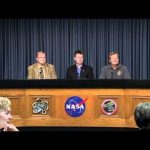
    Briefing held at NASA’s Kennedy Space Center on Sunday, May 1, during which shuttle program officials outline work remaining to resolve an electronics problem that scrubbed Friday’s launch try. A new date for space shuttle Endeavour’s launch on STS-134 has not yet been set.

  • NASA Commemorates Space Shuttle’s 30th Anniversary, Reveals Display Sites for Orbiters

    NASA Commemorates Space Shuttle’s 30th Anniversary, Reveals Display Sites for Orbiters

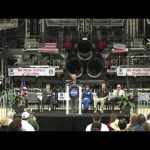
    On the anniversary of the first space shuttle flight, NASA Administrator Charles Bolden joined Kennedy Space Center Director Bob Cabana, and STS-1 shuttle pilot Robert Crippen to pay tribute to the space shuttle era at the KSC in Florida. During the event, Bolden named the four institutions that will receive a shuttle orbiter for permanent display.

  • The Space Shuttle (Narrated by William Shatner)

    The Space Shuttle (Narrated by William Shatner)

    An idea born in unsettled times becomes a feat of engineering excellence. The most complex machine ever built to bring humans to and from space and eventually construct the next stop on the road to space exploration.

  • New Shuttle Launch Date on This Week @NASA

    New Shuttle Launch Date on This Week @NASA

    NASA has re-targeted the liftoff of space shuttle Endeavour for Friday, April 29, at 3:47 p.m. EDT. The move comes to resolve a scheduling conflict with a Russian Progress supply vehicle scheduled to launch April 27 and arrive at the station two days later. Also, Goddard Memorial Symposium; “Wheels” rolls with big Shorty; cost-saving software summit; two honors for Ames; and, marking Odyssey’s beginning.

  • “Best of the Best” Provides New Views, Commentary of Shuttle Launches

    “Best of the Best” Provides New Views, Commentary of Shuttle Launches

    This video from the Glenn Research Center highlights in stunning, behind-the-scenes imagery the launches of three space shuttle missions: STS-114, STS-117, and STS-124. NASA engineers provide commentary as footage from the ground and from the orbiters themselves document in detail the first phase of a mission.

  • New Shuttle Launch Date Tops This Week @NASA

    New Shuttle Launch Date Tops This Week @NASA

    A new target launch date has been selected for STS-133, allowing ample time for repairs to space shuttle Discovery. Also, NASA’s chief technologist and planetary science director were among more than 20 speakers featured at the second TEDxNASA conference in Newport News, Virginia. Hosted by the Langley Research Center, TEDx focused on education, innovation, family, technology, art and space travel. Plus, X-15 astronaut Joe Wagner joins Aerospace Hall of Fame; HQ Honor Awards; and Herrington helps celebrate American Indian & Alaska Native Heritage Month.

  • Shuttle Atlantis: From the Inside

    Shuttle Atlantis: From the Inside

    An unprecedented up close, inside look in high-definition of space shuttle Atlantis as it was readied for “towback” from Kennedy’s Shuttle Landing Facility runway to Orbiter Processing Facility-1 following its May 26 landing on STS-132. After every shuttle landing, about 150 trained workers assist the crew out and prepare the shuttle for towing atop a large diesel-driven tractor to its processing hangar.

  • “Ice Team” Inspects NASA’s Shuttle Atlantis During STS-132 Launch Countdown

    “Ice Team” Inspects NASA’s Shuttle Atlantis During STS-132 Launch Countdown

    At NASA’s Kennedy Space Center in Florida, members of the Final Inspection Team, also known as the “Ice Team,” performs a walkdown of Kennedy’s Launch Pad 39A during space shuttle Atlantis’ STS-132 launch countdown on May 14. The six-member team walks on every level of the pad’s fixed service structure, inspecting the shuttle, external fuel tank, solid rocket boosters, pad structure and ground equipment for signs of ice buildup, debris or anything else that might be amiss prior to launch. As part of the inspection, photos are taken and transmitted to the launch team for review.
    A videographer for NASA was included as a member of the team to capture the first-ever up close, high-definition video of this important and hazardous inspection process.

  • Ariane 30th birthday

    Ariane 30th birthday

    On 24 December 1979, Ariane made its first flight from French Guiana, marking the beginning of 30 years of success and giving Europe a guaranteed independent access to space. With Ariane, ESA could develop its own programmes in many different domains: telecommunications, Earth observation, science and exploration. Europe was the pioneer in the civil launch space market, with the creation of Arianespace, the world-leading space transportation company.

  • The ISS: a work in progress!

    The ISS: a work in progress!

    Highlights of ESA astronaut Christer Fuglesang’s 14-day AlissĂ© mission to the International Space Station between 29 August and 12 September 2009. Fuglesang was part of the seven-strong STS-128 crew launched to the ISS with Space Shuttle Discovery. STS-128 delivered new supplies and equipment to the ISS. The crew also performed three spacewalks to continue Station construction.

  • Space Shuttle Discovery returns to Earth

    Space Shuttle Discovery returns to Earth

    Space Shuttle Discovery lands at Edwards Air Force Base, California, on 12 September concluding ESA astronaut Christer Fuglesang’s 14-day AlissĂ© mission to the the International Space Station.

  • ESA astronauts working on the ISS

    ESA astronauts working on the ISS

    ESA astronauts Frank De Winne and Christer Fuglesang met up on the International Space Station in September 2009. Fuglesang was visiting the ISS during his 14-day Alissé mission. De Winne, on his six-month OasISS mission, was already on the ISS as part of the resident ISS Expedition 20 crew.

  • NASA Commander Tweets To Take Questions In Space

    NASA Commander Tweets To Take Questions In Space

    NASA astronaut Mark Polansky, commander of the next space shuttle mission to the
    International Space Station, is sharing the final weeks of his training on Twitter.
    Polansky invites followers to submit questions that he will answer from orbit during
    his mission, STS-127, targeted to launch in June. Questions should be submitted in
    the form of a video not longer than 30 seconds, posted to YouTube, and a link to the
    video sent to Polansky’s twitter account at:http://twitter.com/Astro_127.

    Questions will be selected each week to be among those Polansky will answer from space,
    live on NASA Television. The questions that have been selected will be announced on
    his Twitter feed each week.

  • NASA Mission Update: New Horizon

    NASA Mission Update: New Horizon

    Three billion miles away from Earth, near the farthest reaches of our solar system, is the heavenly body with an extreme orbit known for 76 years as Pluto. Discovered by astronomers in 1930, Pluto was considered the ninth planet in our solar system until 2006 — when, after much debate, it was reclassified by the International Astronomical Union as a “dwarf planet,” officially dropping its name — for a number.

    Denis Bogan, New Horizons Program Scientist: “Well, it certainly doesnt affect Pluto. Pluto is the same thing it was before it was discovered, before it was given a name, and before the name was changed.”

    Nor does Pluto’s reclassification change the importance of NASA’s first mission to study it.

    Launch Announcer: “We have ignition and lift off of NASAs New Horizon spacecraft on a decade-long”

    Launched in January 2006, the thousand-pound New Horizons spacecraft will travel through space for 9-1/2 years before meeting up with Pluto in the summer of 2015.

    Denis Bogan: “The last time Pluto was in this position in its orbit was during the French and Indian War. It takes 248 Earth years to travel around its orbit and come back to the same place again. At the speed of light, sending a radio signal back from the spacecraft, from Pluto to Earth, will take 4-1/2 hours.”

    Operating on less power than a pair of common 100-watt light bulbs, New Horizons will map the highest-interest areas of Pluto to a resolution of 50 meters, less than the length of a football field — three billion miles away. Itll then move on to survey Pluto’s neighborhood: the atmosphere, ancient materials and small bodies of the Kuiper Belt, a chaotic region astrophysicists believe can tell us how Earth, the planets, even our sun were made.

    Denis Bogan: “We have primitive material chunks of rock and ice, millions of objects of objects out there in the Kuiper Belt and we know very little about it. We didnt discover it until 1992.”

    Traveling 3 billion miles to frozen, rocky Pluto and its environs, New Horizon is, in a way, going back in time to the chemical building blocks of the solar system, and life.

    To learn more about the New Horizons mission visit www.nasa.gov

  • NASA Mission Update: ULYSSES

    NASA Mission Update: ULYSSES

    The sun is the source of life-sustaining energy here on Earth. Much of how it works – and affects us — remains a source of scientific mystery. Sunspots were first recorded by humans in the 16-hundreds. Astrophysicists have since linked heightened sunspot activity with the solar wind. It’s a million-mile-an-hour force of magnetically-charged particles emanating from the sun’s upper atmosphere. Ebbing and flowing in minimum and maximum intensities over eleven year cycles, this so-called space weather can seriously affect how things work here on Earth, such as disrupting satellite communications, telephone service and personal electronics.

    Arik Posner, Program Scientist: “It would help our technology, to safeguard the technology by knowing when and in what intensity space weather occurs and where these effects might show up”

    Launch Announcer : “2 -1 ignition and liftoff of Discovery and the Ulysses spacecraft bound for the polar regions of the sun.”

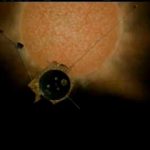
    Until the launch of Ulysses from space shuttle Discovery in 1990, data for understanding and predicting space weather had come from a limited sampling area: the plane extending from the suns equator. Ulysses has since made three orbits above and below the poles of the sun, vastly expanding the territory from where raw space weather data are gathered.

    Arik Posner: “So Ulysses was really the first spacecraft that leaped out of this confinement, and it gives us a view of the global heliosphere.”

    Ulysses has found that the solar minimum were in right now is producing the lowest levels of solar wind seen since accurate readings became available a half-century ago. But for heliophysicists, these data raise as many questions as they answer.

    Arik Posner: “The Space Age is only 50 years now, and the Sun just operates on longer time scales than these 50 years. So we might have just glimpsed just the surface of what is really going on.”

    By expanding its reach, both in time and space, Ulysses is helping the discipline of space weather prediction grow beyond its infancy for the betterment of life here on Earth.

    For more about Ulysses, the heliosphere, and space weather, log onto: www.nasa.gov/missions and click on ‘Ulysses.’

  • NASA Mission Update: CALIPSO

    NASA Mission Update: CALIPSO

    NASA Mission Update: CALIPSO

    Clouds have forever held the imagination of skygazers who are captivated by their endless beauty and seeming randomness. But clouds, and whats in them, also hold fascination for scientists who seek to understand the many effects they have on life here on Earth.

    Hal Maring, Program Scientist, CALIPSO: “Low clouds, which are white, can reflect sunlight and cause cooling of the Earth, and high clouds tend to warm the Earth by absorbing and re-radiating warmth back into the atmosphere.”

    Launch Announcer: “2-1 We have ignition and we have lift-off of NASAs Calipso/Cloudsat spacecraft.”

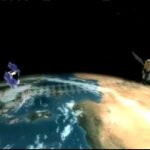
    Since its launch in April 2006, the Cloud-Aerosol Lidar and Infrared Pathfinder Satellite Observation mission, CALIPSO, has provided new insight into the role that clouds play in regulating our climate. As CALIPSO orbits the Earth, its light detection and ranging, or lidar system, emits short pulses of green and infrared light, producing a 300-feet wide snapshot of what’s in the atmosphere from top to bottom — clouds and airborne particles. Snapshots collected along the same orbit are then streamed together to paint a picture of what a vertical slice of our atmosphere looks like.

    Hal Maring: “Its basically a large laser range finder, and it shoots light down into the atmosphere. And, its able to detect and measure, clouds in the vertical .Not like a photograph, which tends to be two-dimensional, but gives us vertical curtains of measurements of clouds, i.e., their altitude.”

    These critical cloud data from CALIPSO are used with information gathered by other satellites in NASAs A-train constellation of Earth-observing spacecraft to quantify just how much sunlight reaches the planet — and how much gets radiated back into space. This so-called energy budget is a key to documenting and understanding climate change.

    Hal Maring: “We have found, it appears as though, the Earth is warming and its warming because of an imbalance or a change in the Earths energy budget.”

    To see and learn more about CALIPSOs cloud images, or how CALIPSOs also helping scientists understand how climate may be changed by naturally-occurring and manmade particulates in the atmosphere called aerosols, go to www.nasa.gov/missions and click on “CALIPSO.”