In this special edition of Earth from Space, senior project scientist at Gamma Remote Sensing, Dr Maurizio Santoro, joins the show to discuss how his team estimates forest biomass from space.
★ Subscribe: http://bit.ly/ESAsubscribe
In this special edition of Earth from Space, senior project scientist at Gamma Remote Sensing, Dr Maurizio Santoro, joins the show to discuss how his team estimates forest biomass from space.
★ Subscribe: http://bit.ly/ESAsubscribe
Sign up for the in60Learning
Learning List: https://www.in60learning.com/
Check out in60Learning’s titles on Amazon: https://amzn.to/2qAfdMq
If you enjoyed the video, please drop a like!
When people think about the big players of the space industry, they don’t tend to think about Europe. But believe it or not the European Space Agency or ESA has the second highest budget out of any space agency. So what are they doing with all that money?
Narration by Mark Lurenana
Written and Edited by David Blom – https://twitter.com/leavedavidalone
Music:
Cycles – Audionautix
European Union Anthem
Simon Bichbihler – In the 1980’s
Thank you to In60learning for sponsoring this video.
#EuropeanSpaceAgency #ESA #Explained
Our alien friend Paxi, ESA Education’s mascot, went to visit American astronaut Scott Tingle on board the International Space Station. Tingle tells Paxi about how astronauts sleep in weightlessness, an important aspect of living on the ISS.
Credit: ESA/NASA
#ESA
#Paxi
#InternationalSpaceStation
Having a stressful day? We got you covered! Sit back, turn the volume up and enjoy a relaxing moment brought to you by ESA and Lufthansa exploring the countries which make up the European Space Agency with images taken by the Copernicus Sentinel-1A, Sentinel-2A and Sentinel-3A, Proba-V and Envisat satellites.
Don’t forget to favourite this video. You will always have a space to relax with us.
Music by Matt Baute.
Every week, on average, a substantial, inert satellite drops into our atmosphere and burns up. Monitoring these reentries and warning European civil authorities has become routine work for ESA’s space debris experts.
Each year, about 100 tonnes of defunct satellites, uncontrolled spacecraft, spent upper stages and discarded items like instrument covers are dragged down by Earth’s upper atmosphere, ending their lives in flaming arcs across the sky.
Some of these objects are big and chunky, and pieces of them survive the fiery reentry to reach the surface. Our planet, however, is a big place, mostly covered by water, and much of what falls down is never seen by anyone, sinking to the bottom of some ocean, or landing far from human habitation.
While still in orbit, these and many other objects are tracked by a US military radar network, which shares the data with ESA, since Europe has no such capability of its own.It’s the task of ESA’s Space Debris team to look at these data and issue updates to ESA Member States and partner civil authorities around the globe.
Visit http://www.esa.int/Our_Activities/Operations/Space_Debris/ESA_reentry_expertise to learn more
The video features footage taken of the parachute deployment as seen from the ground, as well as from onboard GoPros fixed to the drop test vehicle and looking up at the parachute. The test focused on the deployment and inflation of the second main stage 35m-wide parachute, which will be the largest to fly on Mars.
Discussing the test are Stephane Langlois, ESA ExoMars engineer, and John Underwood, principal engineer at Vorticity.
The test was carried out by Vorticity Ltd under supervision of Thales Alenia Space France, Thales Alenia Space Italy and ESA, in Kiruna, Sweden, on 2 March 2018.
Credits: ESA & Vorticity Ltd
Having a stressful day? We got you covered!Sit back, turn the volume up and enjoy a relaxing moment brought to you by ESA and Lufthansa getting lost in the beauty of our planet with images captured by Envisat, JAXA ALOS, KARI Kompsat-2, GeoEye Ikonos-2 and NASA Landsat-5 and Landsat-7 satellites.
Don’t forget to favourite this video. You will always have a space to relax with us.
Music: “Page of Life” by Green Sun.
Earth from Space is presented by Kelsea Brennan-Wessels from the ESA Web TV virtual studios. In this edition, Sentinel-2A satellite takes us over Japan’s capital, the world’s largest megacity.
See also http://www.esa.int/spaceinimages/Images/2018/03/Tokyo to download the image.

Having a stressful day? We got you covered! Sit back, turn the volume up and enjoy a relaxing moment brought to you by ESA and Lufthansa exploring the coldest parts of our planet with a collection of ice images captured by the Envisat satellite.
Don’t forget to favourite this video. You will always have a space to relax with us.
Music: “Page of Life” by Green Sun.

The sixth Space App Camp was held at ESA’s establishment in Frascati, Italy, in September 2017. The camp offers access to the latest space data – particularly from the European Copernicus programme – to app developers, who work to make the information accessible to a broad audience. Twenty-four developers from 14 countries attended the 2017 camp. In this short video, participants talk about why they attended and what they hoped to achieve.
Travel App wins top prize at App camp:
http://www.esa.int/Our_Activities/Observing_the_Earth/Copernicus/Travel_app_wins_top_prize_at_App_Camp
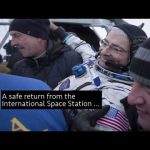
A safe return from the International Space Station, a new weather satellite launched into orbit, and our next mission to Mars moves closer to launch … a few of the stories to tell you about – This Week at NASA!
This video is available for download from NASA’s Image and Video Library: https://images.nasa.gov/details-NHQ_2018_0305_Space%20Station%20Crew%20Returns%20Safely%20on%20This%20Week%20@NASA%20%E2%80%93%20March%205,%202018.html
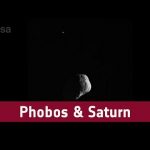
These observations of Phobos and Saturn were taken by the Super Resolution Channel of the High Resolution Stereo Camera on Mars Express. The video comprises 30 separate images acquired during Mars Express orbit 16 346 on 26 November 2016. The slight up and down movement of Saturn and Phobos in these images is caused by the oscillation of the spacecraft’s orientation after completing the turn towards the moon. Phobos can be seen in the foreground, partially illuminated, with Saturn visible as a small ringed dot in the distance.
For more information go tohttp://www.esa.int/Our_Activities/Space_Science/Mars_Express/Mars_Express_views_moons_set_against_Saturn_s_rings
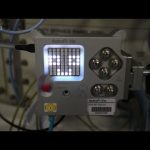
See Astro Pi Ed running one of the Mission Zero winners’ code on-board the ISS.
Go to our website and to read more about Astro Pi Mission Zero: http://www.esa.int/Education/AstroPI/Astro_Pi_s_Mission_Zero_has_been_completed
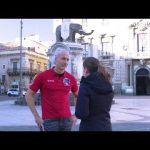
From ESA astronaut Luca Parmitano’s hometown in Catania, Italy, Luca talks about the science he ran on the International Space Station.
The European laboratory Columbus was launched in 2008 and offers scientists a permanent place in space to conduct research that is out of this world.
Luca’s first spaceflight was in 2013 with Russian cosmonaut Fyodor Yurchikhin and NASA astronaut Karen Nyberg. He conducted over 20 experiments during the Volare mission as flight engineer for Expeditions 36 and 37 and he was the first of ESA’s new generation of astronauts to fly into space.
Luca talks about space research, being a human guinea pig, dieting to avoid bone disease osteoporosis, human physiology, using ultrasound remotely to diagnose back problems, measuring eye pressure and how his body and mind reacted to living in weightlessness.
Luca is set for a second mission to the International Space Station in 2019.
Follow Luca and his adventures in space and on Earth via http://lucaparmitano.esa.int
More about Columbus here: http://www.esa.int/Columbus

The European Space Agency (ESA) is part of an international effort to monitor and – ultimately – tackle space debris. This junk – accumulated in orbit since the dawn of the space age sixty years ago – poses an increasing risk to operational spacecraft.
ESA is developing missions to tackle the problem to help prevent a serious collision in space. The Agency is also monitoring possible dangers caused by fragments of redundant spacecraft falling to Earth, such as China’s space station Tiangong-1 – due to enter the atmosphere in the coming months.
Visit our Clean Space site to learn more: http://www.esa.int/Our_Activities/Space_Engineering_Technology/Clean_Space
Looking at a decade of European science on the International Space Station with the Columbus laboratory.
Columbus houses as many disciplines as possible in a small volume, from astrobiology to solar science through metallurgy and psychology – more than 227 experiments have been carried out during this remarkable decade. Countless papers have been published drawing conclusions from experiments performed in Columbus.
From circadian rhythms and new temperature sensors to edible algae as astronaut food through running experiments to grow crystals and investigate processes in a pure environment without gravity interfering with the process – Columbus helping scientists push the boundaries of what is possible and increase our knowledge for life on Earth.
More about Columbus:
http://www.esa.int/columbus
Space vous emmène à Cologne découvrir la réplique terrestre de Columbus. Entretien avec des chercheurs et des astronautes.
Ce mois-ci, Space vous emmène au Centre Européen des Astronautes à Cologne, en Allemagne à la découverte de Columbus, le module européen de la Station spatiale internationale. Pendant ces dix dernières années il a été utilisé par les astronautes pour réaliser des expériences sur eux-mêmes, faire pousser des plantes et même développer de nouveaux métaux. Il y a dix ans, Columbus a pris une navette pour l’espace. Le premier laboratoire européen vola en orbite et fut soigneusement amarré à la Station Spatiale Internationale.
The James Webb Space Telescope’s cryogenic vacuum testing at our Johnson Space Center verified it’s ready for the cold, harsh environment of space, and its mission to uncover a part of the universe we have not seen. From distant worlds orbiting other stars, to mysterious cosmic structures, Webb could help answer questions about our universe and our place in it. Launch of Webb is set for 2019. Also, Flight through Orion Nebula, 360 Degree View from the Center of the Galaxy, and Raging Water on Launch Pad!
This video is available for download from NASA’s Image and Video Library: https://images.nasa.gov/details-NHQ_2018_0112_Webb%20Space%20Telescope%20Update%20on%20This%20Week%20@NASA%20%E2%80%93%20January%2012,%202018.html

The Moon is a destination, a laboratory for science, a place to learn the skills of planetary exploration, and a source of materials and energy for use on the Moon and in space to create new spacefaring capability.
Advocate of a human return on the Moon, Paul D. Spudis, Senior Staff Scientist at the Lunar and Planetary Institute in Houston (Texas, USA), takes us on a journey to rediscover the value of lunar exploration, a topic on which he has spent more than 40 years of study, thought and publications.
Space Bites hosts the best talks on space exploration from the most inspiring and knowledgeable speakers from the field. Held at the technical heart of the European Space Agency in the Netherlands, the lectures are now also available on YouTube. If you want to know about the present and future challenges of ESA, stay tuned for more.
To know more about the exploration of the Moon visit http://lunarexploration.esa.int
★ Subscribe: http://bit.ly/ESAsubscribe and click twice on the bell button to receive our notifications.
Check out our full video catalog: http://bit.ly/SpaceInVideos
Follow us on Twitter: http://bit.ly/ESAonTwitter
On Facebook: http://bit.ly/ESAonFacebook
On Instagram: http://bit.ly/ESAonInstagram
On Pinterest: https://bit.ly/ESAonPinterest
On Flickr: http://bit.ly/ESAonFlickr
We are Europe’s gateway to space. Our mission is to shape the development of Europe’s space capability and ensure that investment in space continues to deliver benefits to the citizens of Europe and the world. Check out https://www.esa.int/ to get up to speed on everything space related.
Copyright information about our videos is available here: https://www.esa.int/ESA_Multimedia/Terms_and_Conditions
#ESA
#SpaceBites
#LunarExploration

Europe’s first Space Exploration Masters competition, based around space exploration activities, welcomed new players to boost business and innovation in the space industry. The event was held at the NewSpace Europe conference on 16 November 2017 in Luxembourg.
Prizes worth more than €500 000 were awarded to winners with disruptive ideas to connect space and non-space areas with new approaches, solutions and services.
For further information visit: http://www.esa.int/About_Us/Business_with_ESA/Business_Opportunities/Space_exploration_open_for_business

This is NASA’s 2018 ‘To Do’ list.
The work we do, which will continue in 2018, helps the United States maintain its world leadership in space exploration and scientific discovery.
Launches, discoveries and more exploration await in the year ahead.
This video is available for download from NASA’s Image and Video Library:
images-assets.nasa.gov/video/NHQ_2017_1219_NASA 2018 TO DO LIST_FINAL/NHQ_2017_1219_NASA 2018 TO DO LIST_FINAL~orig.mp4
Space debris has become a pressing issue, with objects in orbit flying out of control, posing a risk to satellites and to astronauts. We attended a meeting of space debris experts at ESA’s ESTEC technology base in the Netherlands to find out more about what can be done to deal with the problem.
This video is also available in the following languages:
German: https://www.youtube.com/watch?v=cQAje74nQuI
French: https://www.youtube.com/watch?v=fXcrMQ5WjFI
Italian: https://www.youtube.com/watch?v=Jp26l0PnMzo
Spanish: https://www.youtube.com/watch?v=j7XXKHKlBPo
Portuguese: https://www.youtube.com/watch?v=K_NIAMWBofk
Greek: https://www.youtube.com/watch?v=F4cl5p2kpKA
Hungarian: https://www.youtube.com/watch?v=4N4bfQSHTbM
ESA’s Global Space Economic Workshop on 13 October 2017 in Paris broughts together leaders of major space and non-space European stakeholders from institutions and commercial sectors, to interactively discuss space-led innovation opportunities and challenges offered by the on-going transformations that are driven by the digital economy and the current and future trends in the global market.
More info:
http://www.esa.int/About_Us/Business_with_ESA/GSEW/Global_Space_Economic_Workshop
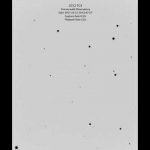
This remarkable footage shows the flyby of asteroid 2012 TC4 during the night of 11/12 October 2017. At the time this was recorded, the estimated 10-20 m-diameter asteroid was approaching Earth. It made its closest approach at 07:41 CEST on 12 October, just 43 782 km away – much closer than the Moon and inside the orbit of some satellites.
This was captured by astronomers Peter Schlatter and Dominik Bodenmann working at the ZIMLAT telescope at the Swiss Optical Ground Station and Geodynamics Observatory operated by the Astronomical Institute of the University of Bern (AIUB).
Credit: AIUB http://www.aiub.unibe.ch
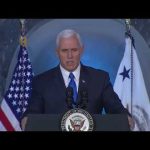
Vice President Mike Pence called for renewed U.S. leadership in space during the first meeting of the National Space Council – outlining exploration goals that include returning American astronauts to the Moon, to build the foundation needed to send Americans to Mars and beyond. The October 5 council meeting, held at the Smithsonian National Air and Space Museum’s Steven F. Udvar-Hazy Center, outside Washington, brought together representatives from all aspects and sectors of the national space enterprise, for the first time in a quarter century – including NASA’s Acting Administrator, Robert Lightfoot. Also, U.S. Spacewalk aboard the Space Station, Eugene Parker Views Solar Probe Spacecraft, Scientists Find Giant Black Hole Pairs, and Parachute Test Platform Launched!
This video is available for download from NASA’s Image and Video Library: https://images.nasa.gov/#/details-NHQ_2017_1006_National%20Space%20Council%20Meets%20on%20This%20Week%20@NASA%20%E2%80%93%20October%206,%202017.html

At the 68th International Astronautical Congress, in Adelaide, Australia, IAC TV gets the chance to sit down with Johann-Dietrich Woerner, the Director General of the European Space Agency to talk about the focus of the ESA for the future of space exploration and why he thinks meetings like the IAC are crucial for the industry.
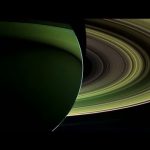
Cassini-Huygens was launched on 15 October 1997 from Cape Canaveral, Florida.After nearly 13 years in orbit around Saturn, the international Cassini-Huygens mission is going through its final chapter: NASA’s Cassini spacecraft is performing a series of daring dives between the planet and its rings, leading to a dramatic final plunge into Saturn’s atmosphere on 15 September.
On 14 January 2005, ESA’s Huygens probe, which hitched a ride to the Saturn system attached to Cassini during the seven-year voyage, entered the history books by descending to the surface of Titan, Saturn’s largest moon. This was humanity’s first successful attempt to land a probe on another world in the outer Solar System.
Huygens made a 21-day solo cruise toward the haze-shrouded moon. Plunging into Titan’s atmosphere, the probe touched down safely on Titan’s frozen surface.
Huygens provided a stream of data representing a unique treasure trove of in situ measurements from the planet-sized satellite which scientists are still mining today.
This video recalls the ‘one of a kind’ journey of Huygens.
More about Cassini-Huygens:
http://www.esa.int/Our_Activities/Space_Science/Cassini-Huygens
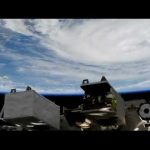
The National Hurricane Center (NHC) upgraded the remnants of tropical storm Harvey to a tropical depression on August 23, 2017 at 11 a.m. EDT (1500 UTC). Harvey became better organized and was revived after moving from Mexico’s Yucatan Peninsula into the Bay of Campeche. The warm waters of the Gulf of Mexico and favorable vertical wind shear promoted the regeneration of the tropical cyclone. This video includes views from The International Space Station recorded on August 24, 2017 at 6:15 p.m. Eastern Time.
This video is available for download from NASA’s Image and Video Library: https://images.nasa.gov/#/details-NHQ_2017_0824_Space%20Station%20Camera%20Captures%20New%20Views%20of%20Hurricane%20Harvey.html

Aboard the International Space Station, Expedition 52 Flight Engineers Peggy Whitson, Jack Fischer and Randy Bresnik of NASA conducted a question and answer session with the agency’s newest class of astronauts during an in-flight “orientation” session Aug. 22 with the new selectees. Twelve new astronauts were announced by NASA on June 7 and will begin extensive training this year for future flight assignments.

ESA’s European Space Operations Centre links people with spacecraft travelling to the frontiers of human knowledge.
Our world is about systems, communication and exploration; our passion is for humanity’s voyages into the Universe.
And even the grandest journey begins with just a few steps.
More about ESOC:
http://www.esa.int/About_Us/ESOC
It’s an age when many of us would be considering winding down, and cutting back on physical exertion. Not so for Paolo Nespoli, who is about to embark on his third space mission at the age of 60, which makes him Europe’s oldest astronaut. At the end of July he will voyage to the International Space Station (ISS), where he will remain for some months.
This video is also available in the following languages:
French: https://www.youtube.com/watch?v=IgsbYsudY9c
German: https://www.youtube.com/watch?v=ucqrT7VYSkc
Spanish: https://www.youtube.com/watch?v=91b_CcXqvAA
Italian: https://www.youtube.com/watch?v=a87NU2XMPUE
Portuguese: https://www.youtube.com/watch?v=A0uSAfZEYNY
Hungarian: https://www.youtube.com/watch?v=AMtHuhq13ek
Greek: https://www.youtube.com/watch?v=doCcnvm2R3E
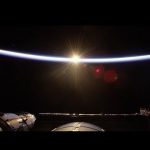
ESA’s vision for human spaceflight and robotic exploration is part of humanity’s road to the stars. Exploring is about visiting new places and coming back with new experiences and knowledge to help us on Earth.
Our strategy includes three destinations where humans will work with robots to gather new knowledge: low-Earth orbit on the International Space Station, the Moon – our closest neighbour, and our third destination Mars.
The exploration programme includes Europe’s service module for NASA’s Orion spacecraft around the Moon, a landing on the Moon with Roscomos’ Luna lander and ESA’s Exomars rover on Mars.
A deep-space gateway farther afield than the International Space Station is considered as a springboard for exploration beyond the Moon.

Dans ce numéro de Space, nous profitons du Salon international du Bourget, évènement incontournable de l’aéronautique et de l’aérospatial, pour rencontrer ceux qui mènent les grandes missions d’aujourd’hui et de demain : les responsables de l’ESA et de la NASA, mais aussi l’astronaute français Thomas Pesquet qui vient de rentrer sur Terre après avoir passé six mois en orbite.

Il Salone dell’aeronautica di Parigi-Le Bourget dal 1909 è uno dei più grandi eventi al mondo dedicati al settore aerospaziale. Degli oltre 2.200 espositori internazionali e 285 delegazioni ufficiali provenienti da tutto il mondo, 137 sono italiani. Qui il nostro inviato Jeremy Wilks ha incontrato il Capo della NASA per parlare della missione su Marte, il capo dell’ESA per discutere dei viaggi su Mercurio e sul Sole, e per scambiare quattro chiacchiere con l’astronauta francese dell’ESA Thomas Pesquet, che è appena tornato a terra dopo mesi nello spazio.
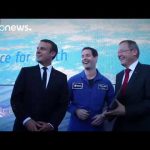
O Salão de Aeronáutica de Paris é um ponto de encontro incontornável para o setor aeroespacial. Falámos com os responsáveis da ESA e da NASA, mas primeiro conversámos com Thomas Pesquet, o astronauta da ESA que acabou de regressar à Terra após 6 meses no espaço.
O momento é de recuperar, depois da massa óssea e muscular que perdeu durante a sua missão. Mas Thomas Pesquet é como um herói para os franceses. Portanto, nada mais natural do que ter o presidente Emmanuel Macron a saudá-lo num evento de dimensão mundial.
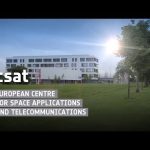
ECSAT (European Centre for Space Applications and Telecommunications) is the European Space Agency’s centre in the UK. With a commercially driven ethos, it supports European and Canadian industry in developing commercial satcom products and services, downstream applications and the ‘spin-out’ of space into non-space sectors.
ECSAT also the home of ESA’s Climate Office and has units dedicated to space exploration and technology development, one of which oversees the ESA–Rutherford Appleton Laboratory Advanced Manufacturing Laboratory.
More about ECSAT:
http://www.esa.int/About_Us/Welcome_to_ESA/ECSAT
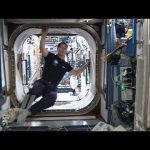
ESA astronaut Thomas Pesquet’s in-depth tour of the International Space Station in French, recorded during his Proxima mission.
Thomas performed around 60 scientific experiments for ESA and France’s space agency CNES and other Station partners.
The mission is part of ESA’s vision to use Earth-orbiting spacecraft as a place to live and work for the benefit of European society while using the experience to prepare for future voyages of exploration further into the Solar System.
More about the Proxima mission: http://www.esa.int/proxima
Connect with Thomas Pesquet: http://thomaspesquet.esa.int
Thomas Pesquet reflects on living on the International Space Station after his six-month Proxima mission. Beyond science and technology the voyage often reveals more than the destination. A message for all humans.
As Marcel Proust wrote in his book The Prisoner: “The only true voyage of discovery, … would be not to visit strange lands but to possess other eyes, to behold the universe through the eyes of another, of a hundred others, to behold the hundred universes that each of them beholds, that each of them is.”
The footage was shot with the Space Station’s highest resolution camera at resolutions between 4K and 6K and available here in Ultra High Definition (3840×2160 pixels). Download the full high-resolution file from ESA’s video archive: http://www.esa.int/spaceinvideos/Videos/2017/05/New_eyes
During Proxima, Thomas performed around 50 scientific experiments for ESA and France’s space agency CNES as well as take part in many research activities for the other Station partners.
The mission is part of ESA’s vision to use Earth-orbiting spacecraft as a place to live and work for the benefit of European society while using the experience to prepare for future voyages of exploration further into the Solar System.
More about the Proxima mission: http://www.esa.int/proxima
Connect with Thomas Pesquet: http://thomaspesquet.esa.int
Music: ‘On home leave’ by Luke Richards

Outside the International Space Station, Expedition 51 Commander Peggy Whitson and Flight Engineer Jack Fischer of NASA conducted a spacewalk May 12 to replace an avionics box responsible for routing power and data commands to experiments on the orbital outpost. In addition to that work, the two spacewalkers installed a data cable for the Alpha Magnetic Spectrometer and a new high definition camera on the station’s truss. The spacewalk was the 200th in support of space station assembly and maintenance since 1998, the ninth for Whitson, who vaulted into third place on the all-time list for most spacewalking hours, and the first for Fischer.
(Czech) Join Paxi as he explores why we have day and night, and learn why the Earth has seasons.