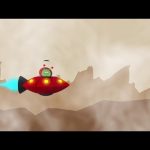
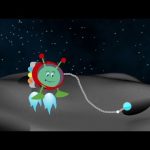
Följ med Paxi på en resa genom vårt Solsystem. Från de steniga inre planeterna nära Solen och förbi de jättestora planeterna, ut till den iskalla utkanten där kometerna bor.
I den här videofilmen som är avsedd för barn mellan 6 och 12 år, tar Paxi med oss på en resa i vårt eget Solsystem där vi besöker alla åtta planeterna samt andra mindre himlakroppar såsom asteroider, kometer och dvärgplaneten Pluto. Den här videofilmen är den andra i en serie av animationer i vilka Paxi, ESA:s utbildningsmaskot, berör olika aspekter av Solsystemet, Universum, planeten Jordens hemligheter och mycket mer.
Acompanhe o Paxi numa viagem através do sistema solar, dos planetas rochosos interiores próximos do Sol, passando pelos planetas gigantes até à orla gelada onde se encontram os cometas.
Neste vídeo, destinado a crianças entre os 6 e os 12 anos de idade, o Paxi leva-nos a dar uma volta pelo sistema solar, visitando os oitos planetas e outros corpos menores como asteroides, cometas e o planeta anão Plutão.
Este vídeo é o segundo de uma série de animações em que o Paxi, a mascote educacional da ESA, aborda diferentes aspetos do sistema solar e do Universo, os segredos do planeta Terra e muito mais.
Este é o Paxi, a mascote educacional da ESA: de onde vem, do que gosta nas viagens espaciais, quem são os seus amigos…
Este vídeo, destinado a crianças entre os 6 e os 12 anos de idade, apresenta o Paxi, um pequeno extraterrestre originário do planeta Ally-O e que veio à Terra para fazer novos amigos e levar as crianças numa viagem de aventura e exploração do espaço. É o primeiro de uma série de animações em que o Paxi, a mascote educacional da ESA, aborda diferentes aspetos do sistema solar e do Universo, os segredos do planeta Terra e muito mais.
Følg Paxi til udkanten af solsystemet for at udforske kometernes verden og lære om den fantastiske Rosetta-mission til kometen 67P/Churyumov-Gerasimenko.
I denne video, som er rettet mod børn i aldersgruppen 6 til 12 år, tager Paxi børnene med for at udforske kometer og se på Rosetta – det fantastiske ESA-rumfartøj, som flyver ved siden af kometen 67P/Churyumov-Gerasimenko, hvorpå den prøver at placere en lander den 12. november 2014.
Denne video er den tredje i en serie af animationer, hvori Paxi, ESA’s uddannelsesmaskot, kommer ind på forskellige aspekter af solsystemet, universet, hemmelighederne bag planeten Jorden og meget mere.
Tag med Paxi på hans rejse gennem vores solsystem, fra de klippefyldte indre planeter tæt på Solen, forbi de gigantiske planeter og ud til den iskolde udkant, hvor kometerne hører hjemme.
I denne video, som er rettet mod børn mellem 6 og 12 år, tager Paxi os med på en rundvisning gennem vores solsystem og besøger alle otte planeter samt andre mindre legemer såsom asteroider, kometer og dværgplaneten Pluto.
Denne video er den anden i en serie af animationer, hvori Paxi, ESA’s uddannelsesmaskot, kommer ind på forskellige aspekter af solsystemet, universet, hemmelighederne bag planeten Jorden og meget mere.
Mød Paxi, ESA’s uddannelsesmaskot: Hvor han kommer fra, hvad han kan lide ved rumrejser, hvem hans venner er…
Denne video, som er rettet mod børn i aldersgruppen 6 til 12 år, introducerer Paxi, som er et lille rumvæsen fra planeten Ally-O. Han er kommet til Jorden for at møde nye venner og tage børn med på en omgang spændende rumudforskning. Videoen er den første i en serie af animationer, hvori Paxi, ESA’s uddannelsesmaskot, kommer ind på forskellige aspekter af solsystemet, universet, hemmelighederne bag planeten Jorden og meget mere.
Lähde Paxin mukaan aurinkokunnan laidalle. Löydä komeettojen maailma ja tutustu Rosetan ihmeelliseen matkaan komeetta 67P/Churyumov-Gerasimenkon luo.
Tällä 6–12-vuotiaille suunnatulla videolla Paxi vie lapset tutkimaan komeettoja ja Rosettaa, ESAn ihmeellistä avaruusalusta, joka lentää 67P/Churyumov-Gerasimenko-komeetan rinnalla ja yrittää laskeutua sille 12. marraskuuta 2014.
Tällä animaatiosarjan kolmannella videolla Paxi, ESAn koulutusmaskotti, esittelee eri näkökulmista aurinkokuntaa, maailmankaikkeutta, Maa-planeetan salaisuuksia ja paljon, paljon muuta.
Tutustu Paxiin, ESAn koulutusmaskottiin: mistä hän tulee, mitä hän pitää avaruusmatkailusta, ketkä ovat hänen ystäviään…
Tämä videomme on suunniteltu 6–12-vuotiaille lapsille. Videolla esiintyy Paxi, pieni avaruusolento, joka tulee Ally-O-planeetalta. Paxi on tullut Maahan tutustumaan uusiin ystäviin, ja hän ottaa lapset mukaansa seikkailulle tutkimaan avaruutta. Animaatiosarjan ensimmäisellä videolla Paxi, ESAn koulutusmaskotti, esittelee eri näkökulmista aurinkokuntaa, maailmankaikkeutta, Maa-planeetan salaisuuksia ja paljon, paljon muuta.
Leć z Paxim do granic Układu Słonecznego, aby odkryć świat komet i dowiedzieć się więcej o niesamowitej misji statku Rosetta do komety 67P/Czuriumow-Gierasimienko.
W tym filmie, przeznaczonym dla dzieci w wieku od 6 do 12 lat, Paxi zabiera dzieci ze sobą, aby pokazać im komety i niesamowity statek kosmiczny ESA Rosetta, lecący obok komety 67P/Czuriumow-Gierasimienko, a także próbę umieszczenia na niej lądownika, jaka miała miejsce 12 listopada 2014 r.
Film ten jest trzecią z całej serii animacji, w których Paxi, edukacyjna maskotka ESA, przedstawia różne zagadnienia związane z Układem Słonecznym, Wszechświatem, tajemnicami planety Ziemi i wiele innych tematów.
Przyłącz się do Paxiego podczas jego podróży przez nasz Układ słoneczny, rozpoczynającej się od skalistych planet wewnętrznych położonych blisko Słońca, poprzez planety-olbrzymy, aż do mroźnych granic, gdzie zamieszkują komety.
W tym filmie, przeznaczonym dla dzieci w wieku od 6 do 12 lat, Paxi zabiera nas na wycieczkę po naszym Układzie Słonecznym. Odwiedzimy wszystkie osiem planet i inne pomniejsze obiekty, takie jak asteroidy, komety oraz karłowatą planetę Pluton.
Film ten jest drugą z całej serii animacji, w których Paxi, edukacyjna maskotka ESA, przedstawia różne zagadnienia związane z Układem Słonecznym, Wszechświatem, tajemnicami planety Ziemi i wiele innych tematów.
Poznajcie Paxiego, edukacyjną maskotkę ESA: skąd pochodzi, co lubi w podróżach kosmicznych, kim są jego przyjaciele…
Niniejszy film przeznaczony jest dla dzieci w wieku od 6 do 12 lat i przedstawia Paxiego – małego kosmitę, który przybył na Ziemię z planety Ally-O, aby zdobyć nowych przyjaciół i zabrać dzieci w pełną przygód podróż na podbój kosmosu. Jest to pierwsza z całej serii animacji, w których Paxi, edukacyjna maskotka ESA, przedstawia różne zagadnienia związane z Układem Słonecznym, Wszechświatem, tajemnicami planety Ziemi i wiele innych tematów.
Následujte Paxiho k okraji sluneční soustavy, objevte svět komet a naučte se něco o úžasné misi Rosetta ke kometě 67P/Churyumov-Gerasimenko.
V tomto videu určeném pro děti od 6 do 12 let Paxi vezme děti na objevování komet a Rosetty, skvělé kosmické lodi ESA létající po boku komety 67P/Churyumov-Gerasimenko, na kterou 12. listopadu 2014 vypustila přistávací modul.
Jedná se o třetí ze série animací, ve které se Paxi, vzdělávací maskot ESA, dotýká různých aspektů sluneční soustavy, vesmíru, tajemství planety Země a mnoha dalších zajímavostí.
Přidejte se k Paximu na cestě naší sluneční soustavou, od skalnatých vnitřních planet blízkých Slunci, přes obří planety až k mrazivému okraji, domovu komet.
V tomto videu určeném pro děti od 6 do 12 let vás Paxi vezme na prohlídku naší sluneční soustavy, na návštěvu všech osmi planet a dalších menších těles jako asteroidů, komet a na trpasličí planetu Pluto.
Jedná se o druhou ze série animací, ve které se Paxi, vzdělávací maskot ESA, dotýká různých aspektů sluneční soustavy, vesmíru, tajemství planety Země a mnoha dalších zajímavostí.
Urmează-l pe Paxi la marginea Sistemului Solar pentru a descoperi lumea cometelor şi pentru a afla mai multe despre uimitoarea misiune Rosetta către cometa 67P / Ciuriumov-Gherasimenko.
În acest video, destinat copiilor cu vârste cuprinse între 6 şi 12 ani, Paxi îi va lua cu el pe copii într-o călătorie pentru a descoperi cometele şi pe Rosetta, uluitoarea navă spaţială a ESA care zboară alături de cometa 67P / Ciuriumov-Gherasimenko şi care va încerca, la data de 12 noiembrie 2014, să plaseze o sondă de aterizare pe aceasta.
Acest videoclip este al treilea dintr-o serie de desene animate în care Paxi, mascota educaţională a ESA, abordează diferite aspecte ale Sistemului Solar, Universul, secretele planetei Pământ şi multe altele.
Alăturaţi-vă lui Paxi într-o călătorie prin Sistemul nostru solar, dinspre planetele interne stâncoase, situate mai aproape de Soare, trecând pe lângă planetele gigante şi până la marginea îngheţată a Sistemului, căminul cometelor.
În acest video, destinat copiilor cu vârste cuprinse între 6 şi 12 ani, Paxi ne conduce într-un tur al Sistemului nostru solar, vizitând toate cele opt planete şi alte corpuri cereşti minore, cum ar fi asteroizi, comete şi planeta pitică Pluto.
Acest videoclip este al doilea dintr-o serie de desene animate în care Paxi, mascota educaţională a ESA, abordează diferite aspecte ale Sistemului Solar, Universul, secretele planetei Pământ şi multe altele.
Faceţi cunoştinţă cu Paxi, mascota educaţională a ESA: veţi afla de unde vine, de ce îi plac călătoriile prin spaţiu, care sunt prietenii lui…
Acest videoclip, destinat copiilor cu vârste cuprinse între 6 şi 12, ni-l prezintă pe Paxi, un micuţ extraterestru de pe planeta Ally-O, care a venit pe Pământ pentru a-şi face prieteni noi şi pentru a-i lua pe copii într-o călătorie plină de aventuri, în cadrul căreia să exploreze spaţiul. Acesta este primul dintr-o serie de desene animate în care Paxi, mascota educaţională a ESA, abordează diferite aspecte ale Sistemului Solar, Universul, secretele planetei Pământ şi multe altele.
On May 16, the International Space Station completed its 100,000th orbit of Earth since the launch of the first component on Nov. 20, 1998. In that time, the station has traveled more than 2.6 billion miles – which is roughly the equivalent of about 10 round trips between Earth and Mars, at the average distance between the two planets. The space station zips around our planet at 17,500 miles per hour – completing each orbit in just 90 minutes – giving the crew onboard the unique opportunity to experience 16 sunrises and sunsets per day and to capture some great images of Earth. Also, CubeSats Deployed from ISS, Humans to Mars Summit 2016, Orion’s Water Drop Test “Passengers”, There’s No Place Like Space and more!
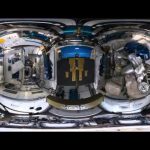
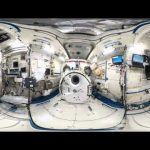
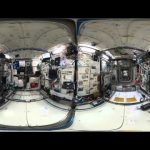
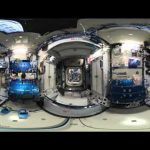
Explore the International Space Station’s Tranquility module from all angles on your mobile phone or headset
Node-3 Tranquility provides life-support for the International Space Station. Part of Tranquility is ESA’s Cupola observation module, a seven-window dome-shaped structure from where the Space Station’s robotic arm, Canadarm 2, is operated as it offers a panoramic view of space and Earth. Launched on Space Shuttle flight STS-130 in February 2010, Node-3 was attached to the port side of Node-1 Unity. Read more on ESA’s Node-3 minisite: http://www.esa.int/Our_Activities/Human_Spaceflight/Node-3_Cupola
Explore Node 3 in Flickr, Facebook or YouTube format with your mobile phone and virtual-reality headset, or take the full tour including all Space Station modules with videos and extra information below. This is the final Space Station module in 360°.
Explore Japan’s Kibo space laboratory with your mobile phone or VR headset in this panorama.
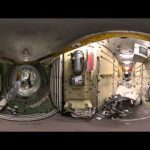
This 360° panorama lets you explore the International Space Station’s seventh module, Kibo. It was launched in three parts in 2008 and 2009 aboard Space Shuttles Atlantis and Endeavour.
The laboratory is renowned for its volume and extra features such as its external robotic arm, an airlock to send experiments outside, and an external facility to expose experiments to space. Nanosats can be launched from Kibo through the airlock, making the Station a base for deploying satellites as well as a weightless research centre for biology, physics and medicine.
Explore Kibo in YouTube, Flickr or Facebook format with your mobile phone and virtual-reality headset, or take the full tour including all Space Station modules with videos and extra information below. We will release a new Space Station module in 360° every week on Thursday.
Explore Europe’s Columbus space laboratory with your mobile phone or VR headset in this panorama.
This 360° panorama lets you explore the International Space Station’s sixth module, Columbus. It was launched on 7 February 2008 on Space Shuttle Atlantis. The laboratory is ESA’s largest single contribution to the Station, and Europe’s first permanent research facility in space.
The state-of-the-art facility offers 75 cubic metres of workspace and contains a suite of research equipment. External platforms support experiments and applications in space science, Earth observation and technology.
Columbus offers European scientists full access to a weightless environment that cannot be duplicated on Earth.
Explore Columbus in Flickr, Facebook or YouTube format with your mobile phone and virtual-reality headset, or take the full tour including all Space Station modules with videos and extra information below. We will release a new Space Station module in 360° every week on Thursday.
ESA astronaut Tim Peake shares his views of Earth and his six-month Principia mission while on the International Space Station. Narrated by Tim himself taken from interviews while in space, this video shows the best views, experiments and shares the experience of Tim’s life in space.
Explore the International Space Station’s Harmony module in this full panorama with your mobile phone or VR headset.
This 360° panorama lets you explore the International Space Station’s fifth module, Harmony. It was launched on 23 October 2007 aboard Space Shuttle Discovery to link the Columbus, Kibo and Destiny laboratories.
Harmony was developed for NASA under an ESA contract with European industry. Its structure is based on that of the Multi-Purpose Logistics Modules and the Europe’s Columbus.
Explore Harmony in YouTube, Flickr or Facebook format with your mobile phone and virtual-reality headset, or take the full tour including all Space Station modules with videos and extra information below. We will release a new Space Station module in 360° every week on Thursday.
Explore NASA’s space laboratory for the International Space Station from every angle in this panorama.
This 360° panorama lets you explore the International Space Station’s fourth module, Destiny. Launched on 7 February 2001 on Space Shuttle Atlantis, the American module is the heart of the non-Russian part of the Station according to ESA astronaut Samantha Cristoforetti (who took the pictures to create this view). The module allows experiments to be performed in many disciplines, from biology to physics, including a rack for burning liquids in weightlessness and the European Microgravity Science Glovebox.
Explore Destiny in Flickr, Facebook or YouTube format with your mobile phone and virtual-reality headset, or take the full tour including all Space Station modules with videos and extra information below. We will release a new Space Station module in 360° every week on Thursday.
Explore the heart of the Russian segment of the International Space Station in this global view.
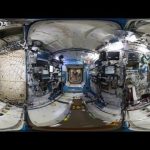
This 360° panorama allows you to explore the International Space Station’s third module, Zvezda. Launched on 12 July 2000, the Russian module supplies life support for the Station and crewquarters. All five of Europe’s Automated Transfer Vehicles docked with the module.
The images to create this view were taken by ESA astronaut Samantha Cristoforetti during her Futura mission in 2015; the cosmonaut in the picture is Gennady Padalka.
Explore Zvezda in Flickr, Facebook or YouTube format with your mobile phone and virtual-reality headset, or take the full tour including all Space Station modules with videos and extra information below. We will release a new Space Station module in 360° every week on Thursday.
Gyroscopes form an important in keeping the International Space Station and satellites pointing the right way as they orbit our planet.
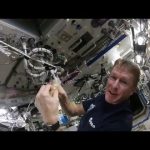
ESA astronaut Tim Peake shows how gyroscopes can be used to keep spacecraft stable during his six-month Principia mission.
There is no up or down in space. Satellites track their pointing direction using the same approach as on submarines and aircraft: fast-spinning gyroscopes that maintain a fixed orientation in the same way as a child’s spinning top. The International Space Station has four big gyroscopes which are used for stabilization of the Station.
“If I have seen further, it is by standing on the shoulders of giants” is the famous quote by renowned scientist Sir Isaac Newton. This is particularly apt as a title for this video summary of ESA astronaut Tim Peake’s Principia mission – named after Newton’s monumental work Philosophiae Naturalis Principia and now building on the work of previous European astronaut missions, while being supported by a huge team of scientists and engineers on the ground.
The music accompanying this video was chosen by Tim, coming from the soundtrack of one of his favourite films, the 2004 movie Layer Cake. This piece is called ‘Drive to the Boatyard’, by internationally known British film composer Ilan Eshkeri. Ilan provided a slightly extended piece specially for ESA.
Tim comments: “I’m delighted with this video, which captures the essence of human spaceflight and natural beauty of our planet from space – all put to Ilan’s inspiring soundtrack!”
Explore the Space Station’s first module with your mobile phone or virtual-reality headset
This 360° video allows you to explore the International Space Station’s first module, Zarya. Launched on 20 November 1998, it was joined three weeks later by the US Unity module. Also known as the Functional Cargo Block, the module is now mainly used for storage.
ESA astronaut Samantha Cristoforetti took the pictures to form these images in June 2015 at the end of her 199-day Futura mission.
Explore this module in Flickr, Facebook or Youtube format with your mobile phone or take the full International Space Station tour on the ESA website with videos and extra information.
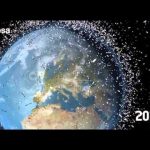
The story of space debris highlighting how the unintended consequences of intense spaceflight activity during the past 60 years has resulted in a growing population of debris objects that pose hazards to safe space navigation. In 2013, experts estimate that 29 000 objects larger than 10 cm were orbiting Earth.
The video also highlights the current state of debris mitigation measures and presents several concepts for removing defunct satellites from economically vital orbits now being studied by space agencies and industry across Europe.
This video was produced for the 6th European Conference on Space Debris, 22-25 April 2013.
On Dec. 11 aboard the International Space Station, NASA’s Kjell Lindgren, Russian cosmonaut Oleg Kononenko and Kimiya Yui of the Japan Aerospace Exploration Agency, bid farewell to crew members remaining on the station — including Commander Scott Kelly, NASA’s one-year mission astronaut. The returning members of Expedition 45 then climbed aboard their Soyuz spacecraft for the trip back to Earth. They safely touched down hours later in Kazakhstan – closing out a 141-day stay in space. Also, Next space station crew prepares for launch, Supply mission arrives at space station, Quantum computing lab and more!
We have all heard of climate change, but what’s really happening to our planet now, in November 2015? As the COP21 summit in Paris looms in December, we set out to establish some of the scientific fundamentals, and hear how space technology is being used to get a truly global view of Earth’s vital signs.
Near Les Deux Alps in the French Alps, some 3,200 metres above sea level, we look at how satellite data and glacier measurements can help us to understand the effects of global warming with remote sensing scientist Jean-Pierre Dedieu.
There are lots of names associated with space rocks, so what is the difference? Join the Royal Observatory Greenwich astronomers to find out. They will also explore what space rocks can tell us about our very own planet Earth. http://bit.ly/rogvideo #rogspacerocks
Meet some real-life robots, and find out what robots really are, and what they do for us every day!
———-
Like SciShow? Want to help support us, and also get things to put on your walls, cover your torso and hold your liquids? Check out our awesome products over at DFTBA Records: http://dftba.com/SciShow
ESA astronaut Samantha Cristoforetti photographs stunning Earth images of Lufthansa worldwide destinations during her Futura mission onboard the ISS. An ESA for Lufthansa inflight film.
Mackenzie Davis and Sebastian Stan, stars of 20th Century Fox’s Film “The Martian”, got a tour from Johnson Space Center Director Ellen Ochoa. News media followed the tour taking a peek at what NASA’s “Real Martians” are working on.
For more videos of the visit: Space Station Crew Members Talk to Cast of The Martian https://youtu.be/hD4WX-X0hBc
Aboard the International Space Station, Expedition 45 Commander Scott Kelly and Flight Engineer Kjell Lindgren of NASA took time out of their work schedule to talk to Sebastian Stan and Mackenzie Davis, cast members of the new movie “The Martian”, during a visit they made to Mission Control at the Johnson Space Center, Houston Sept. 15. They were joined by JSC Director Ellen Ochoa. Kelly is at the midway point of a year-long mission aboard the orbital laboratory with Russian cosmonaut Mikhail Kornienko of the Russian Federal Space Agency (Roscosmos), gathering valuable biomedical data that will be used in the formulation of a future human mission to Mars. Lindgren, who is a medical doctor, is beginning the third month of a five-month mission on the outpost.