Ten years ago, on 19 December 2013, our billion star-mapping satellite Gaia launched.
Since then, Gaia has been scanning the sky and gathering an enormous amount of data on the positions and motions of 1.8 billion stars, enabling discoveries about the history of our galaxy.
Gaia is creating an extraordinarily precise three-dimensional map of more than a billion stars throughout our Milky Way galaxy and beyond, mapping their motions, luminosity, temperature and composition.
This huge stellar census will provide the data needed to tackle an enormous range of important questions related to the origin, structure and evolutionary history of our galaxy.
Gaia’s catalogue is ever-growing containing data on stars and other cosmic objects such as galaxies, exoplanets, and binary stars. Here’s to more discoveries!
Introdu codul “Presura” pentru a abține o ofertă exclusivă de Black Friday de la Surfshark:👇 https://surfshark.deals/presura 00:02:03 – Nașterea stelelor 00:05:02 – Temperatura stelelor 00:07:06 – Pitice roșii
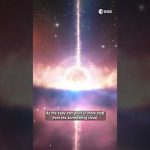
This video zooms in towards the protostar L152 to reveal the object as seen by the NASA/ESA/CSA James Webb Space Telescope, embedded within a cloud of material that is feeding its growth. Material ejected from the star has cleared out cavities above and below it, whose boundaries glow orange and blue in this infrared view. The upper central region displays bubble-like shapes due to stellar ‘burps,’ or sporadic ejections. Webb also detects filaments made of molecular hydrogen that has been shocked by past stellar ejections. Intriguingly, the edges of the cavities at upper left and lower right appear straight, while the boundaries at upper right and lower left are curved. The region at lower right appears blue, as there’s less dust between it and Webb than the orange regions above it.
Credit: ESA/Webb, NASA, CSA, unWISE/JPL-Caltech/D. Lang (Perimeter Institute), E. Slawik, N. Risinger, N. Bartmann, M. Zamani Music: Tonelabs – The Red North (www.tonelabs.com)
★ Subscribe: http://bit.ly/ESAsubscribe and click twice on the bell button to receive our notifications.
We are Europe’s gateway to space. Our mission is to shape the development of Europe’s space capability and ensure that investment in space continues to deliver benefits to the citizens of Europe and the world. Check out https://www.esa.int/ to get up to speed on everything space related.
This video takes the viewer on a journey through space to one of Webb’s first observations in 2022, the Wolf-Rayet star WR 124, seen here in unprecedented detail.
Despite being the scene of an impending stellar ‘death’, astronomers also look to Wolf-Rayet stars for insights into new beginnings. Cosmic dust is forming in the turbulent nebulas surrounding these stars, dust that is composed of the heavy-element building blocks of the modern Universe, including life on Earth.
Credit: NASA, ESA, CSA, STScI, Webb ERO Production Team, DSS, N. Bartmann (ESA/Webb), E. Slawik, N. Risinger, D. de Martin (ESA/Webb), M. Zamani (ESA/Webb) Music: Tonelabs – The Red North (www.tonelabs.com)
★ Subscribe: http://bit.ly/ESAsubscribe and click twice on the bell button to receive our notifications.
We are Europe’s gateway to space. Our mission is to shape the development of Europe’s space capability and ensure that investment in space continues to deliver benefits to the citizens of Europe and the world. Check out https://www.esa.int/ to get up to speed on everything space related.
Two teams of astronomers using ESA’s XMM-Newton space telescope have observed repeated outbursts of light from inactive black holes that partially destroy stars again and again. This discovery is unexpected, since outbursts of black holes usually appear only once when a black hole consumes a star.
We are Europe’s gateway to space. Our mission is to shape the development of Europe’s space capability and ensure that investment in space continues to deliver benefits to the citizens of Europe and the world. Check out https://www.esa.int/ to get up to speed on everything space related.
These are termed “tidal disruption events.” But the wording belies the complex, raw violence of a black hole encounter. There is a balance between the black hole’s gravity pulling in star stuff, and radiation blowing material out. In other words, black holes are messy eaters. Astronomers are using Hubble to find out the details of what happens when a wayward star plunges into the gravitational abyss.
We are Europe’s gateway to space. Our mission is to shape the development of Europe’s space capability and ensure that investment in space continues to deliver benefits to the citizens of Europe and the world. Check out https://www.esa.int/ to get up to speed on everything space related.
Three different moments in a far-off supernova explosion were captured in a single snapshot by the NASA/ESA Hubble Space Telescope. The progenitor star exploded more than 11 billion years ago, when the Universe was less than a fifth of its current age of 13.8 billion years.
📹 @EuropeanSpaceAgency
📸 @NASA, ESA, STScI, Wenlei Chen (UMN), Patrick Kelly (UMN), Hubble Frontier Fields
★ Subscribe: http://bit.ly/ESAsubscribe and click twice on the bell button to receive our notifications.
We are Europe’s gateway to space. Our mission is to shape the development of Europe’s space capability and ensure that investment in space continues to deliver benefits to the citizens of Europe and the world. Check out https://www.esa.int/ to get up to speed on everything space related.
The first clue came when the star mysteriously darkened in late 2019. An immense cloud of obscuring dust formed from the ejected surface as it cooled. Astronomers have now pieced together a scenario for the upheaval. And the star is still slowly recovering; the photosphere is rebuilding itself. And the interior is reverberating like a bell that has been hit with a sledgehammer, disrupting the star’s normal cycle. This doesn’t mean the monster star is going to explode any time soon, but the late-life convulsions may continue to amaze astronomers.
We are Europe’s gateway to space. Our mission is to shape the development of Europe’s space capability and ensure that investment in space continues to deliver benefits to the citizens of Europe and the world. Check out https://www.esa.int/ to get up to speed on everything space related.
This sequence was taken by Solar Orbiter’s Extreme Ultraviolet Imager using the Full Sun Imager telescope, and shows the Sun at a wavelength of 17 nanometers. This wavelength is emitted by gas in the Sun’s atmosphere with a temperature of around one million degrees. The colour on this image has been artificially added because the original wavelength detected by the instrument is invisible to the human eye.
Credit: ESA & @NASA /Solar Orbiter/EUI Team
★ Subscribe: http://bit.ly/ESAsubscribe and click twice on the bell button to receive our notifications.
We are Europe’s gateway to space. Our mission is to shape the development of Europe’s space capability and ensure that investment in space continues to deliver benefits to the citizens of Europe and the world. Check out https://www.esa.int/ to get up to speed on everything space related.
These spectacular images feature the spiral galaxy IC 5332, taken by the @NASA/ESA Hubble Space Telescope and the NASA/ESA/ @Canadian Space Agency James Webb Space Telescope. The images display the powerful capabilities that both world-leading space telescopes provide, especially when combining their data.
We are Europe’s gateway to space. Our mission is to shape the development of Europe’s space capability and ensure that investment in space continues to deliver benefits to the citizens of Europe and the world. Check out https://www.esa.int/ to get up to speed on everything space related.
The Small Magellanic Cloud has a simpler chemical composition than the Milky Way, making it similar to the galaxies found in the younger Universe, when heavier elements were more scarce. Because of this, the stars in the Small Magellanic Cloud burn hotter and so run out of their fuel faster than in our Milky Way. Though a proxy for the early universe, at 200 000 light-years away the Small Magellanic Cloud is also one of our closest galactic neighbours.
We are Europe’s gateway to space. Our mission is to shape the development of Europe’s space capability and ensure that investment in space continues to deliver benefits to the citizens of Europe and the world. Check out https://www.esa.int/ to get up to speed on everything space related.
Thousands of never-before-seen young stars are spotted in a stellar nursery called 30 Doradus, captured by the @NASA/ESA/@Canadian Space Agency James Webb Space Telescope. Nicknamed the Tarantula Nebula for the appearance of its dusty filaments in previous telescope images, the nebula has long been a favourite for astronomers studying star formation. In addition to young stars, Webb reveals distant background galaxies, as well as the detailed structure and composition of the nebula’s gas and dust.
We are Europe’s gateway to space. Our mission is to shape the development of Europe’s space capability and ensure that investment in space continues to deliver benefits to the citizens of Europe and the world. Check out https://www.esa.int/ to get up to speed on everything space related.
New images of the spectacular Phantom Galaxy, M74, showcase the power of space observatories working together in multiple wavelengths. In this case, data from the @NASA / ESA / @canadianspaceagency James Webb Space Telescope and the NASA/ESA Hubble Space Telescope compliment each other to provide a comprehensive view of the galaxy.
We are Europe’s gateway to space. Our mission is to shape the development of Europe’s space capability and ensure that investment in space continues to deliver benefits to the citizens of Europe and the world. Check out https://www.esa.int/ to get up to speed on everything space related.
One of the surprising discoveries coming out of Gaia data release 3, is that Gaia is able to detect starquakes – tiny motions on the surface of a star – that change the shapes of stars, something the observatory was not originally built for.
Previously, Gaia already found radial oscillations that cause stars to swell and shrink periodically, while keeping their spherical shape. But Gaia has now also spotted other vibrations that are more like large-scale tsunamis. These nonradial oscillations change the global shape of a star and are therefore harder to detect.
Nonradial oscillation modes cause a star’s surface to move while it rotates, as shown in the animation. Dark patches are slightly cooler than bright patches, giving rise to periodic changes in the brightness of the star. The frequency of the rotating and pulsating stars was increased 8.6 million times to shift them into the audible range of humans.
Credit: ESA/Gaia/DPAC, CC BY-SA 3.0 IGO. Acknowledgement: Animation and sonification were created by: Dr. Joey Mombarg, KU Leuven, Belgium. Based on information from Gaia Data Release 3: Pulsations in main-sequence OBAF stars as observed by Gaia by the Gaia Collaboration, De Ridder et al., 2022, submitted to A&A. Van Reeth et al. 2015, ApJS 218, id.2, 32 pp. Mombarg et al. 2021, A&A 650, id.A58, 23 pp.
★ Subscribe: http://bit.ly/ESAsubscribe and click twice on the bell button to receive our notifications.
We are Europe’s gateway to space. Our mission is to shape the development of Europe’s space capability and ensure that investment in space continues to deliver benefits to the citizens of Europe and the world. Check out https://www.esa.int/ to get up to speed on everything space related.
Since its launch in 2013 ESA’s Gaia observatory has been mapping our galaxy from Lagrange point 2, creating the most accurate and complete multi-dimensional map of the Milky Way. By now two full sets of data have been released, the first set in 2016 and a second one in 2018. These data releases contained stellar positions, distances, motions across the sky, and colour information, among others. Now on 13 June 2022 a third and new full data set will be released. This data release will contain even more and improved information about almost 2 billion stars, Solar System objects and extragalactic sources. It also includes radial velocities for 33 million stars, a five-time increase compared to data release 2. Another novelty in this data set is the largest catalogue yet of binary stars in the Milky Way, which is crucial to understand stellar evolution.
We are Europe’s gateway to space. Our mission is to shape the development of Europe’s space capability and ensure that investment in space continues to deliver benefits to the citizens of Europe and the world. Check out https://www.esa.int/ to get up to speed on everything space related.
Solar Orbiter is a space mission of international collaboration between ESA and @NASA.
Solar Orbiter’s closest approach to the Sun, known as perihelion, took place on 26 March. The spacecraft was inside the orbit of Mercury, at about one-third the distance from the Sun to the Earth, and its heatshield was reaching around 500°C. But it dissipated that heat with its innovative technology to keep the spacecraft safe and functioning.
Star Trek has served as inspiration to generations of scientists, engineers and sci-fi fans around the world. Join Rod Roddenberry, Gene Roddenberry’s son and Roddenberry Entertainment CEO, George Takei, actor and activist, Administrator Bill Nelson and some of NASA’s best and brightest as they honor Star Trek creator Gene Roddenberry’s 100th birthday with a conversation about diversity and inspiration. NASA panelists include: Hortense Diggs, Director of the Office of Communication and Public Engagement at NASA’s Kennedy Space Center, Tracy Drain, Europa Clipper Flight Systems Engineer, astronaut Jonny Kim, and Swati Mohan, Mars 2020 Guidance and Controls Operations Lead.
00:00-2:55 Administrator Nelson’s opening remarks 2:55-5:23 Rod Roddenberry’s opening remarks 5:23-6:30 Rod Roddenberry introduces panelists 6:30-10:25 George Takei recalls his experience with Star Trek 10:25-20:29 Panelists discuss what inspires them 20:29-29:03 Q/A from George Takei 29:03-41:21 Panelists discuss how they got to where they are today 41:21-43:17 Rod Roddenberry’s closing remarks
ESA’s Solar Orbiter spacecraft has sent back its first images of the Sun. At 77 million kilometres from the surface, this is the closest a camera has ever flown to our nearest star. The pictures reveal features on the Sun’s exterior that have never been seen in detail before.
Launched on 10 February 2020, the spacecraft completed its commissioning phase and first close-approach to the Sun in mid-June. Since then, science teams have been processing and examining this early data.
The spacecraft is currently in its cruise phase, on its way to Venus, but will eventually get even closer to the Sun.
We are Europe’s gateway to space. Our mission is to shape the development of Europe’s space capability and ensure that investment in space continues to deliver benefits to the citizens of Europe and the world. Check out http://www.esa.int/ESA to get up to speed on everything space related.
The first images from ESA’s Solar Orbiter, captured around the spacecraft’s first close pass of the Sun, some 77 million kilometres from its surface, are already exceeding expectations revealing interesting new phenomena on our parent star.
This animation shows a series of close-up views captured by the Extreme Ultraviolet Imager (EUI) at wavelengths of 17 nanometers, showing the upper atmosphere of the Sun, or corona, with a temperature of around 1 million degrees.
These images reveal a multitude of small flaring loops, erupting bright spots and dark, moving fibrils. A ubiquitous feature of the solar surface, uncovered for the first time by these images, have been called ‘campfires’. They are omnipresent minuature eruptions that could be contributing to the high temperatures of the solar corona and the origin of the solar wind.
Captured on 30 May 2020, when Solar Orbiter was roughly halfway between the Earth and the Sun, these are the closest views of the Sun ever taken, allowing EUI to see features in the solar corona of only 400 km across. As the mission continues, Solar Orbiter will go closer to the Sun and this will increase the instrument’s resolving power by a factor of two at closest approach.
The colour on this image has been artificially added because the original wavelength detected by the instrument is invisible to the human eye.
The circle in the lower left corner indicates the size of Earth for scale.
The extended grey shape visible at times moving across the field (00:00-00:25; 01:00-01:28; 01:50-02:00; 02:52-03:27) is not a solar feature but is caused by a sensor artefact.
Solar Orbiter is a space mission of international collaboration between ESA and NASA.
We are Europe’s gateway to space. Our mission is to shape the development of Europe’s space capability and ensure that investment in space continues to deliver benefits to the citizens of Europe and the world. Check out http://www.esa.int/ESA to get up to speed on everything space related.
The first images from ESA’s Solar Orbiter are already exceeding expectations and revealing interesting new phenomena on the Sun.
This animation combines a series of views captured with several remote-sensing instruments on Solar Orbiter between 30 May and 21 June 2020, when the spacecraft was roughly halfway between the Earth and the Sun ¬– closer to the Sun than any other solar telescope has ever been before.
The red and yellow images were taken with the Extreme Ultraviolet Imager (EUI) in the extreme ultraviolet region of the electromagnetic spectrum, at wavelengths of 30 and 17 nanometers, respectively.
The close-up views by EUI show the upper atmosphere of the Sun, or corona, with a temperature of around 1 million degrees. With the power to see features in the solar corona of only 400 km across, these images reveal a multitude of small flaring loops, erupting bright spots and dark, moving fibrils. A ubiquitous feature of the solar surface, uncovered for the first time by these images, have been called ‘campfires’. They are omnipresent minuature eruptions that could be contributing to the high temperatures of the solar corona and the origin of the solar wind.
The EUI images are followed by three views based on data from the Polarimetric and Helioseismic Imager (PHI) instrument. The blue and red view is a ‘tachogram’ of the Sun, showing the line of sight velocity of the Sun, with the blue side turning to us and the red side turning away. The following view is a magnetogram, or a map of magnetic propertied for the whole Sun, featuring a large magnetically active region in the lower right-hand quadrant of the Sun. The yellow-orange view is a visible light image and represents what we would see with the naked eye: there are no sunspots visible because the Sun is displaying only low levels of magnetic activity at the moment.
On larger scales, the Metis coronograph blocks out the dazzling light from the solar surface, bringing the fainter corona into view. Metis observes the corona simultaneously in visible light (shown in green) and ultraviolet light (shown in red) for the first time with unprecedented temporal coverage and spatial resolution. These images reveal the two bright equatorial streamers and fainter polar regions that are characteristic of the solar corona during times of minimal magnetic activity.
On even grander scales, the Heliospheric Imager (SoloHI) telescope takes images of the solar wind – the stream of charged particles constantly released by the Sun into outer space – by capturing the light scattered by electrons in the wind. The first-light image from SoloHI is shown at the end, as a mosaic of four separate images from the instrument’s four separate detectors. In this view, the Sun is located to the right of the frame, and its light is blocked by a series of baffles; the last baffle is in the field of view on the right-hand side and is illuminated by reflections from the solar array. The partial ellipse visible on the right is the zodiacal light, created by sunlight reflecting off the dust particles that are orbiting the Sun. The signal from the solar wind outflow is faint compared to the much brighter zodiacal light signal, but the SoloHI team has developed techniques to reveal it. Planet Mercury is also visible as a small bright dot near the lower edge of the upper left tile.
Solar Orbiter is a space mission of international collaboration between ESA and NASA.
We are Europe’s gateway to space. Our mission is to shape the development of Europe’s space capability and ensure that investment in space continues to deliver benefits to the citizens of Europe and the world. Check out http://www.esa.int/ESA to get up to speed on everything space related.
Each year, the NASA/ESA Hubble Space Telescope dedicates a small portion of its precious observing time to taking a special anniversary image, showcasing particularly beautiful and meaningful objects. These images continue to challenge scientists with exciting new surprises and to enthral the public with ever more evocative observations.
To celebrate Hubble’s 30th anniversary, let’s look back at the beauty and science behind each of the anniversary images unveiled as of 2005. In this video, we will also feature the very special 2020 Hubble Space Telescope 30th anniversary image.
Credit:
Directed by: Bethany Downer
Visual design and editing: Martin Kornmesser
Written by: Bethany Downer
Narration: Sara Mendes da Costa
Images & VIdeos: NASA, ESA, M.Kornmesser, L. Calçada, ESO, NAOJ, G. Bacon, L. Frattare, Z. Levay and F. Summers (STScI/AURA), D. Lennon and E. Sabbi (ESA/STScI), J. Anderson, S.E. de Mink, R. van der Marel, T. Sohn, and N. Walborn (STScI), L. Bedin (INAF, Padua), C. Evans (STFC), H. Sana (Amsterdam), N. Langer (Bonn), P. Crowther (Sheffield), A. Herrero (IAC, Tenerife), N. Bastian (USM, Munich), and E. Bressert (ESO), the Hubble Heritage Team, T. Davis, L. Frattare, Z. Levay, (Viz 3D team, STScI), J. Anderson (STScI), the Hubble Heritage Team (STScI/AURA), A. Nota (ESA/STScI), and the Westerlund 2 Science Team, Eckhard Slawik (e.slawik@gmx.net).
Music: Johan B. Monell (www.johanmonell.com
Web and technical support: Raquel Yumi Shida
Executive producer: Mariya Lyubenova
★ Subscribe: http://bit.ly/ESAsubscribe and click twice on the bell button to receive our notifications.
We are Europe’s gateway to space. Our mission is to shape the development of Europe’s space capability and ensure that investment in space continues to deliver benefits to the citizens of Europe and the world. Check out http://www.esa.int/ESA to get up to speed on everything space related.
On 24 April 1990 the NASA/ESA Hubble Space Telescope was sent into orbit aboard the space shuttle Discovery, the first space telescope of its kind. It offered a new view of the Universe and has, for 30 years, reached and surpassed all expectations, beaming back data and images that have changed scientists’ understanding of the Universe and the public’s perception of it. Hubble’s discoveries have revolutionised nearly all areas of current astronomical research, from planetary science to cosmology, and its pictures are unmistakably out of this world.
This video revisits some of Hubble’s biggest science discoveries throughout its three decades of operation to celebrate the telescope’s 30th anniversary.
Credit:
Directed by: Bethany Downer
Visual design and editing: Martin Kornmesser
Written by: Bethany Downer
Narration: Sara Mendes da Costa
Images & Videos: NASA, ESA, M.Kornmesser, L. Calçada, ESO, G. Bacon (STScI), theHubble Heritage Team (STScI/AURA)-ESA/Hubble Collaboration, and H. Bond (STScI and Pennsylvania State University), A. Feild (STScI), and A. Riess (STScI/JHU), D. Jewitt (UCLA), F. Summers, Z. Levay, J. DePasquale, L. Hustak, L. Frattare, M. Robberto (STScI), R. Hurt (Caltech/IPAC) Acknowledgement: R. Gendler, spaceengine.org.
Music: Johan B. Monell (www.johanmonell.com)
Web and technical support: Raquel Yumi Shida
Executive producer: Mariya Lyubenova
★ Subscribe: http://bit.ly/ESAsubscribe and click twice on the bell button to receive our notifications.
We are Europe’s gateway to space. Our mission is to shape the development of Europe’s space capability and ensure that investment in space continues to deliver benefits to the citizens of Europe and the world. Check out http://www.esa.int/ESA to get up to speed on everything space related.
This month marks the 30th anniversary of the international Hubble Space Telescope.
Launched on 24 April 1990, and deployed from the Space Shuttle Discovery cargo bay a day later (25 April 1990), the telescope has given us a new perspective on the Universe.
The joint NASA/ESA mission has shown us distant galaxies and spectacular nebulae. It has revealed supermassive black holes and planets in distant solar systems; and has proved that the Universe is not only expanding, the expansion is accelerating.
Hubble’s mission has also been eventful. When it was first launched, a defect in the mirror meant it sent back blurry images. Since then, five servicing missions have enabled the telescope to be improved and upgraded. Today, it is still going strong.
We are Europe’s gateway to space. Our mission is to shape the development of Europe’s space capability and ensure that investment in space continues to deliver benefits to the citizens of Europe and the world. Check out http://www.esa.int/ESA to get up to speed on everything space related.
Highlights from the preparation and liftoff of ESA’s Sun-exploring mission Solar Orbiter.
Solar Orbiter lofted to space aboard the US Atlas V 411 rocket from NASA’s spaceport in Cape Canaveral, Florida at 04:03 GMT (05:03 CET) on 10 February 2020.
An ESA-led mission with strong NASA participation, Solar Orbiter carries a set of ten instruments for imaging the surface of the Sun and studying the environment in its vicinity. The spacecraft will travel around the Sun on an elliptical orbit that will take it as close as 42 million km away from the Sun’s surface, about a quarter of the distance between the Sun and Earth. The orbit will allow Solar Orbiter to see some of the never-before-imaged regions of the Sun, including the poles, and shed new light on what gives rise to solar wind, which can affect infrastructure on Earth.
We are Europe’s gateway to space. Our mission is to shape the development of Europe’s space capability and ensure that investment in space continues to deliver benefits to the citizens of Europe and the world. Check out http://www.esa.int/ESA to get up to speed on everything space related.
ESA’s new Sun-exploring mission Solar Orbiter lofted to space aboard the US Atlas V 411 rocket from NASA’s spaceport in Cape Canaveral, Florida at 04:03 GMT (05:03 CET) on 10 February 2020.
Solar Orbiter, an ESA-led mission with strong NASA participation, carries a set of ten instruments for imaging the surface of the Sun and studying the environment in its vicinity. The spacecraft will travel around the Sun on an elliptical orbit that will take it as close as 42 million km away from the Sun’s surface, about a quarter of the distance between the Sun and Earth. The orbit will allow Solar Orbiter to see some of the never-before-imaged regions of the Sun, including the poles, and shed new light on what gives rise to solar wind, which can affect infrastructure on Earth.
We are Europe’s gateway to space. Our mission is to shape the development of Europe’s space capability and ensure that investment in space continues to deliver benefits to the citizens of Europe and the world. Check out http://www.esa.int/ESA to get up to speed on everything space related.
ESA’s Solar Orbiter satellite in a cleanroom at the Astrotech payload processing facility near Kennedy Space Centre, Florida. The spacecraft is seen being mounted onto the payload adaptor ring and encapsulated into a fairing, which will protect the satellite and the rocket upper stage during the turbulent ascent through Earth’s atmosphere.
We are Europe’s gateway to space. Our mission is to shape the development of Europe’s space capability and ensure that investment in space continues to deliver benefits to the citizens of Europe and the world. Check out http://www.esa.int/ESA to get up to speed on everything space related.
ESA’s new Sun-explorer, Solar Orbiter, will capture close-up images of never before seen regions of our parent star, including the poles, and study the electromagnetic environment in its vicinity. The cutting-edge spacecraft will get as close as 42 million kilometres away from the Sun, about a quarter of the distance between the Sun and Earth, and face scorching temperatures of up to 500°C.
ESA has a long history of studying the Sun from space. Since the launch of Ulysses in 1990, the agency has led or cooperated on several Sun-exploring missions including SOHO, the Cluster quartet and Proba-2.
We are Europe’s gateway to space. Our mission is to shape the development of Europe’s space capability and ensure that investment in space continues to deliver benefits to the citizens of Europe and the world. Check out http://www.esa.int/ESA to get up to speed on everything space related.
ESA’s Solar Orbiter is getting ready for its launch on an Atlas V rocket provided by NASA and operated by United Launch Alliance from Cape Canaveral, Florida.
Once in space, and over the course of several years, the spacecraft will repeatedly use the gravity of Venus and Earth to raise its orbit above the poles of the Sun, providing new perspectives on our star, including the first images of the Sun’s polar regions.
All these operations will be controlled from the European Space Operations Centre (ESOC), Germany, where a dedicated team is currently working on simulations of the first moments in orbit, after separation from the launcher, but also all the delicate manoeuvres of the journey that will make Solar Orbiter mission possible.
We are Europe’s gateway to space. Our mission is to shape the development of Europe’s space capability and ensure that investment in space continues to deliver benefits to the citizens of Europe and the world. Check out http://www.esa.int/ESA to get up to speed on everything space related.
ESA’s mission to the Sun, Solar Orbiter, is due for launch on an Atlas V 411 from Cape Canaveral, Florida on 9 February 23:03 EST / 04:03 GMT / 05:03 CET on 10 Feb.
Equipped with a suite of ten scientific instruments, Solar Orbiter will capture the first images of the Sun’s poles and make detailed observations of solar activity. Its specially designed heatshield is capable of enduring temperatures of more than 500ºC.
Solar Orbiter is a space mission of international collaboration between ESA and NASA. The spacecraft has been developed by Airbus.
We are Europe’s gateway to space. Our mission is to shape the development of Europe’s space capability and ensure that investment in space continues to deliver benefits to the citizens of Europe and the world. Check out http://www.esa.int/ESA to get up to speed on everything space related.
What is ESA’s Characterising Exoplanet Satellite, Cheops, and how will it improve our knowledge of exoplanets? Find out more in this interview with Kate Isaak, ESA Cheops project scientist.
We are Europe’s gateway to space. Our mission is to shape the development of Europe’s space capability and ensure that investment in space continues to deliver benefits to the citizens of Europe and the world. Check out http://www.esa.int/ESA to get up to speed on everything space related.
Launched in December 2013, the Gaia mission is revolutionising our understanding of the Milky Way. The space telescope is mapping our galaxy in unprecedented detail – measuring the position, movement and distance of stars.
At a meeting in Groningen in the Netherlands, scientists have been discussing the challenge of processing and visualising Gaia data.
We are Europe’s gateway to space. Our mission is to shape the development of Europe’s space capability and ensure that investment in space continues to deliver benefits to the citizens of Europe and the world. Check out http://www.esa.int/ESA to get up to speed on everything space related.
Launched in December 2013, ESA’s Gaia satellite has been scanning the sky to perform the most precise stellar census of our Milky Way galaxy, observing more than one billion stars and measuring their positions, distances and motions to unprecedented accuracy.
The second Gaia data release, published in April, has provided scientists with extraordinary data to investigate the formation and evolution of stars in the Galaxy and beyond, giving rise to hundreds of scientific studies that are revolutionising our view of the cosmos.
Credits: ESA / CNES / Arianespace; ESA / Gaia / DPAC; Gaia Sky / S. Jordan / T. Sagristà; Koppelman, Villalobos and Helmi; Marchetti et al. 2018; NASA / ESA / Hubble; ESO, M. Kornmesser, L. Calçada
★ Subscribe: http://bit.ly/ESAsubscribe and click twice on the bell button to receive our notifications.
ESA is Europe’s gateway to space. Our mission is to shape the development of Europe’s space capability and ensure that investment in space continues to deliver benefits to the citizens of Europe and the world. Check out http://www.esa.int/ESA to get up to speed on everything space related.
To support Kurzgesagt and learn more about Brilliant, go to https://www.brilliant.org/nutshell and sign up for free. The first 688 people that go to that link will get 20% off the annual Premium subscription.
Are wormholes real or are they just magic disguised as physics and maths? And if they are real how do they work and where can we find them?
🐦🐧🐤 PATREON BIRD ARMY 🐤🐧🐦
▀▀▀▀▀▀▀▀▀▀▀▀▀▀▀▀▀▀▀▀▀▀▀▀▀▀
Many Thanks to our wonderful Patreons from http://kgs.link/patreon who support us every month and made this video possible:
Big Skapinsky, Liam Wenzel, Juan Gonzalez, Grigory Sarnitsky, Brandon Cleary, Amanda Hutchings, Siddharth Amarsee, Maciamo Hay, Nick T., Gabriel Correa, Matthew McAteer, Javier Silva Calvo, javier canella, Gergely Szakács, Pernox, Alana leonhardy, Tommi Moilanen, David DiGiovanni, Jack Bernstein, Jonas Steen Nielsen, Thomas Pyke, Gizem Ozdemir, ShiroiYami, Alice Bater, Ennio Sialiti, Alexander Evans, Eric Chan, Peter Noort, Adrian Haslinger, Tomasz Różalski, Miro Cibula, Lyle Jeff, Sunil Pai, Aurélien Delaux, Piotr Pałek, Øyvind Helland, Khloudalahbaby, Nicola Larosa, Dave, Montant, Eli V, ryan oberfield, Iain Garioch, Janina Lamøy, Saurischian, Zachary Osman, Cody Douglas, Can Berk Güder, Jason Lin, Eric Lugo, Emil Hjort, Luuk Perdaems, Brandon Carraway, Zack Methven, dava, Gauthier Muguerza, Tim Andreev, Robin Gielings, Mihai Anei, Pranab Kumar Mishra, jeong-min, An, Nerijana, jongre1512, Mike Levy, David W., Jakob Stams, Linda Yancey, Leo White, John, Justin Boh, Thot, Matthew Dyet, Andrei Stefan, Patrick McKelvy, Kervan Govender, Rajiv Cruz, Peter Duncan, Ramsey Elbasheer, Zhuang Miao, Brayden Sola, frikinside, Yasmeen Mawlawi, Loic Rebillard, Nicholas Miller, Philipp Bergamin, K. Gustavo Carlos, Albin, Connor Wilson, Talal Al-Khaldi, NURO, Durham Goode, Christopher Hadley, Sean Holland, iulian constantin, Pumpk!nH34D, Douwe de Jong, Jens Baumann, Vladislav Aleynikov, Joshua Olson, Andrew Boggs, William Wu, Andrew Mckinley, Eric Burnett, Benjamin Bromberg, Barry Costa, Philippe Ryll, Barbieri Davide, Claire Baldauf, Ondrej Debreceni, Benjamin Sairanen, Elija Peterson, Eki Hassa, Ryan K. Allen, Ville Vuorela, Reinhold Dunkl, Gloria Hope, Matti Hanberg, Moritz Roell, Marco Schmidt, Trey, Jiesi Ren, Maurice Simmons, Simon Sardeson-Coe, Sam Day, Orphansmith, Noah T Blanchard, Gerald Balla, Yannick van Andel, Khaled I. Johari
The second data release of ESA’s Gaia mission has produced an extraordinary catalogue of over one and a half billion stars in our galaxy. Based on observations between July 2014 to May 2016, it includes the most accurate information yet on the positions, brightness, distance, motion, colour and temperature of stars in the Milky Way as well as information on asteroids and quasars.
NOVA has teamed up with Cook’s Illustrated to cook up a recipe for stars and black holes – a culinary “course” on how the most mysterious objects in the universe are created.
What if everything in the universe came to your doorstep…in a box?! What The Physics is BACK! Future episodes will explore the universe—but first, let’s unbox it.
Subscribe: http://youtube.com/whatthephysics?sub…
↓Want more info?↓
SCIENTIFIC NOTES:
Explosive young stars
* The average lifetime of a star is about 10 billion years, but the bigger the star, the shorter its life. One rare type of star, called a hypergiant, can be tens, hundreds, or even a thousand times the mass of our sun. These stars burn out and explode into supernovae in just a few million years. http://www.guide-to-the-universe.com/hypergiant-star.html
Black holes
* Black holes form from the collapse of a massive star at the end of its life, but this only happens in stars about three times as massive as the sun. http://burro.case.edu/Academics/Astr201/EndofSun.pdf
How big is the universe?
* Probably infinite. No one knows the size of the universe for sure, and we may never know, but the latest thinking is that it probably goes on forever. https://map.gsfc.nasa.gov/universe/uni_shape.html
Standard cosmological model
* According to the standard cosmological model, the universe started with a big bang, underwent rapid inflation within the first fraction of a second, and continues to expand, driven by a vacuum energy called dark energy. All of the structure we see in the universe has come from interactions between dark energy and dark matter (which accounts for about 85% of the universe’s matter). This model describes and predicts many phenomena in the universe but is not perfect. https://physics.aps.org/articles/v8/108
False vacuum model
* The false vacuum model is a real, albeit unlikely theory. All the fundamental forces of nature have corresponding fields (e.g., gravitational fields, magnetic fields, etc.), and we generally believe that the universe is at rest in a global minimum of the potentials of those fields. But if we are instead at rest in a local minimum, or a “false vacuum,” the universe could potentially be nudged, catastrophically, into a lower minimum.
Recycling stars into life
* Before the first stars, the universe was all hydrogen and helium. All heavier elements, including the building blocks of life, were forged in stars.
Dark matter and dark energy
* Only 5% of the universe is made up of matter we can see. The “missing mass” later dubbed dark matter was first noticed in the 1930s; dark energy was discovered in the 1990s. In both cases, their existence was inferred by their effect on objects they interact with. However, they are still not directly observable, so nobody knows yet what they are made of.
Leftover light from the Big Bang
* The theory of the Big Bang predicted the existence of cool radiation pervading the universe, left over from its beginning. In an accidental discovery, two New Jersey scientists discovered the cosmic microwave background, a nearly uniform bath of radiation throughout the universe at a temperature of about 3 Kelvin, or -454 degrees Fahrenheit.
Gravitational waves
* Albert Einstein predicted the existence of gravitational waves in his theory of general relativity in 1916. According to his theory, the acceleration of massive objects, like black holes, should send ripples through space-time at the speed of light. A century after his prediction, two merging black holes sent a ripple through space-time that was detected on Earth as a signal that stretched the 4-kilometer arms of a detector by less than 1/1,000 the width of a proton.
Cosmic dust
* Cosmic dust is cast off from stars at the end of their lives and hovers in galaxies as clouds. These clouds of dust absorb ultraviolet and visible light, obscuring much of what lies behind them. This makes it notoriously difficult to study things like the dusty center of our galaxy.
The observable universe
* The universe is 13.8 billion years old. Since the distance we can observe is limited by the time it takes light to travel to Earth, we can only ever observe a fraction of the universe: an expanding sphere around us that is now about 46 billion years in radius. However, the universe is much larger than what we can observe.
CREDITS:
Host, Writer, Producer: Greg Kestin
Animation & Compositing: Danielle Gustitus
Contributing Writers: Lissy Herman, HCSUCS
Filming, Writing, & Editing Contributions from:
Samia Bouzid and David Goodliffe
Creation of Sad Star Image: Drew Ganon
Special thanks:
Julia Cort
Lauren Aguirre
Ari Daniel
Anna Rothschild
Allison Eck
Fernando Becerra
And the entire NOVA team
In celebration of Star Wars Day, NASA flight engineer Rick Mastracchio hopes to deliver a special message from the International Space Station. Little does he know, however, that the Empire plans to jam his transmissions. Thankfully, R2-D2 is on the case.