Dr. Canton sees the coming of more Artificial Intelligence uses in our everyday lives and in
solving global problems. He encourages us to think about its direction and how to maintain control of what we create.
Dr. James Canton is a leading global futurist, social scientist, keynote presenter, author, and visionary business advisor. For over 30 years, he has been insightfully predicting the key trends that have shaped our world. He is a leading authority on future trends with an emphasis on harnessing innovation. Dr. Canton has advised three White House Administrations and global business leaders.
This talk was given at a TEDx event using the TED conference format but independently organized by a local community. Learn more at http://ted.com/tedx
Besides its scientific and operational successes, the Rosetta mission has captured the imagination of many people worldwide, stimulating them to produce art and music, and undertake other creative activities with friends and families. Many even made further education or career choices inspired by the mission.This video features a selection of contributions that were shared on the Rosetta Legacy tumblr in September 2016.
Experience what it’s like to leave Earth, traveling to over 90,000 feet into the stratosphere. Never before has a 360 video been recorded at these heights – so buckle up and enjoy the view as Seeker takes you on a journey to the Edge of Space.
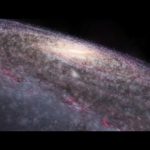
A virtual journey, from our Solar System through the Milky Way, based on data from the first release of ESA’s Gaia satellite.
The journey starts by looking back at the Sun, surrounded by its eight planets. We then move away from the Sun and travel towards and around the Hyades star cluster, the closest open cluster to the Solar System, some 150 light-years away.
The 3D positions of the stars shown in the animation are drawn from the Tycho-Gaia Astrometric Solution (TGAS), which combines information from Gaia’s first year of observations with the earlier Hipparcos and Tycho-2 Catalogues, both based on data from ESA’s Hipparcos mission.
This new dataset contains positions on the sky, distances and proper motions of over two million stars. It is twice as precise and contains almost 20 times as many stars as the previous reference for astrometry, the Hipparcos Catalogue.
The journey continues showing the full extent size of the stars contained in the Tycho-Gaia Astrometric Solution, all relatively near to the Sun, in the overall context of our Milky Way galaxy.
The final Gaia catalogue will contain the most detailed 3D map ever made of the Galaxy, charting a billion stars – about 1% of the Milky Way’s stellar content – to unprecedented accuracy.
NASA scientists discussed asteroids, how they relate to the origins of our solar system, and the search for life beyond Earth during this Sept. 7 event at the agency’s Kennedy Space Center, in Florida. The event was held in conjunction with other pre-launch activities related to the Origins Spectral Interpretation Resource Identification Security – Regolith Explorer, or OSIRIS-REx mission. OSIRIS-REx will be the first U.S. mission to sample an asteroid. The spacecraft is targeted to launch Sept. 8 at 7:05 p.m. EDT to the near-Earth asteroid Bennu, arriving in 2018, to survey the surface, retrieve at least 60 grams (2.1 ounces) of surface material, and return it to Earth in 2023 for study. Analysis of the sample will reveal the earliest stages of the solar system’s evolution and the history of Bennu over the past 4.5 billion years.
Animation visualising Rosetta’s two-year journey around Comet 67P/Churyumov–Gerasimenko.
The animation begins on 31 July 2014, during Rosetta’s final approach to the comet after its ten-year journey through space. The spacecraft arrived at a distance of 100 km on 6 August whereupon it gradually approached the comet and entered initial mapping orbits that were needed to select a landing site for Philae. These observations also enabled the first comet science of the mission. The manoeuvres in the lead up to, during and after Philae’s deployment on 12 November are seen, before Rosetta settled into longer-term science orbits.
In February and March 2015 the spacecraft made several flybys. One of the closest flybys triggered a ‘safe mode’ event that forced it to retreat temporarily until it was safe to gradually draw closer again. The comet’s increased activity in the lead up to and after perihelion in August 2015 meant that Rosetta remained well beyond 100 km distances for several months.
In June 2015, contact was restored with Philae again – albeit temporary, with no permanent link able to be maintained, despite a series of dedicated trajectories flown by Rosetta for several weeks.
Following perihelion, Rosetta performed a dayside far excursion some 1500 km from the comet, before re-approaching to closer orbits again, enabled by the reduction in the comet’s activity. In March–April 2016 Rosetta went on another far excursion, this time on the night side, followed by a close flyby and orbits dedicated to a range of science observations.
The animation finishes at 9 August 2016, before the details of the end of mission orbits were known. A visualisation of the trajectories leading to the final descent to the surface of the comet on 30 September will be provided once available.
The trajectory shown in this animation is created from real data, but the comet rotation is not. An arrow indicates the direction to the Sun as the camera viewpoint changes during the animation.
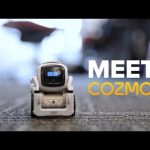
Cozmo is a mini companion robot powered by a so-called emotion engine that develops as it learns about you. Developers will have access to an SDK to program the robot.
Our alien friend Paxi, ESA Education’s mascot, went to visit Japanese astronaut Kimiya Yui on board the International Space Station. Kimiya shows Paxi what it’s like to prepare and eat food in weightlessness, an important part of the day when living on the ISS.
Behold The Future…Imagine a machine that can laugh and cry, learn and dream, and can express its inner responses to how it perceives you to feel. It can express itself in a natural manner but also allows you to visualise the mental imagery emerging in its mind.
The Laboratory for Animate Technologies is creating ‘live’ computational models of the face and brain by combining Bioengineering, Computational and Theoretical Neuroscience, Artificial Intelligence and Interactive Computer Graphics Research.
We are developing multidisciplinary technologies to create interactive autonomously animated systems which will define the next generation of human computer interaction and facial animation.
“If I had my time again I’d want to spend it in this lab” – Alvy Ray Smith, Co-founder of Pixar (on his visit to the Laboratory for Animate Technologies).
We believe the best way to simulate biological behaviour is through biological models. We model the brain processes which give rise to behaviour and social learning and use these to animate lifelike models of the face that can interact with you.
BabyX is an interactive animated virtual infant prototype. BabyX is a computer generated psychobiological simulation under development in the Laboratory of Animate Technologies and is an experimental vehicle incorporating computational models of basic neural systems involved in interactive behaviour and learning.
These models are embodied through advanced 3D computer graphics models of the face and upper body of an infant. The system can analyse video and audio inputs in real time to react to the caregiver’s or peer’s behaviour using behavioural models.
BabyX embodies many of the technologies we work on in the Laboratory and is under continuous development, in its neural models, sensing systems and also the realism of its real time computer graphics.
We create interactive models of neural systems and neuroanatomy enabling visualisation of the internal processes generated by computational simulations giving rise to behaviour.
The Auckland Face Simulator is being developed to cost effectively create extremely realistic and precisely controllable models of the human face and its expressive dynamics for Psychology research.
We are developing the technology to simulate faces both inside and out. We simulate how faces move and how they look, and even their underlying anatomic structure.
We are developing a visual modelling methodology for the construction, visualisation and animation of neural systems called Brain Language [BL], a novel simulation environment for neural models.
This allows users to create animations and real-time visualisations from biologically based neural network models, allowing simulation effects to be viewed in an interactive context. Such a visual environment is not only suitable for visualising a simulation; it is also ideal for model development.
We are developing computer vision based systems to track and analyse facial expression and state of the art algorithms to solve for individual facial muscle activation.
Applications range from real-time expression recognition to microdynamic interaction analysis for psychology research.
Scenes from training of six astronauts who will spend six nights underground in a cave in Sardinia, Italy. After a week of training, the astronauts descend into the caves to set up basecamp 800 m underground.
One of the last unexplored environments on our planet, caves offer parallels to exploring space. ESA’s underground training course “Cooperative Adventure for Valuing and Exercising human behaviour and performance Skills” – CAVES – prepares astronauts over two weeks to work safely and effectively in multicultural teams.
This year’s participants are an even more international team than ever, including ESA’s Pedro Duque, NASA’s Jessica Meir and Richard Arnold, Japan’s astronaut Aki Hoshide, China’s Ye Guangfu and Russia’s Sergei Korsakov.
The similarities between caving and spaceflight are highlighted throughout the course. Speleologists and astronauts adopt the ‘buddy system’, and both astronaut trainers and CAVES instructors repeat the same mantras of “slow is fast,” “check your gear, and then trust it,” and “always be aware of where you are and where your buddy is”.
Follow the underground adventure on Twitter with @ESA_Caves, and on the CAVES blog: http://blogs.esa.int/caves/.
Currently around 63% of students are disengaged at school, meaning that they withdrawal either physically or mentally before they have mastered the skills that are required to flourish in later life. In this talk Scott Bolland explores the science of learning, the mismatch between how we teach and how the brain natural learns, and the important role that artificial intelligence could take in addressing the limitations in our current education system.
Dr Scott Bolland is the founder of New Dawn Technologies, a high-tech software company aiming to revolutionise education through the use of artificial intelligence. He has spent the last 20 years actively researching and teaching in the field of cognitive science – the scientific study of how the mind works – which spans disciplines such as psychology, philosophy, neuroscience, artificial intelligence and computer science. He holds a PhD in this field, as well as a university medal for outstanding academic scholarship.
This talk was given at a TEDx event using the TED conference format but independently organized by a local community. Learn more at http://ted.com/tedx
Put your 3D glasses on and take this narrated tour of the International Space Station. Visit all the modules of humankind’s weightless laboratory orbiting Earth 400 km above.
ESA’s Asteroid Impact Mission, currently under study for launch in 2020 and arrival in 2022, would be humanity’s first probe to a double asteroid system. Targeting an approximately 180-m diameter asteroid – around the same size as the Great Pyramid of Giza – AIM would spend a busy six months gathering data on its surface and inner structure.
It would then perform before-and-after measurements as the NASA-led Double Asteroid Redirection Test spacecraft impacts straight into it, in an attempt to change the asteroid’s orbital period – marking the very first time that humanity shifts a Solar System object in a measurable way. Success would make it possible to consider carrying out such an operation again if an incoming asteroid ever threatened our planet. The two missions combined are called the Asteroid Impact & Deflection Assessment, or ‘AIDA’ for short.
But why do we need to plan such a ground-breaking experiment? Astrophysicist and Queen guitarist Brian May, ESA astronaut Luca Parmitano, the UK’s Astronomer Royal Sir Martin Rees and Canadian astronaut Chris Hadfield share their own thoughts.
ESA astronaut Tim Peake shares his views of Earth and his six-month Principia mission while on the International Space Station. Narrated by Tim himself taken from interviews while in space, this video shows the best views, experiments and shares the experience of Tim’s life in space.
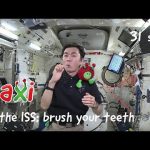
Our alien friend Paxi, ESA Education’s mascot, went to visitJapanese astronaut Kimiya Yui on board the International Space Station. Kimiya shows Paxi whatit’s like to brush your teeth in weightlessness, an important part of the daywhen living on the ISS.
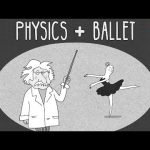
In the third act of “Swan Lake”, the Black Swan pulls off a seemingly endless series of turns, bobbing up and down on one pointed foot and spinning around and around and around … thirty-two times. How is this move — which is called a fouetté — even possible? Arleen Sugano unravels the physics of this famous ballet move.
Lesson by Arlene Sugano, animation by Dancing Line Productions.
ESA’s Asteroid Impact Mission and the US Double Asteroid Redirection Test together make up AIDA – the Asteroid Impact and Deflection Assessment (AIDA), a pioneering planetary defence test that will attempt to shift the orbit of an asteroid in 2022. Artist Didi Rodan performed a unique depiction of this initiative in sand, a highlight of a recent conference on AIM hosted by the GMV company in Madrid.
“If I have seen further, it is by standing on the shoulders of giants” is the famous quote by renowned scientist Sir Isaac Newton. This is particularly apt as a title for this video summary of ESA astronaut Tim Peake’s Principia mission – named after Newton’s monumental work Philosophiae Naturalis Principia and now building on the work of previous European astronaut missions, while being supported by a huge team of scientists and engineers on the ground.
The music accompanying this video was chosen by Tim, coming from the soundtrack of one of his favourite films, the 2004 movie Layer Cake. This piece is called ‘Drive to the Boatyard’, by internationally known British film composer Ilan Eshkeri. Ilan provided a slightly extended piece specially for ESA.
Tim comments: “I’m delighted with this video, which captures the essence of human spaceflight and natural beauty of our planet from space – all put to Ilan’s inspiring soundtrack!”
Danish ESA astronaut Andreas Mogensen congratulates the European Space Camp on its 20th Anniversary. The first Space Camp took place at the Andøya Space Center, Norway, in 1996, with 20 participants from across Scandinavia in attendance. After this initial success, the European Space Camp quickly became an annual event and over the past 20 years, has attracted over 440 participants from over 30 countries across the world.
During the space camp, students go through every aspect of a rocket launch campaign, including building internal circuitry for a rocket, telemetry, and launching a fully-fledged sounding rocket at the end of the week. Participants attend lectures from some of Europe’s top scientists and researchers on topics as diverse as the Large Hadron Collider at CERN to the physics behind aurora. At the end of an unforgettable week, a multitude of social activities await the participants, including a sea safari, mountain hiking or swimming under the midnight sun.
Two ESA scholarships are available for the European Space Camp 2016 for all applicants with a nationality from an ESA Member State or Cooperating State.Apply now at http://www.spacecamp.no/.
After spending nearly a year aboard the International Space Station — conducting a host of biomedical and psychological research on the impacts of long-duration spaceflight on the human body, NASA’s Scott Kelly and Mikhail Kornienko of the Russian space agency Roscosmos wrapped up their historic mission on March 1 – with a safe parachute landing in Kazakhstan . Just over a day, later – at Houston’s Ellington Field, near Johnson Space Center, a host of family, colleagues and VIPs welcomed Kelly back to the United States, including Second Lady of the United States Dr. Jill Biden, Assistant to the President for Science and Technology Dr. John P. Holdren, and NASA Administrator Charles Bolden. There were cheers, embraces and expressions of appreciation for his efforts to help advance deep space exploration and America’s Journey to Mars. Also, Next ISS crew heads to launch site, “Low boom” aircraft, Orion Service Module’s solar array wing deployment and more!
What’s the science behind texting? When you hit send, how does your message leave your phone and make the journey to your friend’s phone?
Subscribe: http://youtube.com/whatthephysics?sub_confirmation=1
↓Want more info?↓
CREDITS:
Host, Writer, Animator, Editor:
Greg Kestin
Special thanks:
Tyler Howe
Julie Elsky
Lissy Herman
Patrick Mitran
Jerry Gibson
Lauren Aguirre
Kristine Allington
Anna Rothschild
Allison Eck
Ari Daniel
Lauren Miller
SCIENTIFIC NOTES:
– Messages can also be encoded by altering the phase of the signal being sent from the antenna.
– Phones use several (~8) frequencies at one time, and since there are limited frequencies (~100) for the tower to use, manages the sharing of them.
MEDIA CREDITS:
Music provided by APM:
Curio C
Sound effects:
Freesound.org
Images:
Two tree cell towers (Devra)
Top of cell tower (Ervins Strauhmanis)
Stock footage from Pond5:
digital-computer-brain-binary
bangkok-city-skyline-aerial-da
aerial-fly-over-green-forest-c
How is the chemical energy of gasoline transformed into kinetic energy of a moving car? And where does that kinetic energy go when the car crashes into something and stops moving?
During an Oct. 28 keynote speech at the Center for American Progress, in Washington, NASA Administrator Charlie Bolden spoke about the advancement made on the journey to Mars and what lies ahead for future administrations and policy makers. NASA’s recently released report “Journey to Mars: Pioneering Next Steps in Space Exploration,” outlines its plan to reach Mars in phases – with technology demonstrations and research aboard the International Space Station, followed by hardware and procedure development in the proving ground around the moon, before sending humans to the Red Planet. Also, Space station spacewalk, Another record in space for Kelly, Mars Landing Sites/ Exploration Zones Workshop, Cassini’s “deep dive” flyby and more!
The Rosetta Mission has captured the interest and imagination of a generation and it is not over yet! Take a look at this Royal Observatory Greenwich video which explains what Rosetta and Philae have achieved as well as the impact the mission has had on our knowledge of our very own solar system. http://bit.ly/rogvideo #rogrosetta
In this edition of Space we set a course for Jupiter, destination of the next European Space Agency mission.
The aim of JUICE (JUpiter ICy moon Explorer) is to provide the most comprehensive exploration of the giant planet and, in particular, of its moons; supposedly hiding habitable zones under their icy crusts.
Jupiter is more than eleven times larger than Earth but is mainly made of gas. During its three and a half year mission, which blasts off in 2022, JUICE will travel around the giant planet, studying its atmosphere and three of its planet-sized satellites: Ganymede, Europa, and Callisto.
TYCHE is an AI robot companion for children. It creates an atmosphere that promotes learning, socializing, and playing as it enhances the imagination and creativity of young minds. The robot talks, listens, thinks and reasons to plan activities and solve problems.
ESA Education mascot Paxi was placed in a Large Diameter Centrifuge gondola which normally houses researchers’ and students’ experiments at ESA’s ESTEC establishment. As the centrifuge starts spinning, the relative g-levels within the gondola increase and this causes Paxi’s weight to increase. At 20 g, Paxi weighs 20 times what he normally does on Earth. As the centrifuge spins down, the g levels decrease and eventually when the centrifuge stops, return to normal.
Sept. 15 marked the halfway point in the yearlong mission on the International Space Station with NASA astronaut Scott Kelly and Russian cosmonaut Mikhail Kornienko. An event the day before at the National Press Club in Washington included a discussion about the biomedical research conducted on the station, to help formulate future human missions to Mars. Kelly participated from the space station. His identical twin, retired NASA astronaut Mark Kelly, and NASA astronaut Terry Virts, who served as commander of Expedition 43, participated from the press club. Also, I spy the space station: Live!, Expedition 43 post-flight visit, Key milestone for Orion spacecraft, Global ocean on Enceladus, Connecting space to village and more!
A composite day at ESTEC, the European space research and technology centre, as depicted in time-lapse format.
Located in Noordwijk, the Netherlands, ESTEC is Europe’s largest place for space, the technical heart of the European Space Agency. For almost all European space missions, the path to space leads through ESTEC.
Around 2700 people arrive here for work every day, working on a broad range of space activities from scientific exploration to telecommunications, Earth observation to navigation, robotics to human spaceflight.
A suite of unique laboratories probe every aspect of the space environment, applying decades of hard-won expertise. Seen here is preparation for testing materials in simulated space conditions as well as atomic force microscopy, employing a nanometer-wide tip like a stylus across a record player to reveal surface topography down to the atomic scale.
Full-scale testing of satellites takes place in the ESTEC Test Centre, including the Maxwell Chamber, kept isolated from the external world for precision electromagnetic testing, and the Large Space Simulator, Europe’s largest vacuum chamber used to reproduce the airlessness and temperature extremes encountered in space. The chamber uses large quantities of liquid nitrogen to mimic the chill of deep space.
Erasmus is ESTEC’s human spaceflight facility, supporting researchers in the design and performance of experiments in microgravity conditions. Also based there is ESTEC’s Telerobotics lab – developing methods of remotely controlling robots using force feedback, extending the human sense of touch to space. The lab team are putting the finishing touches to the Interact Centaur rover, a robot designed to be operated remotely by astronauts in orbit.
A Google hangout with Rosetta mission experts to celebrate perihelion – the closest point to the Sun along the comet’s orbit – which occurred on the morning of on 13 August 2015.
Joining our host Emily Baldwin (ESA Space Science Editor) were:
Nico Altobelli – Acting Rosetta Project Scientist, ESAC
Michael Küppers – Rosetta Science Operations Coordinator, ESAC
Sylvain Lodiot – Rosetta Spacecraft Operations Manager, ESOC
Armelle Hubault – Rosetta spacecraft operations engineer, ESOC
Barbara Cozzoni – Philae Lander engineer, DLR
Holger Sierks – OSIRIS Principal Investigator, MPS
Joel Parker – Alice instrument Deputy-PI, SwRI
Colin Snodgrass – Professional ground-based observing campaign coordinator, Open University
Aurelie Moussi-Soffys – Science activities manager SONC (Philae)
Date: 13 August 2015
Time: 15:00-17:00 CEST (13:00-15:00 GMT)
The LISA Pathfinder spacecraft is due to set off in Autumn 2015 in a bid to prove that it is possible to observe gravitational waves in space. This is the latest step in an incredible journey to spot these ripples in spacetime that were first predicted by Albert Einstein 100 years ago.
If we can manage to capture these waves, then we should be able to observe some of the most violent events in the cosmos, such as black holes colliding and galaxies merging. For the moment, however, we’re still searching.
New Horizons is the first mission to the Kuiper Belt, a gigantic zone of icy bodies and mysterious small objects orbiting beyond Neptune. This region also is known as the “third” zone of our solar system, beyond the inner rocky planets and outer gas giants. Johns Hopkins University Applied Physics Laboratory (APL) in Maryland, designed, built and operates the New Horizons spacecraft, and manages the mission for NASA’s Science Mission Directorate in Washington. The Year of Pluto – NASA New Horizons is a one hour documentary which takes on the hard science and gives us answers to how the mission came about and why it matters. Interviews with Dr. James Green, John Spencer, Fran Bagenal, Mark Showalter and others share how New Horizons will answer many questions. New Horizons is part of the New Frontiers Program, managed by NASA’s Marshall Space Flight Center in Huntsville, Alabama.
Held at the Temple of Hadrian in Rome, Italy, on 27–29 May 2015, the International Symposium on Climate Change reviewed the links between climate change and world development. Experts on a variety of climate- and development-related topics presented over the three-day period, including a talk by ESA’s Mark Doherty on observing climate from space.
Don’t panic! This is the story of a book, a book called The Hitchiker’s Guide to the Galaxy, a wholly remarkable book.
ESA astronaut Samantha Cristoforetti reads from Douglas Adam’s “The Hitchhiker’s Guide to the Galaxy” for towel day from the European laboratory Columbus on the International Space Station.
The Guide has a few things to say on the subject of towels. A towel, it says, is about the most massively useful thing an interstellar hitchhiker can have.
To all you froods on the mostly harmless planet Earth, happy towel day!
Towel Day is an annual celebration on 25 May, as a tribute to the late author Douglas Adams when fans around the universe proudly carry a towel in his honour.
(L-115 days) ESA astronaut Andreas Mogensen and Russian cosmonaut Sergei Volkov take us inside the Soyuz simulator at Star City where they are training for off-nominal situations they could face during their spaceflight. In practice, this includes anything their Soyuz instructor decides to throw at them – including scenarios such as fire or depressurisation.
Andreas is currently training for his 10-day Iriss mission to the International Space Station, set for launch in September 2015.
This panel discussion from NASA headquarters focuses on recent discoveries of water and organics in our solar system, the role our sun plays in water-loss in neighboring planets, and our search for habitable worlds among the stars.