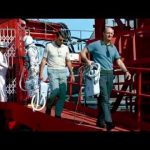
Gemini 3 launched March 23, 1965 from Cape Canaveral, Florida. It was the first crewed Earth-orbiting spacecraft of the Gemini series. It was piloted by astronauts Virgil “Gus” Grissom and John Young.
Tag: the
-
Proba-3: Dancing with the stars
Dancing is probably the oldest human artform – and now ESA’s Proba-3 precision formation-flying mission intends to extend the art of dance to space.
Like dancers, a pair of minisatellites will move around each other, their relative positions maintained to millimetre-scale precision, as if they were both parts of one giant spacecraft.
Their mission is to cast a shadow from one minisatellite onto another, in order to form an artificial total solar eclipse in space – then study the fine details of the Sun’s wispy atmosphere, the solar corona.
Franco Ongaro, ESA Director of Technical and Quality Management; Frederic Teston, Head of System and Cost Engineering; Andrea Santovincenzo, ESA engineer and the project’s manager Agnes Mestreau-Garreau, explain how to go about teaching a space mission to dance.
-

High-tech toys change the way kids have fun
Technology is taking over toys at New York City’s annual Toy Fair. Next to the Lincoln Logs and Tinkertoys are slot cars powered by artificial intelligence. The fair showcases the changing face of the toy industry and how kids play. Gigi Stone Woods reports from the the fair in New York City with the high-tech hype.
-
The State of NASA on This Week @NASA
NASA Administrator Charles Bolden, speaking during his Feb. 2 “State of NASA” address at Kennedy Space Center in Florida after the release of President Obama’s Fiscal Year 2016 $18.5 billion budget proposal for NASA said, “I can unequivocally say that the State of NASA is strong.” The proposed budget is a half-billion-dollar increase over last year’s enacted budget, which, the Administrator noted, “is a clear vote of confidence to you – the employees of NASA and the ambitious exploration program you are executing.” The budget facilitates NASA’s plan moving forward, which includes development of new vehicles and technologies needed for unprecedented human missions to an asteroid and to Mars, commercial partnerships to provide transportation to and from the International Space Station from the United States and research on the station for the benefit of future deep space travelers and people living on our home planet. Also, New views of Pluto, Soil moisture mission underway and Virginia Aerospace Day!
-

Administrator Discusses the State of NASA
During his “State of NASA” speech from Kennedy Space Center on Feb. 2, Administrator Charles Bolden touched on the agency’s scientific and technological achievements and the exciting work ahead as NASA pushes farther into the solar system and continues to lead the world in a new era of exploration.
-
ESA Euronews: The dark side
All we can see around us, from planet Earth to distant galaxies, represents just five per cent of the Universe – the rest is dark energy or dark matter. So what do we know and what do we not know about these elusive components of the cosmos?
The simple answer is that we don’t know much about dark matter and even less about dark energy.
However, that could change quite soon thanks to groundbreaking research being done by scientists at ESA and CERN, home to the world’s foremost particle accelerator, the Large Hadron Collider. The LHC’s discovery three years ago of the Higgs Boson set researchers on a voyage of discovery to the dark side of the Universe. They are about to fire up the colossal accelerator again this year, and for the first time at full power. That extra energy is what’s giving optimism for new revelations about dark energy and dark matter. One scientists tells Space: “we might have a discovery even in the first days, if not in the first weeks.”
At the same time ESA is building a new space telescope called Euclid which will watch how the gravity of dark matter acts on galaxies, and how dark energy is pushing the expansion of our Universe.
Find out how science is unraveling the dark mysteries of the cosmos.
This video is also available in the following languages:
French: http://youtu.be/laj4WuHG7Sw
German: http://youtu.be/G9orG0fS3ew
Spanish: http://youtu.be/zR15Z2gisJA
Italian: http://youtu.be/ZEckJH4JTYg
Hungarian: http://youtu.be/jv70GJmFz1M
Greek: http://youtu.be/eL34G_A-OVg
Portuguese: http://youtu.be/XqXJsbzp7G4 -

State of the Union and NASA
President Obama recognizes NASA and Astronaut Scott Kelly at 2015 State of the Union Address.
-
Paxi – The Solar System
Join Paxi on a journey through our Solar System, from the rocky inner planets close to the Sun, past the giant planets to the freezing edge, the home of comets.
In this video, targeted at children between 6 and 12, Paxi takes us on a tour of our Solar System, visiting all eight planets and other minor bodies such as asteroids, comets and the dwarf planet Pluto.
This video is the second of a series of animations in which Paxi, ESA’s Education mascot, touches on different aspects of the Solar System, the Universe, the secrets of planet Earth, and much more.
More Paxi videos in this playlist:
https://www.youtube.com/playlist?list=PLbyvawxScNbucdsnNdB9p89RmePmGv5cMCopyright: ESA; produced by Science Office, illustrations by Kaleidoscope Design, NL
The Paxi videos are also available in the following languages, follow the link for a full playlist
Spanish: https://www.youtube.com/playlist?list=PLbyvawxScNbsiYWkwXlb3WMdm2IFWoMyc
Dutch: https://www.youtube.com/playlist?list=PLbyvawxScNbs-7xR5B6QgJeEK89RtGdoK
Italian: https://www.youtube.com/playlist?list=PLbyvawxScNbt11Hfg6Cww2ckfHnvXeOdv
German: https://www.youtube.com/playlist?list=PLbyvawxScNbvwcIVrGQV4p6g6cp9pH0To
French: https://www.youtube.com/playlist?list=PLbyvawxScNbsiKIAXeo63bGr1QjYJ4QiLPortuguese subtitles are also available on this video. Select them using the YouTube controls along the bottom of the video player.
-
NASA TV Presents: Inside the ISS – December 2014
A look inside the life, science and adventure of being an astronaut aboard the International Space Station.
www.nasa.gov/mission_pages/station
-
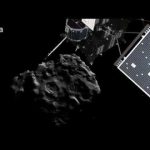
Journey to the surface of a comet
Rosetta’s deployment of Philae to land on Comet 67P/Churyumov–Gerasimenko.
The animation begins with Philae still on Rosetta, which will come to within about 22.5 km of the centre of the nucleus to release the lander on 12 November 2014.
The animation then shows Philae being ejected by Rosetta and deploying its own three legs, and follows the lander’s descent until it reaches the target site on the comet about seven hours later.
The animation is speeded up, but the comet rotation is true: in the time it takes for Philae to descend, the nucleus has rotated by more than 180º (the comet’s rotation period is 12.4 hours).
The final steps of Philae’s descent towards the comet are shown as seen by a hypothetical observer close to the landing site on the comet.
Acknowledgement: The background image of the sequence showing Philae closing in on the landing site was taken by Rosetta’s OSIRIS narrow-angle camera (ESA/Rosetta/MPS for OSIRIS Team MPS/UPD/LAM/IAA/SSO/INTA/UPM/DASP/IDA) on 14 September 2014 from a distance of about 30 km.
Philae was provided by a consortium led by DLR, MPS, CNES and ASI.
Credit: ESA/ATG medialab
-
The von Karman Lecture Series NASA Asteroid Redirect
A Theodore von Kármán Lecture Series talk, held November 6 and 7 at NASA’s Jet Propulsion Laboratory in Pasadena, California, addressed the key aspects of the agency’s Asteroid Redirect Robotic Mission (ARRM) concept, which seeks to rendezvous with, capture, and redirect to translunar space a near-Earth asteroid.
-
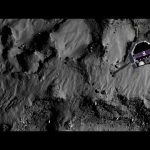
Philae’s descent: closing in on the landing site
The final steps of Philae’s descent towards Comet 67P/Churyumov–Gerasimenko on 12 November 2014, as seen by a hypothetical observer close to the landing site on the comet.
The background image was taken by Rosetta’s OSIRIS narrow-angle camera on 14 September 2014 from a distance of about 30 km.
Philae was provided by a consortium led by DLR, MPS, CNES and ASI.
Credit: ESA/ATG medialab; background image: ESA/Rosetta/MPS for OSIRIS Team MPS/UPD/LAM/IAA/SSO/INTA/UPM/DASP/IDA
-
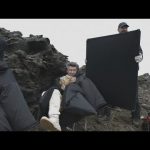
The making of ‘Ambition’
The making of the short film Ambition, a collaboration between Platige Image and ESA. Directed by Tomek Bagiński and starring Aidan Gillen and Aisling Franciosi, Ambition was filmed on location in Iceland, produced in Poland, and screened on 24 October 2014 during the British Film Institute’s celebration of Sci-Fi: Days of Fear and Wonder, at the Southbank, London.
More information:
Rosetta: the ambition to turn science fiction into science fact: http://www.esa.int/Our_Activities/Space_Science/Rosetta/Rosetta_the_ambition_to_turn_science_fiction_into_science_factCredits: ESA/Platige Image
-
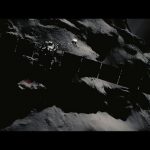
Ambition the film
Ambition is a collaboration between Platige Image and ESA. Directed by Tomek Bagiński and starring Aidan Gillen and Aisling Franciosi, Ambition was filmed on location in Iceland, and screened on 24 October 2014 during the British Film Institute’s celebration of Sci-Fi, at the Southbank, London.
More information.
Rosetta: the ambition to turn science fiction into science fact: http://www.esa.int/Our_Activities/Space_Science/Rosetta/Rosetta_the_ambition_to_turn_science_fiction_into_science_factThe Ambition soundtrack is available here:
http://www.atanasvalkov.com/2014/12/ambition-soundtrack-premiere-15-01-2015/The ‘Making of Ambition’ is available here:
http://youtu.be/Ud9ON2CzYYMCredits: ESA/Platige Image
-

ESA Euronews: The challenge of reentry
Re-entry is the make or break moment for spacecraft. It’s the time when satellites burn up and astronauts hold on for the ride of their lives. A new ESA spacecraft, called IXV Intermediate eXperimental Vehicle, will be launched into space in November 2014 in a bid to feed precious new data to engineers as they try to master the difficult transition between space and planet Earth. In this episode of Space, IXV programme manager Giorgio Tumino shows us around the spacecraft, while rarely-seen archive footage brings the heat, drama and danger of re-entry to life.
This video is also available in the following languages:
French: http://youtu.be/s7x6p9prDfY
German: http://youtu.be/mYECBYWPE8A
Italian: http://youtu.be/QEEFS8E3VLU
Portuguese: http://youtu.be/2uYmr113h3A
Spanish: http://youtu.be/RG8OZt44Ya8
Hungarian: http://youtu.be/2I0uXM8PTdU
Greek: http://youtu.be/EIaW4xeMhlU:More about IXV on the ESA website:
http://www.esa.int/Our_Activities/Launchers/IXVConnect with the IXV project on Twitter:
https://twitter.com/esa_ixv -

Delivering oxygen to the Space Station
ESA astronaut Alexander Gerst is responsible for unloading all the cargo from ESA’s Automated Transfer Vehicle (ATV) Georges Lemaître to the International Space Station. This includes the 100 kg of oxygen stored in ATV’s tanks. Here Alexander recorded the process of opening the valves and checking the pressure.
Georges Lemaître bought 6602 kg of freight, including 2680 kg of dry cargo and 3922 kg of water, propellants and gases to the Station.
Find out more about ESA’s largest spacecraft on the ATV blog: http://blogs.esa.int/atv/
Follow Alexander’s Blue Dot mission via alexandergerst.esa.int
-
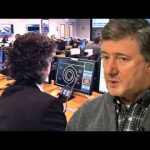
Working in the Concurrent Design Facility
Massimo Bandecchi speaks about the work being done in ESA’s Concurrent Design Facility (CDF). The CDF is a state-of-the-art facility equipped with a network of computers, multimedia devices and software tools, which allows a team of experts from several disciplines to apply the concurrent engineering method to the design of future space missions.
Interested to work here as a trainee? Vacancy posts for Young Graduate Trainees (YGTs) go online once a year in mid-November, and stay open for one month. About 80 YGT job offers will open, aimed at engineers, physicists, biologists or medical graduates, but also business graduates and lawyers.
More information on our Careers website:
http://www.esa.int/About_Us/Careers_at_ESA/Young_Graduate_Trainees -
The Physics of Space Battles
How scientifically accurate is your favorite sci-fi space battle?
Viewers like you help make PBS (Thank you 😃) . Support your local PBS Member Station here: https://to.pbs.org/PBSDSDonate
Subscribe to It’s Okay To Be Smart: http://bit.ly/iotbs_sub
Joseph Shoer has several extensive, in-depth articles on the physics of space warfare:
http://josephshoer.com/blog/2009/12/thoughts-on-space-battles/
http://josephshoer.com/blog/2010/07/projecting-space-battle-physics/Space warfare: Almost everything you know is probably wrong http://www.escapistmagazine.com/forums/read/18.100198-Space-Warfare-Almost-Everything-You-Know-Is-Probably-Wrong
Is space warfare really practical? http://www.escapistmagazine.com/forums/read/18.846407-Is-space-warfare-really-practical-except-lasers
Zero-g dogfighting for dummies: http://www.citizenstarnews.com/news/zero-g-dogfighting-dummies
Projectile weapons vs. directed energy weapons: http://forum.gateworld.net/threads/17263-Projectile-Weapons-vs-Directed-Energy-Weapons
Nukes in space: http://www.projectrho.com/public_html/rocket/spacegunconvent.php
Effects of radiation weapons in space: http://www.projectrho.com/public_html/rocket/radiation.php#effects
Could the Death Star really destroy a planet? http://www.universetoday.com/92746/could-a-death-star-really-destroy-a-planet/
“Sir Isaac Newton is the deadliest son of a b***h in space” https://www.youtube.com/watch?v=hLpgxry542M
Produced by PBS Digital Studios: http://www.youtube.com/user/pbsdigitalstudios
Joe Hanson – Host and writer
Joe Nicolosi – Director
Amanda Fox – Producer, Spotzen IncKate Eads – Associate Producer
Katie Graham – Director of Photography
Editing/Motion Graphics – Andrew Matthews/Kirby Conn
Gaffers – John Knudsen/Philip Sheldon
Post-production intern – Dalton AllenTheme music:
“Ouroboros” by Kevin MacLeodStock images via Shutterstock
———–
Join us on Patreon!
https://patreon.com/itsokaytobesmartTwitter
http://www.twitter.com/DrJoeHanson
http://www.twitter.com/okaytobesmartInstagram
http://www.instagram.com/DrJoeHanson
http://www.instagram.com/okaytobesmartMerch
https://store.dftba.com/collections/its-okay-to-be-smart -
SCUBA diving in the NBL
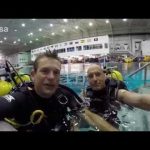
ESA astronaut Andreas Mogensen’s latest update on training for his mission to the International Space Station in 2015. Andreas is joined by ESA astronaut Luca Parmitano as they observe activities in NASA’s Neutral Buoyancy Lab (NBL), a giant swimming pool at Johnson Space Center in Houston. The NBL contains submerged full-sized mockups of ISS modules and is used to train for spacewalks on the real thing.
-
What Is The Speed of Dark?
twitter: http://www.twitter.com/tweetsauce
instagram: http://www.instagram.com/electricpants
facebook: http://www.facebook.com/VsauceGaming
SOURCES BELOW:this is the video where I talk about THE SPEED OF PUSH: https://www.youtube.com/watch?v=Do1lm9IevYE
Big thanks to Martin Archer for help with this episode: http://www.martinarcher.co.uk/
And thanks to Guy Larsen for his shadow magic: https://twitter.com/guylar
music by http://www.YouTube.com/JakeChudnow
and http://www.audionetwork.comshadows faster than light:
http://math.ucr.edu/home/baez/physics/Relativity/SpeedOfLight/FTL.html#3
http://physics.stackexchange.com/questions/63434/could-the-shadow-move-with-faster-than-light-speed
http://www.madsci.org/posts/archives/2000-02/950834634.Ph.q.htmlmaking the moon brighter: http://what-if.xkcd.com/13/
sunset and earth’s shadow and belt of venus in single pics:
http://apod.nasa.gov/apod/ap131024.html
http://apod.nasa.gov/apod/ap100729.htmlamounts of evening-types in a city: http://weatherspark.com/averages/33125/Honolulu-Hawaii-United-States
superluminal scissors:
http://math.ucr.edu/home/baez/physics/Relativity/SR/scissors.html
http://boards.straightdope.com/sdmb/archive/index.php/t-69757.htmlwave animations:
http://www.ablongman.com/mullin/AnimationPages/FigsI-19&20.html
http://www.acs.psu.edu/drussell/Demos/SWR/SWR.html
http://resource.isvr.soton.ac.uk/spcg/tutorial/tutorial/Tutorial_files/Web-inter-superp.htmphase velocity vs. group velocity: http://resource.isvr.soton.ac.uk/spcg/tutorial/tutorial/Tutorial_files/Web-further-dispersive.htm
faster than light dark patches:
http://www.askamathematician.com/2013/02/q-is-darkness-a-wave-the-way-light-is-a-wave-what-is-the-speed-of-dark/
http://www.physicsclassroom.com/class/light/Lesson-3/The-Path-Differencemake a light interference pattern at home:
http://www.exploratorium.edu/snacks/diffraction/
http://www.instructables.com/id/How-to-perform-Interference-and-Diffranction-at-Ho/the speed of ignorance:
http://www.brainpickings.org/index.php/2012/04/02/stuart-firestein-ignorance-science/
http://philosophicalfallibilism.blogspot.com/2009_03_20_archive.html
http://kk.org/thetechnium/2008/10/the-expansion-o/
http://louisecharente.wordpress.com/2013/10/24/the-discovery-of-ignorance/Dunning-Kruger:
http://www.huffingtonpost.com/david-macaray/the-dunningkruger-effect_b_4476166.html
http://en.wikipedia.org/wiki/McArthur_Wheeler“animalcules”: http://www.leben.us/index.php/component/content/article/59-volume-3-issue-4/236-antoni-van-leeuwenhoeks-amazing-little-animalcules
-

The Journeys of Apollo
The Journeys of Apollo is a previously produced documentary narrated by Actor Peter Cullen that relives the 40th Apollo Anniversary and mission to explore Earths neighbor, the moon.
-
The Flight of Apollo 11
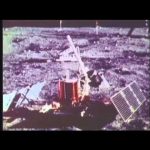
The story of the first Moon landing in July 1969. Depicts the principal events of the mission, from the launching through the post recovery activities of astronauts Armstrong, Aldrin, and Collins. Through television, motion pictures, and still photography, the program provides an “eyewitness” perspective of the Apollo 11 mission.
-
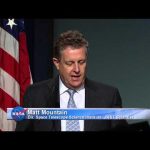
Space Experts Discuss the Search for Life in the Universe at NASA
NASA space-based observatories are making unprecedented new discoveries and revealing worlds never before seen. During a televised panel discussion of leading science and engineering experts at NASA Headquarters on Monday, July 14, a scientific and technological roadmap to lead to the discovery of potentially habitable worlds among the stars was addressed. The agency’s next step, the James Webb Space Telescope (Webb telescope), was featured as a new tool that will continue to help scientists rewrite scientific textbooks long after its scheduled launch in 2018.
-
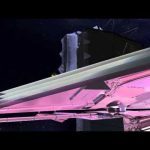
The James Webb Space Telescope described by Peter Cullen
Voice actor Peter Cullen, known for bringing to film and television numerous characters including Optimus Prime of “Transformers”,
Disney’s Eeyore and many more, describes NASA’s next generation space telescope. -
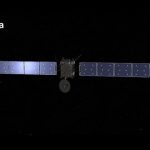
Rosetta puts on the brakes
Rosetta is about to put on the brakes to ensure that it is on target for comet 67P/Churyumov-Gerasimenko.
This video explains the crucial orbit correction manoeuvres that are required to slow down Rosetta’s speed, relative to the comet, from 750 metres per second to just one metre per second between 21 May and 5 August. By then, nine thruster burns (including one test burn in early May) will have reduced the distance between them from one million kms to just under 200 kms.
We also see the first images of the comet from the spacecraft’s OSIRIS camera (Optical, Spectroscopic and Infrared Remote Imaging System), taken between 24 March and 4 May 2014. As the spacecraft gets closer to the comet, further images will improve the orbital corrections and provide more details about the comet’s shape, size and rotation.
MIRO, built by an international team for the European Space Agency, will start taking measurements from late May onwards and will measure gases released from the comet as it approaches the Sun.
-
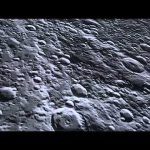
The Dragon Takes Flight on This Week @NASA
SpaceX-3 launches to the International Space Station, Kepler finds a Earth-sized planet and LADEE ends its mission on the lunar surface. These stories and more on this week’s, This Week @NASA
-
Copernicus Monitoring the Earth
Accurate information about the environmental is crucial. It helps to understand how our planet and climate are changing, the role human activity play in these changes and how this affects our daily lives. Responding to these challenges, the EU and ESA have developed an Earth observation programme called Copernicus, formerly known as Global Monitoring for Environment and Security, – a programme that becomes operational with the launch of Sentinel-1A.
-

The Beginning of Everything — The Big Bang
How did everything get started?
Has the universe a beginning or was it here since forever? Well, evidence suggests that there was indeed a starting point to this universe we are part of right now. But how can this be? How can something come from nothing? And what about time? We don’t have all the answers yet so let’s talk about what we know.
Also, we try to make this one not depressing. Tell us if we succeeded.
BY THE WAY. We have a website now. We’ll try to blog from time to time, show you guys how we make the videos and give more insight to our process. Also we sell stuff. We really don’t know where this whole kurzgesagt stuff leads us. But we are really thankful for all the attention and positive feedback and yeah, maybe we can make this our jobs — it would be pretty nice and we could do more content each month. But we’ll see. For now, thank you very much everybody for making this little adventure possible.
OUR CHANNELS
▀▀▀▀▀▀▀▀▀▀▀▀▀▀▀▀▀▀▀▀▀▀▀▀▀▀
German Channel: https://kgs.link/youtubeDE
Spanish Channel: https://kgs.link/youtubeESHOW CAN YOU SUPPORT US?
▀▀▀▀▀▀▀▀▀▀▀▀▀▀▀▀▀▀▀▀▀▀▀▀▀▀
This is how we make our living and it would be a pleasure if you support us!Get Merch designed with ❤ from https://kgs.link/shop
Join the Patreon Bird Army 🐧 https://kgs.link/patreonDISCUSSIONS & SOCIAL MEDIA
▀▀▀▀▀▀▀▀▀▀▀▀▀▀▀▀▀▀▀▀▀▀▀▀▀▀
Reddit: https://kgs.link/reddit
Instagram: https://kgs.link/instagram
Twitter: https://kgs.link/twitter
Facebook: https://kgs.link/facebook
Discord: https://kgs.link/discord
Newsletter: https://kgs.link/newsletterOUR VOICE
▀▀▀▀▀▀▀▀▀▀▀▀▀▀▀▀▀▀▀▀▀▀▀▀▀▀
The Kurzgesagt voice is from
Steve Taylor: https://kgs.link/youtube-voiceOUR MUSIC ♬♪
▀▀▀▀▀▀▀▀▀▀▀▀▀▀▀▀▀▀▀▀▀▀▀▀▀▀
700+ minutes of Kurzgesagt Soundtracks by Epic Mountain:Spotify: https://kgs.link/music-spotify
Soundcloud: https://kgs.link/music-soundcloud
Bandcamp: https://kgs.link/music-bandcamp
Youtube: https://kgs.link/music-youtube
Facebook: https://kgs.link/music-facebookIf you like the MUSIC of the video, you can get it here: http://bit.ly/1fCOlLI
Thomas did an aweful good job again. 🙂Next Video: April. (as soon as we can but we kind of have to make a living and visit college) Topic: Nuclear Energy (probably, if we finish the research in time — if not something else)
Short videos, explaining things. For example Evolution, the Universe, Time, the Stock Exchange or controversial topics like Fracking. Because we love science.
We’re a bunch of Information designers from munich, visit us on our website, twitter, facebook or behance to say hi!
The Beginning of Everything — The Big Bang
Help us caption & translate this video!
http://www.youtube.com/timedtext_cs_panel?c=UCsXVk37bltHxD1rDPwtNM8Q&tab=2
-
NASA and the Japanese Aerospace Agency Launch GPM Satellite
From the Tanegashima Space Center near the southernmost tip of Japan, NASA and the Japanese Aerospace Exploration Agency (JAXA) launched a joint mission to study global measurements of rainfall and snowfall abroad JAXA’s H-IIA rocket. The Global Precipitation Measurement (GPM) Core Observatory is a new NASA built science satellite that will link data from a constellation of current and planned satellites and produce the most precise observations of rain and snow every three hours from anywhere on the globe. The GPM Core Observatory will fly 253 miles (407 kilometers) above Earth in an orbit inclined at 65-degrees to the equator and will begin normal operations in about 60 days after launch. Data will be downlinked through NASA’s Tracking and Data Relay Satellite System to the agency’s Goddard Space Flight Center’s Precipitation Processing Center in Greenbelt, Md., where it will be processed and distributed over the Internet.
-
ESA Euronews – Rosetta: The Comet Hunter Awakes
The exploits of comet-hunting spacecraft Rosetta are generating intense interest as it speeds towards a dramatic climax this autumn.
The craft will catch up with comet 67p/Churyumov–Gerasimenko, fly alongside, and put a lander on its surface. Throughout this fantastic voyage, Euronews will have special access to the engineers and scientists who are making it happen.
On 20th January Rosetta woke up from two and a half years of hibernation. It was a moment of extreme tension for everyone at ESA’s European Space Operations Centre in Darmstadt, Germany. Strained, nervous faces searched for a signal from a probe in deep space.
After some 45 minutes of anxiety the all-important first signal came through. The scientists burst into energetic applause.
-
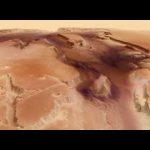
The floodwaters of Mars
Travel across the dramatic flood plains of Mars to celebrate ten years of imaging the Red Planet with Mars Express
Ten years ago, on 14 January 2004, Mars Express took its very first images of Mars in colour and in 3D.
To mark the occasion, the team produced a fly-through movie of the ancient flood plain Kasei Valles. The movie is based on the 67-image mosaic released as part of the ten-years-since-launch celebrations in June 2013. See http://www.esa.int/Our_Activities/Space_Science/Mars_Express/The_floodwaters_of_Mars.
The scene spans 987 km in the north–south direction, 19–36°N, and 1550 km in the east–west direction (280–310°E). It covers 1.55 million square kilometres, an area equivalent to the size of Mongolia.
Kasei Valles is one of the largest outflow channel systems on Mars, created during dramatic flood events. From source to sink, it extends some 3000 km and descends 3 km.
Kasei Valles splits into two main branches that hug a broad island of fractured terrain — Sacra Mensa — rising 2 km above the channels that swerve around it. While weaker materials succumbed to the erosive power of the fast-flowing water, this hardier outcrop has stood the test of time.
Slightly further downstream, the flood waters did their best to erase the 100 km-wide Sharonov crater, crumpling its walls to the south. Around Sharonov many small streamlined islands form teardrop shapes rising from the riverbed as water swept around these natural obstacles.
The Planetary Science and Remote Sensing Group at Freie Universität Berlin produced the movie. The processing of the High Resolution Stereo Camera image data was carried out at the DLR German Aerospace Center.
Credit: ESA/DLR/FU Berlin (G. Neukum) / Music: Crabtambour
-

Rosetta — the story so far
This short movie tells the story of Rosetta’s journey through the Solar System so far, through the voices of some of the many people involved in this exciting mission. ESA’s Rosetta spacecraft launched in March 2004 and has since been chasing down comet 67P/Churyumov-Gerasimenko, where it will become the first space mission to orbit a comet, the first to attempt a landing on a comet’s surface, and the first to follow a comet as it swings around the Sun. In the last ten years Rosetta has made 3 flybys of Earth and 1 of Mars, and passed by and imaged asteroids Steins and Lutetia. Operating on solar energy alone, in June 2011 Rosetta was placed into deep space hibernation as it cruised nearly 800 million kilometres from the warmth of the Sun, close to the orbit of Jupiter. On 20 January, Rosetta will wake up at 673 million kilometres from the Sun and about 9 million km from the comet, ready for the next leg of its epic adventure.
Credits: ESA
-
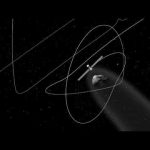
Rosetta’s orbit around the comet
After a ten year journey through space, ESA’s Rosetta spacecraft will reach comet 67P/Churyumov-Gerasimenko in August 2014. After catching up with the comet Rosetta will slightly overtake and enter orbit from the ‘front’ of the comet as both the spacecraft and 67P/CG move along their orbits around the Sun. Rosetta will carry out a complex series of manoeuvres to reduce the separation between the spacecraft and comet from around 100 km to 25-30 km. From this close orbit, detailed mapping will allow scientists to determine the landing site for the mission’s Philae lander. Immediately prior to the deployment of Philae in November, Rosetta will come to within just 2.5 km of the comet’s nucleus.
This animation is not to scale; Rosetta’s solar arrays span 32 m, and the comet is approximately 4 km wide.Credit: ESA — C. Carreau
-
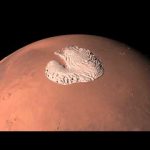
Mars 360: the north pole
Enjoy views of the martian north pole from all angles in this new animation from ESA’s Mars Express.
The ice cap has a diameter of about 1000 km and consists of many thin layers of ice mixed with dust that extend to a depth of around 2 km below the cap. The prominent gap in the ice cap is a 318 km-long, 2 km-deep chasm called Chasma Boreale.
The layers result from variations in the orbit and rotation of Mars that affect the amount of sunlight received at the poles, and thus the amount of melting and deposition of materials over time. Meanwhile, strong prevailing winds are thought to be responsible for shaping the spiral troughs.
The polar ice cap in this movie was constructed using data provided by the Mars Advanced Radar for Subsurface and Ionospheric Sounding instrument, MARSIS.
Low-frequency radio waves beamed towards the surface are reflected back to Mars Express from the planet’s surface and from interfaces between layers of different materials underground.
The strength and timing of the radar echoes are a gauge of the depths of different types of interfaces, such as between rock, water or ice. This information can then be translated into 3D views, as seen in this movie.
Credit: ESA/ASI/NASA/JPL/La Sapienza University/INAF (A. Frigeri)
-
#WakeUpRosetta – Save the date
#WakeUpRosetta – Save the date. At 10:00 UTC on 20 January 2014, ESA’s comet-chasing Rosetta spacecraft will wake up from 31 months in deep-space hibernation. Save the date and join the adventure. More info at www.esa.int/rosetta.
#WakeUpRosetta
-
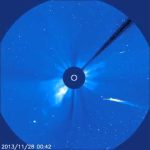
ISON vs the Sun
The ESA/NASA SOHO satellite watched as Comet ISON made its closest approach to the Sun on 28 November, at a distance of around 1.2 million kilometres from the Sun’s visible surface. Did it survive? Early reports suggested that only the comet’s tail continued to follow along ISON’s orbit. Further observations will reveal if a chunk of the comet’s nucleus survived.
See the latest images: http://soho.esac.esa.int/hotshots/index.html/Credit: SOHO (ESA & NASA)
-
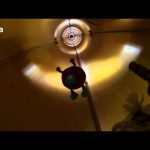
Paxi experimenting in the ZARM Drop Tower
Paxi free falling in the ZARM Drop Tower and experimenting with weightlessness during 4.7 seconds.
Credit: ZARM
-

MAVEN is on the way on This Week @NASA
The Mars Atmosphere and Volatile EvolutioN, or MAVEN spacecraft launched from Cape Canaveral Air Force Station in Florida on a 10-month journey to Mars. MAVEN will take critical measurements of the Martian upper atmosphere to investigate how loss of the atmosphere to space impacted the history of water on the planet’s surface. Also, Happy anniversary, ISS!, Asteroid Ideas, LADEE in science orbit, Orion progress, Rocket autopilot test, Commercial crew, and more!
-

ESA Euronews: The real-life space cadets: Abbie, Marc and Maria
Meet the space cadets, three young engineers with enviable jobs that are quite literally out of this world. This edition of Space focuses on three professionals who’ve turned their dreams of working in space into real down-to- Earth careers.
In the UK, 26-year-old Abbie Hutty, a spacecraft structures engineer at Astrium, is a proud member of the ExoMars team. She is developing the structure of the mission’s rover, ensuring that the actual body of the vehicle and other components are all structurally strong enough to withstand the launch from Earth, and landing on Mars.
Twenty-seven-year-old Marc Costa Sitjà, Science Operations Engineer at the European Space Agency, uses the huge antenna at Cebreros, west of Madrid, to ‘drive’ ESA’s Venus Express spacecraft around the planet. Every day he sends commands and receives data to and from the spacecraft from the agency’s ESAC facility near the Spanish capital.
Maria Komu, a 27-year-old researcher at the Finnish Meteorological Institute, works on Finnish mini satellite Aalto-1, and has a hands-on role developing a weather instrument for ESA’s ExoMars EDM mission.
Space is a childhood dream turned reality for all three. For Abbie the realisation that space wasn’t just science fiction came when she was still at school and she heard of the Beagle 2 mission to Mars, a lander that was developed in the UK by British engineers. Maria tells the story of a book about a school visit around the solar system that enchanted her as a young girl. Meanwhile Marc cites a vivid blue image of Venus as an inspiration to his career.
Abbie, Marc and Maria are all educated to masters level, while Maria continues studying towards a doctorate. They’re on the first steps of the career ladder, and that means plenty of learning ‘on-the-job’. Maria had to master soldering, programming, and testing, Marc developed his skills by creating software that helped a mission to better fulfill its purpose, while Abbie had to understand better the behaviour of particular materials in the cold vacuum of space.
The excitement of working in space is summed up by Abbie: “I think the space industry is quite a privileged industry to work in, because whilst you are still managing projects and meeting schedules and deadlines, and creating a product, at the end of the day that requires a certain amount of processes down on it, you can also come down to the clean rooms and look through the window and see your part of a spaceship, and think ‘that’s going to Mars, and I did that bit’, and you don’t get that anywhere else.”
-
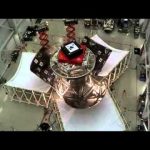
MAVEN is on the way on This Week @NASA
The Mars Atmosphere and Volatile EvolutioN, or MAVEN spacecraft launched from Cape Canaveral Air Force Station in Florida on a 10-month journey to Mars. MAVEN will take critical measurements of the Martian upper atmosphere to investigate how loss of the atmosphere to space impacted the history of water on the planet’s surface. Also, Happy anniversary, ISS!, Asteroid Ideas, LADEE in science orbit, Orion progress, Rocket autopilot test, Commercial crew, and more!