ESA DG Josef Aschbacher, accompanied by TAS CEO Hervé Derrey, Airbus DS EVP Jean-Marc Nasr and OHB Board Member Lutz Bertling, among others, will unveil the Zero Debris Charter initiative, an ambitious drive towards European leadership in space debris mitigation and remediation.
★ Subscribe: http://bit.ly/ESAsubscribe and click twice on the bell button to receive our notifications.
We are Europe’s gateway to space. Our mission is to shape the development of Europe’s space capability and ensure that investment in space continues to deliver benefits to the citizens of Europe and the world. Check out https://www.esa.int/ to get up to speed on everything space related.
Watch the replay of the live session from the Paris Air Show 2023 to watch the press briefing on space transportation. Speakers will share the current status of the Ariane 6 programme, and the next key milestones towards the inaugural flight.
★ Subscribe: http://bit.ly/ESAsubscribe and click twice on the bell button to receive our notifications.
We are Europe’s gateway to space. Our mission is to shape the development of Europe’s space capability and ensure that investment in space continues to deliver benefits to the citizens of Europe and the world. Check out https://www.esa.int/ to get up to speed on everything space related.
Watch the recording of the live session from the Paris Air Show 2023 for a conference examining Europe’s aspirations in human and robotic space exploration. Speakers include ESA Director General Josef Aschbacher, CNES CEO Philippe Baptiste, Director General of the German Space Agency Walther Pelzer, and President of the Italian Space Agency (ASI) Teodoro Valente. ESA astronauts Thomas Pesquet, Samantha Cristoforetti, and Matthias Maurer will provide their perspectives.
★ Subscribe: http://bit.ly/ESAsubscribe and click twice on the bell button to receive our notifications.
We are Europe’s gateway to space. Our mission is to shape the development of Europe’s space capability and ensure that investment in space continues to deliver benefits to the citizens of Europe and the world. Check out https://www.esa.int/ to get up to speed on everything space related.
By using concrete examples of the water and carbon cycles, the speakers in this session will focus on the grand science questions before us and how we can turn them into answers and solutions most useful to decision-makers at the front line of the climate crisis. Earth is a highly dynamic system where the transport and exchanges of energy and matter are influenced by a multitude of processes and feedback mechanisms. Untangling these complex processes to better understand how Earth works as a system is a major challenge; a challenge that satellites, with their global view, are ideally positioned to tackle. While each mission gives us unique insights, it is by combining their data that makes scientific findings shine the brightest. This, in turn, puts European and international collaboration at the heart of Earth observation today.
★ Subscribe: http://bit.ly/ESAsubscribe and click twice on the bell button to receive our notifications.
We are Europe’s gateway to space. Our mission is to shape the development of Europe’s space capability and ensure that investment in space continues to deliver benefits to the citizens of Europe and the world. Check out https://www.esa.int/ to get up to speed on everything space related.
We are Europe’s gateway to space. Our mission is to shape the development of Europe’s space capability and ensure that investment in space continues to deliver benefits to the citizens of Europe and the world. Check out https://www.esa.int/ to get up to speed on everything space related.
Our alien friend Paxi went to visit ESA astronaut Thomas Pesquet on board the International Space Station during his Alpha mission. Thomas explains the difference between natural satellites – moons orbiting planets – and artificial satellites – human-made machines orbiting a space object.
We are Europe’s gateway to space. Our mission is to shape the development of Europe’s space capability and ensure that investment in space continues to deliver benefits to the citizens of Europe and the world. Check out https://www.esa.int/ to get up to speed on everything space related.
Our alien friend Paxi went to visit ESA astronaut Thomas Pesquet on board the International Space Station during his Alpha mission. Thomas explains microorganisms on Earth and in space.
We are Europe’s gateway to space. Our mission is to shape the development of Europe’s space capability and ensure that investment in space continues to deliver benefits to the citizens of Europe and the world. Check out https://www.esa.int/ to get up to speed on everything space related.
ESA astronauts Thomas Pesquet, Luca Parmitano, Alexander Gerst, and Matthias Maurer, together with the ESA Director General, will answer questions from journalists from the IAC in Paris. Andreas Mogensen will join remotely and Samantha Cristoforetti will connect directly from the ISS. A live not to be missed!
We are Europe’s gateway to space. Our mission is to shape the development of Europe’s space capability and ensure that investment in space continues to deliver benefits to the citizens of Europe and the world. Check out https://www.esa.int/ to get up to speed on everything space related.
ESA astronauts Thomas Pesquet, Luca Parmitano, Alexander Gerst, and Matthias Maurer, together with the ESA Director General, will answer questions from journalists from the IAC in Paris. Andreas Mogensen will join remotely and Samantha Cristoforetti will connect directly from the ISS. A live not to be missed!
We are Europe’s gateway to space. Our mission is to shape the development of Europe’s space capability and ensure that investment in space continues to deliver benefits to the citizens of Europe and the world. Check out https://www.esa.int/ to get up to speed on everything space related.
ESA astronaut Thomas Pesquet gives a brief interview in Cologne, Germany, less than 48 hours after leaving the International Space Station.
He talks with ESA Web TV editor Julien Harrod about returning to Earth after his six-month International Space Station mission Alpha, how it feels to splash down in a @SpaceX Crew Dragon, and the differences with the Russian Soyuz spacecraft that flew him to space on his first mission, Proxima, in 2017.
After completing two six-month Space Station missions in five years, Thomas recounts the changes he saw while observing our planet Earth from 400 km above.
Thomas is the first European to fly to the International Space Station and return on a commercial spacecraft. SpaceX’s Crew Dragon Endeavour transporting Crew-2 autonomously undocked from the International Space Station and after a series of burns, entered Earth’s atmosphere and deployed parachutes for a soft water-landing. Thomas and crew splashed down on 9 November 2021 at 03:33 GMT (04:33 CET).
Thomas flew to Cologne, Germany, where he is being monitored by ESA’s space medicine team as he readapts to Earth’s gravity at ESA’s European Astronaut Centre (EAC) and @DLR ‘Envihab’ facility.
Over 200 experiments were run during Thomas’ time in space, with 40 European ones and 12 new experiments led by the French space agency @CNES. The experiments continue on Earth charting the astronauts physical adaptation to living with gravity again.
We are Europe’s gateway to space. Our mission is to shape the development of Europe’s space capability and ensure that investment in space continues to deliver benefits to the citizens of Europe and the world. Check out https://www.esa.int/ to get up to speed on everything space related.
ESA astronaut Thomas Pesquet is sharing scenes from life on board the International Space Station during his second mission “Alpha”. Here he gives a quick tour of the @SpaceX Cargo Dragon Endeavour that brought him to the Space Station together with @JAXA | 宇宙航空研究開発機構 astronaut Aki Hoshide and @NASA astronauts Shane Kimbrough and Megan McArthur. The same astronauts, Crew-2, will use the spacecraft to return home after undocking with the Station and fly to Earth for a splashdown off the coast of Florida, USA.
Over 200 experiments are planned during Thomas’ time in space, with 40 European ones and 12 new experiments led by the French space agency @CNES.
We are Europe’s gateway to space. Our mission is to shape the development of Europe’s space capability and ensure that investment in space continues to deliver benefits to the citizens of Europe and the world. Check out https://www.esa.int/ to get up to speed on everything space related.
Join ESA astronaut Thomas Pesquet on a tour of the International Space Station. On his second space mission Alpha, Thomas flew to space from Florida, USA, as part of Crew-2 in the @SpaceX Crew Dragon Endeavour together with @NASA astronauts Megan McArthur, Shane Kimbrough and @JAXA | 宇宙航空研究開発機構 astronaut Aki Hoshide
In this guided tour, a first shot in 4K, Thomas takes you through the modules of the International Space Station including the Dragon. Recorded in October 2021 the Space Station had just seen the departure of Soyuz MS-18 and the relocation of a Progress supply spacecraft. On board where also NASA astronaut Mark VandeHei and Russian cosmonauts Anton Shkaplerov and Pyotr Dubrov.
Over 200 investigations are planned during Thomas’ time in space, with 40 European ones and 12 new experiments led by the French space agency @CNES.
We are Europe’s gateway to space. Our mission is to shape the development of Europe’s space capability and ensure that investment in space continues to deliver benefits to the citizens of Europe and the world. Check out https://www.esa.int/ to get up to speed on everything space related.
A collection of the best timelapse videos made during ESA astronaut Thomas Pesquet’s second mission to the International Space Station, “Alpha” in 2021. The camera is setup to take pictures at intervals of two a second, and the pictures are then edited into this video that plays at 25 pictures a second. Most videos around 12 times faster than real speed.
Thomas shared this video on social media with the caption:
“Probably the last the timelapse from space, and fittingly here is a special edition “best of” montage: aurora, lightning, spacewalks, day views and spacecraft reentry in less than five minutes. Get comfy, cast it to your largest screen in the house and enjoy!”
Over 200 experiments are planned during Thomas’ time in space, with 40 European ones and 12 new experiments led by the French space agency @CNES.
We are Europe’s gateway to space. Our mission is to shape the development of Europe’s space capability and ensure that investment in space continues to deliver benefits to the citizens of Europe and the world. Check out https://www.esa.int/ to get up to speed on everything space related.
Timelapse video made during ESA astronaut Thomas Pesquet’s second mission to the International Space Station, “Alpha”. On 17 October 2021 at 01:14 GMT the Soyuz MS-18 undocked from the Space Station to return to Earth, inside were @Roscosmos Media cosmonaut Oleg Novitskiy (who had spent 191 days in space) and actress Yulia Peresild and Russian producer-director Klim Shipenko (who both spent 11 days in space). The trio landed on Earth just over three hours later. The camera for this timelapse was setup to take pictures at intervals of two a second, and the pictures are then edited into this video that plays at 25 pictures a second. The video is around 12 times faster than real speed.
Thomas shared this video on social media with the caption:
“Soyuz MS-18 departing two weekends ago already. Oleg left with Yulia and Klim and I see pictures of them back looking happy and healthy back on Earth. they were only in space for a few days though, a business trip, more than an expedition, for us and Oleg it will be a bit different: the physical and social readapting to Earth will require some work. This is a timelapse so it moves 12 times faster than in reality. I wasn’t the only one to film in the Cupola, and where the image shakes a bit is when one of my crewmates bumped the tripod! ”
Over 200 experiments are planned during Thomas’ time in space, with 40 European ones and 12 new experiments led by the French space agency @CNES.
We are Europe’s gateway to space. Our mission is to shape the development of Europe’s space capability and ensure that investment in space continues to deliver benefits to the citizens of Europe and the world. Check out https://www.esa.int/ to get up to speed on everything space related.
ESA astronaut Thomas Pesquet takes you on a brief tour of the International Space Station like no other. Filmed with a 360 camera, he floats from Node-3 to Europe’s Columbus laboratory. Immerse yourself in this brief but unique fly through humankind’s orbital outpost.
We are Europe’s gateway to space. Our mission is to shape the development of Europe’s space capability and ensure that investment in space continues to deliver benefits to the citizens of Europe and the world. Check out https://www.esa.int/ to get up to speed on everything space related.
ESA astronaut Thomas Pesquet and @JAXA | 宇宙航空研究開発機構 astronaut Akihiko Hoshide performed a spacewalk on 12 September 2021 to prepare for the installation of a new solar array on the International Space Station.
The new solar arrays, called IROSA or ISS Roll-Out Solar Array, are being gradually installed over the existing arrays to boost the International Space Station’s power system.
Thomas and @NASA astronaut Shane Kimbrough prepared and installed two IROSA solar panels across three spacewalk in June. The arrays were taken from their storage area outside the Space Station and passed from spacewalker to spacewalker to the worksite. There the rolled arrays were secured, unfolded, connected and then unfurled.
Aki and Thomas prepared the P4 truss for its IROSA installation. This is the same area as where Thomas and Shane installed two IROSA’s but closer to the main body of the Space Station, in an area called the 4A channel. Only one new solar array will be installed here, on a later spacewalk. While the extravehicular activity or EVA was already the fourth spacewalk during Thomas’ Alpha mission, it was his first with Aki and the first time a spacewalking pair did not feature a US or Russian astronaut.
Aki and Thomas made good time preparing the 4A channel for the next IROSA and were able to complete a second task to replace a floating potential measurement unit that was faulty. This unit measures the difference between the Space Station’s conductive structures and the atmospheric plasma.
Thomas and Aki completed their spacewalk in six hours and 54 minutes, which hands Thomas the ESA record for longest time spent spacewalking.
Thomas posted this video on his social media channels with the caption: “Hanging out with my buddy Aki on last week’s spacewalk. The music and timelapse makes it look comical, but as you can see tools and equipment have a life of their own and never stop floating away. Keeping track and even just staying in position in front of the worksite is a constant fight! We got the support bracket done and the truss is ready for the new roll-out solar arrays. We are passing on the baton to the next crew, the arrays need to be launched still and they will be installed next year.”
Over 200 experiments are planned during Thomas’ time in space, with 40 European ones and 12 new experiments led by the French space agency @CNES.
We are Europe’s gateway to space. Our mission is to shape the development of Europe’s space capability and ensure that investment in space continues to deliver benefits to the citizens of Europe and the world. Check out https://www.esa.int/ to get up to speed on everything space related.
ESA astronaut Thomas Pesquet is on his second mission to the International Space Station called Alpha. In this video Thomas talks about his crew preference food that arrived on SpaceX CRS-22 supply spacecraft, the video was recorded on 19 June 2021 in the Zvezda module of the Space Station.
Astronauts’ full space menu comprise of a range of food designed to meet nutritional and operational requirements on board. Because of the two hours of exercise they perform every day on the Station and a full schedule of science and operations, astronauts are expected to consume approximately 3000 calories per day in space. For ESA astronauts such as Thomas, two thirds of this calorie intake come from the basic food supply that is preselected and prepacked by @NASA for the entire space mission.
The final third of their calories comes from ‘crew choice meals’ – food that the astronauts choose for themselves, either from the US menu or a range of European, Russian and Japanese options.
Before any mission to the Space Station, the astronauts participate in several space food tasting sessions to help determine what dishes will be included in the basic food supply. During a training course they test a range of different food and drink items and rate each of them in a questionnaire. This information is then provided to NASA’s food lab which determines the final food package.
Over 200 experiments are planned during Thomas’ time in space, with 40 European ones and 12 new experiments led by the French space agency @CNES.
We are Europe’s gateway to space. Our mission is to shape the development of Europe’s space capability and ensure that investment in space continues to deliver benefits to the citizens of Europe and the world. Check out https://www.esa.int/ to get up to speed on everything space related.
ESA astronaut Thomas Pesquet is sharing scenes from life on board the International Space Station during his second mission “Alpha”. He shared this video on social media with the caption:
“Space workout anyone? The Advanced Resistive Exercise Device or ARED is called this for a reason, it uses pressurized air in two cylinders and complicated machinery to allow us to weightlift in space: squats, deadlifts, bench press, shoulder press, biceps curl, etc, we can do it all… but we do a lot of squats: these muscles don’t do much work during our normal day. We never skip exercise on the International Space Station. Every. Single. Day. I miss having a shower, and I miss the rain, and I miss fresh food, but secretly I also miss having a day without having to exercise. Don’t tell my flight surgeon!”
Over 200 experiments are planned during Thomas’ time in space, with 40 European ones and 12 new experiments led by the French space agency @CNES.
We are Europe’s gateway to space. Our mission is to shape the development of Europe’s space capability and ensure that investment in space continues to deliver benefits to the citizens of Europe and the world. Check out https://www.esa.int/ to get up to speed on everything space related.
ESA astronaut Thomas Pesquet takes you on a tour of the International Space Station like no other. Filmed with a 360 camera, the Space Station 360 series lets you explore for yourself alongside Thomas’s explanation – episode six is NASA’s Node-3, also known as Tranquility.
Node 3 has cylindrical hull 4.5 m in diameter with a shallow conical section enclosing each end. It is almost 7 m long and, together with the Space Station’s observatory Cupola, weighed over 13.5 tonnes at launch. Built in Europe, Node 3 houses the life-support equipment, the toilet and equipment racks.
We are Europe’s gateway to space. Our mission is to shape the development of Europe’s space capability and ensure that investment in space continues to deliver benefits to the citizens of Europe and the world. Check out https://www.esa.int/ to get up to speed on everything space related.
Timelapse video made during ESA astronaut Thomas Pesquet’s second mission to the International Space Station, “Alpha”. The camera is setup to take pictures at intervals of two a second, and the pictures are then edited into this video that plays at 25 pictures a second. The video is around 12 times faster than real speed.
Thomas shared this video on social media with the caption: “A night #timelapse over South-East Asia. Green lights of squid fishing, bright city lights of Hong Kong and Shanghai followed by Seoul until the border of the Korean peninsula closes on a pitch black DPRK.”
Over 200 experiments are planned during Thomas’ time in space, with 40 European ones and 12 new experiments led by the French space agency #CNES.
Latest updates on the Alpha mission can be found via @esaspaceflight on Twitter, with more details on ESA’s exploration blog via thomaspesquet.esa.int.
Background information on the Alpha mission is available at www.esa.int/MissionAlpha with a brochure at www.esa.int/AlphaBrochure.
★ Subscribe: http://bit.ly/ESAsubscribe and click twice on the bell button to receive our notifications.
We are Europe’s gateway to space. Our mission is to shape the development of Europe’s space capability and ensure that investment in space continues to deliver benefits to the citizens of Europe and the world. Check out https://www.esa.int/ to get up to speed on everything space related.
ESA astronaut Thomas Pesquet is sharing scenes from life on board the International Space Station during his second mission “Alpha”. He shared this video moving through NASA’s Destiny laboratory, detailing the elements of a normal day in the research module.
From the exercise bike to the robotics workstation and all the research facilities, Thomas shows how astronauts work in the US space laboratory.
Over 200 experiments are planned during Thomas’ time in space, with 40 European ones and 12 new experiments led by the French space agency @CnesFrance.
We are Europe’s gateway to space. Our mission is to shape the development of Europe’s space capability and ensure that investment in space continues to deliver benefits to the citizens of Europe and the world. Check out https://www.esa.int/ to get up to speed on everything space related.
ESA astronaut Thomas Pesquet takes you on a tour of the International Space Station like no other. Filmed with a 360 camera, the Space Station 360 series lets you explore for yourself alongside Thomas’s explanation – episode four is @NASA’s Quest airlock.
The Quest airlock is the Station’s smallest module, but it is vital for going on spacewalks. This is where the astronauts suit up into their spacesuits, prepare for the spacewalk and enter the airlock to go outside for maintenance, installing new equipment or science experiments.
We are Europe’s gateway to space. Our mission is to shape the development of Europe’s space capability and ensure that investment in space continues to deliver benefits to the citizens of Europe and the world. Check out https://www.esa.int/ to get up to speed on everything space related.
ESA astronaut Thomas Pesquet takes you on a tour of the International Space Station like no other. Filmed with a 360 camera, the Space Station 360 series lets you explore for yourself alongside Thomas’s explanation – this is the Kibo module.
Kibo is the Japanese module, also known as the Japanese Experiment Module or JEM. Thomas takes you through the hardware available for the astronauts and researchers on Earth and the unique airlock and storage space in Kibo.
The video is part of a series with Thomas showing each module in full 360 surround video. Click and drag with your mouse or move your smartphone around to see different angles and feel like you are in space with Thomas.
We are Europe’s gateway to space. Our mission is to shape the development of Europe’s space capability and ensure that investment in space continues to deliver benefits to the citizens of Europe and the world. Check out https://www.esa.int/ to get up to speed on everything space related.
Thomas Pesquet took part in a discussion with the EU Commissioner for Internal Market Thierry Breton, and the EU Commissioner for Environment, Oceans and Fisheries Virginijus Sinkevicius. The inflight call took place during their visit to ESA’s European Space Research and Technology Centre (ESTEC) in the Netherlands, where they were accompanied by ESA Director General Josef Aschbacher.
We are Europe’s gateway to space. Our mission is to shape the development of Europe’s space capability and ensure that investment in space continues to deliver benefits to the citizens of Europe and the world. Check out https://www.esa.int/ to get up to speed on everything space related.
Watch over one hour of our planet, seen from the International Space Station, in 4K resolution. This compilation was made from video taken by ESA astronauts, mostly by Thomas Pesquet during his first mission, Proxima, and ESA astronaut Alexander Gerst on his second mission, Horizons, as well as footage from Samantha Cristoforetti’s Futura mission and Paolo Nespoli’s Vita mission.
Flying 400 km above our amazing planet Earth, the Space Station travels at 28 800 km/h to stay in orbit. The videos are in real time and not sped up or edited. Most of the scenes were filmed in the European-built Cupola module, the Space Station’s observatory.
On 21 April 2001, the first ESA astronaut Umberto Guidoni arrived at the Space Station. Since then, the Space Station has grown immensely, as have the number of Europeans to have worked in it, together with the science experiments performed in orbit.
Europe contributes around 8% of the running costs of the International Space Station, but has built a large part of the structure, including ESA’s Columbus laboratory, the Cupola observatory, the Tranquillity and Harmony modules, as well as the computers that collect data and provide navigation, communications and operations for the Russian segment.
ESA also provided the Space Station with supplies and boosted its orbit through five Automated Transfer Vehicles, the heaviest and most versatile Space Station supply ferry. This programme evolved into the European Service Modules that ESA is supplying for @NASA’s Artemis programme, taking humans forward to the Moon and thus continuing the exemplary international collaboration beyond Earth’s orbit.
Since Umberto’s mission, there have been 26 further ESA astronaut missions to the International Space Station, with astronauts flying to Station on either the Russian Soyuz or US Space Shuttle spacecraft.
Thomas Pesquet’s second mission, Alpha, is the 28th mission for ESA, with ESA astronaut Matthias Maurer already lined up for his first flight later this year, and ESA astronaut Samantha Cristoforetti scheduled for the 30th ESA International Space Station mission in 2022.
★ Subscribe: http://bit.ly/ESAsubscribe and click twice on the bell button to receive our notifications.
We are Europe’s gateway to space. Our mission is to shape the development of Europe’s space capability and ensure that investment in space continues to deliver benefits to the citizens of Europe and the world. Check out https://www.esa.int/ to get up to speed on everything space related.
Here’s the space burger recipe of ESA astronaut Thomas Pesquet: “Tortillas, rehydrated beef patty, fresh onion from a cargo vehicle, a slice of lettuce (grown on the International Space Station for a scientific experiment: don’t tell), and various sauces. It tasted like heaven, and flew like an angel”
We are Europe’s gateway to space. Our mission is to shape the development of Europe’s space capability and ensure that investment in space continues to deliver benefits to the citizens of Europe and the world. Check out https://www.esa.int/ to get up to speed on everything space related.
ESA astronaut Thomas Pesquet takes you on a tour of the International Space Station like no other. Filmed with a 360 camera, the Space Station 360 series lets you explore for yourself alongside Thomas’s explanation – this is the Node 2 module.
Node 2 is a European-built connecting module also known as Harmony that acts as an internal passageway and utility hub. Its exterior also serves as a work platform for the station’s robotic arm, Canadarm2, and has docking ports for spacecraft.
In this video, Thomas shows the different modules that Node 2 connects: Europe’s Columbus Laboratory, the US lab Destiny and the Japanese Kibo Laboratory. He also shows workspaces and sleeping cabins where astronauts can have some personal space and sleep with their sleeping bags attached to the wall.
Click and drag with your mouse or move your smartphone around see different angles and feel like you are in space with Thomas.
We are Europe’s gateway to space. Our mission is to shape the development of Europe’s space capability and ensure that investment in space continues to deliver benefits to the citizens of Europe and the world. Check out https://www.esa.int/ to get up to speed on everything space related.
Before the season came to an end, @thom_astro captured this timelapse of the aurora australis from the @iss and shared it on his social media channels saying: “We’ve been looking, but there’s nothing to see anymore in our aurora sweet spot (southwest of Australia, midway to Antarctica). Don’t worry, I still have a few to share. Don’t you just 💚 the way the light skips across Earth in this one as the solar arrays comes into view.”
We are Europe’s gateway to space. Our mission is to shape the development of Europe’s space capability and ensure that investment in space continues to deliver benefits to the citizens of Europe and the world. Check out https://www.esa.int/ to get up to speed on everything space related.
ESA astronaut Thomas Pesquet gives a tour of the International Space Station’s airlock – the module used to prepare for and carry out spacewalks.
In this video, Thomas provides an overview of the EMU spacesuit used for US spacewalks and its different components. The spacesuits can be adjusted depending on an astronaut’s size, but the gloves are customised to ensure each astronaut has maximum mobility in their hands and fingers.
Thomas shows the cameras and lighting systems that allow astronauts to continue work when over the side of Earth not lit by the sun, the visors they put down during periods of harsh light and the cooling garments worn under the suits that keep their bodies at the right temperature. He also explains the equipment lock and the crew lock, where astronauts breathe in a controlled way to rid their blood of nitrogen and adjust to the lower pressure of space.
We are Europe’s gateway to space. Our mission is to shape the development of Europe’s space capability and ensure that investment in space continues to deliver benefits to the citizens of Europe and the world. Check out https://www.esa.int/ to get up to speed on everything space related.
ESA astronaut Thomas Pesquet takes you on a tour of the International Space Station like no other. Filmed with a 360 camera, the Space Station 360 series lets you explore for yourself alongside Thomas’s explanation – starting with Europe’s science laboratory, Columbus.
Columbus is not the Station’s largest module, but it is one of the best equipped. It is the place where European astronauts conduct most of their work on board and has an external platform that allows experiments to be exposed to the vacuum of space. In addition to science racks, Columbus offers storage space and even a new crew quarter for sleeping. Click and drag with your mouse or move your smartphone around see different angles and feel like you too are in space.
We are Europe’s gateway to space. Our mission is to shape the development of Europe’s space capability and ensure that investment in space continues to deliver benefits to the citizens of Europe and the world. Check out https://www.esa.int/ to get up to speed on everything space related.
Here’s the space burger recipe of ESA astronaut Thomas Pesquet: “Tortillas, rehydrated beef patty, fresh onion from a cargo vehicle, a slice of lettuce (grown on the International Space Station for a scientific experiment: don’t tell), and various sauces. It tasted like heaven, and flew like an angel”
We are Europe’s gateway to space. Our mission is to shape the development of Europe’s space capability and ensure that investment in space continues to deliver benefits to the citizens of Europe and the world. Check out https://www.esa.int/ to get up to speed on everything space related.
Join ESA astronaut Thomas Pesquet for a tour of the International Space Station’s Russian MLM module. The module docked to the Station on 29 July 2021, bringing with it the European Robotic Arm (ERA) that will provide unprecedented access outside the Russian segment.
In this tour, Thomas explains what happened when the module arrived on Station and gives an overview of its facilities and functions. Short for Multipurpose Laboratory Module, and also known as Nauka, the module increases opportunities for science and research in microgravity.
Thomas shows the hatch to access the module, its main hall and a new toilet – the third toilet for the Space Station. He also shows the scientific racks, the piloting station for ERA, a crew quarter, and a second part of the module that will be used for docking with an airlock that will allow experiments to be sent out into the vacuum of space, and a window that – once it is functional – will provide more incredible views over Earth.
We are Europe’s gateway to space. Our mission is to shape the development of Europe’s space capability and ensure that investment in space continues to deliver benefits to the citizens of Europe and the world. Check out https://www.esa.int/ to get up to speed on everything space related.
Capturing a spacecraft requires a complex choreography between human and machine, but these two make it look easy. In this video ESA astronaut Thomas Pesquet and @NASA astronaut Megan McArthur work together to grapple and berth the @Northrop Grumman Cygnus 16 spacecraft on the Earth-facing port of the Unity module on the International Space Station.
At 12:07 CEST (11:07 BST) Thursday 12 August, Megan used the International Space Station’s robotic Canadarm2 to grapple the spacecraft packed with over 3700 kg of science and supplies as Thomas monitored Cygnus systems during its approach.
The Cygnus will remain docked to the Station for about three months before it departs in November 2021.
We are Europe’s gateway to space. Our mission is to shape the development of Europe’s space capability and ensure that investment in space continues to deliver benefits to the citizens of Europe and the world. Check out https://www.esa.int/ to get up to speed on everything space related.
The International Space Station Expedition 65 crew recorded themselves on a day off after a long week of work having some weightless fun. From Earth orbit, 400 km above our planet, the crew present the very first Space Olympics.
ESA astronaut Thomas Pesquet shared this video on social media with the caption: “The first ever Space @Olympics! A Saturday afternoon on the International Space Station. Four disciplines. Rules that evolved as we played 😄. Seven athletes. Four nations. Two teams. Crew cohesion and morale boosted like never before. The first Space Olympics saw Team Crew Dragon and Team Soyuz compete in lack-of-floor-routine, no-handball, synchronised space swimming and weightless sharpshooting.”
Over 200 experiments are planned during Thomas’ time in space, with 40 European ones and 12 new experiments led by the French space agency @CNES. Throughout Mission Alpha Thomas is highlighting the parallels between being an astronaut and an athlete: both need to perform at key moments, and train hard to be at their best. Thomas has often said that sport taught him the values of team spirit and respecting team mates, and no astronaut is an island – if one profession is an example of teamwork it is being an astronaut. It takes a team to ensure they are at their best.
We are Europe’s gateway to space. Our mission is to shape the development of Europe’s space capability and ensure that investment in space continues to deliver benefits to the citizens of Europe and the world. Check out https://www.esa.int/ to get up to speed on everything space related.
The Pirs docking compartment (also called DC-1) left the International Space Station together with the Progress MS-16 cargo spacecraft after 20 years of service and burned up safely in the atmosphere above the Pacific Ocean on 26 July 2021. Its departure made room for the Nauka science module.
European Space Agency astronaut, Thomas Pesquet, filmed this video and shared on social media with the caption: “Here’s a timelapse of DC1’s re-entry last week, together with its tow truck, Progress 77P, seen from above. Atmospheric re-entry without a heat shield results in a nice fireball (you clearly see smaller pieces of melting metal floating away and adding to the fireworks). This timelapse is sped up, we could observe the fireball for around six minutes. Next time you see a shooting star, it might be our ISS trash getting burnt up… Not sure it will be granted in that case, but you never know, I’d still advise to go ahead and make a wish.”
We are Europe’s gateway to space. Our mission is to shape the development of Europe’s space capability and ensure that investment in space continues to deliver benefits to the citizens of Europe and the world. Check out https://www.esa.int/ to get up to speed on everything space related.
European Space Agency astronaut Thomas Pesquet shared this video on social media with the caption:
“100 days in space for #MissionAlpha. It feels like a long time ago, but we also installed new toilets shortly after arriving. I was looking at the procedures on the tablet velcroed to my thigh, and yes, this filter looked so much like a banjo, I had to. The same video specialist at ESA who edits the timelapse videos (and much, much more!), Melanie Cowan, spotted this clip from the Space Station onboard camera views, added some music and the result is… perfectly embarrassing! . True story: I actually helped Mark on this day. A little. Maybe. No one knows.”
Over 200 experiments are planned during Thomas’ time in space, with 40 European ones and 12 new experiments led by the French space agency @CNES.
We are Europe’s gateway to space. Our mission is to shape the development of Europe’s space capability and ensure that investment in space continues to deliver benefits to the citizens of Europe and the world. Check out https://www.esa.int/ to get up to speed on everything space related.
Timelapse video made during ESA astronaut Thomas Pesquet’s second mission to the International Space Station, “Alpha”.
ESA astronaut Thomas Pesquet and @NASA astronaut Shane Kimbrough performed three spacewalks in the span of 10 days to install two new solar arrays that will generate more electricity on the International Space Station.
The third and final spacewalk for the duo happened on June 25 to finish installing the second pair of new solar arrays. This spacewalk proceeded without problems, and the two new solar arrays are already working and supplying power to the Space Station.
The design of the new solar arrays will be used to power the lunar Gateway that will be built in an orbit around the Moon – the next outpost in space for the agencies that run the International Space Station.
Thomas has now spent exactly 33 hours on spacewalks, all with Shane over the course of two spaceflights.
Thomas posted this video on his social media channels with the caption: “Aki took another great timelapse of our last spacewalk to install the new solar panels… for now. Four more are set to be installed, but they are not on the Station yet. This timelapse is great because it shows how small we are compared to the huge layout of the Space Station (it is about the same size as a football field – both types: American football or actually-using-your-feet-football fields). Note how the solar arrays we are working on don’t move, this is because they were turned off and not following the Sun so were not generating power. As an extra precaution we didn’t connect the power cables until darkness!”
Over 200 experiments are planned during Thomas’ time in space, with 40 European ones and 12 new experiments led by the French space agency @CnesFrance.
We are Europe’s gateway to space. Our mission is to shape the development of Europe’s space capability and ensure that investment in space continues to deliver benefits to the citizens of Europe and the world. Check out https://www.esa.int/ to get up to speed on everything space related.
Timelapse video made during ESA astronaut Thomas Pesquet’s second mission to the International Space Station, “Alpha”.
On Sunday 20 June 2021 Thomas and @NASA astronaut Shane Kimbrough were helped into their spacesuits again for their fourth spacewalk together. This time it was to complete installation of the first new solar array and get ahead on the second.
During this spacewalk the duo unfolded the solar arrays that are rolled into tubes for transport, aligned them, connected data cables and secured them to the mounting bracket. Connecting the power lines must be done during the orbital night-time as a precaution to avoid any chance of electric shock.
As Thomas and Shane waited for the night to arrive, Shane’s helmet lights and camera partially detached from his helmet but Thomas used some wire to successfully reattach them as a temporary fix.
From there the spacewalk went smoothly. Shane and Thomas connected the new solar array, watched it unfurl and prepared for the installation of the second new solar array. The second spacewalk lasted 6 hours and 28 minutes, with the duo arriving back at the airlock at 20:10 CEST (19:10 BST).
This video shows scenes from this spacewalk. The images for this timelapse were taken by @JAXA | 宇宙航空研究開発機構 astronaut and Space Station commander Aki Hoshide.
Thomas posted this video on his social media with the caption: “We have to do EVAs, but someone has to keep running the Space Station while we are preparing, spacewalking, reconfiguring, preparing again… Aki has been rock solid taking care of the spaceship pretty much by himself, performing all the maintenance and the science experiments, AND ON TOP OF THAT he found the time to take timelapses of our little walks outside. The man is a machine!”
Over 200 experiments are planned during Thomas’ time in space, with 40 European ones and 12 new experiments led by the French space agency @CNES.
We are Europe’s gateway to space. Our mission is to shape the development of Europe’s space capability and ensure that investment in space continues to deliver benefits to the citizens of Europe and the world. Check out https://www.esa.int/ to get up to speed on everything space related.
Timelapse video made during ESA astronaut Thomas Pesquet’s second mission to the International Space Station, “Alpha”.
On 16 June 2021 Thomas and @NASA astronaut Shane Kimbrough went on a spacewalk to install a new solar array for the International Space Station. These arrays, called IROSA for ISS Roll-Out Solar Array, had to be taken from their storage area outside the Space Station and passed from spacewalker to spacewalker to the worksite. There the rolled arrays were to be secured, unfolded, connected and then unfurled.
During the spacewalk a small technical problem in Shane’s spacesuit required him to return to the airlock and restart his Display and Control Module. This module provides astronauts with continuous information on pressure, temperature and other vital data during a spacewalk. Though the restart was successful and Shane was in no danger, it delayed the duo’s work, preventing them from completing installation of the first new solar array as planned. A second spacewalk was done on 20 June to finish installing the first solar array.
This video shows scenes from the first spacewalk with Thomas being moved on the robotic arm, at the controls was NASA astronaut Megan McArthur. The images for this timelapse were taken by @JAXA | 宇宙航空研究開発機構 astronaut and Space Station commander Aki Hoshide.
Thomas posted this video on his social media with the caption: “We have to do EVAs, but someone has to keep running the Space Station while we are preparing, spacewalking, reconfiguring, preparing again… Aki has been rock solid taking care of the spaceship pretty much by himself, performing all the maintenance and the science experiments, AND ON TOP OF THAT he found the time to take timelapses of our little walks outside. The man is a machine!”
Over 200 experiments are planned during Thomas’ time in space, with 40 European ones and 12 new experiments led by the French space agency @CNES
We are Europe’s gateway to space. Our mission is to shape the development of Europe’s space capability and ensure that investment in space continues to deliver benefits to the citizens of Europe and the world. Check out https://www.esa.int/ to get up to speed on everything space related.
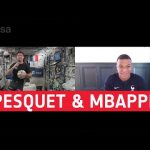
ESA astronaut Thomas Pesquet talked to French national football team player Kylian Mbappé from the International Space Station during the Alpha mission in 2021.
They talked about science, life in space, teamwork, international collaboration, performing under pressure, stress, risk, life behind the scenes and the parallels between professional sport and being an astronaut.
Thomas has often said that sport taught him the values of team spirit and respecting team mates, and no astronaut is an island – if one profession is an example of teamwork it is being an astronaut. It takes a team to ensure they are at their best.
Credits: @UEFA
★ Subscribe: http://bit.ly/ESAsubscribe and click twice on the bell button to receive our notifications.
We are Europe’s gateway to space. Our mission is to shape the development of Europe’s space capability and ensure that investment in space continues to deliver benefits to the citizens of Europe and the world. Check out https://www.esa.int/ to get up to speed on everything space related.



![Dragon Endeavour tour [in French with English subtitles]](https://video.kidibot.ro/wp-content/uploads/2021/11/11313-dragon-endeavour-tour-in-french-with-english-subtitles-150x150.jpg)
![Space Station tour with your guide Thomas Pesquet | 4K [in French with English subtitles available]](https://video.kidibot.ro/wp-content/uploads/2021/11/11271-space-station-tour-with-your-guide-thomas-pesquet-4k-in-french-with-english-subtitles-available-150x150.jpg)
![Space food | Mission Alpha [in French with English subtitles]](https://video.kidibot.ro/wp-content/uploads/2021/10/11052-space-food-mission-alpha-in-french-with-english-subtitles-150x150.jpg)

![Node 3 | Space Station 360 [in French with English subtitles available]](https://video.kidibot.ro/wp-content/uploads/2025/06/21958-node-3-space-station-360-in-french-with-english-subtitles-available-150x150.jpg)
![Quest airlock | Space Station 360 [in French with English subtitles available]](https://video.kidibot.ro/wp-content/uploads/2021/11/11319-quest-airlock-space-station-360-in-french-with-english-subtitles-available-150x150.jpg)
![Kibo | Space Station 360 [in French with English subtitles available]](https://video.kidibot.ro/wp-content/uploads/2025/04/21442-kibo-space-station-360-in-french-with-english-subtitles-available-150x150.jpg)


![Enter the airlock with Thomas Pesquet [in French with English subtitles available]](https://video.kidibot.ro/wp-content/uploads/2025/04/21406-enter-the-airlock-with-thomas-pesquet-in-french-with-english-subtitles-available-150x150.jpg)