Jupiter has super strong winds and massive storms, including the iconic Great Red Spot, a storm bigger than Earth! At the poles, winds can reach up to 1440 km/h.
Saturn is even windier! It has some of the fastest, but not the fastest winds in our Solar System blow. Winds here can reach 1800 km/h.
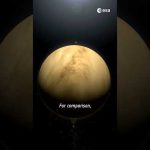
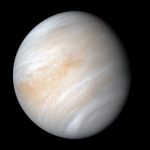
Venus has super-rotating winds that race around the planet up to 60x faster than Venus itself spins. That’s way faster than Earth’s winds, which top out at 10–20% of our planet’s rotation speed.
Mars has a thin atmosphere, so winds are usually gentle. But during dust storms, they can kick up to around 100 km/h.
Neptune holds the record for the fastest winds in the Solar System, blowing at over 2000 km/h!
For context: the fastest wind ever recorded on Earth? 408 km/h—during a massive tornado in Australia.
📹 European Space Agency (ESA) 📸 ESA/Voyager 2, NASA, NSSDC Photo Gallery ID P-34709C
The planet’s thick CO2-filled atmosphere is great at trapping heat. This creates a runaway greenhouse effect that makes Venus roughly 700°F (389°C) hotter than it would be otherwise. @NASAJPL’s Dr. Amy Hofmann provides all the sizzling details.
When a spacecraft launches on a mission to another planet it must first break free of the Earth’s gravitational field. Once it has done that, it enters interplanetary space, where the dominant force is the gravitational field of the Sun.
The spacecraft begins to follow a curving orbit, around the Sun, which is similar to the orbit of a comet. When this orbit brings it close to its target destination the spacecraft must fire a retrorocket to slow down and allow itself to be captured by the gravitational field of its target. The smaller the target, the more the spacecraft must slow down.
Sometimes passing a planet can result in the spacecraft being accelerated, even without the spacecraft firing any of its thrusters. This is known as the ‘slingshot’ effect. Such ‘gravity assist’ manoeuvres are now a standard part of spaceflight and are used by almost all our interplanetary missions. They take advantage of the fact that the gravitational attraction of the planets can be used to change the trajectory and speed of a spacecraft.
The amount by which the spacecraft speeds up or slows down is determined by whether it is passing behind or in front of the planet as the planet follows its orbit. When the spacecraft leaves the influence of the planet, it follows an orbit on a different course than before.
📹 @EuropeanSpaceAgency
★ Subscribe: http://bit.ly/ESAsubscribe and click twice on the bell button to receive our notifications.
We are Europe’s gateway to space. Our mission is to shape the development of Europe’s space capability and ensure that investment in space continues to deliver benefits to the citizens of Europe and the world. Check out https://www.esa.int/ to get up to speed on everything space related.
Why is Venus called Earth’s evil twin? The two planets actually have a lot in common, but somewhere along the way Venus and Earth took two very different paths. NASA Director of Planetary Science, Dr. Lori Glaze, explains how Venus became a hot, hellish, and unforgiving place.
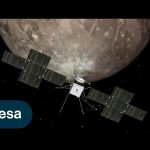
ESA’s Jupiter Icy Moons Explorer, Juice, is set to embark on an eight-year cruise to Jupiter starting April 2023. The mission will investigate the emergence of habitable worlds around gas giants and the Jupiter system as an archetype for the numerous giant planets now known to orbit other stars.
This animation depicts Juice’s journey to Jupiter and highlights from its foreseen tour of the giant planet and its large ocean-bearing moons. It depicts Juice’s journey from leaving Earth’s surface in a launch window 5–25 April 2023 and performing multiple gravity assist flybys in the inner Solar System, to arrival at Jupiter (July 2031), flybys of the Jovian moons Europa, Callisto and Ganymede, orbital insertion at Ganymede (December 2034), and eventual impact on this moon’s surface (late 2035).
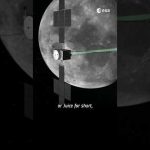
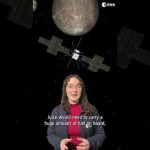
An Ariane 5 will lift Juice into space from Europe’s Spaceport in Kourou. A series of gravity assist flybys of Earth, the Earth-Moon system and Venus will set the spacecraft on course for its July 2031 arrival at Jupiter. These flybys are shown here in order – Earth-Moon (August 2024), Venus (August 2025), Earth (September 2026, January 2029) – interspersed by Juice’s continuing orbits around the Sun. Juice’s flyby of the Earth-Moon system, known as a Lunar-Earth gravity assist (LEGA), is a world first: by performing this manoeuvre – a gravity assist flyby of the Moon followed just 1.5 days later by one of Earth – Juice will save a significant amount of propellant on its journey.
Juice will start its science mission about six months prior to entering orbit around Jupiter, making observations as it approaches its destination. Once in the Jovian system, a gravity assist flyby of Jupiter’s largest moon Ganymede – also the largest moon in the Solar System – will help Juice enter orbit around Jupiter, where the spacecraft will spend four years observing the gas giant and three of its moons: Ganymede, Callisto and Europa.
Juice will make two flybys of Europa (July 2032), which has strong evidence for an ocean of liquid water under its icy shell. Juice will look at the moon’s active zones, its surface composition and geology, search for pockets of liquid water under the surface, and study the plasma environment around Europa, also exploring the moon’s tiny atmosphere and hunting for plumes of water vapour (as have been previously detected erupting to space).
A sequence of Callisto flybys will be used to study this ancient, cratered world that may too harbour a subsurface ocean, also changing the angle of Juice’s orbit with respect to Jupiter’s equator, making it possible to explore Jupiter’s higher latitudes (2032–2034).
A sequence of Ganymede and Callisto flybys will adjust Juice’s orbit – properly orienting it while minimising the amount of propellant expended – so that it can enter orbit around Ganymede in December 2034, making it the first spacecraft to orbit another planet’s moon. Juice’s initial elliptical orbit will be followed by a 5000 km-altitude circular orbit, and later a 500 km-altitude circular orbit.
Ganymede is the only moon in the Solar System to have a magnetosphere. Juice will investigate this phenomenon and the moon’s internal magnetic field, and explore how its plasma environment interacts with that of Jupiter. Juice will also study Ganymede’s atmosphere, surface, subsurface, interior and internal ocean, investigating the moon as not only a planetary object but also a possible habitat.
Over time, Juice’s orbit around Ganymede will naturally decay due to lack of propellant, and it will make a grazing impact onto the surface (late 2035).
The Juice launch itself will be a historical milestone for more reasons than one. It will be the final launch for Ariane 5, ending the launcher’s nearly three-decade run as one of the world’s most successful heavy-lift rockets. Its duties are being taken over by Ariane 6.
We are Europe’s gateway to space. Our mission is to shape the development of Europe’s space capability and ensure that investment in space continues to deliver benefits to the citizens of Europe and the world. Check out https://www.esa.int/ to get up to speed on everything space related.
A sonification of data recorded by the Italian Spring Accelerometer (ISA) aboard the BepiColombo Mercury Planetary Orbiter spacecraft during the flyby of Venus on 10 August 2021. The accelerometer data was converted to frequency to be made audible to the human ear. The resulting sound is rich with interesting effects due to the planet’s gravity acting on the spacecraft structure, the response of the spacecraft to the rapid temperature changes, and the change in reaction wheel velocity as they work hard to compensate for these effects.
The audio has been matched to the timing that the images seen in this movie were captured, in the moments after closest approach.
We are Europe’s gateway to space. Our mission is to shape the development of Europe’s space capability and ensure that investment in space continues to deliver benefits to the citizens of Europe and the world. Check out https://www.esa.int/ to get up to speed on everything space related.
A stunning sequence of 89 images taken by the monitoring cameras on board the European-Japanese BepiColombo mission to Mercury, as the spacecraft made a close approach of Venus on 10 August 2021.
The sequence includes images from all three Monitoring Cameras (MCAM) onboard the Mercury Transfer Module, which provides black-and-white snapshots in 1024 x 1024 pixel resolution. It is not possible to image with the high-resolution camera suite during the cruise phase. The images have been lightly processed to enhance contrast and use the full dynamic range. A small amount of optical vignetting is seen in the corners of some of the images.
The first image is from MCAM 1, and was taken at 13:41:02 UTC, prior to close approach. As such, the spacecraft was still on the nightside of the planet, but the dayside can just be seen creeping into view. Part of the spacecraft’s solar array can also be seen.
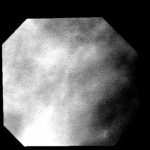
The second image was taken by MCAM 2 at 13:51:56 UTC, two seconds after closest approach. With the Venus surface just 552 km away, the planet fills the entire field of view. The camera is not able to image detail of the planet’s atmosphere. The image also captures the Mercury Planetary Orbiter’s medium gain antenna and magnetometer boom.
The rest of the sequence is from MCAM 3, while the spacecraft was pointed at Venus, and then as it slews away and gradually recedes from view, covering the time period 13:53:56 UTC on 10 August until 12:21:26 UTC on 11 August. The high gain antenna of the Mercury Planetary Orbiter is also seen changing orientation as it points towards Earth.
The music accompanying the compilation was composed especially for the occasion, by @Anna Phoebe.
The images were captured during the second of two Venus flybys, and the third of nine flybys overall. The flybys are gravity assist manoeuvres needed to help steer the spacecraft on course for Mercury. During its seven-year cruise to the smallest and innermost planet of the Solar System, BepiColombo makes one flyby at Earth, two at Venus and six at Mercury in order to approach the orbit around Mercury. Its first Mercury flyby will take place 1-2 October 2021 from a distance of just 200 km.
BepiColombo, which comprises ESA’s Mercury Planetary Orbiter and the Mercury Magnetospheric Orbiter of @JAXA | 宇宙航空研究開発機構, is scheduled to reach its target orbit around the smallest and innermost planet of the Solar System in 2025. The spacecraft will separate and enter into their respective orbits before starting their science mission in early 2026 .
Credit: ESA/BepiColombo/MTM, CC BY-SA 3.0 IGO
Music composed by Anna Phoebe, with additional soundscapes by Mark McCaughrean
★ Subscribe: http://bit.ly/ESAsubscribe and click twice on the bell button to receive our notifications.
We are Europe’s gateway to space. Our mission is to shape the development of Europe’s space capability and ensure that investment in space continues to deliver benefits to the citizens of Europe and the world. Check out https://www.esa.int/ to get up to speed on everything space related.
Learn about two new future missions to Venus and other reasons why the State of NASA is strong and exciting, launching supplies to the space station, and more good news for OSIRIS-REx … a few of the stories to tell you about – This Week at NASA!
Venus, our planetary neighbor, is a hot, hellish unforgiving world and NASA has selected two bold new missions to study this inferno-like planet: DAVINCI+ and VERITAS. Are Venus and Earth fundamentally unique worlds? Or are the differences between these ‘twins’ only cosmetic? Answering this question is key to understanding what makes other rocky planets habitable and, ultimately, emerge with life.
With a simple Google Cardboard-style virtual reality (VR) viewer, you can experience how it feels to be a spacecraft hurtling past Earth. This 360-degree VR simulation of a flyby manoeuvre performed by ESA’s Mercury-bound BepiColombo spacecraft takes you on a trip past Earth at the distance of only 12 700 km, closer than the orbit of Europe’s navigational satellites Galileo.
The simulation displays the field of view of two of BepiColombo’s science instruments (MERTIS and PHEBUS) and two of its three MCAM selfie cameras during the gravity-assist flyby at Earth on 10 April 2020.
The simulation was created using the SPICE software developed by NASA’s Jet Propulsion Laboratory and data generated by the European Space and Astronomy Centre (ESAC)in Spain.
BepiColombo, a joint mission of ESA and the Japan Aerospace Exploration Agency (JAXA), is on a seven-year cruise to Mercury, the smallest and innermost planet of the Solar System. Launched in October 2018, BepiColombo follows an intricate trajectory that involves nine gravity-assist flyby manoeuvres. In addition to the flyby at Earth, BepiColombo will perform two flybys at Venus and six at Mercury, its target planet. The manoeuvres slow down the spacecraft as it needs to constantly brake against the gravitational pull of the Sun in order to be able to enter the correct orbit around Mercury in 2025, ahead of commencing science operations in early 2026.
Credit: ESA SPICE Service/RHEA Group.
★ Subscribe: http://bit.ly/ESAsubscribe and click twice on the bell button to receive our notifications.
We are Europe’s gateway to space. Our mission is to shape the development of Europe’s space capability and ensure that investment in space continues to deliver benefits to the citizens of Europe and the world. Check out http://www.esa.int/ESA to get up to speed on everything space related.
Juice, ESA’s Jupiter Icy Moons Explorer, is set to embark on a seven-year cruise to Jupiter starting May 2022. The mission will investigate the emergence of habitable worlds around gas giants and the Jupiter system as an archetype for the numerous giant planets now known to orbit other stars.
This animation depicts the journey to Jupiter and the highlights from its foreseen tour of the giant planet and its large ocean-bearing moons.
An Ariane 5 will lift Juice into space from Europe’s Spaceport in Kourou. A series of gravity-assist flybys at Earth (3), Venus (1) and Mars (1) will set the spacecraft on course for its October 2029 rendezvous in the Jovian system.
It is expected that a number of instruments will be activated during the gravity assists (indicated by the different coloured beams scanning across the planets) and measurements will be taken for calibration and to check the health of the instruments. The visualisations of the Earth flybys show the closest approaches over the planet according to current planning – over the South Pacific Ocean, Argentina and Peru, respectively. Throughout the animation, the instrument beam colours correspond to example observations by JANUS (green), MAJIS (red), UVS (purple), Gala (Blue) and RIME (grey), which are cameras, spectrometers, laser altimeter and radar.
During the Venus flyby, limited observations can be made because the spacecraft will be oriented to protect it from the heat of the Sun experienced in the inner Solar System. The Mars flyby will see Juice fly over the planet’s south pole to make scientific observations.
Juice will start its science mission about six months prior to arriving in orbit around the gas giant, making observations as it approaches its destination. Once in the Jovian system, a gravity-assist flyby of Jupiter’s largest moon Ganymede – the largest moon in the Solar System – helps Juice enter orbit around the gas giant 7.5 hours later.
While in Jupiter orbit, the spacecraft will study the Jovian system as an archetype for gas giants, making observations of its atmosphere, the magnetosphere, its rings and satellites.
During the tour, Juice will make two flybys of Europa, which has strong evidence for an ocean of liquid water under its icy shell. Juice will look at the moon’s active zones, its surface composition and geology, search for pockets of liquid water under the surface and study the plasma environment around Europa.
A sequence of Callisto flybys will not only be used to study this ancient, cratered world that may too harbor a subsurface ocean, but it will change the angle of Juice’s orbit with respect to Jupiter’s equator, making it possible to investigate the polar regions and environment at higher latitudes.
During the tour there will also be unique periods to observe events such as moon transits. The example in this animation shows Europa and Io passing in front of Jupiter on 27 January 2032. This type of event is rare, with less than 10 expected to occur during Juice’s tour of the Jovian system.
A sequence of Ganymede and Callisto flybys will adjust the orbit of Juice to enable it to enter orbit around Ganymede, marking it the first spacecraft to orbit another planet’s moon (aside from our own). The elliptical orbit will be followed by a 5000 km altitude cicular orbit, and later a 500 km circular orbit.
Ganymede is unique in the Solar System in that it is the only moon to have a magnetosphere. Juice will investigate this phenomenon and the moon’s internal magnetic field, and the interaction of its plasma environment with that of Jupiter. Juice will also study the moon’s atmosphere, surface, subsurface, interior and its internal ocean, investigating the moon as a planetary object and possible habitat.
Over time the 500 km orbit will naturally decay – eventually there will not be enough propellant to maintain it – and it will make a grazing impact on the surface. The animation concludes with an example of what the approach to impact could look like.
★ Subscribe: http://bit.ly/ESAsubscribe and click twice on the bell button to receive our notifications.
ESA is Europe’s gateway to space. Our mission is to shape the development of Europe’s space capability and ensure that investment in space continues to deliver benefits to the citizens of Europe and the world. Check out http://www.esa.int/ESA to get up to speed on everything space related.
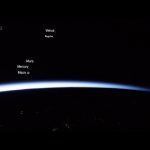
On 18 September 2017, ESA astronaut Paolo Nespoli shot this beautiful time-lapse showing the Moon rising above the Earth’s horizon together with Mercury, Mars, the star Regulus, and Venus.
ESA astronaut Paolo Nespoli is currently working and living on board the International Space Station as part of his long duration Vita mission.
Launched in 2005, ESA’s Venus Express spacecraft has been observing Earth’s so called ‘sister’ planet from a unique point of view: in orbit around Venus itself. This mission is providing scientists with detailed information about the Venusian atmosphere and in the course of these studies many surprises have emerged.
Venus, un misterioso vecino. Un extraño mundo donde el Sol sale por el oeste y se oculta por el este y el día dura más de un año terrestre. La misión de la ESA Venus Express ha pasado 8 años recogiendo datos sobre la atmósfera y el clima de este planeta tan singular. Gracias a la técnica del “aerobraking”, la nave pudo acercarse a la atmósfera de Venus revelando la existencia de olas desconocidas hasta ahora.
After eight years in orbit, ESA’s Venus Express has completed routine science observations and is preparing for a daring plunge into the planet’s hostile atmosphere.
Venus Express was launched on 9 November 2005, and arrived at Venus on 11 April 2006.
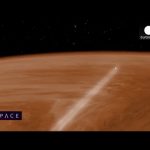
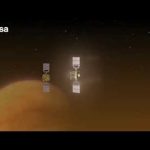
It has been orbiting Venus in an elliptical 24-hour loop that takes it from a distant 66 000 km over the south pole — affording incredible global views — to an altitude of around 250 km above the surface at the north pole, close to the top of the planet’s atmosphere.
With a suite of seven instruments, the spacecraft has provided a comprehensive study of the ionosphere, atmosphere and surface of Venus.
This video includes interviews in English with Håkan Svedhem, ESA mission scientist and Patrick Martin, ESA Venus Express mission manager
Visualisation of the Venus Express aerobraking manoeuvre, which will see the spacecraft orbiting Venus at an altitude of around 130 km from 18 June to 11 July. In the month before, the altitude will gradually be reduced from around 200 km to 130 km. If the spacecraft survives and fuel permits, the elevation of the orbit will be raised back up to approximately 450 km, allowing operations to continue for a further few months. Eventually, however, the spacecraft will plunge back into the atmosphere and the mission will end.
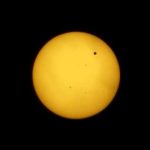
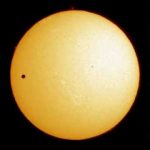
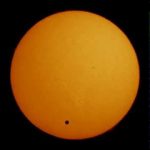
Time lapse movie of the transit of Venus, as seen from the land of the midnight sun in Svalbard. Interference from cloud gives an eerie feel to the scene.
This movie was compiled from images taken by the Venus Monitoring Camera on Venus Express as it approached the planet on its elliptical orbit on 1 June 2012. Initially, the spacecraft is looking at the south side of the planet from a distance of 63 000 km and clouds can be seen moving below. As the spacecraft draws closer, Venus starts filling the field of view and the equatorial regions can be seen. The sequence finishes with observations of cloud features at high latitudes.
Cloudy weather did impact on the Venus transit observations at Longyearbyen, Spitsbergen. Still most of the Venus transit could be captured. Credit: ESA – M. Breitfellner, M. Perez
Almost the whole Venus transit could be captured despite of some clouds did get into the way of those observing the Venus Transit in Canberra, Australia. Credit: ESA – Manuel Castillo-Fraile and Miguel Sanchez-Portal
Almost the whole Venus transit could be captured despite of some clouds did get into the way of those observing the Venus Transit in Canberra, Australia. Credit: ESA – Manuel Castillo-Fraile and Miguel Sanchez-Portal
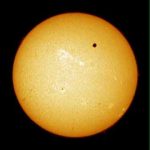
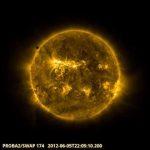
This movie shows the transit of Venus on 5-6 June 2012 as seen from SWAP, a Belgian solar imager onboard ESA’s PROBA2 microsatellite. SWAP, watching the Sun in EUV light, observes Venus as a small, black circle, obscuring the EUV light emitted from the solar outer atmosphere – the corona – from 19:45UT onwards. At 22:16UT – Venus started its transit of the solar disk
The bright dots all over the image (‘snow storm’) are energetic particles hitting the SWAP detector when PROBA2 crosses the South Atlantic Anomaly, a region where the protection of the Earth magnetic field against space radiation is known to be weaker.
Note also the small flaring activity in the bright active region in the northern solar hemisphere as Venus passes over. Towards the end, you can see a big dim inverted-U-shape moving away from the Sun towards the bottom-right corner. This is a coronal mass ejection taking off.
Es conocido como el lucero del alba o la estrella de la mañana, pero no es una estrella: es un planeta. Venus es, junto con Marte, nuestro vecino más cercano, y al mismo tiempo, un gran desconocido. Levantamos el velo que esconde los misterios del planeta ardiente.
On l’appelle l’étoile du berger ou encore l’étoile du matin, mais c’est tout sauf une étoile. C’est même une planète de notre voisinage immédiat. Vénus est, avec Mars, la plus proche planète de la Terre. Proche peut-être mais au combien différente. On commence tout juste à lever quelques pans du voile qui entoure le mystère de la planète brûlante.
It can be called the morning or evening star, depending on where you are or what time it is, but it is anything but a star. In fact, it is one of our nearest planetary neighbours. Venus and Mars may be Earth’s close cousins, but they are oh-so different. Only now are we starting to peer through Venus’ clouds to reveal the burning planet’s secrets.
Space missions are complicated pieces of orbital choreography. When planning a mission, spacecraft engineers must calculate how to point the solar panels towards the Sun, the main antenna towards Earth and the instruments towards the target. ESA Space Scientist Detlef Koschny build a LEGO model of Rosetta mission in order to visualise these precise orientations.
Built using LEGO Mindstorms, the Philae lander model can be controlled using a home computer. It can rotate and move the drill up and down to simulate the behaviour of the real lander. As part of ESA’s Rosetta space mission, Philae will land on comet Churyumov-Gerasimenko in November 2014 to study its composition.