Want to know more about our solar system but don’t know where to start? We’ve got you covered. Our What You Need to Know series takes you on a tour across the solar system, exploring some of the most intriguing features about our tiny slice of the Milky Way galaxy.
From moons that hide vast liquid oceans to asteroids that hold the secrets of our universe to worlds that could be friendly to life, tune in to find out What You Need to Know.
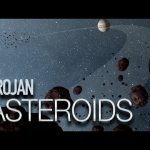
You’ve heard of asteroids… But have you heard of Trojan asteroids?
Our upcoming Lucy mission will study these time capsules from the birth of our solar system for the first time ever. Find out what you need to know about Trojan Asteroids.
For more information about Lucy, check out this episode of NASA Science Live: Lucy in the Sky with Asteroids: https://youtu.be/180pFU_h5Eg
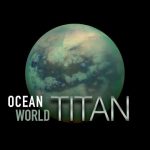
Earth is not the only place in the solar system with rain, rivers, lakes and seas. Saturn’s moon Titan has them, too — not of water, but of liquid methane and ethane. This Earth-like world even hides an ocean of liquid water deep beneath its surface! Find out what you need to know about Titan.
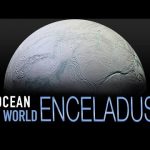
Beneath its icy surface, Saturn’s icy moon Enceladus has many surprises: a reservoir of liquid water, organic chemical compounds, and hydrothermal vents. Find out what you need to know about Enceladus, an ocean world which may have conditions friendly to life.
It turns out Beck, NASA and artificial intelligence have a lot in common!
NASA spacecraft and observatories have been imaging our solar system and our universe for over 60 years. The NASA archives host a wealth of images that showcase and educate. Beck’s latest music videos for the album Hyperspace, created by Osk Studios, use artificial intelligence to interpret our NASA images. We’ve also used our databases of Mars images to train our new Mars rover Perseverance to help it land, drive and explore with autonomy. In this episode of #AskNASA, Beck joins NASA-JPL engineer Farah Alibay and Osk designers Isabelle Albuquerque and Jon Ray to answer social media questions about A.I. in art and science.
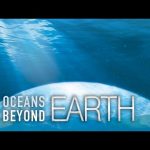
Our planet is a beautiful water-filled world, teeming with life. But did you know that Earth is not the only world in our solar system with an ocean? Here’s what you need to know about Ocean Worlds.
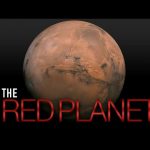
The search for ancient life. Planetary evolution. Preparing for future human exploration. There are so many reasons to study the Red Planet. If you’re craving more, here’s what you need to know about Mars!
Have burning questions about asteroids? Our experts have answers!
(Spoiler Alert: none of them will hit Earth.)
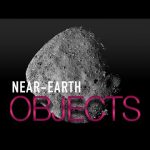
Our solar system is littered with asteroids and comets and sometimes they get a little close to Earth. When an asteroid or comet looks like it could come near our home planet, we keep close watch to warn of any potential impacts.
This year, NASA is celebrating the Hubble Space Telescope’s 30 years of unlocking the beauty and mystery of space.
Hubble is revolutionizing modern astronomy for scientists, while taking the public on a wondrous journey of exploration and discovery. Hubble’s never-ending, breathtaking celestial snapshots provide a visual shorthand for Hubble’s top scientific achievements. Unlike any space telescope before it, Hubble made astronomy relevant, engaging and accessible for people of all ages. The space telescope’s iconic imagery has redefined our view of the universe and our place in time and space.
What is ESA’s Characterising Exoplanet Satellite, Cheops, and how will it improve our knowledge of exoplanets? Find out more in this interview with Kate Isaak, ESA Cheops project scientist.
We are Europe’s gateway to space. Our mission is to shape the development of Europe’s space capability and ensure that investment in space continues to deliver benefits to the citizens of Europe and the world. Check out http://www.esa.int/ESA to get up to speed on everything space related.
NASA’s Jacob Keaton answers questions about the International Space Station. He highlights building this home off Earth and what astronauts do while aboard. Research and other lessons learned from the space station will help us send humans to the Moon under the Artemis program and prepare for Mars.
Comment with your #AskNASA question and subscribe to learn more from our experts!
NASA astronaut Serena M. Auñón-Chancellor answers the question ‘What is Artemis?’ Comment on this video using #AskNASA with your questions for upcoming episodes!
Dr. Auñón-Chancellor reveals more about the program to land American astronauts, including the first woman and the next man, on the Moon by 2024. She also shares her experience in long-duration spaceflight aboard the International Space Station on the Expedition 56/57 missions.
Basic Introduction to robots video for kids. Learn With Lily! Subscribe, comment and like!
Today we learn about artificial intelligence and robots for kids.
Robots and AI
– What does artificial mean?
– What is intelligence?
– What is artificial intelligence?
– What is A.I.?
– Review of the Vector Home Robot by Anki
educational videos for preschoolers. educational videos for toddlers
#baby #children #babies #toddlers #preschool #babyvideos #kids #teach #learn #boostIQ
The Moon has been circling the Earth for over four billion years, but where did it come from?
In this video, Ralf Jaumann, planetary geologist at the German Aerospace Centre, DLR, discusses the four theories that could explain the origin of the Earth-Moon system.
There are four theories about the origin of the Earth-Moon system.
The first is that Earth captured a celestial body in its orbit. Another possibility is that a rapidly rotating Earth could have thrown material out to form the Moon around it. A third theory is that Earth and the Moon formed at the same time out of the same material. Today, most scientists believe the Moon is ‘Earth’s child’ – a large body collided with Earth, destroying our planet’s mantle and sending material into orbit from which the Moon formed. This ‘big splash’ theory would explain why the Moon’s rocks are similar to those on Earth.
ESA is Europe’s gateway to space. Our mission is to shape the development of Europe’s space capability and ensure that investment in space continues to deliver benefits to the citizens of Europe and the world. Check out http://www.esa.int/ESA to get up to speed on everything space related.
ESA Web TV talks with ESA’s Director General Jan Wörner about the plans for ‘Space19+’, ESA’s next Ministerial Council, and its benefits for citizens.
Ministers from ESA’s Member States will come together in Seville, Spain, 27-28 November 2019, to secure financing for ESA’s activities in the coming years.
In this interview the Director General discusses the Space19+ proposal including his plans for space programmes to be carried out by the Agency beyond 2019, covering all aspects of space activities: science and exploration, applications, access to space, operations, research and development. The Space19+ plan also puts ESA in a world-leading position in the emerging field of space safety and security.
★ Subscribe: http://bit.ly/ESAsubscribe and click twice on the bell button to receive our notifications.
ESA is Europe’s gateway to space. Our mission is to shape the development of Europe’s space capability and ensure that investment in space continues to deliver benefits to the citizens of Europe and the world. Check out http://www.esa.int/ESA to get up to speed on everything space related.
Our star dominates the environment within our Solar System. Unpredictable and temperamental, the Sun has made life on the inner-most planets impossible, due to the intense radiation and colossal amounts of energetic material it blasts in every direction, creating the ever-changing conditions in space known as ‘space weather’.
What would the outcome be if you took a leap of faith straight into a black hole? We looked to Einstein and Hawking to ponder the scenario.
Say one day you were exploring space looking for a new planet for humans to inhabit, but came across a black hole and decided – why not check it out? Would you have any chance of survival? How would you get out if at all? Would you find a shortcut to another universe? Watch the video to learn about what would happen if you fell into a black hole.
About What If: Produced by Underknown in Toronto, Canada, What If is a mini-documentary web series that takes you on an epic journey through hypothetical worlds and possibilities. Join us on an imaginary adventure — grounded in scientific theory — through time, space and chance, as we ask what if some of the most fundamental aspects of our existence were different.
What is a lunar eclipse? What is a solar eclipse? This short video explains the difference between these regularly occurring events that can be observed from Earth.
The video uses a mix of ground- and space-based imagery of eclipses, including footage from the International Space Station, ESA’s Proba-2 satellite and the Japanese-led Hinode satellite.
Remember: never look directly at the Sun, even when partially eclipsed, without proper eye protection such as special solar eclipse glasses, or you risk permanent eye damage.
Credits: ESA, ESA/CESAR (graphics, ground-based observations), NASA’s Scientific Visualization Studio (partial lunar eclipse sequence) ESA/NASA (ISS footage), ESA/Royal Observatory of Belgium (Proba-2 footage), NASA/Hinode/XRT (Hinode image).
You’ve probably seen atoms like this emoji ⚛ everywhere from science textbooks to the logo for The Big Bang Theory. But what does an atom really look like? The truth is much stranger.
SUBSCRIBE: http://youtube.com/whatthephysics?sub
Business Insider spoke to 6 tech industry figures at MWC 2018, and asked them what they thought the world would look like in 50 years’ time. From self-driving cars to implanted technology, watch to hear what these experts are predicting for the future.
This evidence seems to suggest that the dark matter is particles that are less than four times the mass of a proton and are moving at non-relativistic speeds. This is consistent with dark matter particles being so-called WIMPs: https://en.wikipedia.org/wiki/Weakly_interacting_massive_particles.
Want to learn more about AI and machine learning? Take this free HubSpot Academy course: https://bit.ly/2Sm2rzG
What is AI? What is machine learning and how does it work? You’ve probably heard the buzz. The age of artificial intelligence has arrived. But that doesn’t mean it’s easy to wrap your mind around. For the full story on the rise of artificial intelligence, check out The Robot Revolution: http://hubs.ly/H0630650
Let’s break down the basics of artificial intelligence, bots, and machine learning. Besides, there’s nothing that will impact marketing more in the next five to ten years than artificial intelligence. Learn what the coming revolution means for your day-to-day work, your business, and ultimately, your customers.
Every day, a large portion of the population is at the mercy of a rising technology, yet few actually understand what it is.
Artificial intelligence. You know, HAL 9000 and Marvin the Paranoid Android?
Thanks to books and movies, each generation has formed its own fantasy of a world ruled — or at least served — by robots. We’ve been conditioned to expect flying cars that steer clear of traffic and robotic maids whipping up our weekday dinner.
But if the age of AI is here, why don’t our lives look more like the Jetsons?
Well, for starters, that’s a cartoon. And really, if you’ve ever browsed Netflix movie suggestions or told Alexa to order a pizza, you’re probably interacting with artificial intelligence more than you realize.
And that’s kind of the point. AI is designed so you don’t realize there’s a computer calling the shots. But that also makes understanding what AI is — and what it’s not — a little complicated.
In basic terms, AI is a broad area of computer science that makes machines seem like they have human intelligence.
So it’s not only programming a computer to drive a car by obeying traffic signals, but it’s when that program also learns to exhibit signs of human-like road rage.
As intimidating as it may seem, this technology isn’t new. Actually, for the past half-a-century, it’s been an idea ahead of its time.
The term “artificial intelligence” was first coined back in 1956 by Dartmouth professor John McCarthy. He called together a group of computer scientists and mathematicians to see if machines could learn like a young child does, using trial and error to develop formal reasoning. The project proposal says they’ll figure out how to make machines “use language, form abstractions and concepts, solve kinds of problems now reserved for humans, and improve themselves.”
That was more than 60 years ago.
Since then, AI has remained for the most part in university classrooms and super secret labs … But that’s changing.
Like all exponential curves, it’s hard to tell when a line that’s slowly ticking upwards is going to skyrocket.
But during the past few years, a couple of factors have led to AI becoming the next “big” thing: First, huge amounts of data are being created every minute. In fact, 90% of the world’s data has been generated in the past two years. And now thanks to advances in processing speeds, computers can actually make sense of all this information more quickly. Because of this, tech giants and venture capitalists have bought into AI and are infusing the market with cash and new applications.
Very soon, AI will become a little less artificial, and a lot more intelligent.
Now the question is: Should you brace yourself for yet another Terminator movie, live on your city streets?
Not exactly. In fact, stop thinking of robots. When it comes to AI, a robot is nothing more than the shell concealing what’s actually used to power the technology.
That means AI can manifest itself in many different ways. Let’s break down the options…
First, you have your bots. They’re text-based and incredibly powerful, but they have limitations.
Ask a weather bot for the forecast, and it will tell you it’s partly cloudy with a high of 57. But ask that same bot what time it is in Tokyo, and it’ll get a little confused. That’s because the bot’s creator only programmed it to give you the weather by pulling from a specific data source.
Natural language processing makes these bots a bit more sophisticated. When you ask Siri or Cortana where the closest gas station is, it’s really just translating your voice into text, feeding it to a search engine, and reading the answer back in human syntax. So in other words, you don’t have to speak in code.
Machine intelligence, artificial intelligence, machine learning, artificial intelligence tutorial, machine learning tutorial, evolution of machine learning, advantages of artificial intelligence, applications of artificial intelligence, ai meaning, machine learning applications, artificial intelligence examples.
Want to stay current on emerging tech? Check out our free guide today: http://bit.ly/2GJesc2
2016 marked record-breaking progress in NASA’s exploration objectives. The agency advanced the capabilities needed to travel farther into the solar system while increasing observations of our home and the universe, learning more about how to continuously live and work in space and, of course, inspiring the next generation of leaders to take up our Journey to Mars and make their own discoveries.
Learn about what physics actually is, why it’s awesome, and why you should come with me on a ride through understanding the wacky universe in which we live.
In 2015, NASA explored the expanse of our solar system and beyond, and the complex processes of our home planet, while also advancing the technologies for our journey to Mars, and new aviation systems as the agency reached new milestones aboard the International Space Station. Here’s a look at some of the top NASA stories of the year!
We all know tides have something to do with gravity from the Moon and Sun, but if gravity affects the motion of all objects equally, then how come oceans have large tides while other bodies of water don’t? It’s because your mental picture of the tides is probably WRONG!!! Join Gabe on this week’s episode of PBS Space Time as he sets the record straight on tidal force, gravitational differential and what role the moon actually plays in tides. Why don’t lakes have tides? Watch the episode to find out!
Artificial intelligence is getting smarter by leaps and bounds — within this century, research suggests, a computer AI could be as “smart” as a human being. And then, says Nick Bostrom, it will overtake us: “Machine intelligence is the last invention that humanity will ever need to make.” A philosopher and technologist, Bostrom asks us to think hard about the world we’re building right now, driven by thinking machines. Will our smart machines help to preserve humanity and our values — or will they have values of their own?
TEDTalks is a daily video podcast of the best talks and performances from the TED Conference, where the world’s leading thinkers and doers give the talk of their lives in 18 minutes (or less). Look for talks on Technology, Entertainment and Design — plus science, business, global issues, the arts and much more.
Find closed captions and translated subtitles in many languages at http://www.ted.com/translate
In 2014, NASA took significant steps on the agency’s journey to Mars — testing cutting-edge technologies and making scientific discoveries while studying our changing Earth and the infinite universe as the agency made progress on the next generation of air travel. Here’s a look at some of the top NASA stories of the year!
In 2013, NASA helped transform access to low Earth orbit … even as one of our venerable spacecraft reached the boundaries of the solar system … and we moved ahead on technologies — that will help us carry out an ambitious asteroid mission we announced … and, eventually, move on to Mars.
Here’s a quick trip back through 2013 for those and some of the other big things that happened This Year at NASA.
#WakeUpRosetta – What do you do Mondays at 10 am? At 10:00 UTC on 20 January 2014, ESA’s comet-chasing Rosetta spacecraft will wake up from 31 months in deep-space hibernation. Save the date and join the adventure. More info at www.esa.int/rosetta.
In this 3 Minute Thinking video Dr Sanjay Modgil imagines a future full of new technology and asks fundamental questions about artificial intelligence.
Economist Andrew McAfee suggests that, yes, probably, droids will take our jobs — or at least the kinds of jobs we know now. In this far-seeing talk, he thinks through what future jobs might look like, and how to educate coming generations to hold them.
TEDTalks is a daily video podcast of the best talks and performances from the TED Conference, where the world’s leading thinkers and doers give the talk of their lives in 18 minutes (or less). Look for talks on Technology, Entertainment and Design — plus science, business, global issues, the arts and much more.
Find closed captions and translated subtitles in many languages at http://www.ted.com/translate