Congress passed the National Aeronautics and Space Act, on July 16 and President Eisenhower signed it into law on July 29, 1958. NASA opened for business on Oct. 1, 1958, with T. Keith Glennan as our first administrator. Our history tells a story of exploration, innovation and discoveries. The next 60 years, that story continues. Learn more: https://www.nasa.gov/60
This video is available for download from NASA’s Image and Video Library: https://images.nasa.gov/details-NASA%2060%20Years%20in%2060%20Seconds.html
This short movie shares an impression of some of the scientific highlights from Rosetta’s mission at Comet 67P/Churyumov–Gerasimenko, as told through the voices of scientists working with Rosetta’s vast dataset, two years after the mission ended.
Rosetta launched in 2004 and travelled for ten years to its destination before deploying the lander Philae to the comet’s surface. Following the comet along its orbit around the Sun, Rosetta studied the comet’s surface changes, its dusty, gassy environment and its interaction with the solar wind. Even though scientific operations concluded in September 2016 with Rosetta’s own descent to the comet’s surface, analysis of the mission’s data will continue for decades.
Credits: This is an ESA Web TV production. The video contains artist impressions of the spacecraft (credit: ESA/ATG medialab) and animations/infographics by ESA. Images of the comet are from Rosetta’s OSIRIS and NAVCAM cameras, as well as Philae’s CIVA camera (credits: ESA/Rosetta/MPS for OSIRIS Team MPS/UPD/LAM/IAA/SSO/INTA/UPM/DASP/IDA – CC BY SA 4.0; ESA/Rosetta/NavCam – CC BY-SA IGO 3.0; ESA/Rosetta/Philae/CIVA). Ground-based images were provided by Colin Snodgrass/Alan Fitzsimmons/Liverpool Telescope. The plasma visualisation is based on modelling and simulation by Technische Universität Braunschweig and Deutsches Zentrum für Luft- und Raumfahrt, and visualised by Zuse-Institut Berlin. The animation of Philae’s flight across the surface is based on data from Philae’s ROMAP, RPC-MAG, OSIRIS, ROLIS, CIVA CONSERT, SESAME and MUPUS instrument teams, the Lander Control Centre at DLR and the Science Operation and Navigation Center at CNES.
ESA is Europe’s gateway to space. Our mission is to shape the development of Europe’s space capability and ensure that investment in space continues to deliver benefits to the citizens of Europe and the world. Check out http://www.esa.int/ESA to get up to speed on everything space related.
NASA astronaut Drew Feustel recorded this music video from space. Feustel launched to the International Space Station in March 2018 and is currently serving as Expedition 56 Commander. Drew thanks all who helped bring this to life, including his friend, Gord Sinclair, for giving him permission to use the song, and the crew of Expeditions 55 and 56 for their support and participation in NASA’s human space exploration mission.
Curiozitatea, povestea şi ecuaţiile sunt coloana vertrebrală a fizicii. Curiozitatea este scânteia care, odată ce pătrunde în creier, declanşează o reacţie în lanţ. Aşa cum ştim de la copii, curiozitatea este satisfăcută prin poveşti. Acesta este al doilea pas. Deși frumoase, poveștile nu descriu cantitativ și precis natura. De aceea, pentru a încheia povestea, trebuie să învățam să folosim matematica, limbajul universal al naturii. „Fizica este o cale de a te descoperi pe tine insuti”, asa cum ne marturiseste Cristian Presura.
Fiind unul dintre cei mai cunoscuti fizicieni romani contemporani, Cristian Presura s-a descoperit pe sine prin fizica. Nascut in 1971 acesta a studiat Fizica la Universitatea din Bucuresti. Dupa terminarea studiilor a lucrat la Intitutul de Fizica Atomica unde a studiat proprietatile laserelor in medii active si solide.
A caracterizat proprietatile optice ale sistemelor corelate de electroni, obtinadu-si astfel doctoratul in fizica la Universitatea Groningen din Olanda în anul 2002. In urma cercetarilor sale, Cristian a publicat rezultatele descoperite în numeroase lucrari publicate in reviste de specialitate precum : Science.
In prezent Cristian este dedicate domeniului cercetarii si doreste sa aduca inovatie prin descoperirile sale. Acesta lucreaza ca cercetator la compania Philips si este specializat in sensozi medicali. Alaturi de echipa sa, a inventat primul ceas ce poate masura pulsul sportivilor exclusiv pe baza sensorilor optici. Cristian Presura este totodata membru al asociatiei cercetatorilor romani Ad Astra.
Dedicarea lui Cristian pentru cercetare nu se opreste aici. Acesta a publicat de-a lungul carierei sale zeci de lucrari si brevete, una dintre cele mai cunsocute fiind volumul “Fizica povestita”, o lucrare distinsa ce a fost premiata cu Premiul Academiei Romane in domeniul stiintelor fizice.
Din dorinta de a populariza stiinta si in particular fizica, Cristian este fondator al asociatiei Stiinte pentru Toti. This talk was given at a TEDx event using the TED conference format but independently organized by a local community. Learn more at https://www.ted.com/tedx
Fake videos and audio keep getting better, faster and easier to make, increasing the mind-blowing technology’s potential for harm if put in the wrong hands. Bloomberg QuickTake explains how good deep fakes have gotten in the last few months, and what’s being done to counter them.
ESRIN, ESA’s centre for Earth observation in Frascati, near Rome, is one of the agency’s main specialised centres in Europe, and its founding ceremony took place 50 years ago on 27 September 1968.
Today, ESRIN manages the exploitation phase of the Earth Observation satellites and the ground segment for ESA and third-party Earth observation satellites, maintaining the largest archive of environmental data in Europe and coordinating over 20 ground stations and ground segment facilities in Europe. It also hosts the project team managing the Vega small-launcher programme.
ESA is Europe’s gateway to space. Our mission is to shape the development of Europe’s space capability and ensure that investment in space continues to deliver benefits to the citizens of Europe and the world. Check out http://www.esa.int/ESA to get up to speed on everything space related.
Michael Alig and Ernie Glam discuss the robot Bina48, her alleged threats against humanity and speculation that artificial intelligence will destroy humanity.
Michael Alig and Ernie Glam are back together again in The Pee-ew to bring you their special brand of political incorrectness and social satire. Each hysterical, action-packed episode features everyone’s favorite ex-club kids pointing their fingers and giggling deviously at the ills of society –giving American Consumer and Celebrity culture a heavy dose of its own medicine. Are they Anarchists, Libertarians, the Illuminati? Whatever you decide, remember there are three things you must do each and every day: Eat! Sleep! Watch The Pee-ew!
Subscribe to The Pee-ew us reach our goal of 5000 to get free studio time at Google!
Follow The Pee-ew on Twitter: https://twitter.com/ThePeeew
Follow The Pee-ew on Facebook: https://www.facebook.com/thepeeew
Follow The Pee-ew on Instagram: http://instagram.com/the_pee_ew
Who the hell do Michael Alig and Ernie Glam think they are? Michael Alig spearheaded a countercultural youth movement based on the concept of the Warholian “anti-Celebrity” and became King of the Club Kids before inspiring the film Party Monster, starring Macaulay Culkin. He is currently painting masterpieces of artwork; working on his autobiography, Aligula; designing a club kid-inspired clothing line called Skroddleface; directing a NYC art collective called Countdown and recording a new dance single. One of the original club kids, Ernie Glam is a journalist and irreverent talk show host by day, Underground clothing designer and stylist-to-the-stars by night; catch him – -if you can get past the red velvet ropes — at the city’s hottest nightclubs and parties.
Shop at AligMart for all your club kid merchandising needs! http://www.michaelalig.com/shop
Buy Ernie’s new book 69 Hangovers at https://www.createspace.com/6578567
Category
Comedy
In the not-too-distant future, leukemia patients may get their treatment recommendations from a computer. A team of researchers in Seattle is testing a program that could take the trial and error out of cancer treatment.
German citizen, Matthias Maurer, officially graduated as an ESA astronaut on Tuesday 25 September 2018 at the European Astronaut Centre in Cologne, Germany. Having completed basic and pre-assignment training, he is now qualified to go to space.
From in the classroom to underwater, across Europe, China and beyond, this clip showcases a few highlights from a challenging and rewarding three-year programme.
Send your congratulatory messages to Matthias in the comment section below.
ESA is Europe’s gateway to space. Our mission is to shape the development of Europe’s space capability and ensure that investment in space continues to deliver benefits to the citizens of Europe and the world. Check out http://www.esa.int/ESA to get up to speed on everything space related.
Revisit the April 18, 2018, launch of NASA’s Transiting Exoplanet Survey Satellite (TESS) aboard a SpaceX Falcon 9 rocket. TESS is already scanning the skies, identifying planet candidates that may be orbiting distant stars. https://go.nasa.gov/2Q3J9ei
TESS is NASA’s next step in the search for planets outside of our solar system, including those that could support life. The mission will find exoplanets that periodically block part of the light from their host stars, events called transits. TESS will survey 200,000 of the brightest stars near the sun to search for transiting exoplanets.
Although it may not be immediately obvious when we visit the beach, sea-level rise is affecting coastlines all over the world. For low-lying countries such as the Netherlands, sea-level rise and tidal surges are a constant threat. Our oceans are rising as a consequence of climate change. As the temperature of seawater increases it expands and the ice melting from ice sheets and glaciers adds more water to the global ocean. We know this because satellites high above our heads measure the temperature of the sea surface and of our changing ice.
While the global averaged trend is towards rising levels, there are many regional differences so that in some places it is rising and in other places it is falling. Satellites carrying altimeter instruments systematically measure the height of the sea surface so that sea-level rise can be closely monitored. Altimetry measurements over the last 25 years show that on average sea-level is rising about 3 mm a year and this rise is accelerating.
ESA is Europe’s gateway to space. Our mission is to shape the development of Europe’s space capability and ensure that investment in space continues to deliver benefits to the citizens of Europe and the world. Check out http://www.esa.int/ESA to get up to speed on everything space related.
Several NASA instruments see their first light, another active week for our administrator, and discover just how much space is in our daily lives … a few of the stories to tell you about – This Week at NASA!
This video is available for download from NASA’s Image and Video Library: https://images.nasa.gov/details-A%20Festival%20of%20%E2%80%9CFirst%20Lights%E2%80%9D%20on%20This%20Week%20@NASA%20%E2%80%93%20September%2021,%202018.html
This edition of #Space comes from the coast of northern Norway, where we’ve come to the Andøya Space Centre to meet scientists working on a new satellite called Aeolus. This mission carries revolutionary laser technology to measure the wind around the entire globe. Lofted into orbit in August 2018 on a Vega rocket from French Guiana, Aeolus has only just begun its life in space. Engineers are now busy commissioning the mission to ensure that it will soon be ready to deliver novel data on winds. This will be used to improve our understanding of the atmosphere and to improve weather forecasts.
ESA is Europe’s gateway to space. Our mission is to shape the development of Europe’s space capability and ensure that investment in space continues to deliver benefits to the citizens of Europe and the world. Check out http://www.esa.int/ESA to get up to speed on everything space related.
Ένας ευρωπαϊκός δορυφόρος που ονομάζεται Αίολος θα μετρήσει για πρώτη φορά τους ανέμους από το διαστημα, υποσχόμενος να βελτιώσει σημαντικά την πρόβλεψη του καιρού.Η εκπομπή #Space και ο Τζέρεμι Γουίλκς βρέθηκε στην ακτή της βόρειας Νορβηγίας,στο διαστημικό κέντρο Andøya για να συναντήσει επιστήμονες που εργάζονται σε ένα νέο δορυφόρο με το όνομα Αίολος, ο οποίος μετράει τον άνεμο γύρω από τον πλανήτη μας για πρώτη φορά. Οι ερευνητές ειναι στο στάδιο της επικύρωσης και αξιολόγησης όλων των μετρήσεων που λαμβάνουν από το δορυφόρο σε τροχιά. Με την εκτόξευση του πυραύλου Vega ξεκινά μια πρωτοποριακή αποστολή για τις καιρικές συνθήκες.
Στα τέλη Αυγούστου του τρέχοντος έτους, ο πολυαναμενόμενος δορυφόρος Αίολος του Ευρωπαϊκού Οργανισμού Διαστήματος εκτοξεύτηκε στο διάστημα, ταξιδεύοντας γρήγορα και χαμηλά, μόλις 320 χιλιόμετρα πάνω από τα κεφάλια μας.
ESA is Europe’s gateway to space. Our mission is to shape the development of Europe’s space capability and ensure that investment in space continues to deliver benefits to the citizens of Europe and the world. Check out http://www.esa.int/ESA to get up to speed on everything space related.
#Space című műsorunkban ezúttal Észak-Norvégiából jelentkezünk, ahol az Andøya űrközpontban tudósokkal találkoztunk, akik egy új műholdon, az Aeolus-on dolgoznak. Ez egyedülálló módon az űrből méri a Föld szeleit. A tudósok jelenleg azon dolgoznak, hogy kalibrálják és érvényesítsék a méréseket, amelyeket a föld körüli pályáról kapnak. A Vega-rakéta robajával úttörő időjárási küldetés kezdődik: az Európai Űrügynökség régóta várt Aeolus-műholdját augusztus végén kilőtték az űrbe. A műhold gyorsan és alacsonyan repül, mindössze 320 kilométeres magasságban.
ESA is Europe’s gateway to space. Our mission is to shape the development of Europe’s space capability and ensure that investment in space continues to deliver benefits to the citizens of Europe and the world. Check out http://www.esa.int/ESA to get up to speed on everything space related.
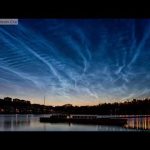
On the cusp of our atmosphere live a thin group of seasonal electric blue clouds. Read the story: https://go.nasa.gov/2QPcrOD
Forming fifty miles above the poles in summer, these clouds are known as noctilucent clouds or polar mesospheric clouds — PMCs. A recent NASA long-duration balloon mission observed these clouds over the course of five days at their home in the mesosphere. The resulting photos, which scientists have just begun to analyze, will help us better understand turbulence in the atmosphere, as well as in oceans, lakes, and other planetary atmospheres, and may even improve weather forecasting.
Music credit: “In The End” By Andrew John Skeet [PRS], Andrew Michael Britton [PRS], David Stephen Goldsmith [PRS] from Killer Tracks
Credits: David Fritts (GATS): Scientist
Joy Ng (USRA): Producer
Mara Johnson-Groh (Wyle Information Systems): Writer Tom Bridgman (GST): Data Visualizer
William Putman (NASA/GSFC): Data Visualizer
This video is public domain and along with other supporting visualizations can be downloaded from the Scientific Visualization Studio at: http://svs.gsfc.nasa.gov/13073
Some Fortune 500 companies are using tools that deploy artificial intelligence to weed out job applicants. But is this practice fair? In this episode of Moving Upstream, WSJ’s Jason Bellini investigates.
Watch for new episodes of Moving Upstream this fall.
This Machine Learning basics video will help you understand what is Machine Learning, what are the types of Machine Learning – supervised, unsupervised & reinforcement learning, how Machine Learning works with simple examples, and will also explain how Machine Learning is being used in various industries. Machine learning is a core sub-area of artificial intelligence; it enables computers to get into a mode of self-learning without being explicitly programmed. When exposed to new data, these computer programs are enabled to learn, grow, change, and develop by themselves. So, put simply, the iterative aspect of machine learning is the ability to adapt to new data independently. This is possible as programs learn from previous computations and use “pattern recognition” to produce reliable results. Machine learning is starting to reshape how we live, and it’s time we understood what it is and why it matters. Now, let us deep dive into this short video and understand the basics of Machine Learning.
Below topics are explained in this Machine Learning basics video:
1. What is Machine Learning? ( 00:21 )
2. Types of Machine Learning ( 02:43 )
2. What is Supervised Learning? ( 02:53 )
3. What is Unsupervised Learning? ( 03:46 )
4. What is Reinforcement Learning? ( 04:37 )
5. Machine Learning applications ( 06:25 )
About Simplilearn Machine Learning course:
A form of artificial intelligence, Machine Learning is revolutionizing the world of computing as well as all people’s digital interactions. Machine Learning powers such innovative automated technologies as recommendation engines, facial recognition, fraud protection and even self-driving cars. This Machine Learning course prepares engineers, data scientists and other professionals with the knowledge and hands-on skills required for certification and job competency in Machine Learning.
Why learn Machine Learning?
Machine Learning is taking over the world- and with that, there is a growing need among companies for professionals to know the ins and outs of Machine Learning
The Machine Learning market size is expected to grow from USD 1.03 Billion in 2016 to USD 8.81 Billion by 2022, at a Compound Annual Growth Rate (CAGR) of 44.1% during the forecast period.
What skills will you learn from this Machine Learning course?
By the end of this Machine Learning course, you will be able to:
1. Master the concepts of supervised, unsupervised and reinforcement learning concepts and modeling.
2. Gain practical mastery over principles, algorithms, and applications of Machine Learning through a hands-on approach which includes working on 28 projects and one capstone project.
3. Acquire a thorough knowledge of the mathematical and heuristic aspects of Machine Learning.
4. Understand the concepts and operation of support vector machines, kernel SVM, naive Bayes, decision tree classifier, random forest classifier, logistic regression, K-nearest neighbors, K-means clustering and more.
5. Be able to model a wide variety of robust Machine Learning algorithms including deep learning, clustering, and recommendation systems
We recommend this Machine Learning training course for the following professionals in particular:
1. Developers aspiring to be a data scientist or Machine Learning engineer
2. Information architects who want to gain expertise in Machine Learning algorithms
3. Analytics professionals who want to work in Machine Learning or artificial intelligence
4. Graduates looking to build a career in data science and Machine Learning
Visit the site: https://go.nasa.gov/2NQHhba
There’s more space in your life than you think! NASA studies our planet, Sun, solar system & beyond, but you can find thousands of NASA-influenced technologies right in your backyard.
At the end of 2019 Vega-C will be launched from Europe’s Spaceport in French Guiana increasing performance from Vega’s current 1.5 t to about 2.2 t in its reference 700 km polar orbit, with no increase in launch costs.
Vega-C’s first stage is based on the P120, the largest single segment carbon fibre solid-propellant rocket motor ever built. It was successfully tested in July 2018. Its development relies on new technologies derived from Vega’s current first stage P80 motor. Two or four P120C motors will also be used for the liftoff boosters on Ariane 6.
Vega-C’s 3.3 m diameter fairing will accommodate larger payloads such as Earth observation satellites of more than two tonnes, and ESA’s Space Rider reentry vehicle.
The Vega launch pad and mobile gantry are being modified to accommodate Vega-C leading into a period when launch facilities will accommodate both vehicles.
ESA is Europe’s gateway to space. Our mission is to shape the development of Europe’s space capability and ensure that investment in space continues to deliver benefits to the citizens of Europe and the world. Check out http://www.esa.int/ESA to get up to speed on everything space related.
Earth is a complex, dynamic system. For 60 years, we have studied our changing planet, and our understanding continues to expand with the use of new technologies. With data from satellites, instruments on the International Space Station, airborne missions, balloons, and observations from ships and on land, we track changes to land, water, ice, and the atmosphere. Application of our Earth observations help improve life now and for future generations.
Congress passed the National Aeronautics and Space Act, on July 16 and President Eisenhower signed it into law on July 29, 1958. NASA opened for business on Oct. 1, 1958. Our history tells a story of exploration, innovation and discoveries. The next 60 years, that story continues. Learn more: https://www.nasa.gov/60
Major hurricane Florence, seen from space, our mission to size up land and sea ice on Earth, and “catching big air” … another successful test for our Orion spacecraft … a few of the stories to tell you about – This Week at NASA!
This video is available for download from NASA’s image and Video Library: https://images.nasa.gov/details-Watching Hurricane Florence from Space on This Week @NASA – September 15, 2018.html
Italian ESA astronaut Samantha Cristoforetti, speaking from the European Astronaut Centre near Cologne in Germany, has a message of thanks to all those who’ve entered our Lunar 3D printing competition so far. A new lunar analogue test facility, called Luna for short, is currently being set up at EAC to test the technologies and techniques needed for any future Moon base – with 3D printing high on the list. And a team ESA’s technical centre in Noordwijk, the Netherlands, is overseeing a project to research in detail how 3D printing could be used in such a Moon base. We’re also interested in the human factor: what would you 3D print to make the Moon feel like home? That’s why we’re crowdsourcing your ideas through this competition. The closing date is 23 September 2018.
ESA is Europe’s gateway to space. Our mission is to shape the development of Europe’s space capability and ensure that investment in space continues to deliver benefits to the citizens of Europe and the world. Check out http://www.esa.int/ESA to get up to speed on everything space related.
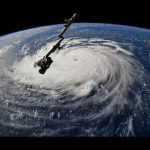
A high definition camera outside the International Space Station captured a stark and sobering view of Hurricane Florence at 7:50 a.m. EDT on Sept. 12. NASA satellites track the storm: https://go.nasa.gov/2CEmDGQ
This video was taken as Florence churned across the Atlantic in a west-northwesterly direction with winds of 130 miles an hour. The National Hurricane Center forecasts additional strengthening for Florence before it reaches the coastline of North Carolina and South Carolina early Friday, Sept. 14.
ESA astronaut Alexander Gerst launches the 2018/19 European Astro Pi Challenge; an ESA Education project run in collaboration with the Raspberry Pi Foundation. He invites students and young people to conduct their own scientific investigations in space, by writing computer programs that run on Raspberry Pi computers on board the International Space Station.
ESA is Europe’s gateway to space. Our mission is to shape the development of Europe’s space capability and ensure that investment in space continues to deliver benefits to the citizens of Europe and the world. Check out http://www.esa.int/ESA to get up to speed on everything space related.
This video on “Supervised and Unsupervised Learning” will help you understand what is machine learning, what are the types of Machine learning, what is supervised machine learning, types of supervised machine learning, what is unsupervised learning, types of unsupervised learning and what are the differences between supervised and unsupervised machine learning. In supervised learning, the model learns from a labeled data whereas in unsupervised learning, model trains itself on unlabelled data. Now, let us get started and understand supervised and unsupervised learning and how they are different from each other.
Below are the topics explained in this supervised and unsupervised learning in Machine Learning Tutorial-
1. What is Machine Learning
– Types of Machine Learning
– Supervised Learning
– Unsupervised Learning
2. Supervised Learning
– Types of Supervised Learning
3. Unsupervised Learning
– Types of Unsupervised Learning
About Simplilearn Machine Learning course:
A form of artificial intelligence, Machine Learning is revolutionizing the world of computing as well as all people’s digital interactions. Machine Learning powers such innovative automated technologies as recommendation engines, facial recognition, fraud protection and even self-driving cars.This Machine Learning course prepares engineers, data scientists and other professionals with the knowledge and hands-on skills required for certification and job competency in Machine Learning.
Why learn Machine Learning?
Machine Learning is taking over the world- and with that, there is a growing need among companies for professionals to know the ins and outs of Machine Learning
The Machine Learning market size is expected to grow from USD 1.03 Billion in 2016 to USD 8.81 Billion by 2022, at a Compound Annual Growth Rate (CAGR) of 44.1% during the forecast period.
What skills will you learn from this Machine Learning course?
By the end of this Machine Learning course, you will be able to:
1. Master the concepts of supervised, unsupervised and reinforcement learning concepts and modeling.
2. Gain practical mastery over principles, algorithms, and applications of Machine Learning through a hands-on approach which includes working on 28 projects and one capstone project.
3. Acquire a thorough knowledge of the mathematical and heuristic aspects of Machine Learning.
4. Understand the concepts and operation of support vector machines, kernel SVM, naive Bayes, decision tree classifier, random forest classifier, logistic regression, K-nearest neighbors, K-means clustering and more.
5. Be able to model a wide variety of robust Machine Learning algorithms including deep learning, clustering, and recommendation systems
We recommend this Machine Learning training course for the following professionals in particular:
1. Developers aspiring to be a data scientist or Machine Learning engineer
2. Information architects who want to gain expertise in Machine Learning algorithms
3. Analytics professionals who want to work in Machine Learning or artificial intelligence
4. Graduates looking to build a career in data science and Machine Learning
At 8:10 a.m. Eastern time, Sept. 10, cameras on the International Space Station captured views of Hurricane Florence. NASA satellites track the storm: https://go.nasa.gov/2CEmDGQ | Download video: https://go.nasa.gov/2Ql555y
Florence is moving in a westerly direction across the Atlantic, headed for a likely landfall along the eastern seaboard of the U.S. late Thursday or early Friday. Now a major hurricane with winds of 115 miles an hour and increasing, the National Hurricane Center says Florence’s forecast track will take the system over the southwestern Atlantic Ocean between Bermuda and the Bahamas Tuesday and Wednesday, and Florence will approach the coast of South Carolina or North Carolina on Thursday. The station was flying 255 miles over the storm at the time this video was captured.
Technology drives exploration. For 60 years, we have advanced technology to meet the rigorous needs of our missions. From GPS navigation to water filtration systems, our technologies developed for space improve your daily life on Earth. We continue to innovate and explore.
Congress passed the National Aeronautics and Space Act, on July 16 and President Eisenhower signed it into law on July 29, 1958. NASA opened for business on Oct. 1, 1958. Our history tells a story of exploration, innovation and discoveries. The next 60 years, that story continues. Learn more: https://www.nasa.gov/60
An update on our Mars rovers, continued progress for our Moon to Mars effort, and a look back at Dawn – in its twilight … a few of the stories to tell you about – This Week at NASA!
This video is available for download from NASA’s Image and Video Library: https://images.nasa.gov/details-NHQ_2018_0907_Clearing%20Skies%20for%20our%20Rovers%20on%20Mars%20on%20This%20Week%20@NASA%20%E2%80%93%20September%207,%202018.html
ESA is Europe’s gateway to space. Our mission is to shape the development of Europe’s space capability and ensure that investment in space continues to deliver benefits to the citizens of Europe and the world. Check out http://www.esa.int/ESA to get up to speed on everything space related.
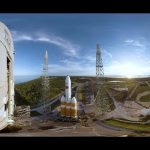
Watch in 360 degrees as an United Launch Alliance Delta IV Heavy rocket lifts off from Space Launch Complex-37 at Cape Canaveral Air Force Station in Florida carrying NASA’s Parker Solar Probe spacecraft. Roughly the size of a small car, the spacecraft lifted off at 3:31 a.m. EDT on Aug. 12, 2018, starting its historic mission to “touch” the Sun.
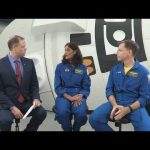
During a recent visit to Johnson Space Center, NASA Administrator Jim Bridenstine sat down with astronauts Chris Ferguson and Sunita “Suni” Williams for an informal Q&A session about the Commercial Crew Program.
NASA’s Commercial Crew Program has worked with several American aerospace industry companies to facilitate the development of U.S. human spaceflight systems since 2010. Both Ferguson and Williams were selected to fly on the Boeing CST-100 Starliner for the Commercial Crew Program – marking the first time that American astronauts will launch to the International Space Station from American soil on American-made spacecraft since the Space Shuttle Program ended in 2011.
To watch specific portions of the Q&A about the future of human space exploration, click a timestamp:
2:30 – Astronaut Chris Ferguson talks about what he has been doing since it was announced that he is a member of the Commercial Crew Program
3:30 – Astronaut Chris Ferguson explains why his flight suit says Boeing and not NASA
4:27 – Astronaut Suni Williams talks about what a day in the life of an astronaut is like and what she has been up to since she was selected for the Commercial Crew program
6:30 – Astronaut Chris Ferguson talks about how the Starliner is different from the Space Shuttle
7:30 – Astronaut Suni Williams talks about how is the Starliner is similar to and different from the Soyuz
8:32 – Astronaut Chris Ferguson talks about how many people the Starliner will be able to carry to the International Space Station
9:20 – Administrator Jim Bridenstine talks about the future of space exploration for NASA
10:58 – Astronaut Suni Williams talks about her previous spaceflights and how her Commercial Crew flight will be different
12:20 – Astronaut Suni Williams talks about their experience landing in space vehicles
15:20 – Administrator Jim Bridenstine and astronaut Chris Ferguson discuss thermal protection to keep astronauts safe
17:30 – Administrator Jim Bridenstine talks about the components of the Space Launch System and how it compares to technology for avionics
18:55 – Astronaut Chris Ferguson discusses how flying tests in the U.S. Navy prepared them for their upcoming missions
20:28 – Astronaut Chris Ferguson discusses what it’s like to dock the Starliner
21:30 – Astronaut Suni Williams talks about training, automation and providing input to Boeing about the Starliner
22:30 – Astronauts Chris Ferguson and Suni Williams talk about the team of individuals who make human spaceflight possible
24:45 – Administrator Jim Bridenstine talks about the preparations that go into space exploration missions
25:46 – Administrator Jim Bridenstine talks about NASA’s launch capabilities
26:52 – Astronauts Chris Ferguson and Suni Williams provide guidance to Administrator Jim Bridenstine as he docks the Boeing Starliner simulator
New Horizons spots its next flyby target, Administrator Bridenstine visits our west coast facilities, and using data from space to fight a life-threatening disease … a few of the stories to tell you about – This Week at NASA!
This video is available for download from NASA’s Image and Video Library: https://images.nasa.gov/details-NHQ_2018_0831_New%20Horizons%20Detects%20Next%20Flyby%20Target%20on%20This%20Week%20@NASA%20%E2%80%93%20August%2031,%202018.html
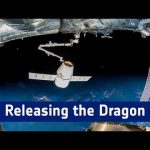
This timelapse video shows still pictures taken from the International Space Station of the departing #Dragon supply spacecraft. Played in quick succession the video displays faster than real life but in 4K resolution.
The Dragon spacecraft was released from the Station’s robotic arm at 18:38 GMT on 3 August 2018. Thrusters fired to increase its distance from the Space Station and the spacecraft started its deorbit and return to Earth, splashing down in the Pacific Ocean less than seven hours after release.
The International Space Station flies at 28 800 km/h above our planet doing a complete orbit in around 90 minutes – during release operations the sun set and rose above the horizon many times.
As Dragon faded into the distance it flew over a stormy part of Earth – lightning flashes can be seen many kilometres below.
Dragon is the only spacecraft that can return to Earth with scientific cargo aside from the Soyuz spacecraft that ferries astronauts to space and back – this flight carried over 1700 kg of cargo.
ESA is Europe’s gateway to space. Our mission is to shape the development of Europe’s space capability and ensure that investment in space continues to deliver benefits to the citizens of Europe and the world. Check out http://www.esa.int/ESA to get up to speed on everything space related.
On August 30, 1983, mission specialist Guion “Guy” Bluford became the first African-American astronaut to fly in space. The dramatic night launch of space shuttle Challenger on the STS-8 mission (https://go.nasa.gov/2N8y4e8), 35 years ago today, marked an important milestone in American history. Bluford, who flew on three more shuttle missions during his NASA career, reflects on the significance of his first space flight.
NASA Administrator Jim Bridenstine spoke the agency’s exploration goals, during a meeting of the NASA Advisory Council (NAC) on Aug. 29 at the agency’s Ames Research Center in Moffett Field, California. The Council meets several times a year for fact finding and deliberative sessions. Meetings are held at NASA Headquarters in Washington, DC, as well as at NASA Centers across the country.
NASA’s historic Parker Solar Probe mission that launched Aug. 12, 2018 from Space Launch Complex 37 on Cape Canaveral Air Force Station in Florida will revolutionize our understanding of the Sun. The Parker Solar Probe spacecraft will travel through the Sun’s atmosphere, closer to the surface than any spacecraft before it, facing brutal heat and radiation conditions — and ultimately providing humanity with the closest-ever observations of a star. This is a look at the moments leading up to T-Zero for NASA’s mission to “touch” the Sun.
Aeronautics is our tradition. For 60 years, we have advanced aeronautics, developed new technologies and researched aerodynamics. Our advancements have transformed the way you fly. We will continue to revolutionize flight.
Congress passed the National Aeronautics and Space Act, on July 16 and President Eisenhower signed it into law on July 29, 1958. NASA opened for business on Oct. 1, 1958. Our history tells a story of exploration, innovation and discoveries. The next 60 years, that story continues. Learn more: https://www.nasa.gov/60