Author: kidibot

  • Artificial Intelligence and NASA Data Used to Discover Eighth Planet Circling Distant Star

    Artificial Intelligence and NASA Data Used to Discover Eighth Planet Circling Distant Star

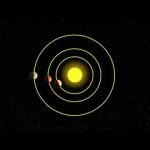
    Our solar system now is tied for most number of planets around a single star, with the recent discovery of an eighth planet circling Kepler-90, a Sun-like star 2,545 light years from Earth. The planet was discovered in data from NASA’s Kepler space telescope. More info: http://www.nasa.gov/press-release/artificial-intelligence-nasa-data-used-to-discover-eighth-planet-circling-distant-star/index.html

    The newly-discovered Kepler-90i — a sizzling hot, rocky planet that orbits its star once every 14.4 days — was found by researchers from Google and The University of Texas at Austin using machine learning. Machine learning is an approach to artificial intelligence in which computers “learn.” In this case, computers learned to identify planets by finding in Kepler data instances where the telescope recorded signals from planets beyond our solar system, known as exoplanets.

    Video credit: NASA/Ames Research Center

    NASA’s Ames Research Center is located in California’s Silicon Valley. Follow us on social media to hear about the latest developments in space, science and technology.

    Facebook
    https://www.facebook.com/nasaames/

    Twitter
    https://twitter.com/NASAAmes

    Instagram
    https://www.instagram.com/nasaames/
  • Christina’s experience as an ESA Young Graduate Trainee

    Christina’s experience as an ESA Young Graduate Trainee

    Christina, a physicist from Denmark, shares her experience as a Young Graduate Trainee. In ESA she is working in the Education Office, and in this video she talks about a project she is part of there, the AstroPi challenge, and what motivates her to work on educational material in the European Space Agency.

    Apply now for new Young Graduate Trainee opportunities:
    http://www.esa.int/About_Us/Careers_at_ESA/Apply_now_for_new_Young_Graduate_Trainee_opportunities

  • New Findings From NASA’s Dawn Mission at Dwarf Planet Ceres

    New Findings From NASA’s Dawn Mission at Dwarf Planet Ceres

    More than 300 bright spots have been located on the surface of Ceres. Scientists with NASA’s Dawn mission say the bright material indicates the dwarf planet is an active, evolving world.
    More: https://www.nasa.gov/feature/jpl/bright-areas-on-ceres-suggest-geologic-activity

  • 2017 – The Year @NASA (Update)

    2017 – The Year @NASA (Update)

    2017: A year of groundbreaking discoveries and record-setting exploration at NASA. The Moon became a focal point for the agency, we brought you unique coverage of the first coast-to-coast total solar eclipse in the U.S. in 99 years, we announced the most Earth-size planets ever found in the habitable zone of a star outside our solar system, and more!

    This video is available for download from NASA’s Image and Video Library: https://images.nasa.gov/details-NHQ_2017_1212_2017%20-%20The%20Year%20@NASA%20-%20Updated%2012-12-2017.html

  • Fly into the Great Red Spot of Jupiter with NASA’s Juno Mission

    Fly into the Great Red Spot of Jupiter with NASA’s Juno Mission

    This animation takes the viewer on a simulated flight into, and then out of, Jupiter’s upper atmosphere at the location of the Great Red Spot. It was created by combining an image from the JunoCam imager on NASA’s Juno spacecraft with a computer-generated animation.

    The perspective begins about 2,000 miles (3,000 kilometers) above the cloud tops of the planet’s southern hemisphere. The bar at far left indicates altitude during the quick descent; a second gauge next to that depicts the dramatic increase in temperature that occurs as the perspective dives deeper down. The clouds turn crimson as the perspective passes through the Great Red Spot. Finally, the view ascends out of the spot.

    For more, visit https://www.nasa.gov/feature/jpl/nasas-juno-probes-the-depths-of-jupiters-great-red-spot

  • Carbon dioxide ocean–atmosphere exchange

    Carbon dioxide ocean–atmosphere exchange

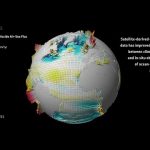
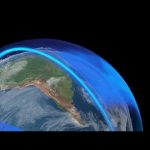
    Atmospheric carbon dioxide is the most important human-made greenhouse gas responsible for global warming. Oceans assist in removing carbon dioxide from the atmosphere: phytoplankton accumulate carbon dioxide through photosynthesis and their chlorophyll colours the ocean’s waters. Satellites use this colour to measure chlorophyll, which helps scientists to calculate how much carbon dioxide is absorbed or emitted.

    Copyright: Planetary Visions (credit: ESA/CCI Ocean Colour/Climate Monitoring User Group/Planetary Visions)

  • Science Max | Amazing Magnets | Kids Science | Experiments

    Science Max | Amazing Magnets | Kids Science | Experiments

    Have you ever done a science experiment and wondered “What would this be like if it were HUGE?” Welcome to Science Max, the exciting new series that turbocharges all the science experiments you’ve done at home.

  • Don’t Miss the Geminid Meteor Shower, Peaking on Dec. 13

    Don’t Miss the Geminid Meteor Shower, Peaking on Dec. 13

    The Geminid meteor shower will put on a dazzling show for skywatchers when it peaks overnight on Dec. 13-14, 2017. NASA will show a livestream of the Geminid shower beginning at 9 p.m. EST (10 p.m. Central) on Dec. 13, from the Automated Lunar and Meteor Observatory at NASA’s Marshall Space Flight Center in Huntsville, Alabama.

    More: https://www.nasa.gov/centers/marshall/news/news/releases/2017/heads-up-earthlings-the-geminids-are-here.html

  • Stella’s experience as an ESA Young Graduate Trainee

    Stella’s experience as an ESA Young Graduate Trainee

    Stella, an astrophysicist from Estonia, shares her experience as a YGT at ESA working with data provided by the Gaia mission’s team to model the movements of stars.

    Apply now for new Young Graduate Trainee opportunities:
    http://www.esa.int/About_Us/Careers_at_ESA/Apply_now_for_new_Young_Graduate_Trainee_opportunities

  • Artificial Intelligence for Kids with Hod Lipson, Professor, Columbia Engineering

    Artificial Intelligence for Kids with Hod Lipson, Professor, Columbia Engineering

    On September 11, 2017, the Deming Center at Columbia Business School partnered with the School for Engineering and Applied Science to host an event on Artificial Intelligence just for the children of faculty, staff and friends of the Center. More than 50 kids ages 6 to 16 gathered to hear Professor of Mechanical Engineering and Director of the Creative Machines Lab Hod Lipson speak to the past, present and future of AI.

    Impressing on them that their lives would be profoundly impacted by advances in AI and Machine Learning, Professor Lipson took the children on a journey through the history of the field, bringing them up to speed on the incredible advances of the last 50 years. He then explored all of the ways in which AI is being used today from simply playing a game of Tic Tac Toe and painting portraits to diagnosing diseases and synthesizing the vast amounts of data being generated by computers, algorithms and images that affect our daily lives. They then turned their attention to all of the ways in which AI would permeate their lives in the near future from driverless cars to robotic traffic police.

    The children asked creative, probing questions throughout compelling the adults in the room to think outside-of-the-box and consider the deep nuances their questions asked. From 6-year old Aziz who was curious as to whether Artificial Intelligence can exist in water to 12-year old Christina’s question about how AI will affect terrorism and war in the future, children and parents alike were left with a sense of wonder and excitement about the future.

  • VITA mission ‘Timelapse a Day’ edition – from Africa to Russia

    VITA mission ‘Timelapse a Day’ edition – from Africa to Russia

    A series of daytime photos were taken by ESA astronaut Paolo Nespoli from on board the International Space Station flying from Africa, to Italy and Russia to create this time-lapse of Earth.

    ESA astronaut Paolo Nespoli in currently working and living on board the International Space Station as part of the Italian Space Agency’s long-duration VITA mission.

    Follow the VITA mission: http://blogs.esa.int/VITAmission/
    Connect with Paolo via http://paolonespoli.esa.int

  • How Much Does a Thought Weigh?

    How Much Does a Thought Weigh?

    How Much Does a Thought Weigh? a.) As much as an electron
    b.) As much as a water molecule
    c.) As much as a mosquito

    Subscribe on YouTube: https://www.youtube.com/WhatThePhysics?sub_confirmation=1

    ↓Want more info?↓

    SCIENTIFIC NOTES:
    * The relationship between information and energy comes from Landauer’s Principle, which connects the erasure of information and energy. But, more generally changes in information (e.g. recording information) are related to changes in energy. I will talk more about this in a future episode about the physics of memory, and why you will forget everything you ever knew! https://en.wikipedia.org/wiki/Landauer%27s_principle

    * The numbers calculated in this video give a lower limit on the energy to record a particular amount of information, but to create a more permanent storage of information would require more energy.

    * Retina display resolution, as it’s name implies, is similar to the eye’s resolution.

    CREDITS:

    Host, Producer: Greg Kestin

    Researcher: Samia Bouzid

    Writer:
    Samia Bouzid
    Greg Kestin

    Animation & Compositing:
    Danielle Gustitus
    Greg Kestin

    Contributing Writer:
    Lissy Herman

    Scientific Consultants:
    Frank Haist
    Murti Salapaka

    Filming, Writing, & Editing Contributions from:
    Samia Bouzid
    David Goodliffe
    Brian Kantor

    Guest Appearances:
    Lindsey Chou
    Ana Aceves
    Drew Gannon

    Editorial Input form:
    Julia Cort
    Anna Rothschild

    Special thanks:
    Ari Daniel
    Allison Eck
    Fernando Becerra
    Gil Kaplan
    Eric Brass
    Lauren Miller
    And the entire NOVA team

    From the producers of PBS NOVA
    © WGBH Educational Foundation

    Funding provided by FQXi

    Music provided by APM
    Sound effects: Freesound.org
    Neuron & Digital Brain footage: Pond5

  • VITA mission ‘Timelapse a Day’ edition – Moonrise

    VITA mission ‘Timelapse a Day’ edition – Moonrise

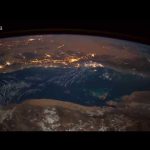
    A series of nighttime photos were taken by ESA astronaut Paolo Nespoli to create this time-lapse of the Earth as seen from the Space Station and the Moon rising above the horizon.

    ESA astronaut Paolo Nespoli in currently working and living on board the International Space Station as part of the Italian Space Agency’s long-duration VITA mission.

    Follow the VITA mission: http://blogs.esa.int/VITAmission/
    Connect with Paolo via http://paolonespoli.esa.int

  • Pizza night!

    Pizza night!

    The Expedition 53 crew received a surprise with the recent arrival of the Cygnus spacecraft at the International Space Station – a make your own pizza kit!

    With thanks to NASA for sharing the video with us.

    Connect with the crew on Twitter:
    @astro_paolo (http://paolonespoli.esa.int)
    @sergeyiss
    @Astro_Sabot
    @AstroAcaba
    @astrokomrade

  • Science Max | BALANCING BOOKS | Kids Science | Experiments

    Science Max | BALANCING BOOKS | Kids Science | Experiments

    Have you ever done a science experiment and wondered “What would this be like if it were HUGE?” Welcome to Science Max, the exciting new series that turbocharges all the science experiments you’ve done at home.

  • Earth from Space: Amazon River

    Earth from Space: Amazon River

    Earth from Space is presented by Kelsea Brennan-Wessels from the ESA Web-TV virtual studios. In the 250th edition, the Sentinel-2A satellite takes us over northern Brazil where the Amazon River meets the Atlantic Ocean.

    See also http://www.esa.int/spaceinimages/Images/2017/12/Amazon_River to download the image.

  • Chris’ experience as an ESA Young Graduate Trainee

    Chris’ experience as an ESA Young Graduate Trainee

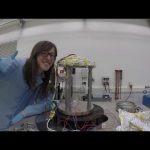
    Chris from the UK shares his experience as an ESA YGT. He has a background in Materials Engineering and in this video, he shows the set-up that he has been using in the lab at ESTEC to test stress corrosion cracking in spacecraft propellant tanks.

    Apply now for new Young Graduate Trainee opportunities:
    http://www.esa.int/About_Us/Careers_at_ESA/Apply_now_for_new_Young_Graduate_Trainee_opportunities

  • Ariane 6 –  a reality in Kourou

    Ariane 6 – a reality in Kourou

    At Europe’s Spaceport in French Guiana, Ariane 6 is now a reality with the launch zone taking shape.

    Indeed there is no time to lose for the future European launcher since its first launch is planned for July 2020.

    But the independent access to space for Europe is at stake along with its leading role on the launcher market.

    This video shows the status of Ariane 6 launch zone in Kourou with latest drone images and an interview with Daniel Neuenschwander, ESA’s Director of Space Transportation.

    Read more about Ariane 6:
    http://www.esa.int/Our_Activities/Space_Transportation/Launch_vehicles/Ariane_6

  • Action Cam Footage From October 2017 Spacewalk

    Action Cam Footage From October 2017 Spacewalk

    NASA astronaut Randy Bresnik captured this footage with a GoPro camera on Oct. 20, 2017 during a spacewalk outside the International Space Station. Bresnik reflected on this quiet moment, “Sometimes on a #spacewalk, you just have to take a moment to enjoy the beauty of our planet Earth. This Go-Pro footage is from our spacewalk where Joe Acaba and I refurbished the Canadarm2 robotic arm and the Dextre robotic arm extension.”
    Read more about the spacewalk: https://blogs.nasa.gov/spacestation/2017/10/20/expedition-53-spacewalk-successfully-comes-to-an-end/
    Follow Randy Bresnik: https://twitter.com/astrokomrade
    https://www.facebook.com/AstroKomrade/
    https://www.instagram.com/astrokomrade/

  • Meet Meccano M.A.X. Interactive Robot with Artificial Intelligence

    Meet Meccano M.A.X. Interactive Robot with Artificial Intelligence

    What can Meccano M.A.X. do once you build this interactive robot? Watch how you can use this hands-on STEM toy as a DJ to mix music, play Are You Smarter Than a Robot and more!
    *This video is sponsored by Spin Master*

    For more information, visit the FULL blog post:
    http://www.techsavvymama.com


    FOLLOW ME:
    -on http://instagram.com/techsavvymama
    -on https://www.facebook.com/techsavvymama
    -on https://twitter.com/techsavvymama

  • Physics in 6 minutes

    Physics in 6 minutes

    Support me at Patreon: https://www.patreon.com/sciencephiletheai

    Facebook: https://www.facebook.com/sciencephile/

    Twitter: https://twitter.com/Sciencephile_

    Music: String Quintet in E Major, Op. 13- Minuet

    Supporters: Roman Rys, Shannon McLaughlin, Save the Dinosaurs, Marko Charqueno, Indrek Palmi

  • Science Max | SCIENCE FRICTION | Kids Science | Experiments

    Science Max | SCIENCE FRICTION | Kids Science | Experiments

    Have you ever done a science experiment and wondered “What would this be like if it were HUGE?” Welcome to Science Max, the exciting new series that turbocharges all the science experiments you’ve done at home.

  • New Details about Interstellar Visitor on This Week @NASA – November 24, 2017

    New Details about Interstellar Visitor on This Week @NASA – November 24, 2017

    New data reveal that the interstellar asteroid that recently zipped through our solar system is rocky, cigar-shaped, and has a somewhat reddish hue. It’s the first confirmed object from another star observed in our solar system, and was discovered Oct. 19 by the University of Hawaii’s Pan-STARRS1 telescope team, funded by NASA’s Near-Earth Object Observations Program. The telescope team named it ‘Oumuamua (oh MOO-uh MOO-uh) – Hawaiian for “a messenger from afar arriving first.” The unusually-shaped asteroid, which is up to a quarter mile long and perhaps 10 times as long as it is wide, may provide new clues into how other solar systems formed. Also, Advanced Weather Satellite Launched, James Webb Space Telescope Completes Final Cryogenic Testing, Recurring Martian Streaks: Flowing Sand, Not Water? and Happy Thanksgiving, from Space!

    This video is available for download from NASA’s Image and Video Library: https://images.nasa.gov/details-NHQ_2017_1124_New%20Details%20about%20Interstellar%20Visitor%20on%20This%20Week%20@NASA%20%E2%80%93%20November%2024,%202017.html

  • ESA Euronews: Space debris

    ESA Euronews: Space debris

    Space debris has become a pressing issue, with objects in orbit flying out of control, posing a risk to satellites and to astronauts. We attended a meeting of space debris experts at ESA’s ESTEC technology base in the Netherlands to find out more about what can be done to deal with the problem.

    This video is also available in the following languages:
    German: https://www.youtube.com/watch?v=cQAje74nQuI
    French: https://www.youtube.com/watch?v=fXcrMQ5WjFI
    Italian: https://www.youtube.com/watch?v=Jp26l0PnMzo
    Spanish: https://www.youtube.com/watch?v=j7XXKHKlBPo
    Portuguese: https://www.youtube.com/watch?v=K_NIAMWBofk
    Greek: https://www.youtube.com/watch?v=F4cl5p2kpKA
    Hungarian: https://www.youtube.com/watch?v=4N4bfQSHTbM

  • ESA Euronews: Lixo espacial

    ESA Euronews: Lixo espacial

    O lixo espacial é um problema premente na órbita da Terra. Existem milhões de objetos a voar pelo espaço, descontrolados, colocando em perigo satélites e astronautas.

    Em busca de uma solução para evitar uma colisão trágica para lá da última fronteira ou, quem sabe, o infortúnio de um qualquer detrito cair e atingir alguém na Terra, cerca de 200 cientistas reúnem-se todos os anos na Holanda, na base da Agência Espacial Europeia (ESA, na sigla original), para debater a limpeza do espaço e confrontar ideias sobre o desenvolvimento, por exemplo, de satélites mais seguros no fim de vida.

    Existem quase 8000 toneladas de lixo espacial em órbita, incluindo cerca 29.000 objetos com mais de dez centímetros e mais de um milhão pequenos demais para poderem ser seguidos.

    As colisões acontecem e todos os pedaços, mesmo os mais pequenos de apenas um milímetro, revelam-se perigosos, sublinha a diretora do gabinete da ESA para a limpeza do espaço.

  • ESA Euronews: I detriti spaziali

    ESA Euronews: I detriti spaziali

    I detriti spaziali sono un problema sempre più urgente. In orbita ci sono circa 8mila tonnellate di detriti spaziali: 29mila oggetti di oltre 10 centimetri e più di un milione di frammenti troppo piccoli per essere tracciati. Sono un pericolo per i satelliti e per gli astronauti. Le collisioni sono possibili, perciò ogni detrito rappresenta un pericolo.

    Ogni anno 200 esperti in materia di spazzatura spaziale si riuniscono nella sede dell’Esa per affrontare la questione. Tra loro ci sono i rappresentanti delle agenzie spaziali e delle aziende che producono satelliti e razzi.

  • ESA Euronews: Mit kezdjünk az űrtörmelékkel?

    ESA Euronews: Mit kezdjünk az űrtörmelékkel?

    Körülbelül 8 000 tonna törmelék kering az űrben. 29 000 10 cm méretű, és több mint egymillió darab ennél is kisebb tárgy.

    Az ütközések megtörténnek, és minden törmelék veszélyt jelent. Ezen a ponton még egy nagyon kicsi törmelék is jelentős, mert a sebessége, amivel utazik, ha egy másik testet vagy műholdat elér, felrobbanthatja azt, így még a legapróbb törmelékeknek is fontos a szerepük.

    Minden évben 200 európai űrkutatási szakember találkozik az Európai Űrügynökség, az ESA hollandiai technológiai központjában, hogy megvitassák a fontos kérdéseket.

    Ők képviselik a fontosabb szereplőket, és mindannyian egyetértenek abban, hogy mit kell tenniük.

  • ESA Euronews: «διαστημικά σκουπίδια»

    ESA Euronews: «διαστημικά σκουπίδια»

    Καλωσήλθατε στην εκπομπή Space. Ας ρίξουμε μια προσεκτική ματιά στο πιεστικό πρόβλημα των «διαστημικών σκουπιδιών». Υπάρχουν εκατομμύρια τέτοια αντικείμενα στο διάστημα εκτός ελέγχου. Ενέχουν κινδύνους για τους δορυφόρους και τους αστροναύτες. Τι μπορεί να γίνει; Βρισκόμαστε στη βάση του Ευρωπαϊκού Οργανισμού Διαστήματος στην Ολλανδία.

    Υπάρχουν περίπου 8.000 τόνοι διαστημικών σκουπιδιών σε τροχιά — 29.000 αντικείμενα εντοπισμένα μεγέθους πάνω από 10 εκατοστά και πάνω από ένα εκατομμύριο μικρά «διαστημικά σκουπίδια .

  • ESA Euronews: Débris spatiaux

    ESA Euronews: Débris spatiaux

    Dans ce numéro de Space, Jeremy Wilks s’est penché sur l’épineuse question des débris spatiaux, avec les experts du centre européen de technologie spatiale de l’Agence Spatiale Européenne, aux Pays-Bas.

  • ESA Euronews: Los desechos espaciales

    ESA Euronews: Los desechos espaciales

    Este mes estamos observando de cerca el apremiante problema de los desechos espaciales. Literalmente hay millones de objetos en órbita volando fuera de control. ¿Qué se puede hacer?.
    Estamos en el Centro Europeo de Investigación y Tecnología Espacial de los Países Bajos para averiguarlo.
    Se estima que hay 8.000 toneladas de desechos espaciales orbitando: 29.000 objetos rastreados de más de 10 centímetros de tamaño y más de un millón de fragmentos demasiado pequeños para poder seguir.

    Haz colisiones y cada pedazo de escombro es un peligro.

  • Aleks’ experience as an ESA Young Graduate Trainee

    Aleks’ experience as an ESA Young Graduate Trainee

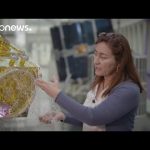
    Aleksandra, 24, from Latvia, shares her experience as an ESA YGT. In this video, the Aerospace Engineer speaks about her work in the thermal analysis and verification section, working with measurements at cryogenic temperatures. Aleks also shows her experiment set up in the Mechanical Systems Laboratory (MSL).

    Apply now for new Young Graduate Trainee opportunities:
    http://www.esa.int/About_Us/Careers_at_ESA/Apply_now_for_new_Young_Graduate_Trainee_opportunities

  • Science Max | BALLOON POWER | Kids Science | Experiments

    Science Max | BALLOON POWER | Kids Science | Experiments

    Have you ever done a science experiment and wondered “What would this be like if it were HUGE?” Welcome to Science Max, the exciting new series that turbocharges all the science experiments you’ve done at home.

  • NASA Launches NOAA Weather Satellite to Improve Forecasts

    NASA Launches NOAA Weather Satellite to Improve Forecasts

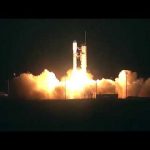
    Early on the morning of Saturday, Nov. 18, NASA successfully launched for the National Oceanic and Atmospheric Administration (NOAA) the first in a series of four advanced polar-orbiting satellites, equipped with next-generation technology and designed to improve the accuracy of U.S. weather forecasts out to seven days. The Joint Polar Satellite System-1 (JPSS-1) lifted off on a United Launch Alliance Delta II rocket from Vandenberg Air Force Base on California’s central coast. JPSS-1 data will improve weather forecasting and help agencies involved with post-storm recovery by visualizing storm damage and the geographic extent of power outages.

    This video is available for download from NASA’s Image and Video Library: https://images.nasa.gov/details-NHQ_2017_1118_NASA%20Launches%20NOAA%20Weather%20Satellite%20to%20Improve%20Forecasts.html

  • Test your geography skills in this timelapse over Europe!

    Test your geography skills in this timelapse over Europe!

    It’s time to test your geography skills! Can you name one or more cities in this night timelapse over Europe?

    If yes, go and write your answers on Paolo’s social media accounts (Twitter, Facebook or Instagram) as a comment or a reply to his video using the hashtag #timelapsechallenge. Stay tuned for the answers!

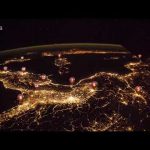
    A series of nighttime photos were taken by ESA astronaut Paolo Nespoli to create this time-lapse of the Earth as seen from the Space Station.

    ESA astronaut Paolo Nespoli in currently working and living on board the International Space Station as part of the Italian Space Agency’s long-duration VITA mission.

    Find out the answers here: https://www.youtube.com/watch?v=SsrgFFPpRKI

    Follow the VITA mission: http://blogs.esa.int/VITAmission/
    Connect with Paolo via http://paolonespoli.esa.int

    Paolo on Twitter: http://www.twitter.com/astro_paolo
    Paolo on Facebook: https://www.facebook.com/ESAPaoloNespoli/
    Paolo on Instagram: https://www.instagram.com/astro_paolo/

  • Earth from Space: Salar de Atacama

    Earth from Space: Salar de Atacama

    Earth from Space is presented by Kelsea Brennan-Wessels from the ESA Web-TV virtual studios. In the 248th edition, discover Chile’s largest salt flat in the Atacama Desert.

    See also http://www.esa.int/spaceinimages/Images/2017/11/Salar_de_Atacama_Chile to download the image.

  • What’s new, Atlas?

    What’s new, Atlas?

    What have you been up to lately, Atlas?

  • A meteoroid as seen from the Space Station… make a wish!

    A meteoroid as seen from the Space Station… make a wish!

    A series of night-time photos were taken by ESA astronaut Paolo Nespoli on 5 November around 22:33 GMT, here shown in a time-lapse with a 1-second interval, while the Space Station was flying from the southern Atlantic Ocean over to Kazakhstan.

    Paolo was lucky enough to capture a fast fireball falling to Earth over the Atlantic Ocean, off the South Africa west coast — look closely between 00:07 and 00:08 seconds at upper right in this video.

    A fireball is basically a very bright meteoroid — a small bit of natural “space rock” — entering Earth’s atmosphere and burning brighter than the background stars. This particular meteoroid was moving much faster than typical, with an estimated speed of around 40 km/s, according to experts working on near-Earth objects (NEOs) in ESA’s Space Situational Awareness Programme.

    “This speed is actually quite fast for meteoroids, which typically enter the atmosphere at around 20 km/s,” says Rüdiger Jehn, SSA NEO segment co-manager.

    ESA astronaut Paolo Nespoli in currently working and living on board the International Space Station as part of the Italian Space Agency’s long-duration VITA mission.

    Follow the VITA mission: http://blogs.esa.int/VITAmission/
    Connect with Paolo via http://paolonespoli.esa.int

  • Monitoring ozone

    Monitoring ozone

    The ozone layer protects life on Earth from ultraviolet radiation but it is also a powerful greenhouse gas. Satellites can provide measurements of atmospheric ozone and monitor distribution changes with the seasons.

    Credit: ESA/CCI Ozone and Aerosol teams/Planetary
    Visions

  • Friend In The Machine: Will Artificial Intelligence ever be a substitute for a human companion?

    Friend In The Machine: Will Artificial Intelligence ever be a substitute for a human companion?

    Produced in association with Arm, this short and thoughtful film looks at the role robots powered by Artificial Intelligence (AI) may be set to play in our lives: from becoming our friends and keeping us company; to helping children with autism communicate; or assisting a rapidly ageing population. Jem Davies, Fellow and General Manager for Machine Learning at Arm, joins other experts from industry and academia to offer their perspective on the future possibilities for companion robots and AI.

    Written and directed by: Colin Ramsay and James Uren
    Producer: Colin Ramsay
    Executive Producer: Beth Singler
    A Little Dragon Films production
    Co-funded by the Faraday Institute for Science and Religion

  • A human-robot dance duet | Huang Yi & KUKA

    A human-robot dance duet | Huang Yi & KUKA

    Harmoniously weaving together the art of dance and the science of mechanical engineering, Huang Yi performs a man-machine dance duet with KUKA — a robot he conceptualized and programmed — set to stirring cello by Joshua Roman.

    Check out more TED Talks: http://www.ted.com

    The TED Talks channel features the best talks and performances from the TED Conference, where the world’s leading thinkers and doers give the talk of their lives in 18 minutes (or less). Look for talks on Technology, Entertainment and Design — plus science, business, global issues, the arts and more.

    Follow TED on Twitter: http://www.twitter.com/TEDTalks
    Like TED on Facebook: https://www.facebook.com/TED

    Subscribe to our channel: https://www.youtube.com/TED